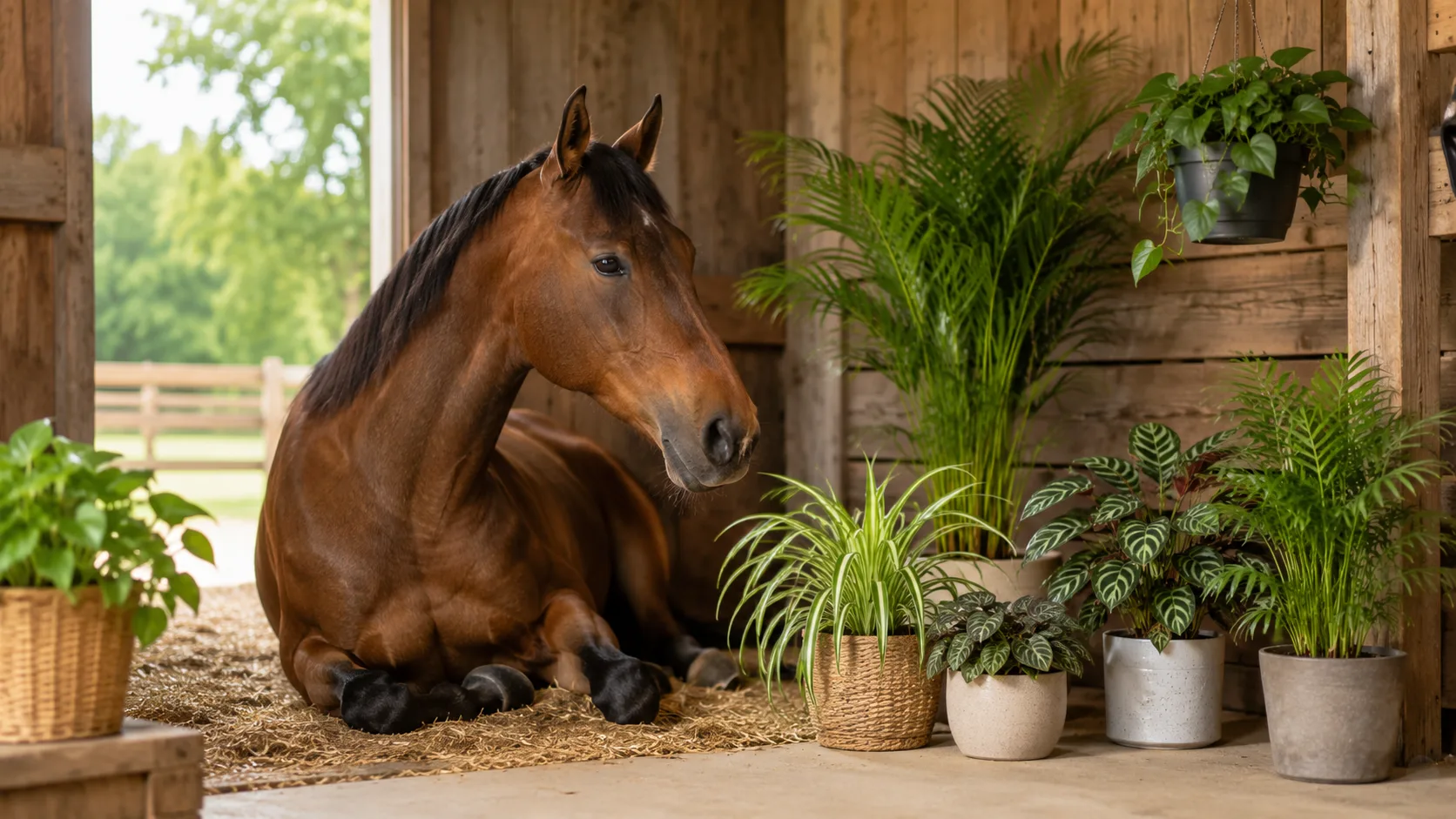
A horse-safer ornamental plant should do more than appear on a non-toxic list. It should survive barn-office conditions, stay out of reach of curious muzzles at doors and cross-ties, and carry an ASPCA horse non-toxic profile you can verify before the pot sits on a porch rail. The best pick is rarely the prettiest foliage online—it is the plant you can secure where a tied horse cannot browse it.
This guide compares eight ornamentals with ASPCA support for horse-adjacent settings: a comparison table, placement guidance for tack rooms and barn offices, and links to full species care. For plants to remove, see Plants Toxic to Horses.
The eight horse-safer ornamentals featured here are spider plant, parlor palm, areca palm, ponytail palm, peperomia, calathea, cast iron plant, and money tree. Each appears on the ASPCA horse non-toxic plant list or carries an individual ASPCA non-toxic listing cross-checked for equines.
Non-Toxic Does Not Mean Safe to Graze
When the ASPCA classifies a plant as non-toxic to horses, it means the plant is not expected to cause the classic severe poisoning profile associated with known equine toxic plants. It does not mean horses should browse decorative foliage, and it does not make potting mix or fertilizer safe.
Horses that snatch porch pots or aisle-side plants—even non-toxic ones—can still develop colic signs, mouth irritation, or digestive upset from volume, foreign material, or chemical residues. Many catastrophic equine plant poisonings involve yard and landscaping species, not houseplants—but the principle holds: ornamentals are not forage.
Treat horse-safe as lower consequence if a small accidental nibble occurs, not as permission to let horses graze decorative plants.
Call your veterinarian promptly if a horse shows colic signs, diarrhea, mouth irritation, depression, ataxia, or if you cannot identify the plant eaten. ASPCA Animal Poison Control is available at 888-426-4435 (fee may apply).
Editor note (barn placement): Tack-room plants on window sills beside open Dutch doors are within reach the first time a horse spooks toward daylight. Mount pots above shoulder height or move them behind closed doors—not because these species are highly toxic, but because horses explore with force.
Quick Pick: Best Horse-Safer Plant for Your Situation
For the most forgiving tack-room plant, choose spider plant—adaptable and on the ASPCA horse non-toxic list.
For sculptural accent on a high shelf, choose ponytail palm—ASPCA non-toxic; stores water in its caudex.
For low-light barn offices, choose parlor palm or cast iron plant.
For bright porch corners behind rails, choose areca palm or money tree.
For patterned foliage in a humid wash rack office, choose calathea—ASPCA non-toxic, humidity-sensitive.
For small desk pots in the farm office, choose peperomia.
How to Choose a Horse-Safer Ornamental
Judge each plant against ASPCA horse verification, placement out of reach, care in barn-adjacent conditions, and separation from known equine toxic landscaping.
Verify on the ASPCA Horse List
Cross-check every species on the ASPCA horse plant list and the individual plant page before buying. Common names mislabel pots at garden centers.
Assume Reach at Doors and Cross-Ties
If a horse can stretch its neck through a stall door, window, or porch rail, the plant is not out of reach. Hanging baskets must clear muzzle height by a full arm length.
Keep Barn Chemicals Separate
Fly spray, hoof treatments, and stall disinfectants do not belong on plant shelves. Residue on leaves becomes an ingestion risk if a horse snatches a pot.
Match Light to the Actual Room
Barn offices are often dim; porches are bright and dry. Choose cast iron plant or parlor palm for dim offices; choose areca palm or money tree for bright, sheltered porches.
How We Selected These Eight
We required ASPCA horse non-toxic verification or individual ASPCA listings cross-checked against the horse plant list. We ranked for forgiving care in farm-adjacent buildings and typical indoor ornamental use in tack rooms and offices.
We left out ASPCA horse-toxic ornamentals and landscaping staples (oleander, yew, red maple leaves, wilted cherry limbs) that belong on Plants Toxic to Horses, not here.
Horse-Safer Ornamental Comparison Table
Spider Plant
Best for: tack rooms, barn offices, hanging baskets above muzzle height.
ASPCA horse status: Non-toxic (ASPCA spider plant listing)
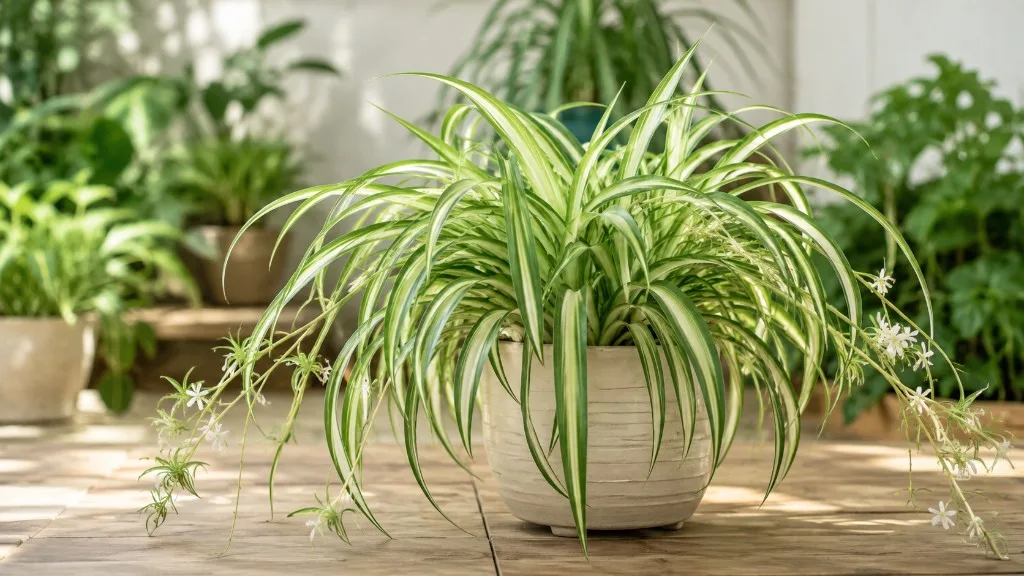
Spider plant (Chlorophytum comosum) is forgiving and listed non-toxic for horses on ASPCA data. Keep spiderettes trimmed if they hang near open doors.
Useful care guides: Spider plant care · Watering · Propagation · Problems
Parlor Palm
Best for: dim barn offices and feed-room corners.
ASPCA horse status: Non-toxic (ASPCA parlor palm listing)
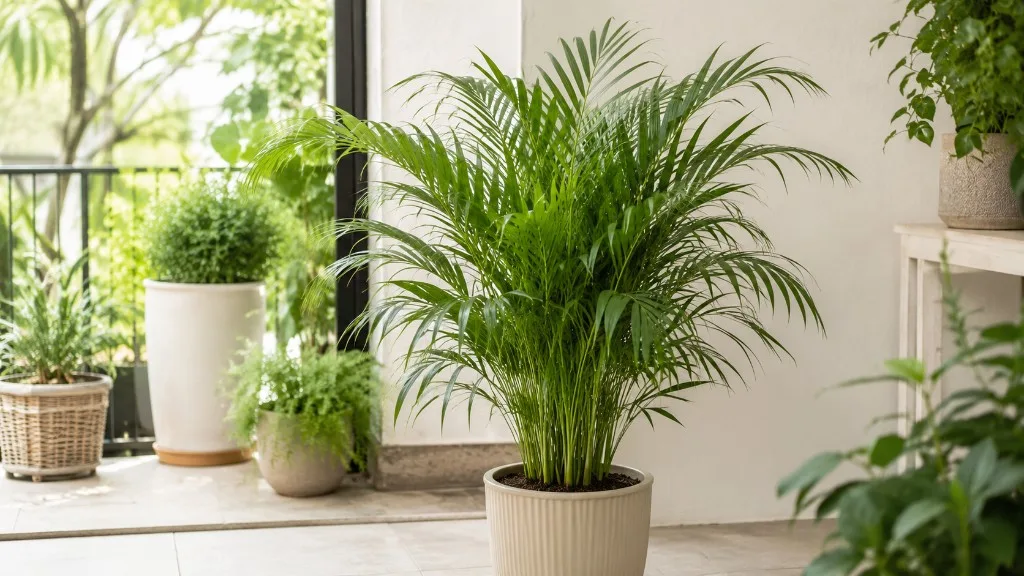
Parlor palm (Chamaedorea elegans) tolerates lower light—useful in barn buildings without bright windows. Secure pots against bumping.
Useful care guides: Parlor palm care · Watering · Light · Problems
Areca Palm
Best for: bright porch corners behind rails.
ASPCA horse status: Non-toxic (ASPCA areca palm listing)
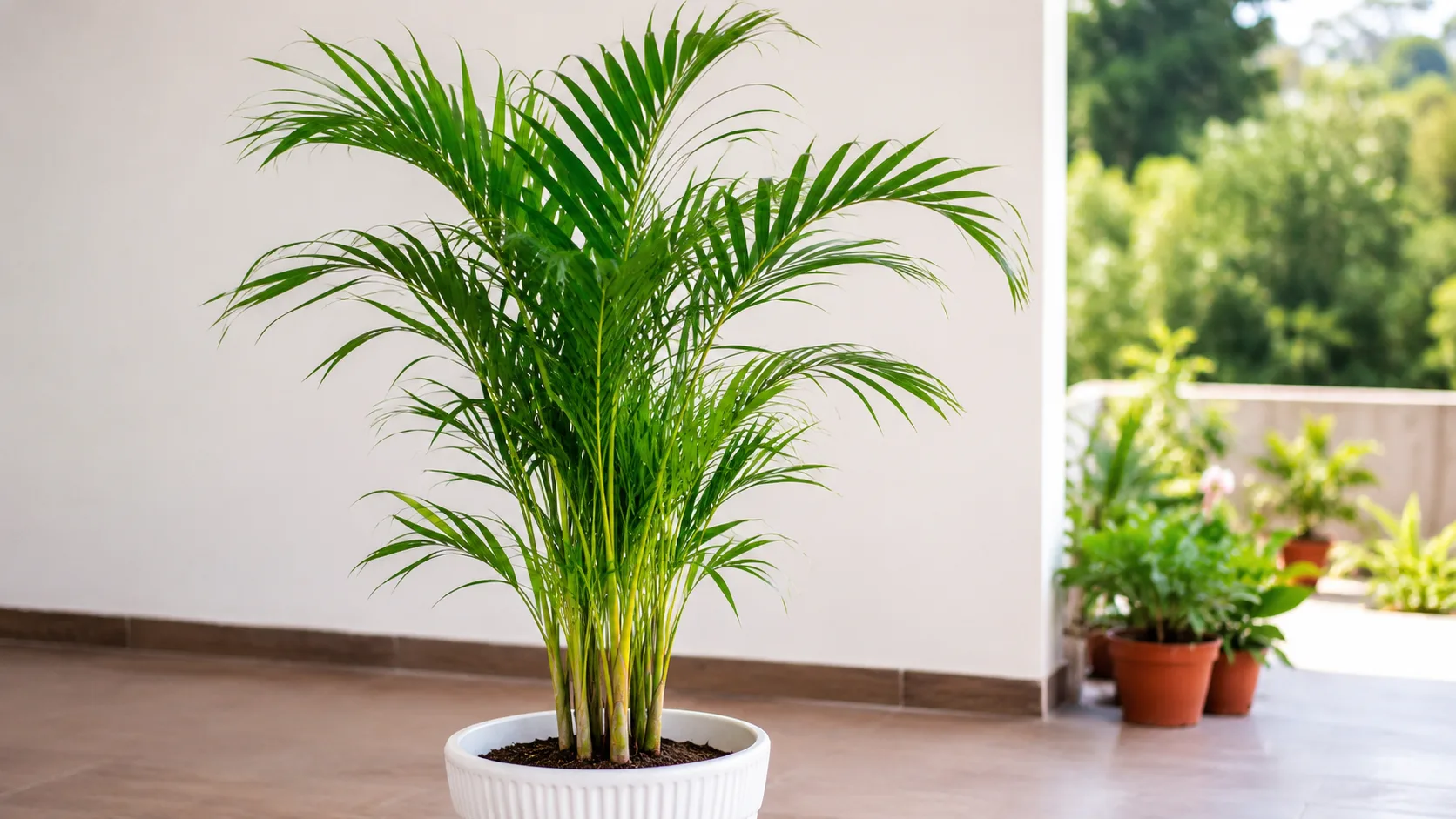
Areca palm (Dypsis lutescens) adds soft height where porch light is strong. Never place floor pots beside cross-ties.
Useful care guides: Areca palm care · Watering · Light · Problems
Ponytail Palm
Best for: sculptural accent on high shelves.
ASPCA horse status: Non-toxic (ASPCA ponytail palm listing)
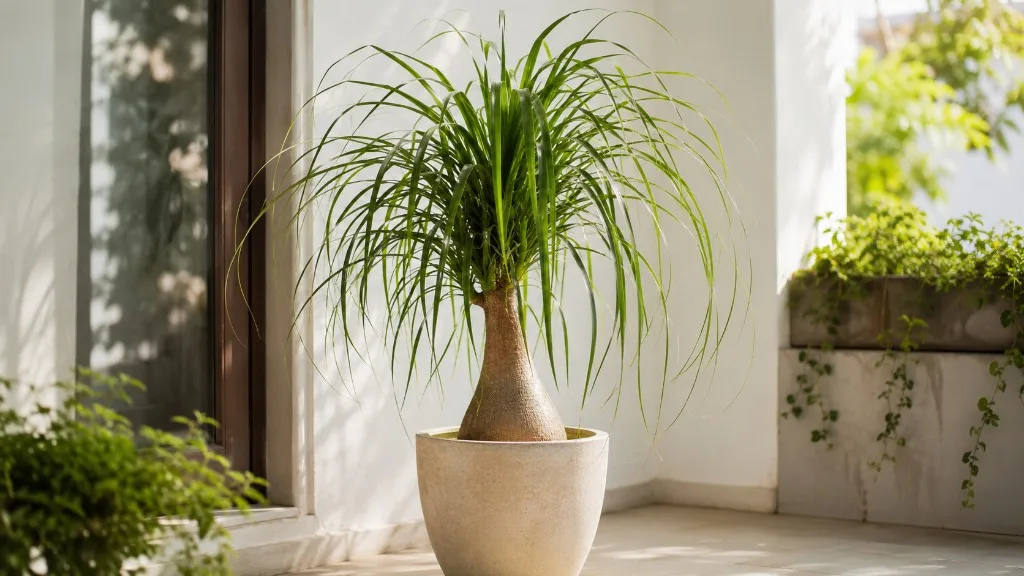
Ponytail palm (Beaucarnea recurvata) is a caudex succulent, not a true palm. ASPCA lists it non-toxic. Heavy base resists light bumps—still not horse-proof.
Useful care guides: Ponytail palm care · Watering · Light · Problems
Peperomia
Best for: farm office desks, window sills above reach.
ASPCA horse status: Non-toxic (ASPCA peperomia listing)
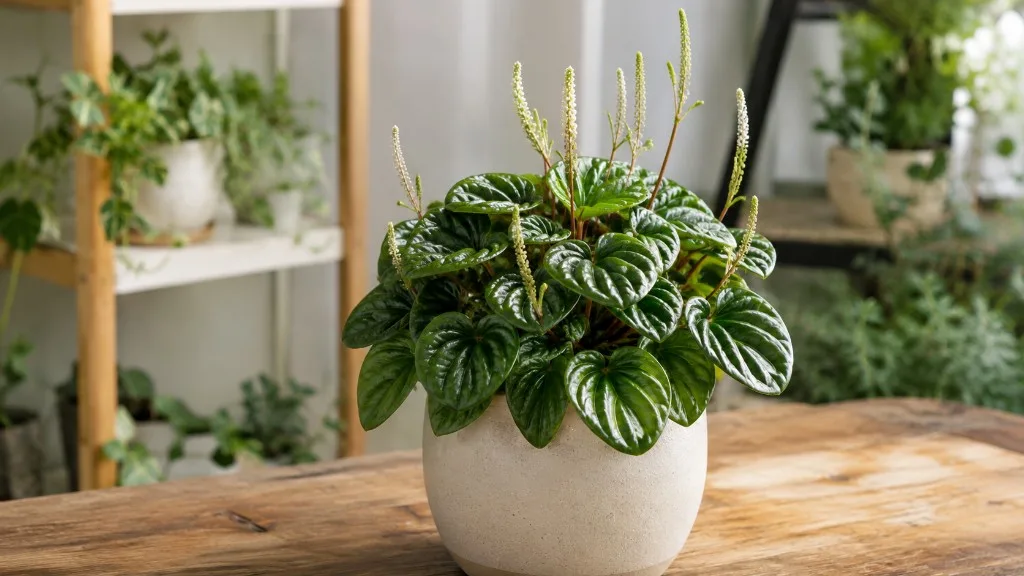
Peperomia (Peperomia spp.) stays compact on desks. Do not confuse with toxic Ficus elastica rubber plant.
Useful care guides: Peperomia care · Watering · Propagation · Problems
Calathea
Best for: humid wash-rack offices with windows.
ASPCA horse status: Non-toxic (ASPCA calathea listing)
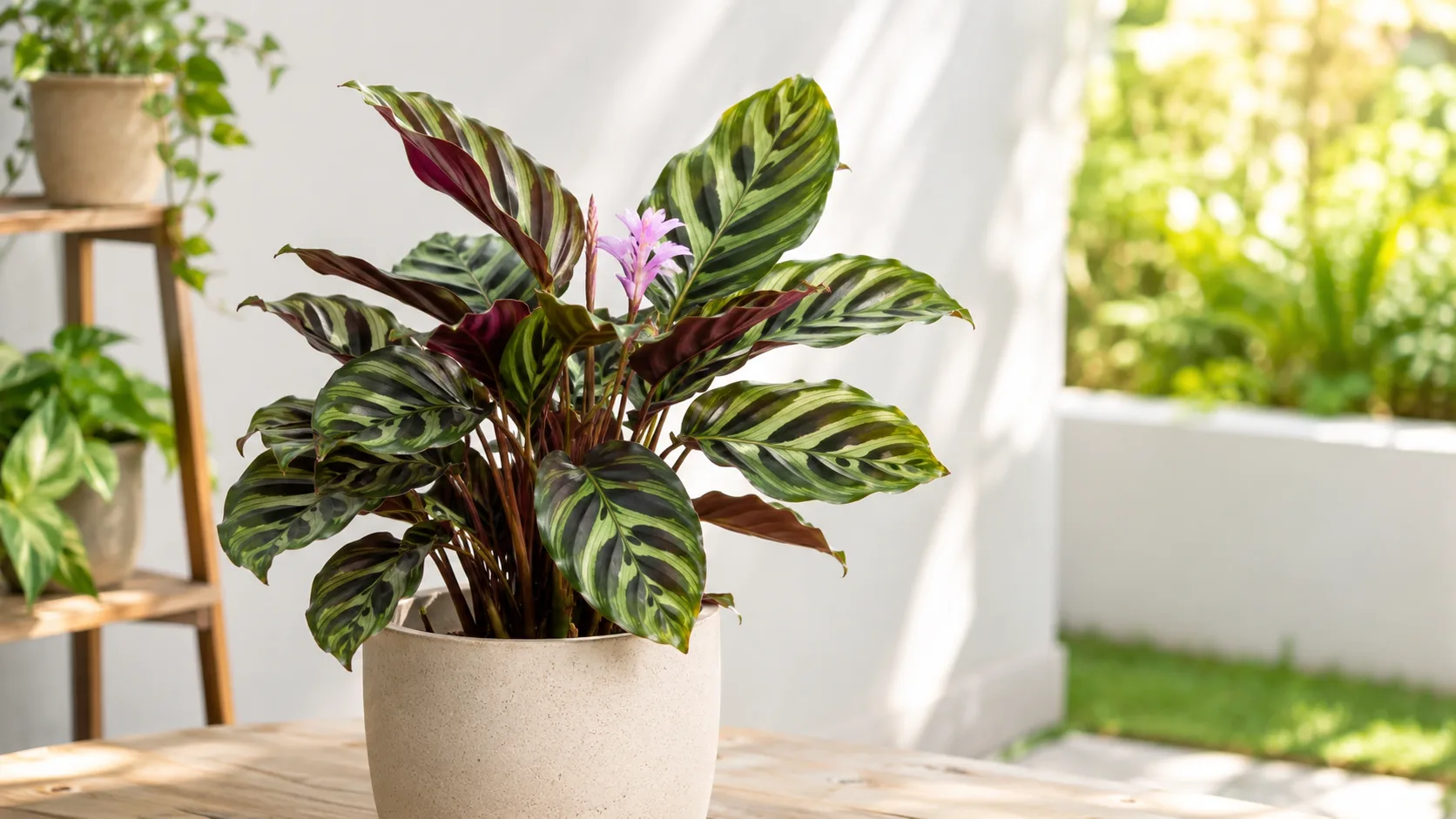
Calathea (Calathea spp.) offers patterned foliage with ASPCA non-toxic status. Demands steady moisture—dry barn heat browns leaf edges.
Useful care guides: Calathea care · Watering · Light · Problems
Cast Iron Plant
Best for: dark hallways and interior tack-room corners.
ASPCA horse status: Non-toxic (ASPCA cast iron plant listing)
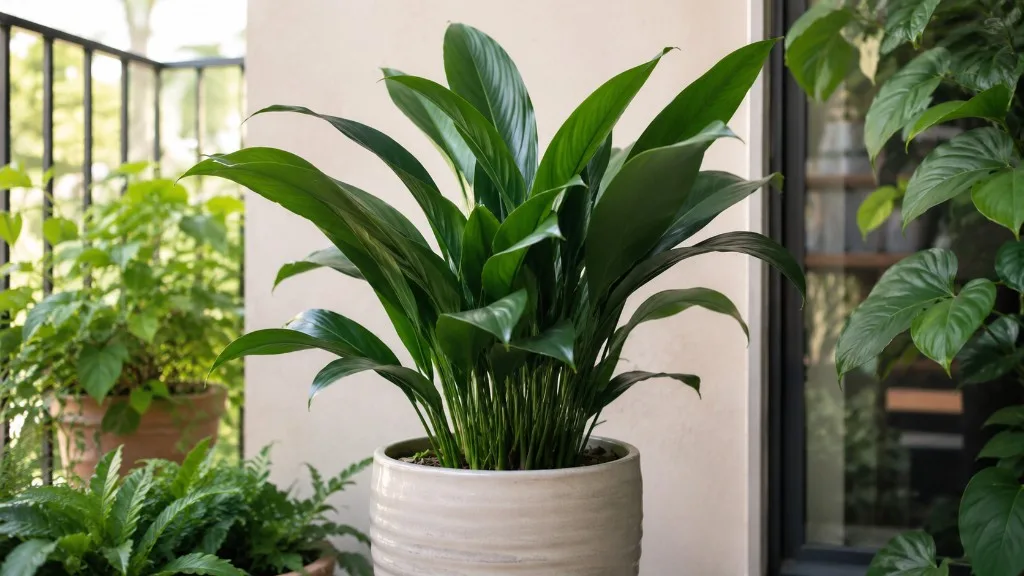
Cast iron plant (Aspidistra elatior) tolerates low light and neglect—useful in older barn buildings. Growth is slow; buy mature size if you need presence.
Useful care guides: Cast iron plant care · Watering · Light · Problems
Money Tree
Best for: bright farm office corners away from aisles.
ASPCA horse status: Non-toxic (ASPCA money tree listing)
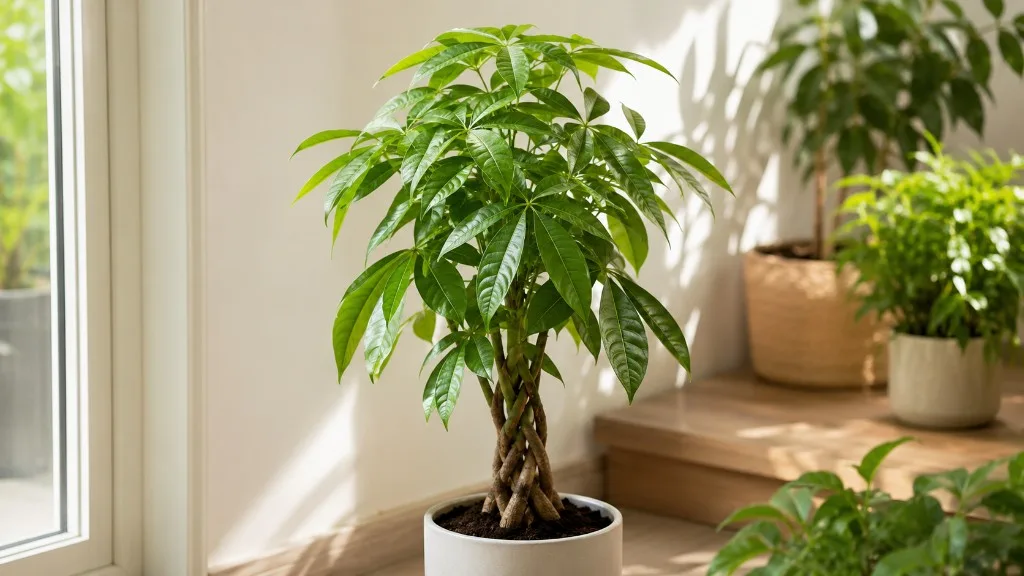
Money tree (Pachira aquatica) is ASPCA-listed non-toxic to cats and dogs and appears on horse non-toxic references. Braided trunks are decorative—keep pots behind closed office doors.
Useful care guides: Money tree care · Watering · Light · Problems
Common Mistakes in Horse-Adjacent Plant Setups
Treating non-toxic as forage. Ornamentals are not pasture supplements.
Placing pots beside cross-ties or Dutch doors. Reach happens faster than owners expect.
Confusing barn-safe with landscape-safe. Pasture toxic plants are a separate, larger risk category.
Ignoring potting mix ingestion. Horses often eat soil and container material before leaves.
Conclusion
The best horse-safer ornamental is ASPCA-verified, out of muzzle reach, and suited to the light in your tack room or barn office—not the trendiest foliage on social media. Spider plant, parlor palm, ponytail palm, peperomia, and cast iron plant are the most forgiving starting points. Areca palm, money tree, and calathea suit brighter or more humid farm-adjacent rooms when secured properly.
Verify every species on the ASPCA horse plant list before purchase. Call your veterinarian or ASPCA Animal Poison Control at 888-426-4435 if exposure concerns you. For removals, see Plants Toxic to Horses.