How to Grow and Care for Common Yarrow
A practical common yarrow care guide covering planting, watering, deadheading, winter cutback, containers, pests, disease, and pet safety.
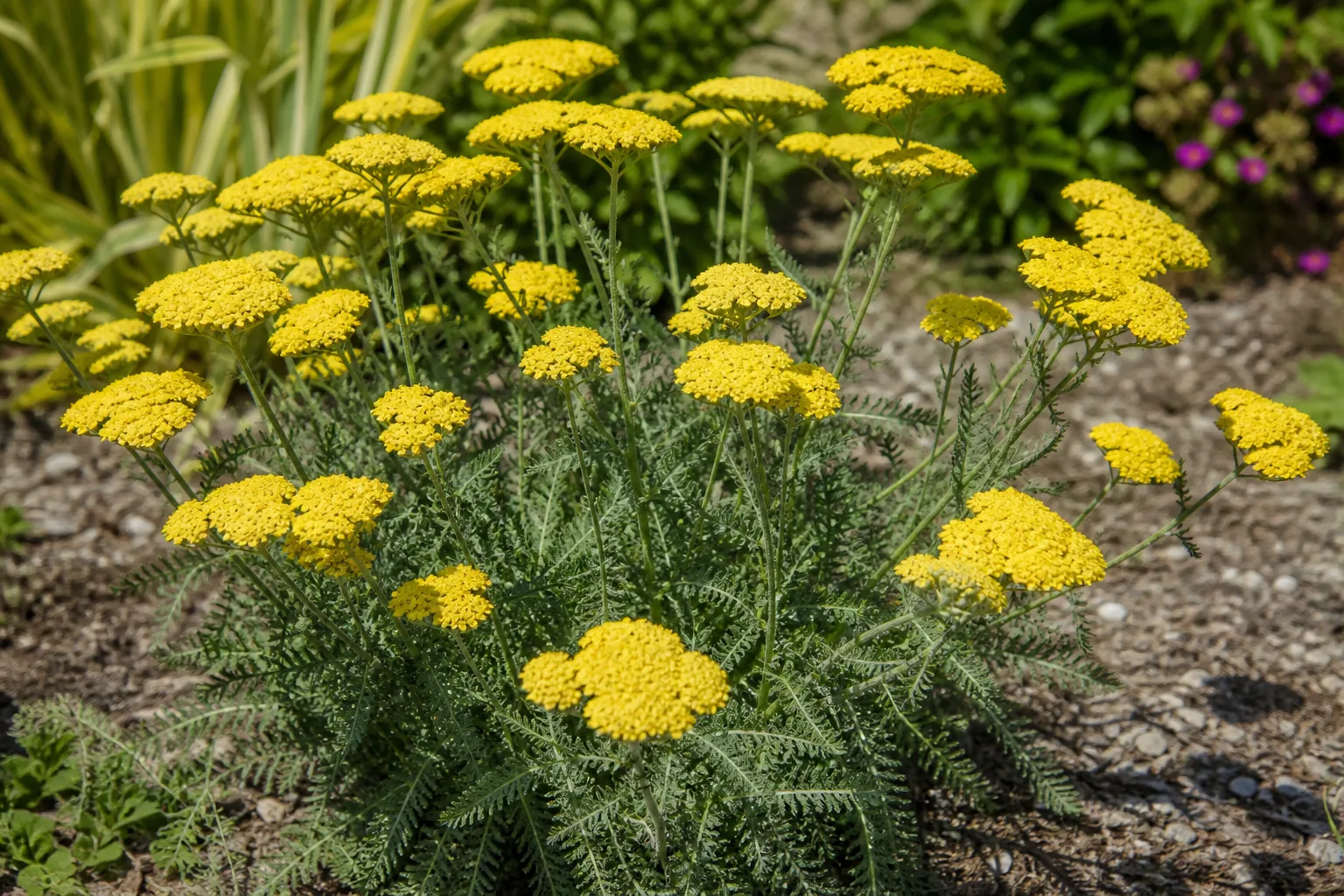
Common yarrow (Achillea millefolium) is a perennial for gardeners who want summer flowers without building a high-input bed around them. Its ferny foliage, flat-topped flower clusters, and tolerance of dry soil make it useful in borders, cutting gardens, pollinator plantings, and difficult sunny edges. It is also capable of spreading by rhizomes and seed, so “low maintenance” does not mean “plant it anywhere and forget it.”
The reliable formula is simple: give yarrow full sun, fast drainage, moderate spacing, and deep rather than frequent watering. Then deadhead or cut it back when you want to limit self-sowing. In damp, heavily fertilized, shaded conditions, the same plant that is tidy and upright in a dry border can become floppy, disease-prone, and difficult to contain.
Know the Plant Before You Plant It
Common yarrow is an herbaceous perennial in the daisy family, Asteraceae. The NC State Extension Plant Toolbox profile for Achillea millefolium supports its full-sun, well-drained-soil, drought-tolerant growing profile while also warning that it can spread aggressively. It dies back or becomes dormant in cold weather, then returns from its crown and roots. Depending on the cultivar and growing conditions, plants commonly reach about 2 to 3 feet tall and wide; compact selections may stay close to 1 foot, while vigorous plants can be taller.
The species typically has white to cream flower clusters, while named cultivars may bloom in shades of yellow, pink, red, orange, or purple. Flowers usually arrive in summer and can continue into early fall if the plant is deadheaded. The foliage is aromatic and finely divided, which explains names such as milfoil and “thousand-leaf.”
Yarrow is broadly hardy in cold-winter climates, but the exact range depends on the cultivar and local conditions. Treat the plant label and your regional extension guidance as the final word, especially in areas with hot, wet summers or mild winters where some cultivars may behave more aggressively.
Choose a Site That Keeps Yarrow Compact
Sun is the first requirement
Aim for at least six hours of direct sun. More light generally means stronger stems, better flowering, and a shorter, more self-supporting plant. Yarrow can survive in partial shade, but low light often produces stretched stems that lean into neighboring plants. If a shady site is your only option, select a compact cultivar and expect fewer flowers rather than trying to correct the problem with fertilizer.
Drainage matters more than rich soil
Yarrow tolerates sandy, gravelly, loamy, and even clay soils if excess water can leave the root zone. The practical test is what happens after rain: water should not sit around the crown for hours. In heavy clay, plant on a slight mound or raised bed and improve structure across the planting area rather than filling one hole with a pocket of rich compost.
Very fertile soil is not an advantage here. It can produce lush, weak growth and encourage a patch to expand faster than you intended. A modest amount of finished compost mixed into genuinely poor soil is reasonable, but yarrow usually needs less feeding than surrounding perennials.
Planting Yarrow for a Strong First Season
Plant nursery starts in spring after the soil can be worked, or in early fall while there is still time for roots to establish before hard freezes. Space plants according to mature width—often 18 to 24 inches for full-size types, less for dwarf cultivars. Crowding raises humidity around foliage and makes flopping more likely.
Set the crown at the same level it was growing in its pot. Backfill, firm the soil gently, and water slowly so the root ball is fully moistened. A thin layer of mulch can reduce weeds, but keep it away from the crown; a thick, wet mulch collar defeats the drainage conditions yarrow prefers.
For a new bed, mark the plant’s intended boundary now. A path, edging, or container-grown root barrier is easier to install before the rhizomes weave through neighboring plants. Avoid planting directly beside a natural area if your region lists common yarrow as invasive or problematic outside cultivation.
Watering: Establishment Versus Maintenance
Water new plants whenever the top inch or two of soil begins to dry. During the first growing season, the goal is a deep, increasingly large root system—not a permanently wet root ball. Water at the base, soak thoroughly, and let the soil dry some before repeating.
Once established, yarrow is drought tolerant. In ordinary garden soil, it may need supplemental water only during prolonged heat, drought, or the first signs of stress such as widespread wilt in the morning. A long, deep watering is more useful than small daily splashes. Light, frequent watering keeps the surface damp, encourages shallow roots, and increases disease pressure.
Do not water on a fixed schedule during rainy weather. If the soil is still wet several inches down, wait. Yellowing lower leaves, a soft crown, persistent wilt despite wet soil, and a sour smell are reasons to inspect drainage and roots rather than add more water.
Feeding and Mulching Without Encouraging a Takeover
Skip routine high-nitrogen fertilizer. If plants are pale because the soil is genuinely poor, a soil test can reveal whether an amendment is warranted. Otherwise, a small spring top-dressing of compost is enough for most beds, and no fertilizer at all may produce a sturdier plant.
Mulch is optional. Use it for weed suppression and moisture moderation, not to keep the soil constantly damp. Gravel or a thin organic mulch suits a dry border better than a deep layer of water-holding material. Always leave air around the crown and avoid burying basal foliage.
Pruning, Deadheading, and Winter Cutback
Deadheading has three jobs: it keeps the plant looking fresh, can encourage another flush of flowers, and removes developing seed before it scatters. Cut a spent flower stem back to a strong leaf node or to the plant’s basal foliage. If a whole flush has finished and stems are tired, shear the plant by about one-third to one-half, provided it still has healthy leaves.
If stems flop, do not automatically stake the patch. First ask why. Full sun, wider spacing, and less fertilizer usually solve the underlying issue better than a forest of supports. A light trim in early summer can also create shorter, branching stems before the main bloom.
In late fall, leave some standing stems if they provide winter structure or seed for birds, then cut the remaining foliage back after it has browned. In wet-winter regions, removing collapsed material can improve airflow and reduce overwintering disease. Do not cut so early that you remove all green foliage while the plant is still storing energy for dormancy.
Keep Yarrow From Spreading Where It Should Not
Common yarrow spreads in two ways: underground rhizomes expand the clump, and flower heads produce seed. Deadheading addresses seed; it does not stop rhizomes. Divide the plant every two or three years, or sooner if the center thins and the edges are advancing.
Contain a patch by edging it, growing it in a large container, or planting it where neighboring plants and hardscape create a clear boundary. Pull or dig unwanted runners while they are small and remove every piece of root you can find. Do not put mature seed heads in home compost unless the pile reliably reaches temperatures that destroy viable seed.
Behavior varies by cultivar, soil, rainfall, and region. A compact named hybrid may be easier to manage than a vigorous species plant, but no label removes the need to watch the patch. Check the Invasive Plant Atlas of the United States yarrow profile and your local invasive-plant resources before using yarrow near conservation land or unmanaged grassland.
Propagate by Division or Seed
Division for predictable plants
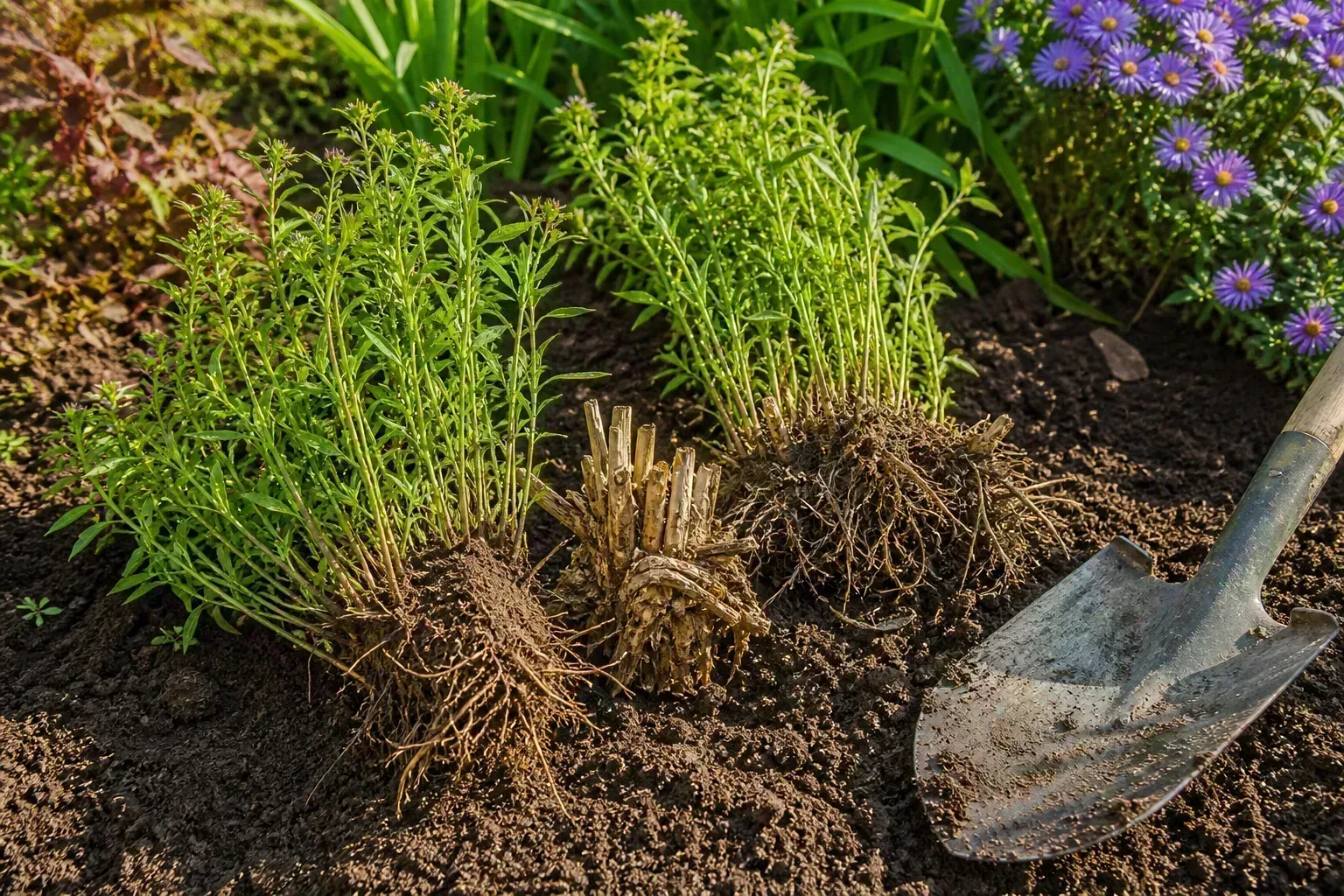
Division is the best method when you want an identical plant or need to reduce a crowded clump. Work in early spring as new growth begins, or in early fall in climates with a long mild season. Dig around the clump, lift it, and separate sections with a sharp spade or knife. Each division should have several shoots and a healthy portion of roots.
Replant divisions immediately at the original depth, water them in, and keep them evenly—not constantly—moist while they establish. Division also lets you discard a weak, woody center and reset the spacing.
Seed for larger, more variable plantings
Yarrow seed needs light to germinate, so press it onto moist seed-starting mix rather than burying it deeply. Start indoors roughly eight to ten weeks before the last frost, or sow outdoors after the danger of hard frost has passed. Keep the surface from drying until seedlings emerge, often within a couple of weeks under warm conditions.
Seed-grown plants may vary in height and flower color, especially when collected from mixed plantings. That is useful for a naturalistic meadow and less useful when you need a uniform border. Thin seedlings early so air can move between mature plants.
Growing Yarrow in Containers
Container culture is a practical way to enjoy yarrow while limiting rhizome spread. Choose a pot with drainage holes, use a free-draining potting mix amended with perlite or grit, and select a compact cultivar. Terracotta can help the mix dry between waterings, but it also dries quickly in hot weather, so check the pot rather than relying on a calendar.
Place the container in full sun. Water thoroughly until excess drains from the bottom, then wait until the mix has dried noticeably before watering again. Never let the pot sit in a saucer of water. Divide or refresh the plant when roots circle the pot or the center becomes crowded.
Containers do not automatically make an invasive plant harmless: seed can still fall outside the pot. Deadhead before seed matures and dispose of unwanted plants responsibly.
Cultivars Worth Considering
Choose by mature size and behavior first, then color. ‘Little Moonshine’ is a compact yellow-flowered choice for containers and front-of-border positions. ‘Cerise Queen’ offers deep pink flowers on a taller plant. ‘Paprika’ opens brick red and often fades toward pink. ‘New Vintage Red’ stays shorter than many species plants and fits smaller beds. ‘Apple Blossom’ brings soft pink tones.
Names and availability vary by nursery, and plants sold under similar color descriptions may not perform identically. Read the mature-height information on the label, look for a plant described as clump-forming, and leave room for width. If you garden in a hot, humid, or high-rainfall area, prioritize airflow and drainage over flower color.
Troubleshoot Flopping, Poor Blooming, and Yellowing
Flopping usually points to insufficient light, excess nitrogen, overwatering, crowding, or a naturally tall cultivar. Move young container plants to brighter light; for established beds, improve the site before adding support. Cut back after flowering and divide congested clumps.
Poor blooming is most often a light or timing problem. Give the plant a full season after transplanting, remove competing shade, and avoid heavy fertilizer that produces leaves instead of flowers. A plant that is continually wet may grow poorly even in full sun because damaged roots cannot support flowering.
Yellowing is not a diagnosis by itself. A few old lower leaves can yellow naturally. Widespread yellowing with wet soil suggests excess moisture; yellowing with dry, hard soil suggests drought; yellowing with pale new growth may justify a soil test. Inspect roots and the crown before choosing a treatment.
Pests, Disease, and Pet Safety
Yarrow is generally resilient, but saturated soil and crowded foliage can invite root problems, botrytis, or powdery mildew. Improve drainage, water at the base, thin crowded stems, and remove badly affected material. Avoid overhead watering late in the day. In a dry, airy site, many minor blemishes do not require spraying.
Spittlebugs may leave frothy masses on stems. A strong stream of water can dislodge them, and the plants usually tolerate light feeding. Escalate only if damage is significant, and identify the pest before applying an insecticide.
The ASPCA yarrow listing lists yarrow as toxic to cats, dogs, and horses. Toxicity is uncommon because the plant is bitter, but keep pets from chewing it and contact a veterinarian or animal poison-control service if ingestion causes concern. Do not use yarrow medicinally or as a food ingredient based on garden identification alone; look-alikes and concentrated preparations create different risks.
A Month-by-Month Care Rhythm
In spring, divide crowded plants, install new starts, remove winter debris, and begin watering only as needed for establishment. In early summer, check that stems receive direct light, thin overcrowded growth, and water deeply during drought. During the bloom season, deadhead selectively: leave a few heads if you want seed or winter interest, remove them all if containment is the priority.
In late summer, trim tired stems after a flowering flush and assess whether the plant is spreading beyond its boundary. In fall, divide only early enough for roots to settle, cut back diseased or collapsed material, and mark the clump so it is not disturbed during dormancy. In winter, avoid working wet soil and plan next season’s spacing or cultivar changes.
Conclusion: Give Yarrow the Conditions It Actually Wants
Common yarrow succeeds when the garden treats it like a dry-land perennial: bright light, drainage, lean soil, and patient watering. Its problems usually come from trying to make it grow like a moisture-loving border plant. Plant it where expansion is acceptable, choose a compact cultivar when space is tight, deadhead when seed is unwanted, and divide before the clump becomes a colony. That small amount of management gives you a long-lived, pollinator-friendly perennial with far less fuss.