Are Strawberry Pots Necessary? Pros and Cons
Are strawberry pots necessary? Learn when their side pockets help, why they dry out, how to water them, and when a bed or regular pot is the better choice.
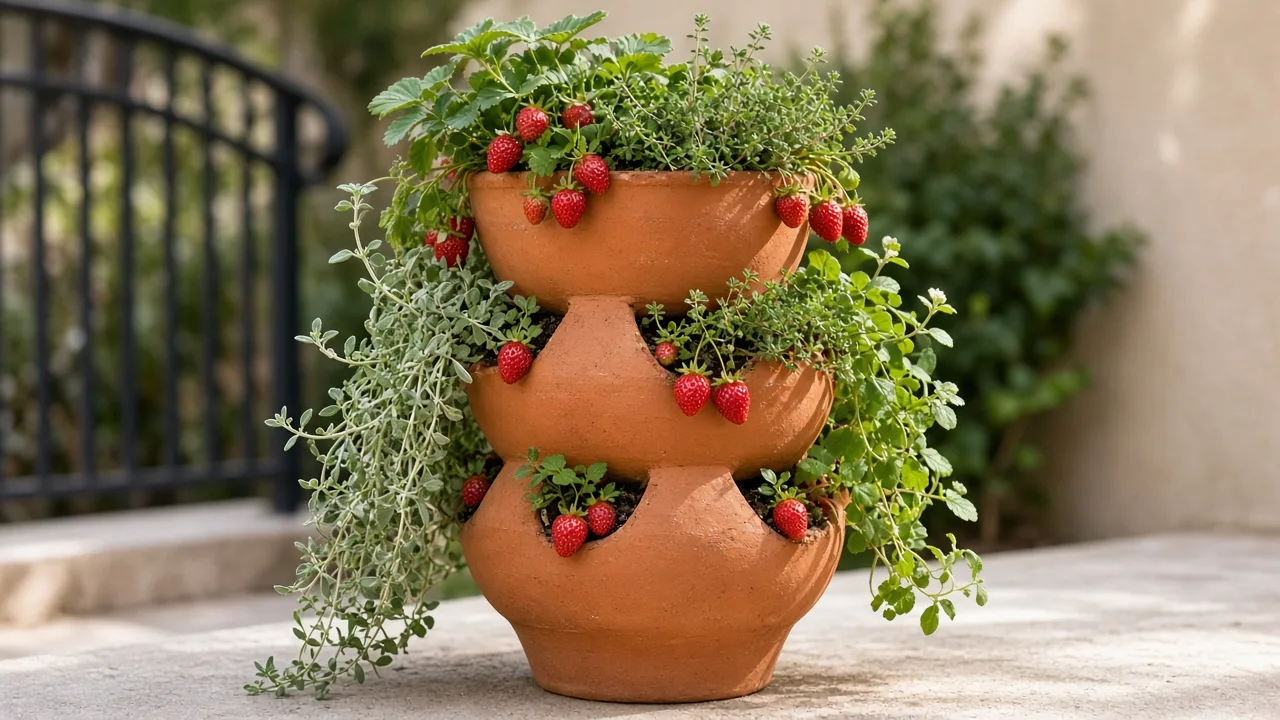
No—you do not need a strawberry pot to grow strawberries. A strawberry pot is a tall container with planting pockets around its sides, and those pockets create a tidy, visible display. They do not provide a secret root treatment or a special fruiting advantage that strawberries cannot get elsewhere.
The useful question is not whether the pot is necessary. It is whether its extra access and vertical planting space are worth the extra watering, feeding, checking, and winter protection your particular site demands. For a small sunny patio, an accessible garden, or a gardener who enjoys a decorative edible display, the answer can be yes. For a larger harvest or a routine that sometimes skips watering, a raised bed, in-ground row, trough, or ordinary large pot is usually easier to keep productive.
The short answer: no, but the pot can solve a specific problem
Strawberries are flexible plants. The Royal Horticultural Society lists dedicated beds, borders, large pots, growing bags, hanging baskets, windowboxes, and troughs as workable homes. Its guidance also makes an important distinction: traditional strawberry pots may look attractive, but the side-pocket design can make it harder to maintain healthy, productive plants. (RHS strawberry growing guide)
That is the balanced verdict in one sentence: a strawberry pot is optional infrastructure. It can help when ground space is scarce, when you want fruit to hang above soil, or when bending to harvest is difficult. It can hurt when the container is small, porous, windy, hard to water evenly, or filled with more plants than its root volume can support.
The University of Nevada Cooperative Extension describes the general container trade-off well: container plants often need more attention than plants in the ground, even though the extra control can be worthwhile when soil or space is limiting. That trade-off applies especially strongly to a pot with several small growing pockets rather than one continuous reservoir of mix. (University of Nevada Cooperative Extension container gardening)
What a strawberry pot changes—and what it cannot fix
A traditional strawberry pot creates a vertical arrangement of plants. The top opening holds one or more crowns, while the side pockets let leaves, runners, flowers, and fruit spill outward. That makes the fruit easier to see from several sides and can put more plants into a small footprint than a single flat pot.
The height also changes the fruit’s relationship with the ground. Berries in side pockets are less likely to rest directly on damp soil, so they may stay cleaner and avoid some slug and snail traffic. This is a reduction in one kind of exposure, not a force field: birds can still reach elevated fruit, wet foliage can still encourage fungal disease, and a crowded canopy can still hold humidity.
The design does not change the plant’s basic biology. Each crown still needs light, oxygen around its roots, a correctly exposed crown, reliable moisture, nutrients, pollination, and room for leaves and fruit. A side pocket that is too small or too dry is not made adequate by being part of a specialized pot.
The pot also cannot turn a small harvest into a large one by itself. Vertical displays are space-efficient, but the total amount of mix and root room remains limited. If you want enough berries for preserving, baking, or a household that snacks heavily, several plants in a bed or a row of large containers will generally give you more forgiving capacity than one decorative jar.
When a strawberry pot is the smart choice
A strawberry pot earns its keep when it matches a real constraint. Start with the site and your routine, not the shape of the container.
It is a sensible choice for a balcony, patio, or very small garden where there is no ground to prepare. It can also be useful on a paved space with contaminated, compacted, or poorly drained soil that you do not want to remediate immediately. The RHS notes that container growing can sidestep soil disease build-up in strawberry beds, even though container plants have their own pest risks.
It can be a good accessibility tool. Raising fruit and foliage makes inspection and harvest easier for someone who cannot comfortably kneel or reach across a bed. The benefit is greatest when the pot sits on a stable stand at a workable height; a heavy, top-heavy terracotta jar placed on the edge of a step is an accident risk, not an accessibility improvement.
It also makes sense when your goal is a small, attractive harvest over a long season. Perpetual or everbearing strawberries produce repeated flushes rather than one short heavy crop, and day-neutral cultivars are often selected for ongoing production. A few plants tumbling from a pot can be more satisfying than a large bed that ripens all at once.
Finally, choose one because you like maintaining it. If checking pockets, lifting a watering can, watching for dry mix, and refreshing fertilizer feels like part of the pleasure, the extra work may be a fair exchange for the display. A container is not a failure because it needs attention; it is a poor fit when you expected it to need less attention than a bed.
When a strawberry pot underperforms
The design is most likely to disappoint when the pot is purchased as a shortcut. It does not reduce the need for site preparation, and it usually increases the importance of watering precision.
Skip the side-pocket pot if you want maximum yield with minimum daily observation. The top and outer pockets can dry before the lower interior is ready for more water. If you water only until the surface looks dark, some pockets remain dry; if you keep pouring until the bottom is saturated, you may leave upper roots thirsty while the lowest mix stays wet.
Be cautious in hot, dry, or windy locations. A porous terracotta wall loses moisture through evaporation, and each side opening exposes a small amount of mix to air. Dark containers can also heat quickly in strong sun. Full sun is important for fruiting, but a pot in reflected heat beside masonry may need a different watering and shade plan than a bed receiving the same number of sun hours.
The pot is also a weak choice for a large family harvest or for vigorous plants that send out many runners. Side pockets tempt gardeners to fill every hole, yet each added crown competes for the same finite water and nutrient supply. If you want to keep runners for new plants, an open bed or a few spacious containers give those plantlets somewhere to root without turning the display into a tangle.
It is a poor fit if you cannot protect it in winter. Roots surrounded by above-ground mix experience colder, faster temperature swings than roots insulated by the ground. In a climate with severe freezes, a heavy container may be difficult to move or shelter, and a bed may be the more durable home.
The root-zone reality behind the trouble
Strawberries have a shallow crown and a relatively shallow active root zone, which is one reason they can succeed in containers. Shallow-rooted does not mean root-free. The plant still needs enough contiguous, moist, well-aerated mix for leaves to support flowers and fruit.
Think of a side pocket as a series of tiny root rooms. A plant in the upper opening may draw on a wider volume of mix than a plant tucked into a narrow side pocket. The pocket nearest the pot wall may lose water rapidly, while the lower interior stays damp after a long top-down watering. The pot’s visual symmetry hides those different microclimates.
The mix matters too. Garden soil can compact in a container, reducing air space and slowing drainage. A quality container mix with organic matter and reliable drainage is a better starting point; the RHS recommends peat-free multi-purpose or soil-based compost for containers. The goal is not to make the pot drain instantly. It is to hold enough moisture for the roots while allowing excess water to leave through the drainage holes.
The crown is the short stem between the roots and leaves. Set it level with the mix surface. Bury it and persistent moisture can encourage crown rot; raise it too far and the roots and crown can dry. This depth rule matters in every container, but it is harder to correct after a strawberry pot has been filled around plants in several pockets.
Better alternatives for the job you actually have
There is no single best strawberry setup. Match the container or bed to what you are trying to control.
| Setup | What it does best | Main limitation |
|---|---|---|
| In-ground row | Buffers moisture and supports many plants | Needs suitable soil, space, and fruit protection |
| Raised bed | Improves drainage and access while keeping a larger root zone | Costs more to build and still needs mulch and netting |
| Large regular pot or trough | Gives simple, inspectable watering and flexible placement | Holds fewer plants than a bed and dries faster than ground |
| Grow bag | Uses a light, inexpensive container for a patio or seasonal crop | Can be unstable, short-lived, and quick to dry |
| Strawberry pot | Creates a vertical edible display and lifts fruit | Side pockets are harder to water evenly |
| Hanging basket | Makes fruit visible and uses overhead space | Has very little moisture reserve and is exposed to wind |
Ground or raised bed for moisture and volume
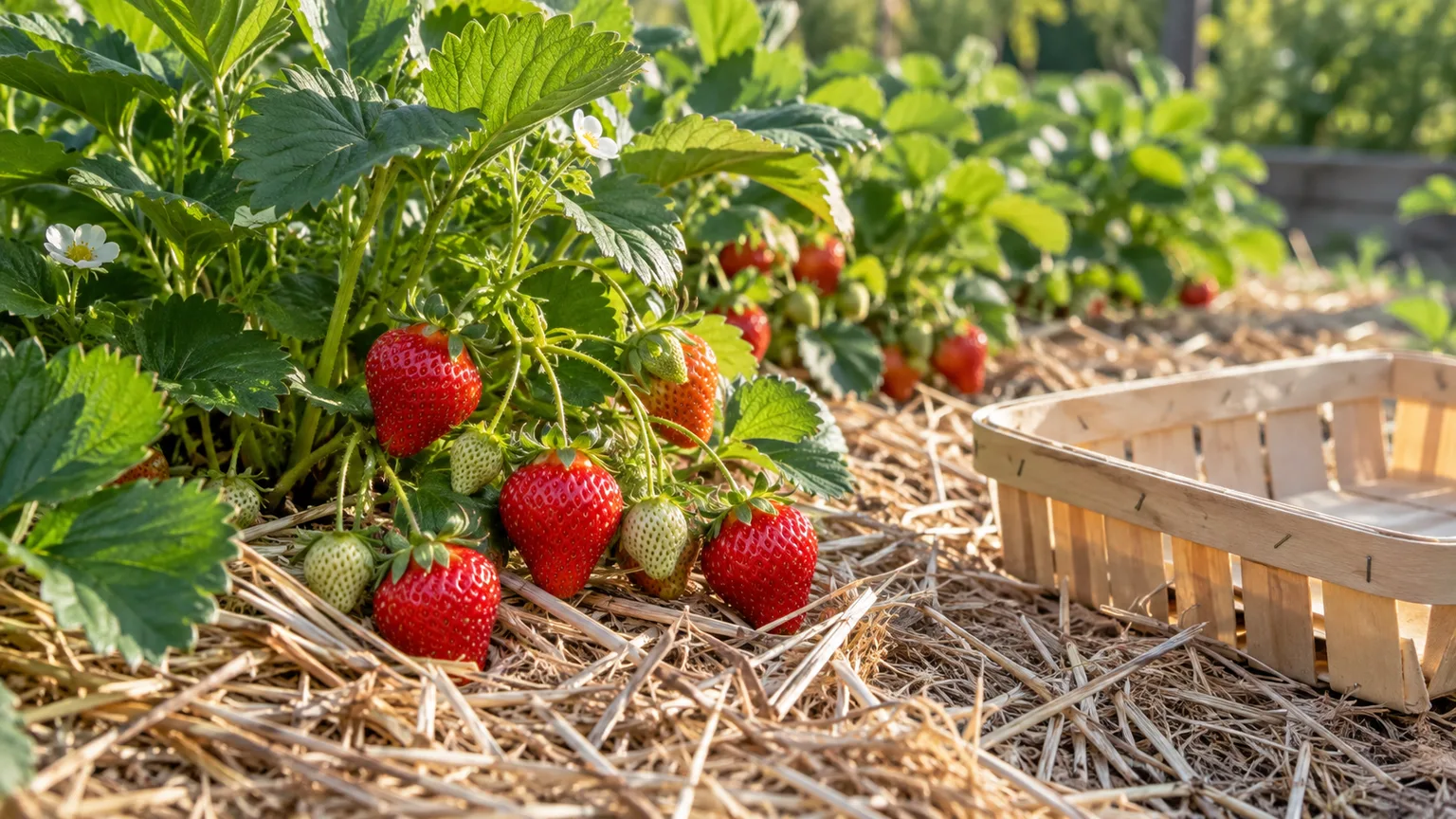
Choose the ground when your soil drains reasonably well, receives enough sun, and you can protect the fruit. The larger soil volume buffers a missed watering better than a small pocket does, and plants can spread into a wider root zone. A layer of straw or another suitable mulch keeps berries off wet soil, reduces splashing, and suppresses weeds. It does not eliminate slugs, snails, birds, or fungal disease, so inspect fruit rather than assuming mulch solves everything.
Choose a raised bed when native soil is heavy, compacted, or poorly drained, or when a little elevation makes care easier. The RHS specifically points to raised beds as a better option for poor or heavy soil because they can improve drainage and increase rooting depth. You also get a larger continuous reservoir than a strawberry jar, while retaining control over the mix.
One generous regular container for simpler care
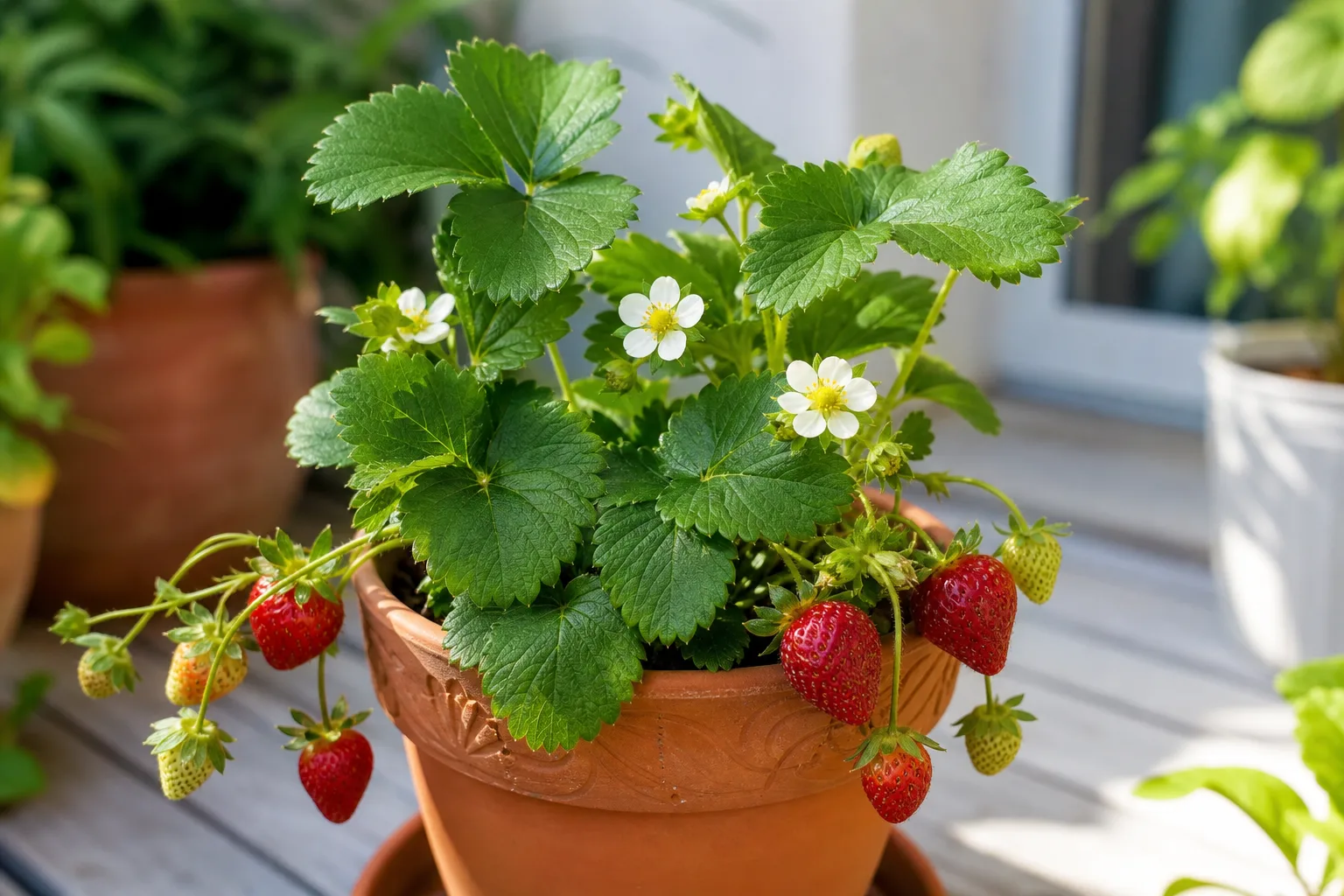
A wide pot, trough, or grow bag is often the best compromise for a patio. You still get clean access to the plant and can move it if the site is wrong, but you can see the entire soil surface and water one connected root zone. That makes it easier to tell whether water is penetrating, whether a crown is buried, and whether roots have filled the mix.
Use a container with drainage holes and enough volume for the number of plants you plan to grow. A few plants in one broad vessel are easier to monitor than the same number scattered through narrow pockets. Leave space around the crowns for air movement and make room for berries to hang over the rim rather than pile into wet foliage.
Hanging baskets for display, not low maintenance
Hanging baskets are a legitimate strawberry option, especially for trailing plants and small spaces. They are also among the fastest containers to dry because wind reaches all sides and the basket has little mix relative to its leaf and fruit load. Put one where you can reach it safely, not where watering requires a ladder.
Use a basket when you can check it frequently during flowering and fruiting. If you travel, work long shifts, or routinely forget containers, a bed or a larger ground-level pot gives you a wider margin for error.
If you choose a strawberry pot, shop for function
Look for a stable, well-drained pot with pockets large enough to hold a real crown and its developing roots. A tall silhouette is useful only if the lower pockets are not so close to the ground that fruit still rests in damp soil. The pot should have a substantial bottom opening or several drainage holes, and it should sit where excess water can escape freely.
Terracotta is attractive and breathable, but that breathability is also a drying cost. Plastic or glazed containers usually slow moisture loss, though they can still overheat or stay wet if drainage is poor. Choose based on your climate, watering routine, and ability to move the container rather than treating one material as universally superior.
Do not fill every pocket simply because it exists. The Gardening Channel’s container guide describes strawberry pots as having openings for plants and runners, but the practical capacity varies dramatically with pocket size, pot diameter, cultivar vigor, and growing conditions. One strong plant in a generous pocket is more useful than a crowded collection of stressed crowns.
Test the watering pattern before planting
Set the empty pot in its final location and fill it with the intended mix, or use a temporary medium if you are testing before purchase. Pour water slowly into the top, then water each side pocket individually. Watch where water appears at the drainage holes and feel the mix in upper, middle, and lower pockets after several minutes.
If the top drains immediately but a lower pocket remains dusty, the design needs a different routine. An optional perforated tube or pipe down the center can help distribute water through a tall container; Melinda Myers describes this approach for strawberry pots and recommends watering thoroughly often enough to keep the mix slightly moist. The tube is a distribution aid, not a substitute for checking each plant. (Melinda Myers strawberry pot guidance)
Do this test before adding plants because it is much easier to change a pot’s location, drainage, or watering method while it is empty. If you cannot make the pockets wet without leaving the bottom waterlogged, return the pot or use it as a decorative outer container for a simpler inner arrangement.
Plant it without the classic mistakes
Start with a container mix that is evenly moist, not a dry column that repels water. Add mix in stages, placing plants so roots spread into the pocket rather than folding into a tight circle. If you are planting runners, fan the roots into the mix; if you are planting potted crowns, loosen only badly circling roots.
Keep the crown at the surface in the top opening and in each side pocket. Firm the mix gently around roots without compressing it into a hard plug. Water slowly until the entire root zone has settled and drainage begins, then check whether any crown has sunk below the surface.
Give strawberries a sheltered, sunny position. The RHS says they produce the sweetest fruits in a sheltered full-sun location, while noting that they tolerate some shade. In a pot, a little afternoon relief can be useful in extreme heat, but deep shade will reduce the energy available for flowers and fruit. Avoid placing a tall pot where wind can tip it or dry the exposed pockets before you can respond.
Leave room for fruit to hang clear of the soil and for leaves to dry after watering. Do not pack straw or other mulch directly over the crown; a small clear margin prevents the crown from staying wet. Inspect the underside of leaves and the lower pockets during the first weeks, when a hidden dry plant can decline before the top of the display looks different.
Watering and feeding for steady fruit
Water by root-zone condition, not by a fixed promise such as every other day. Push a finger into accessible pockets, lift the pot if it is light enough to do so safely, look for wilt that persists after cooler temperatures, and check whether drainage follows a slow soak. In hot, windy weather, a container may need attention much more often than it does during cool, cloudy weather.
Water slowly from the top, then water the side pockets directly. Pause so the mix can absorb the moisture instead of sending it down the outside of the pot. If a central perforated tube is installed, use it as part of the sequence, not as the only route. Water until the root zone is thoroughly moistened and excess drains; do not let the pot sit in a permanently full saucer.
Morning watering is preferable when possible. The RHS advises avoiding wetting the crown and fruit because splashing can contribute to fungal problems such as grey mould, and morning gives any incidental moisture time to dry. A narrow-spout can or drip line aimed at the mix is more useful than a high-pressure spray across the whole display.
Container mix loses nutrients more readily than a bed because water exits through the bottom. Feed according to the label of a fertilizer intended for edible crops, and do not assume more nitrogen means more berries. The RHS recommends regular feeding for container-grown strawberries during the growing season, beginning with a general-purpose liquid feed and moving toward a higher-potassium feed when flower buds form. A vigorous green canopy with few flowers is a reason to review light, cultivar, and nitrogen—not simply to add more fertilizer. (RHS strawberry plant care guidance)
Cultivar and season nuance changes the verdict
The word “strawberry” hides several cropping patterns. Summer-fruiting, often called June-bearing in some regions, generally produces the largest fruit in one short, heavy window. The RHS describes a typical crop period of two or three weeks, with early, mid, and late varieties extending the season when planted together.
Perpetual or everbearing types produce smaller flushes over a longer period. Day-neutral labels are common in North American catalogs and describe plants that can flower and fruit under a wider range of day lengths when temperature and care allow. Catalog terminology overlaps, so read the expected harvest pattern for the specific cultivar rather than assuming “everbearing” and “day-neutral” are interchangeable in every market.
Those repeated flushes can suit a decorative strawberry pot because they keep flowers and fruit appearing over time. A summer-fruiting cultivar may be the better choice if you want a concentrated bowl of large berries and can protect the plant during that peak. Alpine strawberries produce smaller, aromatic berries and can tolerate sun or light shade; they suit an edging or small display when size is less important than flavor and charm. (RHS strawberry varieties and growing guide)
Season matters as much as cultivar. Planting in spring, late summer, or early autumn gives established plants different amounts of time before their main crop, and cold-stored runners may follow a different schedule. If a young plant is weak, removing the first flowers can redirect energy toward establishment; whether that is useful depends on the type, planting date, and condition of the plant. Do not sacrifice every first flower automatically, and do not expect a stressed container plant to follow the catalog calendar.
Fruit quality, pests, and disease trade-offs
The strongest case for the strawberry pot is fruit elevation. Berries that hang clear of damp soil are easier to inspect and less likely to be splashed with soil. In a bed, straw mulch, reusable collars, or a weed-suppressing membrane can deliver much of the same benefit without dividing the root zone.
The pot does not remove the need for bird protection. Birds can reach berries above the ground, and a patio pot may be more visible to them than a bed hidden among foliage. Use a safe, taut fruit netting setup where appropriate and make sure wildlife cannot become entangled. Pick ripe berries promptly; strawberries do not continue to ripen after picking, so harvest when they are fully colored and use them soon.
Keep the foliage and fruit as dry as practical, give crowded plants more space, and remove damaged fruit. Grey mould is favored by persistent dampness and poor air movement, while a buried crown can rot from the root end. In regions where vine weevils occur, container-grown plants can face particular risk from larvae feeding around roots; inspect declining plants at the root zone instead of treating every wilt as a watering problem. The RHS lists vine weevil, grey mould, slugs and snails, frost damage, and several strawberry diseases among the problems to watch.
A raised bed has its own risks, including soil-borne disease building up when strawberries stay in the same location for too long. The RHS notes that a bed can crop well for several years in fertile, well-drained soil, then recommends replanting in a different location to reduce replant problems. The right comparison is not “pot has no pests” versus “bed has pests.” It is which risks can you see, prevent, and manage in your space?
Winter protection and plant lifespan
Strawberries are hardy, but a plant in a pot is not insulated as well as one rooted in the ground. The mix around a container can freeze from several sides, and terracotta can be vulnerable to freeze-thaw damage. A container may also dry out on bright winter days when roots are cold and the gardener assumes no water is needed.
Before winter, remove dead or diseased foliage, check that drainage holes are open, and place the pot in a sheltered location where it will not sit in water. In cold climates, protect the container with an unheated garage, sheltered shed, or other method recommended for your region and cultivar; avoid moving a dormant plant into a warm living room and waking it into weak, low-light growth. Keep the mix from becoming bone dry, but water sparingly when conditions allow drainage.
The pot itself may need a refresh before the plant does. Container mix settles, salts can accumulate, roots can fill small pockets, and repeated watering can expose crowns or bury them as the surface shifts. After harvest or during the appropriate dormant period, inspect each plant, refresh the mix if needed, and replace weak or diseased stock with reputable, disease-free plants.
In a bed, strawberry plants can crop well for several years before replanting becomes sensible; in a crowded pot, productivity can fall sooner because root volume and nutrition are tighter. That is not a reason to avoid containers. It is a reminder that a decorative pot is a living system with maintenance, not a permanent strawberry appliance.
A quick decision checklist
Choose a strawberry pot if most of these statements are true:
- You have a sunny patio, balcony, or other space without usable ground.
- You want a compact, visible display and a modest harvest rather than maximum volume.
- You can check moisture frequently during flowering and fruiting.
- You can water every pocket slowly and reach the pot safely.
- You are willing to use a good container mix, feed during active growth, and protect the pot in winter.
- You like everbearing, day-neutral, or alpine plants for their display and harvest pattern.
Choose a raised bed or in-ground row if most of these statements are true:
- You want more berries and a larger margin for missed watering.
- Your soil is workable or you can improve drainage and fertility.
- You can mulch beneath fruit and add bird protection.
- You want to keep runners and renew plants over time.
Choose a large regular pot or trough if you want container control without the pocket problem. It is the most practical middle ground for many patios: elevated fruit, a visible soil surface, a connected root zone, and simpler troubleshooting. If you already own a strawberry pot, you do not have to discard it. Test its watering pattern, plant fewer crowns, and be honest about how often you can inspect it.
Conclusion
Strawberry pots are not necessary, but they are not pointless. They solve a narrow set of problems—limited footprint, harvest access, fruit elevation, and ornamental display—while creating a new one: several exposed, finite root zones that are difficult to water evenly.
If your priority is reliable volume with less daily fuss, grow strawberries in a well-drained bed, raised bed, trough, or generous regular container. If your priority is a small edible patio display and you enjoy close care, a functional strawberry pot can work well. Choose the cultivar for the harvest pattern you want, keep the crown at the surface, water every pocket rather than just the top, and treat the container as a system to observe—not a shortcut around the plant’s needs.