Alocasia Polly Care: Light, Water, Soil & More
Learn Alocasia Polly care from light and watering to repotting, propagation, winter dormancy, pests, and how to diagnose yellow or drooping leaves.
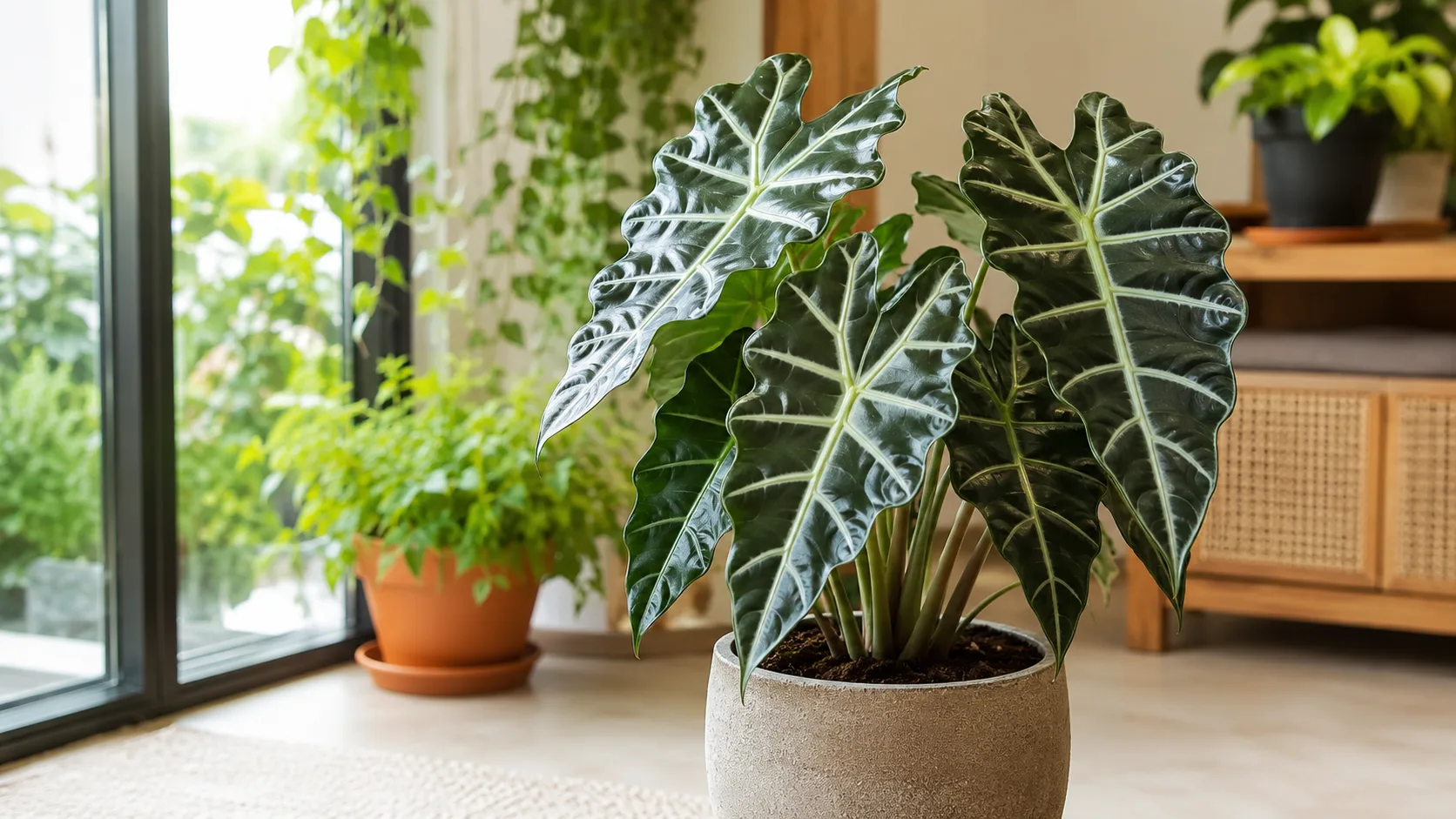
Alocasia Polly rewards consistency more than perfection. Give it bright filtered light, a potting mix that holds some moisture but still drains quickly, warm temperatures, and a watering routine based on what the soil is actually doing. Most serious problems begin when one of those conditions swings too far: roots stay wet for days, the plant gets chilled, light drops sharply, or dry indoor air lets spider mites multiply unnoticed.
That makes this plant less mysterious than its reputation suggests. The trick is to stop treating every droop or yellow leaf as the same problem and instead read several clues together: soil moisture, recent watering, season, temperature, pest signs, and the condition of the roots or corm.
Alocasia Polly Quick Care Card
| Care factor | Practical target |
|---|---|
| Light | Bright, indirect or filtered light; protect from harsh direct sun |
| Water | Water thoroughly after the upper layer of mix has partly dried; never leave the pot standing in water |
| Soil | Airy, fertile, moisture-retentive but fast-draining houseplant mix |
| Temperature | Warm room conditions; aim to keep active plants around or above 60°F (16°C) |
| Humidity | Medium to high humidity with good air movement |
| Feeding | General houseplant fertilizer during active growth, following the product label |
| Repotting | Usually every couple of years or when roots, drainage, or exhausted mix justify it |
| Propagation | Division, offsets, or viable corms; not ordinary leaf cuttings |
| Safety | Keep away from children and pets because the plant contains irritating calcium oxalate crystals |
Use the table as a starting point, not as a rigid recipe. A Polly in a warm, bright room can use water much faster than the same plant in a cool winter room, and a chunky mix in a small terracotta pot behaves very differently from a dense mix in a large glazed container.
What Alocasia Polly Actually Is
The name on the nursery tag can be confusing. NC State Extension lists the hybrid as Alocasia × mortfontanensis, previously known as Alocasia × amazonica, and describes it as a cross involving Alocasia longiloba and Alocasia sanderiana. The Royal Horticultural Society still commonly lists the cultivar as Alocasia × amazonica ‘Polly’, so you may see both names in reputable references.
The important correction is that Polly is a cultivated hybrid, not a species discovered growing wild in the Amazon. It is a compact tropical aroid with dark, shield-shaped leaves, prominent pale veins, and often purplish leaf undersides. That compact habit is one reason it works well as a houseplant, but its tropical ancestry still shows in its preference for warmth, humidity, and steady moisture without waterlogged roots.
Light: Bright, Filtered, and Consistent
Put Alocasia Polly where it receives bright indirect light for much of the day. An east-facing window is often easy to manage; brighter south- or west-facing exposures can also work when a sheer curtain, neighboring plants, or some distance from the glass softens intense midday and afternoon sun. Both NC State Extension and the Royal Horticultural Society emphasize bright, indirect or filtered conditions rather than harsh direct sun.
Watch the plant rather than relying only on window direction. Bleached areas or crisp brown patches on the most exposed leaf surfaces can point to sun scorch, especially after an abrupt move into stronger light. On the other hand, very low light slows growth, makes the pot stay wet longer, and can turn a previously workable watering routine into an overwatering problem.
If you move Polly to a brighter position, acclimate it gradually over a week or two rather than jumping from a dim shelf to hours of direct sun. In winter, a grow light can help maintain active growth in darker homes, but reducing water demand is still important because temperature and day length may change even when supplemental light is used.
Watering: Keep It Even, Not Constantly Wet
Alocasia Polly likes reliable moisture, but “moist” does not mean permanently saturated. The RHS recommends watering when roughly the top 5 cm, or 2 inches, of compost has dried during active growth, then reducing watering in winter. That approach is more useful than watering every seven days because it responds to the pot, season, and room rather than the calendar.
When it is time to water, soak the mix evenly until excess water exits the drainage holes, then empty the saucer or cachepot. This wets the whole root zone and gives you a clear reset point. Small, frequent sips can leave part of the root ball dry while the surface looks damp, and constantly topping up a wet pot reduces the oxygen available to roots.
For a deeper routine, use the Alocasia Polly watering guide alongside the moisture cues here. The goal is a repeating cycle of thorough watering followed by partial drying, not a binary choice between swampy soil and a bone-dry root ball.
A Better Watering Decision Rule
Before reaching for the watering can, check three things: the top layer of mix, the pot’s weight, and what changed since the last watering. If the top 1 to 2 inches are still clearly damp and the pot feels heavy, wait. If that layer is dry and the pot is noticeably lighter, a thorough watering is usually appropriate during active growth.
Then factor in conditions. A recently repotted plant in a larger container, a plant moved to lower light, or a Polly entering winter slowdown will use water more slowly. A rootbound plant in strong light during warm weather may dry much faster. Epic Gardening similarly recommends checking the mix rather than following a fixed schedule, which is the safest habit to carry from one home to another.
Do not automatically water a drooping plant. Droop can come from thirst, but it can also happen when roots are oxygen-starved in wet soil, after a cold draft, during seasonal slowdown, or under heavy spider-mite pressure. Touch the mix and inspect the plant first; the symptom alone is not a watering instruction.
Soil and Pot Choice
The best Alocasia Polly soil has two jobs that sound contradictory: hold enough moisture for fine roots while draining fast enough to keep air in the root zone. A quality peat-free houseplant compost amended with perlite, fine orchid bark, or another coarse aerating component is a practical starting point. The RHS Alocasia growing guide specifically recommends a free-draining houseplant mix and adding grit or perlite for drainage.
Avoid packing Polly into dense garden soil or a heavy mix that collapses into a waterlogged mass. If water sits on the surface for a long time, the pot remains heavy for many days, or the lower mix smells sour, drainage and root health deserve attention. The Alocasia Polly soil guide goes further into mix structure and amendments.
Use a container with unobstructed drainage holes. Pot material is secondary to matching your watering habits: porous terracotta dries faster, while plastic and glazed ceramic usually hold moisture longer. Whichever you choose, resist the temptation to “future-proof” the plant with a huge pot; excess unused mix stays wet longer and raises the margin for error.
Temperature and Humidity
Warm, stable conditions are ideal. The Royal Horticultural Society advises keeping Alocasias above about 16°C (60°F) during active growth, while NC State also cautions against temperatures below roughly 60°F for this hybrid. In a home, that means protecting Polly from cold window glass, air-conditioning blasts, exterior-door drafts, and unheated rooms.
Humidity helps the foliage remain in good condition and can reduce the stress that makes spider-mite outbreaks easier to establish. A room humidifier is the most controllable option when heated or air-conditioned air is very dry. Grouping tropical plants can modestly improve the local microclimate, but crowding them tightly with poor airflow can make pest inspection harder.
Do not chase an exact humidity percentage at the expense of everything else. A healthy Polly in moderate household humidity with good light and sensible watering can outperform one in very humid air with saturated soil and weak light. Brown edges are a clue to investigate humidity and watering consistency, not proof that humidity is the only issue.
Fertilizer Without Salt Stress
Feed during active growth, when the plant is producing or maintaining leaves and has enough light to use nutrients. The RHS plant profile for Alocasia ‘Polly’ suggests a general liquid fertilizer through the growing season, while practical horticulture guides vary in the exact interval and dilution. That disagreement is a good reason to follow the fertilizer label and start conservatively rather than assuming more frequent feeding produces faster growth.
Pause or sharply reduce feeding when growth stalls in winter or after the plant loses its leaves. Fertilizer cannot compensate for poor light, cold roots, or waterlogged soil, and unused salts can accumulate in container mix. If leaf margins burn after repeated feeding, especially when the soil has not been flushed thoroughly for months, fertilizer concentration and salt buildup belong on the troubleshooting list.
Pruning and Flowers
Alocasia Polly does not need routine shaping. Remove leaves that are fully yellow, badly damaged, or collapsing by cutting the petiole near the base with clean pruners; avoid cutting healthy leaves simply to make the plant look symmetrical. The Alocasia Polly pruning guide covers timing and tool hygiene in more detail.
Mature plants can occasionally produce an aroid inflorescence with a spathe and spadix. Indoor plants are grown mainly for foliage, so flowering is a bonus rather than a care target. You can leave the inflorescence to age naturally or remove it once it declines; there is no need to force blooming with extra fertilizer.
Wear gloves if you are sensitive to plant sap, and wash tools afterward. Because the plant contains irritating calcium oxalate crystals, pruning debris should stay away from children and pets.
Repotting and Rootbound Signs
Repot because the plant needs it, not just because a calendar reminder appears. Useful signs include roots circling densely or emerging from drainage holes, water racing around a contracted root ball instead of soaking through it, a pot that dries unusually fast despite otherwise stable conditions, or old mix that has broken down and no longer drains well.
Spring or early active growth is the easiest time to repot because the plant can recover quickly. The RHS recommends moving up only about 5 cm, or 2 inches, in pot size rather than jumping into a much larger container. Use fresh airy mix, keep the rhizome at approximately the same depth, and water thoroughly after repotting so the new mix settles around the roots.
A newly repotted Polly may droop temporarily from root disturbance. Give it stable warmth and bright indirect light rather than “rescuing” it with repeated watering. See the Alocasia Polly repotting guide for a step-by-step process.
How to Propagate Alocasia Polly
Alocasia Polly is normally propagated from divisions, offsets, rhizome sections with viable growth points, or corm-like structures associated with the parent plant. The RHS recommends division of offsets or rhizome as the standard method. A detached leaf by itself is not the usual propagation route because it lacks the underground growing structure needed to make a new plant.
Work with a healthy, established plant during active growth when possible. Propagation is easiest to combine with repotting because the root system is already exposed, which reduces the number of times you disturb the plant.
Division and Offsets
Slide the plant from its pot and gently loosen enough mix to see where natural clumps or offsets connect. Separate sections with their own roots and an obvious growing point; if they pull apart cleanly, avoid unnecessary cutting. When a cut is needed, use a sterile blade and make the smallest clean separation you can.
Pot each division into a container only slightly larger than its roots, using the same airy mix you would use for the parent plant. Water once to settle the mix, then keep it warm in bright indirect light. The new division may pause before producing another leaf, so judge success by firm tissue and healthy roots rather than expecting immediate top growth.
Corm Propagation
Small corms are often found in the mix when a mature Alocasia is repotted. Choose corms that feel firm rather than mushy, and remove only loose outer material without gouging the living tissue. They can be started in a warm, humid propagation setup using lightly moist sphagnum, perlite, or another clean airy medium, with the growing end oriented upward.
The biggest mistake is keeping the propagation medium soaking wet because the corm has limited roots to use that water. Keep the environment humid but the medium only lightly moist, provide bright indirect light, and vent enclosed containers periodically. Once roots and leaves are established, transition the young plant gradually into a normal Alocasia mix rather than moving a barely sprouted corm into an oversized pot.
Dormancy vs. a Plant in Trouble
Alocasia Polly can slow dramatically as days shorten and temperatures fall, and some plants may shed one or more leaves. The RHS Alocasia guide describes a cooler, drier winter rest for many Alocasias, with reduced watering and no feeding until active growth resumes. In a consistently warm, bright home, Polly may remain leafy instead of entering obvious dormancy.
A seasonal slowdown is not a reason to keep the pot as wet as it was in summer. Less leaf area and lower light mean lower water demand. Let the mix dry further between waterings, stop feeding, and keep the underground structure warm enough to avoid cold damage.
The key distinction is firm versus failing tissue. A dormant plant can have little top growth while the rhizome or corm remains firm and the mix smells normal. A plant with blackened, mushy tissue, sour-smelling soil, or soft roots is not simply asleep; those are warning signs of rot and require prompt inspection.
Common Pests and Early Detection
Spider mites are the pest to watch most closely on indoor Alocasias, especially in warm, dry rooms. NC State and the RHS also list mealybugs and aphids among possible problems. Once a week, glance under the leaves, along the veins, at petiole joints, and around new growth; early infestations are much easier to manage than a colony discovered after several leaves are damaged.
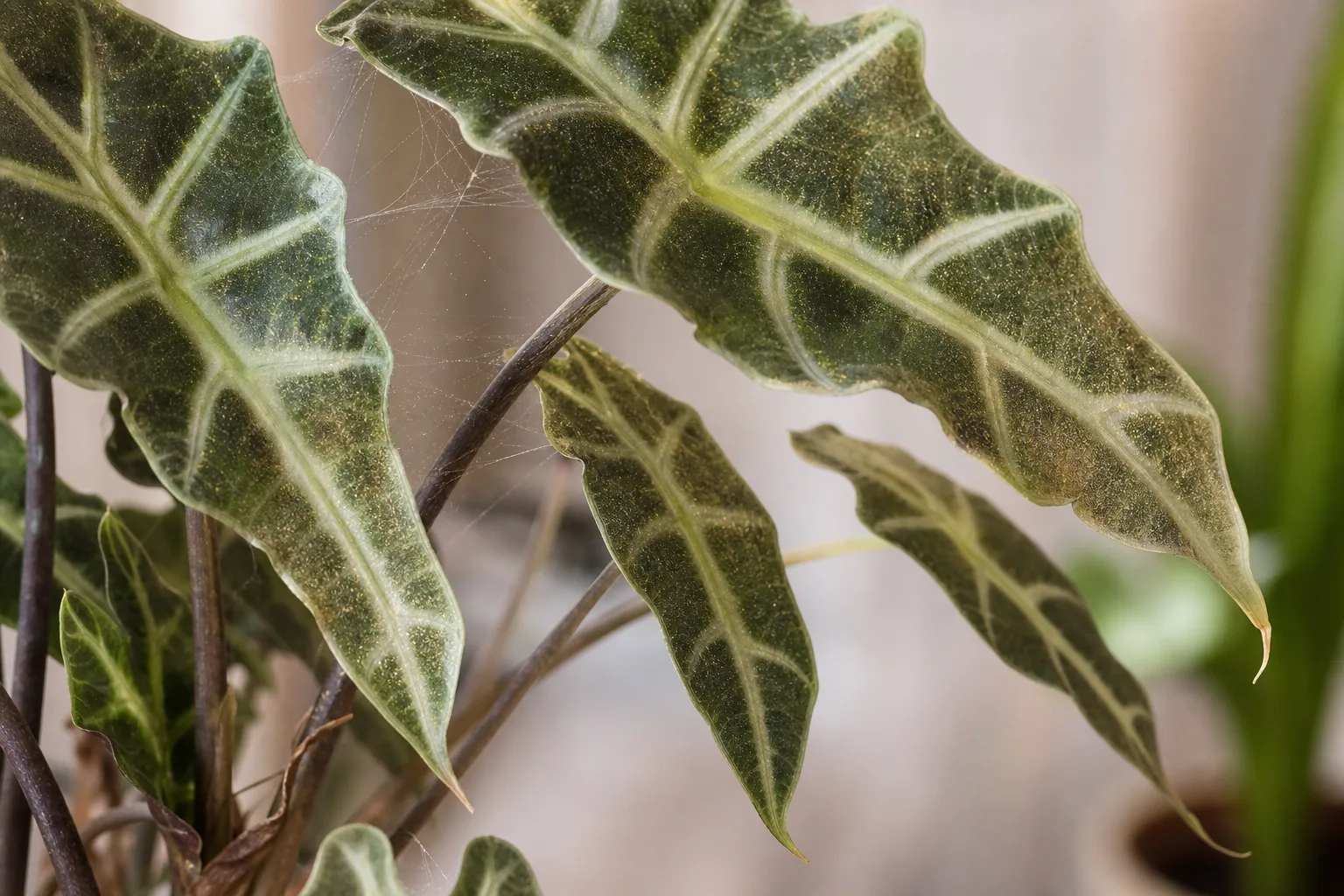
Fine pale stippling, dusty-looking undersides, or delicate webbing point toward spider mites. Cottony clusters suggest mealybugs, while soft-bodied aphids often gather on tender growth. If you find pests, isolate the plant, rinse or wipe foliage where practical, and use a houseplant treatment labeled for the pest, following the product instructions rather than improvising stronger concentrations.
The Alocasia Polly spider-mite guide has a more detailed inspection and control plan. Repeat inspections matter because a single treatment rarely tells you whether eggs or hidden insects remain.
Why Leaves Turn Yellow, Brown, or Droop
A leaf symptom is the plant’s alarm light, not the diagnosis. Start with context. Yellow leaves plus persistently wet soil point first toward overwatering, poor drainage, or root stress; droop plus dry, lightweight mix makes thirst more likely; fine stippling and webbing shift attention to spider mites; and dry brown patches on the sun-facing side can indicate scorch.
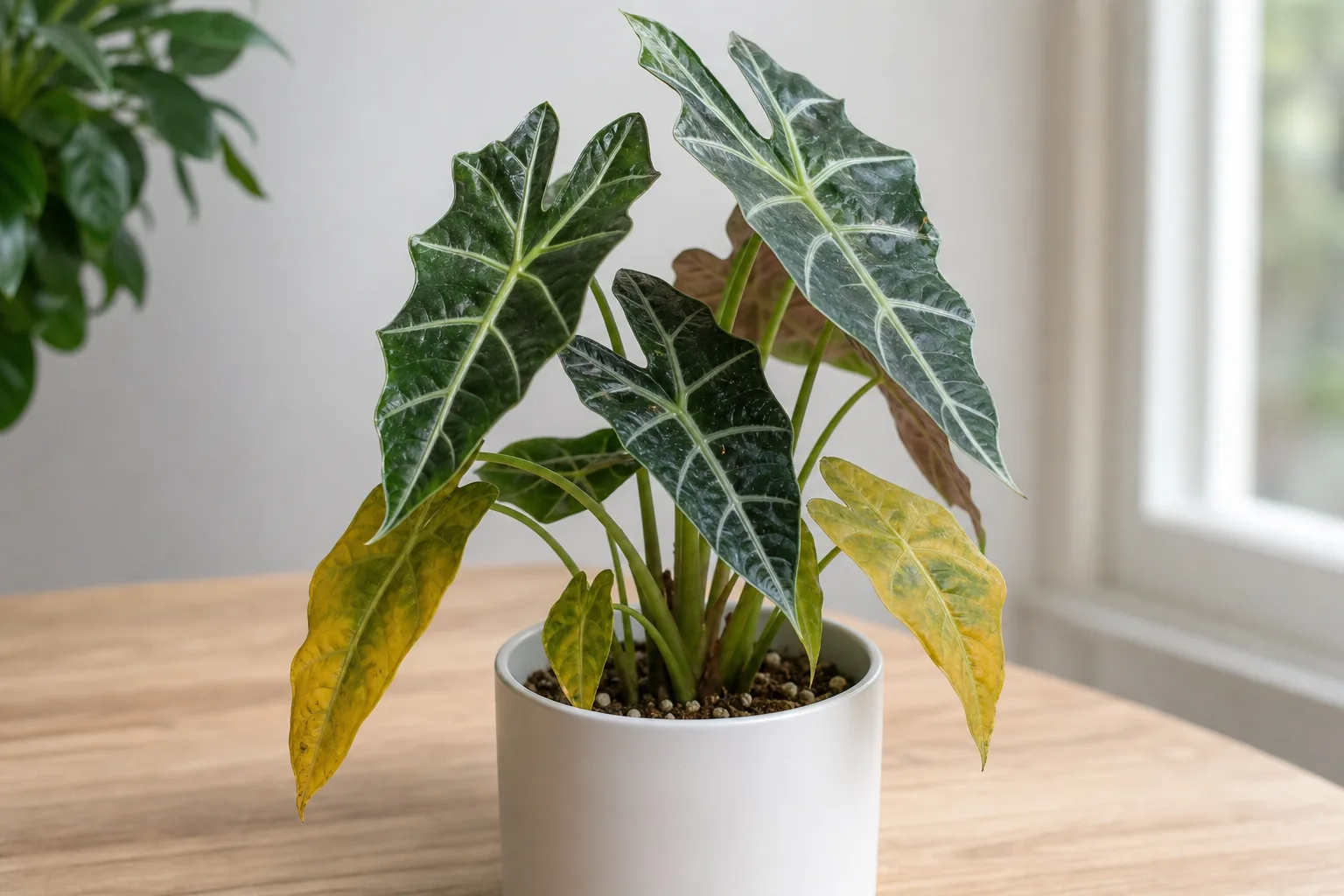
Brown tips or margins can follow dry air, inconsistent watering, root damage, or salt accumulation, so changing four things at once makes the cause harder to identify. Correct the strongest clue first and watch new growth. An old damaged leaf will not turn green again, so success is measured by stable roots and healthier new leaves rather than cosmetic recovery of injured tissue.
For a symptom-specific walkthrough, see the Alocasia Polly yellow-leaves guide. If several leaves deteriorate quickly, always inspect the underside of leaves and the root zone before assuming the plant only needs more water.
Root Rot, Thirst, or Seasonal Slowdown?
Use a simple three-way check. If the mix is wet for many days and roots are brown, soft, or foul-smelling, root trouble is likely; remove rotten tissue, correct the mix and pot conditions, and reduce watering frequency. If the mix is dry through much of the root zone and the plant perks up after a thorough watering, dehydration was the more likely cause.
If the plant slows during darker, cooler months while the rhizome stays firm and there is no foul odor, seasonal slowdown or dormancy is plausible. Keep it warm, reduce water in proportion to the lost leaf area, and wait for active growth before resuming fertilizer. Cold damage can mimic both drought and rot, so also check whether the plant recently sat near a drafty window, door, or air-conditioning vent.
Avoid the common rescue cycle of watering a drooping plant, seeing no immediate improvement, and watering again the next day. Roots damaged by saturation cannot absorb water normally, so extra water can intensify the very symptom that looks like thirst.
Is Alocasia Polly Toxic?
Yes. Alocasias contain insoluble calcium oxalate crystals that can irritate the mouth and gastrointestinal tract when plant tissue is chewed or swallowed. The ASPCA lists Alocasia as toxic to cats and dogs, with signs that can include oral irritation, drooling, vomiting, and difficulty swallowing.
Poison Control also warns that exposure can cause burning or pain in the mouth and related symptoms in people. Place the plant where children and pets cannot chew it, wash hands after handling sap or damaged tissue, and do not treat a significant exposure as a houseplant-care problem. Contact the appropriate local poison service, medical professional, or veterinarian if ingestion occurs or if there is swelling, persistent vomiting, or difficulty swallowing or breathing.
Conclusion
Successful Alocasia Polly care comes down to keeping its environment stable but breathable: bright filtered light, warm temperatures, an airy mix, thorough watering followed by partial drying, and enough humidity to keep foliage comfortable without leaving roots saturated. Once those basics are right, feeding, pruning, and repotting become supporting tasks rather than attempts to rescue a chronically stressed plant.
When something changes, diagnose before reacting. Check the soil, roots, temperature, season, light, and leaf undersides, then make the smallest correction that fits the evidence. That habit is more reliable than any fixed watering schedule and gives Polly the best chance to produce healthy new leaves year after year.