Do Tomato Plants Come Back Every Year? The Answer
Will tomato plants come back next year? Learn when frost kills them, how volunteers differ, and whether saving seed, rooting cuttings, or overwintering makes sense.
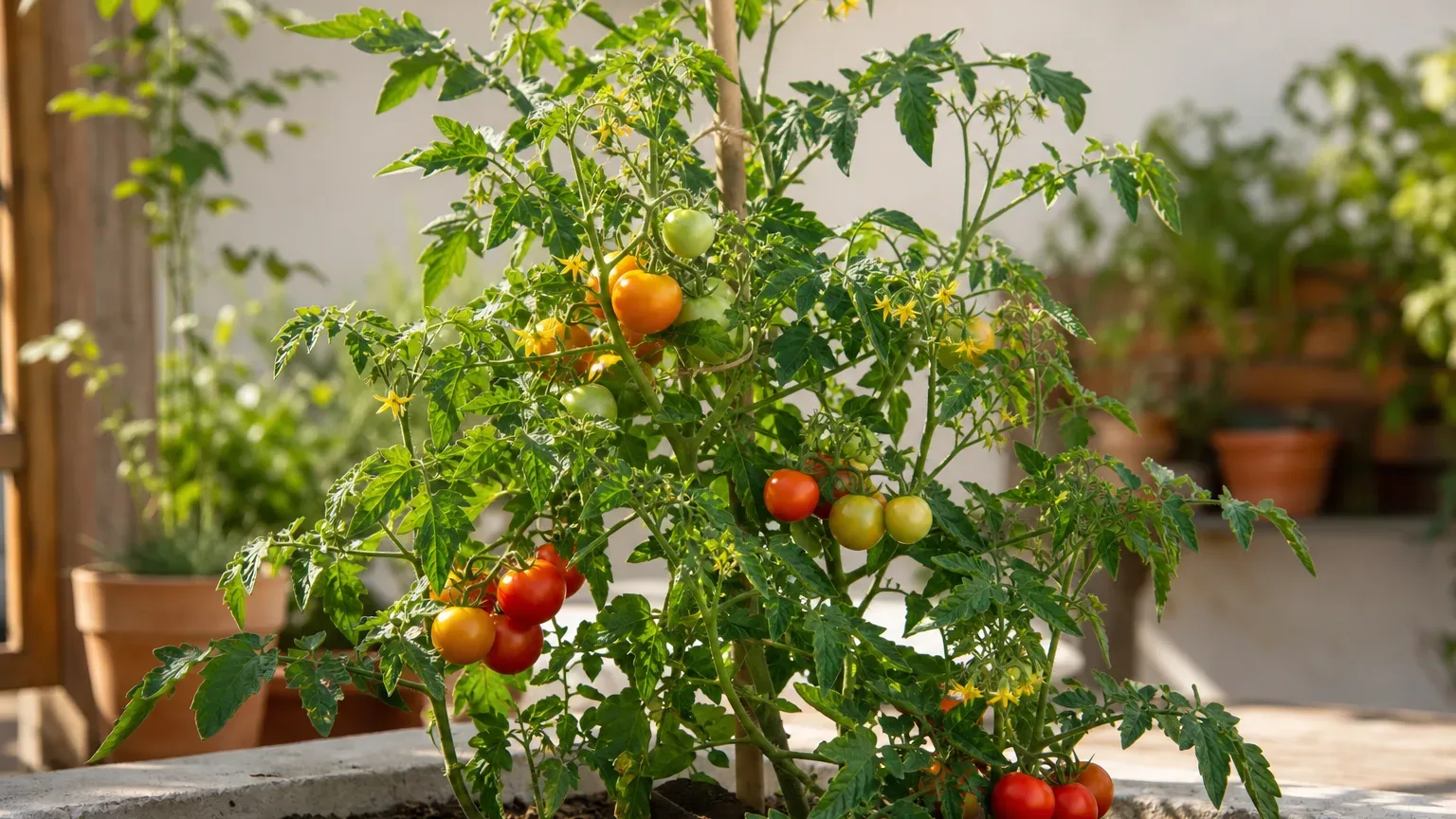
Usually, a tomato plant will not come back after winter in a garden that freezes. Tomatoes are tender, warm-season plants: a hard freeze can kill the vine, and even cool nights can stall growth before frost arrives. A plant can persist in a genuinely frost-free climate, a heated greenhouse, or a protected indoor space, but that is different from expecting last year’s outdoor roots to resprout in spring.
There is a useful distinction behind the seemingly conflicting answers. Tomatoes are botanically capable of living for more than one season under suitable conditions, yet gardeners in cold-winter areas grow them as annuals because cold ends the season. If a tomato appears in last year’s bed, it is more likely a new seedling from dropped fruit than the same plant returning.
The short answer: probably not in a frosty garden
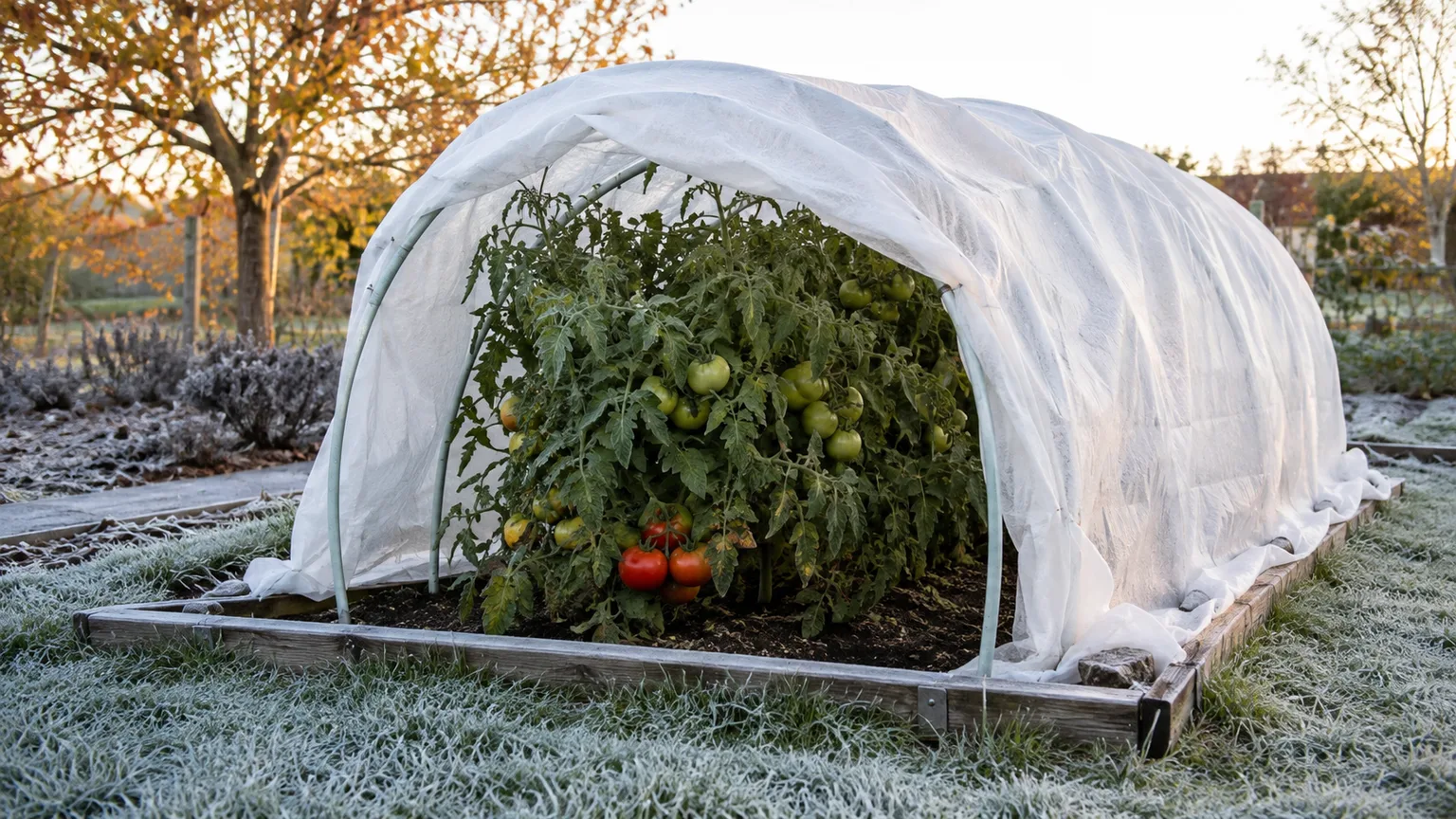
If your yard regularly freezes, plan to replace the tomato plant next season. Pulling the dead vine is normal; you do not need to protect its roots or keep a dormant stem in the ground. A frost cover can buy time during a brief cold snap, but it does not turn a tomato into a hardy perennial that can live through winter soil temperatures.
In a place that stays warm enough year-round, an established tomato may continue growing and fruiting, although heat, disease, and the plant’s age still affect performance. In cooler regions, you can preserve a favorite variety by saving seed or rooting a cutting before the first frost. Those approaches give you a new plant for spring; only bringing the living plant into suitable shelter actually keeps that individual plant alive.
Why gardeners grow tomatoes as annuals
An annual completes its growing cycle in one season, while a perennial can persist and grow again in later seasons. A tomato’s natural life span is not the same thing as the schedule most gardeners use: Cornell Cooperative Extension lists tomato as a warm-season vegetable and an annual in its home-garden guide, while Plantura explains why it can be treated as a tender perennial where frost is absent. In everyday garden planning, “annual” is the useful label for a frost-prone climate.
That classification explains why buying or starting fresh plants each spring is standard. New seedlings are compact, easy to keep disease-free, and ready to grow when the weather warms. An older vine can be awkward, stressed, and pest-ridden by fall, so its ability to live longer does not automatically make it the best plant to carry into another crop year.
Frost kills tender growth and roots
Tomatoes do not have the cold-hardy crown or dormant underground structure that lets many garden perennials survive a winter. Penn State Extension says frost will kill tomato plants, and UConn Extension notes that chill injury can occur below 50°F for many varieties. Those temperatures are not interchangeable: a cool night may slow or damage a plant, while a freezing event can kill exposed tissue outright.
A few degrees of protection may save leaves during a short forecasted dip, especially in a sheltered bed, but the protection is temporary. Repeated cold nights, frozen soil, and thaw-freeze cycles add up. Do not use a hardiness-zone label alone to decide that an outdoor tomato will return; use the actual winter lows and whether the plant stays frost-free. Penn State Extension’s tomato guidance covers frost sensitivity and the warm temperatures tomatoes need to grow well.
A volunteer seedling is a new plant
Tomatoes that fall, split, or remain on the vine can leave seeds in the soil or compost. When spring warmth returns, a seed may germinate and produce a volunteer tomato. It can look like last year’s crop coming back, but it grew from seed; the old vine did not survive underground and regrow.
That difference matters if you want a particular variety. A seedling from an open-pollinated tomato may resemble its parent, though cross-pollination is possible. A seedling from a hybrid tomato may differ in fruit size, color, flavor, or growth because it is not guaranteed to reproduce the parent variety true to type. A cutting, by contrast, is vegetative growth from the original plant and preserves its genetic identity.
Can a tomato plant live outdoors all winter?
Only where the plant avoids damaging cold. In a frost-free region, an outdoor tomato can continue as a perennial, but winter growth may still slow and disease pressure may shorten the plant’s useful life. In borderline locations, a warm wall or sheltered patio might protect a container from a light chill, yet it cannot make an exposed plant safe through a freeze.
USDA hardiness zones describe average annual extreme minimum temperatures for perennial landscape plants; they do not guarantee that a tender vegetable will tolerate a particular cold night, wind exposure, or container temperature. A pot chills faster than garden soil, and a balcony can be colder than a protected courtyard. For that reason, decide based on your actual microclimate and local frost forecast, and move a valuable container plant to shelter before frost rather than waiting for visible damage.
If you expect regular freezes, skip outdoor overwintering. A row cover or frost blanket is useful for extending harvest during a brief cold spell, not for keeping the same tomato alive all winter. The most reliable plan is to preserve seed or a healthy cutting, or to bring a potted plant into a space that remains warm and bright enough.
Choose what you want to save
Before you lift a plant, ask what you are trying to keep: the variety, a living clone, or a mature plant that might produce earlier next year. The simplest method is not always the same as the one that preserves a particular tomato. For most gardeners, a small cutting or fresh seedling is easier to fit indoors than a sprawling vine.
| Method | Best when | Main trade-off |
|---|---|---|
| Save seed | You want an inexpensive start and can accept variation | Hybrid seed may not grow true to type; seedlings need time to mature |
| Root a cutting | You want a compact clone of a favorite plant | It needs light, clean handling, and indoor space for months |
| Keep the whole plant | You have a healthy compact plant and a bright, warm protected area | It takes the most space and can carry pests or disease indoors |
| Leave it outside | Your location stays frost-free through winter | A single damaging freeze can end the plant |
Save seed when the variety matters most
Seed saving is practical if you have a ripe tomato and can start plants indoors or buy a transplant next spring. Choose mature, healthy fruit, and remember that not every seed will produce a plant identical to the parent. If exact flavor and color matter, look for an open-pollinated variety and avoid relying on seed from a labeled hybrid.
Seed is also a sensible alternative when indoor light and space are limited. Rather than maintaining a mature plant through a dark winter, you can start a compact seedling closer to your normal planting date. Cornell Cooperative Extension describes tomatoes as seed-propagated and advises against starting them too early; seedlings need a bright growing space and should not be exposed to cold simply to “harden” them.
Root a cutting when you want a clone
A cutting is the best middle ground when you want to keep the same variety without moving a large plant. It is a clone: the new plant comes from stem tissue, not from a seed, so it retains the parent’s genetic identity. Choose a vigorous, disease-free plant; a stressed or infected parent is not worth carrying into your home.
A tomato sucker, the small shoot that grows where a leaf branch meets the main stem, can be a useful cutting. Compact cherry or dwarf varieties are often easier to handle, but you can root a healthy shoot from other tomatoes too. The trade-off is that this small plant still needs light and care through winter, and it may not be ready to fruit as early as a well-started spring transplant.
Keep a whole plant when space and light allow
Keeping the mature plant makes sense if it is unusually valuable to you, is already in a container, and you have a bright, warm room or heated greenhouse. Compact and dwarf tomatoes are easier to fit under lights than long-vined indeterminate plants. UConn Extension explains that determinate tomatoes have more limited growth after fruit initiation, while indeterminate varieties keep growing and setting fruit through the season.
Do not keep a large plant just because it is technically possible. The root ball, pot, support, fallen leaves, and potential pests all need space, and a sunny window alone often produces weak, stretched growth during short winter days. Homes & Gardens and Gardening Know How both distinguish keeping a plant alive from trying to harvest fruit: fruiting requires much more light and attention, including pollination.
Root a tomato cutting before frost
Take cuttings while the parent plant is healthy and still actively growing, before frost damages it. A practical window is a few weeks before the first expected frost, which gives the cutting time to root and lets you discard any that fail. Use clean scissors or pruners and select a firm, non-flowering shoot several inches long rather than a soft, diseased tip.
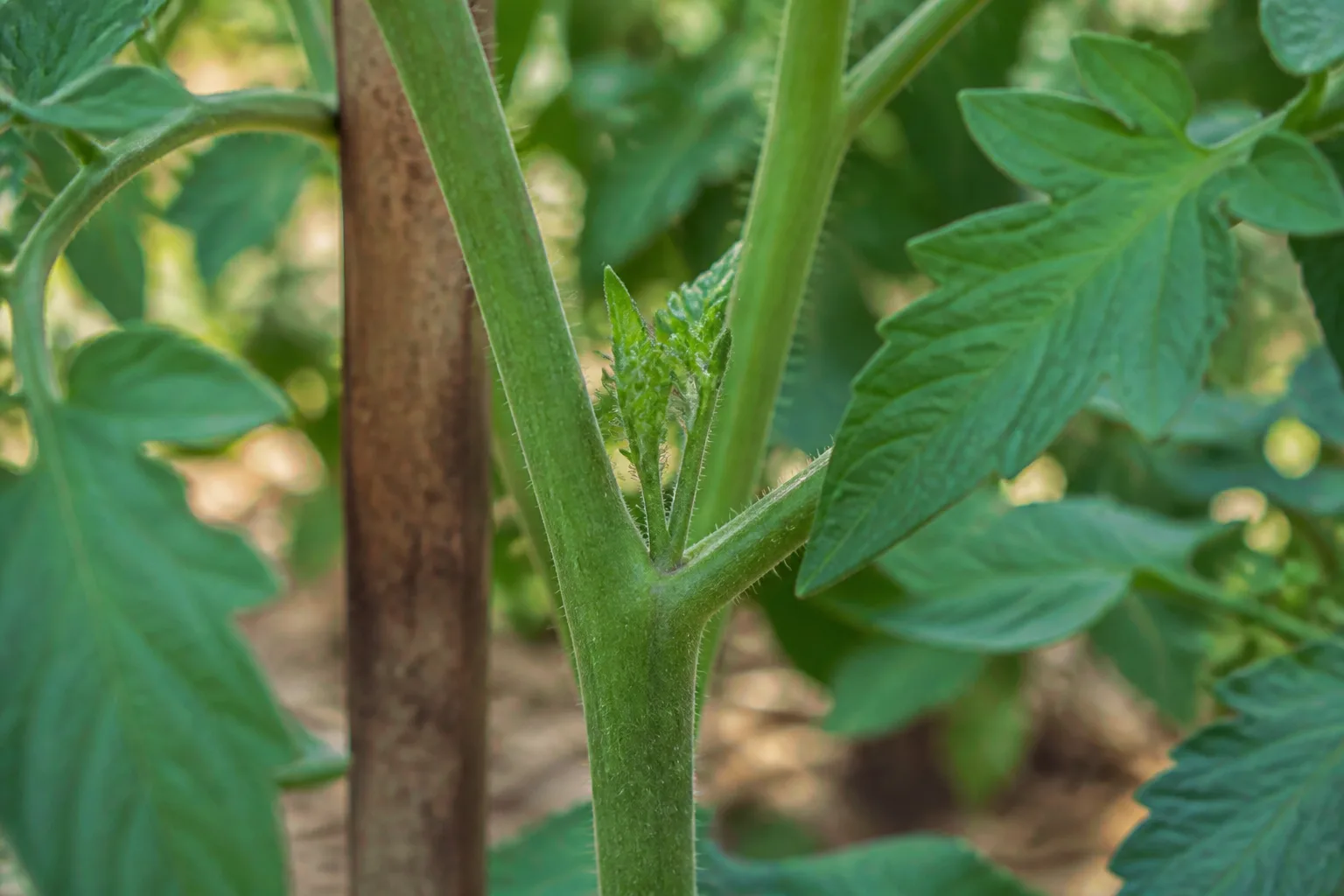
Cut just below a node, remove the leaves from the lower part of the stem, and leave a small cluster at the top. You can place the stem in clean water or insert it into a small pot of fresh, moist seed-starting mix. Gardening Know How describes both water and potting-medium approaches; either way, the cutting needs warmth, bright indirect light while it roots, and a medium that stays damp but not waterlogged.
If rooting in water, change it when it becomes cloudy and pot the cutting once it has formed several healthy roots. If rooting in mix, gently tug after a couple of weeks; resistance suggests roots have formed. Keep each cutting separate so you can remove one that declines without spreading trouble to the others. Do not rush to add fertilizer before it is actively growing in its pot.
Once rooted, give the young plant the brightest safe spot available or use a grow light. It may grow slowly in winter; the point is to keep it healthy until spring, not to force a full crop indoors. Rotate the pot periodically if growth leans toward the window, and water when the surface begins to dry rather than keeping the mix constantly wet.
Overwinter a potted tomato indoors
Bring a potted plant in before frost, not after leaves have turned black. First inspect it closely, then prune only enough to make it manageable and remove dead or damaged foliage. If it is in the garden, dig with a generous root ball and move it into a clean pot with drainage; avoid the bare-root storage method as your default because tomato plants do not have a dependable dormant stage like many hardy bulbs or woody plants.
Acclimate the plant over several days by moving it from the outdoor sun into a sheltered, increasingly protected spot before its final indoor position. This reduces the shock of a sudden change in light, airflow, and temperature. Homes & Gardens, quoting a Texas A&M AgriLife Extension horticulturist, recommends lifting with the root ball and gradually adjusting the plant rather than exposing bare roots. Use a container large enough for the roots, fresh potting mix, and a saucer that can be emptied after watering; do not let the pot sit in standing water.
Set it in the brightest available location, away from cold drafts and direct blasts of heat. A grow light may be needed to prevent thin, weak growth, especially if your goal is to keep a leafy plant until spring. If you want winter fruit, plan for substantially more light, stable warmth, and hand-pollination; this is an optional project, not a likely bonus from simply moving the pot indoors.
For survival rather than fruit, water less often than you did during summer growth, but do not let the root ball dry out completely. Skip fertilizer while growth is slow. If flowers form and you are not trying to harvest, remove them so the plant does not spend energy on fruit it cannot support in low light.
Screen for pests and disease before bringing it in
A healthy-looking top can hide aphids, whiteflies, spider mites, or eggs on leaf undersides and stems. Check the whole plant in daylight, including the soil surface and the area around the pot rim. Keep any new indoor plant separate from houseplants while you watch for signs of pests; finding a problem early is much easier than treating an entire collection.
Do not bring a tomato with suspicious leaf spots, wilting, or a history of serious disease into a greenhouse or home. UConn Extension lists common tomato diseases such as Septoria leaf spot and blights, and Penn State Extension recommends rotating tomato planting locations to reduce soil-borne disease. Keep fallen leaves and old potting material out of the indoor setup, and clean the pot and support before reuse.
Avoid spraying a plant “just in case.” Identify a pest first, then follow the label on any product you choose, especially around edible plants and indoor spaces. If you cannot tell whether a plant is diseased or simply stressed, take a clear photo and ask a local extension office before preserving it; a questionable plant is a poor source for next year’s starts.
Move an overwintered plant outside gradually
Wait until frost danger has passed and outdoor conditions suit tomatoes; a surviving plant is not automatically ready for a cold spring bed. UConn Extension cautions that tomatoes can be injured by chill below 50°F, while Cornell advises planting after the last frost and waiting for consistently milder nights. Local conditions vary, so use those as guidance rather than a universal date.
Harden the plant off over about a week or two. Start with a short stay in bright shade sheltered from wind, then lengthen outdoor time and introduce gentle morning sun. Bring it back in if a cold night or rough weather is forecast. Cornell recommends gradual exposure to sun and wind; hardening is not a reason to deliberately chill the plant.
Before planting, check for active new growth, healthy roots, and any pests that may have appeared indoors. Choose a clean site with sun and good airflow, and avoid planting where tomatoes, peppers, potatoes, or eggplants recently grew if disease has been a problem. Water the transplant in and provide support before vigorous growth resumes.
Common reasons overwintering fails
The most common mistake is waiting until frost has already damaged the plant. A frost-bitten tomato may have limp or blackened foliage, and bringing it inside does not reverse that injury. If you plan to keep a variety, take a cutting early enough that it can root before the parent declines.
Low light is another frequent problem. A tomato that stretches toward a window, drops leaves, or becomes pale may be surviving poorly rather than thriving. Reduce expectations: if you cannot provide a bright position or suitable grow light, start seed in spring instead of trying to force winter growth.
Overwatering, pest transfer, and bringing in diseased foliage can also undo the effort. Indoor pots dry more slowly in cool, dim conditions, so check the mix before watering. Keep the plant isolated, remove dead leaves promptly, and do not keep a specimen that is clearly declining just because it made it indoors.
Is saving a tomato plant worth the effort?
It is worth trying when the plant has a variety you cannot easily replace, you want an exact clone, or you enjoy the experiment and already have suitable indoor space. In those cases, a cutting is usually the most space-efficient way to keep the variety. A whole plant is reasonable if it is compact, healthy, and can live somewhere warm and bright without taking over the room.
For a common tomato that is easy to buy or start from seed, the effort often costs more than it saves. You would need to inspect and prune the old plant, manage its light and water, monitor pests, and harden it off again; meanwhile, a fresh spring seedling may be more vigorous and simpler to manage. The practical rule is to preserve the genetics only when they matter to you, and otherwise let the old vine finish its season.
Conclusion
In a garden that freezes, a tomato plant is unlikely to return from its roots next year. A warm, frost-free climate can let the same plant persist, and a gardener with indoor space can keep a healthy plant or cutting alive, but neither outcome is guaranteed to be easier than starting fresh.
If you see new tomatoes in the bed next spring, they are probably volunteer seedlings, not last year’s vine resurrected. Save seed for a simple restart, take a cutting when you want a clone, or bring a compact healthy plant into bright, warm shelter if you have a good reason. For most gardeners, replacing tomatoes each year is the reliable choice.