12 Best Front Door Plants for Good Feng Shui
Twelve front door plants feng shui practitioners favor—plus light checks, placement rules, and care notes so your entry stays healthy and welcoming.
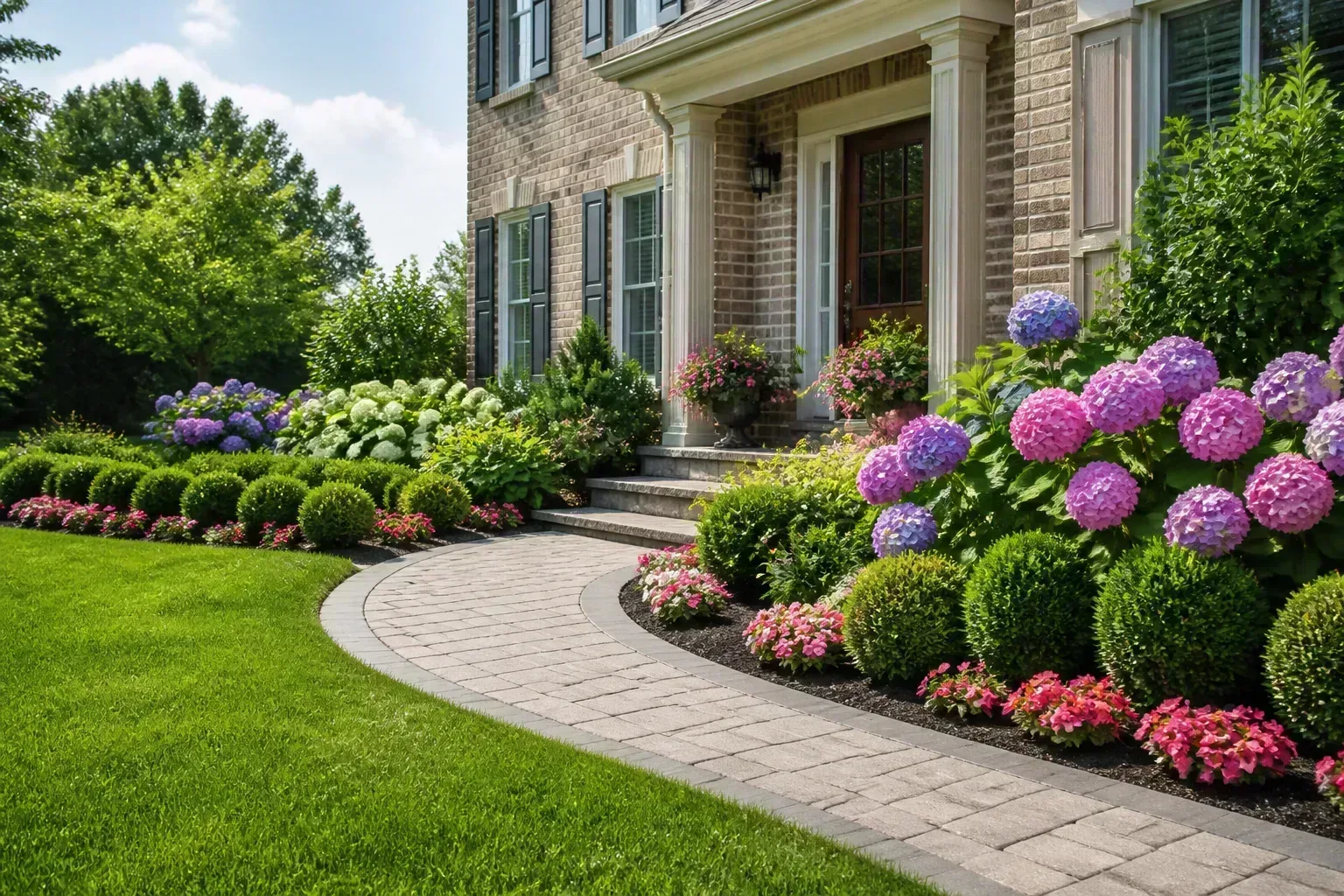
A dying pothos in a cracked pot by your threshold sends a different message than a thriving one in a clean planter—and in feng shui, that visible vitality matters as much as symbolism. The best feng shui front door plants are healthy first and meaningful second: soft or rounded foliage, upward or gentle trailing growth, and a scale that welcomes guests without blocking the door swing. This guide pairs traditional entry symbolism with the horticulture your foyer actually provides—light, drafts, foot traffic, and whether the plant lives indoors, on a covered porch, or outside year-round.
Plants, the Wood Element, and What “Good Energy” Means at the Threshold
In classical feng shui, living plants represent the wood element—growth, renewal, flexibility, and upward movement. Practitioners often place them near the mouth of qi (the main entry where life-force energy is said to enter) to soften hard lines, introduce natural color, and signal that the home is cared for. That is symbolism layered on top of a simpler truth: a green, well-maintained entry reads welcoming to every visitor, feng shui follower or not.
Healthy plants support the wood-element qualities practitioners want—vitality and healing—while wilted, dusty, or pest-ridden plants do the opposite. NASA’s interior landscape research documented that certain houseplants can remove volatile organic compounds from sealed chamber air; real homes ventilate differently, but the takeaway still holds: living plants change how a space feels and smells. Treat plant care as part of the practice. Watering, wiping leaves, and repotting when roots circle are maintenance rituals that keep both the plant and the entry’s presentation strong.
Rounded or heart-shaped leaves are traditionally favored at doors because sharp points and thorns read as “sha qi” (attacking energy) in many schools. That does not ban every spiky plant—snake plants are a common exception because their vertical swords read as protection rather than aggression when kept tidy—but it explains why monstera’s split leaves, peace lily blooms, and jade’s plump pads appear on so many recommended lists.
Why Your Front Door Sets the Tone Before Symbolism Does
Feng shui treats the front door as the home’s public face—the point where opportunities, guests, and energy meet your private world. Even if you daily use a side garage entrance, the main door still shapes first impressions for deliveries, neighbors, and anyone you invite inside. A door that sticks, squeaks, or hides behind clutter undermines every plant you place beside it.
Start with mundane fixes: oil hinges, wash the handle, clear shoes and mail piles, and ensure outdoor lighting works. Many practitioners also suggest using the front door at least once a day so the entry stays psychologically “open” to flow—a small habit that costs nothing. Only after the path is clear should you add planters, because an oversized shrub that blocks the door swing creates a physical barrier that contradicts welcoming qi.
Audit Light and Climate Before You Shop
Feng shui advice fails fast when it ignores photons. Walk your entry at morning, midday, and late afternoon on a sunny day. Note whether light is direct (sunbeams hit leaves), bright indirect (bright room without sun patches), or low (readable without turning on lights). The RHS explains that insufficient light limits photosynthesis and weakens growth—exactly what you do not want at your threshold.
UGA Extension’s sunlight guide clarifies label language: “full sun” means six or more hours of direct sun; “part shade” is three to six hours, often morning only; “shade” is less than three hours of direct sun. Match those labels to your door orientation. A south-facing glass storm door can fry shade-loving ferns; a north-facing apartment alcove will starve a fiddle leaf fig within months.
Temperature swings matter too. Unheated porches, radiator blasts in winter, and summer heat behind glass doors stress plants faster than living-room corners. If your plant will sit outside part of the year, acclimate it gradually—a week of dappled shade before full porch sun prevents scorched leaves that read as neglected energy.
Size, Leaf Shape, and Placement Rules That Matter
Scale is the most overlooked feng shui variable. A seven-foot palm in a four-foot-wide foyer overwhelms the mouth of qi and makes the door feel smaller. Aim for plants whose mature width leaves at least 24 inches of clear walkway beside the door swing. In tight apartments, tabletop jade or a hanging pothos often works better than a floor tree.
Plants many practitioners limit at the threshold:
- Oversized specimens that block sight lines to the door
- Thorny roses or cacti directly flanking the entry (sharp sha qi)
- Dead, yellowing, or pest-infested plants—replace or rehabilitate immediately
- Dripping wet saucers that create slip hazards and mold smell
Placement patterns that work:
- Symmetrical pairs on either side of exterior steps or interior console tables—classical balance for diffusing directed energy toward the door
- Single accent on the handle side when space is tight—better one thriving plant than two struggling ones
- Elevated hangers for trailing pothos or ferns when floor space is zero—keeps leaves off the path
Avoid placing a large plant directly in line with the door if it forces guests to sidestep; energy metaphors aside, that is simply bad hospitality.
Tall Statement Plants for Open Foyers and Wide Porches
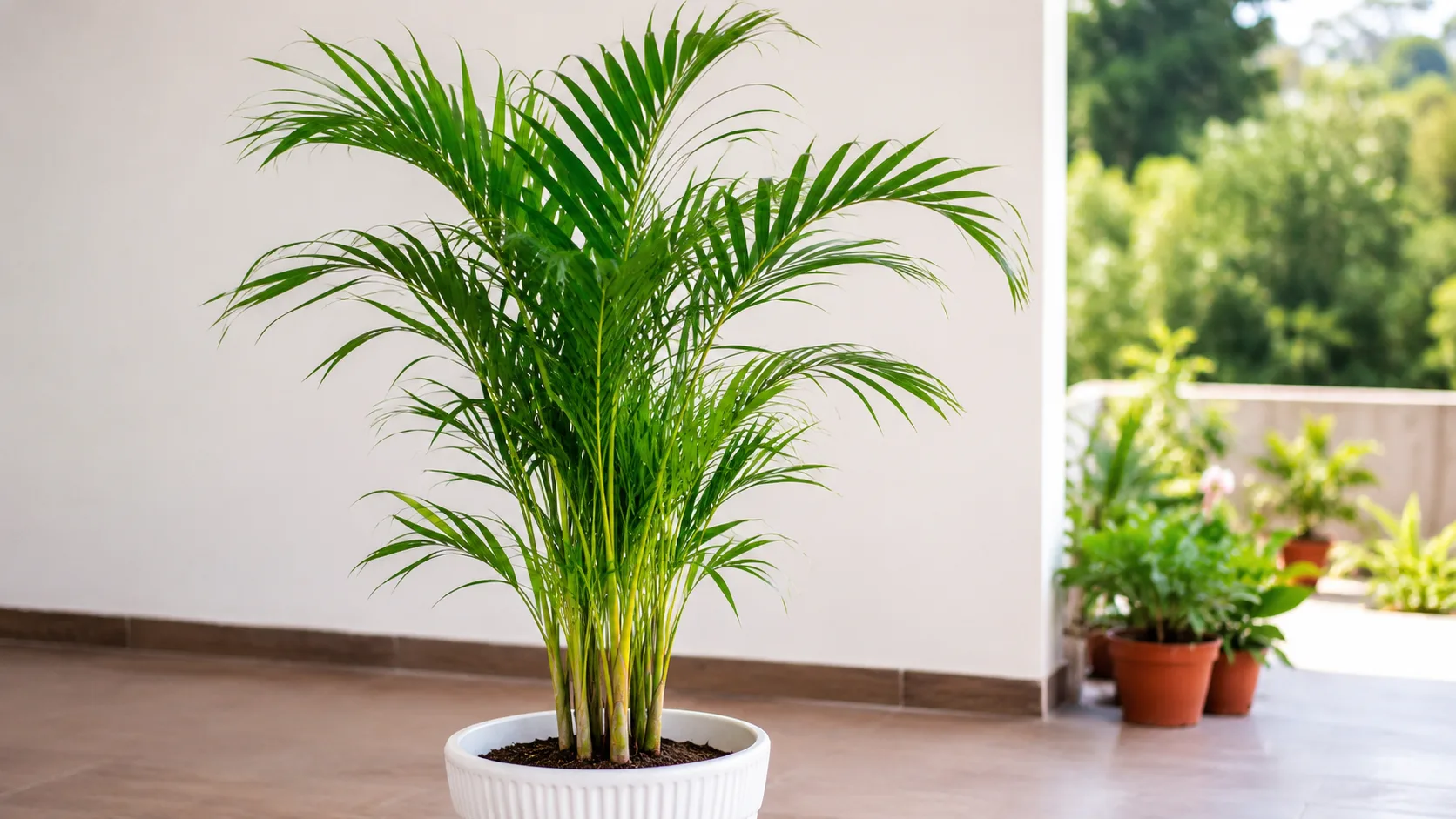
Use this group when ceiling height exceeds eight feet, the foyer is at least six feet wide, or you have a covered porch with bright indirect to partial sun. These plants create vertical wood-element energy and photograph well from the street.
Areca Palm
The areca palm (Dypsis lutescens) brings soft, feathery fronds that move gently in air currents—movement practitioners associate with active, positive qi. It filters dust when leaves are kept clean and suits bright entries with east or west exposure. Indoors, place it where it receives several hours of bright indirect light; on porches in USDA zones 10–11 it can live outside year-round, while colder climates should treat it as a summer patio plant brought in before frost.
Water when the top inch of soil dries; yellow fronds often mean overwatering or fluoride-heavy tap water. Mature height indoors reaches six to seven feet, so reserve it for corners that do not compete with the door arc. Pair with a heavy ceramic pot so top-heavy fronds do not tip in drafts.
Monstera Deliciosa
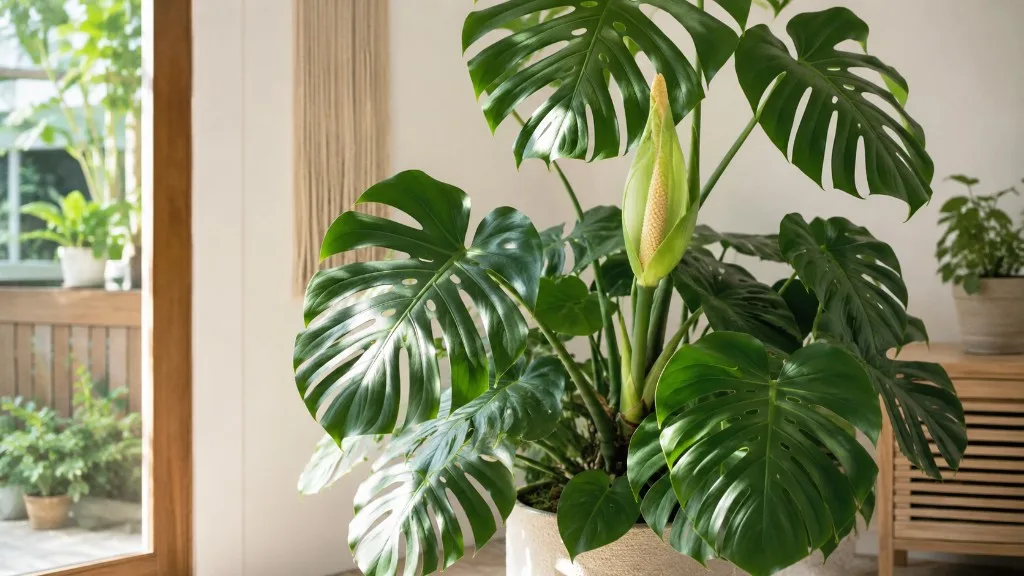
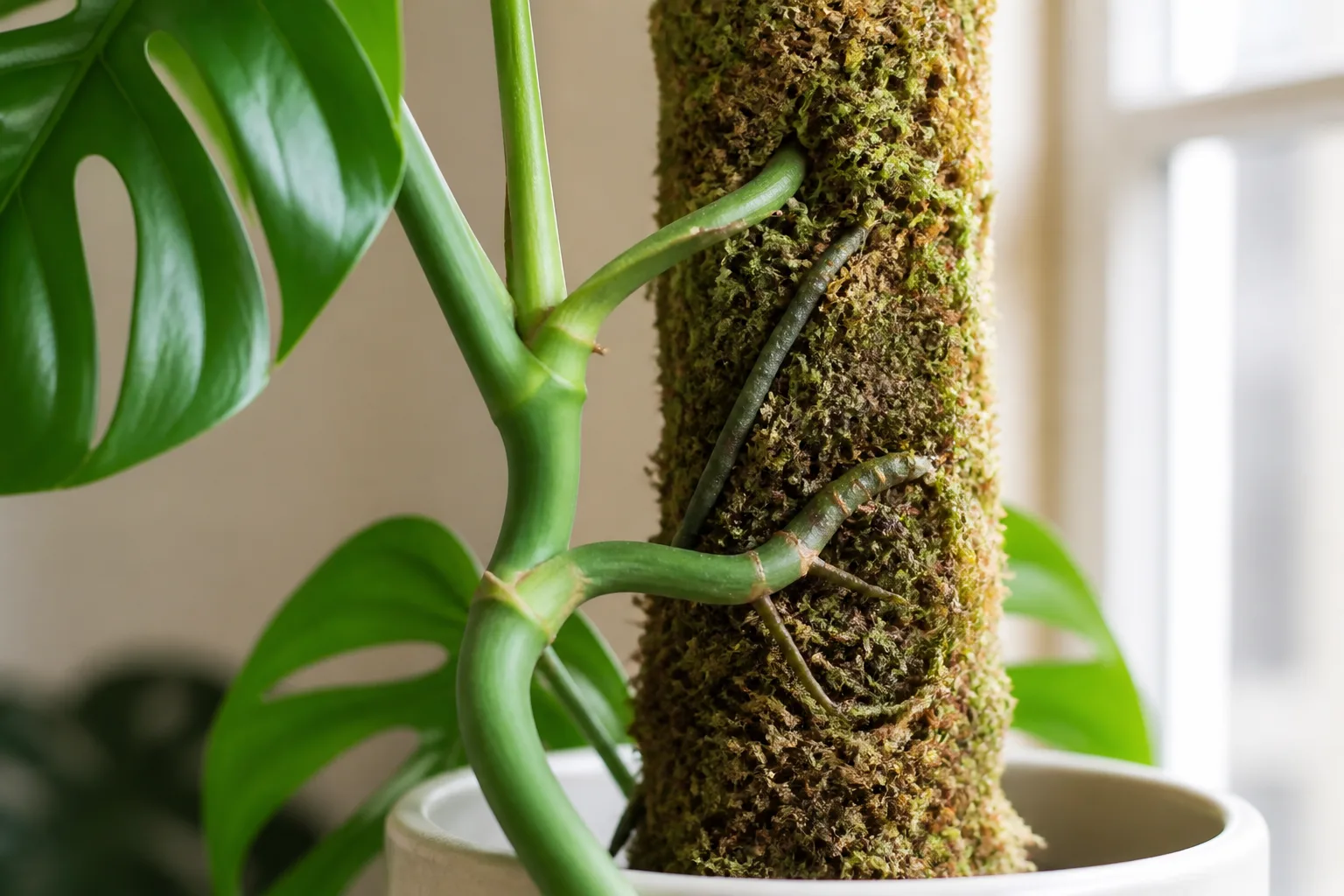
Monstera deliciosa offers large, heart-leaning split leaves tied to kindness and connection in many feng shui interpretations. It grows fast in bright indirect light and can fill a vacant corner beside a console table. Train it on a moss pole to keep growth vertical rather than sprawling across the walkway.
Allow the top two inches of soil to dry between waterings. Low light produces small, solid juvenile leaves without splits—not unhealthy, but less dramatic. Wipe dust monthly; broad leaves show neglect quickly at eye level. Keep away from cold drafts near poorly sealed doors.
Fiddle Leaf Fig
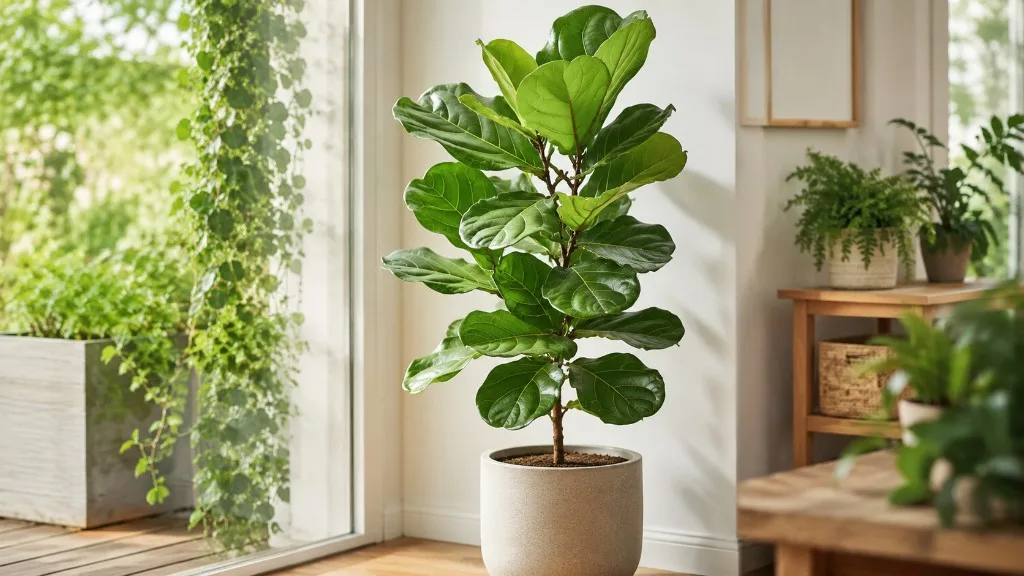
The fiddle leaf fig (Ficus lyrata) is the bold architectural choice—upright trunk, violin-shaped leaves, strong vertical line. It suits design-forward entries with south or west windows filtered by sheer curtains. It is not a beginner plant: inconsistent watering causes leaf drop that reads as poor feng shui faster than almost any other species.
Water when the top two inches are dry; use a well-draining mix and a pot with drainage holes. Rotate the pot quarterly so it does not lean toward the window. If you want the look without the drama, consider a weeping fig or money tree instead.
Money Tree
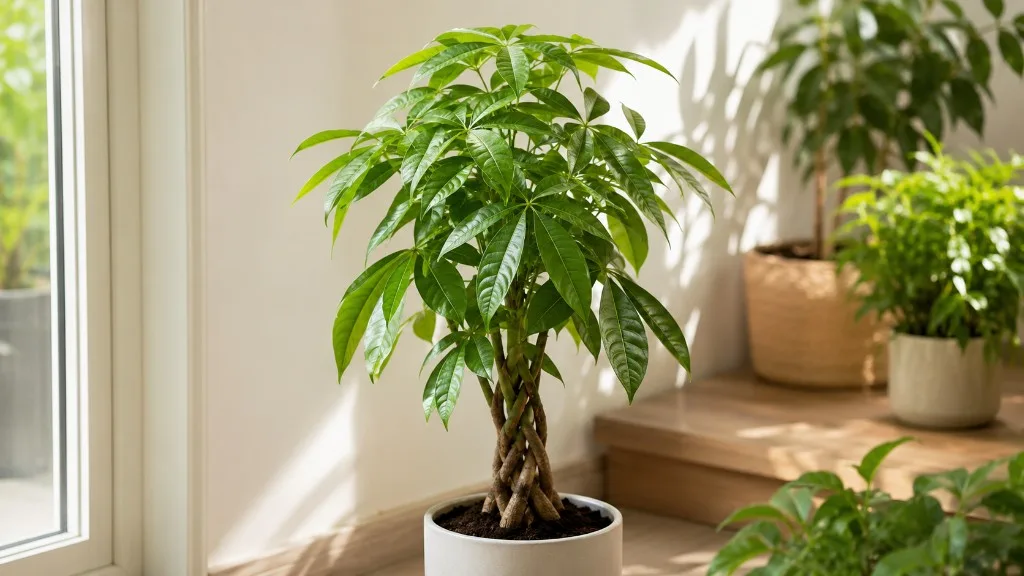
The money tree (Pachira aquatica) is the classic prosperity symbol—braided trunk, hand-shaped leaves, and a reputation for attracting abundance when placed near wealth corners. At the front door, it signals welcome and financial optimism to guests. Bright indirect light and watering when the top two inches dry suit it best.
Avoid over-braiding young trunks or keeping standing water in the saucer; root rot collapses the symbolism and the plant. Indoors it can reach six to eight feet; prune to control height. Many practitioners place it on the left side of the door (looking out) as the “dragon” position, but regional schools differ—consistency matters more than compass debate.
Forgiving Plants for Narrow, Dim, or Busy Entries
Renters, north-facing doors, and high-traffic apartments need plants that survive missed waterings and lower light. These four tolerate real life while still offering soft foliage or upright form.
Pothos
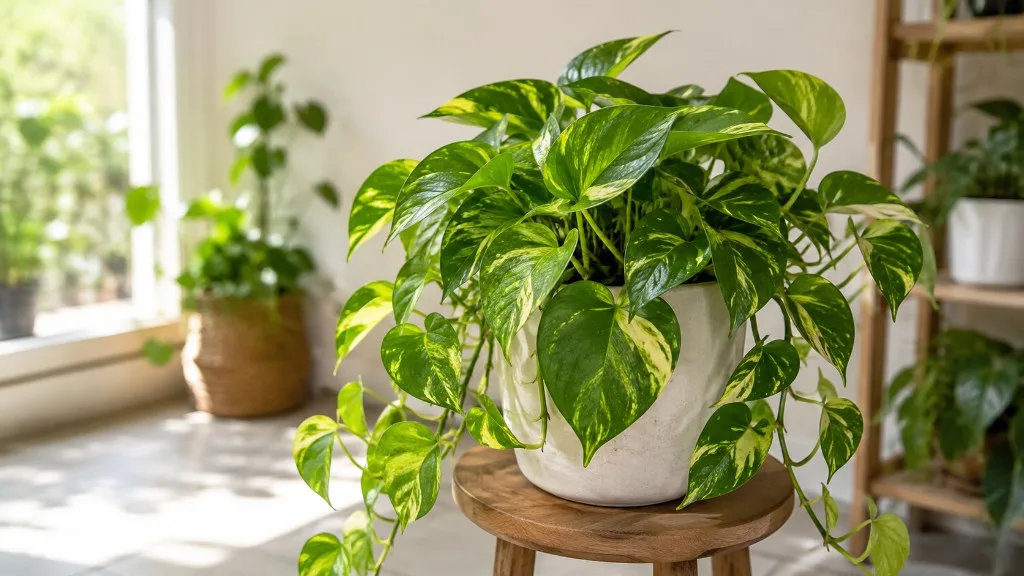
Pothos (Epipremnum spp.) is the rescue plant for uncertain green thumbs. Trailing stems soften sharp console edges and work in hanging baskets above radiators—out of the foot path. It tolerates low to bright indirect light; variegated cultivars need more brightness to keep white patterns.
Water when the top two inches dry. Pet owners note: pothos is toxic to cats and dogs if chewed, so hang baskets high if pets greet guests at the door. Trim vines that reach toward chew height.
Snake Plant
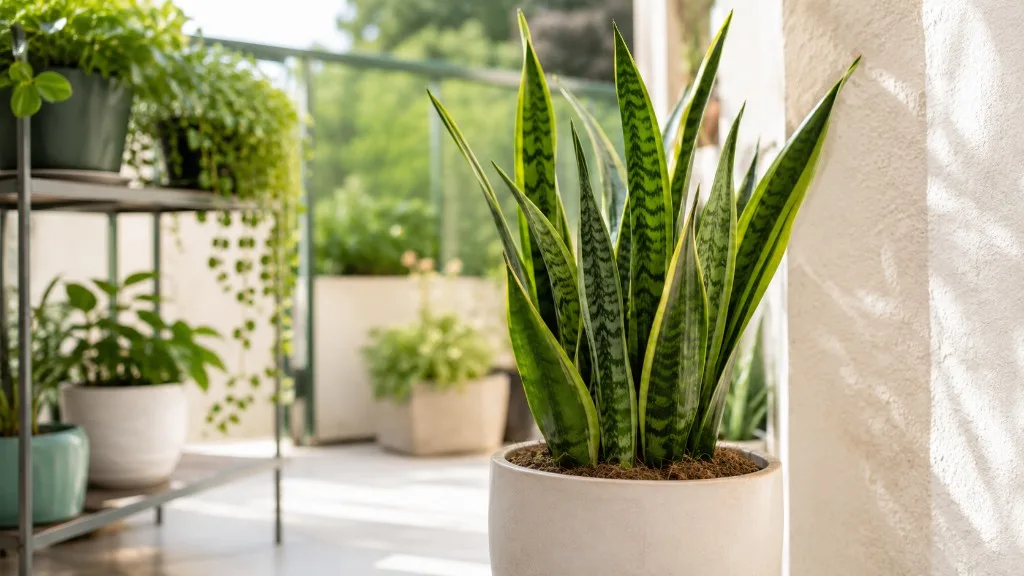
The snake plant (Dracaena trifasciata) grows vertically in a footprint barely wider than the pot—ideal for skinny hallways beside shoe racks. Practitioners often accept its sword-like leaves because they point upward, symbolizing protection and upward ambition rather than outward attack. It tolerates low light and infrequent water; let soil dry completely between drinks.
Choose shorter cultivars like ‘Golden Hahnii’ for tabletops or standard upright forms for floor placement. Wipe leaves to keep the glossy surface dust-free—shine reads as vitality.
Peace Lily
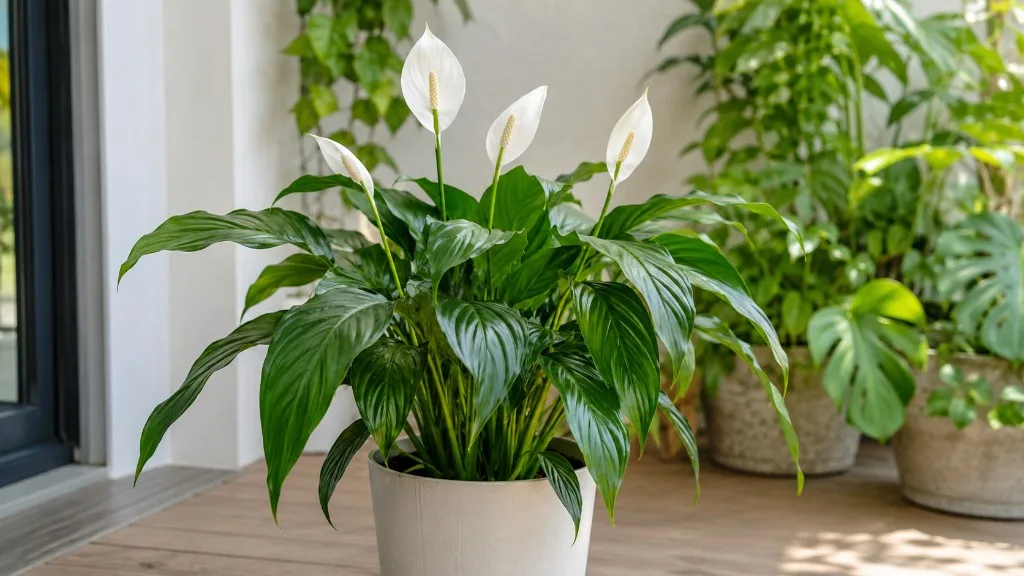
Peace lily (Spathiphyllum) combines rounded leaves with white spathes that many associate with harmony and invitation. It flags thirst by drooping dramatically, then perks after watering—a useful visual cue in busy households. Medium indirect light encourages blooms; it survives lower light with foliage only.
Keep away from cold drafts and heating vents. Toxic to pets if ingested. A 14-inch pot on a bench beside the door provides height without blocking passage.
Boston Fern
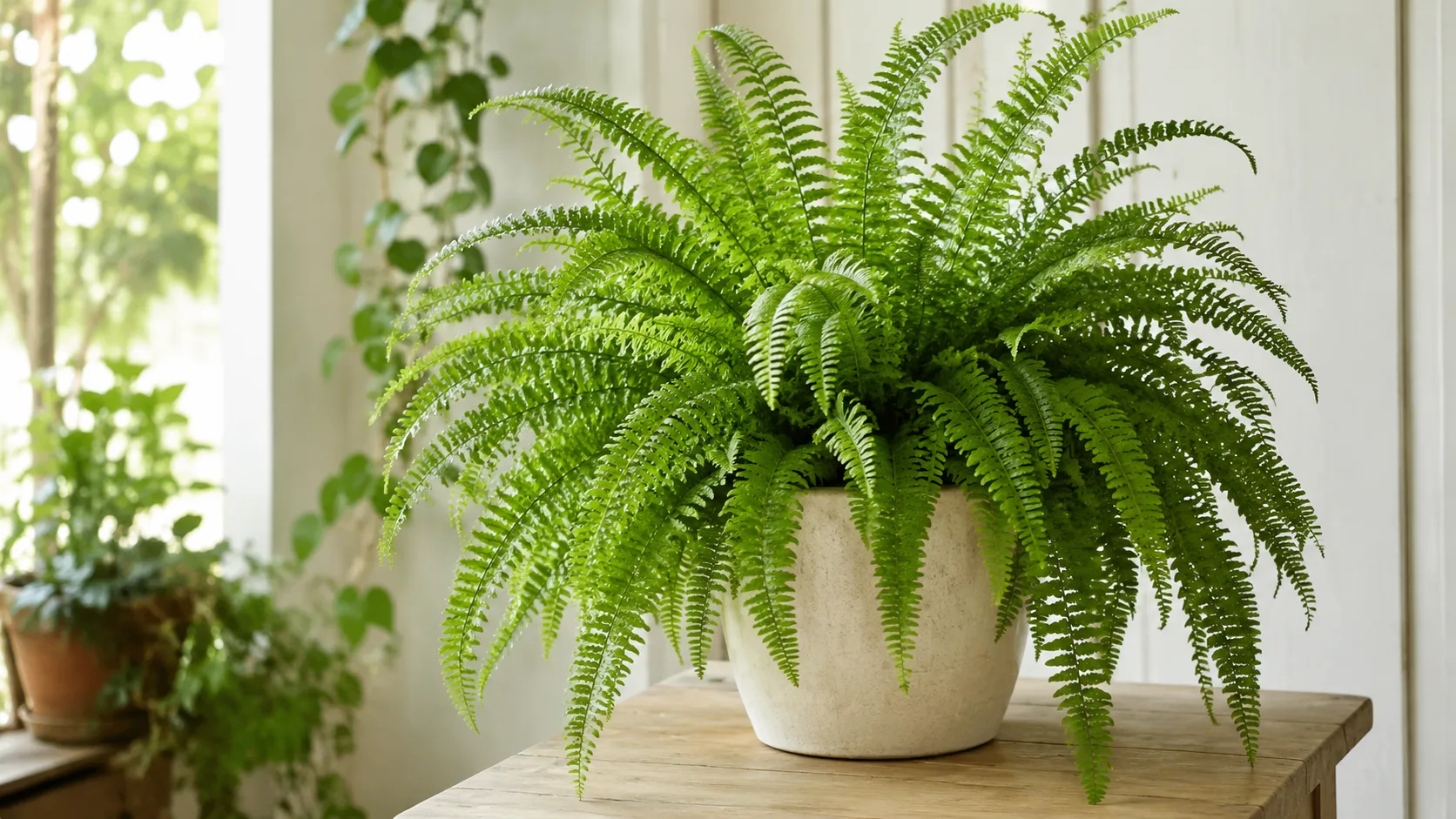
The Boston fern (Nephrolepis exaltata) adds lace-like softness that balances hard tile or brick entries. It needs steady moisture and humidity—mist in dry winters or group with other plants. Bright indirect light without hot afternoon sun prevents frond burn.
Excellent on covered porches in mild climates; indoors, place near an east window or use a pebble tray for humidity. Yellow fronds mean underwatering or low humidity, not bad luck—trim and adjust care.
Compact and Symbolic Plants for Tables, Steps, and Small Entries
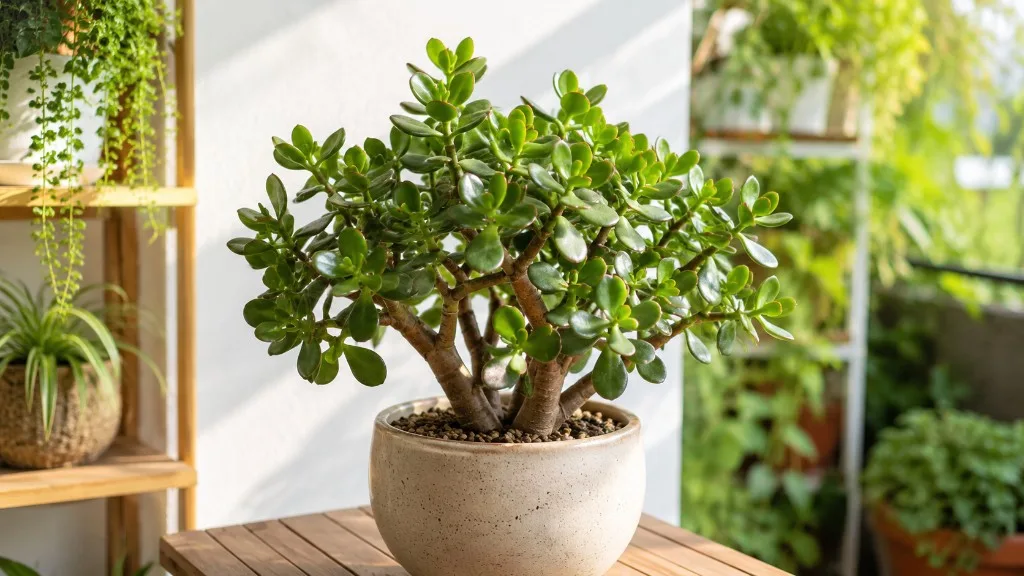
When floor space is precious, tabletop and step plants deliver wood-element energy without dominating the mouth of qi.
Jade Plant
The jade plant (Crassula ovata) is the housewarming classic—thick coin-shaped leaves tied to prosperity and friendship. A six-inch pot on a entry table or outdoor step stays manageable for years. Bright light near a glass sidelite keeps stems compact; leggy growth means move closer to the window.
Water deeply then let soil dry; succulents rot in soggy winter entries. In frost-free zones (USDA 10–11), jade can summer outside and winter indoors.
Weeping Fig
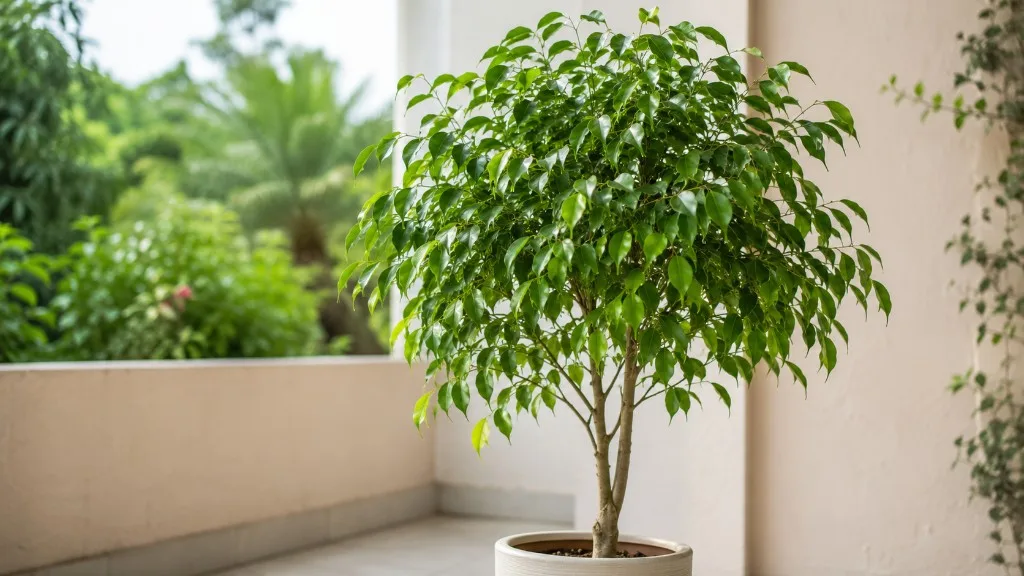
Weeping fig (Ficus benjamina) offers fine, rounded leaves on a tree that reads softer than fiddle leaf fig. It suits medium bright foyers where a full-size tree would overpower. Keep soil evenly moist—not waterlogged—and expect leaf drop when you first move it or when heat blasts from the door opening.
Standard forms reach six feet indoors; prune for shape. Avoid placing directly in a cold air stream from a frequently opened door in winter.
Calamondin and Orchid Options
Calamondin (Citrus × microcarpa) brings round orange fruit associated with wealth and completeness in Chinese tradition—the more fruit, the stronger the symbolic harvest. It needs bright light and frost-free conditions; in zones 8 and below, grow in a pot you roll outside for summer sun. Keep soil moist but drained; scale and spider mites appear when light is too low.
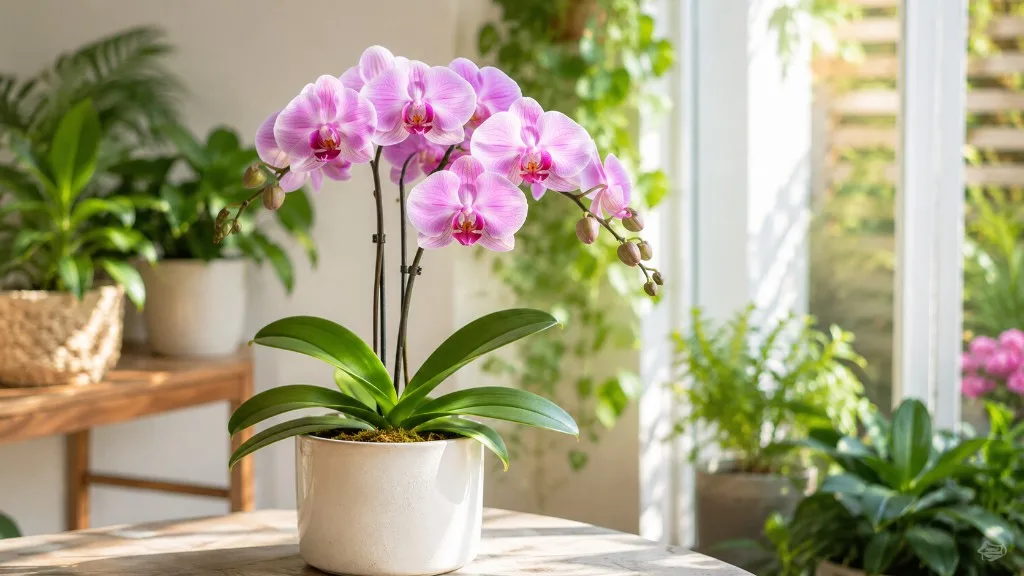
Orchids—especially pink phalaenopsis—symbolize love, partnership, and refinement on entry consoles. They prefer bright indirect light and sparse watering in bark mix. A blooming orchid is stunning feng shui; a spent spike with wrinkled leaves is worse than no plant. Treat orchids as seasonal accents you replace or rebloom, not set-and-forget greenery.
Placement Patterns That Welcome Rather Than Block
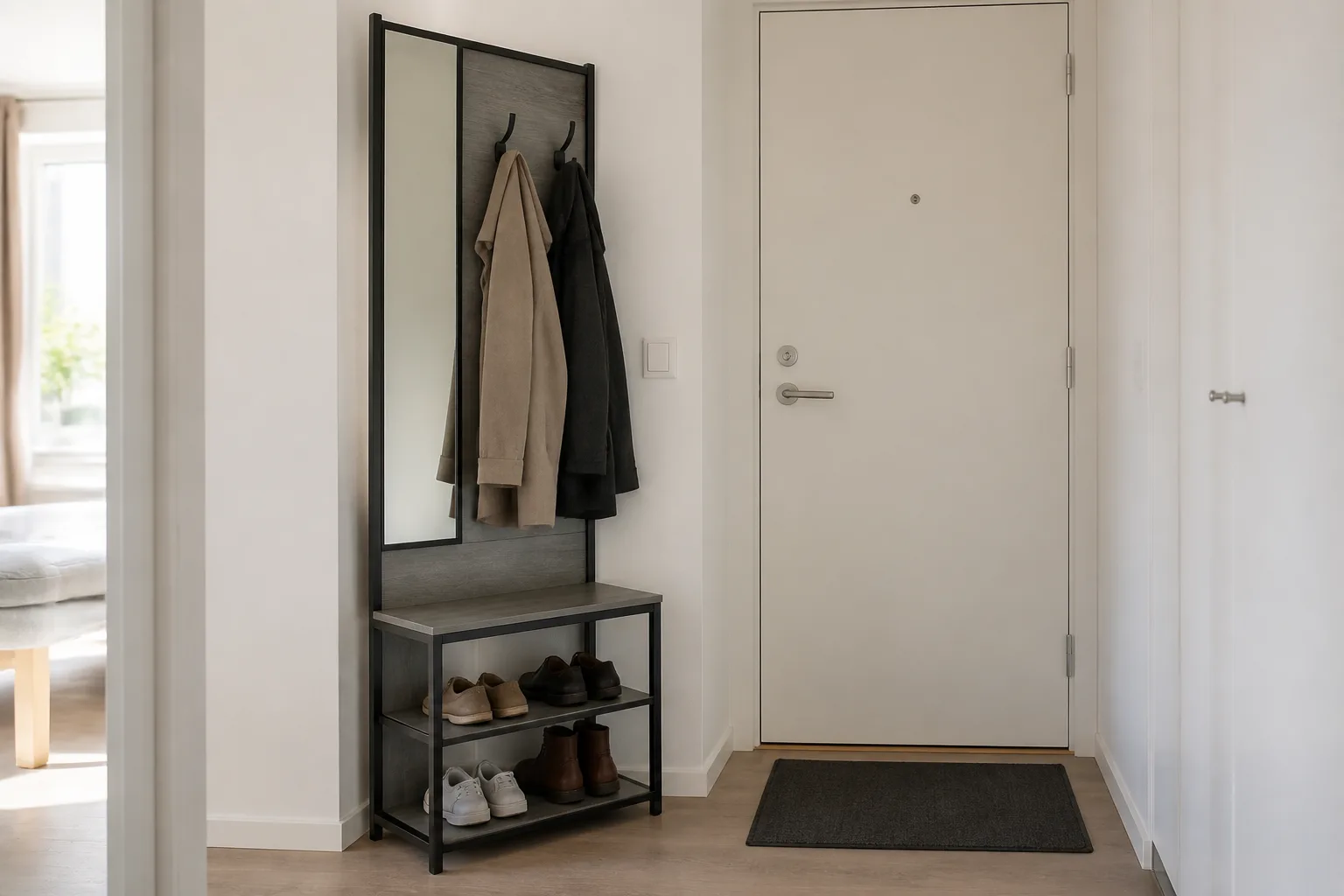
Symmetry is the default recommendation—two matched pots flanking exterior steps or an interior console—but symmetry only works when both plants receive similar light. A shaded left corner and sun-baked right corner will yield one thriving plant and one struggling mirror image. In mismatched light, use one larger anchor plant on the brighter side and a smaller accent or mirror on the dark side, or choose two species with similar forms but different light tolerances.
Keep plants below door-handle height when possible so sight lines stay open. For interior entries, leave at least 36 inches of clear width for delivery boxes and coat removal. Exterior placements need frost plans: tropicals move indoors before first freeze; hardy rosemary or boxwood substitutes can hold the spot in winter if you rotate seasonally.
Use your front door daily—even a quick walk to the mailbox—so the entry stays active. Add soft lighting on plants at night so the threshold feels inhabited rather than abandoned. Clean leaves monthly; dust blocks light and signals neglect to both guests and practitioners.
Conclusion
The 12 best front door plants for good feng shui share one non-negotiable trait: they look alive in your specific entry. Audit light and space first, then choose from tall statement species like areca palm and money tree, forgiving options like pothos and snake plant, or compact symbols like jade and orchid. Keep scale proportional, avoid thorns and clutter in the door path, and maintain health through watering and cleaning—because in feng shui and in gardening, vitality is the message. When a plant outgrows the space or the light, move it deeper into the home and promote a smaller replacement to the threshold rather than letting a legend die at the door.