Bleach to Kill Mold: When It Works and When It Fails
Bleach can kill mold on hard, non-porous surfaces when diluted correctly—but it fails on drywall, wood, and grout. Learn when bleach works, safe mix ratios, and better options.
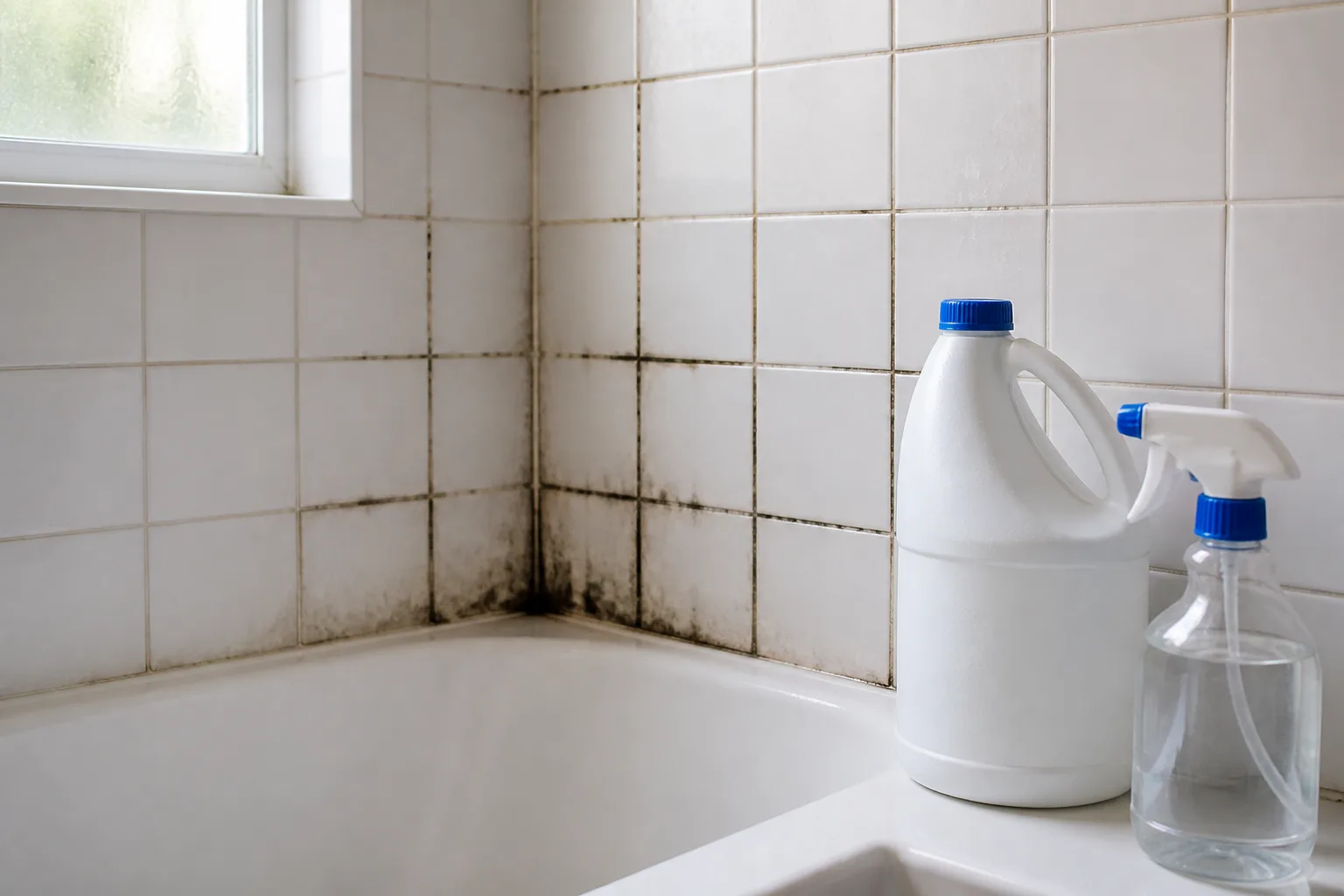
You spot mold along the shower grout or on a plastic storage bin and reach for the chlorine bleach under the sink. That instinct is understandable—bleach is a strong disinfectant, and a diluted solution can kill mold on the right surfaces. It is also incomplete. Bleach is a bad idea for mold when the growth is on or inside porous materials, when the patch is large or hidden, or when you treat color change as proof the colony is dead. Used correctly on small, hard, non-porous spots, bleach can be an effective tool. Used everywhere mold appears, it wastes time, damages finishes, and can create serious chemical hazards.
Quick Answer: When Bleach Helps and When It Backfires
Bleach can kill mold on hard, non-porous surfaces—glazed tile, glass, sealed porcelain, some plastics, and certain countertops—when you use a properly diluted solution, let it dwell long enough, rinse, and dry the area completely. The CDC allows bleach or dish detergent for mold cleanup and specifies no more than 1 cup of household bleach per 1 gallon of water.
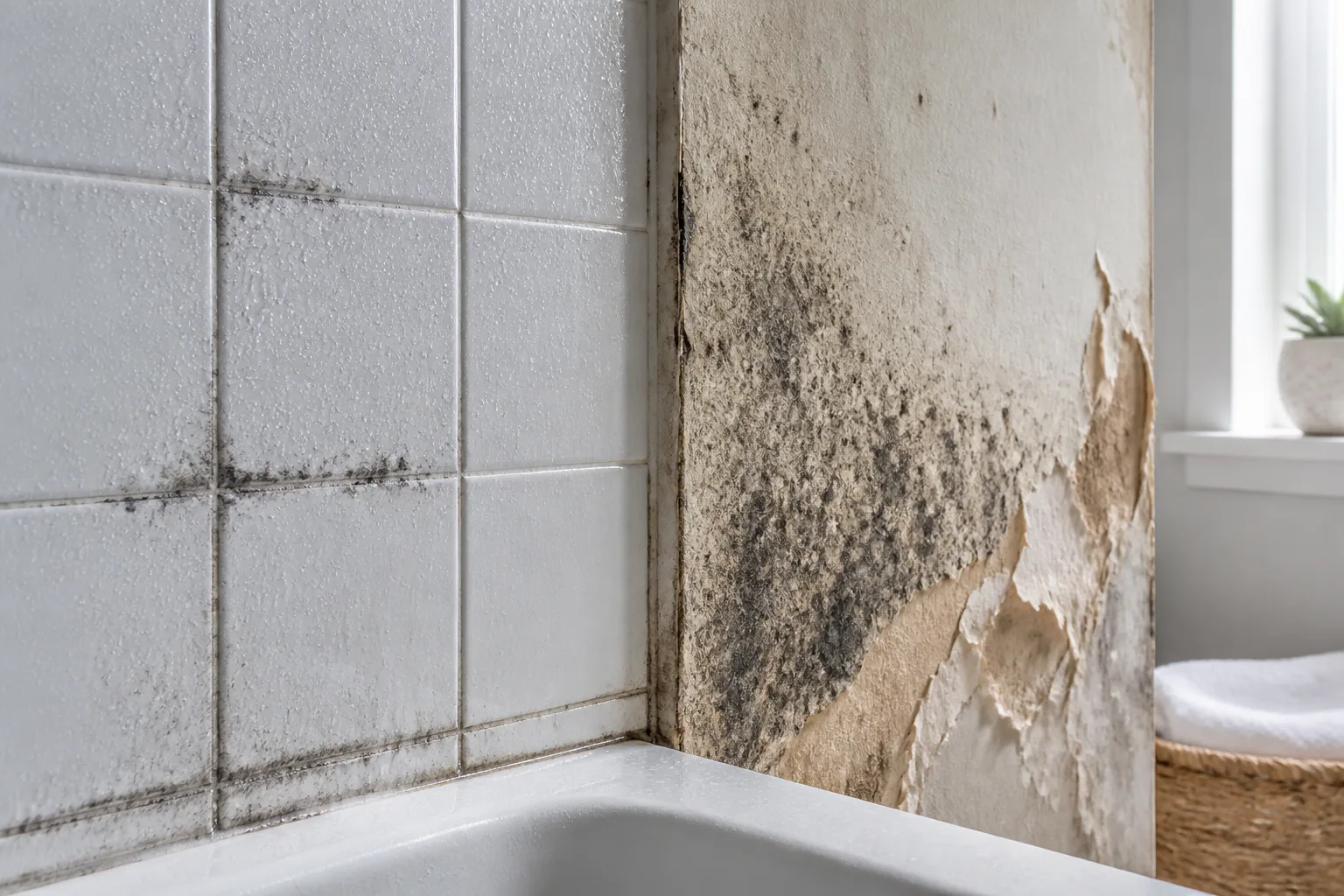
Bleach is a bad idea when mold has penetrated porous materials such as drywall paper, unfinished wood, carpet padding, insulation, ceiling tiles, or failed caulk and grout. On those substrates, liquid bleach may bleach the stain white while hyphae remain inside the material. The EPA’s mold cleanup guidance treats wet, moldy porous items as candidates for removal and discard, not surface scrubbing. If your patch is bigger than about 10 square feet, sits behind a wall, involves HVAC ducts, or follows sewage flooding, stop DIY bleaching and arrange professional remediation.
The One-Question Surface Test
Before you mix anything, run this 30-second test: Is the growth on a hard, sealed surface you could wash like a dinner plate—or on something that absorbs water?
If water beads up and the material does not soften (glazed tile, glass shower door, solid plastic), bleach may be appropriate after you confirm the finish tolerates chlorine. If the material is paper-faced drywall, wood, fabric, carpet, insulation, or crumbly grout, bleach is the wrong primary tool. You need removal, drying, and moisture repair—not another coat of hypochlorite. For help telling surface mildew from penetrating mold, see how to identify mold vs. mildew.
How Bleach Actually Works on Mold
Sodium hypochlorite, the active ingredient in household chlorine bleach, is an oxidizing biocide. It breaks down proteins and pigments in the mold colony it can reach, which is why a dark spot may turn pale after treatment. That visual change feels like success. On a sealed surface where the entire colony sits on top, it often is.
What Bleach Kills—and What It Leaves Behind
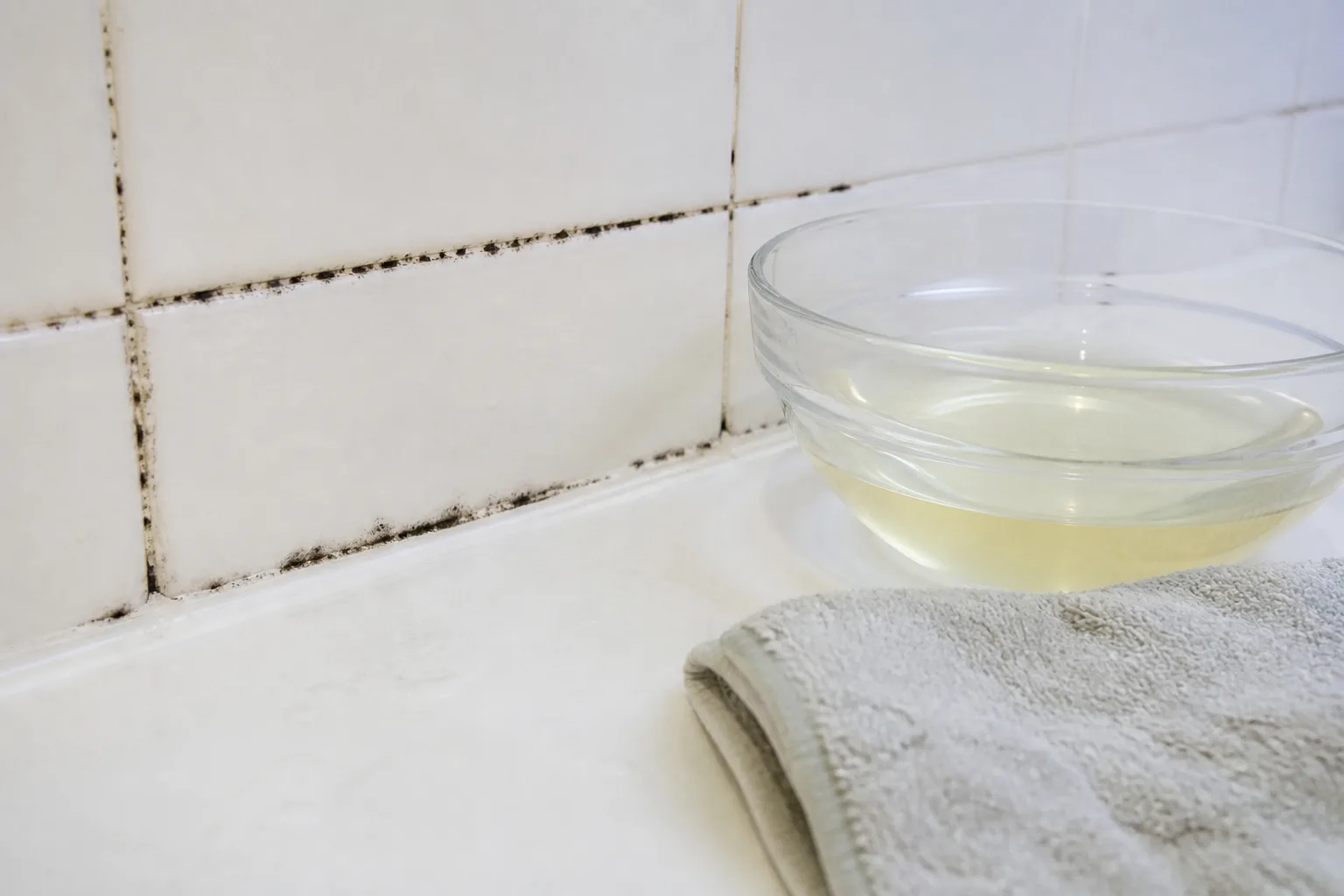
On non-porous materials, a diluted bleach solution can kill exposed mold and help remove staining when you apply it with enough contact time and follow with rinsing and drying. NC State Environmental Health and Safety notes that mold on hard surfaces can generally be removed by wiping or scrubbing with water or water and detergent, with prompt drying to discourage regrowth—bleach is one biocide option when the label and surface allow it.
On porous materials, bleach’s surface action cannot reliably reach mold growing inside fibers, paper, or wood pores. NC State’s remediation guidelines are explicit: molds infiltrate porous substances and can be difficult or impossible to remove completely by wiping. Wet porous materials with mold often must be discarded. A white spot on moldy drywall after bleaching is not proof of a dead colony—it is often proof you masked pigment while roots remain. That is the central reason bleach gets a bad reputation in remediation circles: it solves the look of mold on the wrong materials.
Color also misleads. The CDC states you do not need to identify mold species to decide cleanup—and color does not tell you how dangerous a patch is. “Black mold” marketing has trained homeowners to reach for the strongest bottle. In practice, any visible indoor mold should be removed and the moisture source fixed, regardless of shade.
When Bleach Is the Right Mold Cleaner
Bleach earns a place in your kit when all of these are true: the patch is small (well under professional size thresholds), the surface is hard and non-porous, the finish tolerates chlorine, you can ventilate, you wear proper PPE, and you have already ruled out an active leak behind the area.
Non-Porous Hard Surfaces That Tolerate Bleach
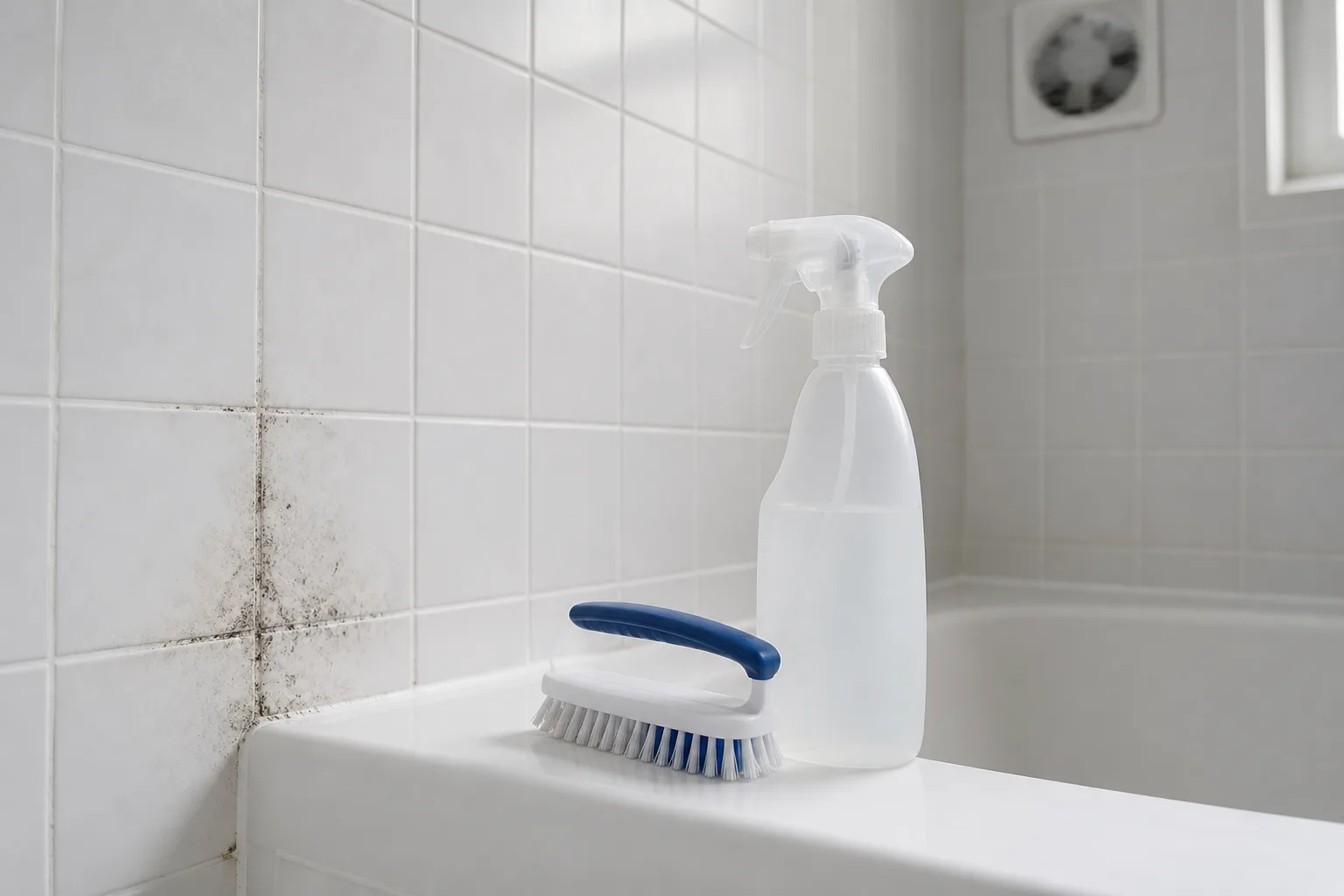
Good bleach candidates include glazed ceramic tile (not natural stone), glass, sealed porcelain tubs and sinks, some solid plastic bins and shower curtains labeled bleach-safe, and certain painted surfaces that are still intact and non-chalking. Shower grout is a gray zone: sound, sealed grout on tile may tolerate a short dwell; crumbling or missing grout is porous—bleach may lighten stains temporarily while water drives growth deeper. Failed caulk should be cut out and replaced, not repeatedly bleached.
Poor bleach candidates include marble, limestone, travertine, unsealed concrete, hardwood, laminate with swollen seams, wallpaper, drywall, ceiling tiles, upholstery, and carpet. Bleach can pit metal, yellow vinyl, and weaken fabrics. For mold inside walls, read how to remove mold from inside walls before spraying anything.
Correct Dilution, Dwell Time, and Rinse Steps
Follow the CDC standard: 1 cup of household laundry bleach per 1 gallon of cool water. Do not use full-strength bleach on household mold—it damages grout, etches metals, and increases fume exposure without improving kill rates on typical bathroom patches.
Step-by-step for a small hard-surface patch:
- Ventilate by opening a window or running an exhaust fan that vents outdoors. Do not blow a portable fan across mold; that spreads spores.
- Gear up: N95 respirator minimum, nitrile or rubber gloves, goggles without vent holes (CDC PPE guidance).
- Pre-clean loose debris with detergent and water on a disposable cloth; bag the cloth.
- Apply the diluted bleach with a spray bottle or cloth—do not oversaturate adjacent porous materials.
- Dwell at least 10 minutes on the moldy area without letting the solution dry completely on grout (drying reduces effectiveness).
- Scrub gently with a nylon brush if needed; avoid metal on tile.
- Rinse with clean water and dry thoroughly.
For plastic food containers or dishes with surface mold, wash with hot soapy water first, then sanitize in 1 tablespoon bleach per gallon of cool water for one minute if the item is bleach-safe—same principle as the CDC disaster-cleanup fact sheet on bleach use, scaled to household items.
When Using Bleach on Mold Is a Bad Idea
If any of the following apply, put the bleach bottle back. You are either using the wrong product or the wrong scale of job.
Porous Materials Bleach Cannot Reach
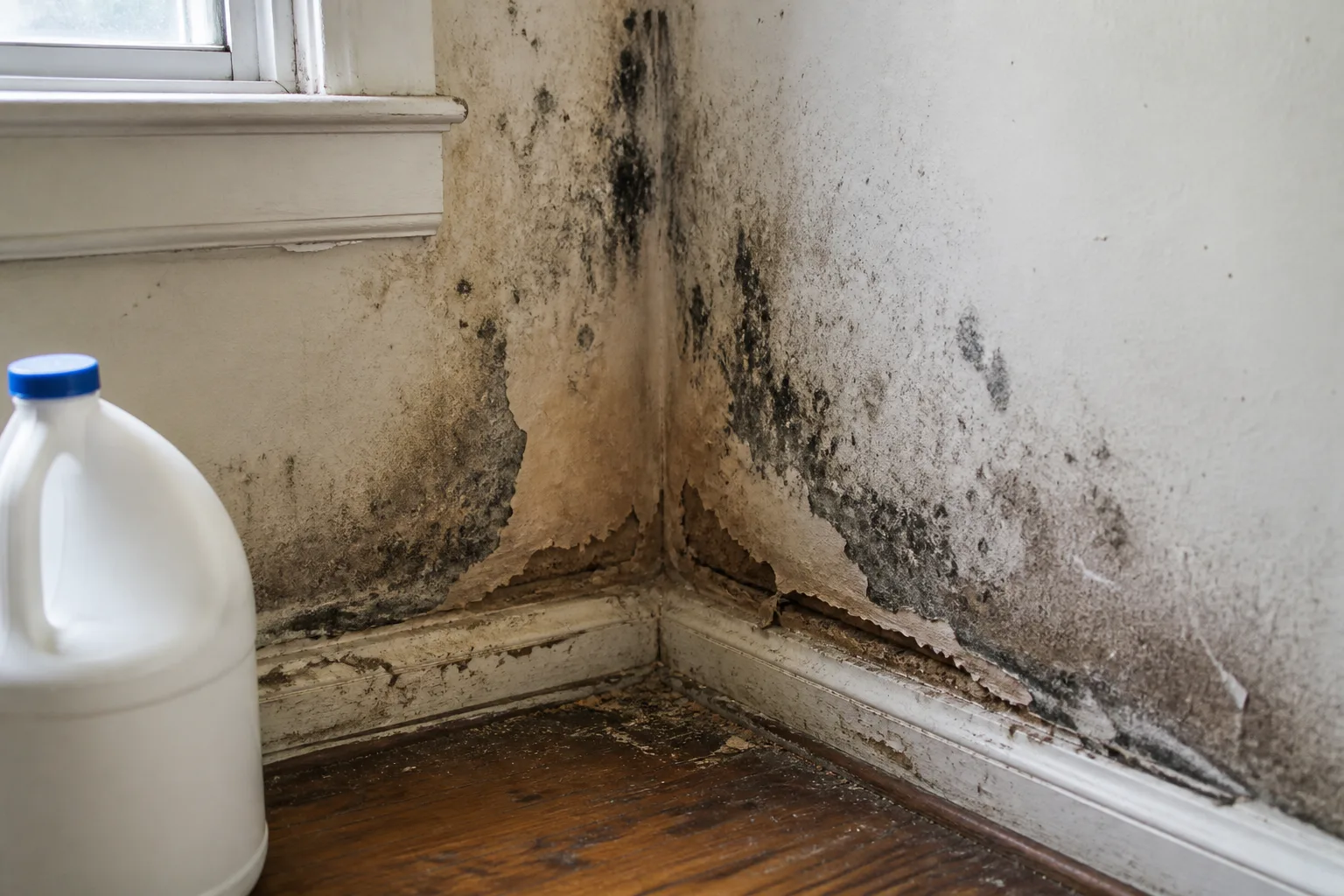
Drywall and gypsum board are the most common mistake. Paper face acts like a sponge; mold colonizes the paper and often the cavity behind it. Bleach applied to the surface does not reliably kill growth inside, and repeated wetting feeds the problem. NC State EHS recommends discarding mold-contaminated porous materials that cannot be fully cleaned. The right move is controlled removal, drying framing, and rebuild—not another bleach rinse.
The same logic applies to carpet and pad, insulation, ceiling tiles, unfinished wood, and upholstery. For fabric mold, see how to get mold off clothes. For houseplant soil mold—a different problem with different rules—see mold on houseplant soil.
Large Patches, Hidden Growth, and HVAC Contamination
Scale matters. The EPA recommends professional help for mold areas larger than about 10 square feet. NC State’s guidelines describe limited containment for roughly 10 to 100 square feet and full containment above that—protocols homeowners rarely have materials and training to execute.
Hidden mold behind wallpaper, under vinyl flooring, inside HVAC ducts, or above ceiling tiles requires investigation, not surface bleaching. NC State warns that stripping wallpaper or opening cavities without containment can release massive spore loads. Musty smell without a visible patch is a stop and investigate signal, not a cue to fog bleach around the room.
Medically vulnerable occupants should not participate in mold cleanup. The CDC lists people with allergies, immune suppression, asthma, or COPD as groups who should avoid mold removal work—and who should not stay in a moldy home during remediation.
Safety Rules Before You Open the Bleach
Mold cleanup exposes you to two hazards: the mold and the chemistry. Treat both seriously.
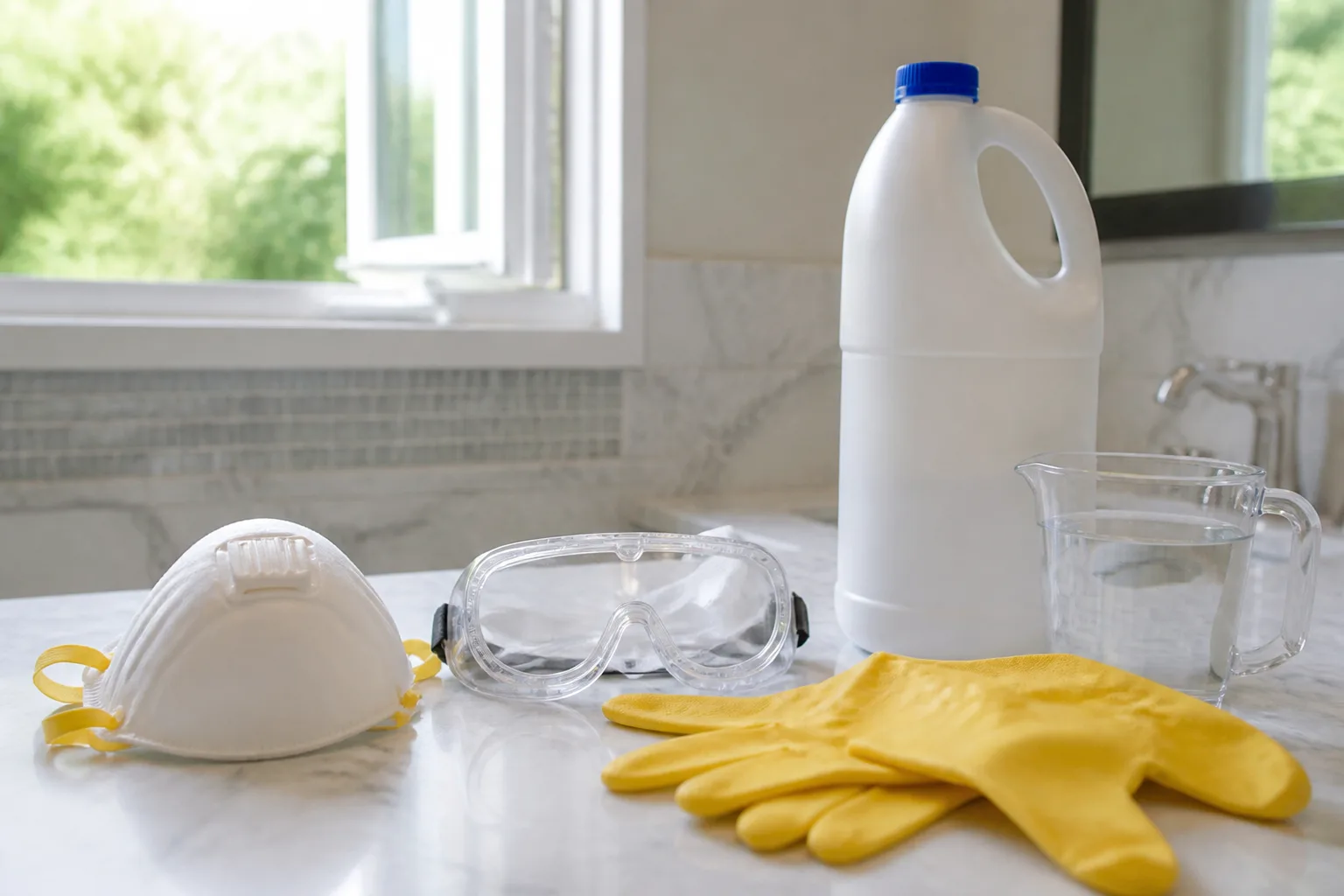
PPE, Ventilation, and Deadly Mixing Mistakes
Minimum PPE for a small patch: NIOSH-approved N95 respirator, non-latex gloves, and goggles that seal against dust. Larger demolition jobs need half-face or full-face respirators with appropriate cartridges—see NC State EHS respiratory protection tiers.
Never mix bleach with ammonia, vinegar, hydrogen peroxide, rubbing alcohol, or other cleaners. Bleach plus ammonia releases chloramine gas; bleach plus acids (including vinegar) releases chlorine gas. Both can cause serious respiratory injury. Rinse surfaces and let them dry before switching products. The CDC reminder is absolute: never mix bleach with ammonia or any other cleanser.
Ventilation means fresh air in, not recirculating spores. Open windows when weather allows; run bathroom or kitchen exhaust that vents outdoors. Keep children, pets, and sensitive adults out of the work zone until surfaces are dry.
If bleach splashes in eyes or causes breathing difficulty, leave the area, get fresh air, and contact poison control or emergency services per product labeling.
Alternatives That Work Without Chlorine
When bleach is wrong for the surface—or you want to avoid chlorine fumes—three common household products can help on small, appropriate hard-surface patches. None replaces fixing moisture. None reliably saves porous materials that should be removed.
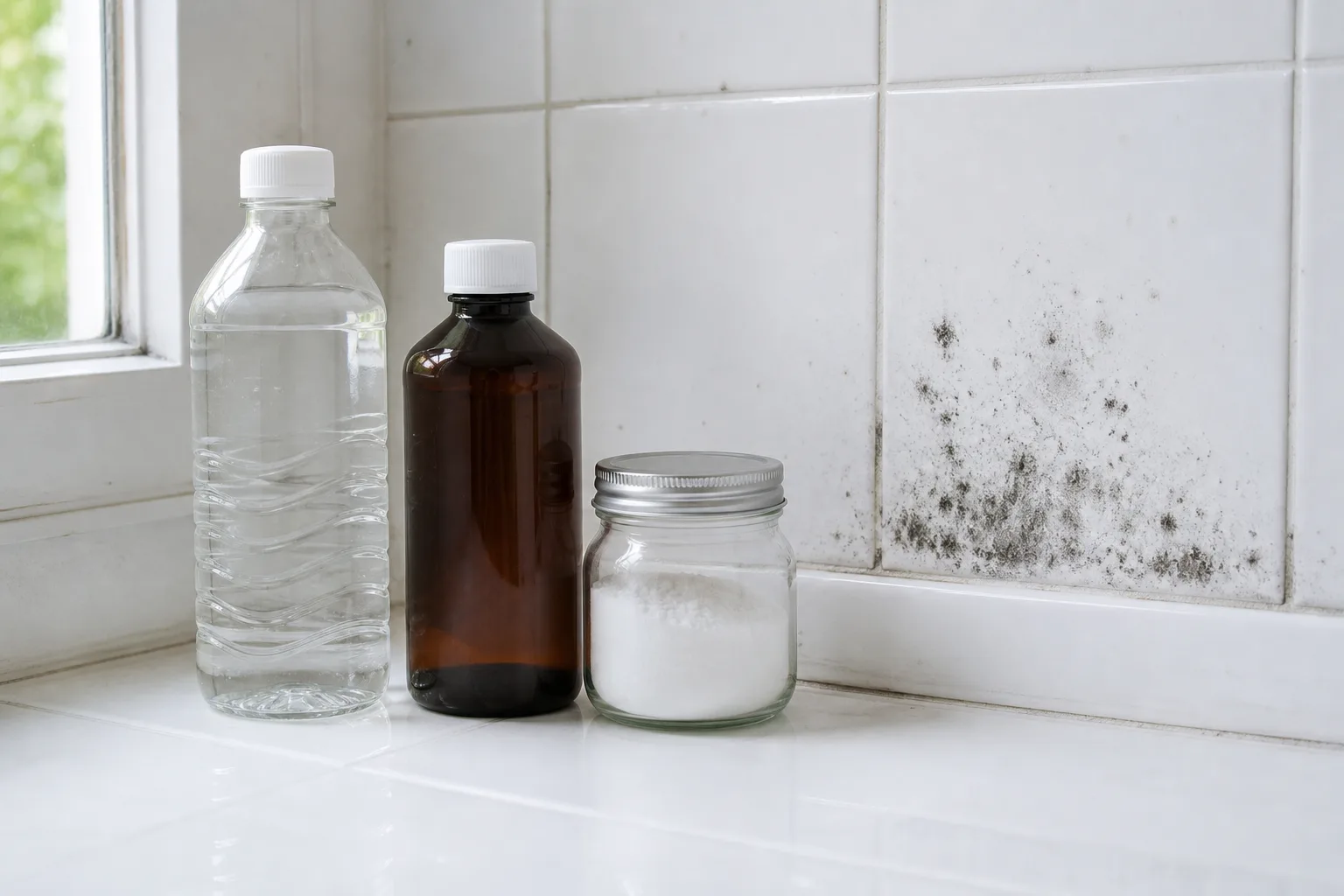
Vinegar, Hydrogen Peroxide, and Citric Acid Compared
A 2015 evaluation of antifungal agents for indoor air environments (Rogawansky et al., PMC) found that vinegar and hydrogen peroxide showed antifungal activity against certain common indoor molds in laboratory conditions, while results vary by species, concentration, and contact time. Translating lab data to your shower corner requires humility: slower agents need longer dwell and may leave stains.
| Cleaner | Typical strength | Best for | Limitations | Dwell time |
|---|---|---|---|---|
| Chlorine bleach | 1 cup per 1 gallon water (CDC) | Glazed tile, glass, bleach-safe plastic | Porous materials; fumes; finish damage | ~10 min |
| White vinegar | Undiluted household (~4–6% acetic acid) | Small hard-surface mildew; acid-tolerant tile | Etches stone; slow; odor; not for drywall | ~30–60 min |
| Hydrogen peroxide | 3% first-aid solution, fresh | Grout, tile, some fabrics (test first) | Degrades in light; slower than bleach | 15–20+ min |
| Citric acid | 1–2 tbsp powder per cup hot water | Light stains on hard surfaces | Slow; not for large or porous jobs | 15–20 min |
For a full vinegar-only protocol, see our DIY mold remover with vinegar guide. The National Pesticide Information Center notes that stronger acetic acid concentrations increase burn risk—use ordinary household vinegar indoors, not horticultural concentrates.
Hydrogen peroxide must be fresh; expired bottles fizz weakly and perform poorly. Citric acid and lemon juice work similarly on light surface growth but will not remediate wall cavities.
Do not layer products. Pick one approach per session, complete rinse and dry, and reassess. If the patch returns within days, you have a moisture problem—not a weak cleaner.
Surface-by-Surface Decision Guide
Use this quick reference after the surface test:
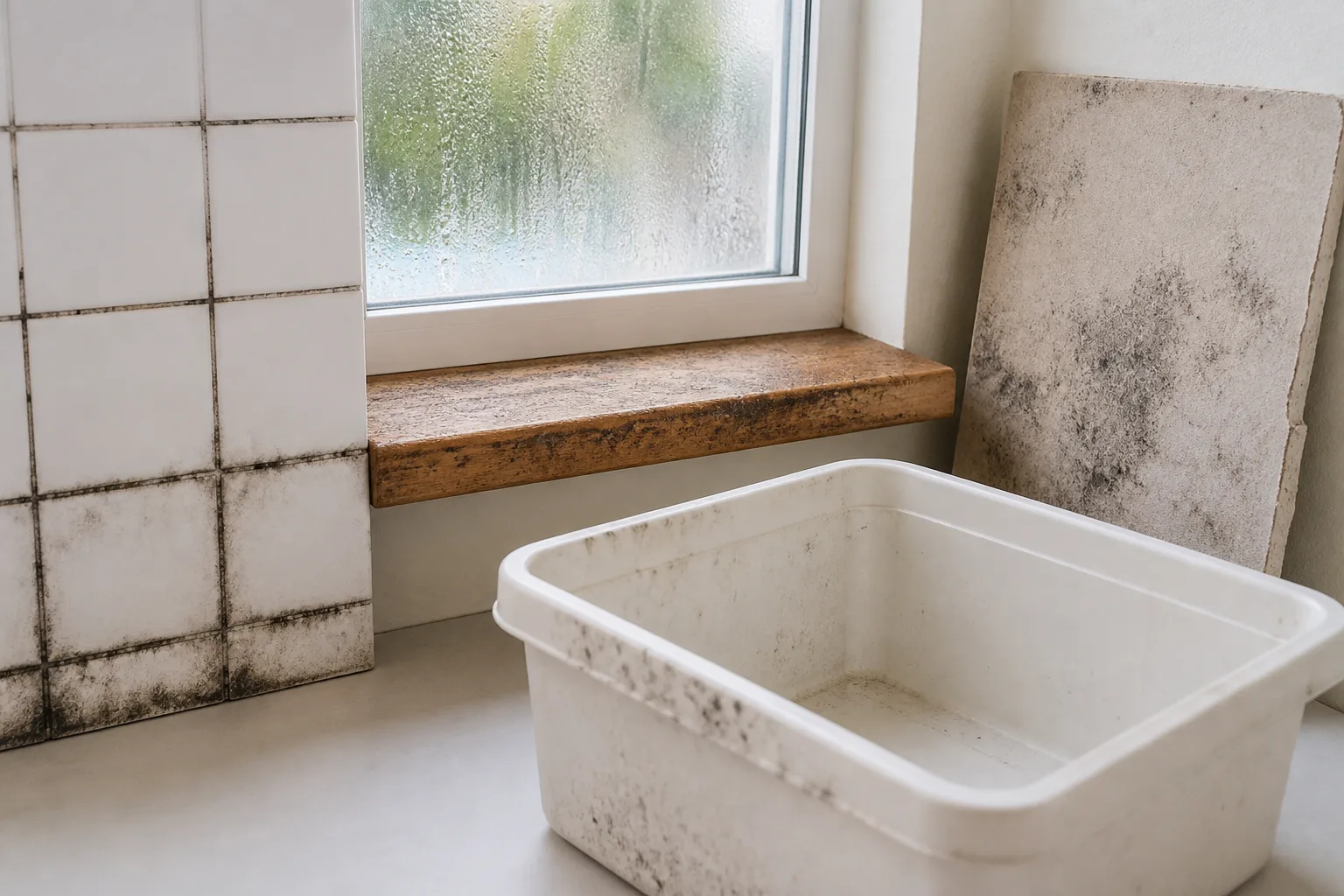
Shower tile and glass: Diluted bleach or vinegar/peroxide on intact glazed surfaces; replace failed caulk; run exhaust during and 20 minutes after showers. Grout: clean if sound; reseal or regrout if porous or crumbling. Plastic bins and dishes: wash, then bleach-sanitize if label allows. Wood windowsills: avoid bleach; fix condensation, sand or replace affected wood, seal paint. Drywall: do not bleach—open, remove, dry, rebuild per wall mold guide. Carpet: discard pad and often carpet; bleach is not a rescue. Houseplant soil: scrape and adjust watering; see mold on soil. Leather shoes: specialty cleaner; bleach ruins leather.
When in doubt, choose the least aggressive product that matches the surface—and escalate to removal if the material is absorbent.
Fix the Moisture—or the Mold Comes Back
Every cleaner fails if the room stays wet. Mold needs moisture, oxygen, and organic material. You cannot eliminate spores indoors; you can eliminate damp niches where colonies form.
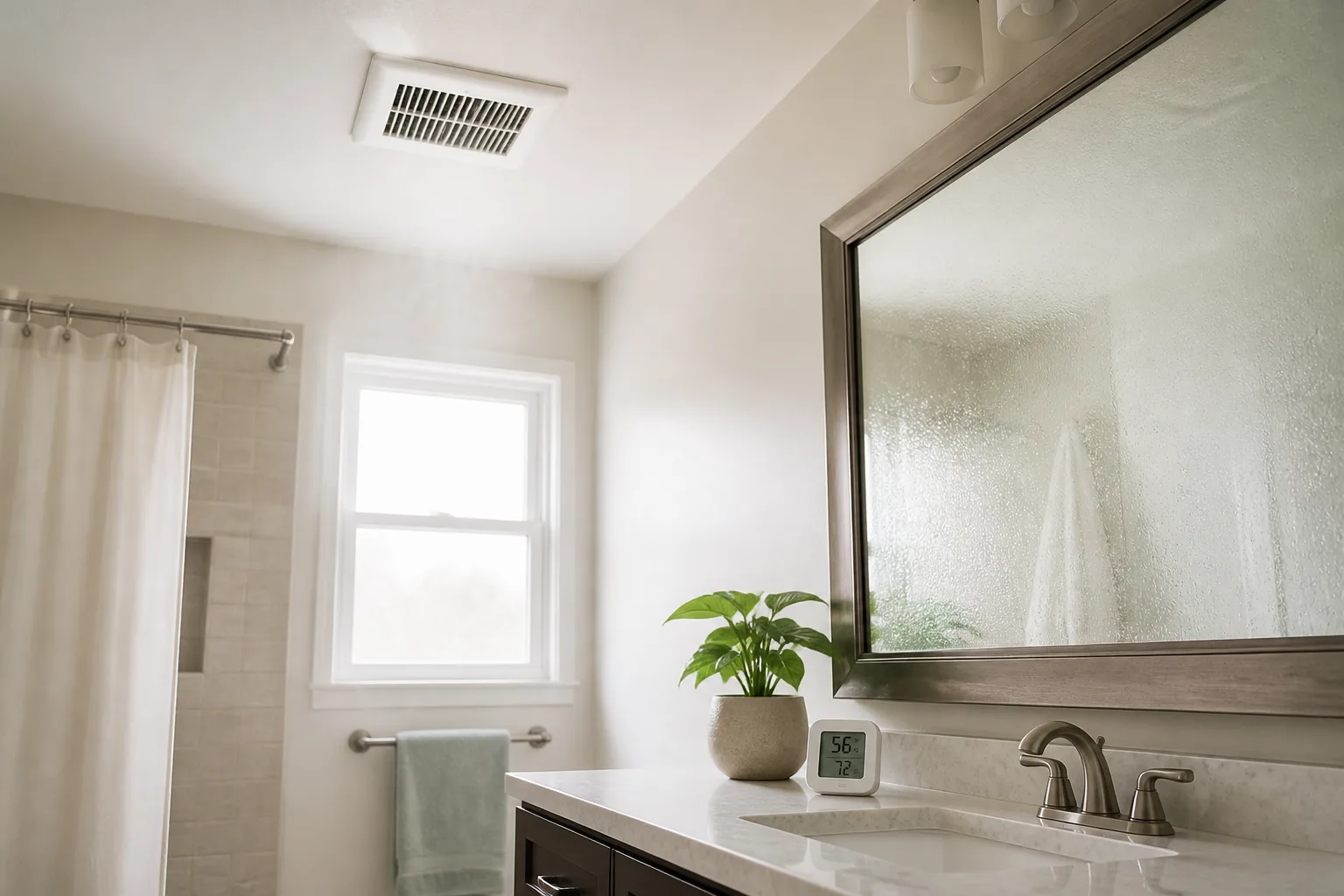
NC State Extension recommends keeping indoor relative humidity below 60%, ideally 30–50%, measured with an inexpensive hygrometer. Run bathroom exhaust during showers, fix leaks within 48 hours of wetting, clean gutters, slope soil away from foundations, and dry fabrics promptly. Condensation on cold pipes and single-pane windows is a common hidden source—insulation and airflow changes beat monthly bleach scrubs.
If mold returns to the same spot after correct cleaning and drying, assume an active moisture source: failed grout, a slow plumbing leak, roof intrusion, or condensation inside a wall. Repeating bleach is treating smoke while the fire burns.
When to Call a Mold Professional
Call a licensed remediation contractor when:
- Visible mold exceeds ~10 square feet (EPA DIY threshold)
- Growth follows flooding, sewage, or long-term undiscovered leaks
- Mold is in HVAC ducts or widespread in a building
- You smell mold but cannot find the source
- Porous materials (drywall, insulation, carpet pad) are wet and moldy
- Occupants have severe asthma, immune compromise, or symptoms that worsen indoors
- You need documentation for a sale, rental, or insurance dispute
Professionals use containment, negative air, HEPA filtration, and material removal protocols NC State outlines for medium and large jobs—steps bleach bottles cannot replicate.
Conclusion
Using bleach to kill mold is not universally bad or good—it is surface-dependent. On small patches of hard, non-porous, bleach-tolerant materials, a CDC-standard dilution (1 cup per gallon), ten-minute dwell, rinse, and dry can work. On drywall, wood, carpet, insulation, and large or hidden growth, bleach is a bad idea: it risks finish damage, toxic mixing mistakes, and false confidence while leaving colonies alive inside porous materials.
Run the surface test, match the product to the material, wear N95 protection, never mix cleaners, and fix moisture first. When the job exceeds DIY scale or involves porous demolition, hire remediation and use the time you would have spent re-bleaching to dry the building. That is how you kill mold once—not every weekend.