How to Grow and Care for Tropical Hibiscus Plants
Learn tropical hibiscus care for strong roots and steady blooms: light, watering, fertilizer, pruning, seasonal moves, winter protection, and fixes for bud drop.
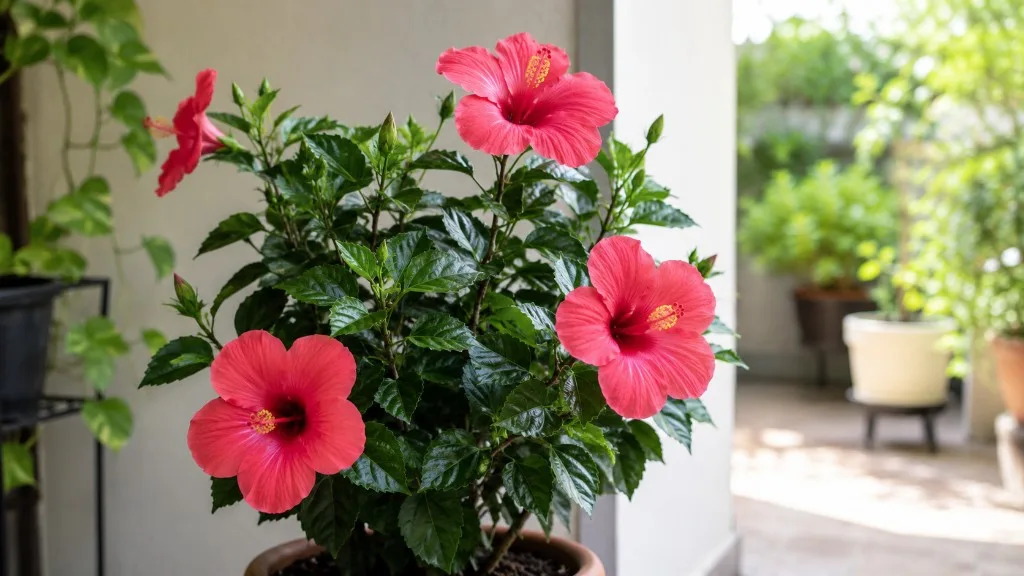
Tropical hibiscus rewards a bright, warm spot with glossy leaves and dramatic flowers, but it reacts quickly when its conditions change. The most dependable routine is simple: give it strong light, keep the root ball evenly moist but never waterlogged, feed only while it is actively growing, and move it between indoors and outdoors gradually.
The care advice below is for tropical hibiscus, Hibiscus rosa-sinensis. If your plant is a hardy perennial hibiscus, its winter behavior and pruning needs are different.
What tropical hibiscus is—and what it is not
Tropical hibiscus is an evergreen woody shrub from the mallow family, grown for large, funnel-shaped flowers and shiny foliage. Cultivars vary in flower color, size, and form; many classic blooms last about a day, while new buds keep the display moving during warm growing weather. NC State Extension lists H. rosa-sinensis as a tropical evergreen that needs protection from wind and frost, and notes that environmental changes can prompt leaves and buds to drop (NC State Extension Gardener Plant Toolbox).
The name “hibiscus” also covers plants with very different winter tolerances. Hardy rose mallow, often sold as Hibiscus moscheutos, dies back and returns from its roots in cold climates; Rose of Sharon, H. syriacus, is a deciduous woody shrub. Tropical H. rosa-sinensis stays leafy in warm climates and is commonly listed for USDA zones 9a through 11b. In colder zones, grow it in a container you can shelter before frost rather than assuming it will survive outdoors like a hardy hibiscus.
This distinction matters when you buy a plant or follow pruning advice. Check the botanical name on the tag and the plant’s expected winter habit: tropical hibiscus stays evergreen in warmth, hardy rose mallow dies back and returns from its roots, and Rose of Sharon is a deciduous shrub. A seller’s broad “hibiscus” label is not enough to tell you how it will handle winter.
With adequate light and steady care, a tropical hibiscus can remain a container plant for many years, but there is no single lifespan that fits every cultivar and home. Treat it as a long-lived shrub rather than a seasonal bouquet, and plan to prune, refresh its potting mix, and manage its winter move as it grows.
Tropical hibiscus care at a glance
Use this table as a starting point, then adjust to the plant’s actual light, temperature, pot size, and growth rate. A small container on a hot patio can dry much faster than a large pot in a sheltered spot, while an indoor plant in winter may use very little water.
| Need | Practical starting point | What to watch |
|---|---|---|
| Light | Full sun or at least six hours of direct light; bright window indoors | Acclimate after a move; shield from harsh reflected heat |
| Water | Soak thoroughly when the upper mix begins to dry | Do not let the pot sit in drained water |
| Soil | Moisture-retentive but freely draining container mix | Slow drainage and sour-smelling mix point to root stress |
| Feeding | Label-directed fertilizer during active growth | Reduce or pause when growth slows in winter |
| Pruning | Shape in early spring before vigorous growth | Flowers form on new growth; heavy late pruning delays bloom |
| Winter | Bring container plants inside before cold nights or frost | Check for pests and expect some adjustment-related leaf drop |
Give it bright light, then protect it from sudden sun
Tropical hibiscus blooms best with strong light. Outdoors, choose a position that receives full sun for much of the day; six or more hours of direct sun is a useful target, though a little afternoon protection can help where summer heat is extreme. NC State’s plant profile lists full sun as six or more direct-light hours and partial shade as an option, while Epic Gardening similarly notes that hot-climate plants may benefit from afternoon protection (NC State Extension; Epic Gardening).
A plant that has spent weeks indoors should not go straight into midday sun. Start it outside in bright shade for several days, then add a little direct morning sun at a time over roughly one to two weeks. If leaves develop pale, papery patches, move it back to gentler light and lengthen the acclimation period; if stems stretch and flowering fades, the plant may need a brighter position.
Indoors, the brightest available window is usually the best choice. A south- or west-facing window can work if the plant is not pressed against cold glass or exposed to scorching heat, while a grow light can help in a dim home. Rotate the pot occasionally so growth stays balanced, but avoid frequent location changes during bud formation because hibiscus can respond to abrupt shifts by dropping buds.
Choose a pot and soil that drain freely
Use a container with several unobstructed drainage holes. A pot that is only slightly larger than the root ball is easier to manage than an oversized one: extra soil holds water longer than the roots can use, especially indoors or during cool weather. Do not place gravel in the bottom as a substitute for drainage; it reduces the depth of usable soil and does not correct a blocked or missing hole.
A quality container potting mix gives roots both moisture and air. If your mix stays wet for days, blend in a coarse component such as perlite or fine bark, or switch to a lighter mix formulated for container plants. Avoid dense garden soil in a pot because it can compact and drain poorly. The goal is not a mix that dries immediately; tropical hibiscus needs steady moisture, but oxygen-starved roots are vulnerable to decay.
Set the plant at the same depth it was growing before, with the root flare not buried under extra mix. After watering, empty the saucer so the pot does not remain in standing water. If you grow the shrub in a warm-climate garden bed, choose a site with rich, moist soil that still drains; NC State describes the plant as preferring moist, well-drained soil and protection from wind (NC State Extension).
Water by the soil, not by the calendar
Check the mix before watering. Press a finger about an inch into the surface; if that layer feels dry and the pot is noticeably lighter, water slowly until excess runs from the drainage holes. If the soil is still damp, wait and check again later. This method is more reliable than “once a week” because heat, wind, sunlight, humidity, and pot size all change how quickly the root ball dries.
During hot outdoor weather, a container may need water daily, sometimes more than once during a heat wave if it is small or exposed. Water the root zone thoroughly rather than giving frequent sips that wet only the surface. In winter indoors, lower light and slower growth usually mean less frequent watering; the plant still needs occasional water, but the surface should have time to dry slightly between soakings.
Use a pot with drainage and remove collected runoff within a few minutes. Constantly saturated mix, a sour smell, or leaves yellowing while the soil stays wet point toward a drainage or root problem, not thirst. Conversely, a pot that becomes bone-dry and pulls away from its sides can shed water; soak it gradually until the root ball is evenly moist, then resume checking it more often.
Feed during active growth without overdoing it
Tropical hibiscus uses nutrients to make new stems and flowers, but fertilizer cannot replace light or healthy roots. During spring and summer, apply a complete fertilizer at the rate and interval on its label, choosing a product suitable for flowering container plants. If you use a slow-release product, do not layer on repeated liquid feedings unless the label’s directions explicitly allow both; combining products can lead to excess salts.
Avoid “more phosphorus equals more flowers” as a shortcut. Phosphorus is essential, but excessive applications can be wasteful and may interfere with nutrient availability; a general-purpose or bloom fertilizer used as directed is safer than adding a concentrated bloom booster by guesswork. University of Florida IFAS explains that nutrient uptake depends on conditions such as soil pH and nutrient interactions, so a yellow leaf alone is not enough evidence to diagnose a single deficiency (University of Florida IFAS, Plant Essential Nutrients and Their Role).
When growth slows in winter, reduce or stop feeding until the plant is actively putting out new growth again. Pale foliage, weak growth, and fewer flowers can reflect low light, root trouble, or a seasonal slowdown as well as nutrition. If you suspect a deficiency after correcting basic conditions, follow the fertilizer label and consider a soil or growing-medium assessment rather than escalating the dose.
Grow tropical hibiscus outdoors without shock
In frost-free regions, tropical hibiscus can grow as a landscape shrub; in colder climates, a container lets you enjoy it outside in warm months and move it to safety later. Place the pot where it gets strong light and some protection from drying wind. The glossy canopy can use water quickly on hot, windy days, so check containers more frequently during heat, but do not compensate by leaving the roots submerged.
Wait until frost danger has passed before moving a wintered plant outside. Platt Hill Nursery recommends letting an indoor hibiscus adjust gradually to higher outdoor light to prevent leaf scorch; the same principle applies when bringing a new nursery plant home or moving it from shade into full sun (Platt Hill Nursery). A sheltered porch or bright shade is a good first stop, followed by gradual exposure to morning sun.
If the plant is in a pot, make sure it is stable in wind and that water can exit freely. Avoid moving it repeatedly between very different conditions while buds are forming. Tropical hibiscus can tolerate warm weather when its roots have enough water, but intense reflected heat from a wall or pavement can stress foliage even when the air temperature seems manageable.
Bring it indoors before cold weather
Do not wait for frost to move a container hibiscus indoors. It is a tropical evergreen, and cold exposure can damage leaves and buds; NC State specifically says to protect it from frost and wind. In regions with chilly autumn nights, use the forecast as your cue and move the plant before temperatures repeatedly fall into the low 50s Fahrenheit, especially if the plant is wet or exposed.
Before moving it, inspect the undersides of leaves, stems, and buds for aphids, whiteflies, scale, or webbing. Rinse the foliage and let it dry, remove dead leaves and debris, and isolate the plant from other houseplants for a couple of weeks if possible. This short quarantine makes it easier to catch pests before they spread indoors.
Expect a transition rather than perfect continuity. The sudden reduction in light, indoor heating, and a different watering pace can trigger some leaf or bud drop, even when the plant is not dying. Put it in the brightest available spot, keep it away from cold drafts and heating vents, and avoid changing fertilizer, pot size, and watering routine all at once. Platt Hill Nursery also notes that indoor transitions can cause leaf and bud loss and advises allowing the plant to adjust rather than treating every dropped leaf as a crisis (Platt Hill Nursery).
Repot only when roots need more room
Repot when roots circle densely around the root ball, emerge through several drainage holes, or the pot dries far faster than it used to despite appropriate watering. The best time is usually spring, as new growth begins, because the plant can recover during active growth. Choose a pot one size larger rather than jumping to a much bigger container.
Slide the plant out and examine the roots before disturbing them. Healthy roots are firm; remove only roots that are mushy, blackened, or clearly dead with clean shears. Refresh the outer mix, keep the crown at its former depth, water thoroughly once, and then let the top layer begin to dry before watering again.
A hibiscus does not need annual repotting simply because the calendar says so. If it is healthy and the roots have room, refreshing the top layer of mix may be enough. A modestly root-bound plant can flower well, but a severely crowded root ball becomes hard to wet evenly and may dry quickly between waterings.
Prune to shape and encourage branching
Prune in early spring, before vigorous new growth begins. Remove dead, damaged, or crossing stems first, then shorten healthy branches to shape the plant or control its size. NC State notes that flowers form on new growth and lists early-spring pruning as a way to encourage a compact habit; a hard cut can therefore delay flowers while new stems develop (NC State Extension).
Use sharp, clean pruners and make cuts just above a leaf node facing in the direction you want the next branch to grow. If the plant is lanky, shorten selected stems rather than shearing every branch to the same height. Pinching the tips of actively growing branches can encourage side shoots and a fuller outline, although it may temporarily remove developing buds.
Avoid severe pruning late in the season unless you must remove damaged or diseased growth. A major cut shortly before flowering can sacrifice buds, and a hard fall prune can leave the plant with tender shoots just as light and temperature are declining. If you need to reduce its size before bringing it inside, remove only enough to fit safely and save major shaping for spring.
Understand its flowers and deadheading
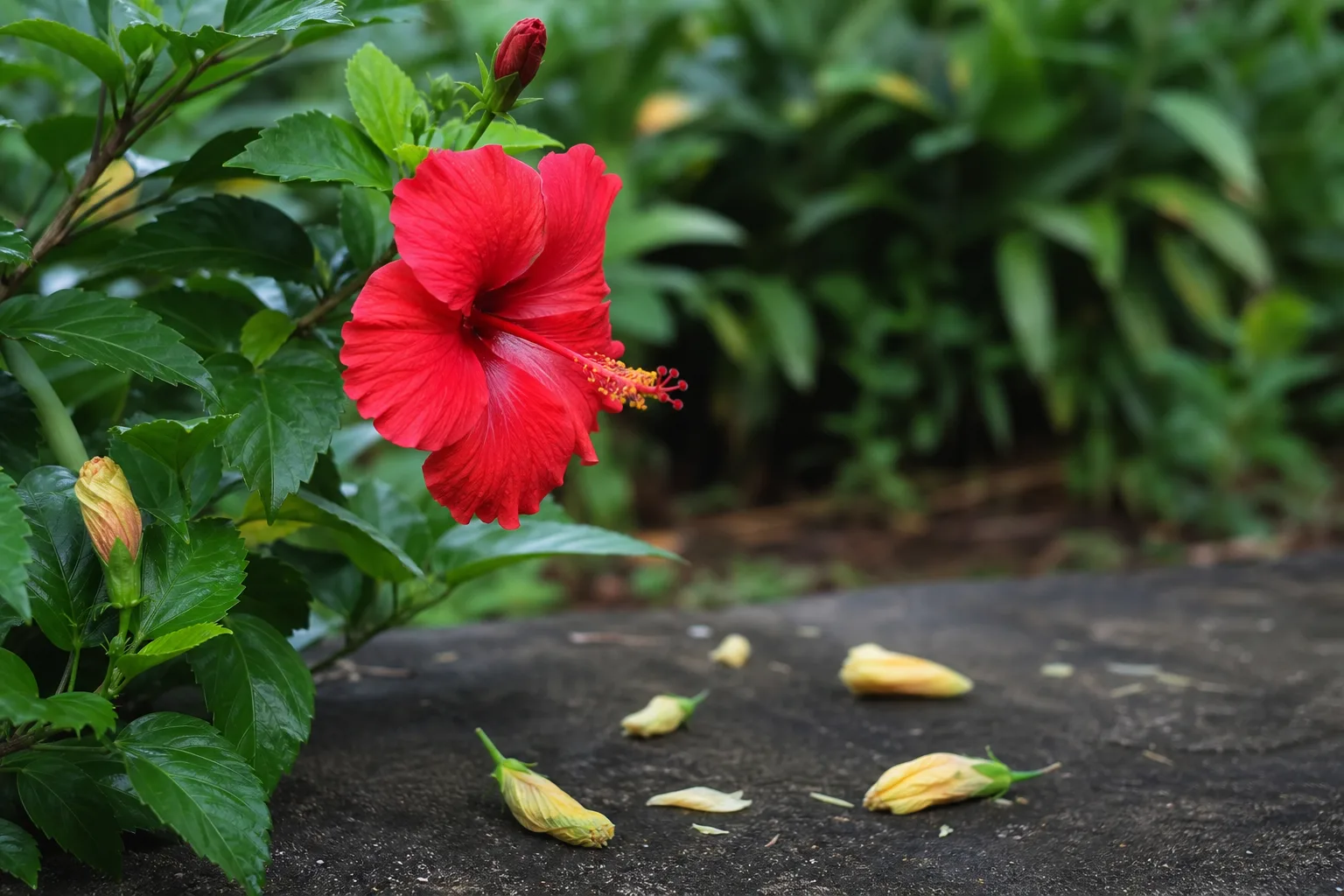
A tropical hibiscus flower is often a short-lived event, not a sign that the plant has failed. Many varieties open for a day and then wilt; fresh buds can continue to form when the plant has the warmth, light, moisture, and active growth it needs. NC State Extension describes the flowers as seasonal and often lasting one day, so judge success by the plant’s ongoing bud production rather than by how long one bloom stays open (NC State Extension).
Remove a spent bloom if it is unsightly or damp weather is causing old petals to cling to the plant. Use your fingers or clean snips and avoid pulling hard on the stem, which can damage the nearby bud. Deadheading keeps the plant tidy, but it is not a substitute for the light and water that drive new flowers.
If buds form but do not open, look for a recent stress event before changing the entire care plan. A cold snap, abrupt move, severe drying, overwatering, or a sudden shift from outdoor sun to indoor shade can interrupt development. Stability matters more than a special bloom trick.
Propagate tropical hibiscus from stem cuttings
Stem cuttings are the practical way to make a copy of a favorite cultivar. Seeds from hybrid plants may not produce a plant with the same flower color or form, while a cutting carries the parent plant’s traits. NC State lists stem cutting as a propagation method for H. rosa-sinensis (NC State Extension).
Take a healthy, nonflowering stem tip during active growth with clean pruners. Remove lower leaves so none sit below the surface, then place the cutting in a small pot of clean, moist propagation mix. Keep it warm in bright indirect light; a loose clear cover can slow moisture loss, but leave some ventilation and keep the mix damp rather than waterlogged.
Once the cutting resists a gentle tug and begins producing new growth, acclimate it to room conditions and pot it into a small container with drainage. Avoid starting several cuttings in a huge shared pot, where it is difficult to manage moisture and inspect roots. Keep the young plant out of harsh sun until it has established.
Check for pests before treating
Inspect leaves every week, especially the undersides and tender new growth. Aphids cluster around buds, whiteflies flutter when a plant is disturbed, spider mites may leave fine webbing and speckled leaves, and scale can appear as fixed bumps along stems. Warm indoor conditions can let a small population build quickly, which is why the pre-winter inspection matters.
Start with the least disruptive response: isolate the plant, rinse foliage with a gentle stream, and wipe visible insects from leaves or stems. Repeat inspections every few days because eggs or hidden insects can survive an initial rinse. Platt Hill Nursery discusses whiteflies, aphids, and spider mites as common hibiscus pests, while NC State flags scale as something to watch (Platt Hill Nursery; NC State Extension).
If physical removal is not enough, use a product labeled for the pest and for the setting where the plant grows, following its directions exactly. Test a small area first because some plants can react to sprays, and do not apply treatments in hot, direct sun or around pollinators contrary to the label. Avoid reaching for a stronger pesticide before confirming what insect you have; webbing, stippling, sticky residue, and raised bumps point to different problems.
Troubleshoot common tropical hibiscus problems
Start with what changed in the last two weeks: a move, a heat wave, a cold draft, a missed watering, a new fertilizer, or a pest exposure. Then check soil moisture and drainage, look underneath leaves, and compare the affected growth with healthy parts of the plant. These checks narrow the cause faster than changing water, light, and fertilizer all at once.
A single symptom rarely identifies a single cause. Use the patterns below as triage, then make one measured adjustment and watch new growth rather than expecting damaged leaves to recover.
Yellow leaves: check the pattern and the roots
A few older leaves yellowing as the plant adapts to a seasonal move can be normal, especially if new growth remains firm and green. Widespread yellowing with damp soil suggests that roots may be short of oxygen; yellowing with a dry, shrinking root ball points in the other direction. Check the mix an inch below the surface and empty any water collected in the saucer before changing fertilizer.
Look at where the yellowing begins. Older leaves fading first can occur with natural aging or a mobile nutrient shortage, while new leaves that emerge pale or distorted call for a different investigation. Nutrient patterns overlap with water and root stress, so do not diagnose iron or nitrogen deficiency from color alone; IFAS describes how nutrient mobility and soil pH affect visible symptoms (University of Florida IFAS).
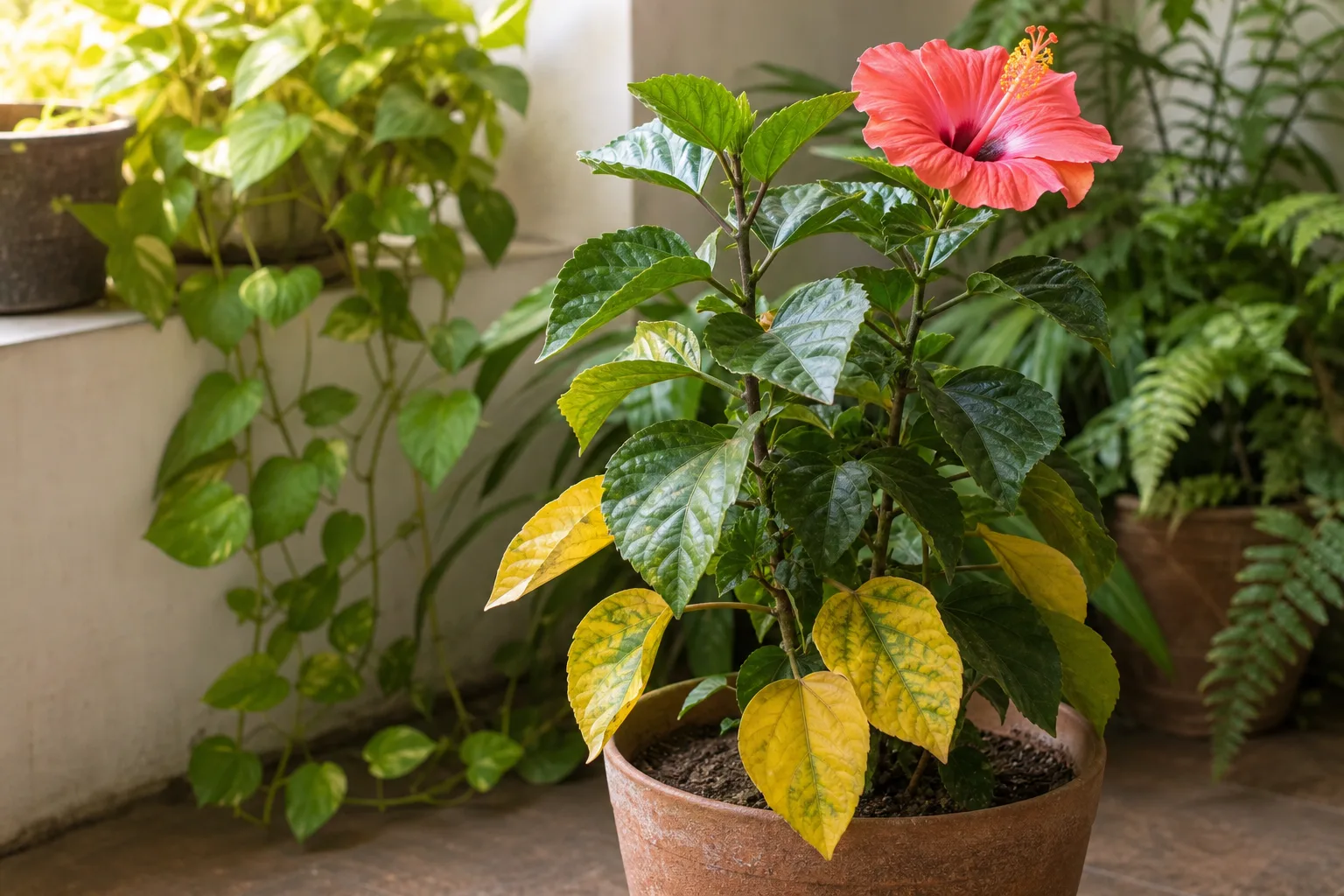
Remove leaves that are fully yellow and dry, but keep partially green leaves while you correct the cause. If yellowing continues on new growth after watering and drainage are stable, assess light, root condition, and fertilizer history before adding a supplement.
Buds falling before they open: look for a recent change
Bud drop often follows a sudden change rather than a long-term lack of fertilizer. Moving the plant from a bright patio into a dim room, letting the root ball dry hard, keeping it saturated, or exposing it to cold air can all interrupt bud development. NC State notes that this species is sensitive to environmental changes and may drop buds and leaves after a move (NC State Extension).
Keep the plant in one bright location, maintain even soil moisture, and protect it from cold drafts. Check whether buds show insect damage before removing them. If the issue began after a move indoors, give the plant several weeks to adjust rather than pruning it heavily or increasing fertilizer immediately.
Lots of leaves but few flowers: audit light and feeding
First check how many hours of direct light the plant actually receives. A bright room can look sunny to you while still providing too little intensity for a flowering shrub; if the plant grows long, soft stems and keeps producing leaves without buds, increase light gradually. Outdoors, consider whether a building or tree shades it for most of the day.
Next review the fertilizer label and recent pruning. Excess nitrogen can favor leafy growth, and pruning after buds have formed can remove the next flush of flowers. Correct the light first, keep feeding within label directions, and let new branches mature before judging whether flowering has improved.
Brown edges or scorched leaves: separate sun from water stress
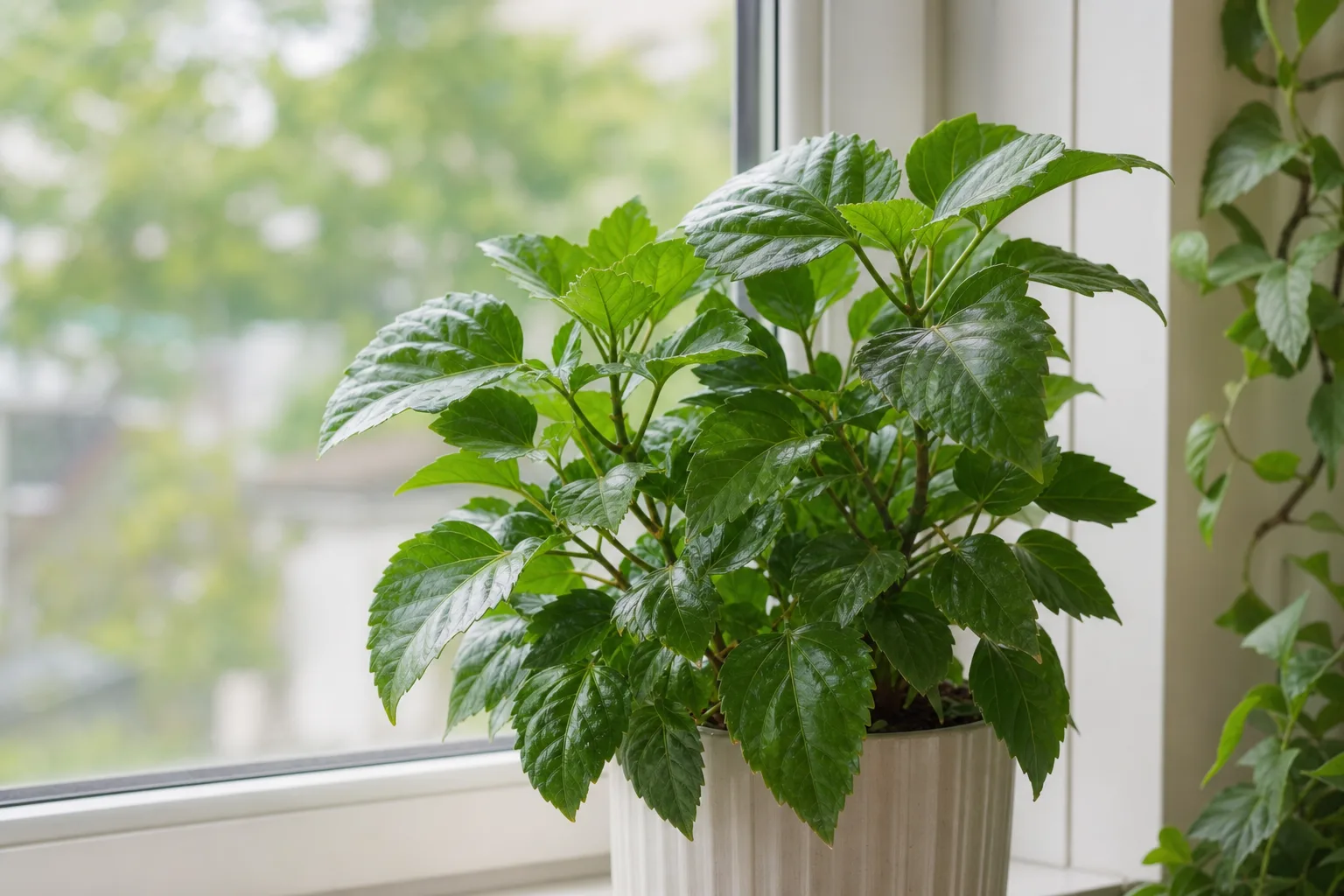
Pale, papery patches on the side facing the sun after moving outdoors point toward sun scorch; the damage often appears on exposed leaves while shaded growth looks better. Brown margins that develop during a hot, windy spell can instead reflect water loss faster than roots can replace it. Check the root ball and weather, then move the pot to temporary afternoon shade if the canopy is overheating.
Do not mist repeatedly as a cure for dry edges. It cannot replace root watering, and wet foliage that stays damp can encourage disease. Remove only dead tissue if you wish; protect the plant from the stress that caused the damage and assess the next flush of leaves.
Conclusion
The best tropical hibiscus care is consistent rather than complicated: choose a bright site, use a draining pot and mix, water when the upper soil begins to dry, and feed only during active growth. Most serious setbacks start when roots stay wet, the plant is moved abruptly between light levels, or a tropical shrub is left outside through cold weather.
Treat summer and winter as two parts of one routine. Acclimate the plant when it goes outside, inspect for pests before it comes in, and expect a short adjustment period after either move. With steady conditions and early attention to the plant’s signals, hibiscus can keep growing and flowering season after season.



