Why Are My Christmas Cactus Leaves Limp? Check the Roots
Limp Christmas cactus leaves can signal dry soil or roots damaged by wet mix. Check the pot, soil, and roots to choose the right fix before watering again.

A limp Christmas cactus can be thirsty, but it can also be unable to drink because its roots are damaged. Those problems look similar above the soil and call for opposite responses, so do not reach for the watering can until you check the mix and pot.
The plant’s flat, jointed pieces are stem segments, or phylloclades, rather than true leaves. They store water, which is why a dehydrated plant wrinkles and softens; if soggy soil has damaged the roots, the segments can do the same even while the pot is wet. Start with the root zone, then look at light, temperature, and other recent changes.
The fastest diagnosis starts with the pot, not the segments
A single limp segment is not enough to diagnose a problem. Look at the whole plant and its recent conditions: Did the drooping appear across the plant or only on the side nearest a window? Did it begin after a missed watering, a repot, a move, or a cold night? Those clues narrow the possibilities, but the soil moisture is the best first check.
| What you find | What it suggests | First move |
|---|---|---|
| Mix is dry well below the surface and the pot feels unusually light | Underwatering or a root ball that repels water | Rehydrate thoroughly, then drain the pot |
| Mix is wet and the saucer or cachepot holds water | Excess moisture or slow drainage | Empty standing water; check how quickly the mix drains |
| Mix stays wet while segments wilt or yellow | Possible root damage or compacted mix | Pause watering and inspect the roots if decline is widespread |
| Mix is reasonably moist and roots seem firm, but the plant faces harsh sun or a draft | Environmental stress is more plausible | Correct the exposure gradually and keep the root zone stable |
Check moisture below the surface
Push a finger into the mix near the edge of the pot, or slide in a clean wooden skewer far enough to sample the middle of the root ball. A dry surface can sit above damp soil, while a crusty surface can also hide a dry, shrunken root ball. If the skewer comes out cool and damp or dark with moist mix clinging to it, wait before watering; if the mix is dry down where the roots are, thirst is plausible.
Lift the inner pot if you can. A pot that is much lighter than usual supports the dry-soil diagnosis, while a heavy pot that stays heavy for days suggests the medium is holding water or the roots are no longer taking it up normally. Neither weight nor a moisture meter is definitive by itself, so combine it with the mix, drainage, and plant’s pattern of decline.
Also check the outer setup, not just the potting mix. A nursery pot can have drainage holes and still sit inside a decorative cachepot full of water, while a saucer can conceal runoff under the plant. Take the inner pot out, empty any collected water, and look for blocked holes or a tight mesh sleeve over the base. These small details often explain why a cactus that seems to be watered carefully remains wet for too long.
The top inch is only a clue, not a universal watering line. A shallow pot can dry evenly, but a tall pot, dense peat mix, or tightly packed root ball can have a damp core under a dry-looking crust. If your finger and skewer disagree, check another point near the pot wall and use the pot’s weight as a tie-breaker instead of watering on appearance alone.
Note the pattern and timing of the slump
Drought often develops as the mix dries and the whole plant gradually loses firmness. Waterlogged roots can produce a more confusing picture: the mix remains damp, lower segments may yellow or soften, and the plant can keep looking thirsty because damaged roots cannot take up water. A sour smell, persistently wet mix, or mushy tissue at the base raises concern for rot, but smell alone does not identify a specific pathogen.
A few older segments hanging naturally from a mature plant are not the same as sudden wilting. Holiday cacti develop a cascading habit as they grow, so compare the plant with its usual shape and inspect whether the segments themselves are wrinkled, limp, discolored, or falling. If several changes happen together, treat the plant as stressed rather than assuming a single segment needs extra water.
If the root ball is dry, rehydrate it slowly
A genuinely dry Christmas cactus usually needs a complete drink, not a small splash at the stem base. Water the mix evenly until excess flows through the drainage holes, then let the pot drain fully. The NC State Extension Plant Toolbox describes holiday cactus as needing a moist but well-drained, airy medium; the aim is to wet the root ball without leaving its roots in standing water.
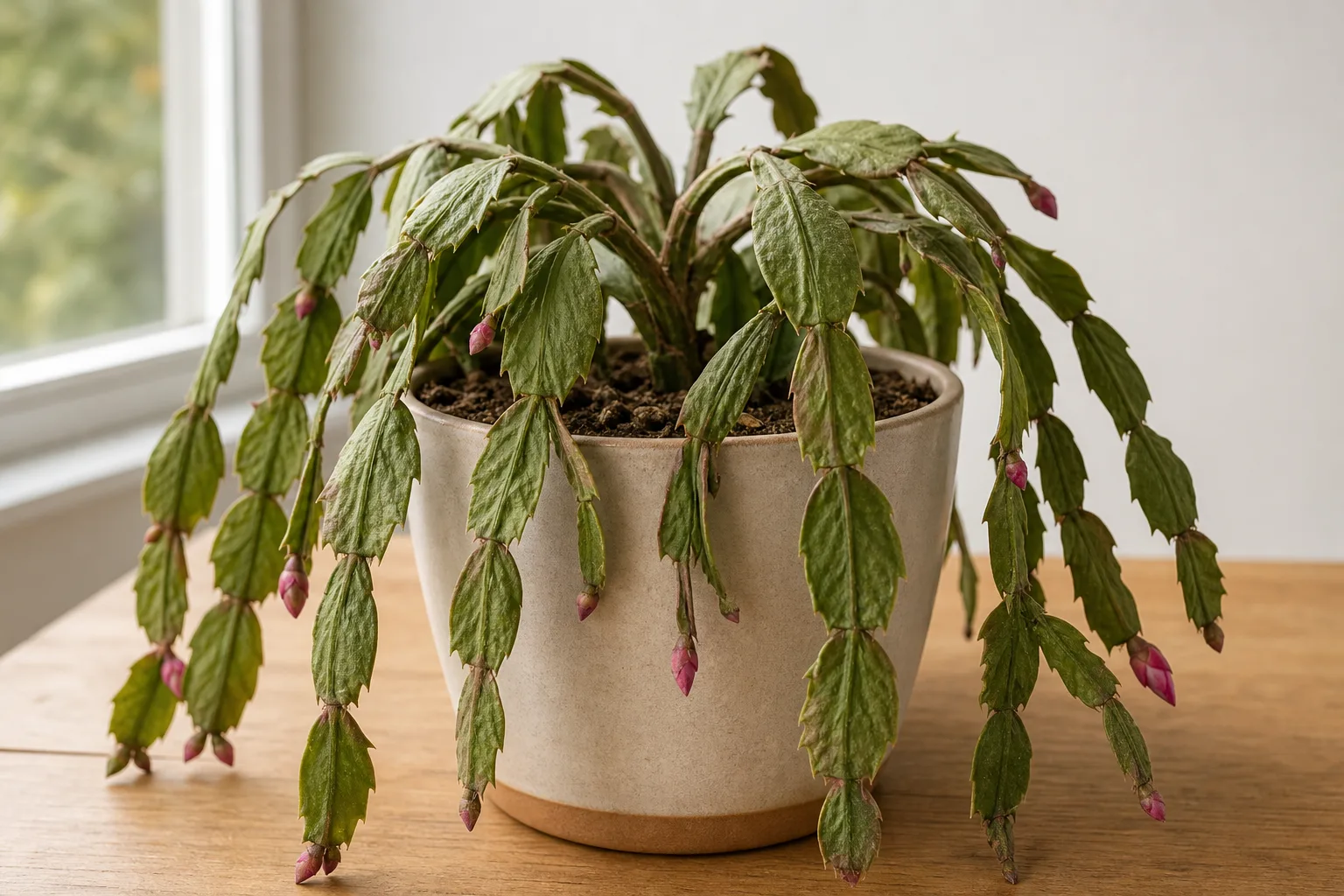
If water immediately runs down the gap between the mix and pot, the center may have dried and shrunk away from the container. In that case, apply water slowly in several passes, giving the mix a little time to absorb between pours. You can also set the pot in a shallow basin of water briefly so the mix draws moisture upward, then remove it and let every excess drop drain; do not leave the pot soaking or let the stem base sit underwater.
Do not try to compensate for months of missed watering with repeated daily dribbles. Rewet the whole mix once, allow it to drain, and then check whether it is absorbing moisture normally the next time it dries. If water still races down the sides or the center stays powder-dry, the medium may be too compacted or hydrophobic to rehydrate evenly; repot after the plant stabilizes rather than keeping a failing mix in place indefinitely.
How to water without keeping roots wet
Use the state of the mix as your trigger, not a weekly or twice-weekly rule. Drying changes with pot size, the amount of root growth, the mix, room warmth, light, airflow, and season. The Better Homes & Gardens watering guide also emphasizes checking the soil rather than relying only on elapsed time, while noting that holiday cacti need different moisture as growth and flowering conditions change.
Once you have watered, empty the saucer or decorative cachepot after drainage stops. Do not add a layer of stones to the bottom of a pot as a substitute for a drainage hole; it does not make a sealed container drain. If the pot has no opening, move the plant to a container that does, or use it as a cachepot only if the nursery pot can drain freely and be removed for watering.
If the mix is dry but the plant does not begin looking firmer after it is thoroughly rehydrated, do not keep pouring on more water. Recheck that the water reached the center of the root ball, and consider whether old roots have dried, become damaged, or failed to anchor the plant. A plant can be both dehydrated aboveground and unable to absorb water belowground.
If the mix is wet, rule out root damage first
Stop watering temporarily when the root ball is still wet. Remove the pot from any standing water, make sure the drainage opening is not blocked, and give the mix time to lose excess moisture in a bright room with gentle airflow. Do not put it in direct midday sun or beside a heater to “dry it out”; that can stress the stems while doing little to fix dense or degraded soil.
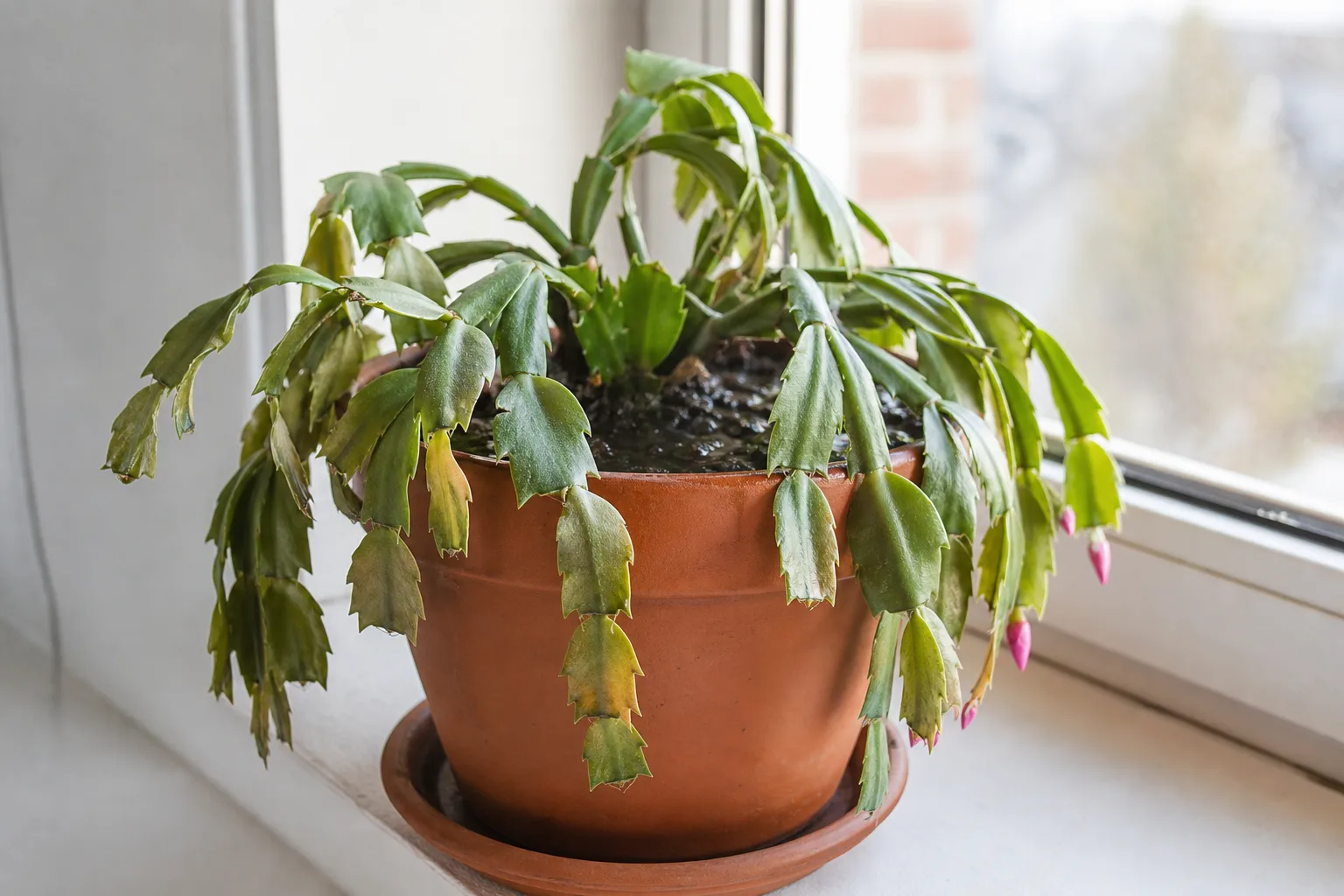
A plant that wilts in wet soil may have lost fine roots to prolonged saturation. Roots need oxygen as well as water, and a dense mix or pot without drainage can keep the root zone airless. UW–Madison Extension’s holiday cactus guide notes that a plant may shrivel despite being well watered when roots have been lost, and that soil staying moist unusually long can be another sign of root trouble. The Epic Gardening care guide similarly flags soft growth paired with mushy roots as a warning to check for root rot.
“Overwatering” is often shorthand for a root zone that stays wet too long, not proof that one generous watering caused the decline. A draining mix can be watered thoroughly and then lose excess water; a compact, cool, oversized, or sealed pot may hold moisture long after the same amount of water would have drained from a smaller airy pot. That distinction matters because cutting back a little on each watering will not fix a blocked hole or degraded medium that cannot exchange air.
When to slide the plant out and inspect
Unpot the cactus if the slump is spreading and the mix stays wet, the plant is yellowing or softening at the base, the medium smells stale, or the container has poor drainage. Hold the plant near the base and support the root ball as it comes out; do not pull on the thin stem tips. Brush away loose wet mix gently so you can see the roots without tearing off healthy ones.
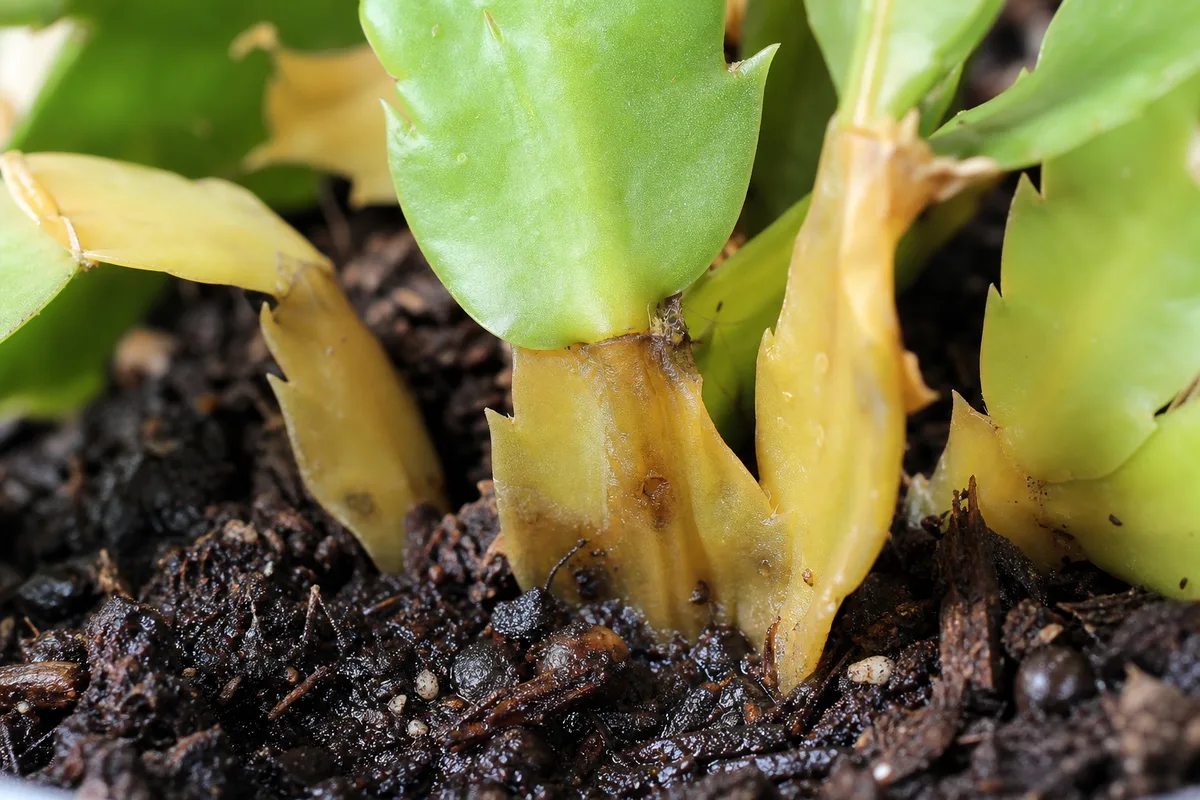
Healthy roots are generally firm and attached. Roots that are dark, mushy, hollow, or easy to pull apart are damaged; color alone is not enough because growing mixes can stain roots. Check the stem base too. If it remains firm and green, the plant has a better chance of recovery than one with a collapsing, blackened crown.
Reset a cactus with root rot
Trim only roots that are clearly dead or mushy with clean, sharp scissors. Keep firm roots, even if they are tan from the mix, and avoid stripping the plant down to bare roots unless the soggy medium will not come away any other way. If the stem base is rotting, cut above the damaged tissue into firm, healthy segments with a sterile blade; save a few healthy upper cuttings as insurance if the root system is severely compromised.
Use a clean pot with drainage and fresh, airy mix rather than returning the cactus to compacted, sour-smelling medium. A blend of houseplant potting mix with chunky material such as perlite or fine bark can retain some moisture while allowing air to reach the roots; the mix should not behave like a dense, water-holding block. Choose a pot only a little larger than the remaining roots, or use a smaller one if root loss has reduced the root ball. A very oversized pot can stay wet around a small root system for too long.
After repotting, water according to the condition of the fresh mix and root cuts rather than to a calendar. Avoid fertilizer while the plant is trying to rebuild roots, because feeding cannot repair rot and may add stress to a weak root system. If almost all roots and the lower stem are soft, recovery is uncertain; firm cuttings can sometimes be rooted separately, but a decayed stem will not become healthy again by drying the pot alone.
Do not wash or scrub every root simply to make it look clean. Preserve firm roots and remove only mix that is loose or clearly saturated; aggressive handling can turn a limited root problem into additional damage. If you trim mushy tissue, clean the tool before and after the cut, keep the plant out of direct sun while it settles, and make the next watering depend on how the new medium feels rather than on how limp the old stems still look.
When watering is not the problem, check the room
If the mix is neither bone-dry nor persistently wet and the roots are firm, look for a recent exposure change. Christmas cactus is a tropical forest epiphyte, not a desert cactus. NC State Extension recommends bright, indirect light and warns that full sun can bleach the stems; UW–Madison Extension also describes the plant’s preference for filtered light and moderate temperatures.
Move it away from a heater, air-conditioning vent, cold windowpane, or door that opens often. Make one adjustment and observe the plant rather than changing its light, watering, and room location at the same time. That keeps you from trading one stress for another and makes the next check more informative.
Sun and heat can flatten or bleach segments
Strong direct afternoon sun through glass can heat the segments and pot, especially after a plant has been moved from a shaded indoor spot or a sheltered patio. Sun stress often comes with pale, yellow, reddish, or scorched patches on the side facing the window; limpness without those marks does not prove that light is the cause. Move the cactus into bright filtered light or farther from the glass instead of putting it in a dark corner.
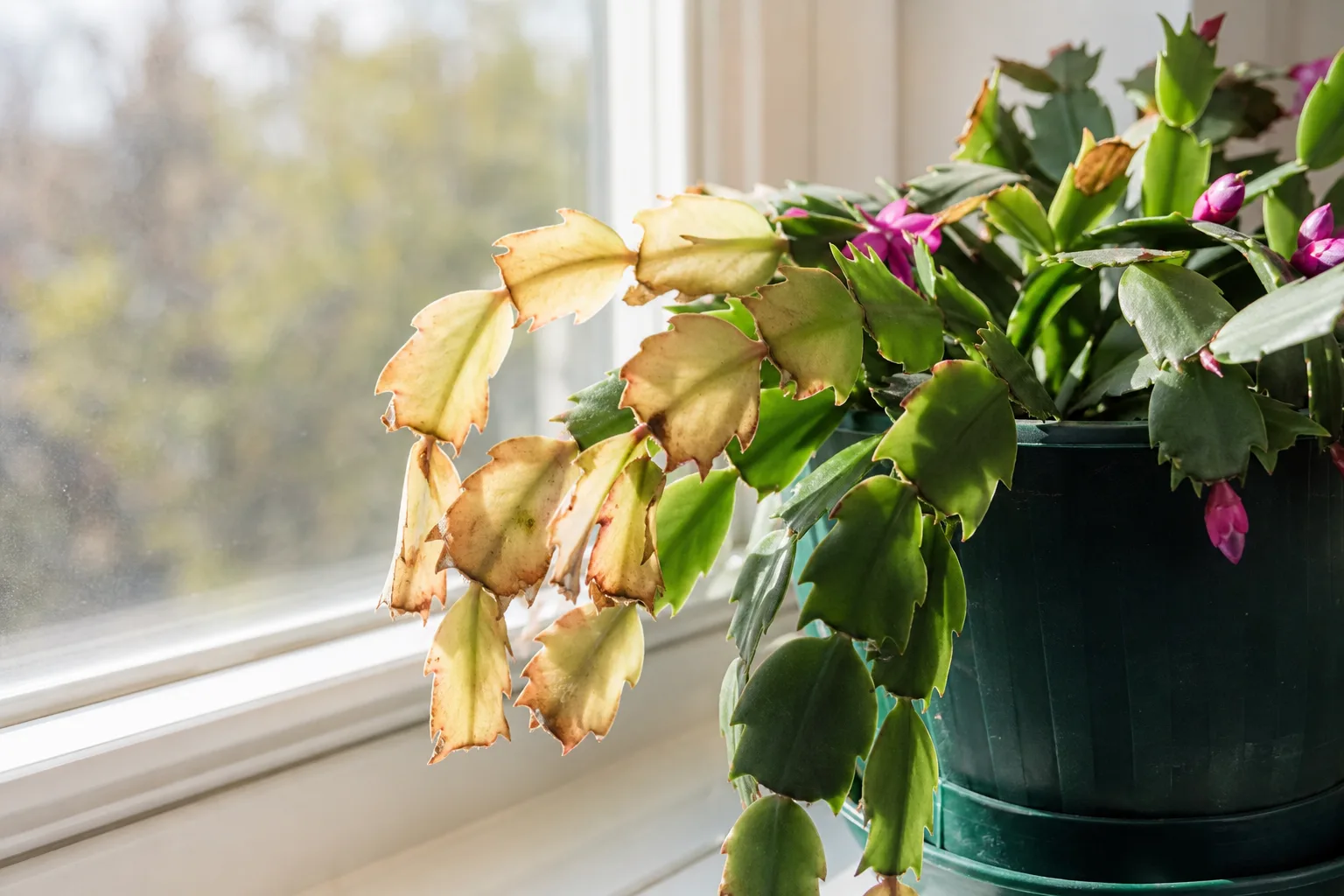
A warm room can also make a pot lose moisture faster, particularly in a small container. That does not mean you should water automatically; check the mix first. If a plant has been in hot sun and the root ball is dry, restore moisture and give it a cooler, bright location. If the soil is wet, address drainage and roots before attributing wilt to heat alone.
Cold drafts and sudden changes can cause collapse
Holiday cacti dislike frost and abrupt changes in temperature. A plant against cold glass, left outdoors during a cold night, or placed directly under a heating vent can develop stressed or softened segments; cold injury may look water-soaked and mushy rather than simply wrinkled. Move it to a steady indoor position and remove damaged tissue only after the extent of injury is clear.
Avoid moving a flowering plant repeatedly between rooms with different light and temperatures. Buds and flowers can drop after sudden environmental changes, but that is different from a watering diagnosis. If the segments remain firm and only the buds fall, stabilize the plant and check the root zone before repotting.
Can low humidity make a Christmas cactus limp?
Dry indoor air can contribute to shriveling, especially when heating runs for long periods, but humidity is usually not the first explanation for a sudden whole-plant collapse. Check the mix and roots before treating the air. NC State Extension notes that holiday cacti prefer higher humidity, yet a humidity problem alone does not explain persistently saturated mix or roots that have turned soft.
If the room air is very dry, group plants together or use a room humidifier and monitor the room with a hygrometer. A tray of damp pebbles may slightly affect the immediate area but is not a substitute for keeping the root zone healthy. Misting the segments can wet foliage without raising room humidity for long, so it is not a dependable fix for a plant that is limp because it is thirsty or has rotting roots.
Does a rootbound pot cause limp segments?
A crowded root ball can make a plant use water quickly, but “rootbound” is often blamed too soon. Holiday cacti can grow and flower while somewhat snug in their pots. More convincing signs are roots packed around the outside of the root ball, a mix that has broken down and stays wet, or water that repeatedly runs through without wetting the center.
Look at the medium as well as the roots. A peat-heavy mix can lose structure over time and compact; UW–Madison Extension describes how altered potting media can eventually suffocate roots. That is different from a healthy plant merely filling its pot. Do not repot on a fixed three-year schedule if the mix drains and the plant is growing normally.
Repot only when the evidence supports it
When the mix has collapsed or roots are densely circling the pot, move the plant after flowering if it is otherwise stable. Use a pot with open drainage that is only modestly wider than the root ball and an airy medium that holds some moisture without staying saturated. Teasing apart every root is unnecessary; loosen only tightly circling roots that prevent the root ball from settling naturally.
If the plant is in bloom but has a sound root system and a draining pot, wait until flowers fade before repotting. If it is in wet, oxygen-starved mix or the pot has no drainage, correcting the emergency takes priority over preserving blooms. Repotting is a response to a diagnosed constraint, not a routine cure for every soft segment.
Check for pests and recent transplant stress
Pests are a less common explanation for an entire Christmas cactus suddenly going limp, but inspect joints and stem undersides for cottony mealybugs, scale bumps, fine webbing, or clusters around new growth. A few fungus gnats often point to persistently damp mix rather than directly causing a mature plant’s whole canopy to wilt. If you find insects, isolate the cactus and identify them before choosing a treatment; avoid applying household oils or soap mixtures blindly to succulent tissue.
A recently purchased, moved, or repotted plant may droop temporarily from adjustment or broken roots. Check whether the container drains, then avoid repeated repositioning and unnecessary watering. If a segment broke, the break itself does not mean the roots are failing; remove only tissue that is mushy or decayed, not firm pieces that still support healthy growth.
Take note of what changed in the week before the symptoms appeared. A plant moved from a sheltered porch into dry heated air can lose moisture faster; one brought indoors from outdoors may suddenly receive less light and use water more slowly. A recent repot can leave broken fine roots that need time to resume uptake, while a new pot with much more unused mix can keep the root zone damp. This short timeline is often more useful than guessing from a single visual symptom.
Recovery is gradual; judge the new growth
A dehydrated plant with intact roots may regain some firmness after the root ball is rehydrated, but badly wrinkled or damaged segments do not always return to their previous shape. A cactus recovering from root loss may take longer to stabilize because it must form functional roots before it can reliably absorb water. Judge progress by whether the decline stops, the remaining segments stay firm, and fresh growth appears when the plant is actively growing.
Keep the cactus in bright indirect light, remove standing water, and make only the changes supported by your diagnosis. Do not “help” by fertilizing, watering on a rigid schedule, or moving it from hot sun to deep shade. If damage continues despite a reasonable moisture level and stable placement, reassess the roots and look for pests or a soft stem base rather than repeating the same fix.
There is no dependable number of days in which every plant should recover. A dry plant with live roots may respond sooner than one that has lost fine roots, and mature segments may remain wrinkled after the original cause is gone. Keep a simple note of the date you watered, whether the pot drained, and what changed; that record helps you see whether the mix is drying at a sensible pace and whether the plant is actually declining or merely recovering slowly.
Conclusion
Limp Christmas cactus segments can mean too little water or roots damaged by too much, so the soil—not the symptom alone—should determine your first move. If the root ball is dry, water it thoroughly and let it drain; if it is wet and the plant keeps declining, inspect the roots before adding more. When moisture and roots look sound, check for harsh sun, heat, cold drafts, dry air, pests, or a compacted mix. Make one measured correction, then watch the plant’s remaining segments and new growth for evidence that it is recovering.