7 Christmas Cactus Problems—and How to Fix Each One
Is your Christmas cactus wilting, yellowing, or refusing to bloom? Use this symptom-first guide to find the cause and choose the safest fix.
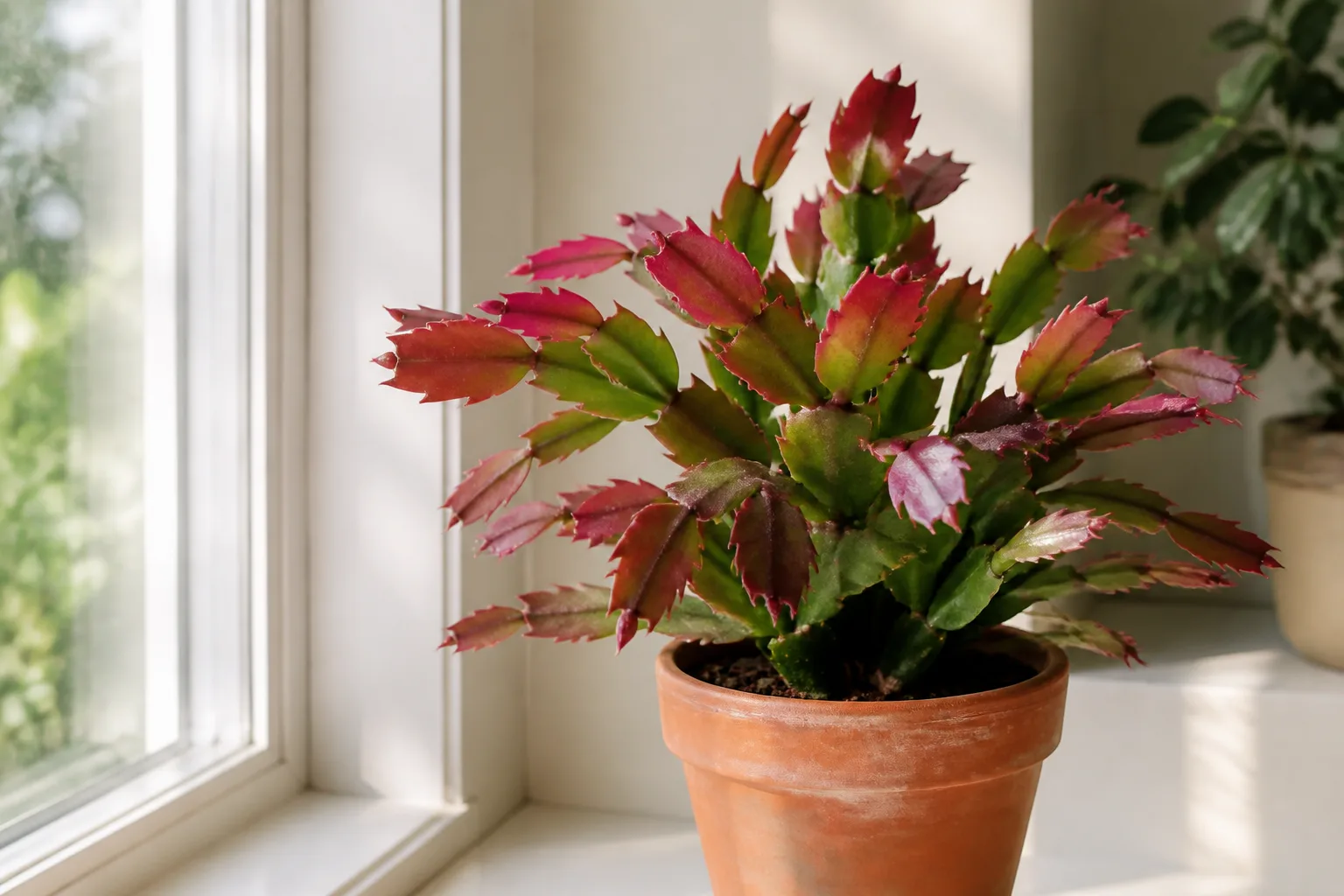
If your Christmas cactus looks limp, yellow, red, or suddenly bare of buds, do not start by adding fertilizer or moving it to a sunnier window. Those symptoms can come from opposite causes. A plant with dry roots may look wilted, but so can a plant whose roots have rotted in wet soil and can no longer take up water.
The quickest way to help is to diagnose the root zone and recent changes before you change three things at once. This guide walks through that process, then covers the seven problems most likely to interrupt healthy segments and winter flowers.
The 60-Second Triage: Soil, Roots, Light, and Temperature
Christmas cactus is a misleading common name. Schlumbergera is a Brazilian forest epiphyte, not a desert plant adapted to baking sun and long periods of bone-dry soil. North Carolina State Extension’s Plant Toolbox describes it as a moisture-loving houseplant that prefers bright, indirect light, good drainage, and humidity; Washington State University Extension likewise describes the plant’s native habitat as cool, shaded, and relatively humid.
That background changes the first response. Check the mix about an inch down, look for water sitting in the saucer, and note whether the plant has recently moved from outdoors to indoors, closer to a heater, or into stronger window light. Also look at the stems themselves: firm, full segments point toward a different problem than soft, translucent, or collapsing ones.
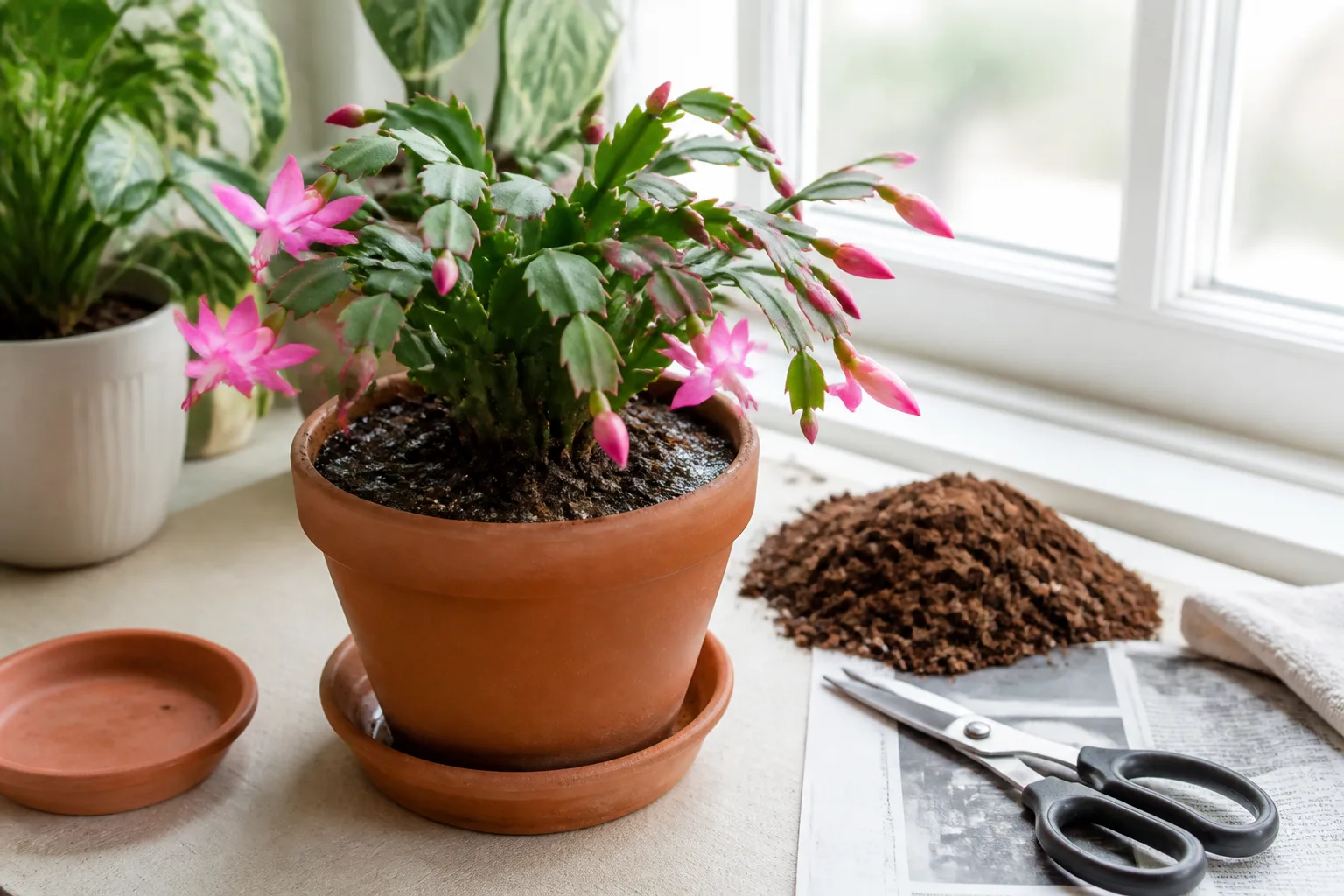
Use this order:
- Feel the mix. If it is dry well below the surface, thirst is plausible. If it is wet several days after watering, suspect poor drainage, slow evaporation, or root damage.
- Check the pot. A drainage hole matters more than a decorative cover pot. Empty the saucer after water drains, and do not let the container sit in a reservoir.
- Inspect the light and temperature. Hot direct sun, a cold pane, a heat vent, and a frequently opened door can all stress the segments or buds.
- Look closely for pests. White cottony clusters, brown scale-like bumps, webbing, or tiny flies change the treatment plan.
- Change one major factor at a time. If you repot, relocate, fertilize, and increase watering on the same day, you lose the clues that would tell you what actually helped.
What Healthy Christmas Cactus Segments Feel Like
Healthy segments, sometimes called cladodes, are flat, green, and slightly succulent. They should have some spring when gently touched, but they should not feel waterlogged or papery. A few older segments may yellow and drop naturally, especially after flowering, but widespread color change or a cascade of falling segments is a stress signal.
Do not assume every plant sold as a Christmas cactus is the exact same holiday cactus. Thanksgiving cactus is often sold under the broader label and has more pointed, claw-like segment edges; true Christmas cactus has more rounded, scalloped margins. The care overlap is large, but bloom timing can differ, so a plant flowering earlier than expected may be correctly responding to its type rather than failing.
1. Limp or Wrinkled Segments
Limp segments are a water-uptake problem until proven otherwise. Underwatering leaves the plant short of moisture, while overwatering can destroy the roots that should absorb it. In both cases the upper plant may look thirsty, which is why watering immediately is sometimes the wrong fix.
Start with the mix. If the pot is light and the mix is dry from top to bottom, water slowly but thoroughly until some drains from the bottom. Let the pot finish draining, then return it to a saucer that is empty. A wilted plant should not be left standing in the runoff while you wait for it to recover.
If the mix is damp or sticky, pause watering. Check whether the container is too large for the root ball, the mix has collapsed into a dense block, or the saucer is trapping water. Move the plant to bright indirect light with gentle airflow, but do not place a wet-rooted plant in hot sun to “dry it out.” That can scorch the segments while the root problem remains.
Distinguish Thirst from Root Stress
Dry mix plus firm, pale roots is consistent with underwatering. Wet mix plus yellowing, a sour smell, soft stems near the soil line, or brown and mushy roots points toward root stress or rot. If the plant remains limp after a proper watering, give it time to refill its tissues; repeating a second or third watering right away can turn temporary thirst into saturated soil.
Temperature is part of the diagnosis. A Christmas cactus that dries quickly in a warm, bright room may need water sooner than one in a cool, dim room. Conversely, a plant moved indoors for winter may use less water because evaporation and growth slow down. A calendar reminder can prompt a check, but the mix—not the date—should decide.
2. Root Rot and Mushy Stems
Root rot is the serious version of the “limp plant” problem. Roots damaged by prolonged saturation become brown, soft, and unable to supply the stems, so the plant can look drought-stressed even while the soil is wet. Gardening Know How lists yellowing, dropping segments, odor, and dark or slimy roots among the warning signs; Epic Gardening also emphasizes that a pot that is too large or a degraded mix can hold excess moisture around this forest cactus.
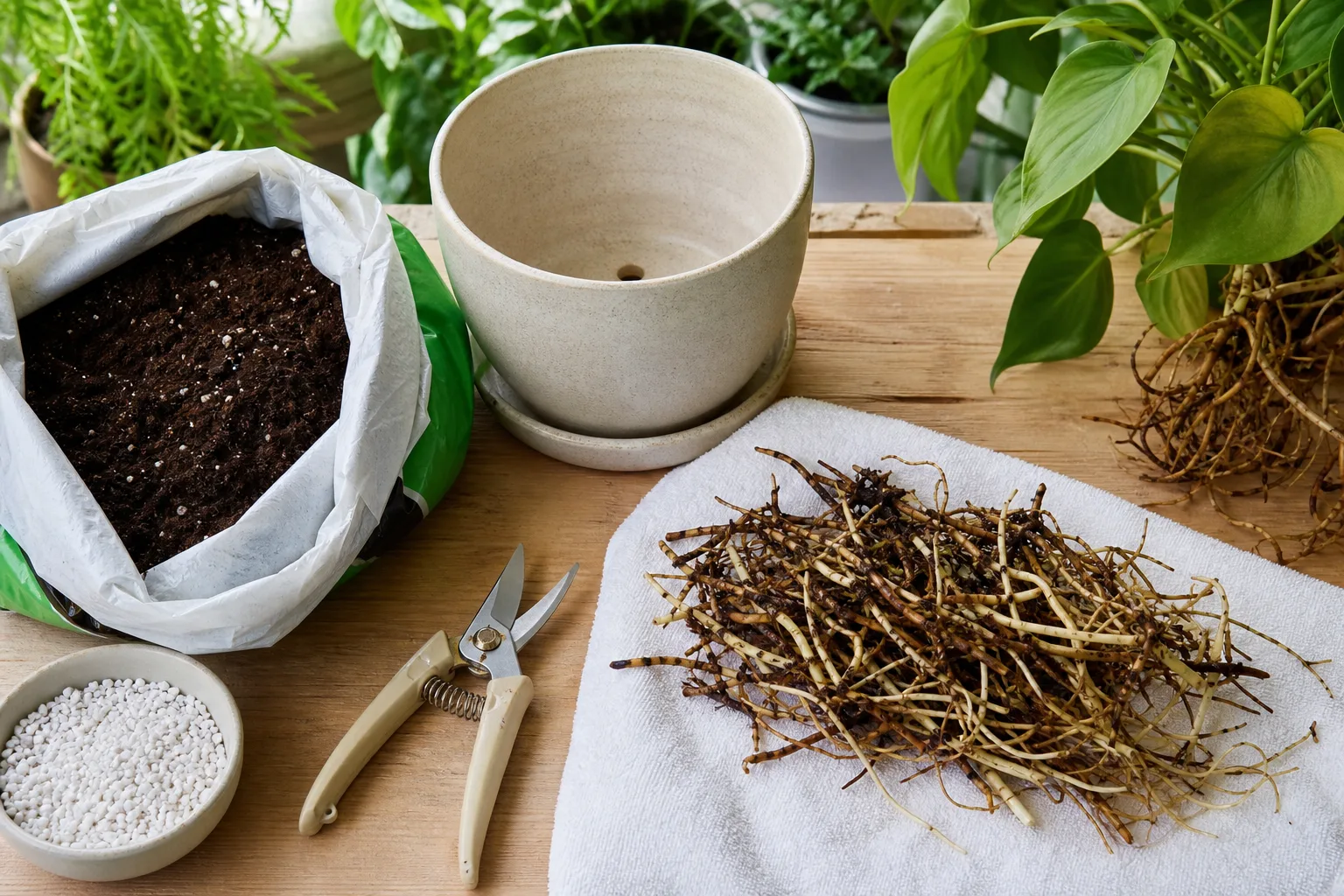
Do not diagnose root rot from a single yellow segment. Confirm it by unpotting the plant when the mix is wet and the decline is spreading. Healthy roots should be firm; roots that smear, collapse, or smell sour are the tissue to remove.
The Rescue Sequence
- Stop adding water and isolate the plant. Keep it away from other houseplants while you inspect it, especially if you see soft tissue, mold, or pests.
- Unpot gently. Remove as much wet mix as you can without tearing the remaining roots. Do not reuse a pot full of contaminated, collapsed mix.
- Trim only dead tissue. With clean, sharp pruners, cut away brown or mushy roots and any stem sections that are soft at the base. Keep firm roots and firm green segments.
- Let the cuts dry briefly. Place the plant out of direct sun in a clean, airy spot for several hours. The goal is to avoid immediately sealing wet wounds into wet soil, not to leave the plant bare for days.
- Repot small. Use a clean container with a drainage hole and a fresh, airy mix that holds some moisture but does not stay saturated. A pot only slightly larger than the remaining root ball is safer than a large “room to grow” container.
- Water once the plant is settled. If the remaining roots are healthy, water the fresh mix thoroughly and let it drain. Then wait until the upper mix has dried before checking again.
If most of the roots and the stem base are soft, recovery is unlikely. Save firm tip segments as cuttings if any remain, and discard the collapsed material rather than trying to nurse a plant with no functional root system. Skip routine fungicide shopping as a first response; correcting saturation, removing damaged tissue, and using clean mix address the conditions that allowed the rot to spread.
3. Yellowing or Dropping Segments
Yellow segments are a clue, not a diagnosis. The pattern matters more than the color alone. One old segment at the base may be normal aging; several yellowing segments on a wet plant point toward root trouble; pale growth on the window-facing side may reflect harsh light or heat; and slow, generally washed-out growth can follow low light or depleted mix.
Check the roots and mix before feeding. A plant cannot use fertilizer well when its roots are rotting, and adding nutrients to saturated soil can increase stress rather than reverse it. Once the roots are firm and the plant is actively growing, a balanced houseplant fertilizer diluted according to its label can support new growth during spring and summer. Stop feeding when the plant is preparing to bloom and while flowers are open.
Also look for physical causes. A pot with no drainage hole, a cachepot that stays full of runoff, or a compacted peat-heavy mix can create yellowing even when the watering amount seems modest. Refresh the mix after flowering if it has become hydrophobic or dense, but do not repot a healthy plant simply because one segment turned yellow.
4. Red or Purple Segments
Red or purple coloring can mean the plant is stressed, but it is not automatically a crisis. Bright direct sun can redden exposed segments, and cold or an abrupt change in light can do the same. Washington State University Extension notes that full sun can darken and burn holiday-cactus segments; Gardening Know How also connects stronger sun and poor nutrition with purple or red color.
Move a sun-stressed plant gradually to bright, filtered light rather than from a bright window to a dark corner. Protect it from hot afternoon rays with a sheer curtain, especially through glass. If the color appeared after a cold night, move it away from a cold pane and drafts, but avoid a second sudden move if it already has buds.
If the segments are red and wrinkled while the mix is either bone dry or persistently wet, treat the root-zone issue first. If growth is healthy but older mix is depleted and the plant has not been fed during active growth, address nutrition later with a dilute, complete fertilizer. Do not use red color alone to justify Epsom salts, coffee grounds, or a strong fertilizer; supplements are not a substitute for identifying the stressor.
5. Buds Dropping Before They Open
Bud drop is usually a stability problem. A Christmas cactus can set buds and then abandon them after a move, a cold draft, a blast of heat, a missed watering followed by a drenching, or a sudden change in light. Low humidity can add stress, but it is rarely the only detail worth checking.
Once buds are visible, leave the plant in one dependable location. Do not rotate it for a better photo, carry it from a cool bedroom to a warm kitchen every evening, or place it directly above a radiator. Keep the mix lightly and evenly moist by checking it more often than you might during a post-bloom rest, while still allowing excess water to drain.
Reset the Bloom Environment
For the next bloom cycle, work backward from the plant’s natural response rather than trying to force flowers overnight. NC State Extension and Washington State University Extension both describe holiday cacti as day-length-sensitive plants. They need long, uninterrupted nights as well as bright daytime light; even artificial room lighting during the dark period can interfere with bud set.
About six to eight weeks before the bloom window you want, provide bright indirect light during the day and a consistently dark, cooler night. NC State Extension gives night temperatures around 55–65°F as a useful flowering range, while Washington State University Extension notes that more than 12 hours of darkness—often about 14 hours—is important for bud formation. Cultivar and local conditions shift the timing, so treat those numbers as a starting range rather than a guarantee.
After buds form, stop changing the conditions. The goal is not maximum humidity or maximum fertilizer; it is a stable combination of usable light, moderate moisture, and freedom from sudden temperature swings.
6. No Flowers at All
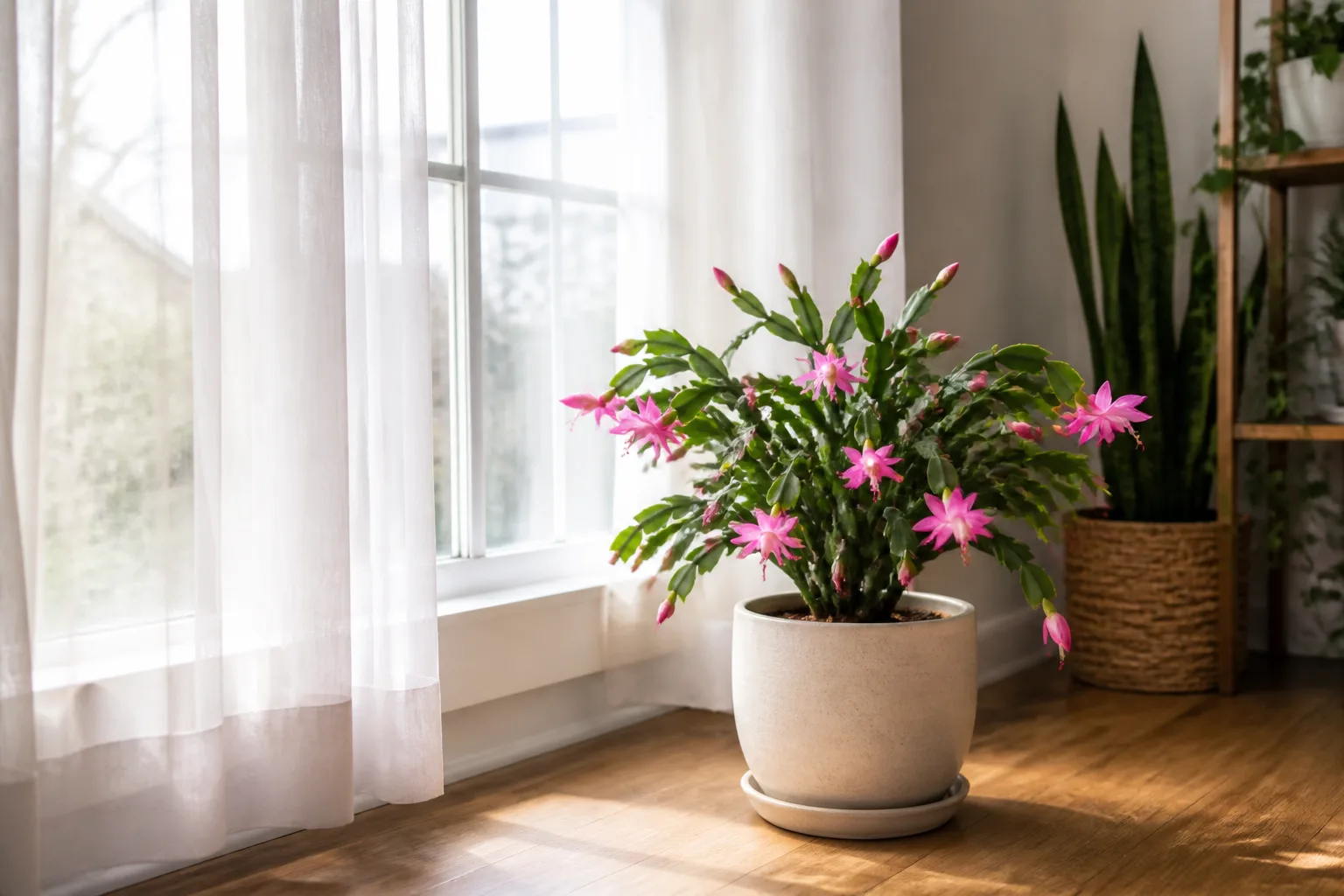
When a Christmas cactus grows leaves but never flowers, insufficient darkness is often the overlooked cause. A bright room can still be a good daytime location, but a lamp, television, porch light, or streetlight near the plant may shorten the uninterrupted night enough to delay bud set.
Low daytime light can also matter. The plant needs enough energy to build new segments and flowers, so a dim shelf may produce thin or pale growth even if nights are dark. Give it bright, indirect light; gentle morning sun can be useful, while hot midday sun through glass may scorch or redden the segments.
Timing and identity can create a false alarm. A plant sold as Christmas cactus may be Thanksgiving cactus and naturally bloom earlier, or it may be a stressed cutting too young to flower heavily. Keep it growing well through spring and summer, feed modestly during active growth, and let it become slightly snug in its pot. Repotting into a much larger container or feeding heavily in fall can favor leaves over a reliable display.
Do not cover the plant with a box if you cannot keep air moving or remember to uncover it. A naturally dark room or a consistent placement away from nighttime lights is simpler and less likely to cause accidental heat or moisture buildup.
7. Pests and Fungal Trouble
Christmas cactus is not immune to houseplant pests. NC State Extension lists mealybugs, scale, spider mites, and aphids among potential insect problems. Mealybugs look like white cottony spots tucked into segment joints; scale looks like small fixed bumps; spider mites can leave fine webbing and stippled color; fungus gnats are tiny flying adults associated with persistently wet mix.
Isolate an infested plant and inspect segment joints, undersides, and the soil surface. Remove a small infestation with a cotton swab or soft cloth, then use a labeled insecticidal soap or other registered product exactly as directed. Test any spray on a small area first, keep it out of direct sun while wet, and repeat only on the label schedule. “Natural” does not mean risk-free for tender segments.
Fungal or bacterial problems become more concerning when you see expanding dark lesions, a soft stem base, mold, or rapid collapse. Avoid splashing water over the plant, improve airflow, remove affected tissue with disinfected tools, and correct wet soil. If the stem base is soft all the way around, take healthy cuttings before the decline reaches them.
When to Isolate the Plant
Quarantine is worthwhile whenever you bring home a new plant, move a holiday cactus back indoors, or find insects on one pot. Keep it separate while you check the mix, stems, and leaf joints. This also gives you time to acclimate it to indoor light without placing a recently moved plant beside a heater or in a crowded, low-airflow corner.
Make the Fix Stick: A Seasonal Care Rhythm
Most recurring Christmas cactus problems come from treating every month as if the plant used water and light at the same rate. A seasonal rhythm is more reliable: active growth in spring and summer, a quieter post-bloom period, and a steady cool-dark setup before buds form.
Watering and Feeding
Water when the mix has dried somewhat below the surface, not because a calendar says it is watering day. Apply enough water to moisten the root ball, then empty the saucer. In a warm, bright, actively growing room that may be roughly weekly; in a cool, dim room it may take longer. The pot, mix, plant size, airflow, and season all change the interval.
Feed only an actively growing, well-rooted plant. Use a balanced, water-soluble houseplant fertilizer at the label dilution, or weaker only when the label supports that approach. Avoid fertilizer on dry roots, recently repotted roots, visibly rotting roots, and plants already showing salt crust or fertilizer-burned edges. Pause feeding as fall bud-setting conditions begin and while the plant is blooming.
Light, Temperature, and Placement
Aim for bright indirect light year-round, with protection from harsh afternoon sun. A sheer curtain, a little distance from the glass, or an east-facing window can work better than a dark room. Keep the pot away from heater vents, air conditioners, exterior doors, and cold panes where temperature changes are abrupt.
Humidity can help in a dry home, but do not confuse a pebble tray with a self-watering reservoir. The pot should sit above the water on the pebbles, never with its drainage holes submerged. A room humidifier may be more effective for a broad collection of plants, while good drainage remains the non-negotiable safeguard for this one.
When to Propagate Instead of Rescue
Propagation is the sensible backup when the roots are badly compromised but the outer stems still contain firm, green segments. Take a few Y-shaped pieces or cuttings with clean tools, allow the ends to callus briefly, and root them in a small pot of lightly moist, airy mix. Keep them in bright indirect light and avoid saturating the medium while roots develop.
Do not take a large number of cuttings from a healthy plant in the middle of bud set just because you are worried. Wait until after flowering for routine pruning or propagation. The best insurance is a few firm pieces from a plant you have already confirmed is declining, not a major haircut that adds another stress during bloom.
Conclusion
The safest way to fix Christmas cactus problems is to slow down the diagnosis. Feel the mix, inspect roots when wet soil and decline travel together, check recent light and temperature changes, and look for pests before reaching for fertilizer or a spray.
Remember that this is a forest cactus with succulent stems, not a desert plant that wants full sun and long drought. Give it drainage, bright filtered light, steady moisture, cool uninterrupted nights before bud set, and a stable location once buds appear. Those simple checks solve many problems—and when the roots cannot be saved, healthy stem cuttings can carry the plant into the next season.