How to Grow and Care for Christmas Rose in Your Garden
Grow Christmas rose (Helleborus niger) with a cool, sheltered site, free-draining soil, careful watering, seasonal pruning, and safe handling tips for garden and pots.
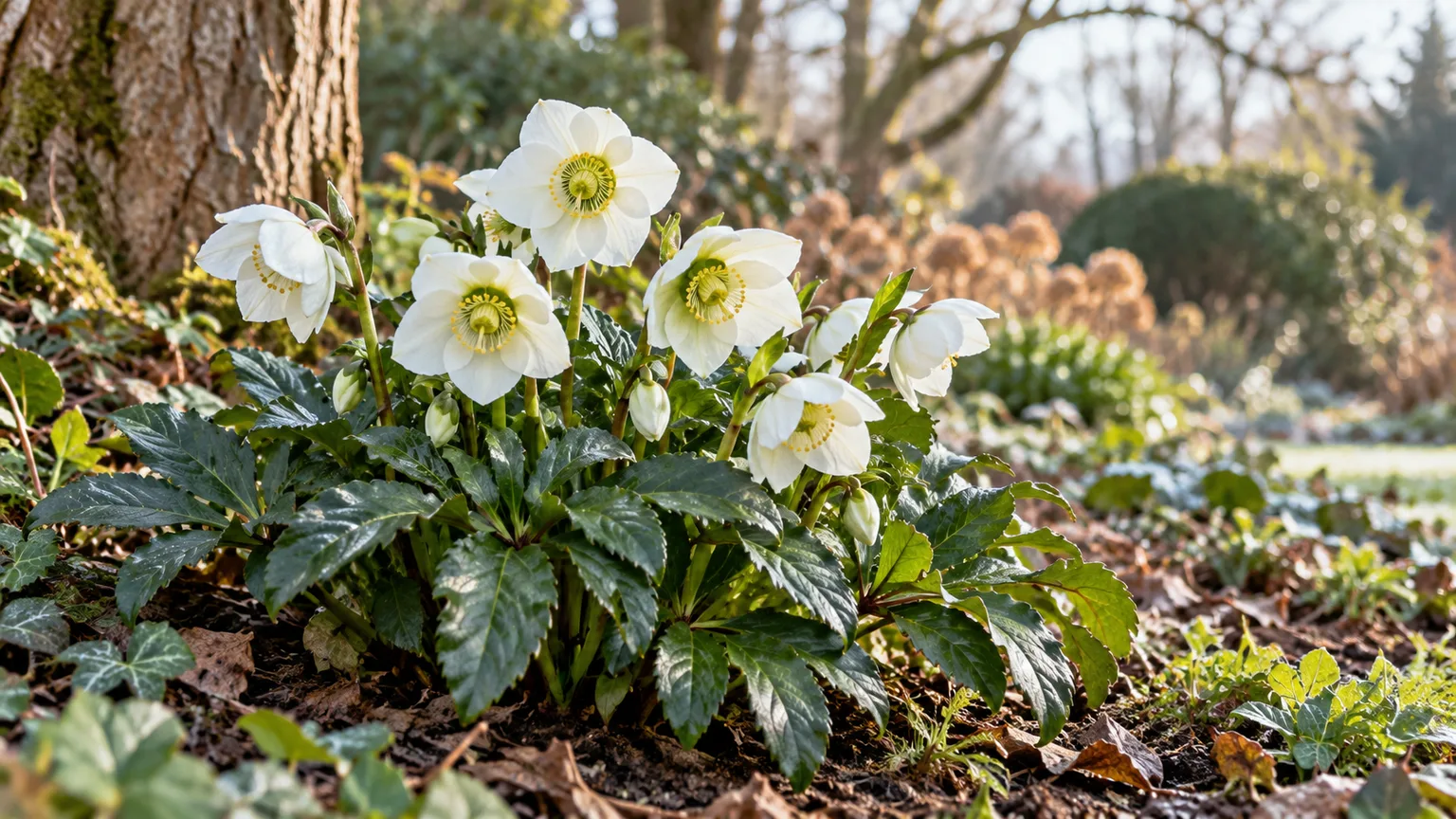
Christmas rose (Helleborus niger) is an evergreen perennial for gardeners who want flowers when much of the border is quiet. It is not a rose, and its bloom is not reliably timed to Christmas: the plant may flower in winter in a mild, sheltered garden, then wait until late winter or early spring in a colder one. Getting its conditions right matters more than trying to force a date.
The care challenge is a balance: roots need reliable moisture, but a crown sitting in cold, saturated soil can decline. Choose a cool, sheltered site with light shade and excellent drainage, plant at the same depth as the nursery pot, and water according to the soil rather than a fixed weekly schedule. Once established, leave the plant in place unless there is a compelling reason to move it.
Christmas Rose Care at a Glance
| Need | Practical target | What to avoid |
|---|---|---|
| Light | Cool, light or dappled shade; some gentle sun is fine | Hot afternoon exposure in a warm-summer climate |
| Soil | Fertile, humus-rich, moist but freely draining; neutral to slightly alkaline is a useful target | Heavy, compacted soil that stays cold and wet |
| Planting depth | Set the root ball level with the soil surface | Burying the crown or piling mulch against it |
| Water | Keep new plants from drying during their first growing season; water established plants in prolonged dry spells | Keeping the root zone continuously saturated |
| Maintenance | Remove damaged foliage, topdress with compost, and keep the plant undisturbed | Routine division or heavy feeding |
| Safety | Treat every part as toxic; wear gloves for pruning or handling | Letting children or pets chew leaves, flowers, or roots |
The key phrase is moist but well drained. Moisture supports new roots and evergreen leaves; drainage brings air back to the root zone after rain. If a site puddles through the next day after ordinary rain, use a raised bed or a container instead of trying to fix the problem with more frequent watering or a layer of stones at the bottom of the planting hole.
Identify the True Christmas Rose Before You Buy
Check the botanical name on the label. Christmas rose means Helleborus niger, a species with dark evergreen leaves and pale, usually white flowers. It belongs to the buttercup family, Ranunculaceae, rather than the rose family. “Black hellebore” is another old common name, referring to the dark roots, not the color of its blooms.
The frequent mix-up is Lenten rose, usually Helleborus × hybridus. Both are hellebores, but Lenten rose is a group of hybrids with a wider range of flower colors and often pendulous flowers; Christmas rose is the white-flowered species that tends to bloom earlier. Their care overlaps, but they are not interchangeable names. The RHS hellebore guide distinguishes H. niger from the easier-to-grow Oriental hybrids and notes that Christmas rose can be more demanding because it needs excellent winter drainage.
If you are buying a plant in bloom, use the label and flower as a cross-check rather than trusting a holiday display sign. Cultivars can differ in vigor, bloom timing, and mature size, so ask the nursery which selection it is selling and how it performs locally. A plant sold as “Christmas rose” may be a different hellebore unless the tag names Helleborus niger.
Choose Light That Changes With the Seasons
Aim for light shade: a position that receives filtered light or gentle sun for part of the day, then protection from the strongest summer heat. The useful pattern is often the edge of a deciduous tree, where branches shade the plant in leaf and admit more light after autumn leaf fall. Do not interpret that as a requirement for full winter sun; a bright, sheltered position can flower well without direct rays all day.
In a cool maritime climate, H. niger may tolerate more sun if the soil stays evenly moist. In a hot or dry summer climate, afternoon shade protects the evergreen leaves and prevents the root zone from drying too quickly. The exact balance depends on local heat and wind, not only a compass direction. Melinda Myers’ planting guidance also recommends part to full shade and a sheltered spot out of drying winter winds.
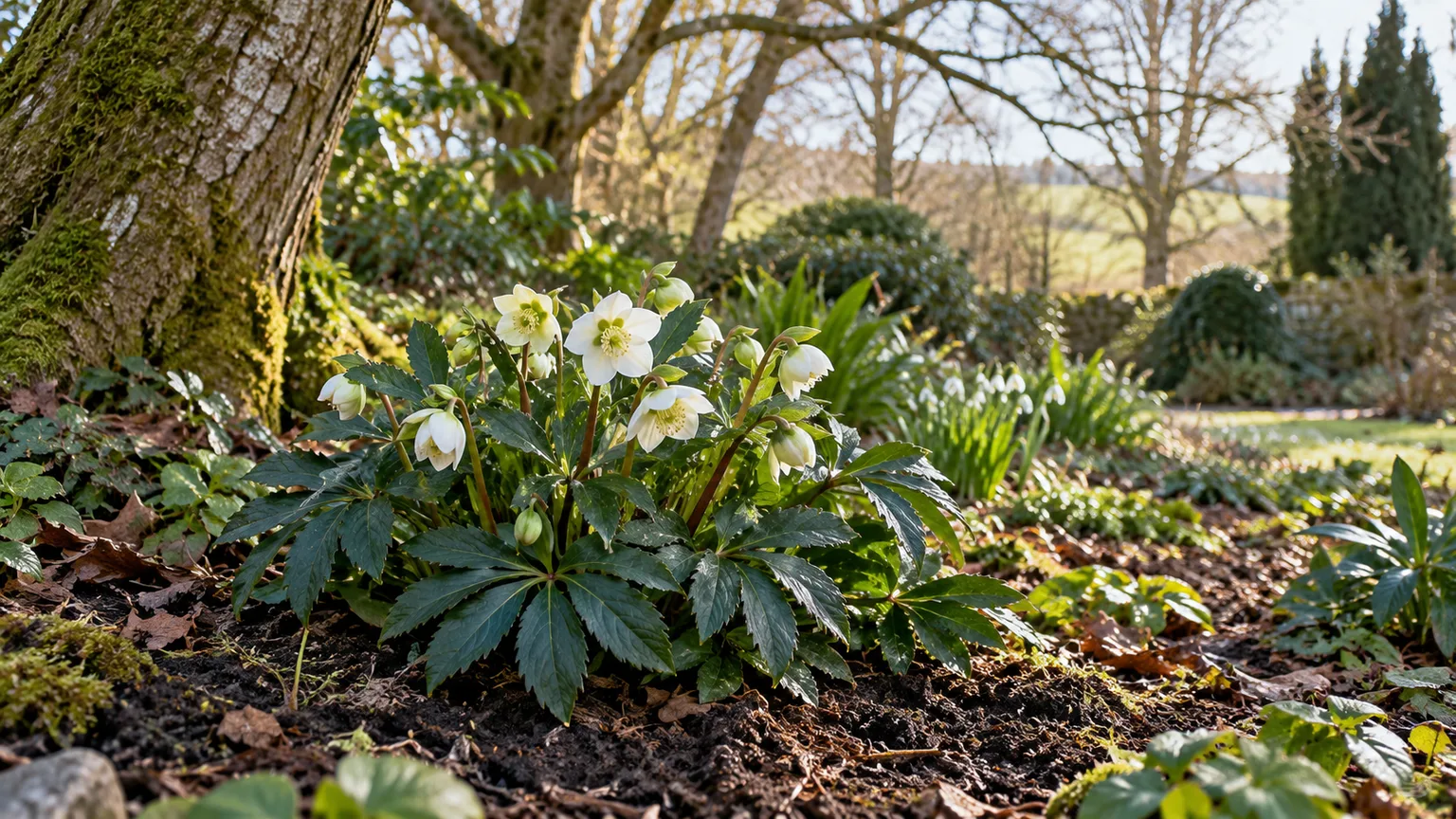
Light shade beneath a deciduous canopy can protect summer foliage while still admitting cool-season light.
Avoid the narrow strip under a roof eave if it stays bone dry, and avoid a dense, dark corner where the soil never dries and air barely moves. Hellebores tolerate shade, but “shade plant” does not mean “plant in any dark, wet spot.” If the bed is shaded by a building rather than a deciduous canopy, check it after rain and during summer: water should soak in, and the plant should not bake against a hot wall.
Give It Moist, Deep, Fast-Draining Soil
Christmas rose grows best in soil that holds some moisture without becoming airless. A deep, fertile bed with organic matter and good drainage is easier to manage than a shallow, stony patch that dries in summer or dense clay that stays saturated in winter. The University of Missouri’s Christmas rose profile describes the plant as preferring deep, fertile soil that is moist yet well drained, and reports best performance in neutral to slightly alkaline soil.
A soil pH near neutral to slightly alkaline is a reasonable starting point, but test before adding lime. Missouri’s suggested pH range reflects its guidance and local soil conditions; it is not a reason to apply lime blindly to every bed. A soil test tells you whether pH adjustment is useful and helps prevent a well-meant amendment from pushing the soil too alkaline. Compost improves structure and organic matter, but it cannot turn a persistently waterlogged site into a freely draining one.
Use a simple drainage audit before planting: observe the area after a soaking rain, look for standing water the following day, and note whether the soil has a sour, anaerobic smell or stays sticky for days. If it does, choose a raised bed or container instead. For compacted ground, loosen a broad planting area and blend in mature compost; avoid digging a small, heavily amended “pot” into clay, where water can collect around the root ball.
Plant Without Burying the Crown
Plant in autumn, early spring, or another cool period when the soil is workable and not waterlogged. Autumn planting gives roots time to settle before the next bloom season, while spring is a good choice where winter planting would expose a new plant to harsh conditions. Avoid planting during a hot, dry spell unless you can keep the root ball evenly moist while it establishes.
- Water the nursery pot first so the root ball is damp and easier to handle.
- Dig a hole about as deep as the root ball and wider than the pot. Loosen the soil across the planting area rather than creating a deep pocket in heavy ground.
- Slide the plant out carefully. If roots circle tightly around the outside, tease only the outermost roots loose; do not shred a compact hellebore root system.
- Set the plant so the top of its root ball meets the surrounding soil surface. Hellebores resent being planted too deeply, and a buried crown stays wetter.
- Backfill, firm gently, water thoroughly, and add a light compost mulch around the root zone while leaving a clear gap around the crown.
For a small group, leave roughly 14 to 18 inches between plants, then allow more room if the nursery label lists a larger mature spread. Give each crown breathing room; crowding slows surface drying and makes leaf problems harder to spot. Once planted, mark the location so you do not dig through the dormant-looking roots when the plant is between visible flushes.
Water for Establishment, Not on a Calendar
Newly planted Christmas roses need closer attention than established ones. During the first growing season, check the soil every few days during dry weather and water deeply when the root zone begins to dry. Do not wait for the foliage to wilt, but do not pour water into a bed that is still wet below the surface. The RHS advises extra watering for newly planted hellebores in spring and summer and watering established plants during hot, dry spells.
After the plant has had a couple of seasons to root in, rainfall often supplies most of its needs in a suitable bed. Water during a prolonged dry spell, especially if the leaves lose firmness or the soil is dry several inches down. A quick sprinkle on the leaves does little for the roots and can leave foliage damp for longer; direct water to the soil in the morning when possible.
Containers dry faster than garden soil, so check them more often in warm or windy weather. Lift the pot slightly if practical: a pot that feels light and has dry compost beneath the surface likely needs a thorough watering. Let excess water drain freely, and do not leave the pot sitting in a saucer full of water. In cool weather, watering demand drops, but a sheltered pot can still dry during a sunny, windy spell.
Follow a Seasonal Care Rhythm
Helleborus niger keeps much of its foliage through winter, so the plant does not follow the same “cut everything down in fall” routine as a herbaceous perennial that dies back to the ground. Think in terms of protection and inspection: keep the root zone from drying out, move wet container plants to shelter if needed, then clean up damaged leaves as new growth appears.
Protect the evergreen leaves in winter
Cold is not the only winter stress. Drying wind and cold, wet soil can cause more trouble than a brief frost in a sheltered site. A light mulch can buffer temperature and slow moisture loss, but keep the crown clear; a mound of wet leaves or compost against the stems encourages rot. If the garden is exposed, use a wind-sheltered planting site or a temporary screen rather than wrapping the plant tightly.
The evergreen leaves may look tired after a harsh winter. If leaf edges are brown but the crown and new buds remain firm, wait for the next flush before removing the damaged foliage. It is easier to distinguish winter scorch from disease when fresh leaves start to emerge.
Clean up after flowering
In late winter or spring, inspect the plant for leaves with black spots, yellowing, or winter damage. Cut affected leaves close to the base with clean pruners, then remove them from the bed rather than leaving them around the crown. Keep healthy foliage if it still looks useful; stripping every green leaf at once removes the plant’s working surface.
A clean-up is also a good time to replenish a thin compost mulch and check whether the crown is exposed or buried. Leave a visible air gap around the stems. If faded flowers are producing seed and you want seedlings, leave some heads in place; otherwise remove them before seed pods open.
Grow Christmas Rose in a Container
A container can solve the biggest site problem: winter soil that stays wet. It also makes it possible to move the plant under an eave or against a sheltered wall during cold, wet spells. Choose a pot roughly 12 inches (30 cm) deep for a mature specimen, with several unobstructed drainage holes and only a little wider than the current root ball; a much oversized pot holds excess wet mix around a small root system. The Teddington Gardener’s account also reports better results with a deep root run than with shallow containers.
Use a free-draining, peat-free container mix. The RHS suggests a loam-based No. 3 compost blended with multipurpose compost and horticultural grit; the proportions can be adapted to what is available locally, but the finished mix should drain quickly after watering and still hold some moisture. Do not put a thick layer of gravel at the bottom as a substitute for drainage holes. Plant at the same level as in the original pot and keep the crown uncovered.
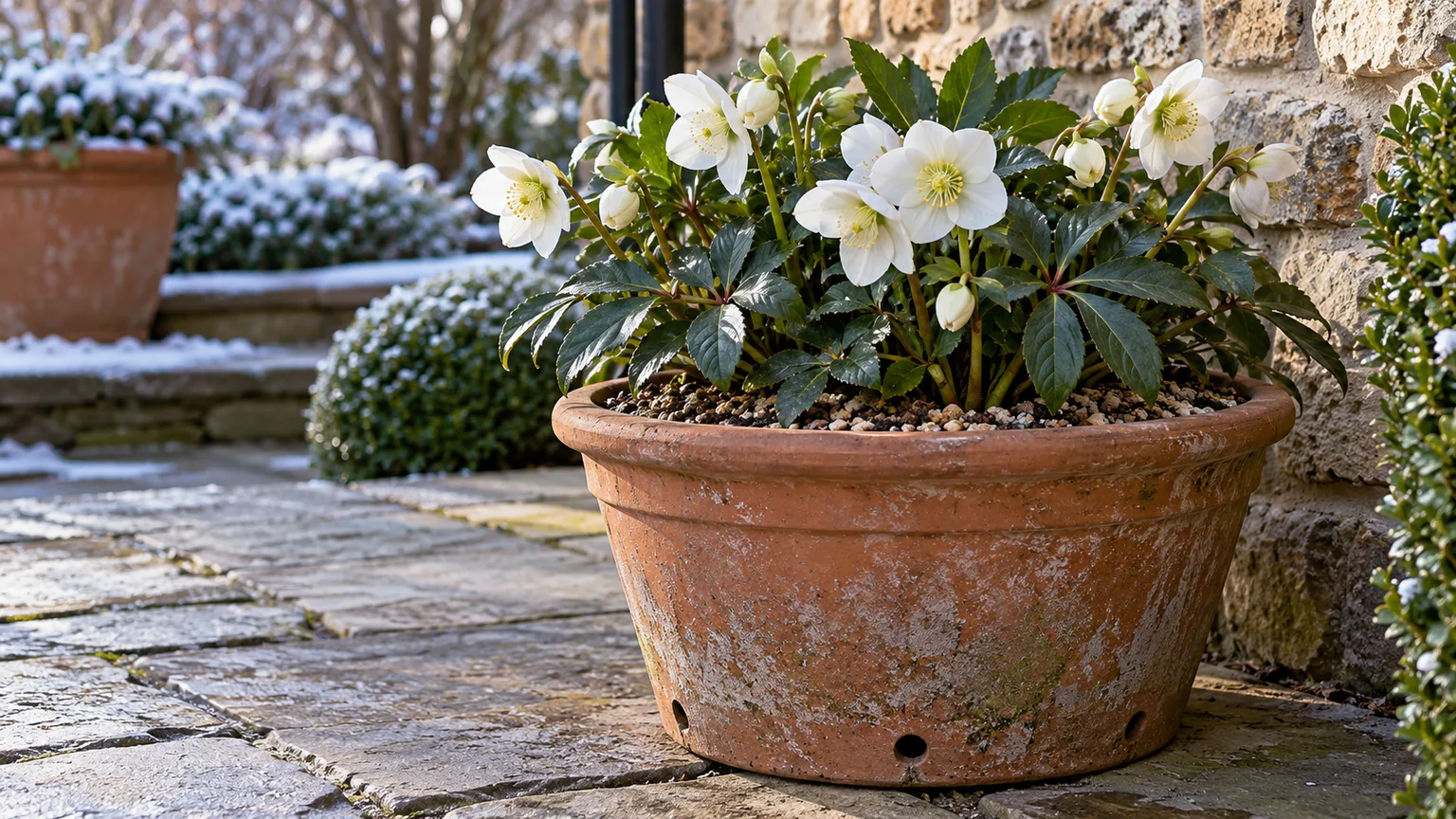
A deep pot with open drainage makes a sheltered container display easier to manage in winter.
A container-grown plant needs regular checks because wind and sun can dry the mix even in cool weather. In severe winters, roots in a pot are more exposed than roots in the ground, so move the container to a sheltered, unheated position where it will not sit in rain or freeze solid for prolonged periods. Do not bring it into a heated living room for the whole season: the plant is an outdoor perennial and benefits from cool conditions. The Teddington Gardener’s account describes success with deep containers and a sheltered, gritty growing medium, while emphasizing that the crown should not be waterlogged.
Understand Its Flowering Calendar
The common name promises a date that the plant cannot guarantee. Helleborus niger may flower around the winter holidays in mild climates, then bloom later where winters are colder or the plant receives less warmth and light. In many gardens, expect flowers from late winter into early spring. A sheltered position close to a warm wall may bring blooms forward, but it should not replace good drainage or create summer heat stress.
The showy white parts are sepals, not petals. They can persist after the flowers are pollinated, gradually taking on pink or green tones while the plant forms seed pods. A flower that has aged in color may still be structurally present, so judge the display by the plant’s overall health rather than assuming that every pink-tinged bloom is damaged. Melinda Myers notes that the colored sepals can persist for months and that bloom timing shifts from Christmas in mild climates to later in colder regions.
A young plant may need time before it makes a strong display, especially if it was divided or transplanted recently. If a mature plant has healthy foliage but few flowers, check its light, crown depth, drainage, and recent disturbance before adding fertilizer. Hellebores are not quick to reward repeated digging; moving a plant to chase a slightly earlier bloom can set it back for more than one season.
Feed Lightly and Prune With a Purpose
A garden-grown Christmas rose rarely needs a heavy fertilizer program. Start with a thin annual top-dressing of mature compost in spring, keeping it away from the crown. If growth remains weak despite suitable light, moisture, and drainage, get a soil test before applying a balanced fertilizer. The RHS guide notes that border hellebores seldom need extra feeding and that poor growth is often related to soil that is too dry or waterlogged rather than a nutrient shortage.
Container plants have less soil volume and may need more regular feeding during active growth, but follow the product label and use a restrained dose. Too much nitrogen can encourage leafy growth without fixing root stress. If a pot’s compost has compacted or drains poorly, refreshing the mix at the right time is more useful than adding more fertilizer.
Prune only what has a clear reason to go: dead, damaged, diseased, or badly spotted leaves; spent flowers you do not want to set seed; and foliage that hides emerging blooms. Use clean, sharp pruners and cut stems near their base without slicing into the crown. Remove diseased leaves promptly and clean the blades before working on another plant. There is no need to shear all foliage automatically in autumn or winter.
Propagate Only When You Have a Reason
Christmas rose is slow to settle after disturbance, so propagation is not annual maintenance. If you want another plant in the same garden, sow seed or purchase a second nursery-grown specimen before you dig up a healthy, established clump. Melinda Myers specifically notes that Christmas rose does not need regular division and prefers to stay put.
Raise seedlings from fresh seed
Let some flowers form seed pods, then watch for the pods to swell and begin to open. Collect ripe seed before it scatters and sow it outdoors promptly in a labeled pot of moist, free-draining seed mix. Hellebore seed is not a good candidate for long, dry storage: it can be difficult to germinate after storage and may need both a warm and a cold period. The RHS recommends about six weeks at 15–18°C followed by six weeks near 5°C for stored hellebore seed; germination may still be sporadic and take up to a year.
Keep the pot shaded and the mix evenly moist, never waterlogged, while you wait. Mark the sowing date and resist emptying the pot after a few weeks—delayed germination is normal. When seedlings are large enough to handle, pot them individually and grow them on before planting into the border. Seedlings may not match a named cultivar exactly, and it can take several years for a seed-grown plant to flower.
Divide an established clump carefully
Divide only if the plant has become large enough to justify the risk, or if you need to move it. Early autumn or spring just after flowering is a practical window, provided the soil is workable and the plant can be watered while new roots establish. Dig a wide circle around the clump to keep as many roots as possible, lift the root mass, and separate sections only where each piece has a healthy crown and roots.
Replant divisions immediately at the original depth, water thoroughly, and keep the soil from drying during the first growing season. Expect a pause in flowering while each division rebuilds its roots; the RHS warns that new hellebore divisions may take a couple of years to flower well. If the plant is healthy and in the right position, leaving it intact is usually the more reliable choice.
Prevent Pests and Diseases
Most problems follow a site problem or weak sanitation. Slugs and snails may chew leaves and flower stems, while aphids can cluster around tender growth. Check the undersides of leaves and new buds before treating anything. Hand-remove visible pests or use a method that is safe for the rest of your garden; avoid applying a pesticide without confirming the pest and following the product label.
Black or brown leaf spots can indicate hellebore leaf spot, especially when old foliage stays crowded and damp. Remove badly affected leaves, clear fallen debris, improve air movement, and water at soil level. Do not compost visibly diseased leaves unless your composting system reaches a reliable pathogen-killing temperature. Rot at the crown is more serious: a plant that collapses in wet soil needs better drainage and a clear crown, not additional fertilizer.
The RHS identifies hellebore aphids and leaf spot among common problems, while noting that they are not usually major issues on plants in suitable conditions. Hellebore black death is different and serious: the RHS guide says there is no cure and affected plants should be destroyed to prevent spread. Because blackening and distortion can have other causes, isolate a suspect plant and seek local extension or diagnostic advice to confirm the problem before disposing of it.
Handle the Plant Safely
Treat every part of Helleborus niger as toxic. Cornell University’s poisonous-plant profile describes toxic compounds in hellebore tissues and irritation after ingestion or contact with bruised plant material. Wear gloves when cutting or dividing the plant, avoid touching your face, and wash your hands and tools afterward. Keep trimmings and seed pods out of reach of children and pets.
Choose a planting spot away from play areas and paths where fallen leaves or flowers could be handled or tasted. Do not use hellebore as food or a home remedy, and do not assume that drying makes plant material safe. If someone or an animal may have eaten any part, contact a poison-control service or veterinarian promptly and share the plant’s botanical name; do not try to induce vomiting or treat exposure at home unless a qualified professional instructs you to.
Troubleshoot Poor Growth and Few Flowers
Start with the conditions the roots experience. A plant that has been dry and one that has been waterlogged can both grow poorly, so check the soil several inches down before changing your watering routine. Use this quick diagnosis to choose the next step:
| What you see | First thing to check | Useful response |
|---|---|---|
| Brown leaf edges after winter | Exposure to cold, drying wind or winter sun | Wait for new growth, remove dead leaves, and improve shelter |
| Yellowing or soft collapse | Soil that stays saturated; crown buried; roots stressed | Stop routine watering, clear mulch from the crown, and improve drainage |
| Black spots on older foliage | Leaf spot, crowded leaves, debris | Remove affected leaves, clean pruners, and open airflow |
| Healthy leaves but few flowers | Recent planting or division, deep shade, buried crown | Give it time; correct depth and light before feeding |
| Container dries very quickly | Small pot, wind, or summer sun | Check moisture more often and move the pot to light shade |
| No visible growth after sowing | Seed still dormant or mix dried out | Keep the labeled pot moist and wait through the warm-cold cycle |
Do not lift a struggling plant immediately just to inspect its roots; another disturbance may compound the problem. First correct the moisture and exposure issue you can see. If the crown is mushy or the whole plant continues to collapse despite improved drainage, ask a local extension service or nursery to inspect a sample before replanting in the same spot.
Conclusion
The most dependable way to grow Christmas rose is to choose a sheltered, lightly shaded site where the soil stays moist without remaining wet in winter. Set Helleborus niger level with the soil surface, water new plants while they establish, and use compost rather than a heavy feeding schedule. In containers, prioritize a deep pot with open drainage and protection from winter rain.
Expect flowers when your climate and plant maturity allow, not necessarily on December 25. Keep the crown uncovered, remove damaged foliage with clean pruners, and leave an established plant alone unless there is a good reason to divide it. With the right site and a little patience, the plant can contribute evergreen structure and pale winter flowers for years.



