12 Best Chrysanthemum Companion Plants
Choose chrysanthemum companions for fall color, texture, and compatible care. Compare 12 plants, learn what to avoid, and plan beds or porch containers.
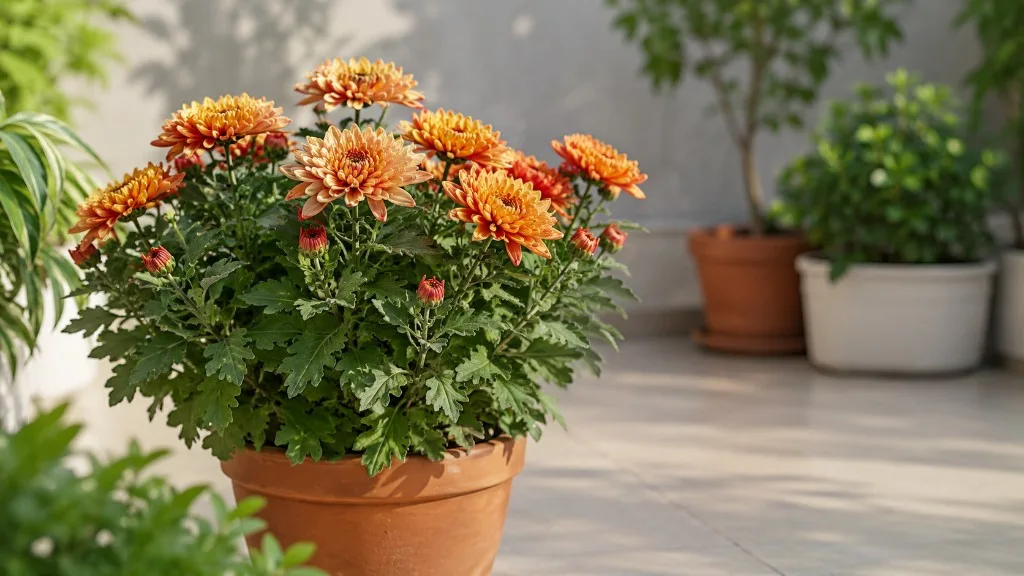
The best plants to grow with chrysanthemums share enough of the same growing conditions to stay healthy, but add something mums do not: a different flower shape, foliage color, height, or season of interest. Asters, goldenrod, sedum, ornamental cabbage, and selected grasses are strong starting points for a sunny fall border; marigolds and compact foliage plants can also work when their needs fit the site.
“Companion plant” does not automatically mean pest repellent or mutually beneficial. For most ornamental beds, the dependable advantages are design and practical fit: flowers that overlap or follow the mum display, plants that tolerate similar sun and drainage, and enough space for air to move around mature foliage. Choose for the actual chrysanthemum cultivar and planting site, then use the pairings below as a shortlist rather than a rigid recipe.
Quick Pairings for a Fall Garden
| Garden goal | Good starting choices | Check before planting |
|---|---|---|
| More late-season flowers | New England aster, goldenrod, Helenium | Mature height and spread; use clumping cultivars where space is tight. |
| A lower, sturdy front edge | Autumn Joy sedum, marigold, yarrow | Sedum wants sharper drainage than a consistently moist bed. |
| Color after flowers fade | Ornamental cabbage or kale, coral bells | Check winter behavior and whether the cultivar tolerates the bed’s sun. |
| Fine texture or height | Fountain grass, flowering chives | Verify the grass species is not invasive locally; chives bloom earlier than many mums. |
| A porch pot for one season | Ornamental cabbage, compact marigolds, pansies nearby | Use separate nursery pots inside a larger vessel if watering needs differ. |
For a reliable fall display, start with one main mum color, one contrasting flower form, and one foliage or grass texture. The Royal Horticultural Society’s chrysanthemum guide describes garden chrysanthemums as sunny-site plants for borders and containers, flowering from late summer into autumn; that shared site requirement is a more useful filter than a claim that one neighbor will keep every pest away.
What Makes a Good Chrysanthemum Companion?
Check four things before choosing a plant: light, soil moisture, mature size, and timing. Most garden mums flower best in a sunny, sheltered spot with fertile soil that stays moist but drains well. A companion that likes the same sun and does not demand constantly wet soil is a simpler match than one that looks perfect in a picture but requires a different microclimate. In a hot region, even “full sun” plants may need afternoon protection while newly established; in a cool, cloudy region, shade can reduce flower production.
Next, compare the whole season rather than the day you buy them. A companion can bloom before the mums and hand off color, flower alongside them, or hold attractive seedheads or foliage after the mum flowers fade. Tall asters and goldenrod belong behind or to the center of a border, while low plants should not be tucked so tightly around a mum that the leaves stay damp or the crown is buried. Use each plant’s mature spread, not the size of its nursery pot, to estimate spacing.
Finally, separate a good design combination from an evidence-based pest strategy. The RHS review of companion planting describes several mechanisms that can matter in particular crop systems, but also explains that mixed planting alone can affect insect numbers and that not every traditional pairing claim is proven. A marigold next to a mum may add color and diversity; that is not evidence that it will repel aphids from that mum. Keep scouting, sanitation, and appropriate plant spacing as the actual pest and disease plan.
12 Best Companion Plants for Chrysanthemums
These options include the best seasonal flowers and foliage companions as well as a few more specialized choices. Some are best in the ground; others make more sense in a temporary fall display. When a pairing needs a compromise, the notes below say so plainly.
Marigolds
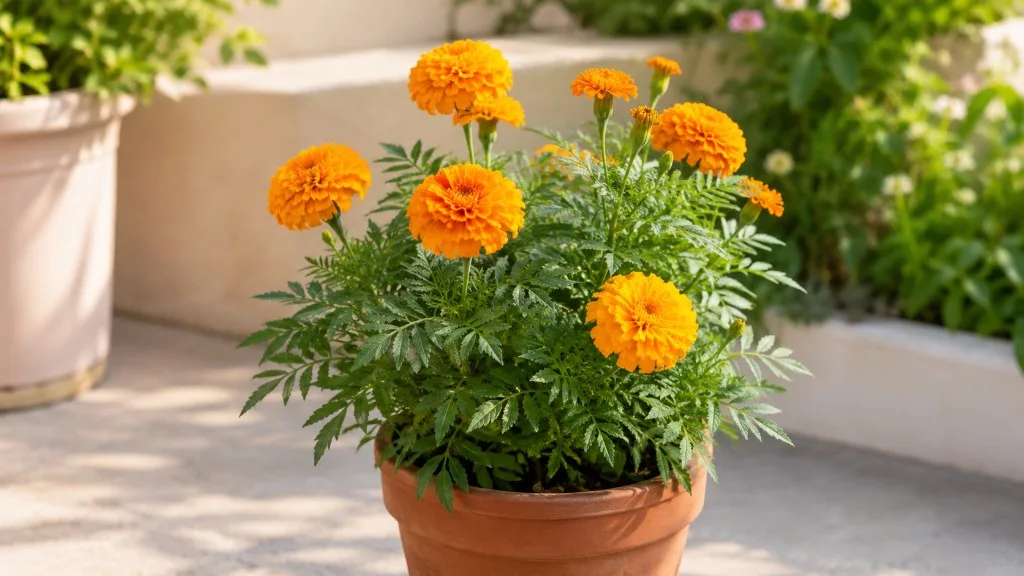
French marigolds (Tagetes patula) make a useful low edging plant because their compact mounds contrast with the rounded shape of many mums. Their yellow, orange, and red flowers echo autumn colors, and they can bloom until frost in a sunny bed. Taller African marigolds can sit behind a shorter mum, but check the seed packet or label for mature height; a too-tall variety can block light and flatten the display.
Do not choose marigolds on the promise that a nearby plant will automatically repel pests. Research and horticultural guidance discuss particular marigold effects in specific crops, but those results do not establish a general protective radius around ornamental chrysanthemums. Treat marigolds as a color and diversity choice, allow room for airflow, and inspect mums as usual. In a container, compact French types are easier to manage than large African varieties.
Ornamental Cabbage and Kale
Ornamental cabbage and kale bring rosettes of green, cream, pink, or purple foliage when autumn nights cool and many summer annuals are fading. They are especially effective at the front of a border or in a porch display: the broad leaves make a clear textural counterpoint to the smaller, denser petals of a mum. Choose compact nursery plants with good color and no yellowing lower leaves, and leave a visible gap between root balls instead of crowding the mum’s crown.
These are cool-season display plants, not permanent companions in every climate. They can keep their foliage through light frost, but a hard freeze may damage them, and their eventual size depends on the variety and weather. For a container, pair them with a mum in separate inner pots so you can water each root ball according to how quickly it dries. Ornamental varieties may have been treated with products not intended for food crops, so do not assume they are edible just because they are related to culinary cabbage.
Autumn Joy Sedum
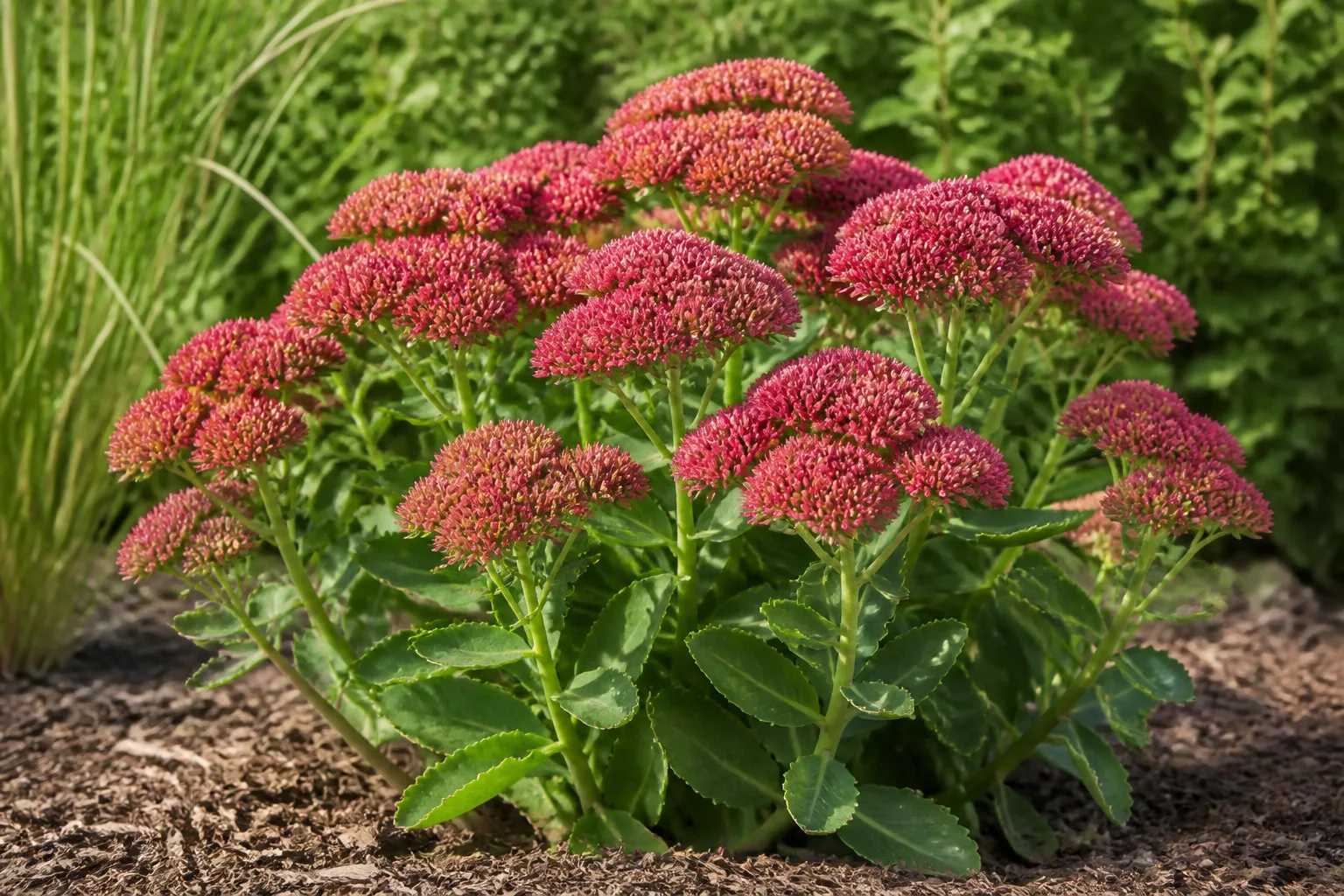
Autumn Joy stonecrop (Hylotelephium ‘Herbstfreude’, often sold under the older name Sedum) is one of the easiest structural partners for mums. Its fleshy leaves hold a compact mound, and its flat-topped flower clusters deepen in color as autumn advances. The flower shape is markedly different from a daisy-like mum, so even a small group can make a border look more layered rather than like a row of matching nursery pots.
The key is drainage. This sedum tolerates drier soil once established and can rot in a waterlogged planting hole, while mums prefer even moisture without standing water. Put it on a slightly raised or naturally sharper-draining section of the bed, and do not compensate for its drought tolerance by letting neighboring mums dry out. Its dried flower heads can remain upright for winter texture if they are healthy; cut them back in spring if you prefer a tidier start.
Costmary
Costmary (Tanacetum balsamita) is a heritage herb for gardeners who want a foliage and fragrance layer rather than another showy flower. Its broad, aromatic leaves can make a soft, silver-green counterpoint to a mum’s darker foliage, while its small yellow flower clusters add a looser look when they appear. It is less common in ordinary garden centers than marigolds or asters, so consider it a specialty option rather than a plant you must track down.
Give it a sunny position and enough room to form a substantial clump. If you are unsure whether it will spread in your soil, keep it in a pot sunk near the border or divide it when the clump grows beyond its allotted space. Its role is mostly texture and scent; do not count on it to protect neighboring flowers from insects. Pair it with a compact mum only after checking both plants’ mature sizes, because a vigorous herb can become a visual block at the front of a small bed.
Coral Bells
Coral bells (Heuchera) contribute foliage color when you want burgundy, bronze, caramel, or silver tones beneath brighter mum flowers. They are most useful as a front-edge plant or a low foliage accent, not as a substitute for a fall-blooming companion. The contrast can be excellent: broad, scalloped leaves sit low while mum flowers rise above them.
This pairing is cultivar-dependent. Many coral bells prefer partial shade, and their leaves can scorch in the hot afternoon sun that helps mums bloom well. If the bed receives strong sun all day, choose a cultivar documented for more sun tolerance, keep soil evenly moist but not saturated, and watch leaves during the first hot spell. If edges crisp or bleach, move the heuchera to a brighter shade pocket or grow it in a separate container rather than weakening the mum’s sunny position to suit it.
Fountain Grass
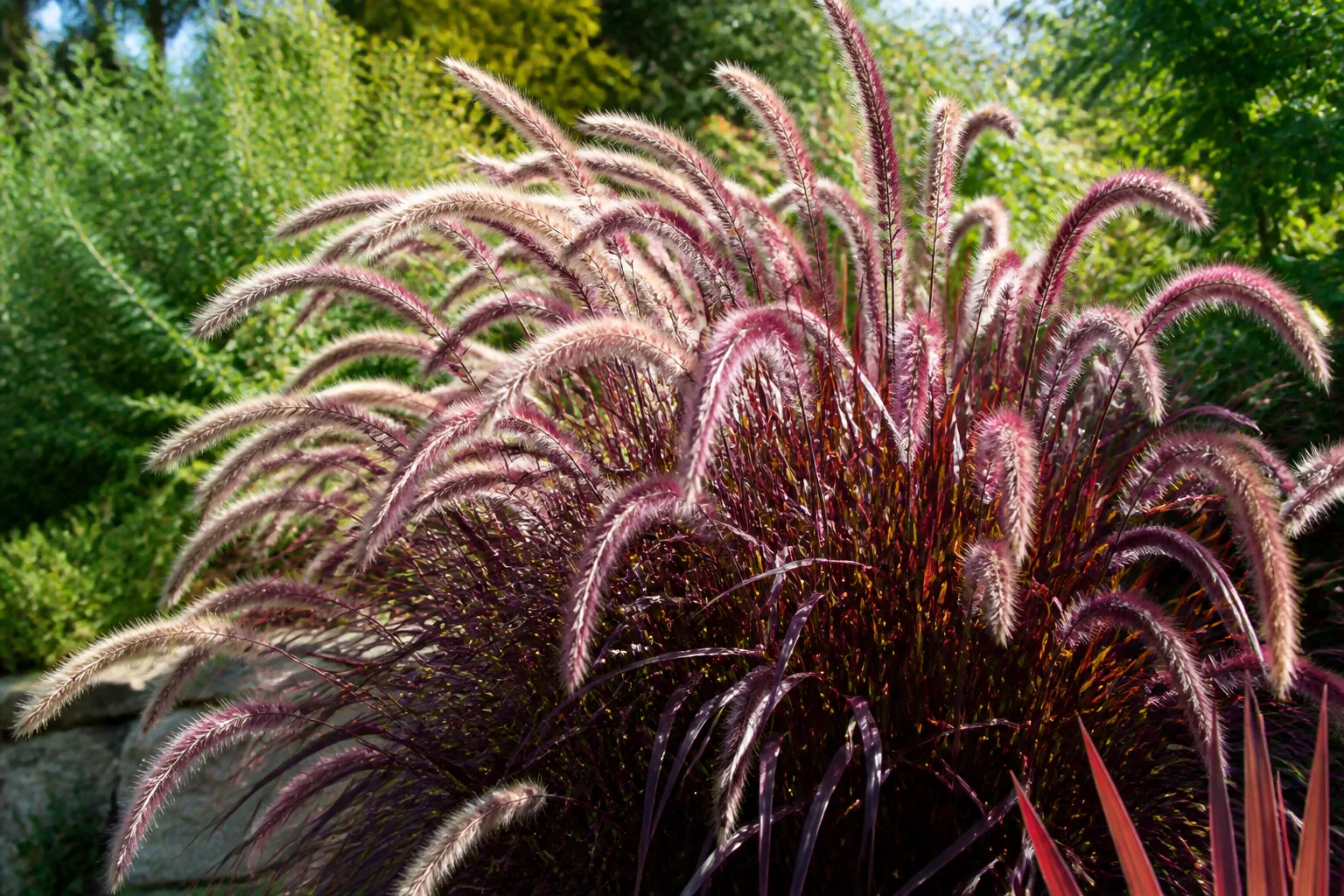
Fountain grass brings movement and airy plumes beside a dense mound of flowers. Set a clump behind the mums or use it as a repeated accent in a larger border; its narrow leaves and arching form keep the planting from becoming a flat wall of color. The visual effect is strongest when the grass rises above a lower mum cultivar without shading the whole clump.
The common name covers different species and cultivars, so read the botanical label and check local invasive-plant guidance before buying. Some fountain grasses spread aggressively or are considered invasive in parts of the country; a named cultivar is not automatically safe everywhere. If the plant is unsuitable for your region, choose a locally appropriate clumping ornamental grass with a similar height and texture. Do not cram grass and mum crowns into one small hole: mature roots need enough space, and both plants need the bed to drain freely.
Fernleaf Yarrow
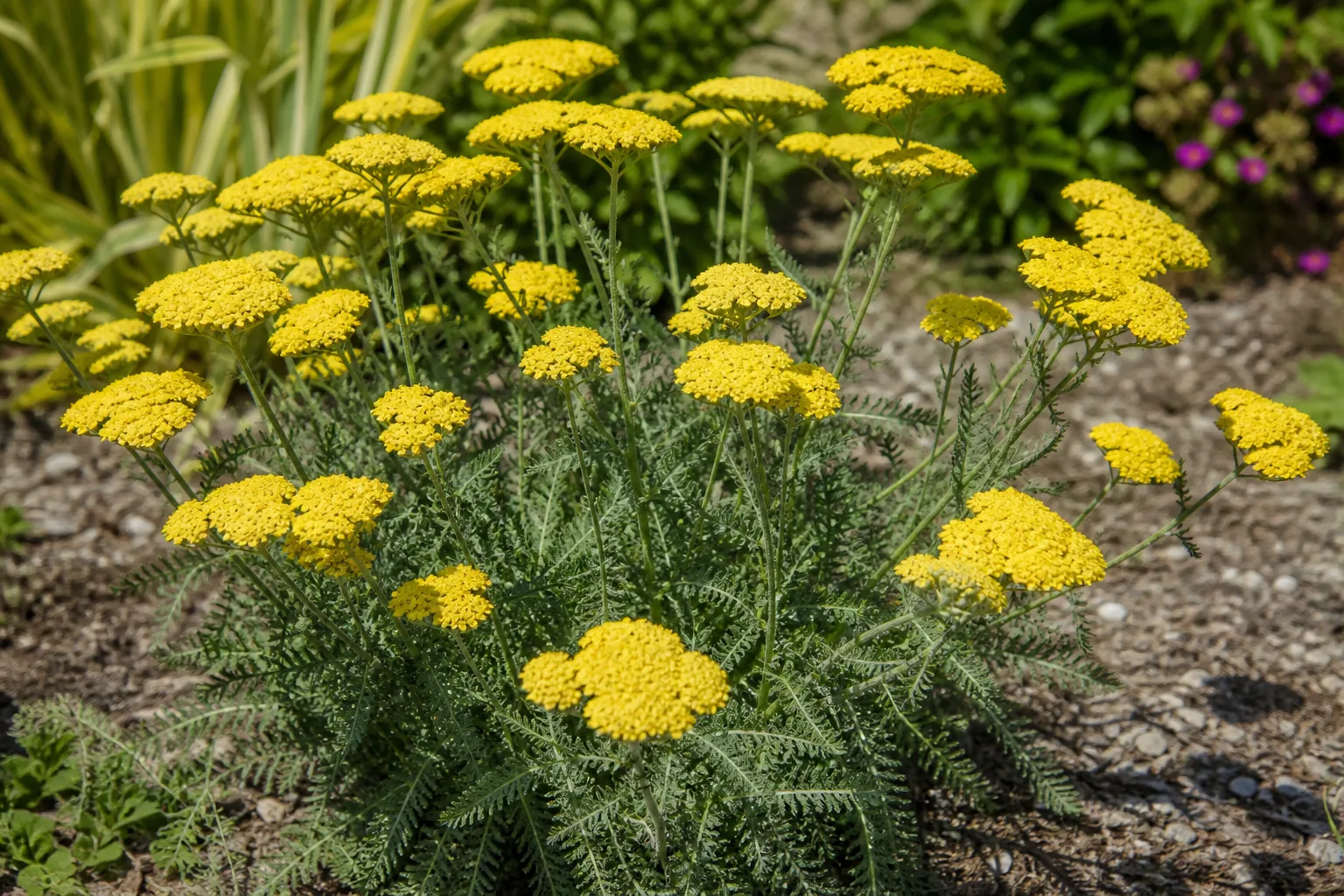
Fernleaf yarrow (Achillea filipendulina) provides a strong, upright flower stem above finely divided foliage. Its broad yellow flower plates make a warm contrast with bronze, purple, white, or red mums, and the flower heads can remain useful as dried material after their fresh color fades. It is a better fit for a sunny, well-drained border than for a shaded or persistently wet corner.
Yarrow often blooms earlier than fall mums, so its main contribution may be a summer-to-autumn handoff rather than simultaneous flowers. Place taller forms behind compact mums, and give the clump enough room to keep air moving around both plants. If the bed stays wet, choose another companion instead of trying to solve the mismatch with more drainage amendments around a mature perennial. Leave some healthy seedheads standing for texture or cut them when they begin to look ragged.
Flowering Chives
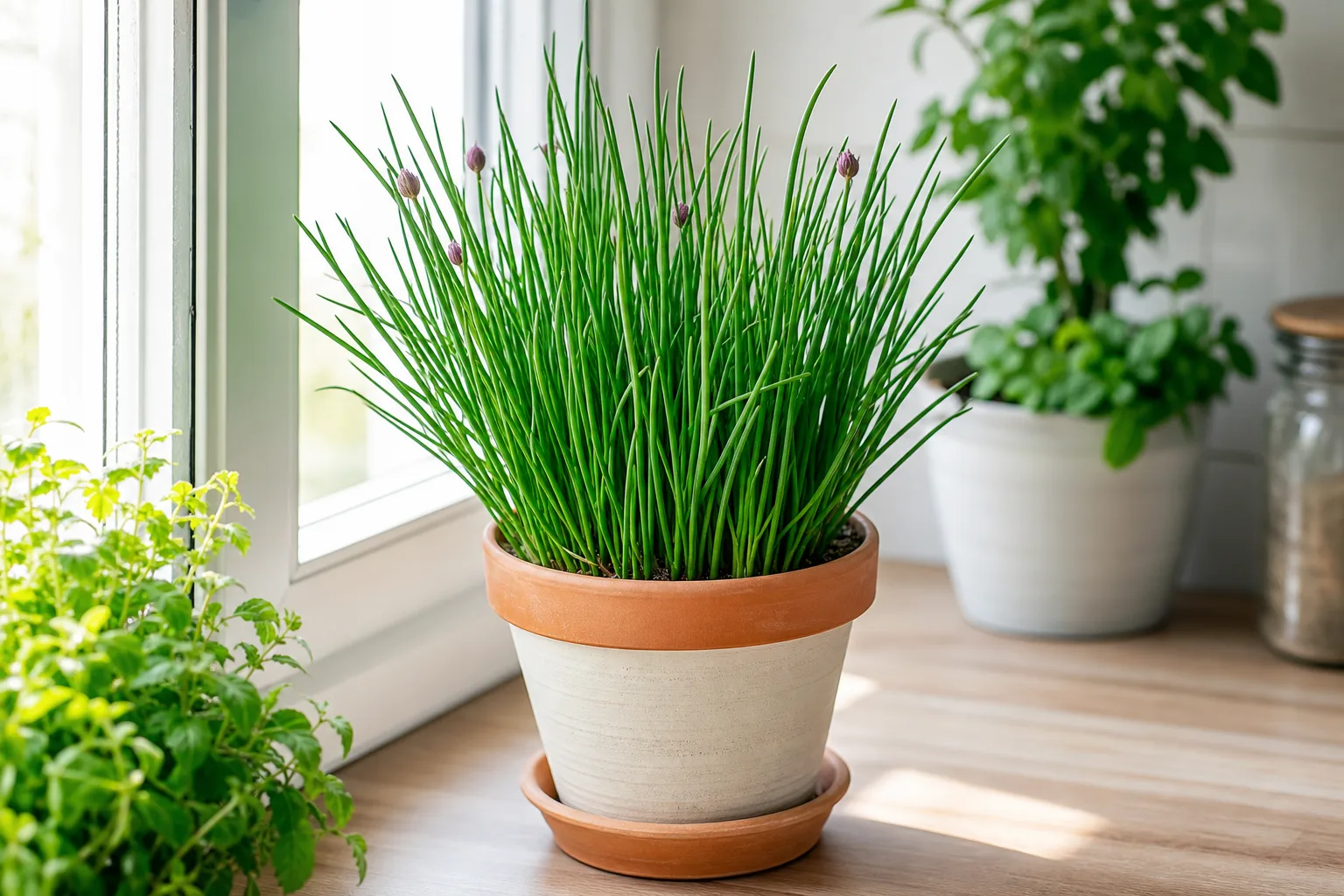
Flowering chives (Allium schoenoprasum) offer upright, grasslike leaves and rounded purple blooms earlier in the growing season. They are useful when the goal is a border that looks planned before the mums open, rather than a display in which every plant flowers at once. Their small clumps can repeat through a sunny bed without competing visually with the larger fall flowers.
The timing caveat matters: chive blooms usually do not coincide with late-season chrysanthemums, and the foliage may look tired by the time mums take over. Plant chives where spring and early-summer growth can be enjoyed, then let nearby mum foliage cover the area only if there is still enough spacing and light. Chives are not a guaranteed Japanese beetle deterrent around mums; the practical benefit here is edible-herb utility and seasonal structure, not pest control. Remove spent flowerheads if you do not want seedlings.
Goldenrod

Goldenrod (Solidago) supplies loose sprays of yellow flowers and an important late-season color counterpoint to mums. Its natural, airy form can soften a formal row of tightly rounded plants, while the flower clusters offer nectar and pollen when many garden flowers are winding down. A compact cultivar can fit a residential bed more easily than a tall species that spreads or crowds its neighbors.
Use the botanical name to choose the right plant: goldenrod species vary in height, spread, and garden behavior. Put tall selections toward the back, choose clumping cultivars for limited space, and check the expected width before planting beside a small mum. It prefers sun and reasonably drained soil; if your location is unusually dry, establish it with consistent water during its first season. Goldenrod is not a mum-specific disease treatment, but it can contribute a different bloom structure and a useful late-season floral resource.
New England Asters
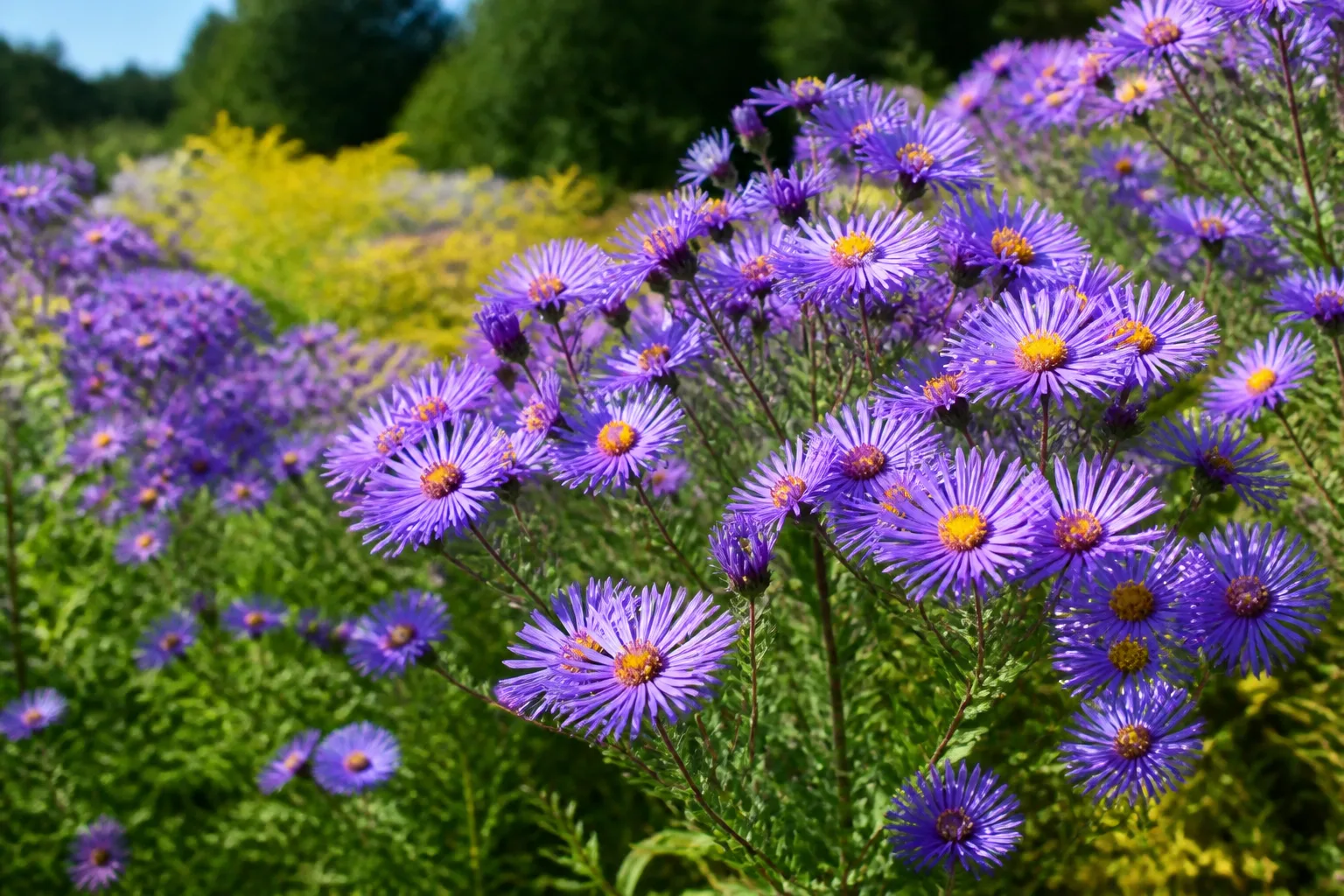
New England asters (Symphyotrichum novae-angliae) are among the strongest flower partners for hardy garden mums because they bring abundant fall blooms in purple, pink, or violet tones. Their branching, daisy-like flowers complement the fuller mum forms, and both plants can occupy a sunny, well-drained border. Gardenia’s planting guide also treats asters as a key late-season chrysanthemum pairing; the useful next step is to choose cultivars whose mature heights work in your bed, not simply to plant two names from a list.
Many asters grow taller and broader than the compact mums sold for porch displays. Give a tall cultivar a back-row position or select a shorter one for the middle of a mixed border. Water new plants consistently while roots establish, but avoid keeping the foliage wet with overhead irrigation. Penn State Extension lists avoiding overhead watering among disease-management measures for chrysanthemums; open spacing and watering at the soil are sensible practices for a mixed planting as well.
Helenium
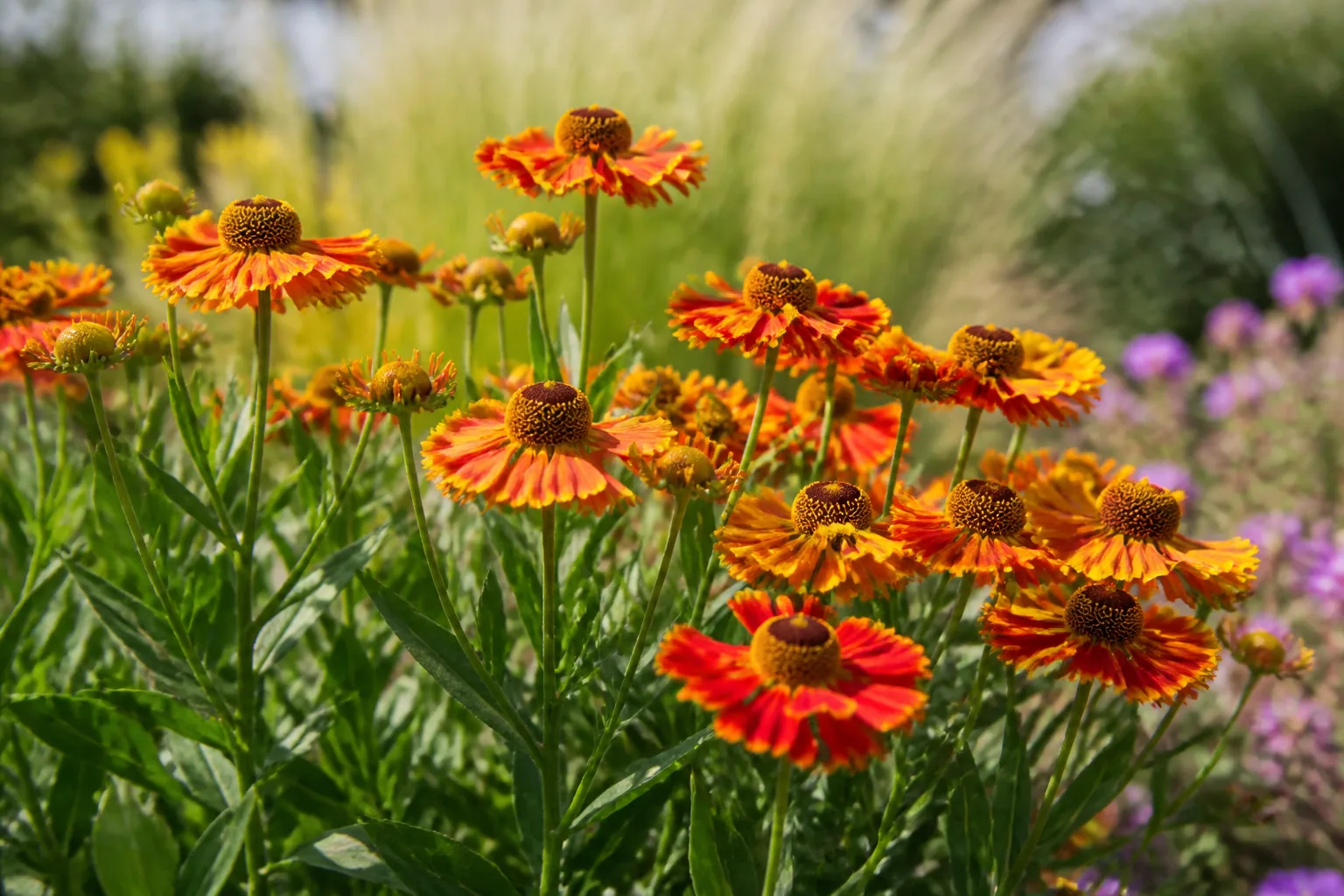
Helenium, often called sneezeweed, contributes daisy-like blooms in yellow, copper, rust, and red shades. It can extend the warm palette around bronze or gold mums while its taller stems create a back-of-border layer. Unlike a second mound-forming flower, its upright stems and open flower centers give a dense planting more height and visual movement.
Choose a variety whose bloom time overlaps your mums and whose height fits the site; the species and cultivars vary. Helenium generally performs best in sun and soil that does not dry out completely, so it suits a bed where mums receive regular but not excessive moisture. It is a poor choice for a dry, gravelly strip where an Autumn Joy sedum thrives. Cut back dead stems when they no longer add winter interest, and avoid placing it where it will cast afternoon shade over shorter flowers.
Coneflowers
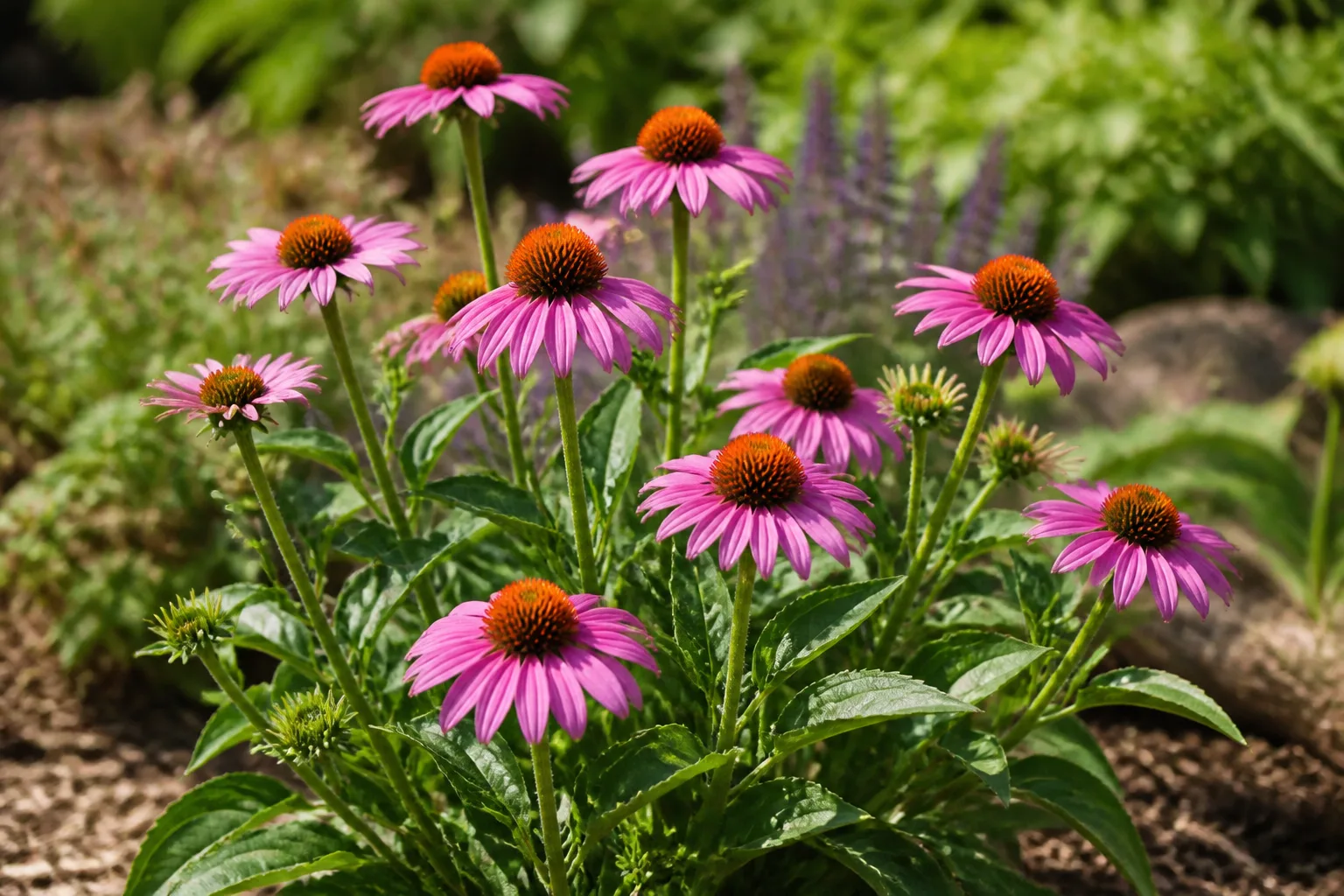
Coneflowers (Echinacea) help bridge summer color into autumn and add a strong central cone that contrasts with the many petal forms of chrysanthemums. Purple is familiar, but cultivated varieties may have white, yellow, orange, or pink blooms. For a naturalistic bed, let the seedheads stand after flowering; they provide texture and may be used by birds, although the value depends on the cultivar and what wildlife visits your garden.
Do not assume every coneflower will bloom alongside every mum. Some cultivars flower mainly in summer, while others continue later under favorable conditions. Choose for the actual bloom period listed by the nursery and give taller varieties the rear or middle of a bed. Coneflowers and mums both appreciate sun, but avoid crowding them: adequate space makes it easier to see each plant’s shape, maintain healthy foliage, and reach the mum for deadheading or inspection.
What Not to Plant With Chrysanthemums
There is no universal blacklist of plants that are inherently incompatible with every chrysanthemum. The less successful choices are usually mismatches in site, size, or spread. Avoid putting a shade-preferring heuchera in a spot where it will be scorched, planting a moisture-loving perennial in a dry sedum pocket, or allowing a tall companion to shade a compact mum just as it forms buds.
Avoid crowding mums into a solid block with no room between mature plants. A mixed border can add texture and spread bloom across the season, but mixing plants does not erase disease risk or replace good cultural care. Chrysanthemum disease guidance emphasizes keeping foliage dry and preventing splash; Penn State Extension lists overhead irrigation among practices to avoid for several diseases. Water near the soil, remove badly diseased debris, and leave enough open space for leaves to dry after rain.
Be cautious with plants whose names conceal very different growth habits. “Fountain grass” can mean species with different regional impacts, and a vigorous herb such as costmary can outgrow a small bed if ignored. Use locally vetted plants, contain spreaders when necessary, and do not use a plant’s aromatic scent as a substitute for identifying a pest. In an area with a history of a serious soilborne disease, get local extension guidance before planting susceptible ornamentals into that bed.
How to Arrange Mums and Companions in Beds and Containers
In a border, arrange by mature height and give each plant its own root space. Put tall asters, goldenrod, Helenium, or grass toward the back; place medium mums in the middle; and use low marigolds, compact sedum, or ornamental foliage near the front. That arrangement keeps flowers visible without stacking shade over the mum. For a narrow bed, choose one tall accent and repeat it instead of squeezing all twelve kinds into a single planting.
Think in layers and bloom handoffs. A simple scheme might use chives or coneflowers for earlier flowers, mums and asters for the main autumn show, then leave goldenrod or seedheads to extend interest. Repeat the same two or three plants in small groups for rhythm. This usually looks more intentional and is easier to maintain than alternating every plant in a long, single-specimen row.
Containers need a different approach because root volume and drainage are limited. A single large pot can support a mum and a few compact seasonal annuals, but a sedum, a moisture-loving perennial, and an actively growing mum may not want identical watering. A practical porch display is to keep plants in their nursery pots and nest them inside a larger decorative vessel, with the drainage holes unobstructed. This lets you change the arrangement or replace a spent annual without disturbing the mum’s roots. Homes & Gardens quotes garden designers who use grouped pots, varied heights, and repeated colors to make fall displays feel composed; the same principles help even when you have only a few containers.
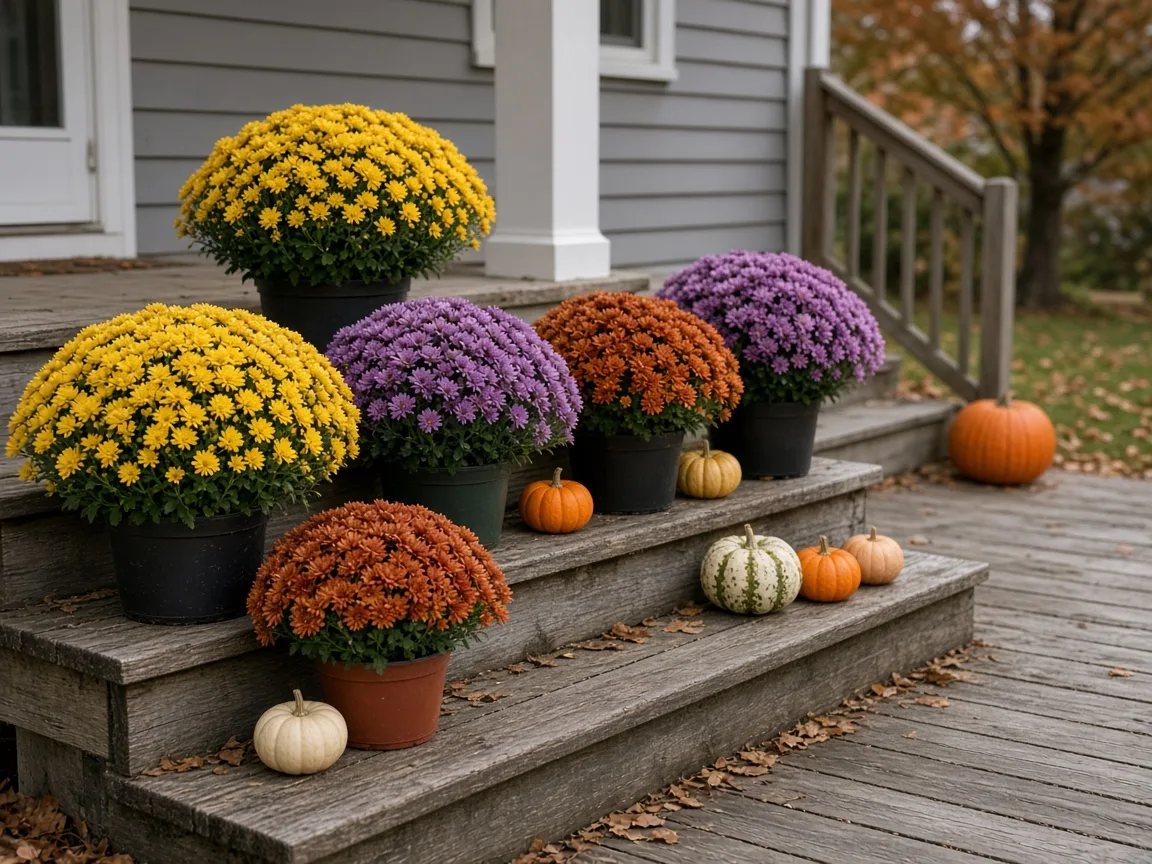
Before planting, put the unopened nursery pots where you plan to display them and view the arrangement from the walkway and the house. Check that the tallest plant does not block a window or hide the mum, that the pot can drain after rain, and that every plant has the light its label calls for. When a combination looks crowded before roots grow, remove one plant now rather than trying to prune around a spacing problem later.
Conclusion
Choose chrysanthemum companion plants by matching site conditions first, then use flower timing, foliage, and height to build the display. Asters, goldenrod, Helenium, coneflowers, sedum, ornamental cabbage, and selected grasses each offer a different role, while coral bells, chives, marigolds, and costmary need more specific expectations or placement.
The most reliable combination is one you can maintain: sunny conditions for the mum, soil that drains after watering, room for mature growth, and a layout that keeps foliage visible and accessible. Use companions to create color and structure, not as a promise of pest control; healthy spacing and regular observation do the practical work.