How to Prevent Bacterial Wilt in Cucumbers
Learn how to prevent bacterial wilt in cucumbers with row covers, beetle scouting, tolerant varieties, and a clear plan for flowering and infected vines.
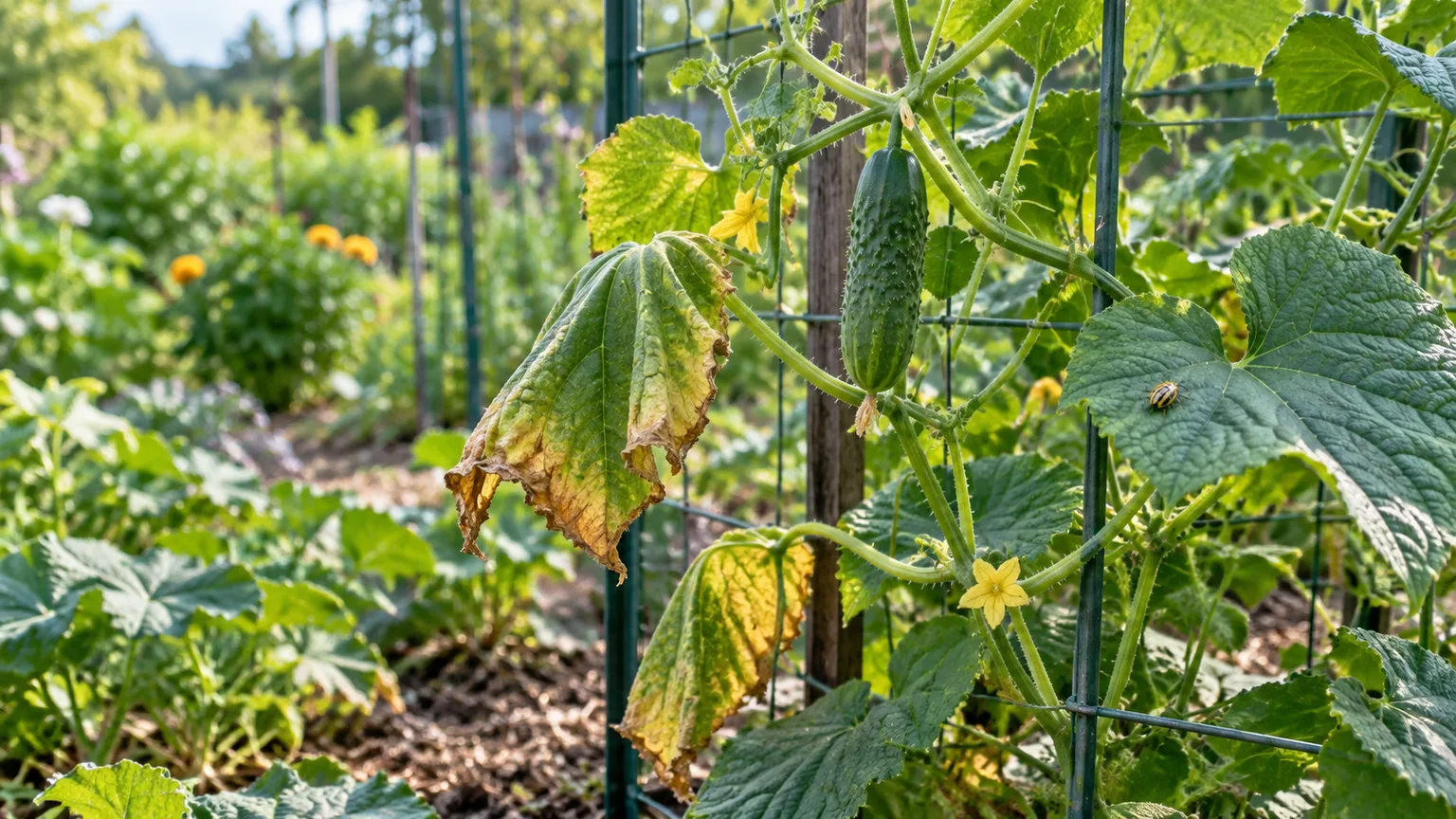
The most reliable way to prevent bacterial wilt in cucumbers is to stop cucumber beetles from feeding on young plants. The disease is caused by Erwinia tracheiphila, a bacterium carried by striped and spotted cucumber beetles. Once the bacterium has established itself inside a vine, there is no home-garden treatment that restores it; prevention has to happen before that point. University of Maryland Extension explains the disease cycle and early-season controls.
That priority changes how you use familiar garden advice. Good watering helps cucumbers handle heat, but it does not block infection. Crop rotation and cleanup can reduce pest pressure, but neither keeps flying beetles from landing on a seedling. Start with exclusion, then scout, then add other controls only where they fit your garden and the crop’s flowering stage.
Understand why wilt begins with cucumber beetles
Bacterial wilt is a vector-borne disease: the pathogen moves from plant to plant inside or on its insect carrier. Beetles feed on cucurbits, acquire bacteria from infected plants, and can introduce the pathogen as they feed on another vine. Infection then spreads through the plant’s water-conducting tissue, which is why adding water to the soil cannot flush it out. Iowa State University Extension describes cucumber beetles as the main route of transmission.
This is different from a typical leaf disease that spreads mainly by windblown spores or splashing soil. The first prevention question is not “What spray cures wilt?” but “How can I keep the vector from feeding during the period when my cucumbers are most exposed?” The answer is usually a physical barrier on young plants, paired with regular checks for beetles and fast removal of vines that are likely infected.
Which beetles spread the disease
Two familiar pests are involved: the striped cucumber beetle, usually yellow-green with three black stripes, and the spotted cucumber beetle, generally yellow-green with dark spots. Both feed on cucumbers and other cucurbits, including melons and squash, though the relative importance of each species varies by region. Beetles may be gone by the time a vine shows symptoms, so not seeing one today does not rule out earlier feeding.
A few holes in a leaf do not prove that a beetle carried the bacterium, and not every beetle is infected. The practical reason to watch for them is that a gardener cannot tell which individual beetle carries the pathogen. If you see cucumber beetles on a seedling, reduce feeding promptly instead of waiting for extensive chewing or wilt. Wisconsin Horticulture recommends frequent early scouting because the risk is greatest while plants are small.
Why seedlings are the highest-risk stage
A newly emerged seedling has little leaf area and limited reserves. Repeated feeding can stunt or kill it directly, and a single successful infection can eventually take down the vine. Cucumbers and muskmelons are especially susceptible among common cucurbits; some squash and pumpkins are less susceptible, while bacterial wilt is rarely a problem on watermelon. The Missouri Botanical Garden’s plant-health reference summarizes these host differences and the disease’s progression.
Older, vigorous plants are not immune, but they have more foliage and a larger root system than a two-leaf seedling. This is why row covers and beetle scouting matter most early, even if the garden looks healthy. Protecting the vulnerable window can buy time for vines to grow; it cannot make a susceptible variety permanently safe once the cover comes off.
Read the pattern before you diagnose
A cucumber that droops on a hot afternoon may be thirsty, overheated, root-damaged, or diseased. Check the soil several inches down before watering again: dry soil points toward water stress, while persistently saturated soil suggests a drainage or root problem. Bacterial wilt becomes more plausible when a plant repeatedly wilts despite adequate moisture and the decline progresses from one leaf or runner into more of the vine.
Look at the whole pattern, not one dramatic moment. Compare neighboring plants, inspect the stem base for chewing or injury, and note whether the leaves recover in the cooler evening. A single episode of midday droop is not a reason to pull a productive plant. Progressive wilt plus cucumber beetle activity, characteristic leaf symptoms, or a positive ooze test raises the concern; a local extension diagnostic service can help when the answer would change what you remove.
What early bacterial wilt looks like
Early symptoms often start on one or a few leaves. They lose firmness, yellow or dry, and may seem to recover temporarily at night before the wilt advances along a runner or into more of the vine. As vascular tissue becomes impaired, the plant can no longer move enough water to its leaves, even when the soil is moist. Cornell’s cucumber disease key describes the shift from single leaves to individual runners.
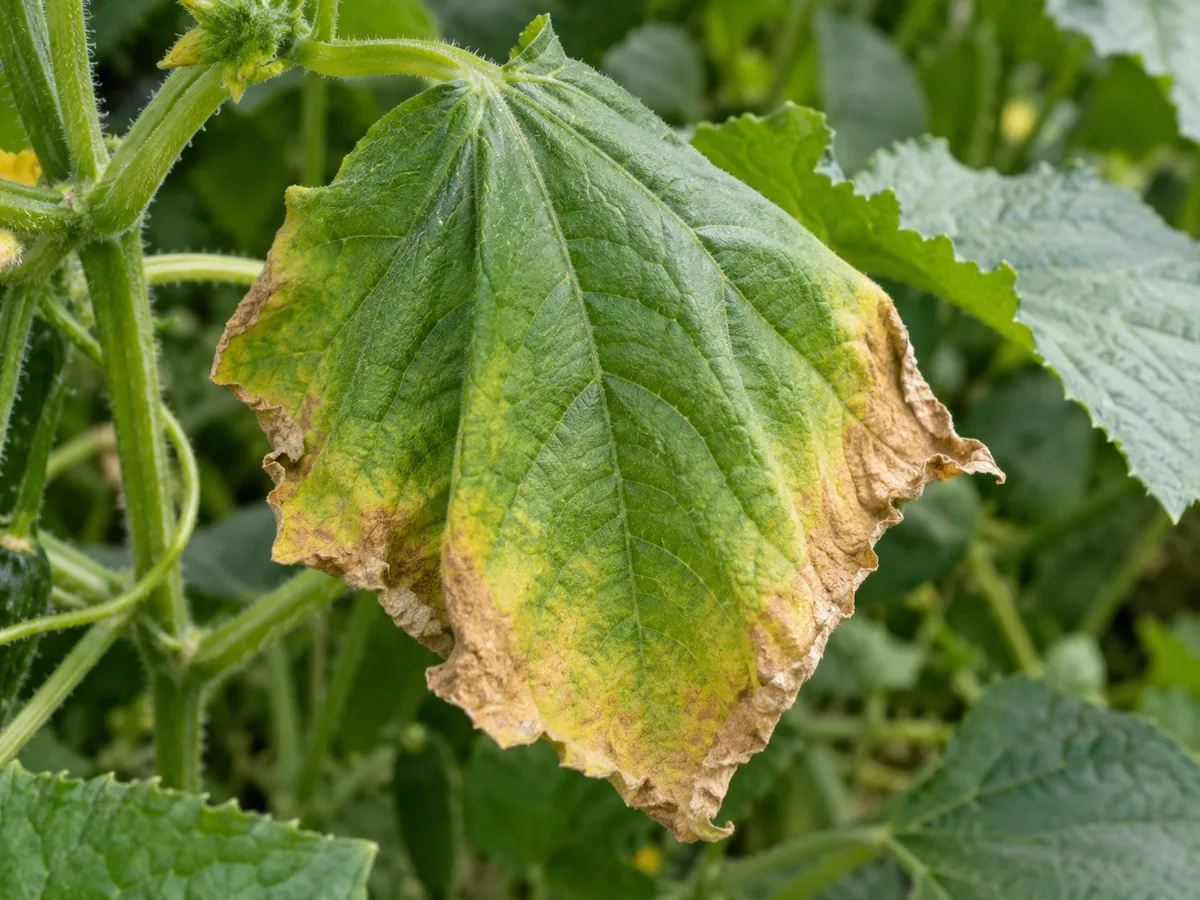
Early leaf symptoms can help focus an inspection, but a photograph or leaf appearance alone cannot confirm bacterial wilt.
The pattern can resemble drought or heat stress at first, but those problems often affect several plants exposed to the same conditions and can improve after the root zone is watered or the afternoon heat passes. Bacterial wilt may become one-sided or runner-specific before the entire plant collapses. Do not diagnose by leaf color alone: insect injury, other diseases, and root problems can overlap.
Use the ooze test as evidence, not a verdict
A simple field check can support a diagnosis. With a clean, sharp knife, cut a fresh, wilted stem near its base. Gently press the two cut surfaces together and slowly draw them apart; thin, sticky white-to-clear threads between the cut faces are consistent with bacterial ooze. Another version suspends a freshly cut stem in clear water and watches for cloudy ooze near the cut. Iowa State Extension outlines both versions of the test.
A positive thread test is useful evidence, but a negative result does not prove the plant is healthy. Old, dried stems may not ooze, symptoms can be uneven within a vine, and the test is not a substitute for laboratory diagnosis. Repeat on a fresh symptomatic runner if needed, clean the blade between plants, and contact a local plant clinic or extension office if you are unsure whether to remove multiple vines. The University of Minnesota notes that laboratory testing is needed for definitive confirmation.
Prepare the bed before beetles arrive
If bacterial wilt has appeared in your garden before, plan before sowing or transplanting. Write down when beetles first appeared and when wilt began; those dates help you decide when to set out covers next year. Choose seed and a planting spot with the disease risk in mind, and have your cover material ready before seedlings emerge so there is no unprotected gap after planting.
There is no single planting date that works across climates. In parts of the Upper Midwest, delaying cucurbit planting can reduce contact with the earliest overwintered beetles, but it also delays harvest and may not help where beetles arrive throughout the season. Ask your local extension service about typical beetle timing and the best cucumber planting window for your area rather than copying a calendar date from another region.
Choose tolerant cultivars with realistic expectations
Some cucumber cultivars are reported to tolerate bacterial wilt better than others. Extension references list options such as County Fair, Arkansas Little Leaf, Little Leaf, Shintokiwa, and Perseus; availability and seed-catalog names vary, so confirm the cultivar and the disease resistance or tolerance claim before buying. The Missouri Botanical Garden lists several tolerant cucumbers, and Ask Extension notes that relatively few cucumber varieties are resistant.
Treat “resistant” or “tolerant” as a reduction in risk, not immunity. Disease response can differ by growing conditions and the specific strain or pressure in a region, and a tolerant vine can still be infected. If bacterial wilt has repeatedly wiped out your harvest, choosing one of these cultivars is a sensible layer, but pair it with early exclusion and scouting rather than replacing them.
Also distinguish bacterial-wilt tolerance from cucumber-beetle resistance. Some cultivars are less attractive to beetles because of plant chemistry, while other cultivars have been selected for disease tolerance. Those are related but not identical traits. Read the packet description carefully and avoid assuming that a cultivar advertised as “bug resistant” is also resistant to bacterial wilt.
Rotate and time planting to reduce exposure
When space allows, move cucumbers and other cucurbits away from last year’s bed and avoid planting them among abandoned volunteer squash or old vine debris. Rotation can reduce the chance that beetles emerging close to a previous cucurbit planting reach new seedlings immediately. It is a supporting tactic, however: adult beetles can move from shelter or neighboring gardens, and rotation alone cannot protect a seedling from an arriving carrier. Wisconsin Horticulture recommends rotating vine crops with non-host crops as one part of cucumber beetle management.
Clean up old cucurbit vines after harvest and remove volunteer plants that become an unmanaged host patch. This does not mean stripping the garden of every leaf or beneficial habitat. Focus on old crop residue and neglected host plants where pests can shelter, then keep next season’s plants covered while they are small.
A later planting can make sense when local records show that the first beetle wave reliably peaks early and your season is long enough to absorb the delay. It is a tradeoff, not a universal rule: a delayed crop may face later beetle arrivals, heat, or a shorter harvest. Use planting-date advice from your region and treat a row cover as the more direct way to block feeding when timing is uncertain.
Exclude beetles while cucumbers are young
A floating row cover or fine insect netting is usually the most dependable home-garden prevention because it physically keeps beetles from reaching plants. Put it in place immediately after sowing or transplanting, before you see beetles. A cover placed over beetles already on the plants can trap them beside their food, so inspect under the fabric first and remove any insects before sealing it.
Use a breathable cover supported by hoops if the fabric would press on the foliage, and leave enough room for the vine to grow. The goal is a continuous barrier from the soil to the cover edges. A beautifully draped fabric with an open corner is still a path for beetles to crawl or fly in.
Install a row cover that actually excludes pests
Lay the cover over the bed, then bury the edges in soil or secure them continuously with boards, clips, or weights. Check the ends after wind and after working in the bed. If a leaf or tendril pushes fabric upward, re-secure it; beetles can use small openings, especially where the cover meets a trellis or raised-bed rim.
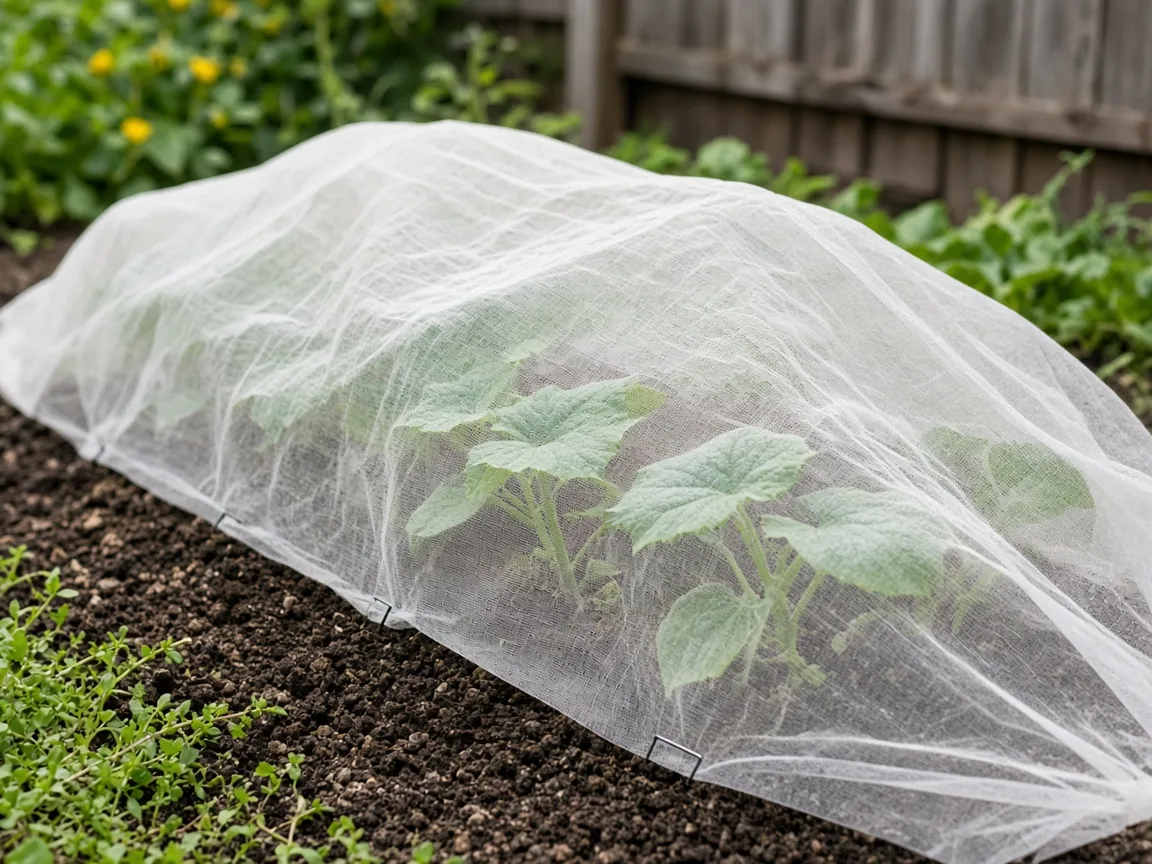
For a cucumber planted in a pot, cover the entire plant and secure the netting around the pot rim without leaving a gap. A cover can warm plants and limit airflow, so monitor them during hot weather and open or remove it if temperatures become unsafe for the crop. Use insect netting or lightweight row-cover fabric that allows light and rain to reach plants; heavy opaque material can slow growth and does not improve exclusion.
This tool works best before damage begins. It does not kill beetles elsewhere in the garden, protect flowers once the cover is removed, or cure an infected vine. Think of it as a gate: it prevents contact while closed, but you still need a plan for the moment the gate opens.
Remove or manage covers when pollination begins
Most cucumbers depend on insect pollination, so a sealed cover must come off when the female flowers open and need pollinator access. Male flowers often appear first; a female flower has a tiny immature cucumber behind its petals. Watching for that fruit-shaped swelling gives you a better cue than removing the cover simply because you spotted the first yellow blossom. Wisconsin Horticulture explains why covers need to come off when female flowers are present.
If your cucumber type can set fruit without pollination, check the variety description and confirm with the seed supplier before leaving a cover on. Otherwise, you can uncover for bloom or hand-pollinate under a cover if you are willing to do that consistently. A missed pollination window can mean poor fruit set, so do not extend exclusion without a workable pollination plan.
Some research tested delaying row-cover removal beyond first bloom as a way to reduce bacterial wilt. Iowa State trials with muskmelons found that delayed removal reduced wilt in some seasons, but results varied and pollination still had to be managed. That is useful evidence that the first bloom is not a biologically magical date; it is not a blanket instruction to keep home cucumbers sealed after female flowers open. Use it only if you can provide pollination and your local conditions justify the extra effort. Iowa State Extension reports the trial results and their limits.
Scout and add control layers when needed
Once covers come off, inspect plants often enough to catch beetles before they build up. Extension guidance commonly calls for multiple checks each week early in the season, then continued monitoring as plants grow. The exact action threshold varies with crop, plant stage, and region; commercial thresholds should not be copied blindly into a backyard. For a small cucumber patch with a history of wilt, treat even a few beetles on young uncovered plants as a reason to inspect closely and remove what you can.
When you find beetles, check the underside of leaves and inside flowers as well as the top surface. Look at the youngest plants first, because they have less foliage to lose and are the plants you are trying hardest to protect. A useful routine is to scout in the morning, record where and how many beetles you find, remove adults, and recheck the same plants the next day.
Inspect on a schedule and hand-pick adults
In a small garden, hand-picking can reduce adult feeding without exposing pollinators to a broad spray. Hold a cup of soapy water beneath a leaf and tap the beetle into it, or use a hand-held vacuum dedicated to garden pests. Move slowly: cucumber beetles fly readily when disturbed, and sweeping at them can send them to another plant.
Repeat the check rather than expecting one pass to solve the problem. Hand-picking will not reach eggs or larvae in soil, and new adults can move in from nearby hosts. Use it as a quick response for a few plants, then keep scouting and choose a barrier or local extension-approved control if beetles return. The Old Farmer’s Almanac also recommends inspecting cucurbits closely while they are seedlings and using covers during the early growth stage; its practical garden advice aligns with the extension emphasis on protecting young plants. See its current cucumber beetle guidance.
Treat trap crops and cleanup as supporting tactics
A perimeter trap crop is a ring or border of a more attractive plant, often Blue Hubbard squash, intended to draw beetles away from cucumbers. This can make sense in a larger, planned planting where you can inspect and manage the trap crop. It is less dependable as an improvised companion planting: if beetles gather on the squash and no one controls them, they can spread into the cucumbers next door.
If you use a trap crop, plant it early enough to be attractive before the main cucumbers, keep it healthy, inspect it frequently, and have a targeted management plan ready. University of Connecticut field work found that a managed Blue Hubbard perimeter crop reduced cucumber losses in its tested system, but that result depended on active management and should not be read as evidence that simply planting squash nearby will prevent wilt. UConn IPM describes the system and its operating conditions.
Rotation and fall cleanup help by reducing nearby host material and shelter. They do not make soil treatment or total garden sanitation necessary, and they do not replace a row cover. Skip folk remedies that claim to repel cucumber beetles with certainty; a tactic that has no reliable evidence can waste the short window when seedlings need protection.
Use insecticides only when justified
If beetles are numerous and young plants remain exposed, a pesticide may be one part of an integrated response. Choose only a product whose current label lists cucumbers and cucumber beetles, and follow its protective-equipment, harvest-interval, re-entry, and pollinator directions. Rules and product formulations vary by location, so ask a local extension office before relying on a product name from an old article or seed packet.
An insecticide cannot cure bacterial wilt after infection has spread inside the plant. Spraying blooms or treating broadly without checking the label can also expose pollinators and other beneficial insects. If a product is warranted, use the narrowest effective treatment and timing permitted by the label, avoid applying when bees are actively foraging, and continue the physical and monitoring measures that reduce future feeding. University of Minnesota’s disease guidance makes clear that prevention and removal—not treatment of an infected vine—are the useful options.
If bacterial wilt is likely
There is no cure for a cucumber vine with established bacterial wilt. Once symptoms are progressive and the evidence points to the disease, remove the plant promptly so beetles are less likely to acquire bacteria from it and carry them to a healthy cucurbit. Do not spend days adding water, fertilizer, or a fungicide; those steps cannot clear a bacterium already moving through vascular tissue.
Use gloves if you prefer, cut or pull the vine carefully, and avoid dragging it across neighboring plants. Bag or otherwise dispose of the diseased material according to your local waste rules; do not leave it in the bed as a mulch. Clean any tools that contacted the vine before using them on another plant. The key is to remove the potential source while avoiding extra contact that could injure nearby vines.
Then inspect neighboring cucumbers, melons, and squash for beetles and new wilt symptoms. If they are healthy, protect uncovered young vines with netting where possible and continue frequent scouting. A single infected plant does not guarantee that every cucurbit will become diseased, but the nearby crop deserves closer attention because beetles can move between hosts. The University of Minnesota recommends removing infected plants to reduce spread by beetles.
If wilt is the only symptom and the diagnosis is uncertain, compare soil moisture, inspect for stem or root damage, and repeat the field test on a fresh wilted stem. A negative string test is not a guarantee, and pulling every cucumber that droops in afternoon heat can sacrifice healthy plants. When several vines are affected or you need certainty before removing a large planting, send a sample to your local university plant diagnostic clinic.
Build a practical season plan
Before planting, choose a cucumber cultivar with reported tolerance if bacterial wilt is a recurring local problem, rotate the crop when space permits, and have clean row-cover material ready. After sowing or transplanting, seal the cover immediately and check the edges after wind. Inspect under the cover before closing it so you do not trap beetles inside with the seedlings.
While plants are covered, check growth, heat, and moisture; do not assume the cover makes them maintenance-free. When female flowers open, decide whether you will uncover for bees or hand-pollinate. After uncovering, scout several times a week during local beetle activity, hand-pick small numbers, and use only a label-compliant control if pressure rises.
At the first progressive wilt, test a fresh stem and compare symptoms with water stress or physical damage. Remove a strongly suspected infected vine, inspect its neighbors, and record when beetles and symptoms appeared. That short record improves next year’s timing and helps you distinguish a recurring disease cycle from a one-off summer wilt.
Conclusion: protect the vulnerable stage
You cannot rescue a cucumber vine from established bacterial wilt, but you can lower the chance that beetles introduce the bacterium in the first place. Cover young plants before beetles arrive, seal the barrier, uncover when pollination is needed, and keep scouting after bloom. Add tolerant cultivars, rotation, cleanup, trap crops, or a labeled insecticide only as supporting measures that fit your garden.
If one plant begins to wilt, do not assume it needs more water or pull it based on one hot afternoon. Check the soil, inspect the pattern, use the ooze test carefully, and remove the vine when evidence points to bacterial wilt. Protect the next healthy plant; that is where the prevention plan still has leverage.



