How to Grow and Care for Dwarf Alberta Spruce
Dwarf Alberta spruce care made practical: choose the right site, prevent winter burn, water correctly, and diagnose browning before it spreads.
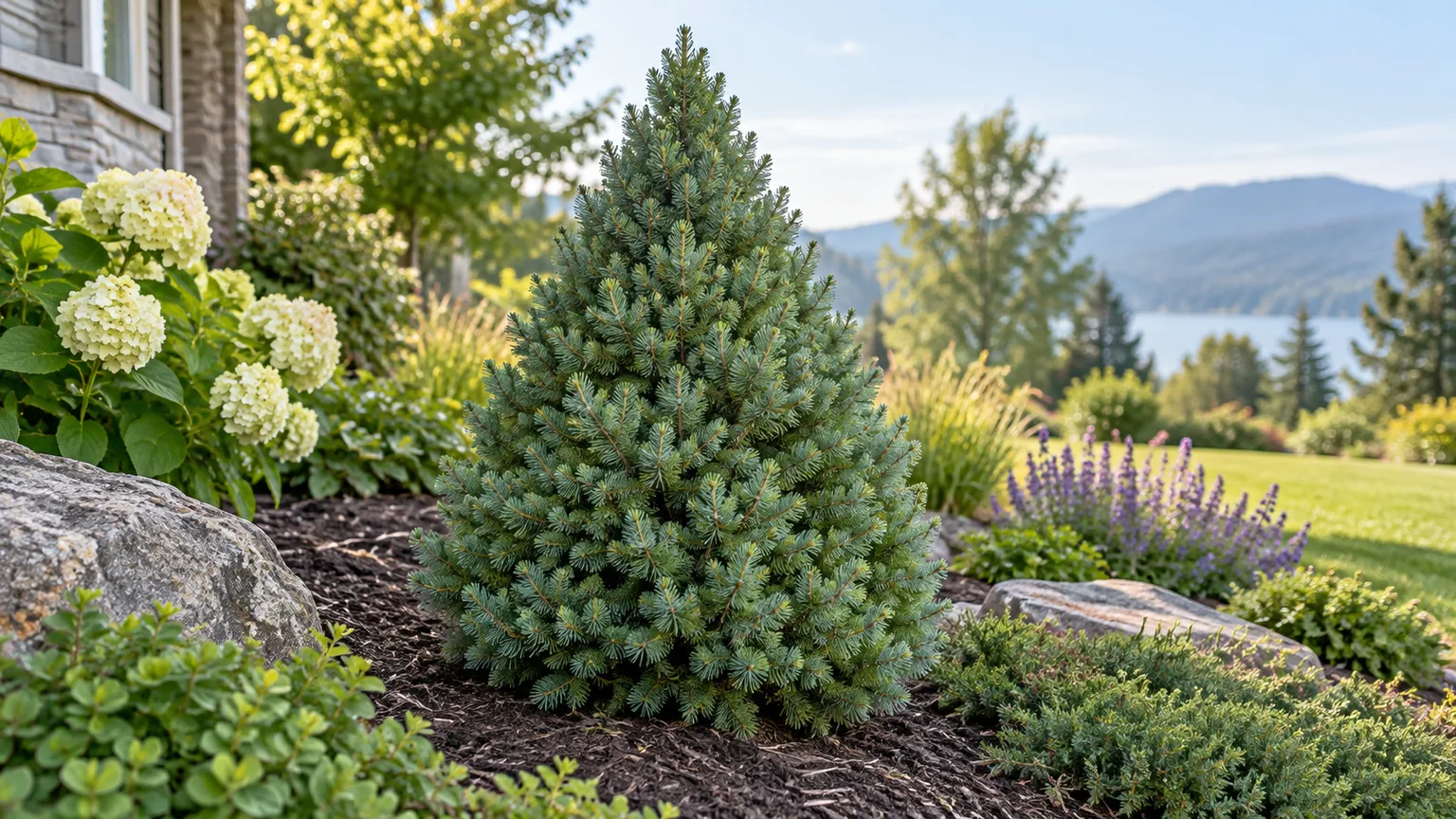
The dwarf Alberta spruce (Picea glauca ‘Conica’) earns its popularity honestly: it has a naturally tidy cone shape, evergreen color, and a slow pace that suits foundation beds, entry gardens, large containers, and formal plantings. It is also less forgiving than its neat outline suggests. Hot humid summers, reflected heat, trapped air, winter wind, drought, and waterlogged roots can turn a healthy-looking plant brown before a gardener sees the cause.
The most important care decision is not which fertilizer to buy. It is whether the site has the cool summers, drainage, and air movement this conifer prefers. Once the location fits, care is simple: plant at the correct depth, water the root zone thoroughly while it establishes, avoid routine shearing, and investigate browning by its pattern instead of guessing.
Start With the Plant’s Real Size and Climate
“Dwarf” describes the cultivar’s growth compared with a species white spruce; it does not mean a bonsai-sized shrub. A well-established plant can eventually reach roughly 10 to 13 feet tall and 7 to 10 feet wide, although its slow growth—often about 2 to 4 inches per year—makes that mature size easy to underestimate. The Ohio State University plant profile identifies ‘Conica’ as a slow-growing, pyramidal white spruce cultivar with a long potential lifespan. Ohio State University plant facts
Treat the mature dimensions as a design constraint from the beginning. Leave room for the lower branches to remain open to air, keep the plant away from a hot wall or narrow foundation pocket, and do not place it where a future move would require cutting through a dense root system. A small nursery specimen may look perfect beside a doorway; that does not make a tight doorway planting a good long-term site.
This spruce is most dependable where winters are cold and summers are relatively cool. It is commonly grown in USDA Zones 3 through 6, but zone numbers alone do not describe summer humidity, reflected heat, or the wind exposure of an individual yard. In warmer parts of its range, morning sun, open spacing, and protection from harsh afternoon heat matter more than a label on the plant tag.
Choose a Site That Drains Quickly
Before planting, observe the spot after a hard rain and again during a hot afternoon. If water remains around the root ball, the soil is compacted, or a nearby wall radiates heat for hours, solve that site problem first. Moving the tree to a better location is far easier before the roots fill the surrounding ground.
Light, Wind, and Summer Heat
Full sun produces the densest growth, but the best exposure is not always the brightest possible exposure. In a cool climate, six or more hours of direct sun is a strong target. In a hot or humid climate, an eastern or northern exposure can provide useful light while reducing the late-day heat load that dries the needles and overheats the root zone.
Give the plant space on every side. Air circulation helps foliage dry after rain and makes the site less inviting to spruce spider mites. Avoid a narrow corridor between a wall and hedge, a crowded evergreen border, or a corner where hot air sits. Shelter from the strongest winter wind is valuable, but a sealed-in pocket is not; choose an open site with a windbreak rather than a stagnant enclosure.
Soil and Root-Zone Setup
Dwarf Alberta spruce needs soil that holds moisture long enough for roots to use it but drains excess water quickly. A sandy loam or well-structured garden soil is easier to manage than heavy compacted clay. Soil pH is not the main reason a planting fails, so do not add amendments simply to chase a particular number. Drainage, organic matter, and a stable moisture supply are more useful priorities.
Do not create a rich, soft pocket of amended soil inside a dense native bed. That can hold water around the root ball while the surrounding soil remains dry, encouraging root stress. Instead, loosen the planting area broadly, remove construction debris or compacted clods, and use a soil test if the bed has a history of poor growth or excessive fertilizer.
Plant a Dwarf Alberta Spruce Without Burying the Trunk
The safest planting method is uncomplicated. Dig a hole about twice the width of the container or root ball and no deeper than the root ball’s height. The tree should sit at the same level it grew in its nursery container, with the root flare and upper roots covered only by soil that was already around them.
The Planting Sequence
- Prepare the hole and root ball. Remove the container, tease out circling roots at the outer edge, and inspect for a tightly wound root mass. Do not shred the entire ball or wash away all soil. The goal is to help roots leave the container shape without causing unnecessary transplant shock.
- Set the tree at grade. Place the root ball on firm soil, then turn the best side toward the view. Check from several angles before backfilling. Planting too deeply reduces oxygen around the roots and can trap moisture against the trunk.
- Backfill with native soil. Firm the soil gently to close large air pockets, but do not stomp it into a hard layer. Make a broad, shallow watering basin at the outer edge of the root zone rather than a raised wall against the trunk.
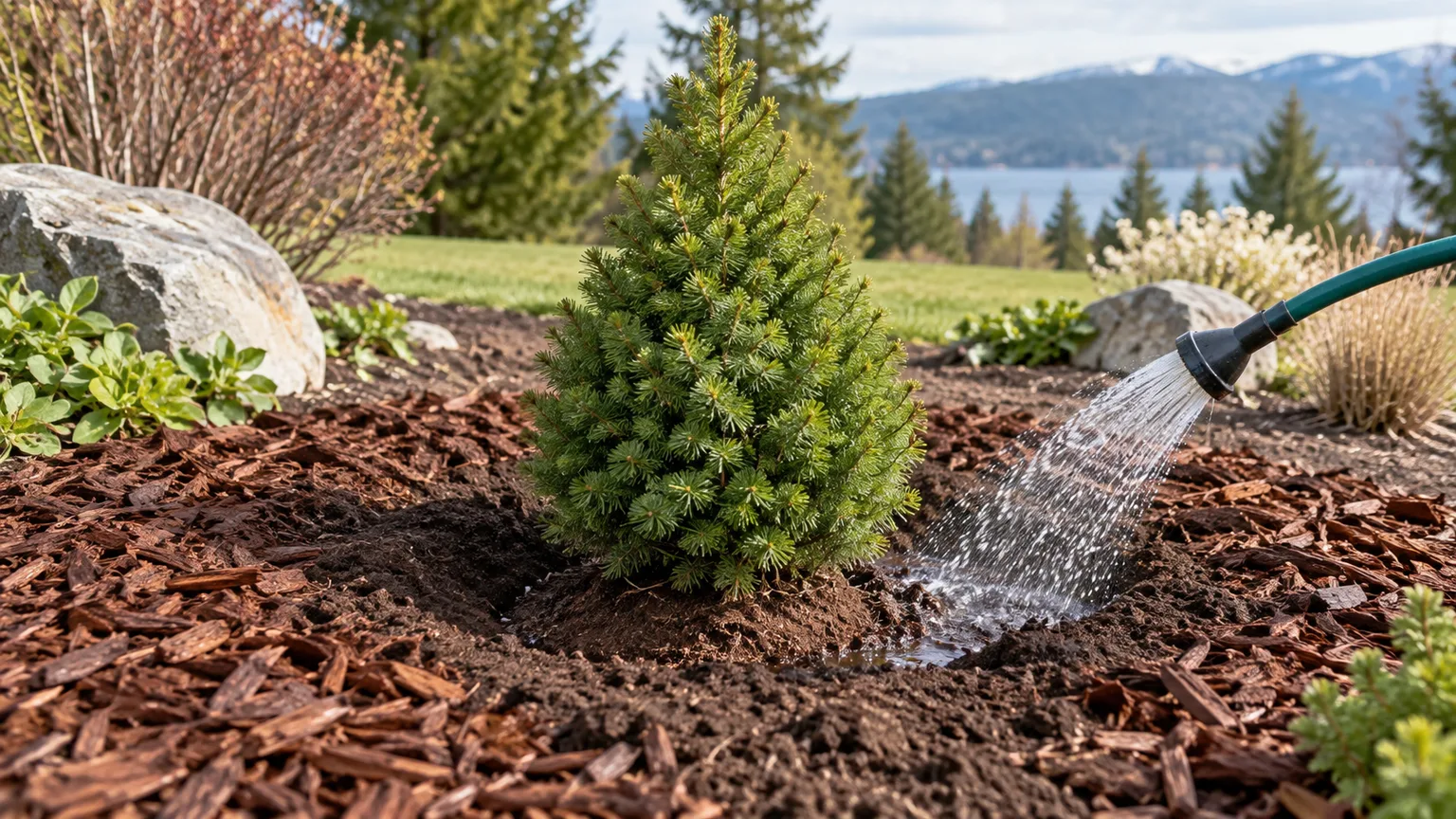
- Soak and mulch. Water slowly until the full root ball and surrounding soil are wet. Add about 2 to 3 inches of shredded bark or another coarse organic mulch across the root zone, leaving a clear gap around the trunk.
First-Year Establishment
For the first growing season, check the soil several inches down every few days during hot or dry weather. A newly planted tree may need a deep soak about once a week, with more frequent checks in sandy soil and less frequent watering after steady rain. The exact interval is less important than wetting the root zone deeply and allowing excess water to drain before the next soak.
Keep competing turf and weeds away from the root zone. Grass can intercept shallow irrigation before the spruce’s roots receive it, while a thick mulch volcano keeps the trunk damp and hides damage. Replenish mulch as it settles, but keep the trunk collar visible.
Watering: Deep, Infrequent, and Season-Aware
Water when the soil is beginning to dry below the surface, not because a calendar says it is watering day. Probe the soil several inches from the trunk; the surface under mulch can feel cool while the root ball beneath it is dry, or it can look dry while the interior remains saturated. A slow hose soak that wets the root ball is more useful than a quick splash over the needles.
Established in-ground trees generally need supplemental water during prolonged drought, extreme heat, or an autumn that stays unusually dry. Water before the ground freezes so the roots enter winter with access to moisture. Do not keep watering on a fixed schedule after heavy rain, and do not allow a saucer or low planting pocket to hold water around the roots.
Container plants dry faster because their root volume is limited and their sides are exposed to air. Check the mix with a finger or moisture probe, then water until it flows from the drainage holes. Empty any outer cachepot or saucer. If the mix has shrunk away from the pot wall or has become hard to re-wet, soak the pot slowly in stages rather than assuming one brief watering reached the root ball.
Fertilizing: Less Is Usually Better
A dwarf Alberta spruce that is growing steadily with good color does not need routine feeding. Excess nitrogen can push soft, uneven growth, increase water demand, and create a plant that outgrows its space without solving a real deficiency. If growth is weak or foliage is unusually pale, check drainage, root damage, light, and soil compaction before reaching for fertilizer.
Use a soil test when the planting is valuable or symptoms persist. If a test or a credible diagnosis shows a nutrient deficiency, apply a slow-release product according to its label and the tree’s size, preferably in the growing season. Never pile granular fertilizer against the trunk, and avoid late-season high-nitrogen feeding that can encourage tender growth before cold weather.
Pruning: Preserve the Natural Cone
The best pruning for this cultivar is usually no pruning. Its pyramidal habit is naturally dense, and shearing the outside can create a green shell around shaded, bare interior wood. Spruce branches do not reliably push new growth from old, leafless wood, so severe cuts may leave permanent holes.
Remove dead, broken, crossing, or clearly diseased branches with clean bypass pruners. Make a cut just outside the branch collar rather than leaving a long stub. If a branch is alive but too long, shorten it only where green side shoots remain. Do not top the tree to hold it at an arbitrary height; choose a smaller cultivar instead.
Late winter or the beginning of spring is a practical time to assess structure, but timing cannot repair a cut made into bare wood. For a formal container specimen, light tip pruning can maintain proportion, yet frequent shearing is not a substitute for adequate light and open spacing.
Growing It in a Container
A container makes the spruce portable, but it also magnifies every care error. Choose a pot with a drainage hole and enough width to insulate the root ball, then use a high-quality, well-draining potting mix rather than garden soil. The container should be stable enough that wind cannot rock the tree and loosen its roots.
Repot when roots circle densely, water runs straight down the sides, or the plant dries almost immediately after soaking. Move up one container size rather than placing a small root ball in a very large pot that stays wet. When you repot, keep the trunk and root flare at their former depth.
Do not treat a pot as a way to keep the tree permanently miniature. Restricted roots can slow growth, but they also increase drought, salt, and winter injury. A container-grown specimen still needs outdoor light, air movement, and a realistic plan for its eventual size.
Keeping a Living Christmas Tree Healthy
A potted dwarf Alberta spruce can decorate a cool room briefly, but it is an outdoor conifer, not a long-term houseplant. Keep its indoor stay short—about a week is a safer target than leaving it beside a heater for several weeks—then move it back outside gradually. Avoid radiators, fireplaces, heat vents, and a sunny window that turns the foliage hot.
Water the root ball before bringing the tree inside, but do not leave it sitting in water. After the holiday, place it in a cool, sheltered transition area for several days before exposing it to freezing wind. A sudden change from warm, dry indoor air to severe cold can damage needles and roots even when the plant looked fine indoors.
Winter Protection for In-Ground and Potted Trees
Winter injury often appears after the worst weather has passed. On bright, windy winter days, needles can lose water while frozen soil or damaged roots cannot replace it. Browning that is strongest on the south or west side is a useful clue, not proof; inspect roots, moisture, and trunk health before declaring winter burn.
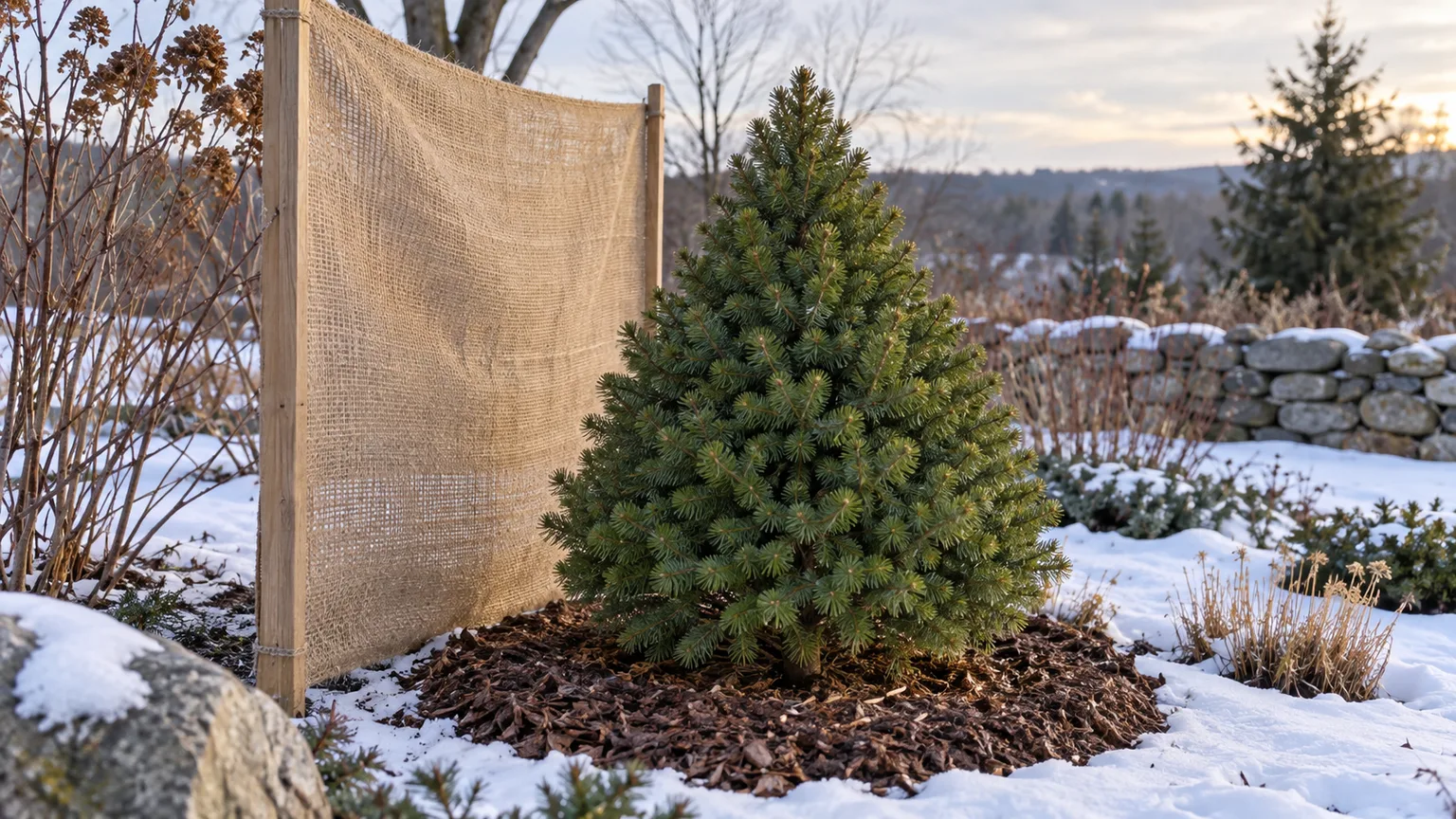
In-ground trees benefit from a thorough autumn watering before the soil freezes and a 2- to 3-inch mulch layer over the root zone. Do not wrap the foliage tightly in plastic. If the site is exposed, a breathable wind screen placed on the windward side can reduce desiccation while still allowing air to move around the plant.
Potted trees have less thermal protection than trees in the ground. Move the container to a sheltered location, group it with other pots, or sink the pot into the ground before the soil freezes. You can surround the container with straw bales or another insulating material, but keep drainage open and avoid sealing the plant in wet, stagnant conditions.
Pests and Diseases to Watch
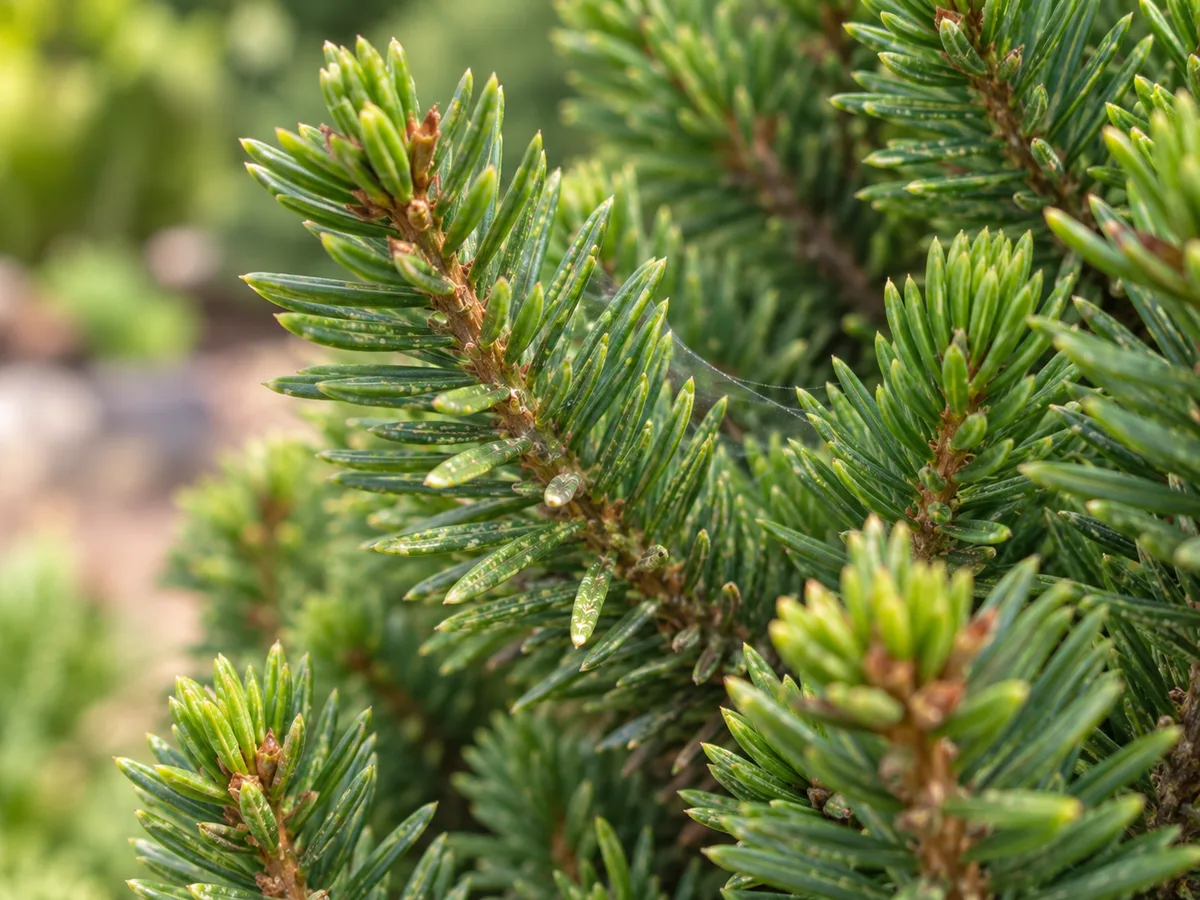
The most important pest to learn is the spruce spider mite. Crowded, dusty, hot, dry, or stressed plants are more vulnerable, and a light infestation can be easy to miss because the insects are tiny. Look for dull or stippled needles, fine webbing deep in the canopy, and a gradual loss of healthy green color rather than assuming every brown needle is a watering problem.
Spider Mites: The Fastest Troubleshooting Route
Hold a sheet of white paper under a branch and tap the branch firmly. Moving specks on the paper can indicate mites; use a hand lens if available. The Missouri Botanical Garden notes that spruce spider mites can affect conifers and that monitoring is important because damage may build before the pest is obvious. Missouri Botanical Garden’s spruce spider mite guide
First reduce stress: move a container away from reflected heat, open up crowded vegetation, and correct drought without saturating the soil. Rinse foliage with a strong but non-damaging stream of water when the plant and weather allow it, paying attention to branch interiors. If a labeled horticultural or insecticidal soap product is appropriate for your plant and local conditions, follow its label exactly, test a small area first, and repeat only as directed. Do not use broad-spectrum insecticides casually; they can eliminate predators and sometimes worsen mite outbreaks.
When Needles Turn Brown: Use the Pattern
Brown needles are a symptom, not a diagnosis. Start by asking when the browning appeared, which side or age of growth is affected, whether the soil is wet or dry, and whether the tree is still producing normal new growth. A plant that is mostly green with a few damaged tips may have a recoverable stress problem; a tree that is brown throughout with brittle twigs has a much poorer outlook.
A Practical Browning Checklist
- Scattered interior needles: Some older inner-needle drop is normal as shaded foliage ages, but widespread shedding can also follow drought, transplant shock, or poor light. Check the root zone and look for new bud growth before pruning.
- Brown tips after hot weather: Suspect drought, reflected heat, salt buildup, or root injury. Confirm soil moisture several inches down and inspect whether the tree is planted beside pavement or receiving salty runoff.
- Browning on one sunny side: Compare the pattern with prevailing winter wind and the south or west exposure. Winter burn is more likely when browning is lopsided and the roots went into winter dry. The City of Aberdeen’s forestry guidance describes this dry-needle pattern and emphasizes fall moisture before freeze-up. City of Aberdeen winter-burn guidance
- Brown branches that snap: Scratch a small twig lightly. Green tissue beneath the bark suggests life; dry brown tissue throughout several twigs indicates dieback. Do not expect new shoots from completely bare spruce wood.
- Brown top or sudden leader loss: Inspect the trunk for chewing or girdling, check for a loose root ball, and investigate whether the roots are black and mushy. A damaged trunk or dead leader can change the tree’s future shape even if lower branches remain green.
If the tree is small and the problem is caught early, remove it from a pot and inspect the roots. Healthy roots are firm and pale to tan; mushy, black, foul-smelling roots point to prolonged saturation. Cut away only clearly dead tissue with sterilized tools, repot into fresh draining mix, and correct the watering pattern. Do not keep repeating fungicide applications without a diagnosis.
Propagation and Cultivar Choices
Seed is not a reliable way to reproduce the compact ‘Conica’ form. Seedlings may vary because a named cultivar is selected for a particular habit, while seedlings are genetically different. Propagation from cuttings is possible for skilled growers, but spruce cuttings are slow and sensitive to moisture balance; rooting a nursery plant at home is rarely faster or easier than buying a healthy specimen.
If you need a different size or shape, shop for a named cultivar rather than planning to control a standard ‘Conica’ by hard pruning. ‘Jean’s Dilly’ is a shorter form, ‘Rainbow’s End’ has a contrasting cream-to-yellow new growth flush, and ‘Little Globe’ stays more rounded. Labels and final sizes vary by nursery and growing conditions, so use the mature dimensions on the specific tag and leave more room than the smallest advertised number suggests.
Conclusion
Dwarf Alberta spruce succeeds when you match it to the site before you plant it. Give it bright light without punishing afternoon heat, open air without constant winter wind, and soil that drains after a thorough soak. Plant the root ball at grade, water deeply while roots establish, mulch broadly but not against the trunk, and let the natural cone shape do most of the design work.
When browning appears, slow down before treating. Read the pattern, test the soil moisture, check for mites and trunk damage, and compare the plant’s exposure with the weather that preceded the symptom. Those few observations tell you whether the next step is watering, shelter, pest control, root correction, or replacement—and they prevent a tidy evergreen from becoming a cycle of guesswork.