How to Use Epsom Salt for Plants—and When Not To
Learn when Epsom salt helps plants, how to apply it safely, why yellow leaves are not proof of deficiency, and when to skip it entirely.
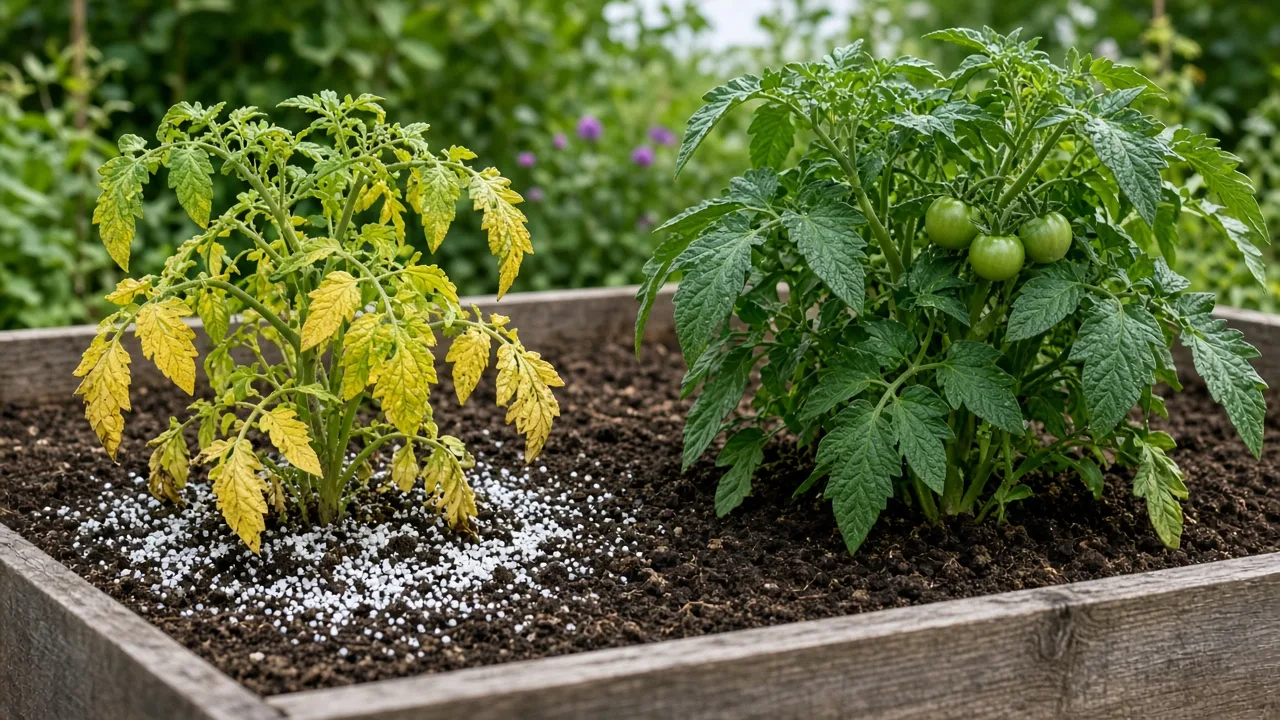
Epsom salt can help a plant only when magnesium or sulfur is limiting growth and the soil can use those nutrients. It is not a complete fertilizer, a bloom booster that works on every plant, or a cure for every yellow leaf. In many gardens, adding it without checking the soil simply adds soluble salts to a problem that needs a different fix.
The practical rule is simple: test first, treat only a demonstrated need, and stop after a measured application. If you are dealing with an established plant, a recent soil report showing low magnesium, and a product label that allows the use you have in mind, Epsom salt can be a reasonable targeted amendment. If you have no test, start by diagnosing light, watering, roots, pH, and general fertility instead.
The short answer: use it only for a confirmed need
Epsom salt is magnesium sulfate, a soluble compound that supplies magnesium and sulfur. Magnesium is involved in chlorophyll and photosynthesis; sulfur is used in amino acids and proteins. Those roles explain why a true deficiency can reduce vigor, but they do not prove that adding more of either nutrient will improve a healthy plant. This Old House’s gardening overview summarizes both the nutrient role and the limited evidence behind routine use.
If a soil test says magnesium is adequate, Epsom salt is unlikely to create a benefit. Extra magnesium can also interfere with the balance of other cations, particularly calcium and potassium, while repeated soluble applications can raise the salt load around roots. A product being inexpensive and water-soluble makes it easy to overapply; it does not make it universally safe.
What Epsom salt actually adds
Epsom salt supplies two nutrients and almost nothing else. It contributes no meaningful nitrogen, phosphorus, or potassium, so it cannot replace a complete fertilizer when the plant needs broad nutrition. It also does not improve drainage, add organic matter, correct compacted soil, or repair roots damaged by standing water.
Think of it as a narrow tool. A soil report may show low magnesium, or a tissue test may support a deficiency diagnosis; in that situation, magnesium sulfate may be one option. Without that evidence, a balanced fertilizer, compost used to improve soil structure, a pH correction, or a change in watering may do more than a magnesium salt.
Check soil before adding anything
The fastest way to waste Epsom salt is to treat a symptom before identifying the cause. Take a representative soil sample from the plant’s root zone, follow the laboratory’s sampling instructions, and ask for a test that reports pH, magnesium, calcium, potassium, phosphorus, and soluble salts when those options are available.
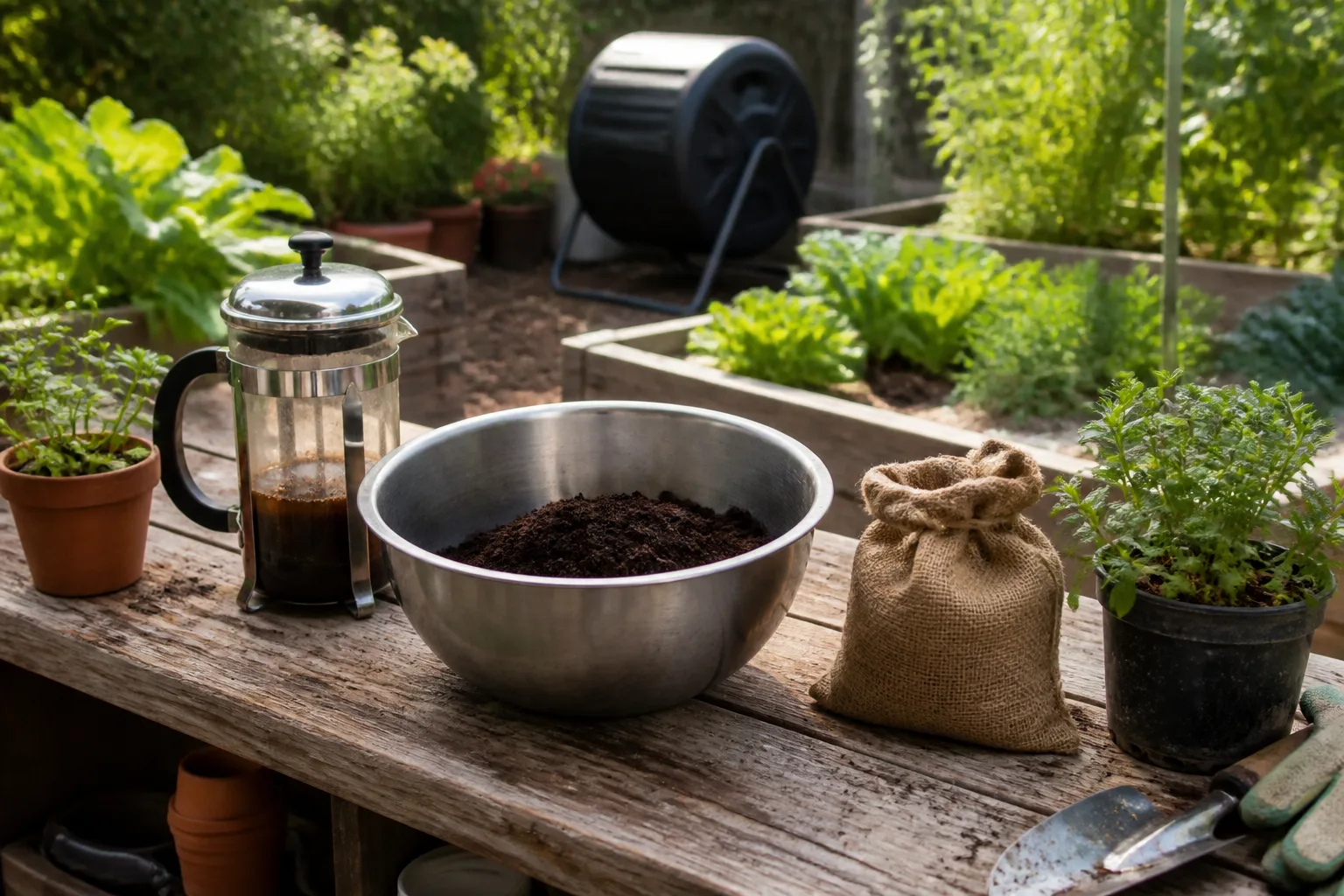
Cornell Cooperative Extension Broome County explains that a standard home-garden soil test can measure pH, phosphorus, potassium, calcium, magnesium, micronutrients, and organic matter, then provide recommendations for the tested crop or landscape use. That is more useful than a generic “one tablespoon per gallon” recipe because the right response depends on soil chemistry, plant type, and application area.
University of Delaware Cooperative Extension likewise bases nutrient recommendations on soil-test calibration studies. Its guidance notes that results depend on the extraction method and reporting units; a number from one laboratory should not be interpreted with a chart made for another test method. In other words, read the recommendation attached to your report rather than converting a random internet rate.
What a useful soil test should include
For a garden bed, collect several small samples from the same planting area, mix them cleanly, and submit the combined sample as the lab directs. Keep separate beds, containers, lawns, and areas with visibly different soil from one another. A single scoop from beside a compost pile can make a whole bed look more fertile than it is.
When the report comes back, look for three things. First, is magnesium rated low, adequate, or high? Second, is the pH appropriate for the plant? Third, does the lab recommend magnesium sulfate specifically, or does it recommend a different amendment? If pH is the main limitation, adding magnesium alone may leave the nutrient unavailable or create a second imbalance.
The report may also show that the soil is already carrying excess soluble salts. That matters especially in containers, raised beds that receive frequent fertilizer, and dry climates where salts are not regularly leached below the root zone. Do not add Epsom salt to a high-salt soil while trying to solve a pale leaf.
Why yellow leaves are not proof of magnesium deficiency
Magnesium deficiency often appears as interveinal chlorosis on older leaves: the tissue between veins pales while the veins remain greener. That pattern is a clue, not a diagnosis. Yellowing can also come from root rot, overwatering, drought, low light, cold soil, pests, disease, iron or nitrogen problems, or a pH that blocks nutrient uptake.
Leaf age helps narrow the possibilities. A problem that begins on the newest leaves points you toward different causes than a problem that starts on older leaves. If the whole plant is pale, growth is stalled, and the pot stays wet, check roots and drainage before reaching for a nutrient. If only a few old leaves are naturally aging, do nothing.
GardenDrum’s discussion of gardenias is a useful reminder that the same yellow foliage can be interpreted in more than one way: seasonal cold, watering, pH, iron availability, and actual magnesium deficiency can overlap. The article also summarizes horticulturist Linda Chalker-Scott’s caution that there is not robust evidence for dosing plants of unknown nutrient status. Read the GardenDrum analysis as a practical example of why observation alone should not trigger a routine salt treatment.
When Epsom salt can make sense
Epsom salt makes the most sense when three conditions line up: a credible soil or tissue diagnosis identifies a magnesium or sulfur need, the plant is in active growth, and the product label or soil laboratory gives a rate for that crop and setting. Use it as a correction, not as a calendar event.
In practical terms, it may be considered for an established vegetable bed with confirmed low magnesium, a rose bed with a test-backed deficiency, or a container crop whose nutrient solution has been diagnosed. It is not automatically justified because tomatoes, peppers, roses, or flowering plants are popular examples online. A plant’s reputation is not a soil test.
Garden beds and in-ground plants
For in-ground plants, follow the soil laboratory’s recommendation and the package label. The report may recommend a different magnesium source, a lime product that also supplies magnesium, or no amendment at all. Use the smallest correction that meets the recommendation, incorporate or water it as directed, and record the date and amount so you do not unknowingly repeat it.
If you are applying a label-approved soil drench, dissolve the measured amount completely in water and apply it to already-moist soil around the root zone rather than piling dry crystals against the stem. Keep the solution off foliage, sidewalks, ponds, and storm drains. Watering the soil after a dry application is not a way to make an unmeasured dose safe; it merely moves the salt.
Do not expect an overnight color change to prove that the diagnosis was correct. New growth is a better measure than old leaves, which may stay damaged even after the underlying issue is corrected. Recheck the plant’s growth, soil moisture, and any recommended follow-up interval before applying again.
Containers and houseplants
Containers deserve more caution because the root zone is small and runoff is limited. A monthly Epsom-salt routine can quietly accumulate salts in potting mix, especially when the pot has poor drainage, the plant is dormant, or fertilizer is already being used.
For a potted plant, use Epsom salt only when a test or a professional diagnosis supports it. Prefer a complete, crop-appropriate fertilizer when the problem is general underfeeding. If you are correcting a confirmed magnesium deficiency, use the container-specific label rate, apply once, and monitor new growth. Never use a garden-bed rate in a six-inch pot.
Do not treat a succulent or cactus simply because its lower leaves look pale. Those plants are particularly easy to damage with excess water and salts. Fix light, watering, drainage, or root health first, and remember that a naturally lean growing medium is part of their care strategy.
How to apply it with the least risk
Application method matters less than diagnosis, but careful technique can reduce avoidable injury. Wear gloves, measure rather than guess, dissolve crystals fully, use clean water, and keep notes. Avoid applying to drought-stressed, wilted, freshly transplanted, or heat-stressed plants.
Soil drench: a controlled starting method
A soil drench sends the solution to the root zone and avoids the direct leaf-burn risk of spraying. Start with moist soil so the solution spreads evenly. Pour slowly around the outer root zone, not against the crown or stem, and stop when the product label’s volume has been delivered.
Do not use a generic rate as a universal prescription. A frequently repeated household formula is 1 tablespoon per gallon of water, but that is not a complete recommendation without a crop, soil, and product context. Treat it as an internet convention, not proof that your plant needs that concentration. For a confirmed deficiency, the label or soil report should control the amount and frequency.
After application, watch for new leaf development, leaf-edge scorch, crusty soil, wilting, or a sudden decline. If the plant worsens and the container has good drainage, flush the root zone with plain water according to the plant’s tolerance, allowing excess to drain away. Do not flush a water-sensitive plant blindly; correct the diagnosis first.
Foliar spray: faster, easier to overdo
Foliar feeding can move a soluble nutrient across leaf surfaces quickly, but it also creates a direct route to leaf injury. A strong spray, hot sun, low humidity, tender foliage, or residue left to dry can cause spotting or scorch. Foliar treatment does not correct a root-zone pH problem or replace a complete fertilizer.
Use a foliar spray only when the label or a qualified recommendation calls for it. Test a small number of leaves first, spray in cool low-light conditions, avoid open flowers and tender new growth, and do not combine the solution with another product unless the labels explicitly allow that mix. Never spray a wilted plant and never assume that a greener leaf a day later means the entire plant is fixed.
Washington State University Extension’s publication on Epsom salt use in home gardens and landscapes is also clear on a point that is often lost in garden folklore: Epsom salt is not a pesticide and should not be used as one. See the Washington State University publication. It will not reliably control aphids, slugs, fungus, weeds, or disease.
What not to mix or use it for
Do not mix Epsom salt into every watering can, add it to a complete fertilizer without checking both labels, or sprinkle it around plants as a substitute for measurement. Avoid dumping unused solution onto the lawn, driveway, or drain. Soluble nutrients move with water, so an application made “just in case” can become runoff rather than plant nutrition.
Epsom salt is also the wrong tool for blossom-end rot, which is primarily a calcium and water-management problem, not a simple magnesium shortage. It is not a reliable way to make fruit sweeter, increase flowering on an otherwise healthy plant, or correct compacted soil. Deep Green Permaculture’s mythbusting review is a useful reminder that nutrient additions should be tied to a demonstrated deficiency and not a promise attached to a crop.
Plants and situations that need extra caution
Some settings magnify the downside of guessing. The more limited the root zone, the younger the plant, or the more specialized the soil requirement, the less appropriate a routine Epsom-salt treatment becomes.
Acid-loving plants, succulents, and seedlings
Azaleas, rhododendrons, blueberries, gardenias, and other acid-loving plants should not receive Epsom salt merely because their leaves are yellow. Their symptoms may reflect pH, iron availability, cold, root stress, or waterlogging. Test the soil and plant-specific conditions before adding any magnesium.
Succulents and cacti often prefer lean, sharply draining mixes. A salt solution can add water at the same time that the plant is most vulnerable to wet roots. Seedlings are also poor candidates for casual treatment because their small root systems and tender leaves have little margin for concentration errors.
Avoid applying to a newly transplanted plant, a plant with damaged roots, or a plant recovering from heat or drought until it is hydrated and actively growing. Fertilizer stress layered on environmental stress is harder to diagnose and easier to worsen.
Lawns, trees, and large beds
Do not spread Epsom salt over a lawn or large bed just to make it greener. Large areas multiply the amount of product, and a small error becomes a soil-salinity or runoff problem. A lawn that is pale may need nitrogen, better mowing, improved irrigation, iron, or a pH adjustment instead.
Trees are an especially poor place for guesswork. Their active roots extend well beyond the trunk, symptoms can appear long after the cause, and salts applied near the base do not neatly reach the roots that need them. Obtain a soil or tissue diagnosis and use an arborist or extension service when decline is significant.
What to do if the plant still looks stressed
If the plant does not improve, do not repeat the dose automatically. Return to the diagnosis and ask what changed after the application. New leaves that remain pale can indicate that magnesium was not the limiting factor, the pH is still blocking uptake, roots are unhealthy, or the product was not applied to the active root zone.
Use this troubleshooting order:
- Check soil moisture several inches down and inspect roots if the plant is in a container.
- Look at light, temperature, airflow, pests, and the pattern of damage across old and new leaves.
- Review the soil report for pH, magnesium, calcium, potassium, and soluble salts.
- Check the product label, amount, dates, and any other fertilizer applied during the same period.
- Ask a local extension office, master gardener program, or qualified horticulturist to review photos and test results if the diagnosis remains unclear.
Do not use a darker green color as the only success metric. A plant can green up temporarily while the underlying root, water, or pH problem continues. Measure new growth, flowering, root health, and the plant’s overall recovery over several weeks.
Better fixes for common garden goals
Most reasons people reach for Epsom salt have a more direct first step.
For yellow leaves: identify whether yellowing is on old or new growth, check moisture and light, inspect for pests, and test pH and nutrients. Magnesium sulfate is appropriate only when the evidence points to magnesium or sulfur.
For bigger blooms: give the plant its required light, keep watering consistent, deadhead when appropriate, and use a complete fertilizer at the labeled rate if a fertility shortage is confirmed. Epsom salt cannot compensate for shade or a weak root system.
For more tomatoes or peppers: improve sun, soil structure, irrigation, pollination conditions, and balanced fertility. Add magnesium only when a soil or tissue test identifies the need. Do not use it as a preventive cure for blossom-end rot.
For a greener lawn: test soil, correct pH if recommended, mow at the correct height, and water deeply enough for the grass type. Choose a lawn fertilizer by soil-test need and local timing rather than applying a salt because the color looks dull.
For healthier houseplants: fix light, pot size, drainage, watering rhythm, and fertilizer concentration first. A fresh, airy potting mix and a complete houseplant fertilizer are usually more useful than a monthly Epsom-salt ritual.
For soil improvement: add mature compost where appropriate, protect soil with mulch, reduce compaction, and follow the soil report. Epsom salt adds soluble nutrients; it does not build the physical structure that roots need.
Conclusion
Epsom salt for plants is a targeted amendment, not a universal plant tonic. It can be useful when a soil or tissue test shows a real magnesium or sulfur need and the label or laboratory recommendation gives you a crop-appropriate way to apply it. Otherwise, the safest choice is to skip it and investigate the plant’s light, water, roots, pH, and complete nutrient supply.
If you do use it, measure carefully, dissolve it fully, keep it off foliage unless a label-approved foliar treatment is called for, and record what you applied. One well-diagnosed correction is more responsible than a season of routine doses—and much more likely to leave both the plant and the soil healthier.