How to Grow Strawflower: Seeds, Care, and Harvest Guide
Learn how to grow strawflower from seed, choose a variety, water it without overdoing it, and harvest blooms at the right stage for fresh or dried arrangements.
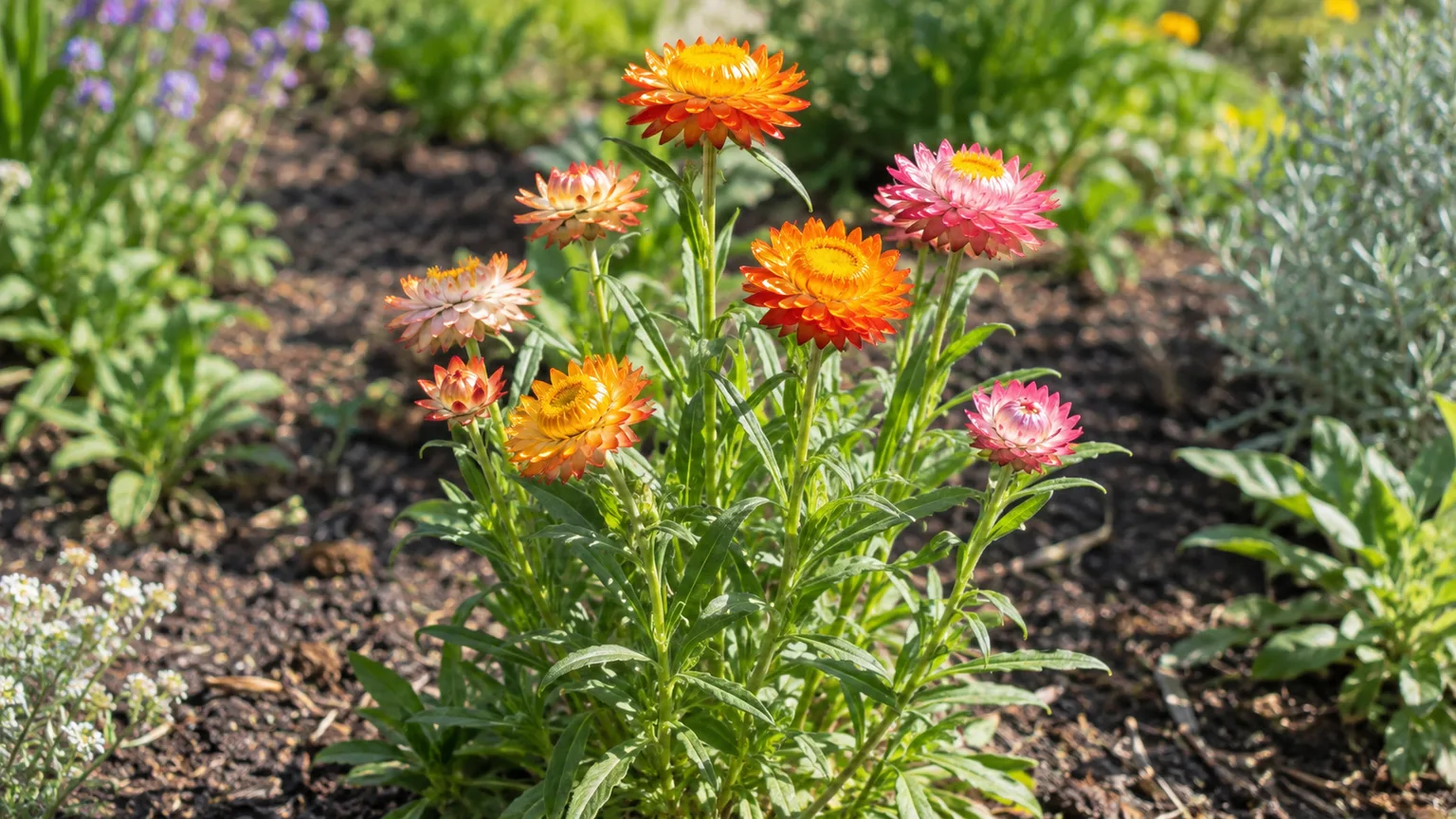
Strawflower (Xerochrysum bracteatum) is a warm-season flower grown for blooms that feel crisp and papery even when fresh. Give it six or more hours of sun, well-drained soil, and a light hand with water and fertilizer. Sow seed on the soil surface indoors six to eight weeks before your last frost, or direct-sow after frost in a long, warm season. The most useful twist: pick flowers while several rings of bracts have opened but the yellow center is only beginning to show if you want dried stems that hold their shape.
Strawflower at a glance
The colorful “petals” of strawflower are bracts—modified leaves surrounding the small true florets in the center. Their dry, firm texture is the reason the flowers last so well in arrangements. The plant is native to Australia and is also sold under older botanical names such as Helichrysum bracteatum and Bracteantha bracteata. Most garden cultivars grow about 2 to 3 feet tall, though compact selections can stay near a foot; flower size and stem strength also vary by cultivar. (NC State Extension)
| Growing question | Practical answer |
|---|---|
| Annual or perennial? | Usually grown as a frost-tender annual; it may act as a short-lived perennial in mild, frost-free climates. |
| Light | Full sun, ideally at least six hours of direct light. |
| Soil | Loose, well-drained soil; average fertility is enough. |
| Water | Keep new transplants evenly moist; established plants tolerate some dry spells but flower better without prolonged drought. |
| Spacing | About 9 to 12 inches for many garden plantings; widen toward 12 to 18 inches for tall cultivars or humid, still sites. |
| Blooming | Often begins in summer and continues until frost, depending on sowing date, heat, and cultivar. |
USDA zone labels can be misleading here. Strawflower is often treated as a tender perennial in warmer parts of zones 8–11, but a mild winter does not guarantee that every seed-grown or named cultivar will return. If you want a dependable display, plan it as an annual and treat any regrowth as a bonus. (NC State Extension)
Choose a variety for your space and purpose
Pick the plant habit before you pick a color. Compact varieties such as ‘Bright Bikini’ and ‘Tom Thumb’ work well along a path, in a window box, or in a container that needs a low, branching flower. Taller cultivars are better for cutting because they produce longer stems, but they may need support in wind. Seed packets often contain a color mix; if a particular shade matters, choose a named cultivar or a single-color strain rather than saving seed and expecting every offspring to match. (NC State Extension, Utah State University Extension)
For dried arrangements, ask whether the cultivar holds its color after drying. Utah State’s cut-flower guidance highlights ‘Apricot Peach’ for color retention, while other selections are chosen for their white, blush, orange, or deeper red tones. In a home garden, a mixed packet is a low-risk way to see which forms you like; in a border where you want a coordinated palette, buy seed with a named color range. (Utah State University Extension)
Planting site: sun, spacing, and drainage
Provide full sun and room for airflow
Choose the brightest open spot available. Six or more hours of direct sun produces stronger stems and more flower buds; plants grown in partial shade may survive, but they tend to stretch toward the light and flower less. In a hot climate, afternoon heat is usually easier to manage than a dim, crowded location. If a container wilts quickly on a paved patio, move it only if the pot itself is overheating; shade over the plant can reduce flowering. (NC State Extension, Homes & Gardens)
Leave enough room for stems to branch and for leaves to dry after rain. Nine to twelve inches is a workable starting spacing for many cultivars; use the wider end—or the seed packet’s recommendation—when growing taller plants, in a humid region, or where the bed has little breeze. Tight spacing may look full at transplant time but becomes a disease and staking problem once stems branch. A cut-flower row is easier to tend and harvest when you can reach between plants without crushing foliage.

Improve drainage without overfeeding
Strawflower grows in a range of ordinary garden soils as long as excess water can drain away. Sandy or loamy soil is convenient, but you do not need to replace a whole bed or chase a specific pH reading. The important test is what happens after rain: if a puddle remains for hours or the soil stays tacky and cold, use a raised bed, improve the bed structure with organic matter, or choose another spot. Strawflower can handle dry spells better than waterlogged roots. (NC State Extension, Utah State University Extension)
Do not enrich a fertile bed just because it is a flower. A modest layer of finished compost can help poor soil, but repeated high-nitrogen feeding often favors leafy growth over sturdy flowering stems. If you have a persistent growth problem, test the soil before adding lime, phosphorus, or iron. Different symptoms can look like “bad soil,” and an amendment that does not address the cause may make the balance worse.
Start strawflowers from seed
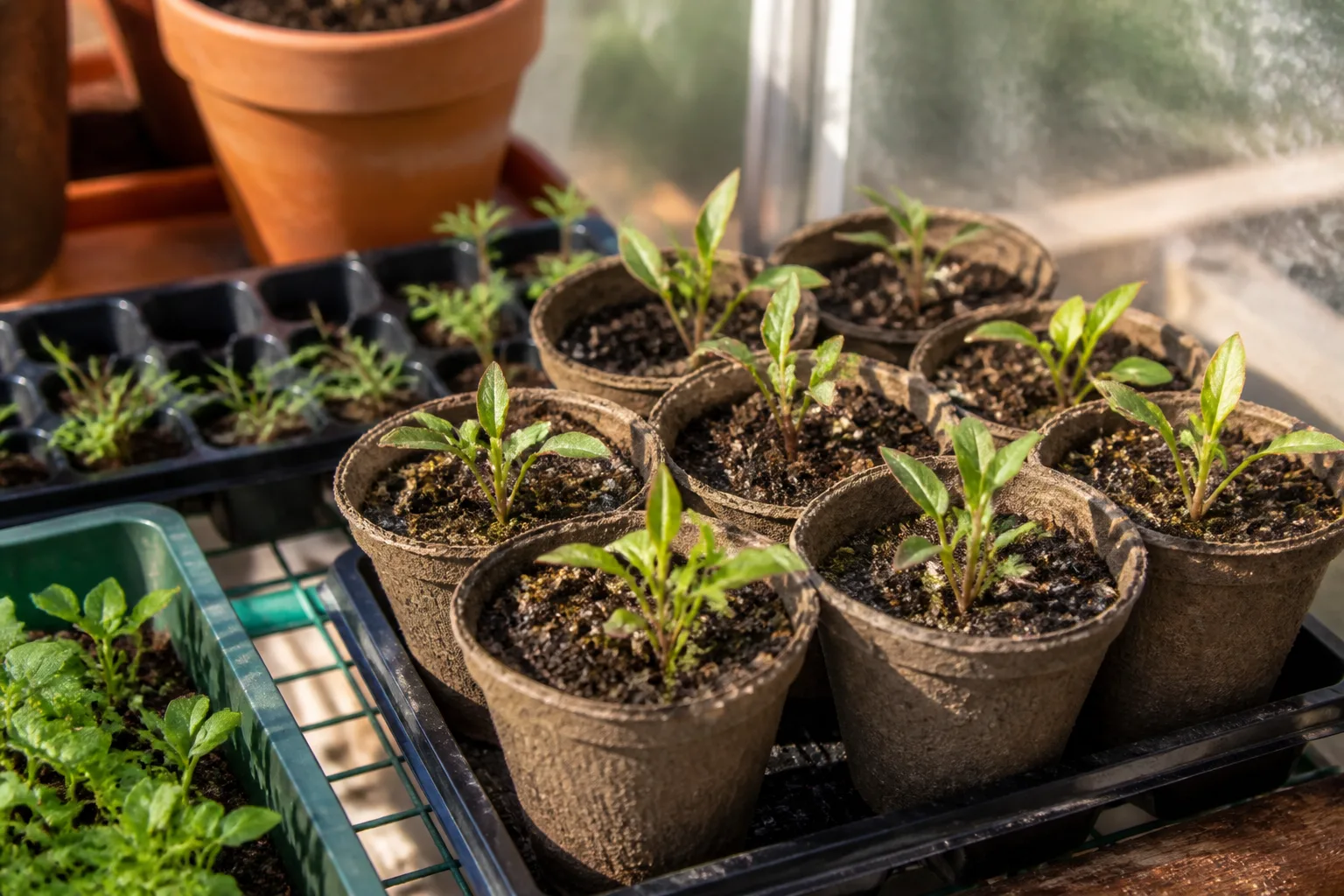
The seeds are tiny and light-responsive, so sow them at the surface rather than burying them under a layer of potting mix. They need consistent contact with moisture while they germinate; a gentle mist or bottom watering keeps them from washing into a corner of the tray. At about 70–75°F, germination commonly takes roughly a week to ten days, although seed age, cultivar, and temperature can shift the timing. (Utah State University Extension, Gardener’s Path)
Sow indoors for earlier blooms
Count back six to eight weeks from your local average last-frost date. Fill a clean seed tray with a fine seed-starting mix, moisten it first, and press two or three seeds onto each cell’s surface. Press lightly so the seeds touch the mix, then leave them uncovered or dust them with only a very thin layer of fine vermiculite. That light coating can hold moisture while still letting light reach the seed; a blanket of opaque mix is more likely to delay or prevent germination. (Garden Therapy, Utah State University Extension)
Keep the surface evenly moist, not saturated. A clear cover can slow evaporation before sprouts emerge, but remove it once seedlings appear so stale humidity does not linger around the foliage. Give seedlings the brightest window you have or place them under a grow light close enough to prevent lanky growth; a sunny window may still leave seedlings leaning if the days are short. When each cell has a few true leaves, thin to the strongest seedling rather than letting a crowded clump compete for water and light.
Seedlings raised indoors need a gradual transition to outdoor sun and wind. Over about a week, set trays outside for short periods in a sheltered, shaded location, then increase the time and light exposure each day. Bring them in or protect them if a cold night is forecast. A plant that looked sturdy under a grow light can scorch or stall if moved straight into midday sun, so hardening off is part of planting—not an optional extra.
Direct sow once soil is warm
If your growing season is long, direct sowing is simpler. Wait until frost danger has passed and the soil has warmed, rake the bed smooth, water it, and scatter seeds over the surface. Press them in gently; do not bury them. Keep the top layer from drying while they germinate, then thin crowded seedlings to the spacing recommended for the cultivar. In short-summer regions, direct sowing after frost can postpone flowers, so starting indoors is the better route when you want earlier blooms. (Savvy Gardening, Utah State University Extension)
Transplant seedlings and grow in containers
Transplant after frost risk has passed and temperatures are reliably warm. Water the seedlings before lifting them, loosen compacted roots, and set each plug at the same depth it grew in its cell. Water thoroughly at planting to settle soil around the root ball, then check the bed more often while roots establish. If a late cold snap threatens young plants, cover them overnight rather than assuming a warm-season flower will shrug off a freeze. (Utah State University Extension)
For pots, start with compact cultivars and a container with drainage holes. Use fresh, free-draining potting mix; garden soil is dense in a pot and can hold too much water around roots. Put the container in full sun and leave enough room around stems for air movement. A small pot dries faster than a bed, so use the soil check—not a fixed weekly rule—to decide when to water. If water runs straight through without wetting the root ball, set the pot in a shallow basin briefly, then drain it fully. (Gardener’s Path, Homes & Gardens)
Strawflower can fill a mixed planter, but its companions should like the same sunny position and quick drainage. Give the plant room rather than squeezing it between fast-growing neighbors. Overcrowding makes it harder to inspect the lower leaves and increases the time foliage stays damp after rain. A pot does not need frequent repotting during one growing season; if you bought a root-bound nursery plant, loosen the outer roots gently and move it into a container only modestly larger than its root ball.
Water and feed for steady flowering
Water newly transplanted seedlings when the surface begins to dry so the root zone does not swing from wet to bone-dry while it is getting established. Once plants are rooted, let the top inch or two of soil dry before watering again. Soak the root zone deeply, then wait for it to dry down; frequent light splashes wet the surface without encouraging roots to grow deeper. Established strawflower tolerates some drought, but long dry spells can reduce flower size and make a container plant wilt before the next watering. (Utah State University Extension, Homes & Gardens)
The right interval depends on rainfall, soil texture, wind, and whether the plant is in a pot. A finger test is more useful than “once a week”: if soil at root depth still feels cool and damp, wait; if it is dry and the plant is beginning to flag in morning rather than only in afternoon heat, water thoroughly. In hot weather above 90°F, plants may use more water, especially in containers, but do not keep the bed constantly wet to prevent temporary midday droop. (Utah State University Extension)
Strawflower is not a heavy feeder. If it is growing in prepared garden soil, compost worked in before planting may be enough for the season. In containers, a diluted balanced fertilizer can help if growth is pale or slow, but follow the label and avoid repeated high-nitrogen applications. There is no need to feed on a strict monthly schedule when plants are already leafy and blooming; more fertilizer will not correct shade, poor drainage, or overwatering.
Pinch, support, and deadhead
Pinching is most useful when you want a branching plant with more harvestable stems. When a young plant is about 12 inches tall, snip the central growing tip back by several inches, just above a leaf node. Side shoots then develop below the cut. This briefly delays the first flower, so skip or reduce pinching if your season is short or you would rather have an earlier bloom on a single main stem. Utah State’s cut-flower guidance recommends pinching at roughly this height for branching; compact cultivars may need less intervention. (Utah State University Extension, Homes & Gardens)
Stake taller varieties before they flop. A single stake and soft tie can steady a small planting; in a row, horizontal flower netting installed early supports several stems at once. A net is easier to raise with the plants than to thread through a mature clump, so place it at planting or when stems are still short. If the plant is already bending, loosely tie a few stems to a stake rather than pulling the whole clump upright at once.
Deadhead flowers when you no longer want them for seed. Cut the stem down to a branching point or healthy pair of leaves; simply plucking off the head leaves a long bare stalk. Frequent cutting for bouquets has the same effect as deadheading and can encourage new side shoots. Leave a few healthy blooms late in the season if you want to collect seed or see whether the plant will self-sow. (NC State Extension, Gardener’s Path)
Harvest fresh stems and dry flowers
Cutting flowers regularly is one of the easiest ways to keep a strawflower patch productive. Use clean, sharp snips and harvest when the stems are dry. For a fresh vase, flowers can be a little more open; for drying, cut earlier, before the center is fully exposed. The heads may close overnight, on rainy days, or under heavy cloud, so inspect them again in bright daylight before deciding that a bloom is immature or overripe. (Utah State University Extension)
Pick at the right opening stage
For a dried stem with a rounded shape, cut when about two to four rings of the papery bracts have opened and the center is just starting to show. This is sometimes called the “bundt cake” stage because the bracts make a raised ring around the center. A flower cut too early can droop at the neck as it continues to open; one cut too late may reveal a prominent center and can shatter or discolor more readily as it dries. The exact appearance varies by cultivar, so use both the bract layers and stem firmness rather than a calendar date. (Utah State University Extension, Homes & Gardens)
Utah State suggests a “wiggle test” for cut-flower production: hold the stem several inches below the bloom and move it gently side to side. If the neck directly below the head flexes, leave it a little longer; if that section stays firm, it is closer to a good harvest stage. On a fresh-flower stem, cut longer than the length you need and strip leaves that would sit below the waterline. Put stems straight into a clean bucket of cool water. For continued garden production, leave several healthy nodes lower on the plant so side growth can keep developing. (Utah State University Extension)
Air-dry for long-lasting color
Remove foliage from the lower part of each stem and gather a few stems into a small, loose bunch. Tie them securely because stems shrink slightly as they dry, then hang the bunch upside down in a dark, dry place with good airflow. Keep the bunches small enough that the flower heads do not touch; a crowded, damp bunch dries slowly and is more likely to lose shape. Avoid a sunny windowsill, bathroom, or closed plastic container while the stems are drying. (Garden Therapy, Utah State University Extension)
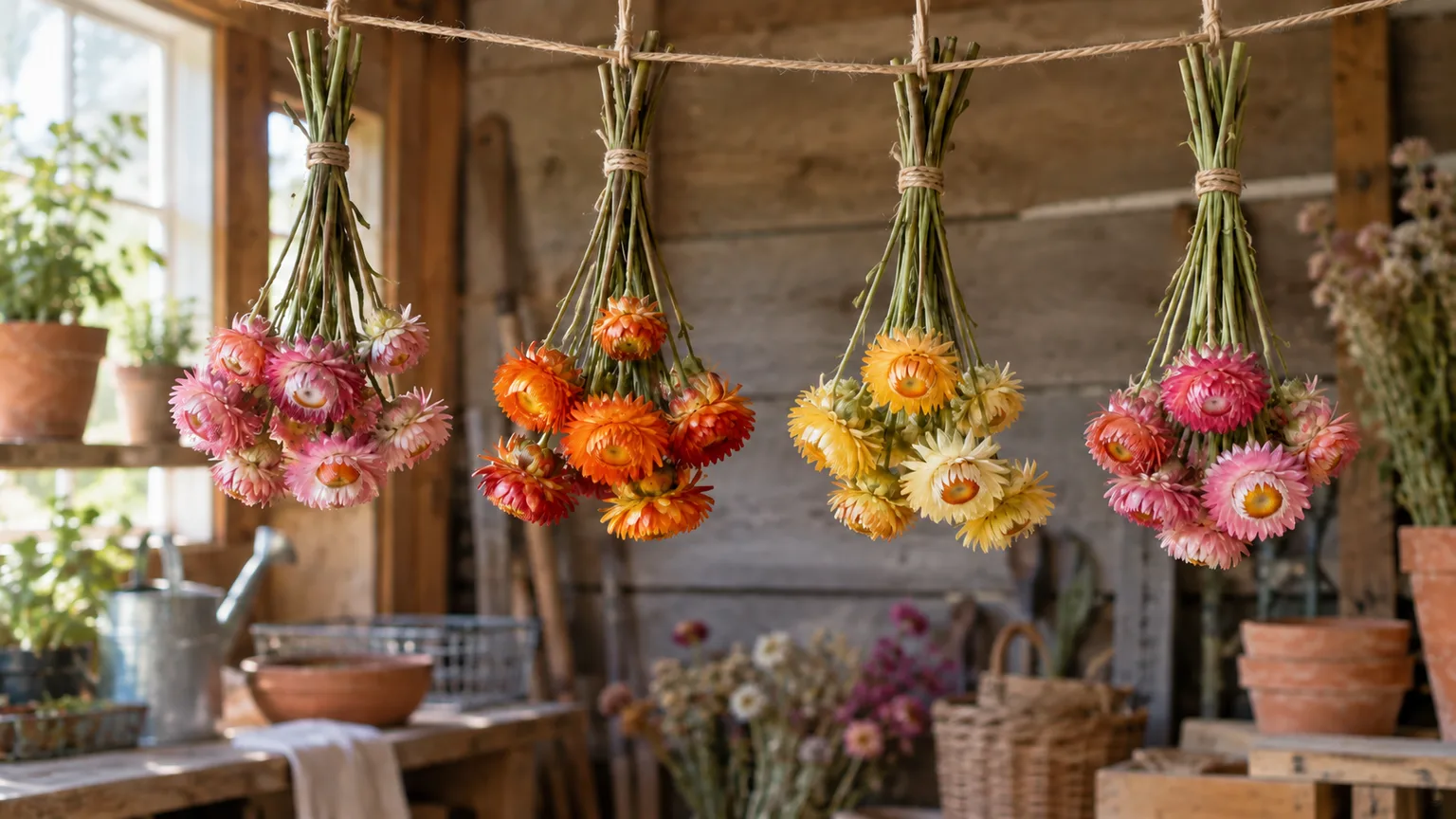
Leave the flowers hanging until the stems and heads feel dry rather than cool or flexible. Drying time varies with room humidity and bunch size, so judge by texture instead of assuming a fixed number of days. Once dry, keep arrangements away from direct sun, steam, and frequent handling; their bracts are durable but can become brittle. If you prefer a vase of fresh flowers, cut them at a more open stage and change the water as it clouds.
Diagnose common strawflower problems
No flowers or floppy stems
Start with light. If stems are long, leaning toward one side, and carrying few buds, move a container into brighter sun or reduce shade from neighboring plants. Too much nitrogen can create soft leafy growth, so stop feeding until you see whether the plant is simply growing in shade or overly rich soil. Tall plants may naturally need support; a sturdier cultivar or early netting can prevent the next flush from leaning.
If flower heads are present but remain closed, check the weather before changing the care routine. Many strawflowers close in darkness, rain, or overcast conditions and reopen when light returns. That behavior is normal and helps explain why a flower can look different at evening or on a cloudy harvest day. If the head never opens even in bright conditions, check for persistent wet soil, severe shade, or a stressed young plant rather than assuming the cultivar is defective. (Utah State University Extension)
Yellow leaves, wilt, or mildew
Yellow lower leaves with a generally limp plant often point first to a wet root zone. Check the soil before adding water: if it is saturated, improve drainage and pause irrigation; if it is dry several inches down, water deeply. Persistent wilting, yellowing, or dark soft roots may indicate root or crown rot. Remove severely affected plants and correct the moisture or drainage problem before replanting in that spot. (Utah State University Extension)
Downy mildew is more likely in cool, wet weather. Look for yellow areas on the upper leaf surface with pale, downy growth underneath and leaves that roll downward. Water at soil level, widen spacing, and remove badly affected material rather than keeping foliage wet. UC IPM notes that downy mildews affecting strawflower are favored by cool, wet conditions; product labels and registrations vary, so do not reach for a fungicide unless a local extension service confirms the diagnosis and a product is labeled for the crop and use. (UC Statewide IPM Program)
One-sided yellowing, stunting, or greenish distorted flowers can be a sign of aster yellows, a phytoplasma spread by leafhoppers. There is no curative treatment for an infected plant: remove it promptly and manage weeds that can harbor leafhoppers nearby. More even yellowing in new leaves can have other causes, including wet roots or iron availability; do not add iron by guesswork. Check drainage and, if the pattern persists, use a soil test or ask a local extension office to help distinguish a nutrient issue from disease. (UC Statewide IPM Program, Utah State University Extension)
Save seed and manage self-sowing
Strawflower may self-sow in a mild climate if spent heads remain on the plant, but seedlings from hybrid or mixed-color cultivars may not resemble the parent. For a reliable color or a specific flower form, buy fresh seed from that cultivar. To collect seed, leave a few heads until they dry and begin to loosen, cut them into a paper bag, and let them finish drying indoors. Rub the dry heads gently to release seed and chaff, then store the seed cool and dry in a labeled envelope.
If you do not want volunteers, deadhead before the seed heads mature and pull unwanted seedlings while they are small. If seedlings appear where you want them, thin them to a useful spacing rather than leaving every sprout. In colder climates, save seed instead of trying to overwinter the mother plant; it is a simpler way to repeat the display next year. (NC State Extension, Gardener’s Path)
Conclusion
For reliable strawflower, start with warmth, sun, and drainage: sow the tiny seeds at the surface, harden seedlings off before planting, and water by checking the soil rather than the calendar. Choose a compact cultivar for pots or a taller one for cutting, then pinch only if you want more branches and give long stems support before they lean. Cut dried-flower stems while several bract layers have opened but the center is just emerging, and hang small bunches in a dark, airy space. With those few decisions matched to your climate and cultivar, strawflower can deliver a long run of garden color and flowers worth saving.



