5 Fall Flowers That Aren't Mums (and When to Plant)
Compare yarrow, asters, geum, African daisies, and salvia to choose fall color that fits your frost date, garden bed, or patio pot.
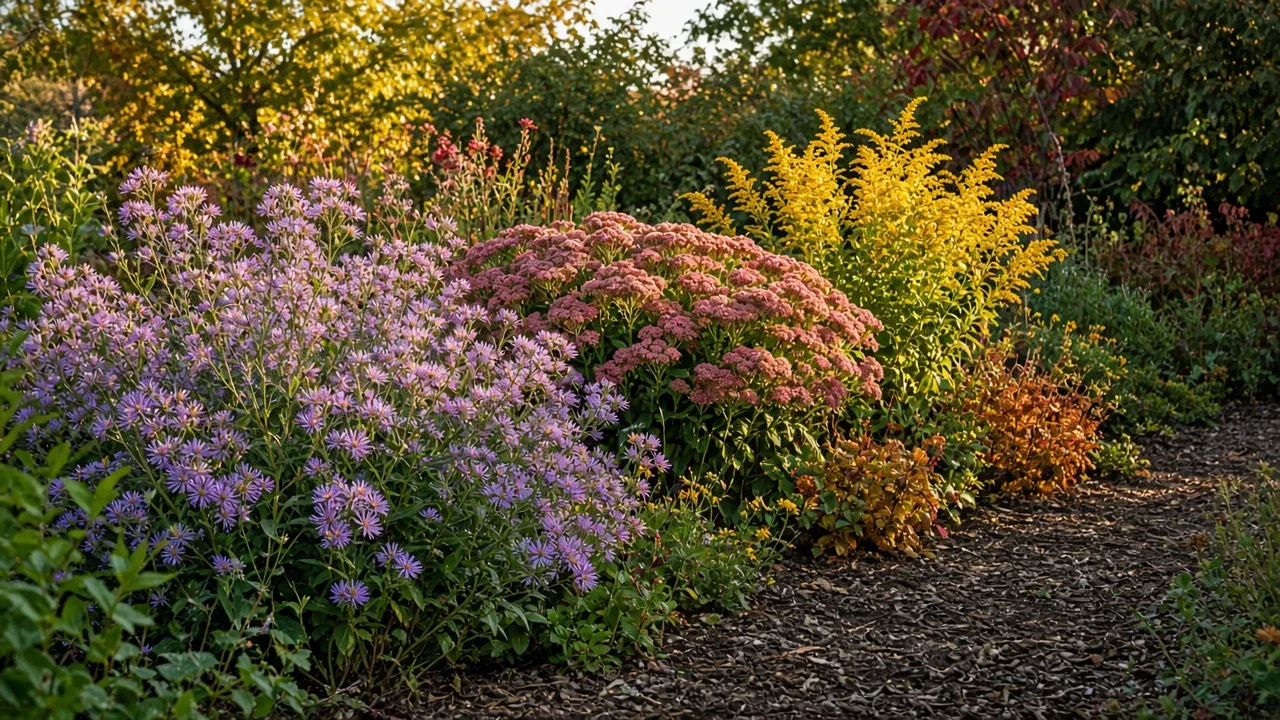
If you want autumn color but do not want another pot of mums, start with the flowering window you need. A plant can look beautiful in an autumn border without producing its main flush of flowers in autumn; others bloom late but are too tender to survive a cold night. Those differences decide whether a plant is a dependable replacement or simply a useful supporting act.
Among these five choices, smooth blue aster is the clearest perennial for reliable late-season flowers. Selected salvias can also carry color late, while African daisies are useful in containers where winters stay mild or the pot can be moved. Geum can continue blooming into autumn in favorable conditions, and fern-leaf yarrow earns a place for golden summer flowers and lasting dried heads rather than a guaranteed November show.
Start by deciding what “fall flower” means in your climate
Garden centers often use “fall plant” for anything sold alongside pumpkins once nights cool. In a garden, the phrase can mean a plant that starts flowering in autumn, one that keeps blooming from summer until frost, or one whose seedheads and foliage still look good after flowers fade. Decide which of those jobs you want before you buy; they are not interchangeable.
Check the frost window, not just the hardiness zone
Your USDA hardiness zone describes average annual extreme minimum winter temperatures, which helps estimate whether a perennial can survive winter outdoors. It does not tell you the date your yard will get its first frost, how long a plant will keep flowering, or whether a newly planted root ball will establish before the soil freezes. Use the USDA Plant Hardiness Zone Map for the first question, then check local frost averages and your extension service for seasonal timing.
That distinction matters most for African daisies and salvias. A tender plant may give a striking display for several weeks and then be finished by a freeze, while a hardy perennial may return next year but need time to establish before winter. If hard frost is close, buy a healthy plant already in bud, use a container you can shelter, or choose a locally hardy fall bloomer instead of expecting a small transplant to transform a bed overnight.
Match the plant to a bed or a container
A sunny in-ground border rewards plants that return and spread into a colony, such as asters. Pots are better for tender color, including African daisies, because you can move them against a wall or into a bright protected space when a freeze is forecast. Containers also dry faster than garden soil, so their convenience comes with closer watering checks.
Think about the display from the sidewalk and from up close. Tall, branching asters and Mexican bush sage can fill the back or middle of a border; low mounds of geum can soften the front edge; fern-leaf yarrow adds a flat-topped golden shape and fine foliage. In a pot, mix one upright flower, one compact mound, and foliage with a different texture rather than squeezing five large perennials into a single container.
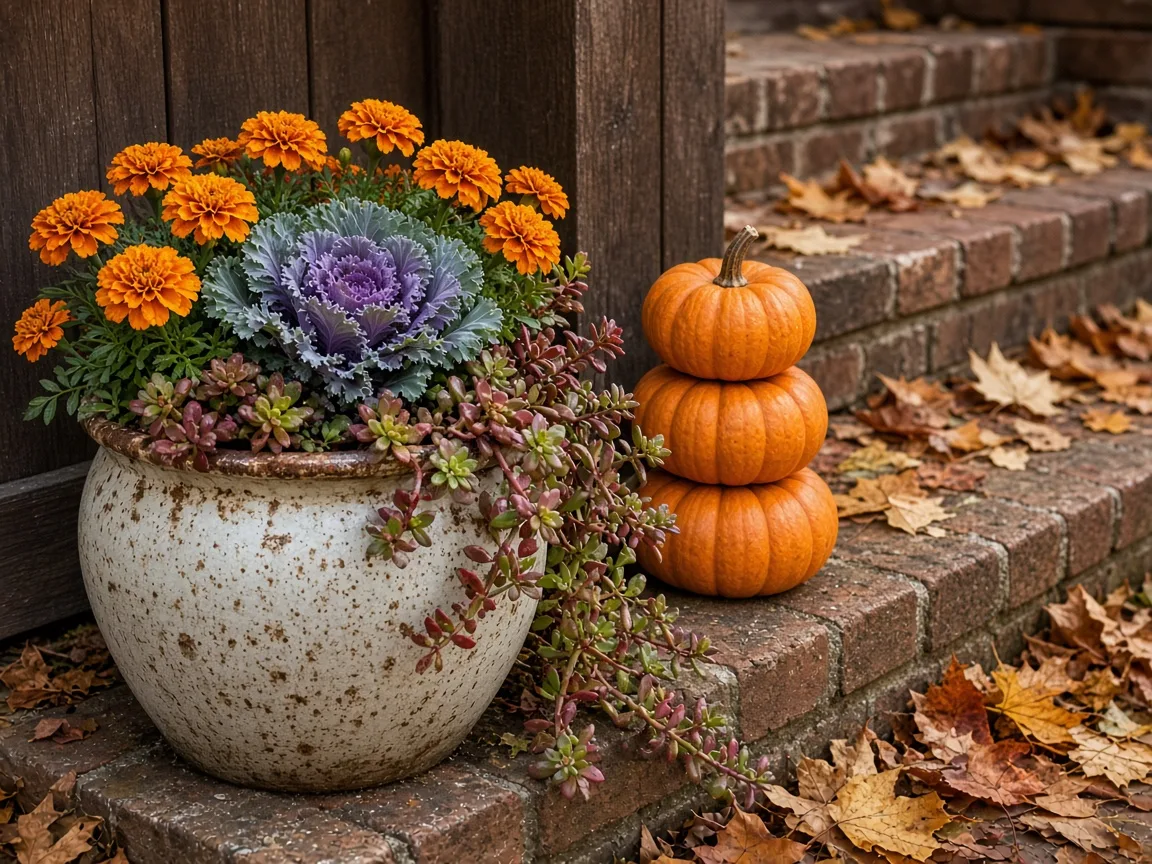
Five fall plants that give you more than one kind of payoff
Use the table as a quick filter. It separates plants that are likely to provide true fall flowers from those that are better for a longer seasonal composition or for next year’s garden.
| Plant | Best fall role | How dependable is late bloom? | Best fit |
|---|---|---|---|
| Fern-leaf yarrow | Golden flower heads and later structure | Low as a late-fall flower; stronger in summer | Sunny, dry, well-drained beds |
| Smooth blue aster | A true late-season perennial bloom | High, though timing varies locally | Sunny borders and pollinator plantings |
| Geum | Warm color at the front of a border | Variable; usually stronger in spring and summer | Moisture-retentive soil and repeat-blooming selections |
| African daisy | Bright cool-weather container color | Good in mild weather; poor through hard frost | Pots, sunny patios, mild climates |
| Salvia | Tall spikes and late-season nectar | Depends on the species or cultivar | Sunny beds and containers matched to local hardiness |
1. Fern-leaf yarrow: gold now, useful structure later
Fern-leaf yarrow (Achillea filipendulina) has upright stems, fern-textured foliage, and wide, flat clusters of yellow flowers. NC State Extension describes it as a full-sun perennial for average, well-drained soil, typically 3 to 4 feet tall and 2 to 3 feet wide. Its flowers appear through much of summer when spent stems are removed, which makes the plant valuable in a sunny border but also means it is not a reliable late-fall bloom substitute.
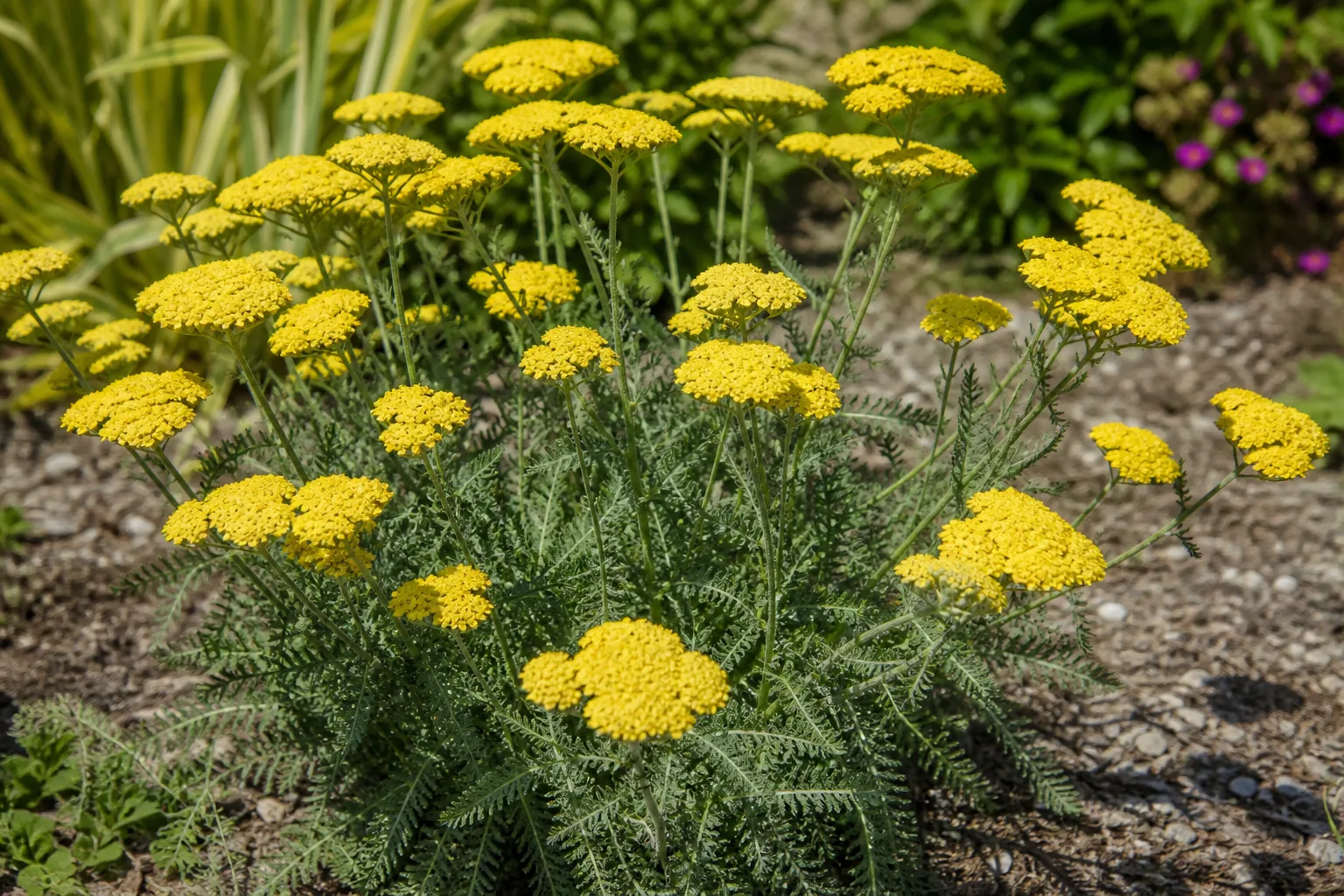
That is the useful correction to a common fall-flower list: yarrow can still contribute after its main bloom, but late-season value may come from dry flower heads, seedheads, and a strong clump of foliage, not fresh gold flowers. If you need yellow petals in October, choose a yarrow only as a companion to an actual fall-blooming plant. The NC State Extension fernleaf yarrow profile also recommends avoiding excessive water and fertilizer; rich, wet conditions work against the plant’s preference for drainage. It is native to Central and Southwest Asia and naturalized in parts of North America, so gardeners prioritizing locally native plantings may prefer to use it sparingly and make a regional aster the main late-season choice.
Use it where its height will not flop into a path, and give it room to spread. Deadhead if you want a tidier look or another flush during the growing season; leave healthy heads standing when you prefer winter structure. A stake or a more sheltered location can help the tall stems in a windy garden. Fern-leaf yarrow makes the most sense for gardeners who want drought-tolerant golden color earlier in the season and a durable perennial that continues to look intentional after flowering.
2. Smooth blue aster: the most dependable true fall bloomer
Smooth blue aster (Symphyotrichum laeve) is the strongest choice here when the assignment is specifically flowers in late summer and fall. Its many small lavender-blue flowers have yellow centers, and the blue-green foliage stays attractive before and after the main show. NC State Extension gives a typical height and width of 2 to 4 feet and describes blooms from late summer through late fall; the plant is native across much of North America and parts of Mexico.
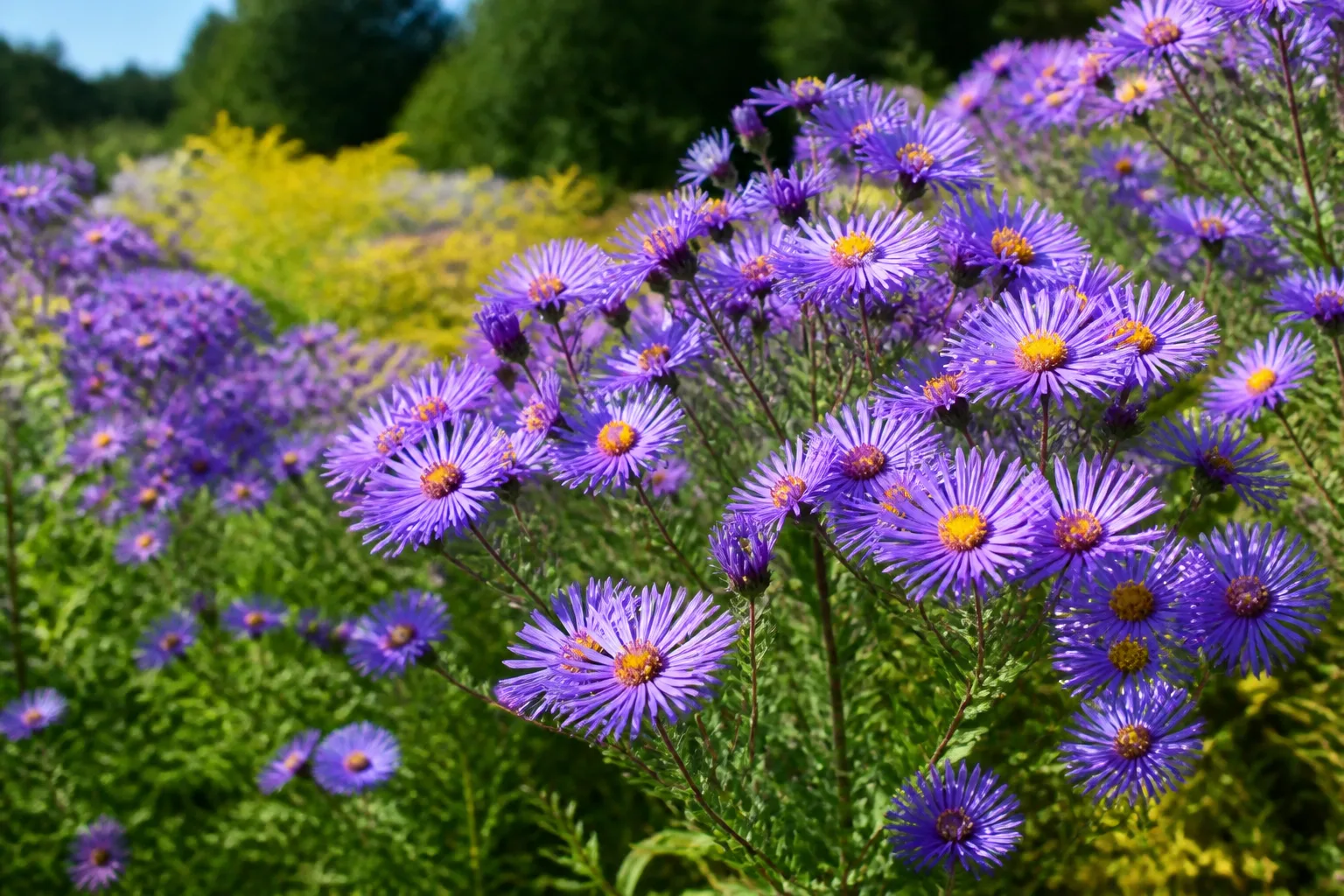
The branching habit reads differently from a dense mound of florist mums. Plant an aster behind low edging plants or in a group of three if you want a visible late-season cloud of color, and leave enough space around it for mature growth and airflow. It suits full sun and dry to medium, well-drained soil; once established, it tolerates drought better than a plant that requires consistently moist ground. A popular cultivar, ‘Bluebird,’ is one option when you want a named selection, but check its mature size and hardiness against your own nursery label.
Asters can self-seed, and their late flowers and seeds can serve wildlife. That is a benefit in a naturalized planting and a nuisance in a very formal bed, where you may want to remove some spent flowers before seed develops. Avoid treating every stem as disposable: if you want to keep seedheads for birds or winter texture, leave a portion standing. For more practical field notes about site and size, GrowIt BuildIt’s smooth blue aster guide complements the extension profile.
3. Geum: rich color with a real seasonal caveat
Geum, also called avens, brings an open, warm-toned flower rather than the tightly packed bloom shape people associate with mums. Cultivars can flower in orange, red, yellow, peach, and softer shades, often on wiry stems above a low clump. The caveat is timing: the Royal Horticultural Society’s geum growing guide says flowering is generally from late spring into summer, although it can continue into autumn. That makes geum a possible bridge plant, not the one to rely on for a bed that must first bloom in October.
The best selection depends on your site. Most border geums prefer an open, sunny position that is not too dry and soil that holds some moisture without becoming waterlogged. Alpine types want sharper drainage, while some species are better suited to damp, partly shaded ground; the name “geum” alone does not tell you which conditions to provide. Many border cultivars reach roughly 16 to 30 inches tall, so they work near the front or middle rather than as the tallest backdrop.
Deadheading fading stems can prolong flowering, especially when the plant still has warm weather and enough light to make new growth. It will not force a fresh flush after the plant has entered dormancy or temperatures have dropped too far. Geums are often planted in spring or autumn for root establishment, so a nursery plant bought late in the season may be a sound investment for next year even if it has few flowers left now. Choose one for a front-of-border color and texture, not as a last-minute guarantee of flowers until frost. Deadheading fading stems can prolong flowering, especially when the plant still has warm weather and enough light to make new growth. It will not force a fresh flush after the plant has entered dormancy or temperatures have dropped too far. Geums are often planted in spring or autumn for root establishment, so a nursery plant bought late in the season may be a sound investment for next year even if it has few flowers left now. Choose one for a front-of-border color and texture, not as a last-minute guarantee of flowers until frost.
4. African daisy: best for mild falls and portable pots
African daisies (Osteospermum spp.) open broad, daisy-shaped flowers in white, purple, pink, blue, or yellow, often with a contrasting center. They are useful when you want a bright, compact plant for a sunny step or patio container. In cool-summer places they may flower for a long stretch; where summer heat has paused blooming, plants can begin to look better when cooler conditions return. A Gardenia plant profile describes that cool-weather pattern and notes that these are tender perennials, often grown as annuals in colder climates.
Do not assume that “perennial” on a plant label means hardy in your yard. Many osteospermums survive outdoors only in warm-winter regions; in cold regions, treat them as seasonal annuals or keep a pot you can move to shelter. They prefer sun and free-draining soil, and a heavy, saturated container can be more damaging than a cool but bright position. The flowers may close overnight or on dull days, so a plant can look less open in the morning or during a stretch of cloudy weather without being unhealthy.
For a fall container, choose a plant with firm green foliage and several buds that are not all open already. Pair it with ornamental foliage that can remain attractive after a bloom fades, and make sure the pot has drainage holes. Water when the upper layer starts to dry rather than keeping the mix soggy; small pots in wind or reflected patio heat may need attention more often than a border. When frost is imminent, move the pot to a sheltered bright place if your climate allows, or accept that the plant’s season is ending and replace it with a genuinely cold-tolerant option.
5. Salvia: the label matters more than the genus
“Salvia” is a large genus, not a single plant with one bloom schedule. Some ornamental varieties flower mainly in summer, some repeat for months, and some make a late-season display; the botanical name and cultivar on the label tell you which one you are buying. For a fall-focused choice, Mexican bush sage (Salvia leucantha) is known for fuzzy purple-and-white flower spikes in late summer to early fall. Better Homes & Gardens describes it as a tender plant often grown as an annual in cold-winter gardens for a fall finale.
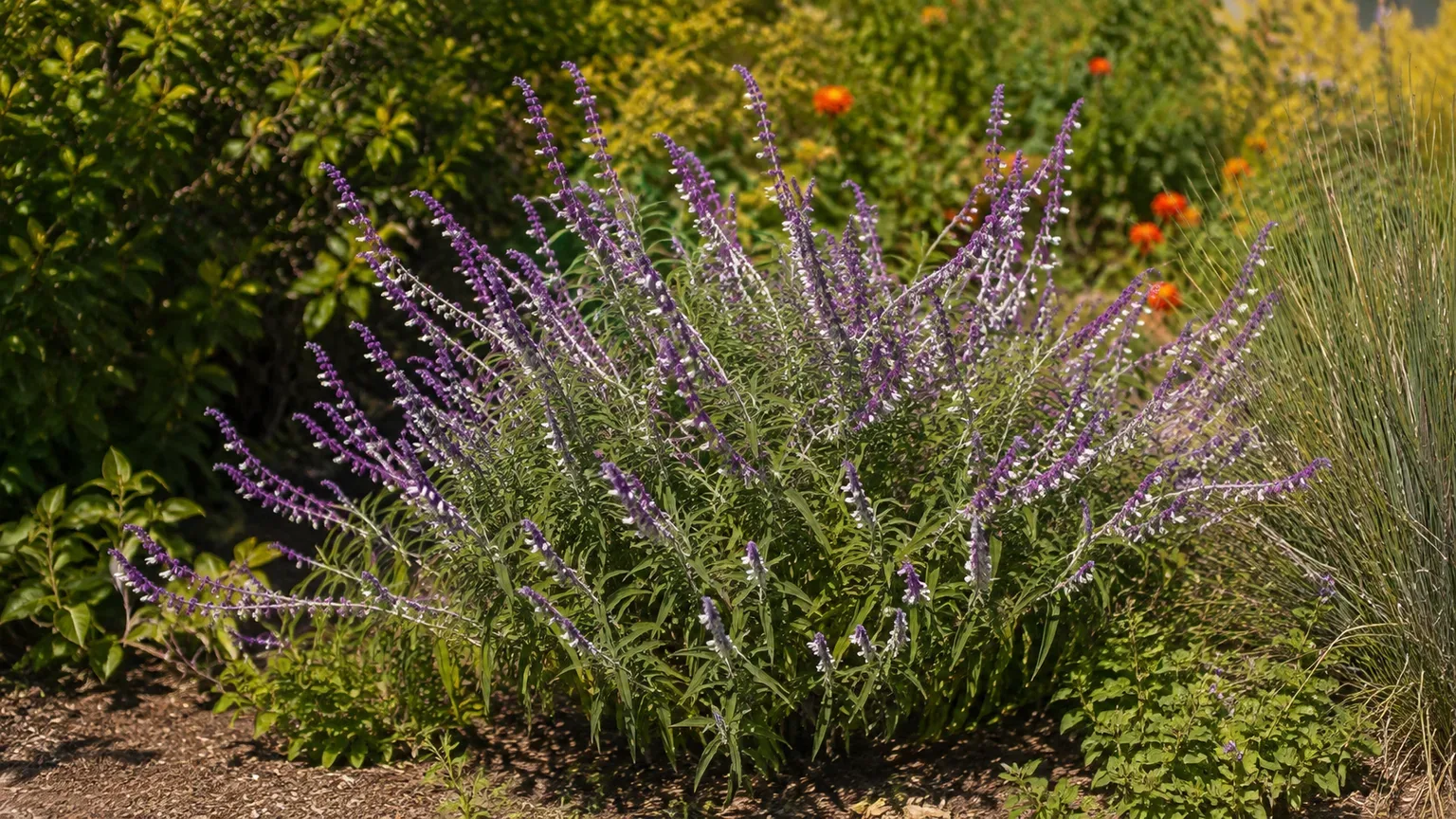
That tender status is useful, not a defect, if your goal is one season of height and color. Mexican bush sage can occupy the center of a sunny mixed bed or a large patio pot, where its tall flower stems bring a different silhouette from daisylike asters. It is not a safe perennial bet in a cold climate unless the specific plant is hardy there or you have a reliable overwintering setup. A nursery tag that lists only “salvia” is not enough information to predict winter survival.
If you want a perennial instead, look for a named salvia proven for your region, then compare its bloom window with the date you need color. Local extension guidance and the plant’s mature size are more useful than genus-level promises. Some cultivars respond to light trimming after a spent flush, but late hard pruning can encourage soft growth that has no time to harden before frost. If in doubt, remove only faded flower stems and leave the leafy crown intact until spring.
Choose by your climate and design goal
Choose a plant for the actual job it can do in your yard rather than treating all five as equivalent replacements. A perennial can be a good long-term choice even if it does not flower this month, and an annual can be the right choice when you want an immediate container display and do not need the plant to return.
For cold-winter gardens
Use smooth aster as the late-flowering backbone, then add hardy, locally proven salvias if their label promises the right bloom window. Fern-leaf yarrow can contribute earlier gold and sturdy foliage in a dry, sunny spot, but it should not carry the last weeks of bloom by itself. Geum is worth adding to the border for next season if its color and moisture needs fit; it is usually not the answer to “what will bloom after my first October frost?”
Treat African daisies and Mexican bush sage as annual color unless your local conditions genuinely match their hardiness. The USDA map is a winter-survival tool, not a promise that any plant will handle every winter exposure, wet soil, or root freeze in a pot. If the bed is already close to frozen, plant a container-grown perennial only when you can water it and give roots time to settle; otherwise keep it in a pot or wait until spring.
For long, mild autumns
In places with a long cool fall and no imminent hard frost, African daisies can extend their display, and late-flowering salvias can keep vertical color going. Geum may also continue its flowering season where the cultivar and local weather cooperate. You still need to distinguish mild days from mild winters: a species can bloom beautifully in October and fail to survive the following cold season.
In hot-summer climates, look for plants that pause during heat and resume as temperatures fall, rather than expecting uninterrupted flowers from June onward. A mixed display is more dependable than a single plant because not every species reacts to the same temperature shift. The useful design sequence is a summer-flowering mound or yarrow, an aster that takes over in late summer, and a tender pot plant that can be sheltered or replaced when the forecast turns.
How to plant fall flowers without stressing them
Before planting, water the nursery pot until the root ball is evenly moist, then slide it out and check for circling or densely packed roots. If they form a tight mat, gently loosen only the outside roots; tearing the whole root ball apart during late-season planting adds stress without creating more rooting time. Set the plant at the same depth it was growing in the pot, firm soil around it, and water again to settle air pockets.
For fall-planted perennials, the calendar is less useful than the time remaining before the ground freezes. Gardening Know How suggests aiming to plant roughly four to six weeks before the first hard frost so roots can establish; treat that as a rule of thumb, not a guarantee for every species or region. The Colorado State University Extension perennial guide likewise emphasizes matching plants to local conditions such as sun, wind, soil, water, and bloom period. If you are beyond the local window, keeping the plant in a protected container or waiting for spring can be safer than planting into cold, saturated soil.
Space plants for their mature width rather than their nursery-pot size. Smooth aster can become a broad 2-to-4-foot clump, and fern-leaf yarrow can reach several feet tall; overcrowding reduces airflow and makes future thinning harder. Geum belongs closer to the edge, while a large salvia belongs behind it. Add a thin layer of mulch around new perennials to stabilize moisture, but keep mulch away from crowns and do not fertilize heavily just before dormancy.
Keep the display going through the first frost
For the first few weeks after planting, check soil moisture below the surface instead of watering by a fixed calendar. New root balls can dry out while the surrounding bed still feels damp, and a newly planted perennial has not yet earned the drought tolerance of an established one. Water slowly at the soil line, then allow excess to drain; constant saturation encourages root problems, especially for yarrow and container-grown African daisies.
Deadheading is a tool for extending flowers, not a requirement to strip every spent head. Remove faded flowers from geum or salvia when the plant is still actively growing and you want it to put energy into another flush. Leave some healthy aster or yarrow seedheads if winter structure, birds, or natural reseeding matters more to you than a tidy border. Stop cutting when the plant is no longer making fresh buds or when frost is near; late trimming cannot create warm weather that has already passed.
When a light frost is forecast, cover tender plants overnight with breathable fabric if they are in a fixed bed, then remove the cover the next morning. A container is easier to move under a porch or against a protected wall, though it still needs light and drainage. After a hard freeze blackens a tender plant, remove collapsed material and compost it only if it is disease-free; do not leave a cold, wet pot standing in a saucer full of water.
Common mistakes that make fall color disappear early
The first mistake is buying by flower color alone. A tag showing a fully open plant does not tell you whether it will keep blooming for weeks, whether it is perennial in your zone, or whether its main season has already passed. Look for the botanical name, expected bloom months, mature dimensions, and a hardiness note before purchasing; if any are missing, ask the nursery rather than guessing from the common name.
The second is treating “fall” as a fixed month. A plant that blooms in September in the upper Midwest may flower earlier in a hot southern region or later at altitude. Check how the listed bloom season overlaps your local frost window and choose a mix rather than relying on one exact date. Even a locally hardy perennial can fail in a wet winter or an exposed container, so drainage and placement still matter.
The third is forcing a spring-and-summer flower to act like a fall specialist. Fern-leaf yarrow and most geums can add color or structure, but neither should be advertised as a guaranteed flower show deep into autumn. The fourth is leaving a tender plant in an exposed pot during a freeze because it survived a few cool nights; a cool-season bloom response is not the same as hardiness. Finally, avoid late high-nitrogen fertilizer and excessive pruning: both can produce soft growth or remove the foliage a perennial needs before winter.
Conclusion
For dependable autumn flowers, start with smooth blue aster and add a salvia whose species and hardiness match your region. African daisies are a bright, flexible choice for mild falls or portable pots, while geum and fern-leaf yarrow are better understood as supporting perennials with broader seasonal value than as guaranteed late-fall bloomers.
Before buying, check the frost window, plant label, sun exposure, mature size, and drainage in the spot where the flower will grow. That small check gives you a more satisfying display this season and a clearer idea of which plants will return, which will need protection, and which are worth planting now for color next year.



