How to Grow and Care for Flame Azalea
Learn flame azalea care, from regional hardiness and acidic soil to planting, watering, pruning, propagation, and pet safety for this Appalachian native.
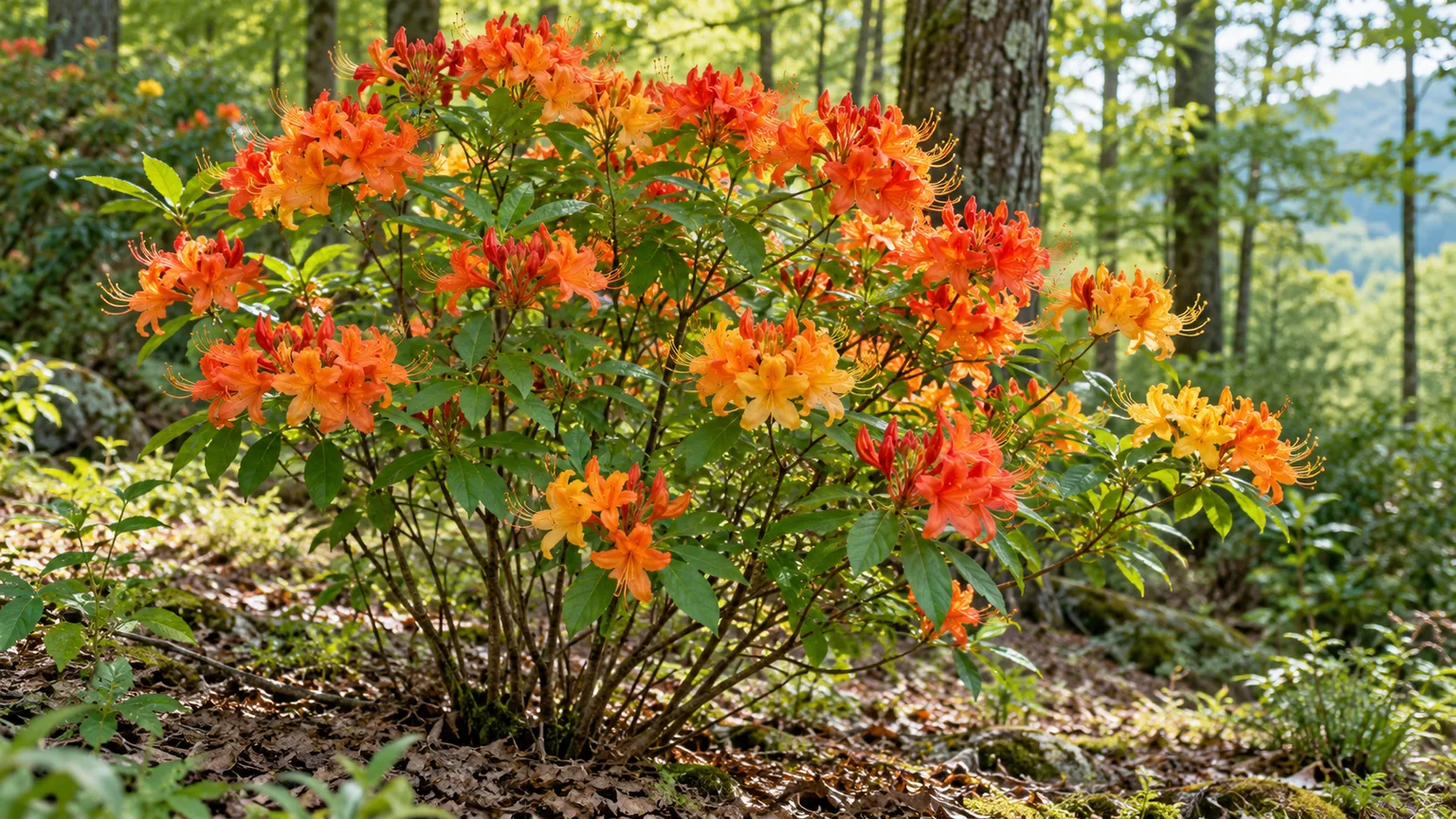
Flame azalea (Rhododendron calendulaceum) is a deciduous shrub native to Appalachian mountain slopes, where it grows in acidic, well-drained soil and receives anything from dappled shade to substantial sun. It is a beautiful garden plant when those conditions match your yard, but it is less forgiving than a generic “azalea” label suggests. Start by checking regional fit, afternoon heat, soil drainage, and pH; watering or fertilizer cannot make a poorly suited site work.
Unlike evergreen azaleas commonly sold for foundation beds, flame azalea loses its leaves in fall and produces large, often orange, yellow, or red flowers in late spring or early summer. Its bloom timing and ultimate size vary with elevation, latitude, and local conditions. The steps below focus on the species’ needs, explain where references differ, and show how to establish and maintain it without keeping the roots wet or pruning away next year’s flowers.
Flame azalea care at a glance
Choose a cool-to-moderate climate in or near the Appalachian region, give the shrub morning sun or filtered light with protection from punishing afternoon heat, and plant it in acidic soil that stays moist but drains freely. A soil pH around 4.5 to 6.0 is a useful target cited by the Azalea Society of America for azaleas generally; a soil test is more useful than guessing from nearby plants. Water newly planted shrubs deeply when rainfall is insufficient, mulch the shallow root zone, and prune lightly soon after bloom.
That profile is more useful than a fixed weekly schedule. A new plant in a sunny, windy site may need closer watching than an established shrub beneath open trees. A naturally acidic slope may need little soil preparation, while heavy clay, compacted fill, or a concrete-adjacent bed may require a raised planting area or a different plant. Think of drainage and climate as prerequisites, not maintenance problems to correct later.
Know the plant you are growing
Flame azalea is a woody member of the heath family, Ericaceae. It is not one of the evergreen azalea cultivars that may be sold under similar common names. North Carolina State Extension describes an upright shrub commonly about 4 to 8 feet tall, with larger specimens possible; the University of Illinois Extension profile gives a similar several-foot mature size and a wider potential spread. Allow room for a natural, open outline rather than planning to shear it into a tight hedge. (North Carolina State Extension: Flame Azalea; University of Illinois Extension: Flame Azalea)
Its flowers are the main event, but it is not a year-round evergreen screen. In autumn the leaves drop, and the bare branching structure remains. Depending on region and elevation, flowers can appear from late spring into summer: North Carolina State gives a May-to-July window, while Tennessee’s native-plant listing places its bloom in June. A cool mountain site and a lower, warmer garden will not keep the same calendar. (North Carolina State Extension: Flame Azalea; University of Tennessee Yards: Flame Azalea)
If a nursery tag does not name the species, ask for the botanical name. Care instructions for a compact evergreen hybrid, a heat-tolerant landscape cultivar, and wild-origin Rhododendron calendulaceum are not automatically interchangeable. The tag should also tell you the plant’s propagation type, source, and expected mature dimensions; those details can affect hardiness, shape, and whether a seedling will resemble its parent.
Check whether your region suits flame azalea
The species is native to the Appalachian region, from Pennsylvania south toward Georgia, and it is best suited to gardens with broadly similar seasonal conditions. North Carolina State Extension lists USDA zones 5a through 7b. The University of Connecticut database and Illinois Extension use a broader 5-to-7 range; UConn cautions that the species performs poorly in zones warmer than 7. These references overlap, but they are not identical, so treat the range as a screening guide rather than a promise. (North Carolina State Extension: Flame Azalea; University of Connecticut Plant Database: Flame Azalea; University of Illinois Extension: Flame Azalea)
Read hardiness zones as a starting point
A hardiness zone describes average annual extreme winter minimums; it does not measure summer heat, humidity, soil, rainfall, or the length of a growing season. That is why zone 7 in a cool, elevated Appalachian setting is not necessarily equivalent to zone 7 in a hot, low-elevation urban yard. In a region outside the species’ native corridor, ask a nearby extension office or native-plant nursery whether locally sourced flame azaleas have performed reliably. A favorable minimum temperature alone is not enough.
In colder parts of the listed range, site the shrub out of drying winter wind and avoid low pockets where late frost collects. In warmer areas, summer heat, warm nights, and dry air can create stress even when the winter minimum falls within a listed zone. The Tennessee Yards native-plant profile describes flame azalea as a mountain-slope shrub that can handle moderately dry conditions once established, but that regional adaptation should not be read as permission to ignore irrigation during establishment. (University of Tennessee Yards: Flame Azalea)
Choose light that supports bloom without scorching foliage
Light recommendations vary across reputable species profiles. North Carolina State allows full sun to partial or deep shade but says the plant prefers some moisture and can suffer in hot afternoon sun; Illinois Extension lists partial to full shade; Tennessee’s regional profile recommends part sun to light shade and notes that some sun supports flowering. A practical compromise in a home landscape is morning sun or bright, open shade, with protection from intense late-day heat, especially in warmer lowlands. (North Carolina State Extension: Flame Azalea; University of Illinois Extension: Flame Azalea; University of Tennessee Yards: Flame Azalea)
Before planting, observe the candidate site through a sunny day. Light below high, deciduous tree canopy can change from spring to summer as foliage fills in, so do not judge only from a bare winter garden. A spot that receives early sun and shade during the hottest afternoon hours usually balances flowering with lower leaf and root stress. Deep shade may keep foliage protected yet reduce flowering; a west-facing wall, paving, or reflective driveway can make an otherwise acceptable exposure much hotter.
Test the soil before planting
Flame azalea needs an acidic root zone and free drainage. The Azalea Society of America gives a general azalea pH range of 4.5 to 6.0, and North Carolina State describes flame azalea as preferring acidic soil below pH 6. The soil should hold enough moisture for fine roots while leaving air spaces around them. Soil that stays saturated deprives roots of oxygen and favors decline; dry, loose sand can also leave a recently planted root ball short of water. (Azalea Society of America: Growing Azaleas; North Carolina State Extension: Flame Azalea)
Send a sample from the intended bed to your county or state extension soil-testing service. Test pH and nutrient status before adding sulfur, lime, iron, or fertilizer. The amount needed to change pH depends on soil texture and buffering capacity, so a dosage copied from a general gardening article can overcorrect one yard and barely affect another. A test gives you an actionable starting point and can expose a nutrient issue that is really a drainage or pH problem.
Fix poor drainage across a broad area
Look at how water behaves after a soaking rain. If it ponds, moves slowly through compacted soil, or leaves the bed wet well after nearby ground has drained, do not dig a narrow hole and fill it with loose acidic mix. In clay, that pocket can collect water like a basin. The Azalea Society warns against this “bathtub” effect and recommends addressing heavy soil with a raised bed, broad-area amendment, or planting high. Flame azalea needs moisture, but its roots also need oxygen. (Azalea Society of America: Growing Azaleas)
For a small problem area, create a broad, low mound that sheds excess water and blends into the landscape; for a persistently wet or compacted site, use a raised bed with enough depth and width to support the mature shrub. Do not improve drainage by placing a layer of gravel in the bottom of the planting hole. Gravel does not fix the surrounding soil profile. If soil is alkaline throughout and the bed is too small to manage, choose a naturally compatible shrub instead of committing to repeated chemical correction.
Plant flame azalea for shallow-rooted growth
Plant in cool weather when the soil is workable and the shrub is not facing immediate heat or drought. Spring and early fall are often practical windows, but regional timing matters: allow a new transplant time to establish before summer heat or frozen ground. Set the plant where it can reach mature size without future cutting back, away from tree roots that will monopolize moisture, and where its eventual leafless winter form will not surprise you.
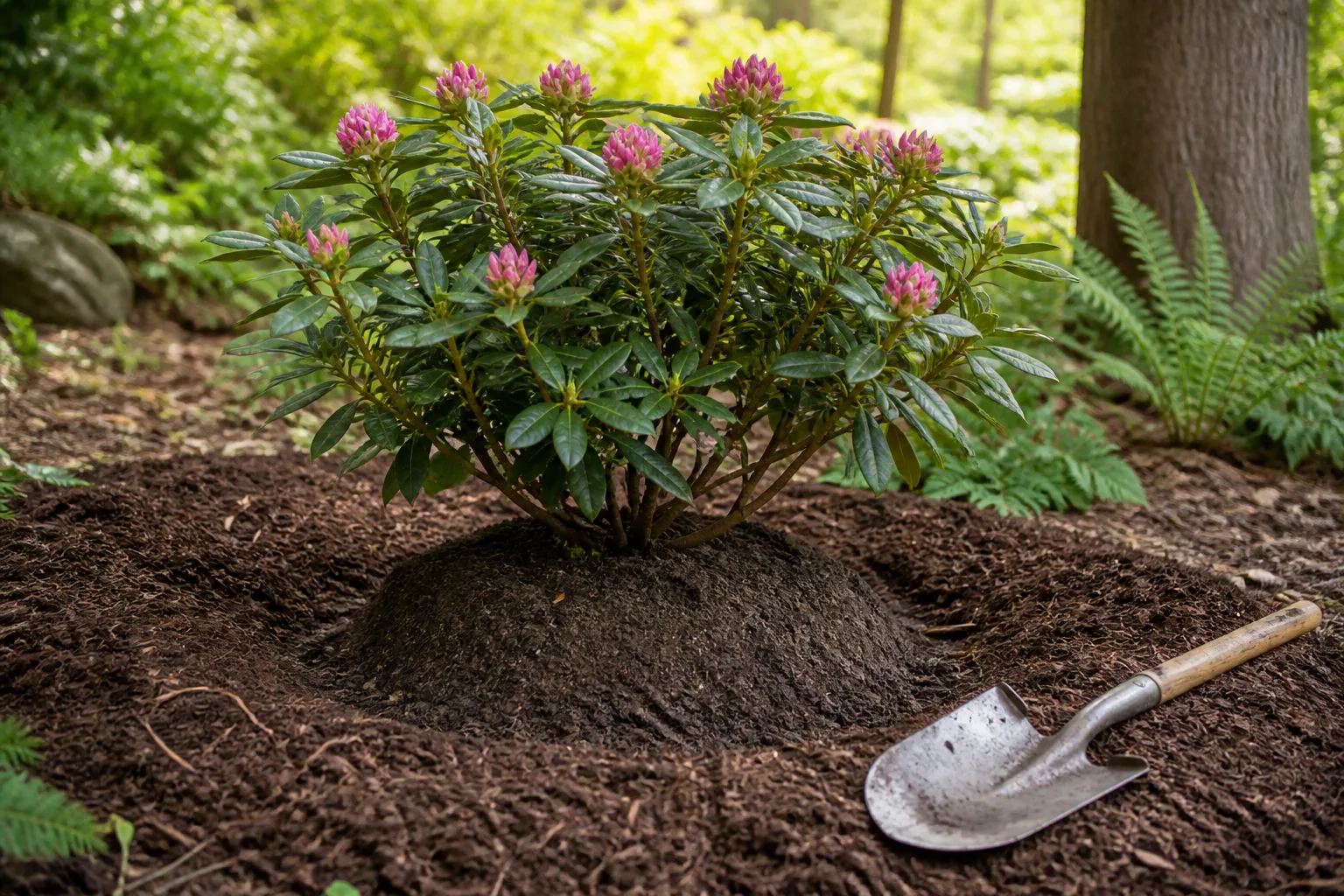
The Azalea Society’s planting guidance supports a simple sequence: water a dry nursery root ball before planting, remove the pot without pulling on stems, and inspect for roots circling the outside. Loosen or make a few shallow vertical cuts through matted circling roots with a clean tool so new roots can grow outward; do not tear the ball apart. Dig a broad hole no deeper than the root ball in well-drained soil. The root ball should sit level with or slightly above surrounding grade, never buried below it. In heavy soil, plant higher and mound soil around the sides rather than creating a deep pocket. (Azalea Society of America: Growing Azaleas)
Backfill with the native soil unless a soil test or bed-wide plan calls for a different approach. Avoid making an isolated pocket of rich compost that can settle and retain water. Firm the soil gently to remove large air gaps, then water slowly and thoroughly. Apply a few inches of organic mulch over the root zone, leaving a clear gap around the stems. That last step matters: mulch piled against the crown holds excess moisture against bark and hides the point where stems meet roots.
Water to establish roots, then respond to weather
A new flame azalea needs consistent moisture while its roots spread beyond the nursery ball. Water deeply after planting and keep checking the root zone during the first several weeks; the Azalea Society advises watering at least weekly in that early period and continuing to watch small plants for a month or more and larger ones for a year or longer. Treat that as a reminder to monitor, not an automatic schedule. Rainfall, soil texture, exposure, plant size, and temperature all change how quickly the root zone dries. (Azalea Society of America: Growing Azaleas)
When rain is scarce, soak the soil slowly enough for water to reach the root ball and nearby soil. A quick sprinkle wets foliage and surface mulch but may not reach the roots. Check soil moisture with a finger or narrow trowel near the edge of the root ball; if the soil is still damp, wait. If it is drying and rainfall has been light, water at the base. Once established, a flame azalea on a well-drained site may tolerate moderate dry spells, but long droughts can still reduce vigor and flower bud development.
Do not leave it standing wet to avoid any chance of wilt. Drooping leaves can reflect heat, drought, damaged roots, or saturated soil, and more water is not the right response to all four. Check the soil before irrigating. If it is wet and the plant is declining, improve drainage or seek a diagnosis rather than repeatedly adding water. Avoid frequent shallow watering once roots are established; it encourages a surface-only moisture pattern and can leave the deeper root zone dry.
Mulch and fertilize with restraint
Organic mulch mimics the leaf litter of a woodland floor, moderates root-zone temperatures, and slows moisture loss. Use a loose layer of shredded leaves, pine bark, or similar material. The Azalea Society recommends 2 to 4 inches and says to keep mulch about an inch away from stems. Refresh it as it decomposes rather than building a tall mound year after year. If the roots become exposed after erosion, add a light cover of soil or mulch without burying the shrub’s crown. (Azalea Society of America: Growing Azaleas)
Do not fertilize automatically because the shrub has just been planted or because it did not flower in its first season. The Azalea Society notes that established, mulched azaleas often need no added fertilizer and recommends testing first; a trusted general azalea guide from Gardener’s Path likewise places any supplemental feeding in spring and uses a product intended for acid-loving plants. For flame azalea, let soil-test results and visible growth guide the decision. Excess fertilizer can injure shallow roots or stimulate tender growth at the wrong time, while low flowering can result from shade, age, late pruning, or regional mismatch rather than a nutrient shortage. (Azalea Society of America: Growing Azaleas; Gardener’s Path: How to Grow Azaleas)
If a test indicates a deficiency, follow its rate and timing for your soil. Do not apply iron just because leaves are yellow: unavailable iron is often connected to high pH, compacted soil, or waterlogged roots. Fix the cause before treating a symptom. Skip late-season high-nitrogen feeding, which can encourage new growth that may not harden properly before cold weather.
Prune after flowering to protect next year’s buds
For routine shaping, prune flame azalea soon after its flowers fade. That gives the shrub time to make new growth and set the next crop of flower buds. A late-summer or fall trim can remove those buds and lead to a disappointing spring display. Cut individual branches back to a healthy side branch or remove them at their origin; avoid shearing the entire shrub into a formal box, which works against its natural open shape. North Carolina State Extension also places pruning after flowering, and Gardenia’s azalea and rhododendron pruning guide explains why late pruning risks reducing the next bloom. (North Carolina State Extension: Flame Azalea; Gardenia: How to Prune Azaleas and Rhododendrons)
Remove broken, rubbing, diseased, or dead branches when you notice them, using clean, sharp pruners. If an older shrub has become too large, do not cut it back drastically just before bloom and expect flowers that year. Renovation pruning is possible for some established azaleas, but it can trade a season or more of bloom for replacement growth. Make a conservative plan, prune after flowering where possible, and spread major reduction over more than one year unless a local expert advises otherwise.
Propagate flame azalea with realistic expectations
Propagation is possible, but the best method depends on whether you want a genetically varied native shrub or a plant that matches a named selection. Seed-grown plants are not clones: they may differ from the parent in flower color, growth habit, and time to bloom. The University of Tennessee’s native-plant profile describes seed propagation as moderately easy and cuttings as difficult for flame azalea, a useful warning against expecting a few cut stems to root like a common bedding plant. (University of Tennessee Yards: Flame Azalea)
Seed, cuttings, and layering suit different goals
If raising seedlings, use fresh, correctly identified seed and a clean, fine-textured growing medium; keep it evenly moist and protected from drying while it germinates. Azalea seeds are tiny, so do not bury them deeply. Expect slow development and variable offspring, and check with a native plant nursery or propagation reference for locally appropriate sowing timing and seed handling. Do not collect from wild populations without permission; buy ethically propagated seed or plants from a reputable native nursery.
For a plant that reproduces a desirable form, cuttings may be attempted but can be unreliable with this species. A low flexible branch may be layered by lightly wounding the underside, pinning that section under soil while leaving its tip exposed, and waiting until roots form before separating it. Layering can take a full growing season or longer and is not guaranteed. Keep the parent plant watered during the attempt, use clean tools, and avoid taking material from protected land. For a named cultivar, ask the nursery how that exact selection is propagated and whether it is protected or patented.
Follow a seasonal care rhythm
In early spring, inspect for winter injury, broken wood, mulch piled against the stems, and signs of standing water. Do not mistake the plant’s leafless winter state for death; flame azalea is deciduous. As buds swell, note which branches are alive before pruning. After flowering, make any light shaping cuts, then water newly planted or drought-stressed shrubs as needed. Record bloom timing in your garden because local dates are more useful for future pruning than a generic calendar.
During summer, maintain moisture during extended dry weather and keep an eye on foliage under intense afternoon exposure. Avoid late-season shearing. In fall, allow the shrub to enter dormancy naturally and renew the mulch layer if needed, keeping it clear of stems. In winter, leave the shrub unwrapped unless a local climate or nursery recommends specific protection; a suitable native-region site and a healthy root zone matter more than wrapping branches. If your winter is much harsher or warmer than the reference area, follow locally tested guidance.
Diagnose weak growth and common problems
When a flame azalea looks unhealthy, start with site conditions rather than reaching first for pesticide or fertilizer. Ask four questions: Is the root zone too wet or too dry? Is the soil pH appropriate? Does water drain? Has the plant received the light and seasonal conditions the species needs? A slow response after transplanting is not automatically a disease; the species can take time to establish, especially when roots are disturbed or the new site differs from the nursery’s.
Yellow leaves, dieback, and pests have different causes
Yellowing between green leaf veins can be a sign that iron is unavailable, often because soil is too alkaline or roots are stressed. Widespread yellowing or wilt in wet soil points toward drainage or root injury; crispy margins after dry, hot weather suggest moisture or exposure stress. Before applying amendments, test pH and check the soil around the root ball. The Azalea Society describes chlorosis as a symptom with several possible causes, including pH, compaction, excess water, and overfertilizing; one symptom does not identify one cure. (Azalea Society of America: Growing Azaleas)
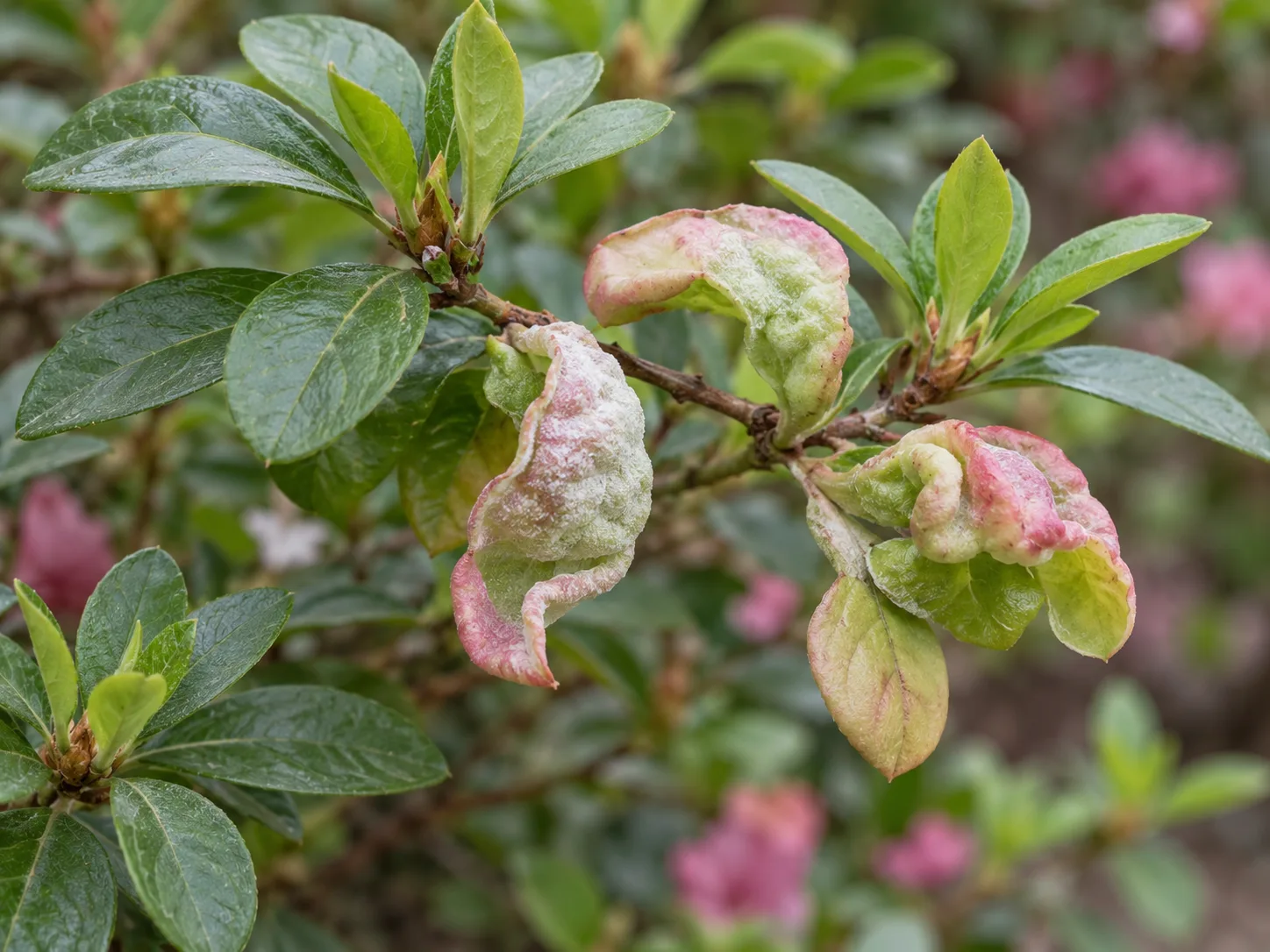
Leaf galls can distort leaves and develop pale or whitish growth. Remove affected tissue and discard it rather than composting visibly infected material. The species can also face leaf spots, rust, powdery mildew, borers, and other pests; the North Carolina State profile lists several of these potential problems. Identify the actual pest or disease before choosing a treatment, and use any pesticide only if the label lists the plant and problem and all label directions can be followed. If dieback is progressing, roots are dark and soft, or a valuable plant is declining quickly, contact a local extension diagnostic service. (North Carolina State Extension: Flame Azalea)
Keep flame azalea away from pets and children
Azaleas and rhododendrons contain grayanotoxins and are considered toxic to pets. The ASPCA lists azalea as toxic to dogs, cats, and horses; reported signs can include vomiting, diarrhea, weakness, and potentially serious effects. Keep pets from chewing leaves or flowers, and keep pruned branches and fallen plant material out of reach. The toxicity warning applies to plant parts, not only the flowers. (ASPCA: Azalea)
Human exposure risk depends on the amount and circumstances. Poison Control says small accidental tastes are more common than severe poisoning, but ingestion can cause irritation or stomach symptoms and larger exposures can be serious. Do not induce vomiting or rely on internet home remedies. For a suspected human ingestion in the United States, contact Poison Control at 1-800-222-1222 or use its online tool; for a pet, call a veterinarian or animal poison-control service promptly. (Poison Control: Azaleas and Rhododendrons; ASPCA: Azalea)
Conclusion
Flame azalea care starts with an honest site check. The plant is most likely to thrive where regional climate resembles its Appalachian home, light is bright but not punishing, soil is acidic and freely drained, and shallow roots stay evenly moist without sitting in water. Plant it high enough to protect the root crown, mulch lightly, and use soil-test results before adding fertilizer or pH amendments.
Give a new shrub time to establish, then prune just after flowering so next year’s buds remain. If you live outside the species’ familiar region, ask a local extension service or native-plant nursery before buying; the zone number alone cannot predict summer performance. When the site fits, a flame azalea can reward patient care with a vivid seasonal bloom and a natural woodland-garden presence.



