How to Grow Cilantro Indoors From Seed: A Care Guide
Learn how to grow cilantro indoors in a deep, draining pot, keep roots cool, spot bolting early, and sow small batches for a steadier fresh kitchen supply.
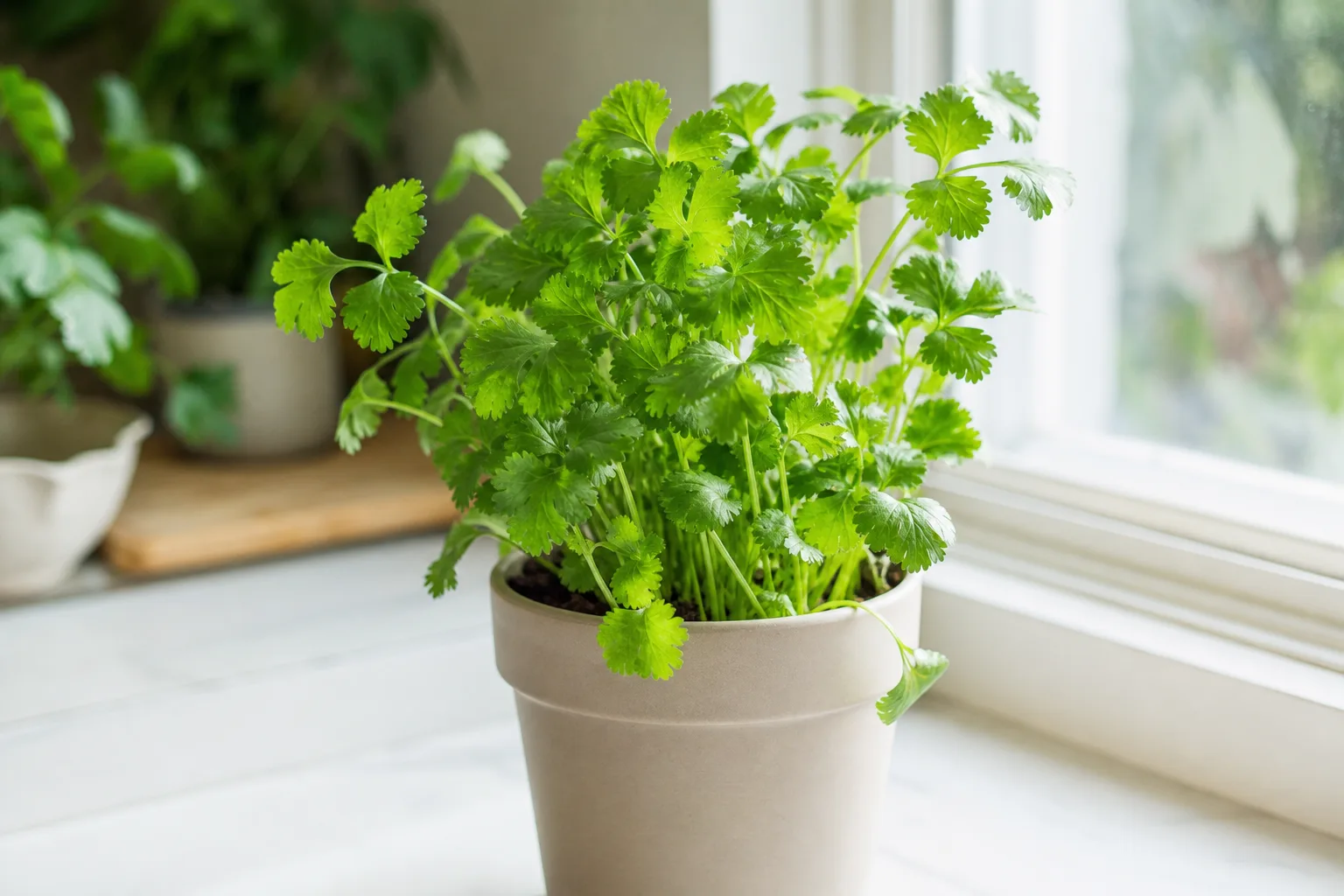
Cilantro can grow indoors, but it behaves like a short-lived cool-season crop, not a permanent windowsill houseplant. The setup that works is simple: sow seed in a deep pot where it can stay, give it the brightest cool location you have, keep the mix lightly moist rather than waterlogged, and start another small batch before the first one flowers.
Indoor growing removes some outdoor problems, such as sudden rain and garden heat, but it creates others. Winter windows can be too dim, a sunny sill can heat the root ball, and a decorative pot without drainage can keep roots wet for days. University and horticultural guidance agrees that cilantro prefers cool conditions and can become pale, leggy, or quick to flower when it is too warm, dry, or short on light; the RHS coriander guide specifically cautions that a windowsill crop may not last long in low light or heat. The goal is not to prevent every flower. It is to make a compact leafy crop, harvest it well, and have a replacement coming along.
Treat cilantro as a short-term indoor crop
Yes, if you can provide enough light and keep the potting mix from becoming hot or constantly wet. A bright, cool room can support a useful crop through much of the year, and a grow light can fill in the gap during short winter days. But cilantro remains an annual with a natural shift from leafy growth to flowering and seed, so a single plant will not supply leaves forever.
That distinction helps set expectations. Indoors gives you more control over the root zone and lets you move the pot away from heat, but it does not erase the plant’s life cycle. The University of Wisconsin–Madison Extension describes cilantro as a cool-season crop that bolts in hot weather and notes that even slow-bolting varieties do not hold well under high temperatures and long days. Treat indoor cilantro as a repeatable crop, not a herb you keep indefinitely by trimming it.
Choose a growing method that matches your goal
For a regular handful of leaves, start from seed directly in the pot where the plant will grow. Cilantro forms a long taproot and dislikes disturbance; both Wisconsin Extension and Epic Gardening recommend direct sowing or careful handling because the root can be damaged during transplanting. Seeds are also inexpensive, and you can time small batches around your kitchen use.
A supermarket pot can be a quick source of leaves, but it may contain many crowded seedlings packed into a small amount of mix. If you buy one, harvest some stems promptly and avoid tugging the clump apart into individual plants; teasing apart the roots can set them back more than leaving the pot crowded for a short harvest. A nursery seedling is easier to keep if it is still small and its root ball can be transferred intact, but do not expect an established plant to settle into a larger pot as smoothly as seed sown in place.
If you mainly want a quick garnish and have limited light, grow cilantro as microgreens. Sow densely in a shallow tray, keep it evenly moist, and cut the seedlings young rather than waiting for full-size plants. This is a different harvest, not a way to keep mature cilantro growing indefinitely; it is useful when you want tender leaves quickly and can repeat the tray as needed.
Use a wide, deep pot that drains
Choose a pot at least 8 to 10 inches deep, with several open drainage holes, so the taproot has room and excess water can escape. A wider pot is often more useful than an oversized single-plant pot because it lets you sow a short row or make a second sowing while the first is growing. For a kitchen-window crop, a container about 10 to 12 inches wide is a practical starting point; scale up only if you want more plants or room for succession sowings.
A saucer protects the sill, but it should not become a reservoir. Water until the mix is evenly damp and a little drains through, then pour away the runoff after a few minutes. If your decorative cachepot has no drainage hole, keep the cilantro in a plain nursery pot inside it and lift that inner pot out to water. A layer of gravel at the bottom does not substitute for drainage holes; it simply takes up room while leaving the wettest soil above it.
Fill the pot with loose, lightly fed mix
Use a fresh, general-purpose potting mix designed for containers. Garden soil is too dense for most indoor pots and may compact into a slow-draining mass; the mix should hold enough moisture for a small herb but leave air spaces around the roots. If the mix feels heavy or stays wet for several days, blend in a modest amount of perlite or fine bark rather than trying to correct the problem with more frequent watering.
Do not start cilantro in a rich, heavily fertilized mix and then add a regular dose of liquid feed on top. The crop grows quickly and is usually harvested before it needs elaborate feeding. Utah State University Extension warns that excess nitrogen can reduce flavor. A balanced potting mix and restraint are more useful than a strong fertilizer program, especially in a small container where salts can build up.
Sow seeds where they will finish
Fill the pot to within about an inch of its rim, pre-moisten the mix, and sow coriander seeds about ¼ to ½ inch deep. Cover them lightly and water with a gentle stream so they stay in place. If you are growing leafy cilantro, place the seeds a couple of inches apart; once they sprout, snip out weak or excess seedlings at the soil line instead of pulling them beside a plant you want to keep.
Keep the upper layer evenly moist while the seeds germinate, but do not leave the container sitting in water. Germination can take one to three weeks, depending on conditions, so a bare pot after several days is not proof that the seed failed. RHS gives a one-to-three-week germination window and recommends keeping seedlings evenly moist; if yours are slower, check that the surface has not dried or crusted before resowing.
Sow for leaf harvest
For leaves, a close but airy stand gives you more stems in a small footprint. Start with seeds roughly 2 inches apart and thin seedlings if the foliage forms a wet, tangled mat; exact spacing matters less indoors than having enough room for air to move and for you to cut outer stems cleanly. If you want coriander seed as well, grow a separate plant with more space and let it flower rather than harvesting every stem.
Avoid starting cilantro in tiny cells and moving it later unless you have a specific reason to do so. Utah State Extension describes starting cilantro indoors before transplanting, but also cautions growers to minimize root disturbance; for a plant that will remain inside, direct sowing in its permanent pot removes that extra risk. When transplanting is unavoidable, move a young seedling with its whole plug of mix and water it in gently without loosening the root ball.
Plan small succession sowings
A dependable supply comes from overlap, not from asking one plant to keep producing. Sow a second small pot two or three weeks after the first, then repeat while your indoor conditions remain favorable. When the older plant starts sending up a flower stalk, the younger pot is already approaching harvest size. Wisconsin Extension recommends sowing at two-to-three-week intervals outdoors; indoors the same staggered approach is useful, although light and temperature will affect how quickly each pot grows.
Keep the batches small enough that you can use them. A single 10-inch pot may provide more cilantro than one person needs at once, so you might sow a half-pot now and reserve the other half for the next batch, or rotate two small containers. Label each sowing date. If a pot flowers before you have picked much, keep the next batch cooler and brighter; if it grows slowly but stays leafy, sow the next one earlier rather than crowding more seeds into the first pot.
Succession does not mean sowing every few weeks in all conditions. If your room stays hot, light is weak, and seedlings repeatedly stretch or bolt, pause and fix the environment before starting another batch. In winter, microgreens can be a more realistic short-turnaround harvest than full-size plants on a dim sill. During a bright, cool season, a larger gap between sowings may be enough because each pot lasts longer.
Give the pot strong light without overheating it
Place cilantro at the brightest suitable window you have, ideally where it receives several hours of direct sun or very bright light for most of the day. A south- or west-facing window can work in a cool room, but the glass and sill may heat the pot during direct sun. An east-facing window often gives gentler morning light; whichever direction you use, rotate the pot every few days so stems do not lean toward one side.
Light quality matters more than how bright the room feels to you. If the stems lengthen while the leaf clusters remain small, the plant is reaching for more light. The RHS notes that coriander grown indoors can become pale in low light, while Epic Gardening’s cilantro guide recommends sun with light afternoon shade when heat is a concern. Do not move a plant from shade straight into harsh midday sun; increase its exposure over several days and watch for bleaching or scorched leaf edges.
When to add a grow light
Use a grow light when a window gives only a short patch of sun, when winter days are dim, or when seedlings consistently stretch toward the glass. A simple white full-spectrum LED made for plants is easier to judge than a decorative purple lamp. Position it according to the manufacturer’s distance and coverage instructions, keep the timer consistent, and raise the light as the leaves grow so the tops are illuminated without being hot.
Do not try to compensate for weak light by leaving the lamp on around the clock. Plants need a regular dark period, and a timer makes the routine repeatable. If you use a grow light but the stems remain long and weak, bring the fixture closer within its safe range or use a brighter fixture; if leaf edges dry or bleach, reduce intensity or distance and reassess. Keep the lamp above the whole pot rather than lighting one narrow point, especially if you are growing a row of seedlings.
Keep roots cool and humidity moderate
Cilantro prefers cool growing conditions, and a warm root ball near a sunny pane can trigger stress even when the center of the room feels comfortable. Utah State Extension advises keeping the soil temperature below 75°F for indoor cilantro, particularly when a pot sits beside a heat source or a window that warms up. A small thermometer placed near the pot for a sunny afternoon can reveal a hot sill that you would otherwise miss.
Move the container a few inches back from hot glass, a radiator, an oven, or a heating vent if the mix warms or dries unusually fast. You do not need a cold room; steady ordinary indoor temperatures are easier than repeated swings between a chilly window at night and a heated sill by day. If you open a window for ventilation, protect the plant from a cold draft and do not leave it where the pot chills against glass.
Average household humidity is usually adequate. Cilantro does not need misting, and wet foliage indoors can stay damp longer than leaves outdoors. Leave a little space around the pot for airflow, remove dead leaves from the soil surface, and avoid placing it in a sealed decorative cloche. If your home is humid, check the pot less often for water because the mix may dry more slowly.
Water by checking the mix, not the calendar
Water seedlings often enough that the top layer does not dry out during germination, then let the top half-inch to inch of mix begin to dry before watering an established pot again. Push a fingertip into the mix rather than judging from the surface color alone. If the surface is dry but the mix below still feels cool and damp, wait; if the pot is light and the mix is dry below the surface, water thoroughly.
Use room-temperature water and wet the root zone evenly until excess comes through the drainage holes. Empty the saucer or cachepot after it drains. Small pots, warm sills, and bright grow lights can dry quickly, while larger plastic pots in a cool room can remain moist for days, so a fixed daily schedule creates both underwatering and rot. The RHS guidance for coriander notes that container plants dry faster than plants in the ground but also warns against soggy compost; both points matter when you grow in a windowsill pot.
Wilting alone does not tell you whether to water. A dry pot and limp leaves call for a deep drink; limp leaves above wet mix point toward poor drainage or damaged roots, so adding more water is the wrong response. If water runs straight down the gap between mix and pot, re-wet it slowly in two passes rather than soaking the pot in a full sink. This simple check—soil first, then leaves—prevents most indoor watering errors.
Fertilize lightly and avoid crowding
If you used a fresh potting mix that includes starter nutrients, wait and see how the plant grows before feeding. A pale crop can signal poor light, old mix, cold roots, or overwatering; fertilizer does not fix those conditions. If the plant has been growing for several weeks and new leaves are weak despite good light and healthy roots, apply a balanced liquid fertilizer diluted according to its label for edible herbs.
Use less fertilizer than you would for a long-lived foliage plant because cilantro is a short crop. Overfeeding can push soft growth and, as Utah State Extension notes, excess nitrogen can diminish flavor. Do not add fertilizer to dry mix; water first or feed with a normal watering so concentrated salts do not contact dry roots. When the plant is near flowering, more fertilizer will not return it to a leafy stage.
Thin crowded seedlings so air reaches the soil and leaves dry after watering. A tightly packed supermarket pot may look lush on purchase, but an indoor stand of stems that never dries can encourage weak growth and make it harder to notice pests. Cut excess seedlings at the base instead of pulling them up, and remove fallen leaves before they decay on the mix.
Harvest outer stems and preserve the growing point
Begin harvesting when plants are roughly 4 to 6 inches tall and have several established stems. Use clean scissors to cut a few of the outer stems near the base, leaving the smaller central leaves and crown intact. Taking only what you need from several plants is gentler than cutting one pot down to the soil; it also leaves enough leaf area to keep the plant growing.
Cilantro has a finite leafy period, so harvest while leaves are broad, tender, and aromatic. The Wisconsin Extension guide recommends picking once plants are established and removing older outer leaves. Rinse only what you plan to use, dry the rest well, and refrigerate stems in a jar with a little water or wrap dry leaves loosely in a towel. Fresh leaves lose quality quickly once bruised or wet in storage.
What bolting looks like and when to stop pinching
A plant that is bolting sends up a taller, firmer central stem; its upper leaves become more finely divided, and flower buds appear at the tips. This is normal development, not a sign that the pot needs more food. You can snip off an early flower stem if you want to delay the seed stage briefly, but repeated pinching cannot turn a mature plant back into a young leafy rosette.
At the first clear flower stalk, harvest usable leaves and decide whether to let the plant flower for coriander seed or replace it with a fresh sowing. Slow-bolting cultivars may extend the harvest window, but they are not immune to warmth, long days, or maturity. The RHS suggests removing flower stems for leaf production, while Epic Gardening makes clear that pruning cannot reverse bolting; read those recommendations together: remove a young stalk if it buys a little time, but plan a new pot for the next sustained harvest.
Troubleshoot indoor cilantro
Change one condition at a time so you can tell whether the fix worked. Check the light and temperature first, then inspect moisture and drainage. Cilantro is a quick crop, so a plant already near flowering may be better replaced than nursed through several weeks of corrections.
Thin, pale, or slow seedlings
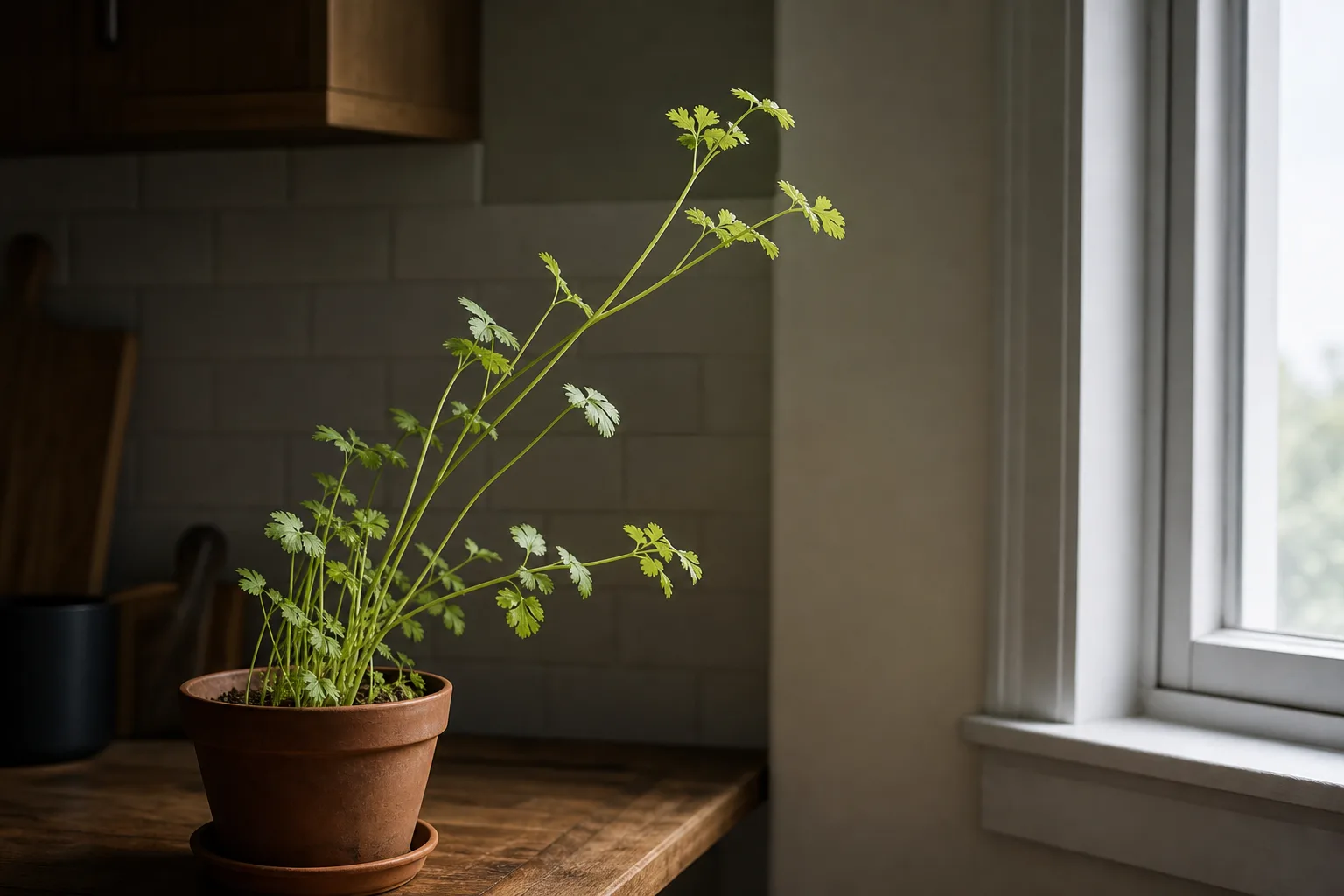
Long, leaning stems point to inadequate light or a light source placed too far away.
If seedlings are pale, widely spaced, or leaning toward the window, improve the light before adding fertilizer. Move the pot closer to a bright window if the sill stays cool, or add a grow light above the canopy; turn the pot so all sides receive light. If the plants are very stretched already, they will not become stocky overnight, so sow a replacement batch under the improved setup and harvest the older leaves as they are ready.
Slow growth has several possible causes. Check for a cold draft, a saturated mix, poor drainage, or a pot that is too small before assuming the seed is weak. Cilantro can take up to three weeks to emerge, so leave a newly sown pot alone through its expected germination period; if no seedlings appear after that, resow with fresh seed and keep the surface evenly moist rather than waterlogged.
Yellow leaves, droop, and mold
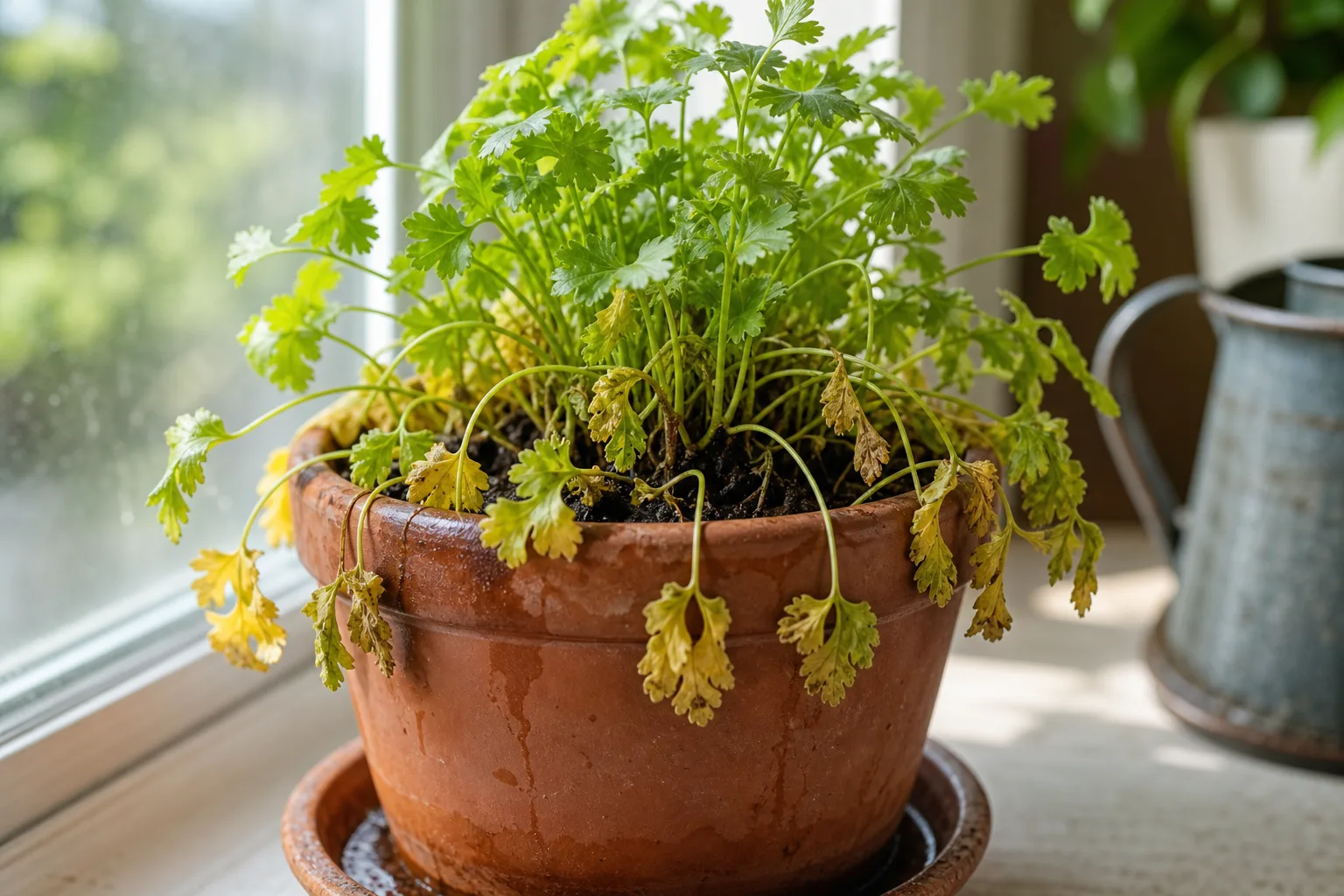
Yellow leaves alongside persistently wet soil call for checking the drainage and root zone before watering again.
Yellowing lower leaves can be normal as older foliage ages, but widespread yellowing with a heavy, wet pot suggests roots are staying too damp. Make sure drainage holes are open, pour out standing water, and allow the mix to dry slightly before the next watering. If stems collapse at the soil line or the roots smell sour, the plant may have root damage; for a short-lived herb, sowing a fresh pot in clean mix is often more reliable than trying to save badly affected roots.
If leaves droop while the mix is dry, water deeply and confirm the water reaches the whole root ball. If the surface grows fuzzy, let the top layer dry more between waterings, remove fallen plant material, and increase air movement around the pot. Inspect new growth and leaf undersides for aphids; a small cluster can often be rinsed away, but isolate a heavily infested indoor pot and use only products whose label allows use on edible herbs and specifies the harvest interval.
Conclusion
The most reliable way to grow cilantro indoors is to sow seed in a deep pot with drainage, put it in bright light, and keep the root zone cool and evenly moist. Watch the actual pot rather than following a watering calendar, and do not try to rescue weak growth with heavy fertilizer when light or drainage is the real problem.
One plant can give several useful pickings, but its leafy stage ends. Start a second small batch before the first bolts, use microgreens when full-size growth is unrealistic, and treat a flower stalk as a cue to harvest what remains or save coriander seed. That rhythm makes indoor cilantro predictable without expecting one short-lived herb to behave like a year-round houseplant.