How to Grow a Lemon Tree From Seed
Learn how to grow a lemon tree from seed, from fresh-seed preparation and planting depth to seedling care, grafting options, and realistic fruit expectations.
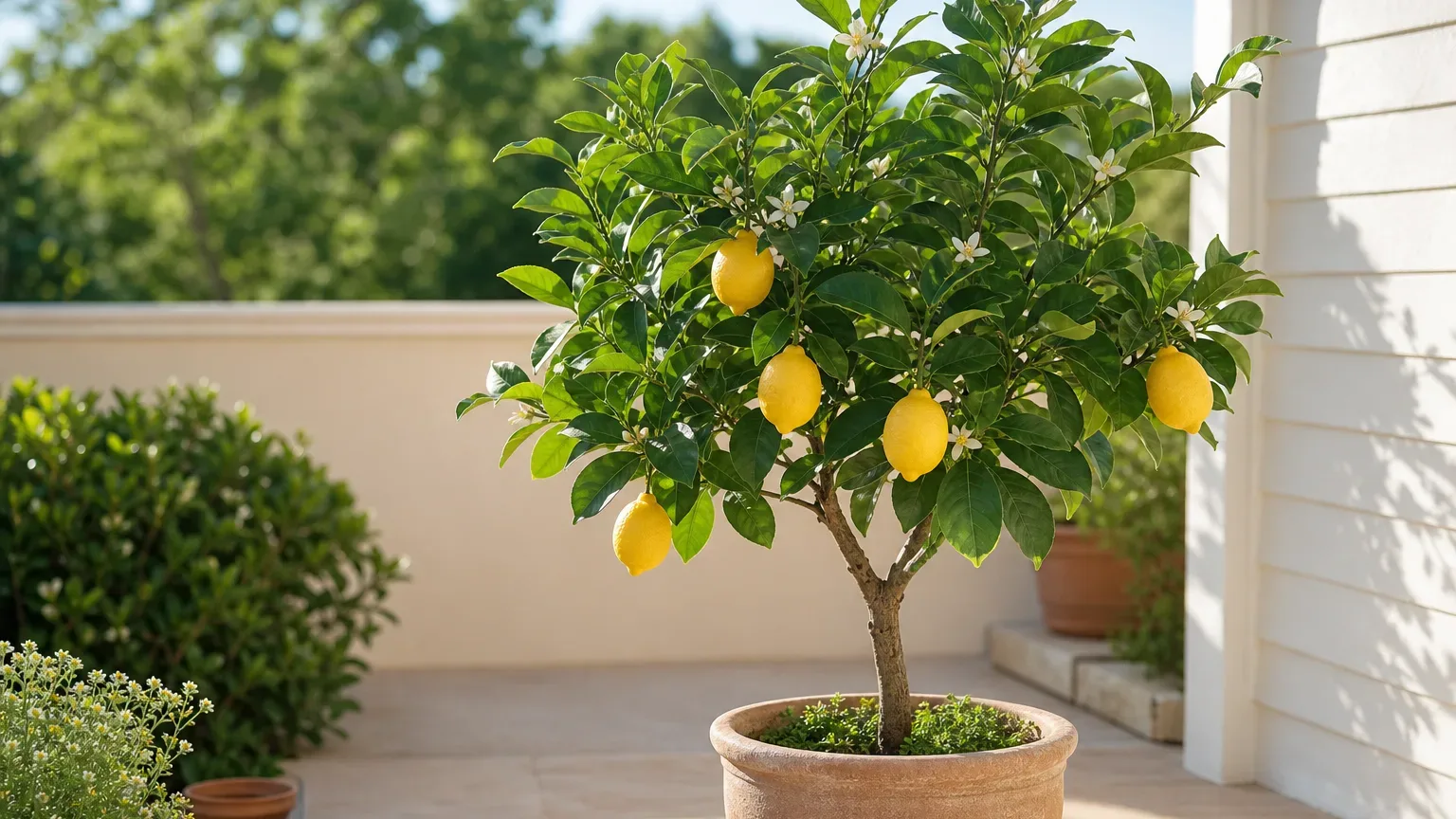
Growing a lemon tree from seed is a satisfying way to turn a kitchen seed into a long-term plant project. It is also a slow, uncertain route to fruit: a seedling needs years to mature, and its eventual fruit may not match the lemon you started with. If you want dependable lemons soon, buy a grafted tree; if you want to watch citrus germinate and grow, a fresh seed is a fine place to begin.
The most useful way to think about the project is in two stages. First, raise a healthy seedling. Later, decide whether to keep it as an ornamental experiment, grow it as potential rootstock, or graft a known lemon variety onto it. Those are separate goals, and treating them separately prevents disappointment.
Decide Whether a Seed-Grown Lemon Fits Your Goal
Lemon seeds germinate readily enough in warm, clean conditions, but sprouting is only the beginning. A young citrus tree must build a substantial root and branch system before it reaches reproductive maturity; a seed-grown tree can stay juvenile for many years. The University of Florida IFAS Extension describes citrus seedlings as capable of eventually bearing fruit, while warning that juvenility delays production.
Choose a seed if you value the process, want a child-friendly science project, or are curious about citrus growth. Choose a grafted nursery tree if your priority is a known cultivar, earlier fruit, and a predictable plant size or growth habit. Even a carefully raised seedling cannot promise the yield, flavor, thorniness, or maturity schedule printed on a parent tree’s label.
| Your goal | Better starting point | Why |
|---|---|---|
| Germination experiment or classroom project | Fresh lemon seed | Inexpensive and engaging; the harvest is not the point |
| Fruit with a known variety and flavor | Grafted lemon tree | The fruiting top is a selected cultivar joined to a chosen rootstock |
| Practice raising citrus stock for grafting | Seedling | Seed-grown rootstocks are used in citrus propagation |
| A lemon tree to keep indoors for years | A compact grafted tree, or seedling if patient | Indoor light and juvenile growth make quick fruit unlikely |
Commercial citrus trees commonly combine a rootstock and a scion. The rootstock supplies the lower trunk and roots, while the scion is the selected variety that produces the fruit. UF/IFAS Citrus Propagation explains why growers use this two-part system: rootstocks can influence stress tolerance, tree size, fruit quality, and yield, while budding or grafting preserves the desired fruiting variety.
Why Citrus Seedlings Do Not All Behave the Same Way
The phrase “grown from seed” does not automatically mean “genetically unlike its parent.” Many citrus varieties are polyembryonic: a single seed can contain multiple embryos, including nucellar embryos that develop from maternal tissue and are genetically identical to the mother plant. A seed can also produce a zygotic embryo created through sexual reproduction, which is genetically different. UF/IFAS explains both outcomes, and nursery growers sort out seedlings that appear to be off-types.
That distinction matters for lemons, including hybrid types such as Meyer lemon. A seed-grown tree may resemble its parent if it comes from a nucellar embryo, but you cannot identify that with certainty from the seed or guarantee it will be true to the named cultivar. The practical rule is simple: enjoy the seedling for what it becomes, but use a certified grafted tree when exact cultivar identity and reliable fruit production matter.
Choose a Fresh Seed and Prepare It Gently
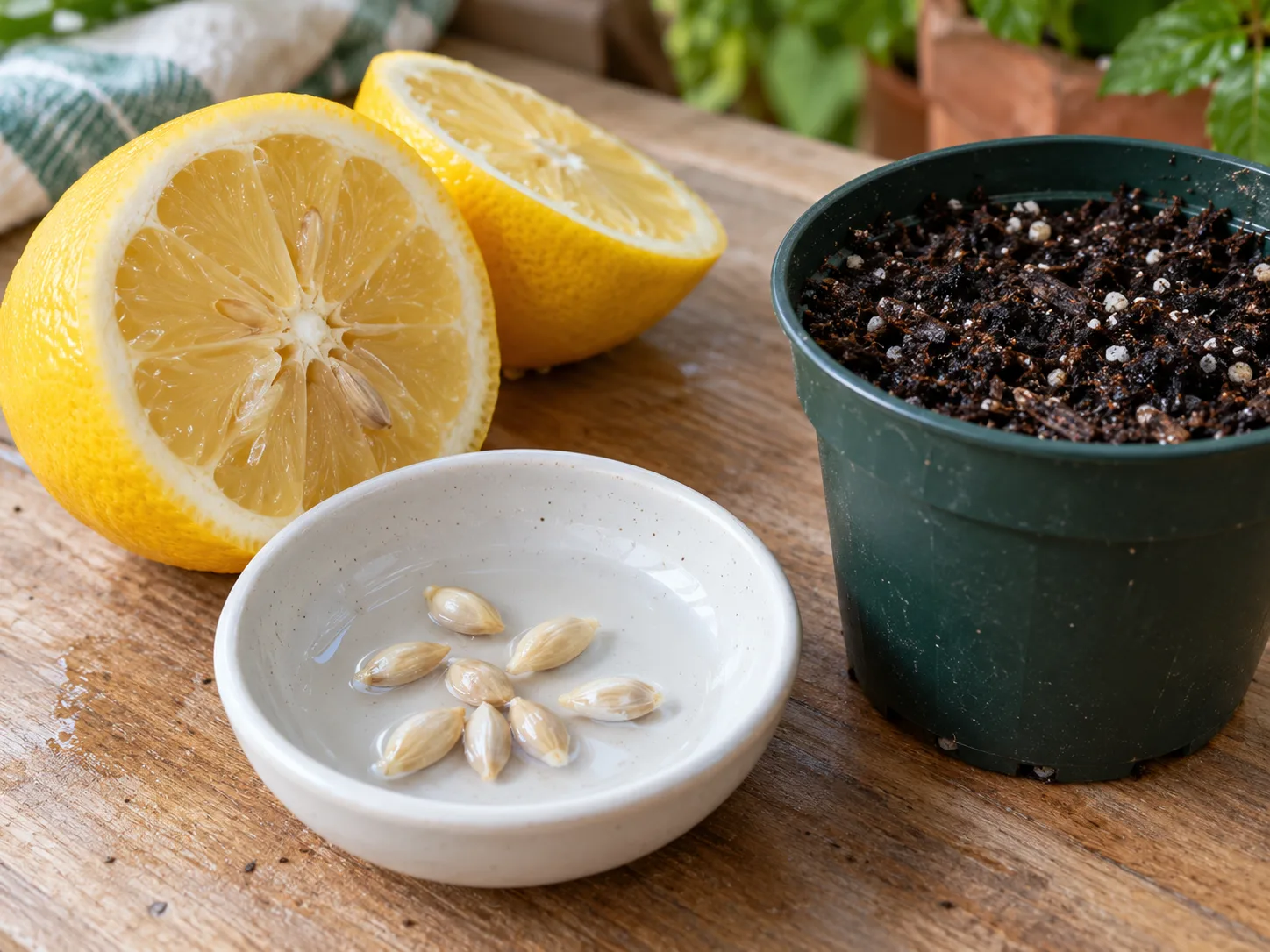
Use seeds from a ripe, healthy lemon. Cut the fruit carefully so you do not nick the seeds, then select several plump, firm seeds rather than betting the project on one. Rinse away all pulp and slippery residue, which can mold in the pot. Home gardeners often sow cleaned seeds promptly, while UF/IFAS citrus nursery guidance recommends drying and cool storage before sowing for more uniform commercial germination; direct planting is possible, but emergence can be less uniform.
Do not rely on the bowl-of-water float test to decide which seeds are alive. Floating can be affected by trapped air and surface conditions, so it is not a dependable home viability test. Sow several clean seeds instead; thinning later is easier than discarding a viable seed because it floated.
You can sow a rinsed seed as is, or peel away its thin outer seed coat to speed emergence. The coat is a protective layer, and peeling is optional: soak a seed briefly to soften the coat, then work from a loosened edge with clean fingers. Stop if it resists. A nick to the pale embryo can ruin a viable seed, so a patient grower is better served by planting it intact than by forcing the shortcut.
Commercial citrus nurseries may disinfect fruit and seed, dry and cold-store seed, or use carefully controlled treatments to improve uniformity and reduce disease risk. That is a production protocol, not a home recipe. Do not copy nursery concentrations of bleach, caustic soda, or fungicide into a kitchen seed-starting project; for a few household seeds, careful rinsing, clean tools, a clean pot, and fresh potting medium are the sensible low-risk steps.
Plant Lemon Seeds in a Small, Draining Pot
Use a clean 3- to 4-inch nursery pot or a small seed-starting cell with an open drainage hole. A pot that is too large holds unused mix wet for longer, raising the chance of seed rot. Fill it with a fresh, fine-textured seed-starting mix that drains freely; do not use dense garden soil, which can compact in a small container.
Moisten the medium before planting so it feels evenly damp but does not drip when squeezed. Sow each seed about 1/4 to 1/2 inch deep, then cover it lightly and press the surface just enough to ensure contact. If you plant several seeds in one pot, leave space between them and plan to separate the seedlings after they establish; individual cells make that later step easier.
Water gently after sowing. The goal is to settle the mix around the seed without creating a waterlogged layer or washing the seed toward the bottom. Empty any saucer after watering, and label the pot with the sowing date so you can track the germination window rather than repeatedly digging to check.
Keep the Mix Warm, Moist, and Aerated
Warmth speeds citrus germination. Keep the pot in a consistently warm room, ideally around 70 to 80°F, away from cold glass, heater blasts, and temperature swings. A heat mat can help in a cool room, but use it with a thermostat and keep the mix from drying out; a warm location is not useful if it turns the seed into a dry seed.
Cover the pot loosely with a clear dome or a clear bag supported above the soil to hold humidity. The cover should not seal the mix into a stagnant, dripping environment. Vent it daily, wipe away heavy condensation, and remove it once the shoot emerges so the stem and leaves can dry between waterings.
Check the medium with a fingertip rather than watering on a fixed calendar. It should remain lightly moist during germination, never swampy. If the surface looks wet for days, smells sour, or develops fuzzy growth, increase airflow and let the top begin to dry; if it has become dry all the way through, re-moisten gently rather than flooding the pot.
Read the Germination Timeline
Under favorable conditions, citrus seedlings can emerge in roughly two to three weeks. Home results vary with seed freshness, temperature, seed coat, and moisture, so a pot that is still quiet at three weeks has not necessarily failed. Give it several more weeks if the seed remains firm and the mix has not become cold or saturated.
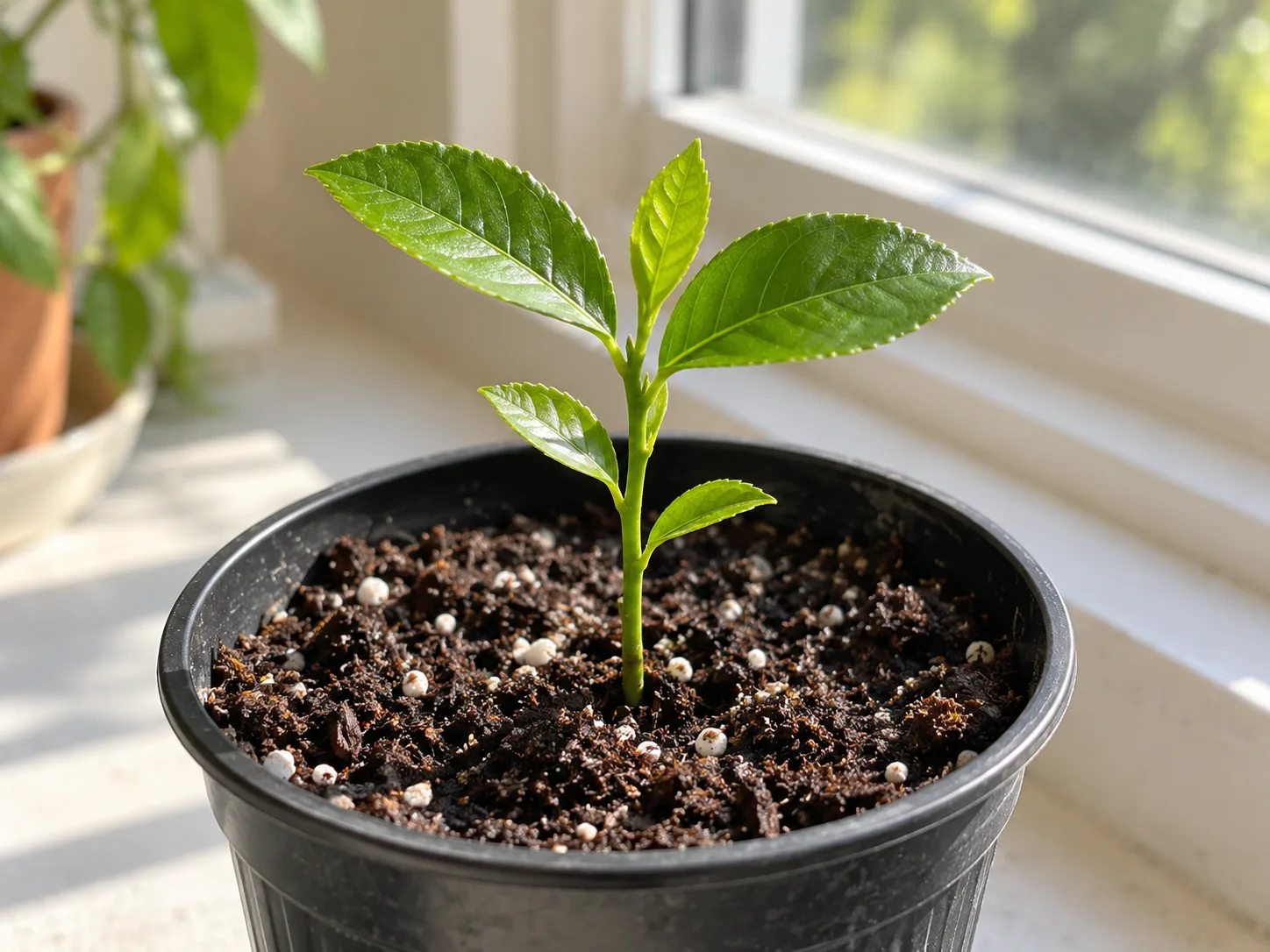
The first sign may be a curved green shoot pushing through the mix rather than a pair of recognizable lemon leaves. At emergence, move the pot into bright light immediately and remove the humidity cover. Weak light encourages a stretched, fragile stem, while leaving a cover on too long keeps foliage wet and can invite fungal problems.
Do not pull a seed up to see whether it has rooted. That can tear the new root, which is more important to the plant than the tiny shoot suggests. If you need to confirm activity, look for the stem at the surface and wait; a seedling that is still establishing belowground may take a little time to show leaves.
Handle Multiple Sprouts From One Seed
Sometimes two or more shoots emerge from a single lemon seed. Citrus polyembryony can account for this: several embryos may be present, and the seedlings may not all have the same genetic origin. A cluster of shoots is not automatically a problem or a sign that the seed has split into unrelated roots.
Let each sprout develop a few leaves before deciding what to do. If the seedlings are crowded, transplant them carefully into separate small pots while the mix is moist, teasing apart roots only when they separate easily. When roots are tightly tangled, keep the strongest shoot and snip the others at the soil line with clean scissors instead of yanking them out.
For an experiment, you may prefer to keep multiple seedlings and compare their leaf shape and vigor over time. For rootstock, select healthy, sturdy growth, but remember that visual differences alone do not prove a seedling’s genetics or disease status. Professional nurseries use controlled seed sources and selection procedures for a reason; a home-grown lemon seedling is not automatically certified nursery stock.
Pot Up Without Damaging the Young Roots
Move a seedling when it has several true leaves and the root system is beginning to fill its small cell, or when roots appear at the drainage opening. Do not wait until the plant is severely rootbound, but do not transplant it simply because it grew one new leaf. A stable root ball is easier to move intact than loose, newly emerged roots.
Choose a pot only one size larger, with drainage holes, and fill it with a well-draining container mix. Citrus roots need both moisture and air; a decorative pot without drainage makes watering harder to judge. Set the seedling at the same depth it was growing before, backfill without compressing the mix hard, and water until excess drains from the bottom.
After potting, keep the plant in bright indirect light for a short adjustment period, then return it to stronger light as it resumes growth. A brief pause in growth is normal after transplanting. Wilting that persists, a stem that collapses at soil level, or a sour-smelling root ball points to excess moisture or root damage rather than a need for extra fertilizer.
Give the Seedling Strong Light and Steady Care
A lemon is a sun-loving evergreen, but a small seedling moved from a dim room into intense midday sun can scorch. Indoors, place it in the brightest available window and supplement with a grow light if the stem stretches, leaf spacing becomes long, or new growth stays weak. Epic Gardening’s dwarf Meyer lemon guide likewise emphasizes bright light, warm conditions, and drainage for container citrus.
Water when the upper layer of mix begins to dry, then water thoroughly and let the excess drain away. Do not let the root ball remain saturated, and do not leave the pot sitting in runoff. Seedlings use less water than a mature fruiting tree, so instructions to water a large citrus plant frequently can drown a small one if copied without checking the pot.
Wait until the seedling is actively growing and has several true leaves before feeding. Then use a complete fertilizer suitable for citrus or container plants, diluted according to its label; more fertilizer does not make a young lemon mature faster. Avoid applying fertilizer to dry roots or stacking multiple products, since salt buildup can damage tender root tips.
Keep the young tree away from cold drafts, hot radiators, and sudden changes in location. Citrus can drop leaves after stress, but leaf drop is a symptom, not a diagnosis. Check the roots and mix moisture first, then assess light, temperature, and pests before changing several conditions at once.
Move It Outdoors Only After a Gradual Transition
If you want to move the seedling outside for summer, wait until nights are reliably mild and frost is no longer a risk for your area. Lemon trees are cold-sensitive, and a young potted seedling is especially vulnerable because its roots have little soil around them for insulation. In colder climates, it is safer to keep the plant in a container that can return indoors before cool weather.
Harden off the seedling over about one to two weeks. Start with a few hours in bright shade in a sheltered spot, then lengthen the time outside and introduce morning sun gradually. Bring it back in during strong wind, a cold snap, or an unusually hot afternoon until it has adjusted.
For permanent outdoor planting, check local climate and citrus guidance rather than assuming a seedling will tolerate the same conditions as an established orchard tree. UF/IFAS lemon landscape guidance discusses site, cold protection, watering, and nutrition for lemons in Florida; its regional recommendations should not be copied uncritically to a different climate. In a frost-prone region, a movable container is more realistic than a permanent in-ground planting.
Shape the Young Tree and Watch Its Growth
For its first year or two, let the seedling build a sound root system and a sturdy main stem. Remove only damaged or dead growth, and avoid pruning the top simply to make the plant look like a miniature mature tree. A seedling does not need to be forced into fruit production or a complicated framework while it is still establishing.
If you intend to keep it as a container plant, rotate the pot occasionally so growth does not lean hard toward one window. When the tree is larger, light tip-pruning can encourage branching, but each cut removes leaves that the plant needs to build energy. If its roots reach the pot edge quickly, move it up gradually instead of jumping to an oversized container.
Record the sowing date, emergence date, and any changes in leaf shape or growth habit. These notes help you distinguish a slow but healthy seedling from one stalled by cold, low light, or waterlogged soil. They are also useful if you later decide to graft, because you will know how long the rootstock has grown and how it responded to your conditions.
Understand Fruiting, Variety, and the Grafting Option
A seed-grown lemon can eventually flower and fruit, but there is no dependable calendar for when. The juvenile period lasts for years, and indoor light, climate, root restriction, nutrition, and the seedling’s genetics all influence growth. A flowering seedling still may not produce lemons identical to the fruit that supplied its seed.
Meyer lemons are hybrids, but that fact alone does not settle what every seed will produce. Citrus can form nucellar embryos alongside zygotic embryos, so some seedlings may be maternal clones while others are genetically distinct; neither an edible lemon nor a true-to-name Meyer is guaranteed for an individual seed. The honest expectation is “possible, variable, and slow,” not “never” or “exactly like the parent.”
If your seedling grows vigorously and you want reliable fruit, grafting can change its top to a known cultivar while keeping its established roots. Citrus growers commonly bud a selected scion onto rootstock, as described in UF/IFAS nursery propagation guidance. That is a skilled step requiring healthy, appropriate budwood and clean technique; in regions with citrus disease controls, follow local rules and use certified material.
For most home gardeners who simply want lemons, buying a grafted tree from a reputable nursery is simpler and faster than waiting years to evaluate a seedling and then learning to graft it. Keep the seedling if the experiment itself is rewarding. You can still enjoy its evergreen foliage without treating fruit as the measure of whether the project succeeded.
Troubleshoot Seeds That Rot or Fail to Sprout
If nothing emerges, check the conditions in this order: seed freshness, warmth, moisture, and drainage. A seed that dried out before planting may have lost vigor; a chilly pot may germinate slowly; and a saturated mix can deprive the embryo of oxygen. Correct the setup before adding more water or fertilizer.
If the seed turns soft, brown, or foul-smelling, it has probably rotted. Discard it and restart in a clean pot with fresh mix; do not plant a second seed into the same moldy medium. If white fuzzy growth appears only on the soil surface, improve air circulation and reduce excess moisture, but discard a seed that itself is mushy.
If a seedling emerges but grows tall and thin, increase light gradually and place the light closer if you use a lamp, following its manufacturer’s distance guidance. If the stem darkens and pinches at the soil line, damping-off may be underway; isolate and discard the collapsed seedling, then clean the pot and improve drainage and airflow for the next sowing.
Yellowing leaves do not automatically mean the plant needs fertilizer. A persistently wet mix, compacted roots, low light, cold exposure, or transplant shock can all cause decline. Make one targeted correction at a time and watch the next flush of growth before changing the care routine again.
Avoid the Shortcuts That Cause Setbacks
The float test is not a reliable reason to discard every floating seed. Sow several fresh seeds and let actual emergence tell you which are viable; the extra pot space is a small cost compared with losing the only seed that might grow.
Peeling the seed coat is not mandatory, and aggressive scraping can damage the embryo. The same applies to soaking for a full day: a short soak may soften the coat, but it cannot rescue an old, dried, or injured seed. Prioritize fresh seed, clean medium, warmth, and even moisture.
Do not use a sealed container as a substitute for drainage, or keep a humidity cover over the plant long after leaves appear. Do not leave the pot in standing water, bury the seed several inches deep, or keep it in a dark cupboard after emergence. Each shortcut interferes with one of the basic requirements: oxygen, moisture balance, light, or a short path to the surface.
Finally, do not promise yourself a harvest date based on a seedling’s first year of growth. Fruit quality, time to maturity, and cold tolerance are uncertain until the tree develops; the surest route to a particular lemon remains a grafted, correctly labeled tree. Treat the seedling as a worthwhile plant project first and a potential fruit tree only as a future possibility.
Conclusion
To grow a lemon tree from seed, start with several fresh seeds from a ripe fruit, rinse off the pulp, and sow them about 1/4 to 1/2 inch deep in clean, damp, freely draining mix. Keep the pot warm, lightly moist, and covered loosely until sprouts appear, then remove the cover and give the seedlings strong light. Pot up only when roots and true leaves show that the plant is ready, and protect it from cold as it grows.
The seed can produce an enjoyable evergreen tree and may eventually fruit, but citrus embryo biology and the long juvenile phase make the outcome hard to predict. If you mainly want to learn, sow the seed and enjoy the process. If you want lemons of a known variety on a realistic schedule, choose a grafted tree instead.



