How to Grow and Care for Purple Heart Plants
Learn how to grow purple heart with the right light, soil, water, pruning, propagation, winter protection, and fixes for green or yellow leaves.
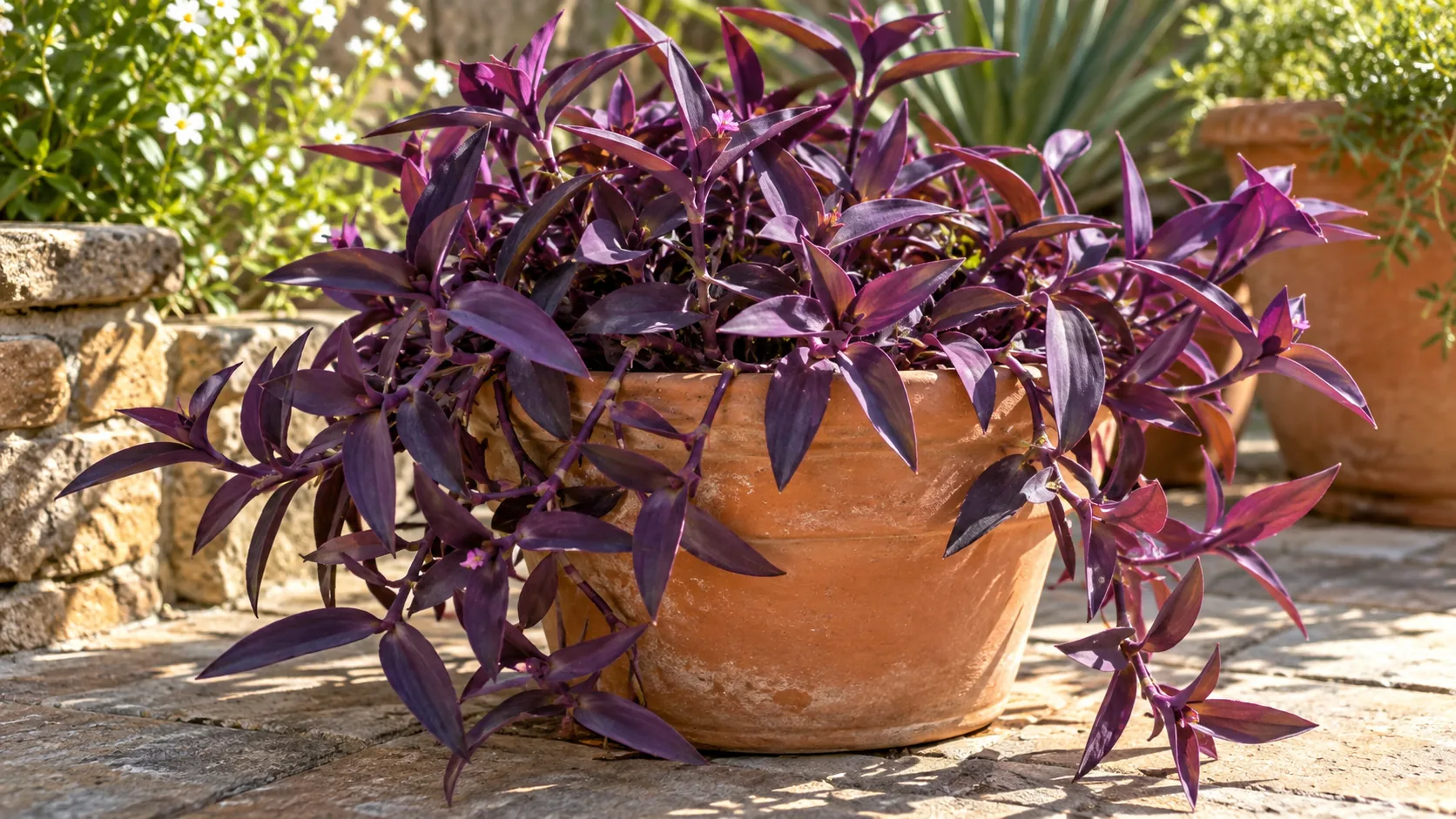
Purple heart (Tradescantia pallida ‘Purple Heart’) earns its name honestly: healthy plants carry violet stems and narrow, purple leaves that glow in direct morning or afternoon light. The plant is also unusually forgiving. A cutting can root quickly, a missed watering is rarely fatal, and a single container can fill out in one warm season.
The catch is that purple heart is forgiving only when its basic signals are read correctly. Too little light turns the growth greener and more widely spaced. Too much water causes soft stems and yellow leaves. A sudden move from a dim room to hot sun can scorch foliage, while a single hard frost can end an outdoor planting. The reliable routine is simple: provide strong light, use a draining mix, water after a meaningful dry-down, and cut it back before it becomes a tangled, bare-stemmed vine.
Purple Heart at a Glance
| Need | Practical target |
|---|---|
| Botanical name | Tradescantia pallida ‘Purple Heart’ |
| Light | Bright light indoors; several hours of direct sun outdoors after acclimation |
| Soil | Loose, well-drained potting mix or garden soil that does not stay waterlogged |
| Water | Soak thoroughly, then let the upper root zone dry before watering again |
| Temperature | Warm growing conditions; protect from frost and freezing soil |
| Mature habit | Trailing or sprawling stems, commonly about 1–2 feet tall and wide in a container |
| Flowers | Small pink to violet, three-petaled flowers, usually in warm-season growth |
| Best uses | Containers, hanging baskets, borders, sunny groundcover, and indoor bright windows |
For botanical identification and baseline care, compare NC State Extension’s Tradescantia profile and the University of South Florida Plant Atlas entry for Tradescantia pallida. For pet-safety context, see the ASPCA inch-plant listing. The RHS plant profile is useful for cross-checking cultivation language, while practical container and propagation decisions are consistent with editorial guidance from Fine Gardening and Gardening Know How. NC State Extension identifies the plant within the Tradescantia group, while the University of South Florida Plant Atlas records T. pallida as a species with a history of escaping cultivation in suitable climates. That combination explains its appeal and its caution: it is easy to grow, but outdoor planting should be deliberate where winters are mild and spread is possible.
What Purple Heart Is and How It Grows
Purple heart is a tender perennial vine-like groundcover in the spiderwort family, Commelinaceae. Its stems creep, trail, or spill over a container rather than forming a rigid shrub. The leaves are succulent enough to tolerate short dry spells, but they are not so thick that the plant can be treated like a desert cactus.
The most useful distinction is between color and vigor. A plant can grow quickly in partial shade yet lose the intense purple that makes the cultivar desirable. Conversely, full sun can deepen the color while increasing water demand. Look at new growth rather than old leaves: fresh purple leaves with compact spacing usually mean the plant is receiving enough light; long green sections mean the growing conditions need adjustment.
Purple heart is often sold as an annual in cold climates, a perennial in frost-free gardens, or a houseplant anywhere it can receive bright light. The plant’s identity does not change between those uses, but the seasonal routine does.
Choose Outdoor, Container, or Indoor Placement
Use an outdoor bed when your climate stays warm enough through winter and you want a spreading, low-growing accent. Use a container when you want to move the plant, control its reach, or combine it with flowers that need similar sun. Use a bright indoor window when winter freezes would kill an in-ground plant or when you want to keep a few cuttings year-round.
Containers are the most flexible choice. They let you test light, bring the plant inside before frost, and trim roots or stems without disturbing a larger planting. They also make watering easier to diagnose because you can feel the pot’s weight and see whether drainage is actually working.
Give Purple Heart Enough Light for Purple Foliage
Outdoor purple heart usually looks best in full sun to bright partial sun. Aim for several hours of direct light, especially gentle morning sun or late-afternoon sun. In very hot climates, a site with morning sun and protection from the harshest late-day heat can reduce leaf scorch while preserving color.
Indoors, put it in the brightest window available. A south- or west-facing window may work if the glass does not create excessive heat; an east-facing window is often easier to manage. A dim room may keep the plant alive but will usually produce green, stretched stems. If the plant is more than a few feet from a bright window, a grow light can provide more reliable color than repeatedly moving it between rooms.
Acclimate a Plant to Stronger Sun
Never take a plant that has been indoors or in shade and place it immediately in all-day summer sun. Begin with bright shade or a short period of mild morning sun. Extend the exposure over roughly a week, watching for bleached patches, crisp leaf edges, or limp stems that do not recover in the evening.
Sunburned leaves will not turn purple again. The goal is to protect new growth while the plant adjusts, not to rescue every damaged leaf. If the plant burns, move it to bright filtered light, keep watering consistent, and wait for new leaves before judging the recovery.
Use Fast-Draining Soil and a Sensible Pot
Purple heart tolerates loam, sand, and clay in the ground if excess water can escape. In a container, use a quality potting mix amended with perlite, pumice, or coarse bark if it stays wet for several days. The exact recipe matters less than the result: after watering, the mix should drain freely rather than remain cold and saturated around the stems.
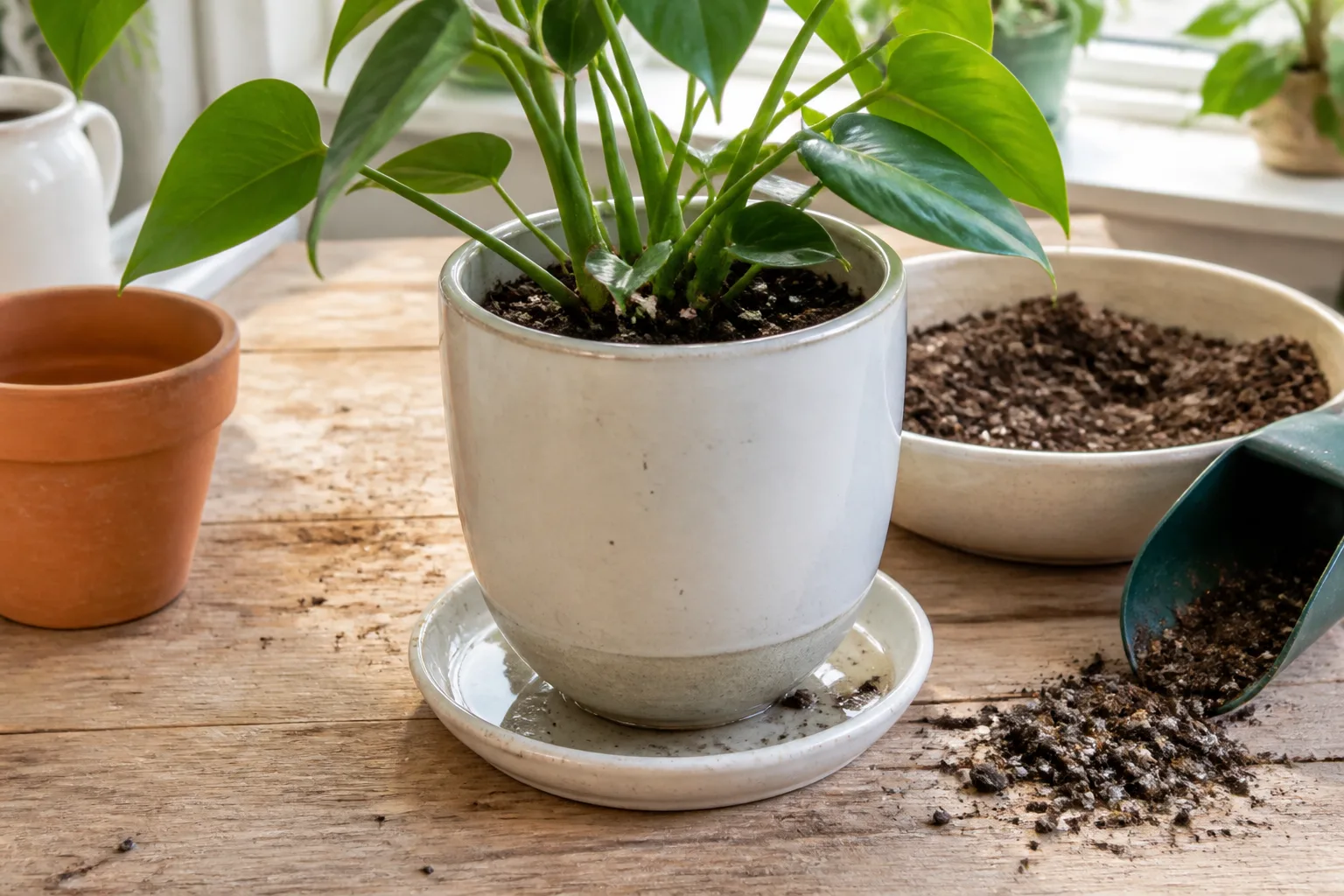
Choose a pot with drainage holes. A decorative cachepot can be used as an outer cover, but empty it after watering. A pot that is much larger than the root ball holds more wet soil than the plant can use and makes yellow leaves or stem rot more likely. When repotting, go up one container size rather than jumping into a large tub.
For an in-ground planting, do not bury the stems deeply. Set the root ball at the same level it was growing, and improve a heavy site with organic matter and a way for water to move away. Purple heart can tolerate brief dryness more safely than standing water.
Water by Root-Zone Dryness, Not by Calendar
Water thoroughly when the upper part of the root zone has dried, then allow excess water to run out. Do not give a few sips every day; shallow watering wets only the surface and encourages roots to stay near the top. Do not keep the pot standing in a saucer of water.
The interval will change with light, temperature, pot size, and season. A sunny outdoor container may need water several times a week during a heat wave, while an indoor plant in winter may need water much less often. Test the soil with a finger or wooden skewer and lift the pot when possible. A light container plus dry soil is a better signal than a calendar reminder.
If leaves soften during a hot afternoon but recover at night, check the soil before watering; heat stress is not always thirst. If lower leaves yellow while the mix stays wet, move the plant into brighter light, confirm the drainage hole is open, and let the root zone dry further before the next soak.
Manage Temperature, Humidity, and Airflow
Purple heart grows fastest in warm weather and slows as days shorten. Protect it from frost, freezing rain, and cold wet soil. In a container, bring it indoors before the first frost forecast rather than waiting for visible damage. An outdoor plant that survives a light chill may still lose its tender tips and require a hard cutback.
Average indoor humidity is usually adequate. You do not need to mist purple heart or place it over a water-filled pebble tray. Good light and a well-drained mix matter more. Leave enough space around the pot for air movement, especially when stems are dense and the plant is watered frequently outdoors.
Fertilize Lightly During Active Growth
Purple heart does not need a heavy feeding program. During spring and summer, apply a balanced liquid fertilizer at half strength when the plant is actively producing new stems. Feeding after watering reduces the chance of dry roots meeting concentrated salts.
Stop or sharply reduce fertilizer during the darker, cooler months. If growth is pale and stretched, fix light before adding fertilizer. Extra nutrients cannot replace sunlight and may produce soft, weak growth that flops or attracts pests.
Prune for Bushier, Better-Colored Growth
Prune when stems become long, bare near the base, or extend beyond the shape you want. Use clean, sharp scissors and cut just above a leaf node. Removing the tips encourages branching from lower nodes, so several modest cuts usually create a fuller plant than one severe chop.
The cut stems are useful. Strip the lowest leaves, place the pieces in moist potting mix or water, and use them to fill a thin container. Wear gloves if your skin reacts to plant sap, and wash exposed skin afterward. Pruning is easiest during active growth, but a plant brought indoors for winter can be lightly shaped whenever it becomes impractical.
Propagate Purple Heart from Stem Cuttings
Stem cuttings are the fastest way to make new plants and the safest way to preserve a favorite plant before winter. Choose a healthy, non-flowering stem with several nodes. Cut a piece about 3–6 inches long, remove leaves from the lower section, and keep two or three leaves at the top.
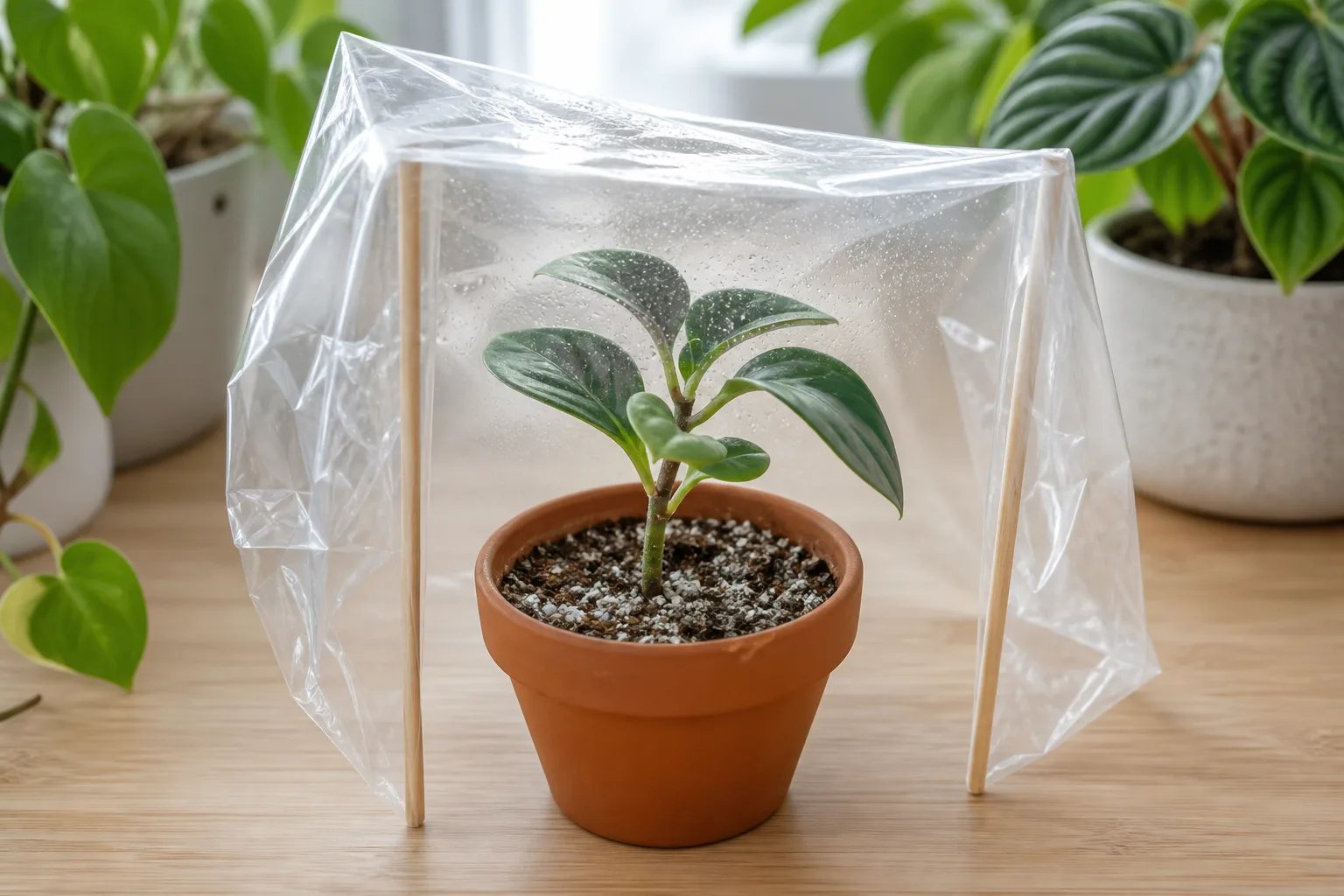
For soil propagation, insert at least one node into a small pot of damp, loose mix. Keep the pot in bright indirect light while roots form, and keep the mix lightly moist rather than saturated. For water propagation, place one or two nodes below the water line and keep the leaves above it; change the water if it becomes cloudy.
Once the cutting resists a gentle tug or shows several roots, move it into potting mix. Do not put a newly rooted cutting directly into full sun. Give it a gradual transition, then pinch the growing tip after it establishes to create a fuller plant.
Repot and Refresh Overgrown Plants
Repot when roots circle densely, emerge from the drainage hole, or the mix has broken down and drains poorly. Spring is a convenient time because the plant is beginning active growth, but a failing, waterlogged mix should be corrected promptly regardless of the calendar.
Support trailing stems as you slide the plant out. Inspect the roots and trim only dead, black, or mushy sections with clean scissors. Set the plant into fresh mix at its previous depth, water once to settle it, and place it in bright light while it reestablishes. If the top growth is too long for the new pot, prune and root the cuttings rather than forcing the entire vine into a larger container.
Overwinter Purple Heart Before Frost
In frost-free regions, purple heart may remain outdoors through winter, though growth slows and an overgrown planting may benefit from a seasonal cutback. In colder regions, treat it as a tender perennial: take cuttings, move a container indoors, or accept that the outdoor plant will be replaced in spring.
Before bringing a plant inside, inspect stems and leaf undersides for aphids, mealybugs, scale, and hitchhiking snails. Rinse the foliage, isolate the plant from houseplants for a short observation period, and place it in the brightest window. Reduce watering as indoor light and temperature fall. A plant that receives less light indoors uses water more slowly.
Encourage Summer Flowers Without Chasing Them
Small pink or violet flowers appear during warm-season growth when the plant has strong light and steady, not excessive, moisture. Flowers are a bonus rather than the main reason to grow purple heart; its foliage carries the display.
If blooming is sparse, start with light. Avoid trying to force flowers with extra fertilizer, which can create foliage at the expense of compact growth. Remove spent flowers if you prefer a tidy container, but deadheading is not essential to the plant’s health.
Troubleshoot Green, Yellow, Brown, or Leggy Growth
Green leaves or long spaces between leaves: The plant is probably receiving too little light. Move it closer to a bright window or increase outdoor sun gradually. Prune the stretched stems after the new location proves safe.
Yellow leaves and wet soil: Suspect overwatering, poor drainage, or low light slowing evaporation. Check the roots and pot hole before adding fertilizer. Remove mushy tissue and repot if rot has begun.
Brown, crisp patches: Consider sudden sun exposure, a missed watering during heat, or cold injury. Old lower leaves may also age naturally. Brown tissue will not recover, so correct the cause and wait for healthy new growth.
Soft, collapsing stems: This is more urgent than ordinary wilting. Pull back watering, improve drainage, and inspect the stem base. Take firm cuttings from healthy portions before trimming away rot.
A sparse center with vigorous ends: The plant needs a renewal prune, not a larger pot by default. Cut back long stems, root the pieces, and provide stronger light so regrowth stays compact.
Watch for Pests and Handle Sap Safely
Outdoor purple heart may encounter caterpillars, snails, and slugs. Indoors, inspect for aphids, mealybugs, and scale, especially before moving a plant inside. Start with isolation, a water rinse, and removal of visible pests. Use any pesticide only according to its current label and only when the plant and site are listed.
Sap can irritate sensitive skin. Wear gloves while pruning if you have reacted to Tradescantia before, avoid touching your eyes, and wash tools and hands after handling. ASPCA lists inch plants in the Tradescantia group as toxic to cats and dogs; because common names can be confusing, keep purple heart away from pets and consult a veterinarian or poison-control service if a pet chews it and develops symptoms.
Keep Vigorous Outdoor Growth Contained
Purple heart’s easy rooting is helpful in a planter and less helpful when unwanted pieces touch moist soil in a frost-free garden. Keep it in a container or defined bed where you can see the edges. Remove fallen cuttings before they root, and do not dump trimmings in natural areas or compost them if they contain viable pieces.
The University of South Florida Plant Atlas flags Tradescantia pallida as a plant that can escape cultivation in parts of Florida. Local rules and invasive-plant concerns vary, so check your extension service before using it as a broad groundcover. A contained container provides nearly all the color with less management risk.
Conclusion
Purple heart is at its best when its care matches its biology: bright light for color, drainage for healthy roots, a real dry-down between waterings, and regular pinching to keep trailing stems full. Treat it as a tender plant when frost is possible, propagate a few cuttings before the season changes, and use containers when you need control.
When a plant turns green, starts stretching, or develops yellow leaves, change the growing conditions before reaching for fertilizer. Purple heart usually tells you what it needs through its newest growth. Watch that growth, make one adjustment at a time, and this fast, vivid plant can remain a reliable container accent or indoor windowsill trailing plant for years.