How to Grow and Care for Silver Squill Indoors and Out
Learn silver squill care: choose bright filtered light, seasonal watering, a gritty mix, and exposed bulbs, with repotting, division, and winter-rest advice.
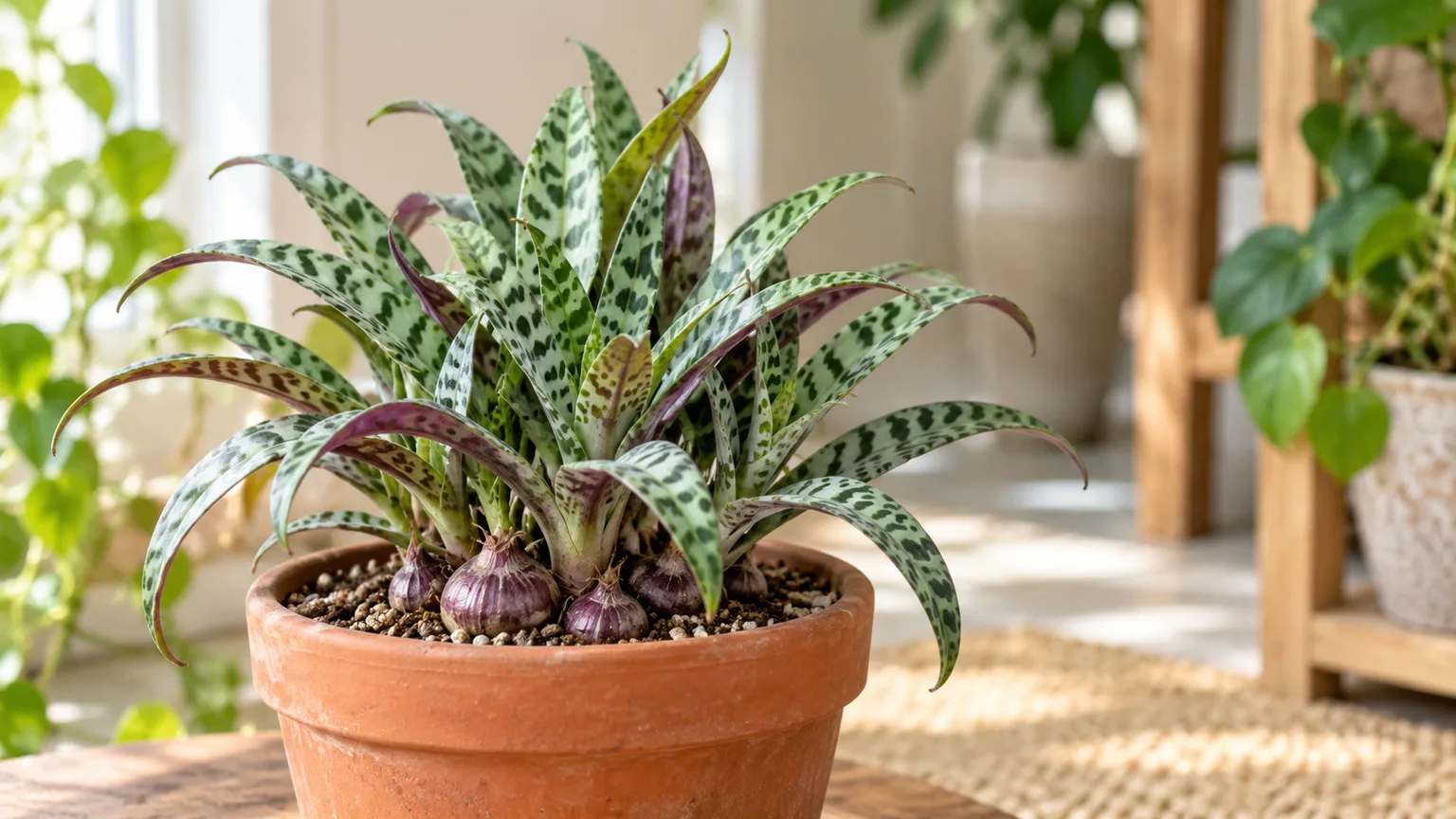
Silver squill is easiest to keep when you treat it as a bulb-forming plant with seasonal needs, not as a typical leafy houseplant. Give it bright filtered light, let excess water drain, and keep the upper part of its small bulbs visible above the growing mix; those three choices prevent most routine care problems.
Meet Silver Squill: A Bulb That Lives Above Its Soil
Silver squill, Ledebouria socialis, is a compact bulbous perennial native to South Africa’s Cape Provinces. Kew lists the accepted species as a bulbous geophyte, while NC State Extension describes the familiar plant: narrow, silver-green leaves with dark green spots, purple undersides, and teardrop-shaped bulbs that sit partly above the soil. The spotted leaves explain another common name, leopard lily, but the plant belongs to the asparagus family rather than the true lilies. Kew’s Plants of the World Online confirms its accepted name and native range; NC State Extension provides the horticultural profile.
Those visible bulbs are not a planting mistake or a sign that the plant has been pushed out of its pot. Ledebouria socialis makes small bulbs above ground and gradually builds a clump, so the part of the bulb above the mix should remain exposed. It stores moisture in its fleshy tissues, which helps it tolerate short dry spells, but that adaptation does not make it a true succulent or a plant that should stay bone-dry while actively growing.
The species is grown mainly for its patterned foliage, though mature clumps can send up airy spring flower stalks bearing many small greenish-white blooms. Individual flowers are subtle; the stalks are the show. A healthy plant may therefore look attractive without flowering every year, and its care should prioritize firm bulbs and sturdy leaves rather than treating bloom as the only measure of success.
Plant labels may say ‘Juda,’ ‘Miner’ or ‘Minor,’ ‘Paucifolia,’ or ‘Violacea.’ NC State Extension lists these horticultural forms, while Kew treats Ledebouria violacea as a synonym and the Pacific Bulb Society notes that naming can be confusing. Buy for the leaf pattern you like and follow the same basic care; names alone do not mean a different watering routine.
Quick Silver Squill Care Snapshot
| Need | Practical target |
|---|---|
| Light | Bright, filtered light or partial shade; avoid hot direct sun |
| Water | During active growth, water when the top inch of mix is dry; reduce in the cooler rest season |
| Mix | Fast-draining, airy medium with a substantial mineral component |
| Pot | A snug container with an open drainage hole |
| Bulb position | Leave roughly the upper half to two-thirds exposed |
| Temperature | Comfortable indoor conditions; protect from frost and temperatures near 30°F |
| Feeding | Light feeding during active spring and summer growth |
| Propagation | Divide offsets after flowering or when the clump becomes crowded |
Use the table as a starting point, then adjust for the room or garden where the plant actually grows. A small pot near a sunny window dries faster than a large glazed pot in a cool room, so a weekly watering reminder is less reliable than checking the medium and leaves.
Find Bright, Filtered Light
Silver squill grows best in a bright position where sunlight is softened by a sheer curtain, nearby foliage, or a few hours of gentle morning sun. A bright east-facing window is often a simple starting point; a south- or west-facing window may work if the plant sits back from the hottest direct rays. Both NC State Extension and the Pacific Bulb Society describe partial shade or filtered light as suitable, and the bulb society cautions against full sun.
Watch the leaves after you move the plant. Long, floppy growth or a widening gap between leaves usually means the plant is reaching for more light, while bleached patches and dry brown edges on the window-facing side suggest the sun is too intense. Move it in small increments so the plant can adapt, and rotate the pot occasionally if one side leans toward the window.
Outdoors, think dappled shade rather than deep darkness. Silver squill can be placed under a light canopy or on a sheltered patio, but a spot that receives strong afternoon sun can scorch the foliage even if the plant tolerates brighter conditions in a cool climate. If natural light is weak, a grow light can help, but keep the fixture at a sensible distance and use the leaf response—not a rigid timer—as your cue.
Water by Growth, Not a Calendar
During spring and summer growth, water thoroughly when the top inch of potting mix has dried. Pour over the mix until water leaves the drainage hole, then empty the saucer; repeated small sips leave parts of the root zone dry while keeping the surface confusingly damp. Savvy Gardening and NC State Extension both use the top inch as a useful check for active-season watering. Savvy Gardening’s silver squill guide adds the practical point that a fixed schedule can lead to overwatering.
Check with a finger or a wooden skewer near the edge of the pot, where you are less likely to damage a bulb. If the mix still feels cool or clings to the skewer, wait and check again in a few days. If it is dry and the plant is actively growing, water fully rather than letting the entire root ball go dry for weeks.
Reduce watering as growth slows in fall and winter, particularly if the plant is in a cooler room. There is no universal number of days between drinks: a warm, bright room may keep the leaves growing, while a cool indoor shelf may produce a clear rest period. The goal is less frequent watering, not standing the plant in wet compost or automatically stopping water completely regardless of its condition.
A dry bulb cluster is usually firm and light in color; a problem bulb becomes soft or collapses. When you are unsure whether the plant is thirsty or resting, inspect the mix and bulb texture before watering. This small check is more useful than guessing from a single older leaf.
Choose a Pot and Mix That Let Bulbs Breathe
Use a pot with a working drainage hole and a mix that loses excess moisture quickly. The Pacific Bulb Society describes a well-drained mix with both organic and mineral components; its suggested starting point is about equal parts of each. In practice, combine a quality indoor potting mix with pumice, perlite, or coarse horticultural grit, then adjust if the mix stays wet for too long. A ready-made cactus or succulent mix can also work, but check that it is not a fine, peat-heavy blend that remains soggy in your conditions.
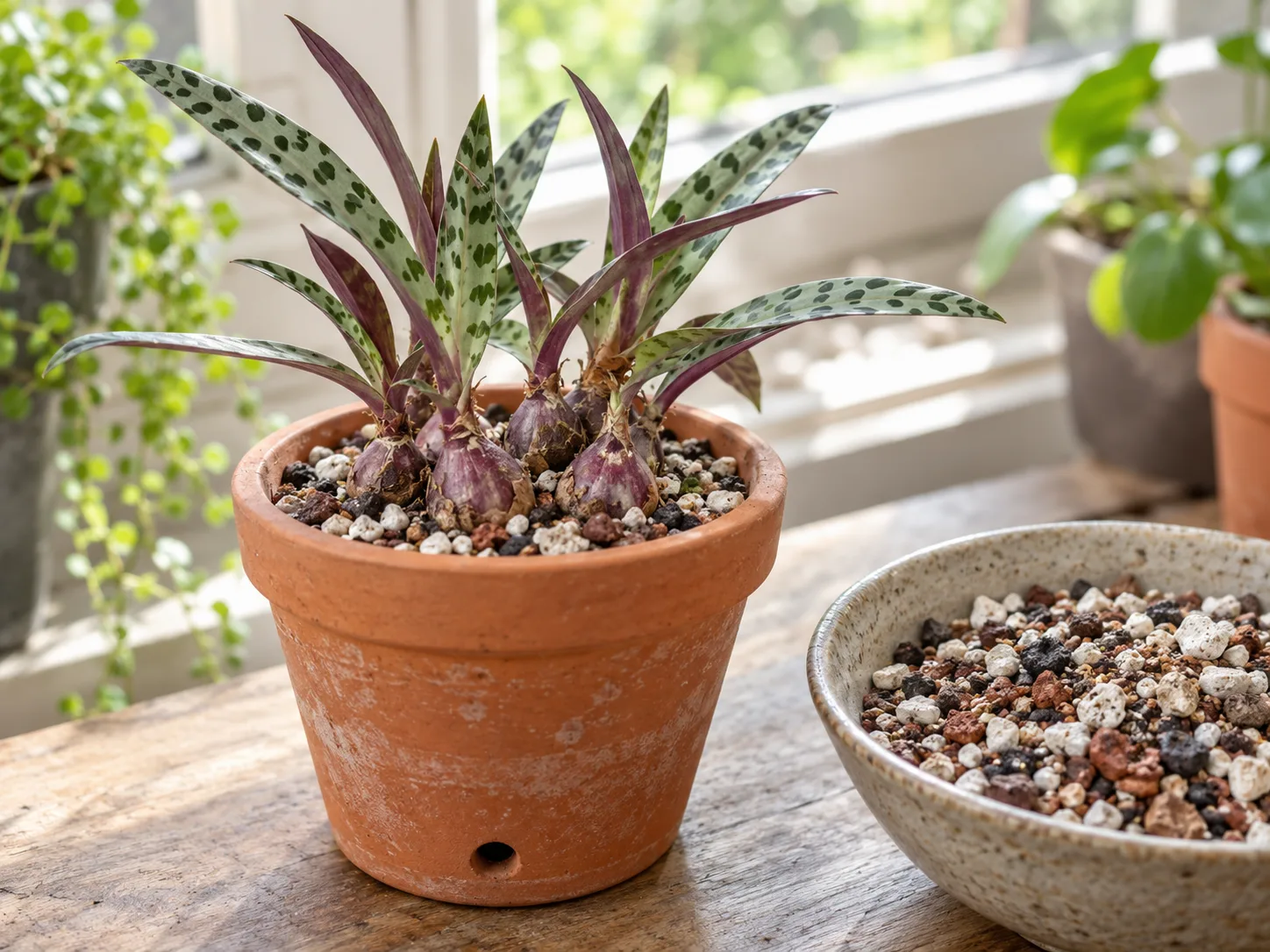
Choose a container only a little wider than the root-and-bulb clump. An oversized pot holds more unused wet mix, so it can take longer to dry even though the plant itself is small. Terracotta is helpful if you tend to water heavily or your room is humid because the porous sides lose moisture; glazed ceramic or plastic is fine if you compensate with an airy mix and careful watering.
When planting or refreshing the mix, set the bulbs so roughly the top half to two-thirds remains visible. Do not bury the whole bulb to keep it upright: nestle the lower portion into mix and press gently around the roots. The exposed bulb is part of the plant’s normal growth habit, not an invitation to add soil over it later.
Hold Warmth and Avoid the Cold
Silver squill is comfortable in ordinary indoor temperatures and does not need a heated greenhouse. Keep the pot away from cold drafts, a frequently opened exterior door, or a frosty windowpane, and avoid placing it beside a heater that makes the mix dry unevenly. A stable room is easier on the plant than a location with sharp temperature swings.
Outdoors, use the plant only where winters remain mild. NC State Extension places it in USDA hardiness zones 10a through 11b and notes that it is intolerant of temperatures below about 30°F; that is a lower limit, not a temperature to test in a wet pot. In colder regions, grow it in a container and bring it inside before frost or when nights begin approaching the low 40s. That earlier move is a cautious buffer, especially for a plant that has spent summer in a sheltered spot.
Give an outdoor plant time to adjust when moving it between inside and outside. Start it in bright shade for several days, then shift toward brighter filtered light; reverse the process before bringing it indoors. This acclimation limits sudden sun stress and makes inspection for hitchhiking insects easier.
Feed Lightly During Active Growth
Feed silver squill only while it is producing new leaves or otherwise growing, typically in spring and summer. A balanced liquid houseplant fertilizer diluted according to its label is enough; if you use a full-strength product, apply it to already damp mix so it is less likely to scorch roots. Garden Know How describes monthly liquid feeding during the growing season, while Savvy Gardening likewise limits fertilizer to active spring and summer growth.
Do not feed a plant that is resting, recently divided, or struggling with soggy soil. Fertilizer cannot correct low light, damaged roots, or a poor drainage setup, and salts can build up if you keep adding nutrients to a small pot without flushing it. If the leaves are healthy and the bulbs firm, sparse feeding is safer than trying to force fast growth.
Use Seasonal Rest to Support Spring Flowers
Many growers reduce water in fall and winter so silver squill gets a drier rest before its next active season. The Pacific Bulb Society notes that a wet winter rest can interfere with leaf renewal and flowering in some forms, and Savvy Gardening suggests a slightly cooler rest around 50–60°F when encouraging blooms. NC State Extension recommends less frequent winter watering without requiring a particular cool temperature, so treat a cooler, drier rest as a bloom-supporting strategy rather than a rigid requirement for every home.
When the plant slows, move it to a bright but cooler indoor spot if one is available, stop fertilizing, and let the mix dry further between waterings. Do not place a pot in darkness or leave it bone-dry for months simply to force dormancy; the bulbs still need to stay firm. When new growth appears or days lengthen and the plant resumes activity, return it to warmer bright light and gradually resume normal watering.
If a plant has never bloomed, first check its light and the condition of its bulbs. A plant kept dim or constantly moist may put energy into leaves or lose older foliage without forming flower stalks. A seasonal rest may help once basic light and drainage are right, but even excellent care does not guarantee flowers every year.
Repot When the Clump Is Tight, Not Just Crowded
Silver squill tolerates a snug pot and does not need annual repotting. Consider a fresh container when roots fill the pot, the mix has broken down into a dense layer, drainage has slowed, or the bulb clump no longer sits securely. Savvy Gardening suggests repotting roughly every three to four years, but the plant’s condition is a better guide than the calendar.
The bulbs naturally rise above the soil, so do not repot just because you can see them. If the clump is healthy and the water drains normally, leave it alone; disturbance can set back a plant that has no real need for more space. When you do repot, move up only one pot size, refresh the airy mix, and reset the bulbs with their upper portions exposed.
Repotting is also the easiest time to divide offsets. If you want a fuller display, keep several bulbs together in the same pot; if the center is crowded or you want new plants, separate some of the cluster. You do not need to divide every bulb to make the parent plant healthier.
Propagate Silver Squill by Separating Offsets
Silver squill is usually propagated from offsets because seed germination can be inconsistent and seedlings grow slowly. Divide after flowering or when the cluster is crowded and the plant is entering active growth; late summer or early fall is a practical window for many indoor growers. The bulb society and extension sources both identify division as the straightforward method.
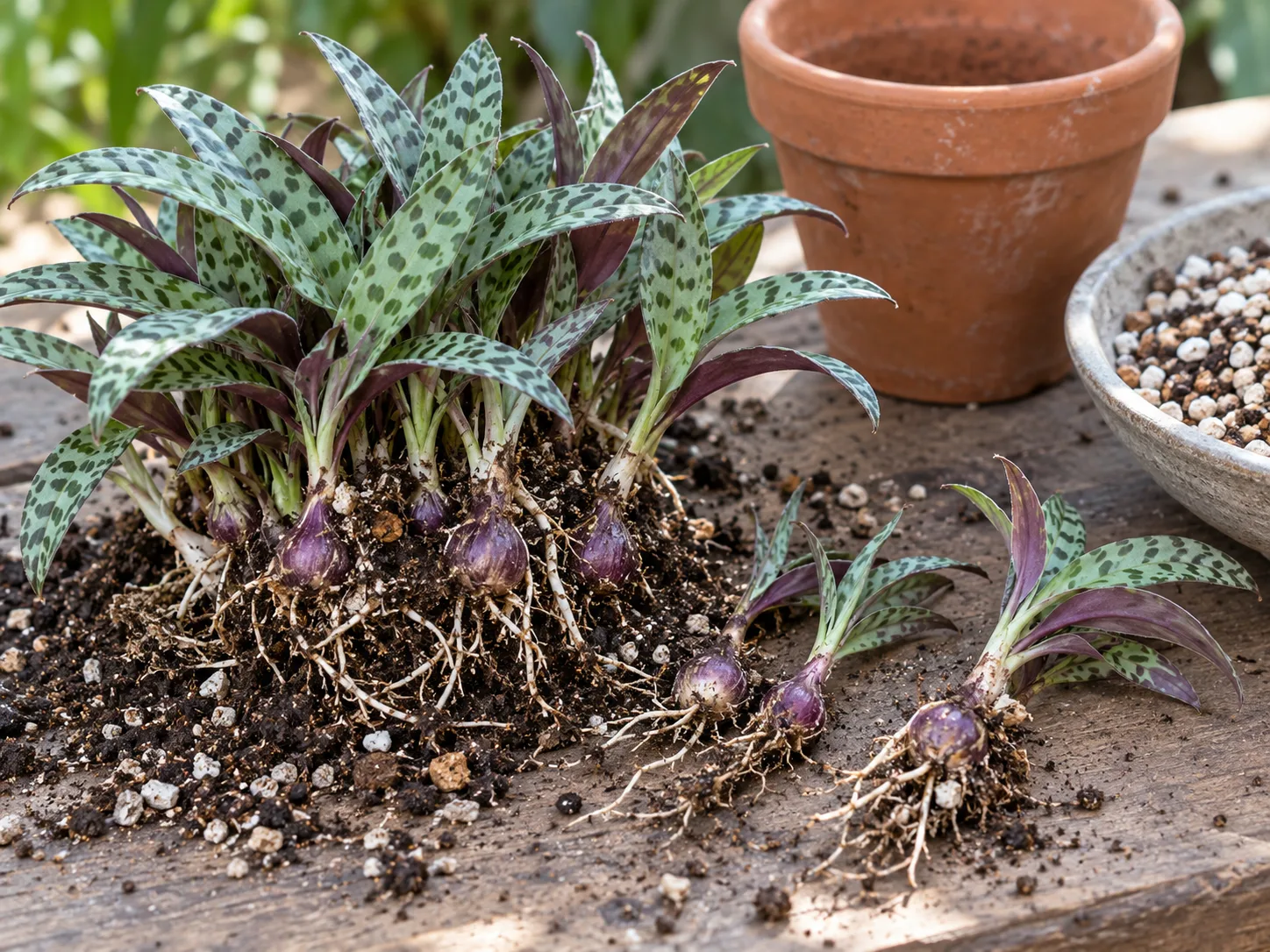
Use clean hands or gloves and prepare small pots with fresh, well-draining mix before lifting the plant. Ease the clump from its container, brush away enough mix to see where the offsets connect, then gently separate naturally distinct bulbs; avoid tearing roots just to make more divisions. Keep a few bulbs together if an offset has no roots or is very small, since a larger division has more stored energy to resume growth.
Plant each division with its lower portion in the mix and the upper half to two-thirds exposed. Water once to settle the medium around roots, let the pot drain completely, and then return to the same moisture check used for an established plant. A division may pause briefly while it adjusts; keep it warm and bright, but do not compensate for slow growth by keeping the mix wet.
Grow Silver Squill Indoors or Outdoors
Indoors is the dependable choice in most climates: a bright window, a drained pot, and room temperatures let you control both water and winter exposure. If the room receives weak light, move the plant closer to a window or use a grow light rather than putting it outdoors in direct summer sun. Indoor culture also makes it easier to keep the bulbs out of frost and to inspect a spreading clump.
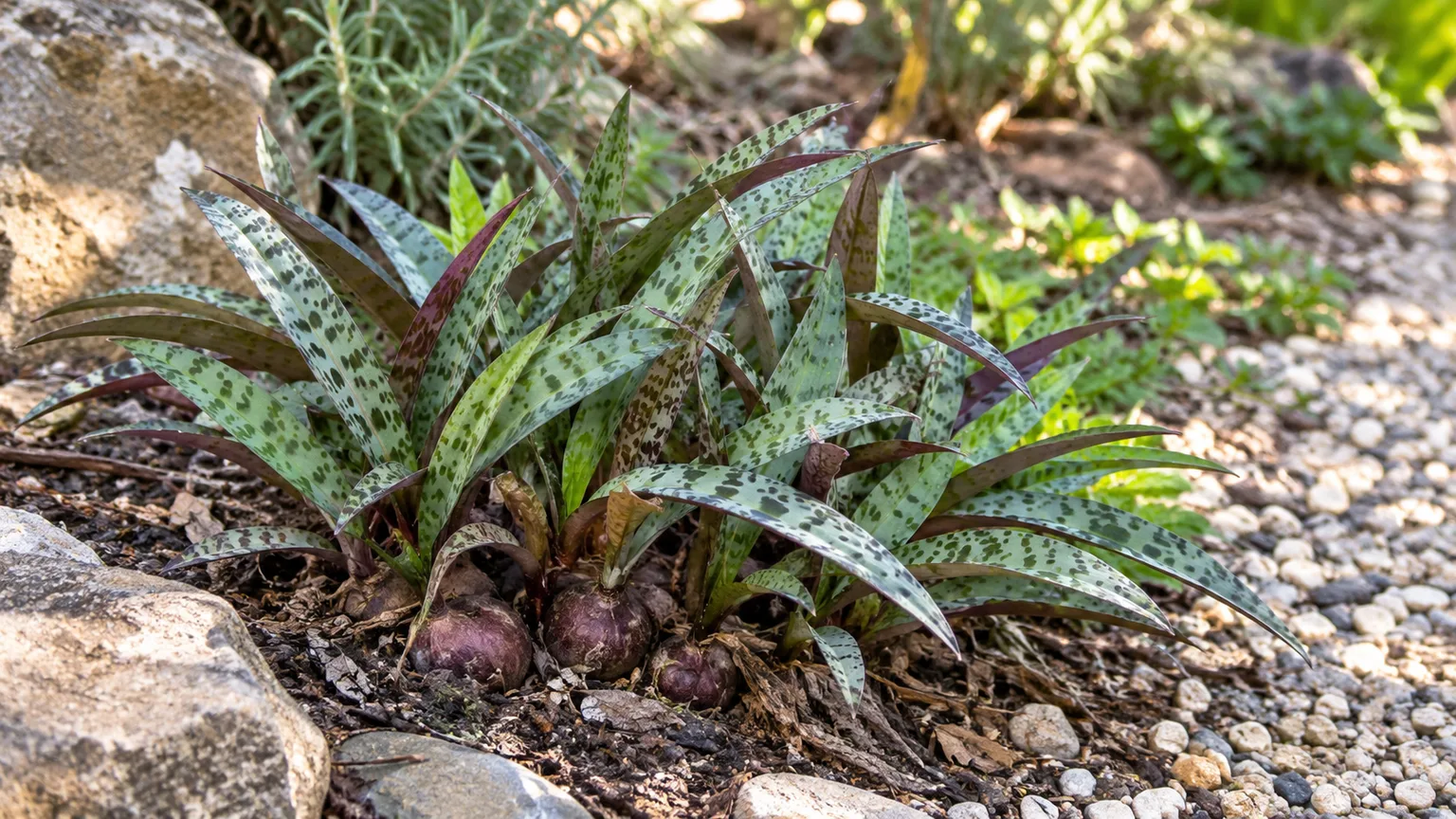
In frost-free parts of USDA zones 10 and 11, silver squill can grow in the ground as a low border or groundcover, provided the site drains well and receives bright shade or filtered light. NC State Extension includes it in zones 10a–11b, and the species is native to the Cape Provinces of South Africa. The outdoor plant still needs the same protection from harsh afternoon sun and waterlogged soil that it needs in a pot.
If your climate has cold winters or long spells of freezing rain, keep it in a movable container. Place the pot outside only after frost danger has passed, then bring it inside before the first cold snap; do not rely on a warm wall or thick mulch to protect an exposed tropical-zone bulb from a hard freeze. In a garden with mild winters, choose a raised or sloped site if heavy rain otherwise pools around the bulbs.
Prune Without Stripping Healthy Leaves
Silver squill needs little shaping. Remove a leaf only when it is fully yellow, brown, or damaged, and cut a spent flower stalk near its base after the flowers fade. A leaf that is partly green still contributes energy, so letting it finish naturally is better than pulling it off because it looks untidy.
Use clean, sharp snips rather than tugging at a leaf or flower stalk, which can disturb the small bulbs beneath it. If you see pest residue or a damaged leaf, wipe the foliage gently and inspect the undersides before cutting. NC State Extension notes that sap may irritate skin, so gloves are a sensible choice when dividing, pruning, or cleaning the plant.
Troubleshoot the Problems That Matter
One yellow leaf does not automatically mean the plant is dying. Diagnose the pattern: is the problem limited to an older outer leaf, is the whole clump soft, are several leaves changing after a move, or is the pot staying wet? That distinction points you toward the right first action instead of adding water or fertilizer by reflex.
Soft Bulbs and Yellowing Leaves
If several leaves yellow while the mix stays damp and the bulbs feel soft, suspect excess moisture or rot before assuming the plant is thirsty. Stop watering, remove the plant from its pot, and inspect the roots and bulbs; discard mushy tissue with clean tools, then replant firm sections in fresh, airy mix after allowing wet roots to dry briefly. A pot without a drainage hole or a dense mix should be corrected at the same time, or the problem will return.
If the bulbs are firm and only one of the oldest outer leaves is fading, the plant may simply be replacing old foliage. Remove only the leaf once it has fully yellowed and check that the rest of the clump remains firm and upright. Do not start a rescue routine based on one leaf when the root zone is healthy.
Brown Edges, Curling, or Faded Spots
Dry brown margins and curled leaves can follow a stretch of strong direct sun, a hot position, or a root ball that became excessively dry. Check the side of the plant facing the window and the moisture deeper in the pot, then move it to bright filtered light and water fully if the mix is dry. If new leaves stay healthy after the move, the old marks will not disappear but the diagnosis was likely right.
When the leaves become long, floppy, or lose their strong mottling without scorch marks, low light is a more likely culprit. Move the pot closer to a bright window gradually or add a grow light; do not solve a lighting problem by increasing water or fertilizer. Silver squill naturally has some variation among forms, so judge a change against the plant’s own recent leaves rather than expecting every cultivar to match a photograph.
Leggy Growth or Few Flowers
Leggy growth usually means the plant is stretching toward stronger light. Give it a brighter filtered position, rotate it every few weeks, and avoid abruptly placing a shaded plant in hot sun. Older leaves will not shorten, but compact new growth is a useful sign that the adjustment helped.
For sparse flowering, review the previous growing cycle: was the plant bright enough, did the medium drain freely, and did it get a drier winter pause? Correct the basics first, then try the cooler, drier rest if conditions allow. Some forms are grown chiefly for foliage and a plant that is otherwise healthy can still skip a season of flowers.
Keep Silver Squill Away from Curious Pets and Children
NC State Extension describes silver squill as poisonous if ingested and lists nausea, vomiting, and loss of appetite among human symptoms; it also reports risks to cats and dogs. Its plant profile notes that sap can irritate skin, so keep the plant where children and pets cannot chew the leaves or bulbs, and wear gloves for division or pruning. The fact that it is sometimes called leopard lily does not make it a true lily or change the need for precautions.
If a child or animal chews any part of the plant, remove remaining pieces from the mouth and contact a poison-control service, veterinarian, or local medical professional for case-specific advice. Do not induce vomiting or wait for symptoms before seeking guidance. Store detached offsets and fallen leaves where they cannot be reached, and wash tools and hands after handling the plant.
Conclusion
Silver squill rewards a light touch: bright filtered light, a small draining pot, and watering that follows active growth rather than a weekly schedule. Keep the upper part of each bulb visible, reduce moisture as the plant rests, and protect it from cold and direct afternoon sun.
When the clump needs room, divide its offsets gently and replant them in airy mix instead of burying the bulbs. With those few habits—and sensible precautions around pets and children—you can keep this compact, spotted plant healthy indoors or in a mild, sheltered garden.