Korean Fir Care: The Summer-Heat Detail to Know
Grow Korean fir in a site that fits its mature size and cool-climate needs. Get practical advice on soil, establishment, containers, and common problems.
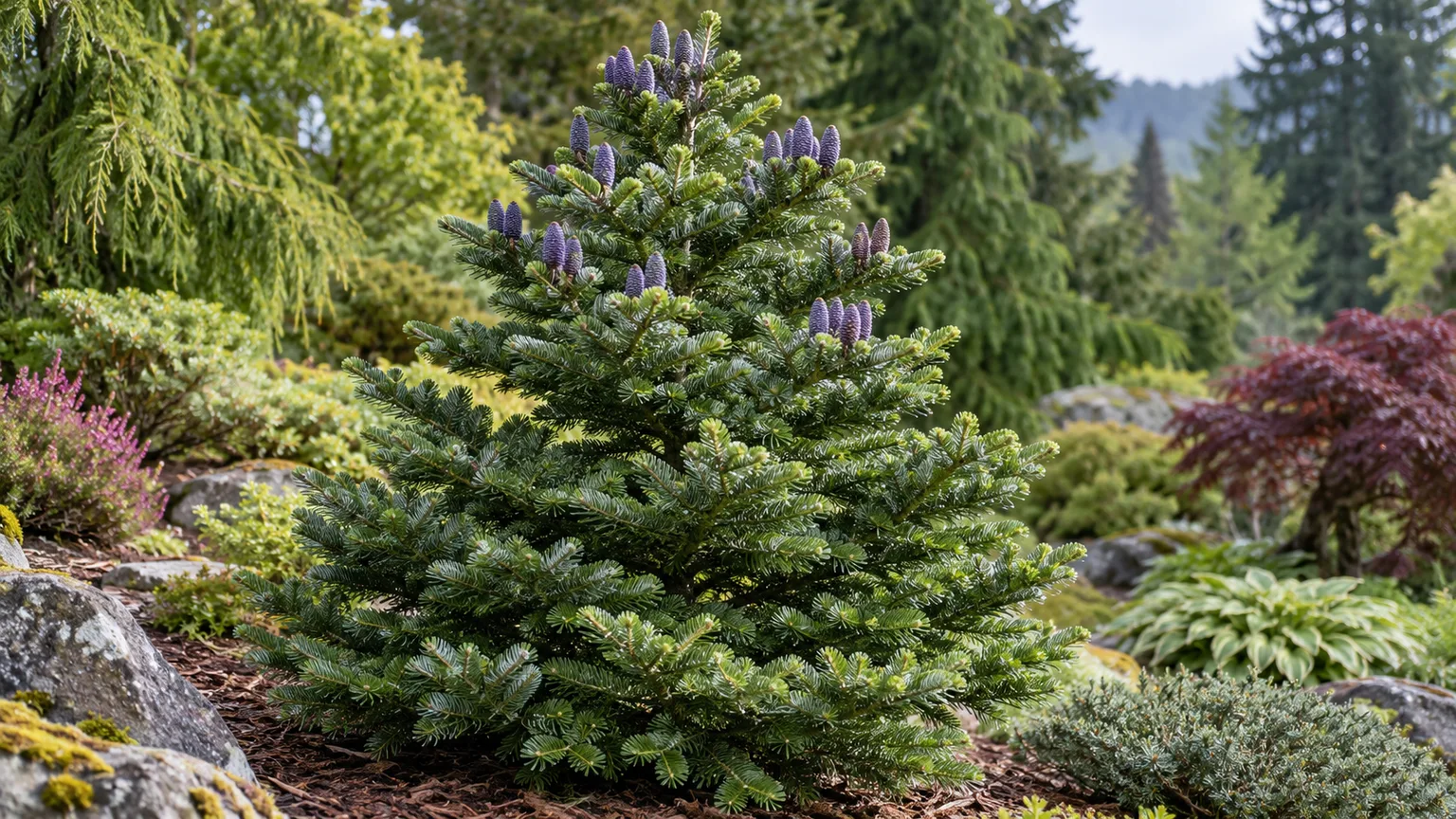
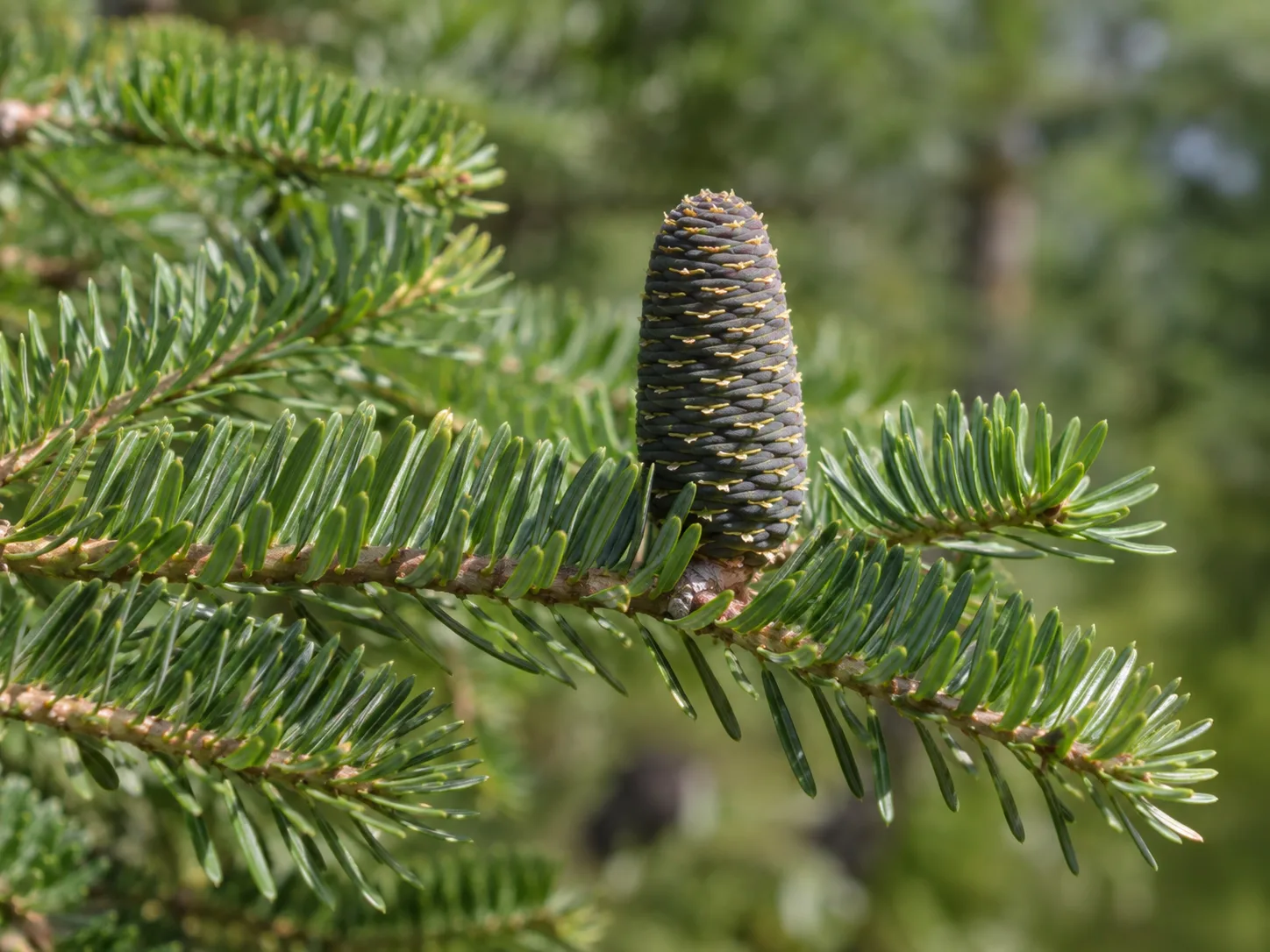
Korean fir (Abies koreana) is a slow-growing, evergreen true fir with a naturally compact outline, dark needles that show pale undersides, and upright blue-purple cones. It can be an excellent specimen tree in a cool-summer garden, but “compact” does not mean small: the straight species commonly reaches 15 to 30 feet tall and 6 to 12 feet wide, according to NC State Extension and Oregon State University. Its eventual size, summer climate, and soil drainage matter more than how tidy a young nursery plant looks.
For reliable growth, plant Korean fir in a site with room for its mature crown, moist but well-drained soil, and full sun or light shade. Water consistently while it establishes, then irrigate during dry spells after checking soil moisture. The tree needs little routine pruning or fertilizer. If your summers are hot and humid, or the planting site stays wet after rain, choose a different conifer or a carefully selected cultivar rather than trying to correct a poor fit with extra water and feed.
Is Korean Fir Right for Your Climate and Space?
Korean fir is native to South Korea, including cool mountain habitats. The species’ beauty comes with a preference for a temperate growing season: it tolerates winter cold, yet prolonged heat, hot nights, dry soil, and humid lowland conditions can make it struggle. A USDA hardiness-zone number describes average winter minimums; it does not measure the heat load or humidity a tree faces in summer.
Before buying, answer two separate questions: can the tree survive your winter, and can it grow through your summer? A garden in a maritime or high-elevation zone may have mild temperatures and cool nights, while a place with the same zone number farther inland may have weeks of hot weather. Korean fir is a better bet in the former. NC State Extension describes it as best in cooler climates while tolerating some heat and humidity; the University of Minnesota UFOR nursery notes it is not recommended for hot, humid summers. Those statements are compatible: tolerance is not the same as ideal performance.
Start with mature dimensions, not nursery size
The species is often listed for USDA Zones 5 through 7, with some references giving a broader range. Its mature size is similarly variable: NC State and Oregon State describe a typical garden height around 15 to 30 feet, while other botanical references report trees reaching roughly 30 feet or more. These estimates reflect differences in age, climate, site, and what a source counts as a mature landscape specimen. Plan for the upper end unless you are buying a cultivar with a known, stable size and habit.
A Korean fir planted below a window or close to a path can outgrow the space even if it takes many years. Measure the intended location against both height and spread, including clearance from buildings, overhead wires, neighboring crowns, and sight lines. If you want a screen, space plants according to their expected mature width; crowding them together for faster coverage can reduce airflow and force future pruning that a fir does not handle gracefully.
Read the climate label beyond hardiness zone
A “Zone 5” tag is not a guarantee of success, and a “Zone 7” garden is not automatically too warm. Look at local summer highs and nighttime temperatures, humidity, reflected heat from paving or walls, and whether your garden has a cool, sheltered microclimate. Korean fir’s mountain origin is a useful clue: a north- or east-facing slope, high-elevation site, or coastal garden with cool nights is generally more promising than an exposed, hot courtyard.
Use a local nursery or extension service to compare Korean fir with conifers proven in your region. Rainyside’s Pacific Northwest growing guide, for example, describes Korean fir as doing well in milder maritime Zones 7 and 8, while warning that those same zone numbers do not imply the same result in warmer southern regions. That is a practical reminder to match the tree to regional heat patterns instead of relying on a hardiness map alone.
Choose a Korean Fir Cultivar That Fits
Cultivar choice changes the result more than most routine care adjustments. Some Korean fir selections stay low and spreading; others form small upright trees; the straight species can become a substantial landscape tree. Check the cultivar name on the nursery label and ask for the expected size at 10 years and at maturity. A plant sold simply as “Korean fir” should be treated as the species, not assumed to be a dwarf.
| Selection | What to expect | Where it can fit |
|---|---|---|
| Abies koreana (species) | Often 15–30 feet tall and 6–12 feet wide; slow-growing, pyramidal, and coning young | A specimen or screen where there is room for a small-to-medium tree |
| ‘Horstmann’s Silberlocke’ | Needles curl upward to show silvery undersides; Utah State reports roughly 12–15 feet tall and 8–10 feet wide | A distinctive small tree, not a miniature plant |
| ‘Kohout’s Icebreaker’ | A very slow-growing dwarf, often about 1–2 feet tall and wide after years of growth | A rock garden, front edge, or container where the label’s size is acceptable |
| ‘Green Carpet’ | A low, spreading mound, reported around 2 feet tall | Ground-level accent with room to spread sideways |
| ‘Aurea’ | Golden new growth that matures toward yellow-green; habit and ultimate size vary | A focal point in a cool site where the foliage color will not be overwhelmed by heat stress |
These descriptions are starting points, not promises that every specimen will match a catalog photograph. Oregon State lists ‘Green Carpet’ as a roughly two-foot spreading dwarf and describes ‘Kohout’s Icebreaker’ as a slow-growing, globe-shaped plant that can later become a small cone. Fine Gardening reports that Icebreaker typically remains about one to two feet high and wide, while Utah State University gives ‘Horstmann’s Silberlocke’ dimensions that make clear it is much larger. The cultivars are not interchangeable simply because they share a species name.
For named cultivars, buy a correctly labeled nursery plant rather than starting with seed. Seedlings vary genetically and will not reliably reproduce the parent’s exact foliage color, shape, or dwarf habit. Some selections are propagated by grafting or other clonal methods; ask the grower how the plant was produced if the graft union or form matters to your design. A tiny plant without a cultivar label can eventually become a full-size fir.
Choose a Site That Stays Cool and Drains Well
Korean fir wants even moisture, not a wet root zone. Choose an open bed where rainwater does not collect, irrigation does not run continually, and roots have room to expand. A sunny, cool garden with naturally draining soil is ideal; in a warmer climate, an area with morning sun and afternoon shade may reduce heat stress. Avoid hot foundation strips, reflected heat beside pavement, and windy corners that dry needles while the soil is frozen or parched.
The Royal Horticultural Society recommends full sun, moist but well-drained soil, and shelter from cold winds. NC State lists full sun to partial shade and likewise warns against wet sites and urban conditions. Use those recommendations together: provide enough light to keep the canopy dense, but reduce afternoon exposure where summer heat is a concern. “Full sun” should not be interpreted as a requirement to bake the tree in an exposed, hot spot.
Balance sunlight with summer heat and wind
In a cool-summer location, six or more hours of direct sunlight is usually a good target. Partial shade can work, particularly where the afternoon sun is intense. Too much shade may lead to a looser canopy and slower growth, but that is usually less damaging than putting a moisture-sensitive, cool-climate tree in a hot, dry pocket. Watch how sun shifts through the day before planting; an east-facing or lightly shaded site can receive useful morning light without the strongest late-day heat.
Shelter the tree from strong drying winds, especially during establishment and winter. A nearby building or evergreen windbreak can help if it does not trap heat or cast dense shade. Do not crowd the tree against a wall to provide shelter: it still needs mature crown room and good air movement. If your only planting spot is exposed to wind and heat, choose a more locally adapted conifer.
Keep soil moist without keeping it saturated
Korean fir prefers deep, moisture-retentive but freely draining soil. A loam with organic matter often balances those needs, though the tree can grow in several soil textures when drainage is sound. It does poorly where heavy soil remains waterlogged or where shallow bedrock prevents roots from accessing moisture. A site can be damp after rain and still drain adequately; the warning sign is water that stands for hours or soil that stays sticky and airless well after the surrounding ground has dried.
Soil pH recommendations vary slightly: RHS favors neutral to slightly acidic conditions, while NC State’s listing allows acidic through neutral soil. The University of Connecticut plant database describes the species as disliking high pH. The useful rule is not to chase an exact number with amendments. Test soil if growth is poor or new growth shows chlorosis, then correct a confirmed issue gradually; adding sulfur or acid fertilizer without a test can damage roots and nearby plants.
Plant Korean Fir with the Root Flare at Grade
Planting depth and drainage are difficult to fix later, so inspect the root ball before digging. Look for the point where the trunk widens into the structural roots. If potting mix or nursery soil covers that flare, brush excess material away until the first roots are visible. Penn State Extension calls planting too deeply one of the most common tree-planting errors because buried roots receive less oxygen and the constantly damp trunk base becomes more vulnerable to decay.
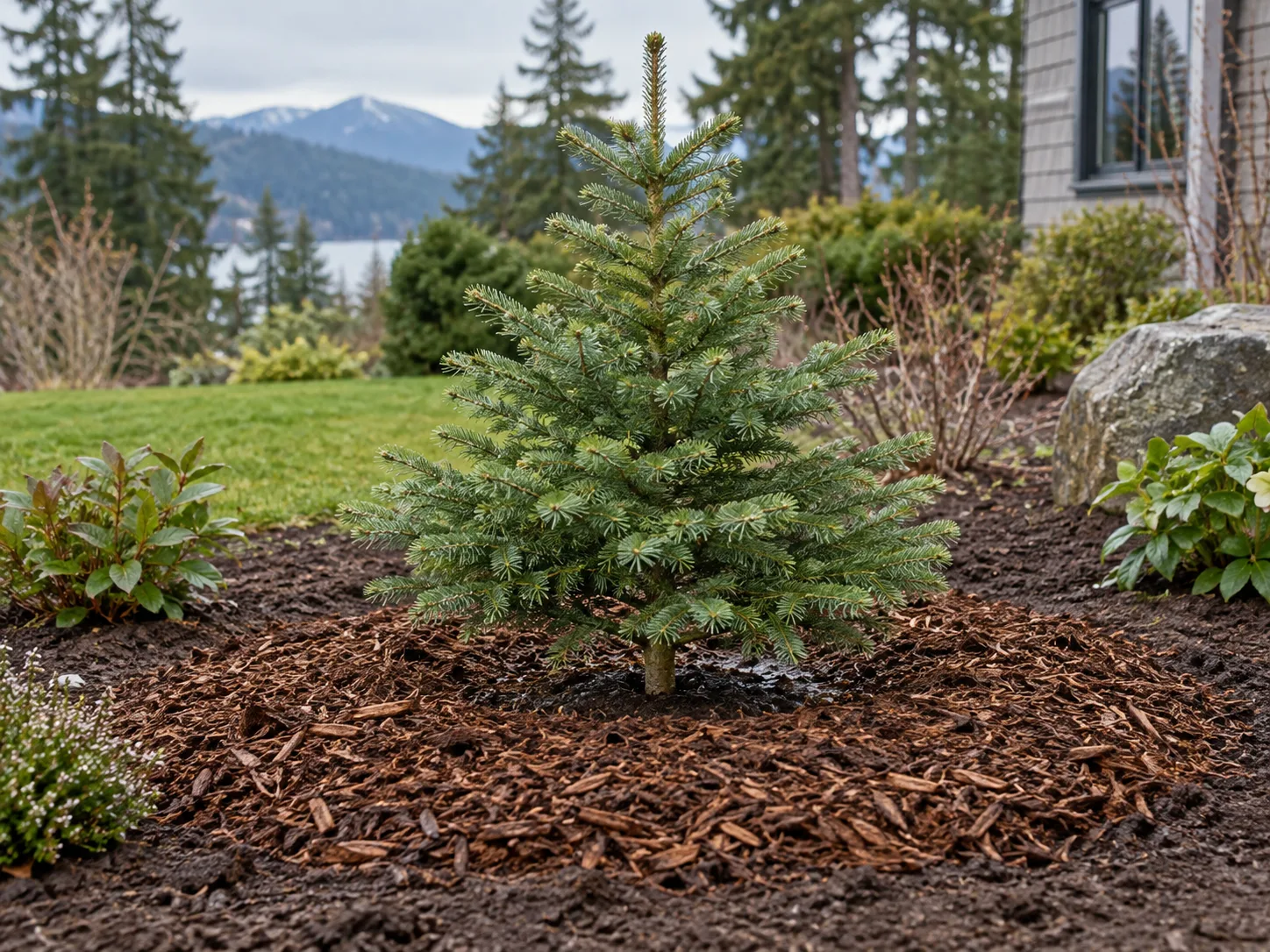
Dig a hole no deeper than the root ball and at least twice as wide, loosening the sides if they are smooth or compacted. Set the tree so its root flare is at or slightly above the surrounding grade, then backfill with the soil removed from the hole. Penn State Extension’s tree-planting guidance explains why keeping the flare visible and giving roots a broad hole helps establishment. Avoid putting compost, fertilizer, or a different potting mix in a small pocket around the roots; the abrupt soil contrast can hold excess water or discourage roots from moving into the surrounding ground. Water slowly as you backfill to settle soil around the root mass without leaving air gaps.
Spread a two- to three-inch layer of organic mulch across the root zone, widening it as the tree grows, but keep the trunk and root flare uncovered. The University of Minnesota recommends a broad mulch ring for newly planted trees and cautions against deep layers that keep poorly drained soil too wet. Mulch moderates soil temperature and slows evaporation; it should not become a mound against the bark. Turf and weeds also compete with a new tree for water, so keep a generous vegetation-free circle around the base.
Water to Establish Deep Roots
A newly planted Korean fir needs regular moisture until its roots have spread beyond the nursery root ball. Water the whole root zone slowly enough that moisture reaches the lower roots, not just the mulch. During the first weeks, check the soil in the root ball and just outside it. The nursery mix can dry faster than the surrounding ground, so a damp-looking lawn does not prove that the tree’s roots are hydrated.
The University of Minnesota’s tree-establishment guidance gives frequent watering intervals early after planting and then tapers to weekly watering as roots establish. Use this as a framework, not a calendar that overrides your weather: sandy soil, high temperatures, wind, and small root balls dry faster, while cool rain and clay soil slow drying. Push a finger or a narrow trowel several inches into the soil near the root ball. If it is still moist, wait; if it is drying, water deeply and check again after the water drains.
Once established, Korean fir does not need constant irrigation in a climate with regular rain. Water during extended dry periods, especially when temperatures are high or the tree is producing new growth. If the upper soil dries quickly but deeper soil is wet, do not add more water. If the root ball and surrounding soil are both dry, a slow soak across the root zone is more useful than frequent surface sprinkling. The goal is to prevent a long drought without maintaining soggy soil.
Continue checking moisture in autumn before the ground freezes. Evergreens keep losing water through their needles during winter thaws, but frozen soil cannot replace what the foliage loses. Wisconsin Horticulture explains that dry fall soil, winter sun, drying winds, recent transplanting, and frozen ground can combine to cause winter burn. If autumn has been dry, water the root zone on a mild day while the soil can still absorb it. Do not water frozen ground or leave a hose running where the soil is already saturated.
Fertilize Only When Growth Calls for It
Korean fir is not a plant to push with repeated feeding. If the tree produces healthy seasonal growth and holds normal color, a fertilizer application may not be useful. Too much nitrogen can create soft, lush growth that is more vulnerable to weather stress, while salts in concentrated products can injure roots. Do not feed a newly planted or drought-stressed tree to compensate for poor establishment; fix water, soil, planting depth, and climate fit first.
If growth is unusually weak or foliage is pale, begin with a soil test and an inspection for root problems, waterlogging, and pests. Yellow needles are not proof that soil is alkaline or that the tree needs an acidifying product. If a test identifies a nutrient issue, use a fertilizer labeled for landscape trees and follow its rate and timing instructions. Apply it over the root zone, not against the trunk, and avoid fertilizing late in the season when fresh growth may not harden before winter.
Keep Pruning Light and Specific
A healthy Korean fir usually forms its own symmetrical, conical outline. Routine shearing is unnecessary and can make a naturally layered tree look clipped. More importantly, many conifers do not produce replacement shoots from old, bare wood. If you cut back a branch beyond its green needles, the resulting gap may remain for years rather than filling in.
Remove dead, broken, or clearly diseased branches with clean tools, cutting back to a live lateral or the branch collar instead of leaving a long stub. If the central leader is damaged on a young tree, select one strong upright shoot to guide as a replacement and remove competing leaders gradually; do not top the tree. For a mature tree with a large dead limb, extensive dieback, or a structural defect, consult a certified arborist before making large cuts. Pruning cannot make a full-size species stay dwarf.
Can Korean Fir Grow in a Container or Come Indoors for Christmas?
A dwarf Korean fir can grow in a container for a time, but a pot is not a permanent shortcut around the tree’s eventual size. Select a cultivar with a naturally small growth habit, a deep container with drainage holes, and a coarse, well-drained growing medium. The smaller the root volume, the faster it dries in warm or windy weather and the more quickly it freezes in winter. Check moisture more often than you would for a tree planted in the ground, and do not let the pot sit in a saucer of water.
Container roots are exposed to colder temperatures than roots in the ground. In regions with severe winters, place the pot in a sheltered location and insulate the sides, or sink the container into the soil for the dormant season if the site allows. Keep the plant outdoors in a cool, bright location; Korean fir is not a year-round indoor houseplant. If the tree repeatedly dries out, becomes root-bound, or grows beyond the space you can move, transplant it into an appropriate landscape site rather than continuing to up-pot it indefinitely.
Protect container roots and limit indoor display
A living Korean fir used as a Christmas tree should spend most of the year outdoors and only a brief period indoors. Guidance varies by source: Penn State Extension recommends about four to five days indoors, while the University of New Hampshire allows roughly seven to ten days. Choose the shorter window if the tree is fully dormant or will return to freezing weather. Keep it in the coolest room available, away from heaters, fireplaces, and sunny windows, and keep the root ball moist without leaving it in standing water.
A balled-and-burlapped tree benefits from a gradual temperature transition through a cool garage or sheltered porch. Before the holiday season, choose its permanent planting spot and dig the hole while the soil is workable; frozen soil can make the return trip difficult. After display, move it back through a cool transition space and protect the root ball from drying or freezing. If your home is warm and the tree cannot be moved or planted promptly, a cut Christmas tree is usually a more practical choice than risking a living specimen.
Troubleshoot Needle Changes Before Treating
Korean fir needles can turn yellow, brown, or fall for different reasons, and treating the color alone often wastes time. Look at where the change begins, whether it affects old interior needles or current outer growth, how quickly it is spreading, and whether the soil is dry or saturated. Also inspect the lower branches and the needle undersides for insects, webbing, sticky residue, or small pustules. Take clear photos and note when symptoms started before asking a nursery, extension office, or arborist for a diagnosis.
Separate yellowing, browning, and normal aging
If a few older needles near the interior of the crown fade while the tips and outer branches remain green, the tree may be shedding older foliage. That pattern is different from the browning of new tips, a whole branch, or large sections on one side of the tree. Widespread yellowing can follow drought, root injury, poor drainage, or an unsuitable site; it does not automatically mean the soil needs acidification. Compare several branches and check soil moisture before changing fertilizer or pH.
Brown foliage that appears after winter on the windward or sun-exposed side may be winter desiccation. Evergreens lose moisture from needles when winter sun and wind stimulate water loss, while frozen roots cannot replace it. Newly planted trees, exposed sites, dry autumns, and warm south- or west-facing walls increase the risk. Water adequately before the ground freezes, use mulch to moderate soil moisture, and improve shelter where practical. Do not prune every browned tip immediately; wait until spring growth shows which buds and branches are still alive.
Needle discoloration can also follow root rot, needle rust, insect feeding, or twig blight. Check whether a branch has dead tips, whether the symptoms begin at the base or crown, and whether the soil stays wet after rain. If the tree is losing entire branches or decline is accelerating, request an on-site diagnosis. A photo can help identify the pattern, but it cannot reveal whether the roots are rotting underground or which pathogen is present.
Check for pests, root rot, and twig blight
NC State Extension lists root rot, needle rust, and twig blight among Korean fir’s disease problems; RHS also lists aphids and adelgids as possible pests. Inspect before treating. Aphids and adelgids may be visible as clusters of small insects or pale, waxy material on shoots; feeding can cause yellowing, needle loss, or weakened growth. A forceful rinse may remove light infestations on a small tree, but spraying the top of a mature tree is not a safe or reliable substitute for diagnosis.
Root rot is more likely when roots sit in heavy, saturated soil and the canopy declines despite regular watering. Do not respond by watering more because needles are brown: first check the soil several inches down and whether water drains from the planting area. Needle rust or twig blight may require a lab or trained professional to distinguish from drought injury and other diseases. Avoid applying fungicides or insecticides as a guess. If a product is needed, follow its label and local rules, and ask an arborist or extension service to confirm that the target pest or disease is present.
Propagate from Seed or Buy a Named Cultivar
Korean fir can be propagated from seed, but seedlings are a slow route to a landscape tree and will not preserve a named cultivar’s exact features. The Royal Horticultural Society lists propagation by seed and winter grafting. Seeds need a cool stratification period before sowing; Rainyside’s guide recommends refrigerating fresh seed or sowing it outdoors to receive winter chilling. Germination and early growth take patience, and seedlings need protection from drying and harsh weather while their root systems develop.
If you want a particular dwarf shape, golden foliage, or curled silver needles, buy a correctly named plant from a reputable nursery. Seed collected from a tree with a special cultivar label may produce a variety of forms rather than a duplicate. Commercial growers commonly use grafting to preserve cultivar characteristics, but grafting takes skill and is rarely the simplest home method. For most gardeners, the most reliable propagation decision is to start with the size and form they actually want.
Conclusion
Korean fir is a rewarding specimen when the garden matches its needs: cool or moderate summers, reliable moisture, good drainage, shelter from drying winds, and enough room for the chosen cultivar. The straight species is a real tree, commonly 15 to 30 feet tall, while dwarf selections can stay much smaller. Confirm the cultivar and mature dimensions before planting rather than relying on the size of the plant in its pot.
Set the root flare at grade, water the root ball deeply while roots establish, mulch broadly without touching the trunk, and avoid routine shearing or fertilizer. When needles change color, inspect the pattern, roots, soil moisture, and branches before treating. Those checks will tell you whether to adjust care, improve the site, or call for a professional diagnosis—and help you decide early if another conifer is a better match for your climate.



