How to Start a $30 Balcony Herb Garden
Start a balcony herb garden for about $30 with reused containers, the right herbs, simple watering cues, and a setup beginners can maintain.
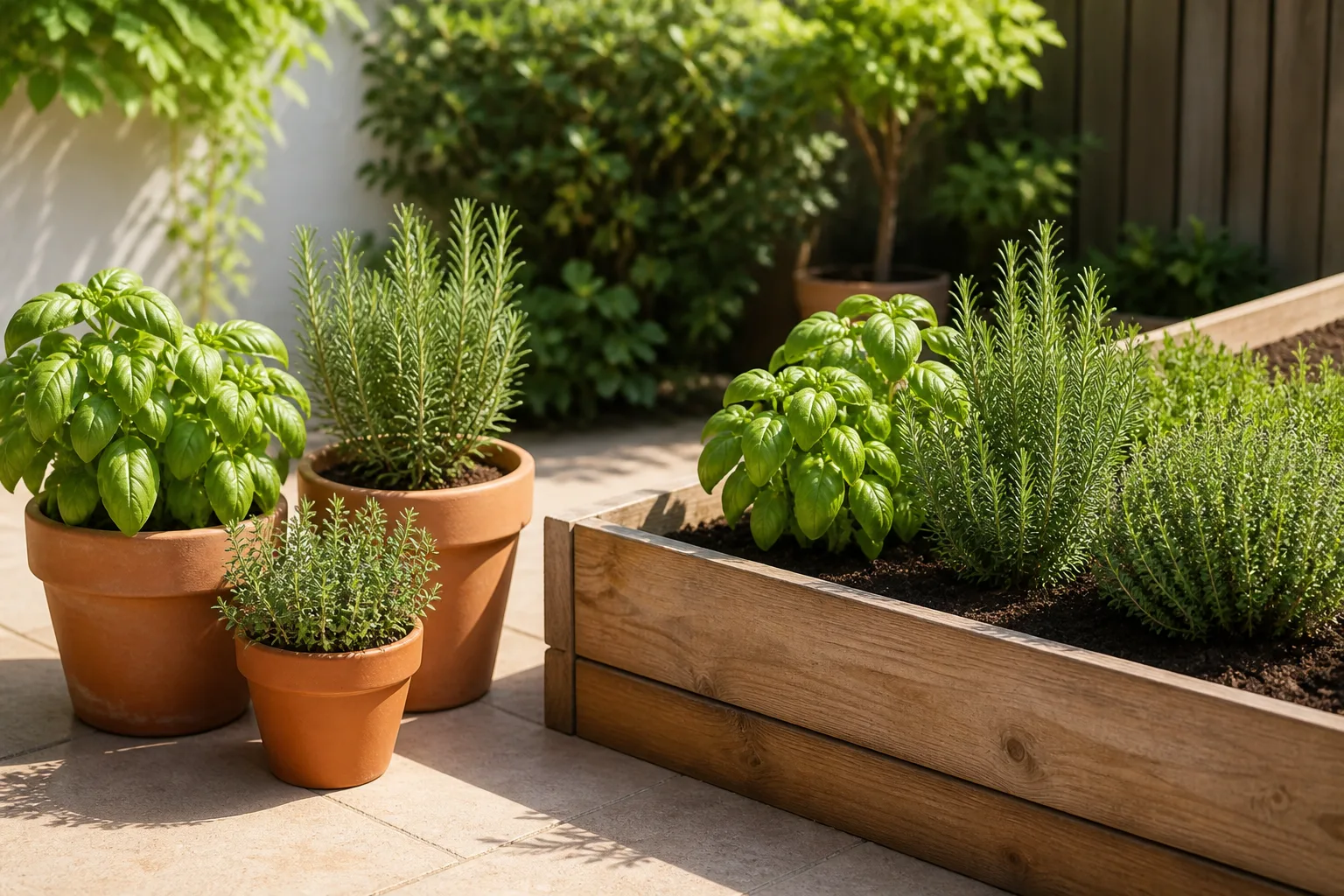
Yes, you can start a useful balcony herb garden for about $30, but the trick is not finding the cheapest possible pot. Spend first on healthy starter plants and a light, well-draining potting mix; reuse containers and household tools wherever they are safe. Three herbs in the right place will give you more meals and more confidence than eight crowded plants in decorative pots.
This plan is designed for a small balcony, patio, fire escape garden where permitted, or sunny doorstep. It assumes you are starting with little or no equipment and want a harvest within weeks, not a long seed-starting project. Prices vary by city and season, so treat the numbers as a target budget rather than a guarantee.
The Budget Is a Constraint, Not the Plan
The cheapest setup is not automatically the most economical one. A pot with no drainage hole can turn a healthy herb into a root-rot project, and a shaded balcony can make even a correctly watered plant weak and flavorless. Put your limited money toward the parts you cannot improvise, then let thrift handle the rest.
What to Buy First
Here is a realistic starter list for a three-herb garden:
| Item | Target cost | Why it earns a place in the budget |
|---|---|---|
| Three healthy starter herbs at about $3 each | $9 | Gives you an immediate garden and removes germination uncertainty |
| Small bag of quality potting mix | $8–10 | Provides the air and drainage container roots need |
| One new plastic pot or window box, if necessary | $5–7 | Fills the one container gap you cannot safely reuse |
| Small package of balanced fertilizer | $4–5 | Replaces nutrients that a pot cannot draw from surrounding soil |
| Estimated total | $26–31 | Close to the $30 target, depending on what you already own |
If you already have three suitable vessels, your first purchase may be closer to $20–24. Use the savings for a fourth herb only after the first three have a good home. More plants multiply watering, crowding, and failure points; they do not automatically multiply harvest.
Penn State Extension makes the same basic distinction in its container gardening guidance: nearly any container can work, but the roots need a way for water to drain away. The same guide explains why quality potting soil and replenished fertilizer matter in a container, where roots cannot travel into new soil in search of nutrients.
What to Reuse Without Creating Problems
Reuse a clean plastic nursery pot, food-safe bucket, sturdy storage tub, or old planter if it can hold wet mix without flexing or cracking. A coffee can, mug, or food container can work only after you create a drainage hole and confirm that the material will not crumble, rust into the soil, or leave a sharp edge where you will handle it.
Do not put a pot without drainage inside a saucer and assume the saucer solves the problem. The saucer catches runoff; it does not give excess water a way out. If drilling is impossible, use that vessel as a decorative cachepot around a real nursery pot with holes, and lift the inner pot out to water it fully before returning it after the excess drains.
You also do not need a trowel, pruners, plant labels, or a special watering can on day one. A clean kitchen spoon, a pair of sharp scissors reserved for plants, a pencil, and a recycled bottle with a small pour opening are enough. Avoid reusing containers that held chemicals, oily products, or anything you would not want touching edible roots.
Choose Herbs That Match Your Balcony
Select herbs by conditions and cooking habits, not by how impressive a nursery shelf looks. Penn State Extension recommends that beginners start small and think about how the herbs will actually be used; it also notes that basil and cilantro are annuals, while many familiar herbs such as mint and thyme are perennials. That life cycle matters when you plan a $30 garden: some plants are a one-season experiment, while others can keep earning their pot.
Basil for Warm, Productive Growth
Basil is the best first choice when the balcony is warm and bright and you cook with it often. It grows quickly, responds well to regular harvesting, and gives a beginner visible feedback: new side shoots appear when you cut above a leaf pair, while flower spikes signal that the plant is shifting from leaf production toward seed production.
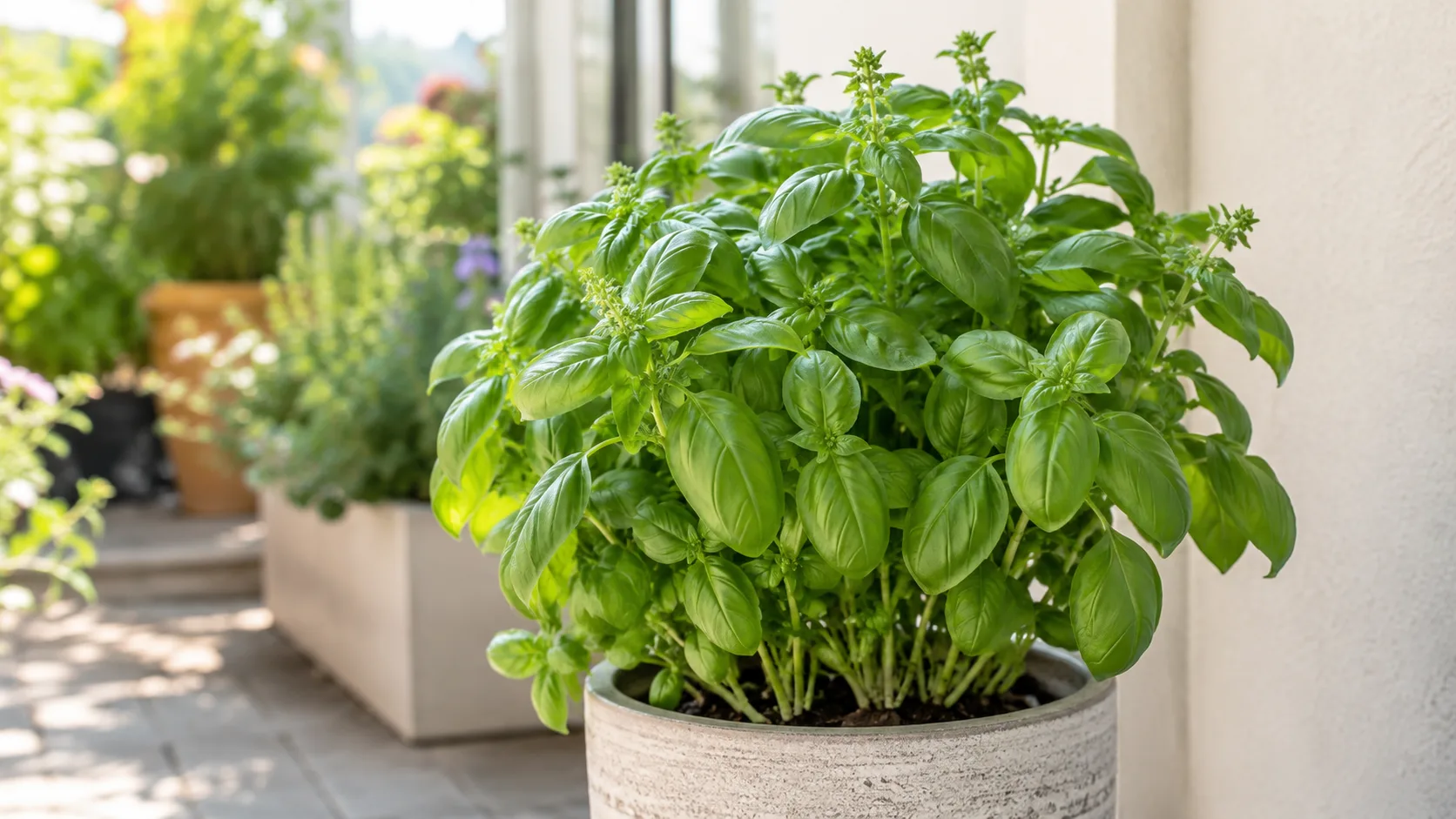
NC State Extension describes sweet basil as a warm-season herb that prefers full sun and moist, well-drained soil. Its basil profile also recommends pinching long stem tips and flower buds to encourage a branching, bushy form. In a small container, that combination of warmth, drainage, and frequent tip harvesting is more important than the exact cultivar.
Look for a plant with firm stems, evenly green leaves, and no gray fuzz or black patches. A very dense grocery-store basil may contain many seedlings packed into one tiny pot; it can still be useful, but separating the root mass too aggressively on the first day can cause a setback. If the clump is healthy, divide it into two portions only if each portion keeps a reasonable amount of roots and has room to spread.
Cilantro for a Cooler, Shorter Run
Cilantro is rewarding when you use it in salsa, chutney, soups, or grain bowls, but it is not a plant to judge yourself by in midsummer. NC State Extension says cilantro grows best in cool conditions in spring and fall, prefers medium-moist, well-drained soil, and bolts easily in hotter climates. Its plant profile is a useful reminder that flowering is often a temperature-and-age response, not proof that you watered incorrectly.
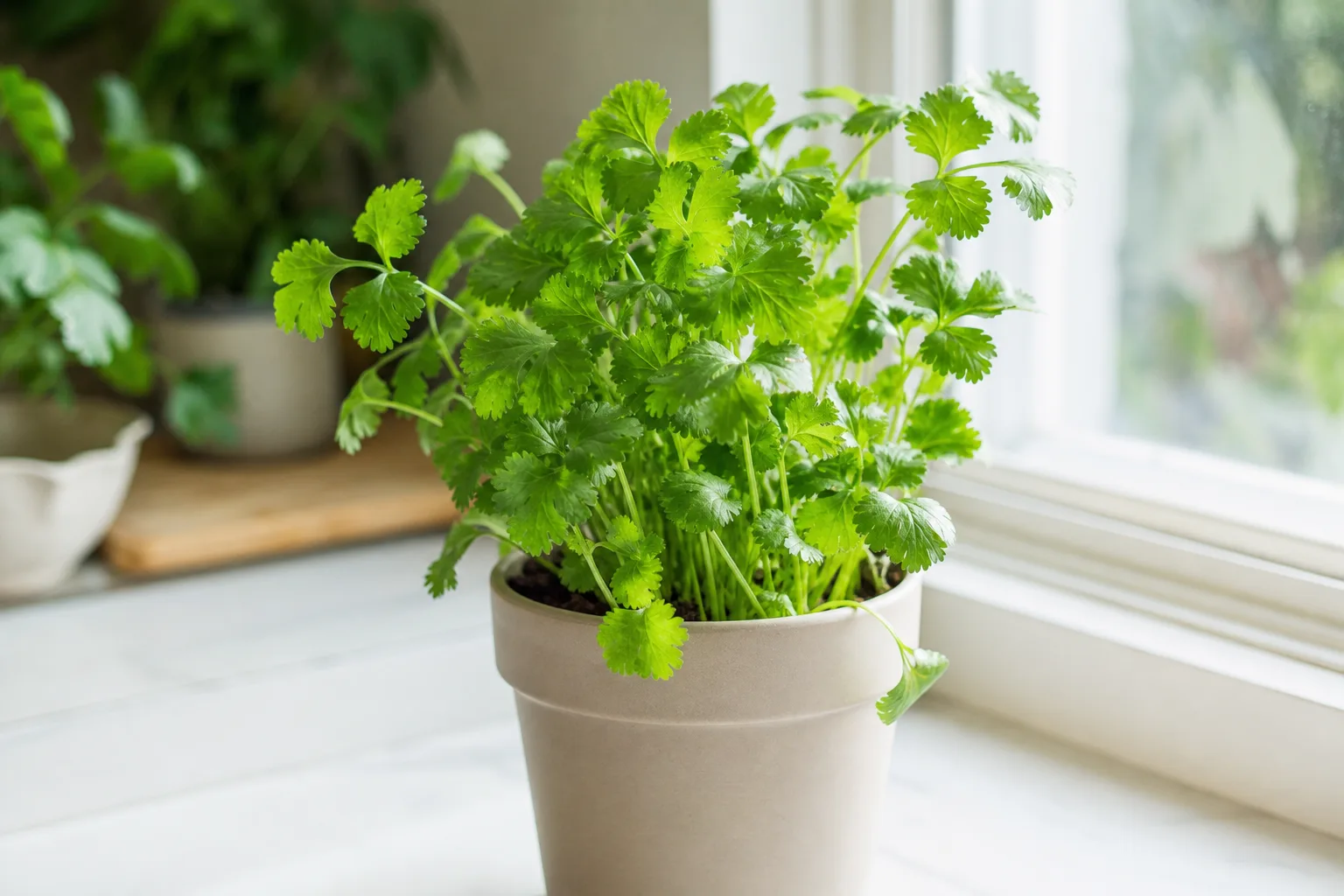
Give cilantro the coolest bright position you have, such as morning sun with protection from harsh late-afternoon heat. Harvest the outer stems while the plant is young and consider starting a second small pot two or three weeks after the first. Succession planting is a better budget strategy than buying a large replacement after the first plant flowers.
Once cilantro bolts, the leaves usually become less tender and the plant focuses on flowers and seed. You can let some flowers feed pollinators and collect coriander seed if you want, but start a new pot for leafy cilantro rather than trying to prune a flowering plant back into its original stage.
Rosemary for Sun and Sharp Drainage
Rosemary is a strong choice for a sunny balcony because one plant can provide sprigs for a long time, but it is a bad companion for a plant that needs constantly moist soil. NC State Extension describes rosemary as a perennial evergreen shrub from dry, rocky regions; its rosemary profile says it does best in full sun and dry to medium, well-drained soil and has low tolerance for wet, humid conditions.
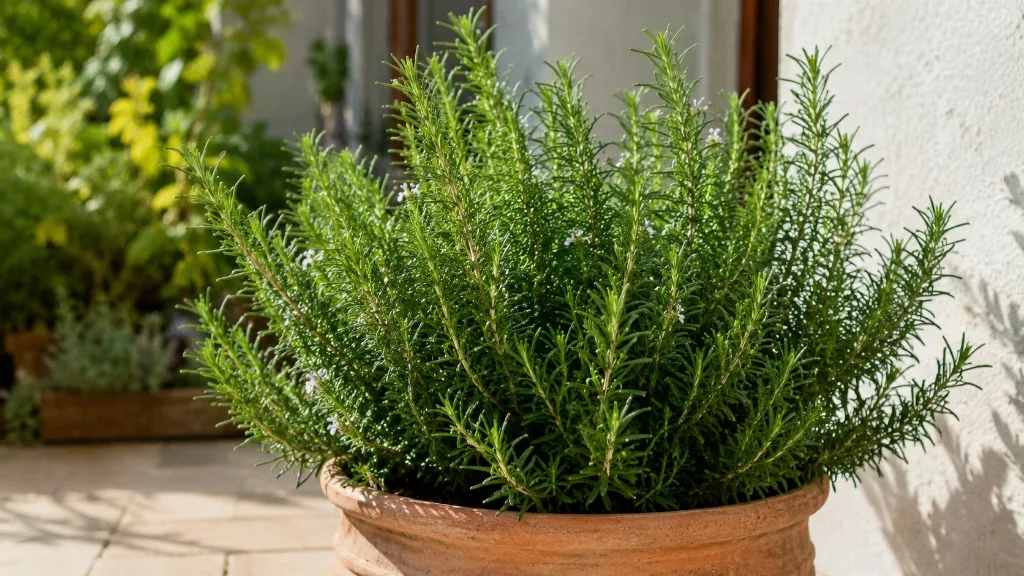
Put rosemary in its own pot, preferably a heavier vessel that will not tip in wind. Let the upper part of the mix dry before watering thoroughly, and never leave its drainage hole standing in a full saucer. A plant that looks limp in wet soil is not asking for more water; it is asking for better root conditions.
Parsley is a useful alternative if your balcony gets bright partial shade and you want a leafy herb that handles cooler weather. Mint is easy to grow but should live alone in a pot because runners and stems can escape into neighboring containers. Chives are compact and forgiving, making them a sensible fourth plant once your light and watering routine are working.
Audit Light, Wind, and Weight Before Shopping
Do a one-day balcony audit before you spend anything. At breakfast, lunch, mid-afternoon, and early evening, take a quick photo from the spot where the pots will sit. Note direct sun, bright shade, reflected heat from a wall, wind, and whether rain can reach the containers. A balcony can be sunny in one season and shaded in another as the sun’s angle changes.
The goal is not a perfect number of sunlight hours; it is a realistic match. Basil and rosemary generally reward the brightest position, while cilantro and parsley are more forgiving of some shade. If every possible location receives only a small patch of dim reflected light, buy fewer plants and consider an inexpensive supplemental grow light before buying more herbs. A low-light balcony is a limitation to solve, not a watering problem to disguise.
Wind changes the budget calculation because it dries small pots quickly and can snap tall stems. Put low, heavy pots near a protected wall, but leave enough space for air movement and drainage. Never attach a hanging planter to a railing unless the building permits it and the hardware is rated for the wet weight; potting mix becomes substantially heavier after watering.
Check where runoff will go. Water spilling onto a neighbor’s balcony, a slippery walkway, painted flooring, or an electrical outlet is a safety and maintenance problem. Use saucers, risers, or a waterproof tray that can hold the runoff, then empty it after the pot has drained.
Build a Container System That Forgives Mistakes
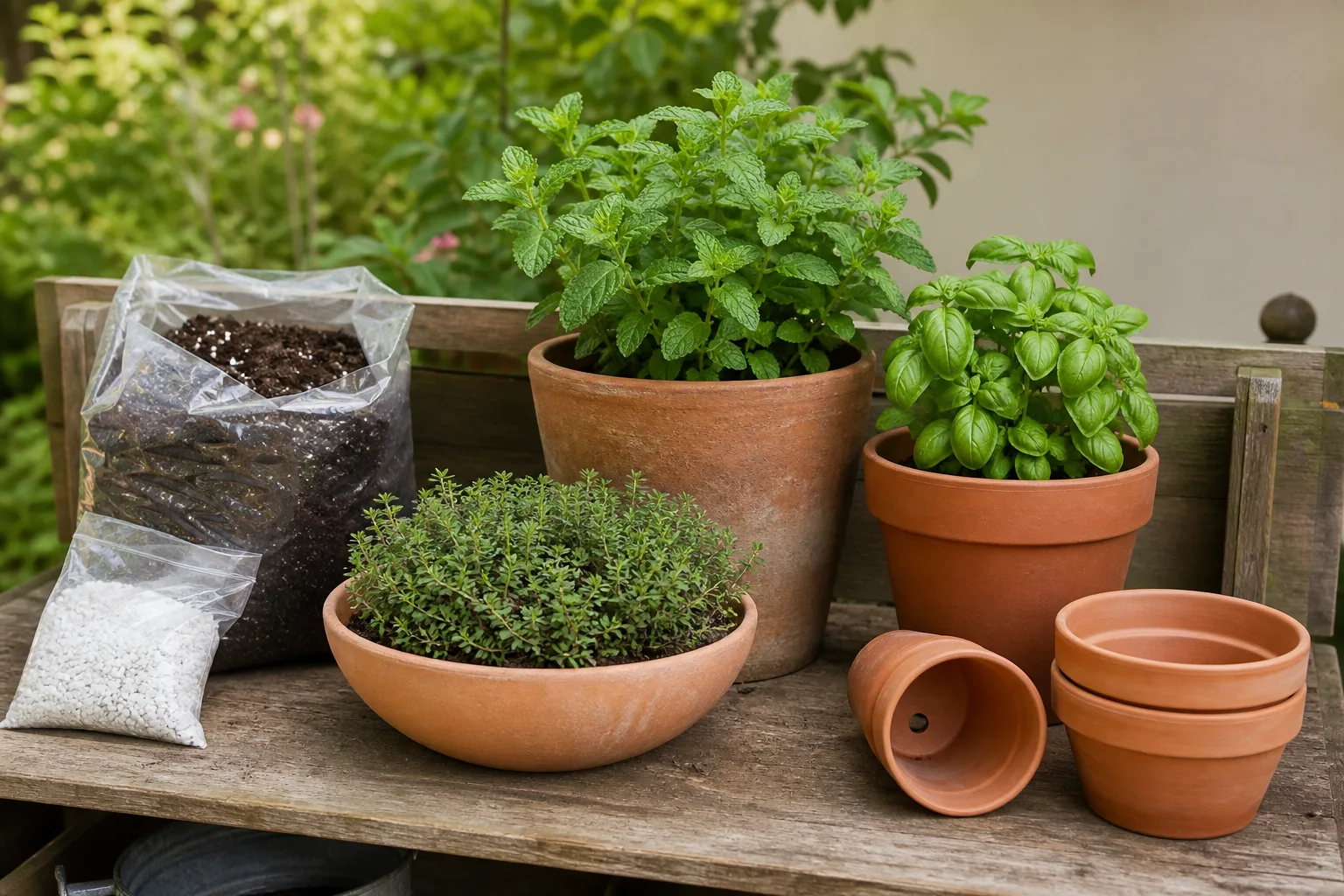
Start with one pot per herb when the plants have different moisture preferences. Fine Gardening’s container-herb guide highlights several advantages of this approach: you can adjust the soil for each plant, move containers as light changes, and keep vigorous herbs contained. A single mixed planter can look efficient, but it forces every root system to share the same watering compromise.
Drainage and Pot Size
Choose a container that is wide and deep enough for the root ball with a little room to grow, not an enormous pot that stays wet for days. As a starting range, give basil roughly an 8- to 10-inch pot, cilantro a pot at least 6 to 8 inches deep, and rosemary a 10- to 12-inch pot. These are practical starting points, not permanent limits; move a root-bound plant up one size when roots circle the mix or water runs straight through the gap between root ball and pot.
Make sure the drainage hole is open before you add soil. If it is small, cover it with a piece of mesh or a broken shard so mix does not wash out, but do not fill the bottom with a thick layer of gravel as a substitute for drainage. The whole root zone should be a continuous, airy mix. Elevate a pot slightly if the hole is pressed flat against a balcony surface.
Use a saucer under every pot, but empty it after a storm or deep watering. Standing water can keep a rosemary root ball saturated and can also attract mosquitoes outdoors. A saucer is a runoff-management tool, not a reservoir unless the container and plant were specifically designed for subirrigation.
Potting Mix and Fertility
Use packaged potting mix made for containers rather than soil dug from the yard. Garden soil is heavy, compacts in a pot, and can drain poorly; Penn State Extension specifically advises against using garden soil for container plants. A mix containing peat or coir plus perlite, bark, or another coarse component gives roots a better balance of moisture and air than dense topsoil.
Fill the container loosely, set the plant at the same depth it was growing before, and leave about an inch of space below the rim so water does not rush over the side. Do not bury the stem of basil or cilantro deeper just to make a tall plant look stable. Firm the mix gently around the root ball, then water slowly until a little drains from the bottom.
Fresh potting mix often contains some starter fertilizer, but a container plant eventually uses those nutrients. Wait until a transplanted herb shows new growth before feeding, then use a balanced fertilizer at the label rate. More fertilizer is not a shortcut to more flavor; excess salts can stress roots and produce soft, overly lush growth. Keep fertilizer off the foliage and never guess at a concentrated homemade dose.
Transplant Grocery-Store or Nursery Herbs Without Shock
Starter plants are a sensible beginner shortcut, not cheating. Seeds are inexpensive, but germination, thinning, timing, and early light add variables. A nursery or grocery-store herb lets you practice the parts that matter most on a balcony: drainage, placement, watering, pruning, and harvest.
Before buying, inspect the underside of leaves, stems, and the surface of the potting mix for insects, webbing, mold, or a sour smell. Choose a compact plant with new growth rather than the tallest plant on the shelf. Keep new herbs away from any established houseplants for several days if you can, because a bargain plant is not a bargain if it introduces pests to your collection.
Water the starter plant if the root ball is dry, but do not transplant a collapsed, waterlogged plant immediately and expect the new pot to perform a miracle. Let it recover in bright shade for a short period, then move it gradually into stronger outdoor light. Sudden outdoor sun, wind, and temperature changes can scorch leaves even when the roots are healthy.
When the container is ready, slide the plant out while supporting the stems and root ball. Loosen only the outer roots that are circling tightly; do not shake every bit of old mix away from a fragile grocery-store clump. Set the root ball at its previous depth, fill around it, and water the entire container so there are no dry pockets.
For the first week, watch new growth and the soil rather than trying to force a schedule. A little droop after moving is common, but persistent wilt in wet soil, a sour smell, or blackening stems points to a root problem. Shade during the hottest hours, protect from strong wind, and increase light in stages.
Water Based on Soil, Not a Calendar
A weekly reminder is useful, but “water every Sunday” is not a plant-care rule. Small pots can dry in a day during hot, windy weather and stay wet for a week during cool rain. Check each pot separately by pressing a finger into the top inch or two of mix, lifting the pot to feel its weight, and looking at the leaves together with the soil.
When the mix is dry where the roots are active and the pot feels light, water slowly across the entire surface until water exits the drainage hole. Pause, then water again if the mix has pulled away from the pot edge or the first pour ran down a dry channel. Empty the saucer once the pot finishes draining.
When the mix is still cool and damp, wait. A wilted-looking plant in saturated mix needs diagnosis, not an automatic drink. Check whether the container drains, whether rain has filled the saucer, and whether the plant is receiving enough light to use the water. Basil may need more even moisture than rosemary, but neither herb benefits from a permanently swampy root zone.
Rain changes the plan, but it does not always water a balcony pot. A roof, railing, or dense canopy may keep the mix dry while the surrounding pavement is wet. Conversely, a wind-driven storm can saturate a small pot quickly. Touch the soil after rain instead of counting the storm as a complete watering.
Prune and Harvest So Plants Get Bushier
Harvesting is maintenance with a purpose. Cutting a little and often keeps herbs useful and gives you a chance to inspect new growth before a problem spreads. Fine Gardening and Savvy Gardening both emphasize the practical advantage of growing herbs in containers close to the kitchen: you are more likely to notice when the plant needs water, a trim, or a new position.
For basil, find a pair of leaves on a stem and cut just above that pair. The two buds at the node can grow into side branches, which creates a wider plant instead of a single tall stem. Remove flower buds when your priority is leaves, but do not panic if flowers appear; the plant is still edible, and you can use the flowers or let some bloom for pollinators.
For cilantro, cut the outer stems near the base and leave the small center growth until you need it. Take a portion rather than stripping the entire plant, especially when it is young. Because heat can end a cilantro crop quickly, harvesting and succession sowing are more reliable than trying to keep one plant leafy forever.
For rosemary, snip green tips for cooking and avoid removing large amounts of old, bare woody stem at once. The plant is slower-growing than basil, so treat each harvest as a small shaping cut. Strip the leaves from the stem after cutting, or use the sprig whole and remove it before serving.
Use clean, sharp scissors and harvest when the foliage is dry if possible. Rinse herbs gently when needed, dry them well, and refrigerate tender leaves in a way that allows airflow. Harvest does not need to be large to count: a few basil leaves, a rosemary sprig, or a handful of cilantro can turn the garden into part of dinner and give you a reason to keep checking it.
Troubleshoot Before Replacing a Plant
Start with the root-zone check: is the mix dry, evenly moist, or staying wet? Then inspect light, wind, pests, and the newest leaves. Old damage will not disappear, so judge a recovery by whether new growth is clean and firm rather than waiting for every old leaf to look perfect.
The plant is wilted but the soil is dry. Water deeply and slowly, making sure the mix actually absorbs it. If water races down the side, re-wet in two or three passes. Move the pot out of harsh afternoon exposure for a day if heat and wind are extreme, then improve the container or watering rhythm rather than keeping it permanently shaded.
The plant is wilted but the soil is wet. Move it to a brighter, airy position, empty the saucer, and inspect the drainage hole. Do not fertilize a stressed plant. If the stem base is dark or the mix smells sour, slide the plant out and check for mushy roots; trim only clearly dead material with clean scissors and repot into fresh, appropriately moist mix.
Basil is tall and sparse. Light is often the first suspect, followed by a lack of pinching. Move it toward brighter light gradually, cut above leaf pairs, and rotate the pot so one side does not stretch toward the sun. Do not solve legginess with heavy fertilizer.
Cilantro flowers quickly. Heat and plant age are likely contributors. Give it morning sun and afternoon protection, harvest the leafy stems, and start a replacement pot in cooler weather. Treat the flowering plant as a seed-and-pollinator phase rather than a failure.
Rosemary develops brown tips or drops leaves. Check for wet soil before assuming thirst. Rosemary is more likely to resent poor drainage or low light than to want daily watering. Cut back dead material, correct the root-zone condition, and wait for fresh growth before feeding.
Small insects appear. Isolate the affected pot, rinse accessible pests with a gentle stream of water, and inspect leaf undersides and new growth. Do not spray an edible herb with a kitchen detergent mixture or an unlabeled pesticide. If a labeled product is necessary, follow its crop, dilution, harvest-interval, and safety instructions exactly.
Extend the Season Without Buying New Gear
The cheapest way to extend a container garden is to change location and plant timing. Move tender basil away from cold nights and bring it indoors only when you have a bright enough window or supplemental light. Rosemary may tolerate cooler conditions better than basil, but its container roots are still more exposed to temperature swings than roots in the ground.
Know whether each herb is an annual, biennial, or perennial, and check your local frost dates and hardiness information. Penn State Extension’s herb-growing resource recommends starting small, choosing plants that suit the local conditions, and protecting perennial and biennial herbs where winter demands it. A balcony in a mild climate has different options from a high, exposed balcony with repeated freezes.
Before a cold snap, group pots against a sheltered wall, lift them off a freezing surface, and follow local guidance for protecting edible plants. Do not wrap plants so tightly that air cannot move, and do not keep a wet pot enclosed for days. If frost will be severe and you have no bright indoor space, accept that basil may be a seasonal plant and save money by starting fresh at the right time rather than buying a complicated overwintering setup.
Keep a one-minute garden note: purchase date, location, last watering, first harvest, and what the leaves looked like. That record turns a $30 experiment into a better second season. You will learn whether your balcony dries pots quickly, whether cilantro needs an earlier start, and whether rosemary deserves its own heavier container.
Conclusion
A thriving $30 herb garden begins with three decisions: match the herbs to the light, give every root system a drainage path, and buy only what you cannot safely reuse. Basil, cilantro, and rosemary make a useful starter trio when they live in separate pots and receive different watering attention; parsley, chives, or mint can join later when you know what your balcony actually does.
Start small enough to inspect every plant, harvest often enough to stay engaged, and change one variable at a time when something struggles. You do not need experience, a yard, or a shelf full of tools to grow fresh herbs. You need a workable root zone, an honest reading of your balcony, and a budget that protects the plants before it decorates the space.