How Long Does It Take to Grow a Pineapple?
How long does it take to grow a pineapple? See the crown-to-fruit timeline, rooting times, flowering stages, climate limits, and harvest signs.
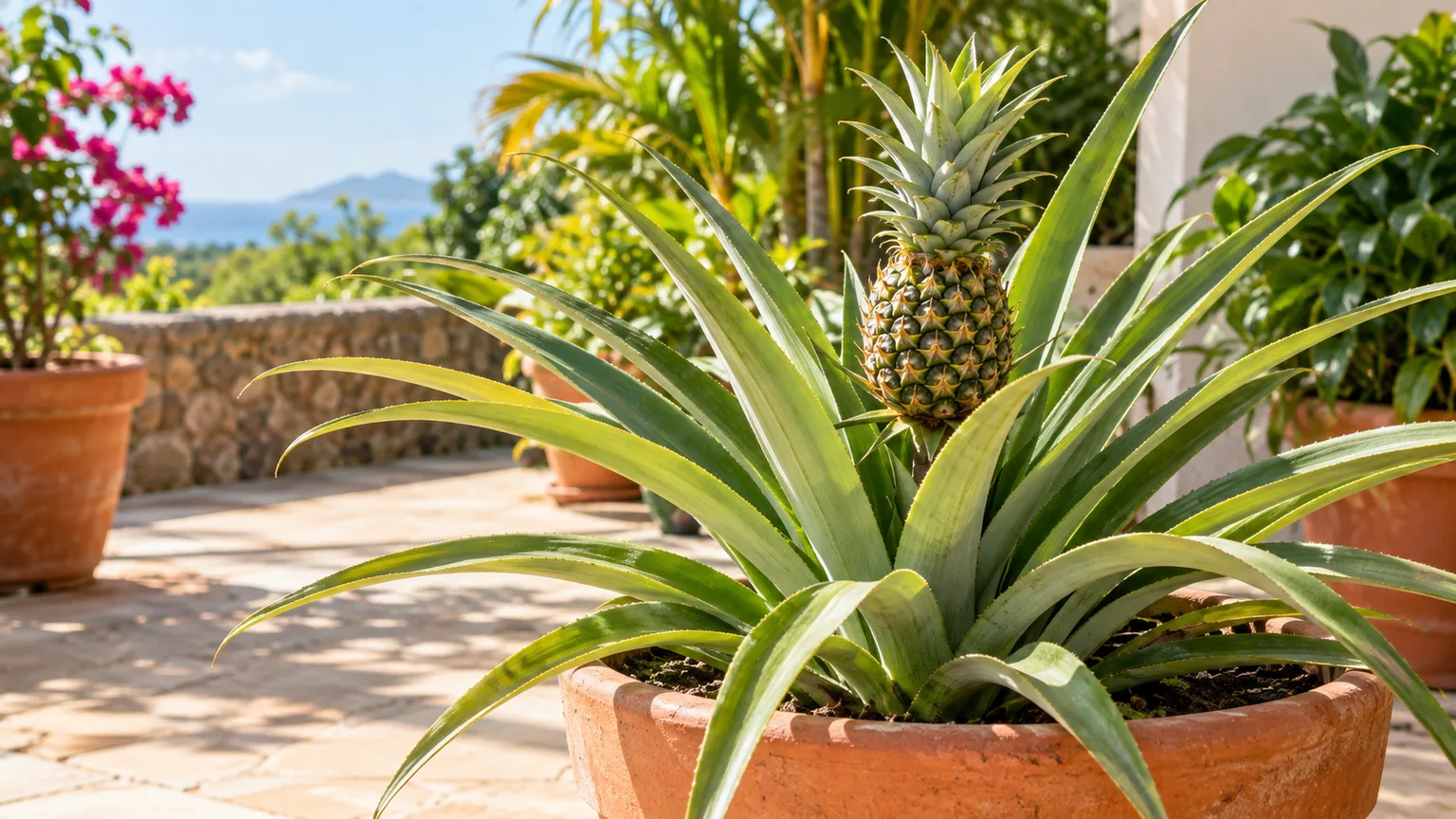
Growing a pineapple is a slow experiment with a surprisingly useful progress report: first the crown roots, then the plant spends months building a large rosette, then a central flower stalk appears, and only after that does the fruit swell. For a home grower, the honest answer is about 18 to 36 months from planting to harvest, with a crown usually taking longer than a large slip or sucker and a cool, dim, or waterlogged location taking longer still.
The range is wide because “grow a pineapple” can mean two different milestones. A small top may become an attractive houseplant in a few months, while an edible fruit requires a plant large enough to flower and several more months after bloom. Use the stages below to judge your own plant instead of treating a calendar estimate as a promise.
The short answer: plan on 18 to 36 months
If you plant a healthy grocery-store crown in a warm, bright, well-drained container, plan for roughly two to three years before your first edible pineapple. North Carolina State Extension describes a crown as the slowest fruiting method and notes that it can take at least 24 months to flower, while a UF/IFAS home-landscape guide gives 18 to 24 months from planting to harvest in favorable Florida conditions and a longer 18- to 36-month range in subtropical conditions.
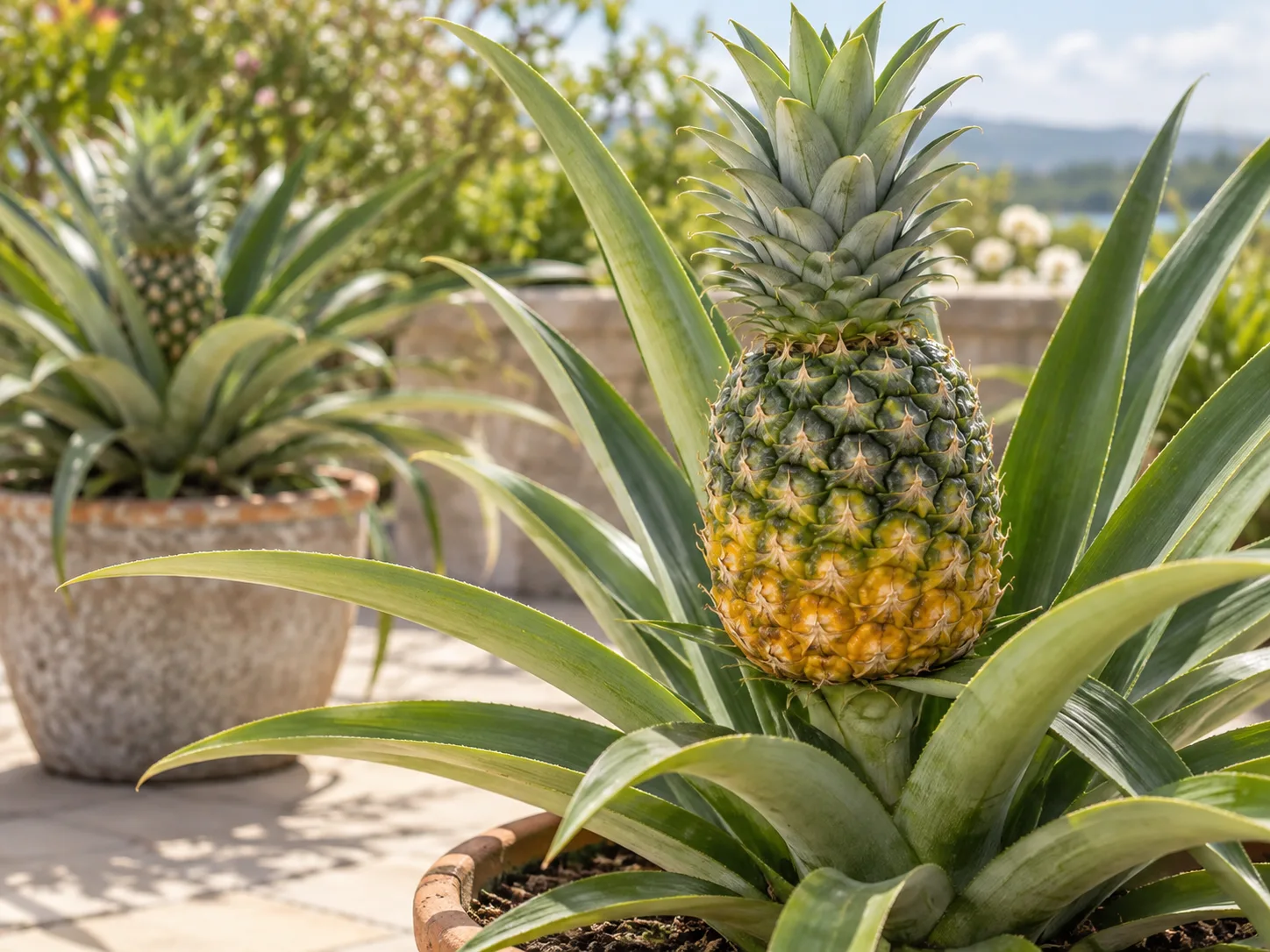
A large nursery plant or a well-developed sucker can beat the crown estimate because it has already accumulated size before you receive it. A slip or sucker is not a shortcut that erases the season; it is a head start. The actual finish line still depends on whether the plant has enough leaves, warmth, light, water, and root health to support a flower and a full-sized fruit.
The practical answer is therefore: six to eight weeks for crown roots, about 14 to 18 months to reach a flowering-size plant under good conditions, and another five to seven months from flower induction to harvest. Those windows overlap in real life, and a plant that pauses through cold weather can take longer.
Pineapple growth timeline at a glance
| Stage | Typical timing from planting | What you should see |
|---|---|---|
| Crown drying and planting | A few days to about a week | A trimmed, dry cut base planted in airy mix |
| Root establishment | About 6–12 weeks | New center leaves and firmer anchoring |
| Vegetative growth | Roughly 12–24 months | A larger rosette, longer leaves, and pups later on |
| Flower induction to first open flowers | About 50 days | A central stalk and a reddish “heart” or flower head |
| Flowering period | About 20–40 days | Many individual flowers open over several weeks |
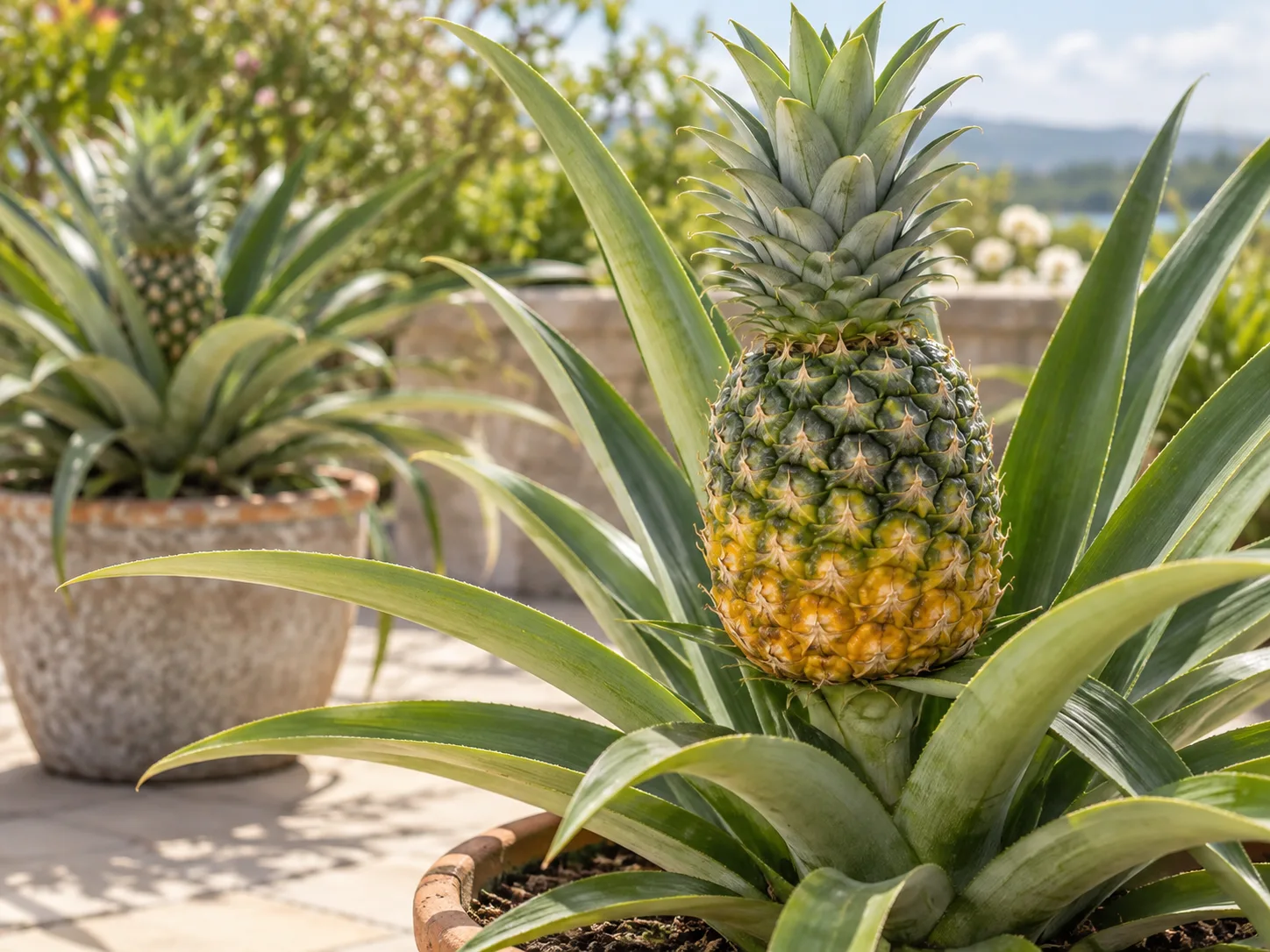
| Fruit development and ripening | About 5–7 months after induction | A swelling fruit with color moving up from the base |
| First harvest from a crown | Commonly 18–36 months total | A full-sized fruit with aroma and a mature shell |
 |
These are working ranges, not guarantees. UF/IFAS Gardening Solutions reports about 14 to 18 months for a plant to reach mature size and about 18 to 32 months from planting to harvest in a home setting. That distinction is important: the plant can look impressively large long before it has finished the fruiting phase.
Why the clock starts before you see a fruit
A pineapple is a terrestrial bromeliad, not a tree or a vine that keeps adding fruiting branches. It builds one compact rosette around a short stem, and the growing point eventually changes from making leaves to making a single flower cluster. The pineapple fruit is a syncarp, meaning many individual flowers fuse as they develop into one fruit.
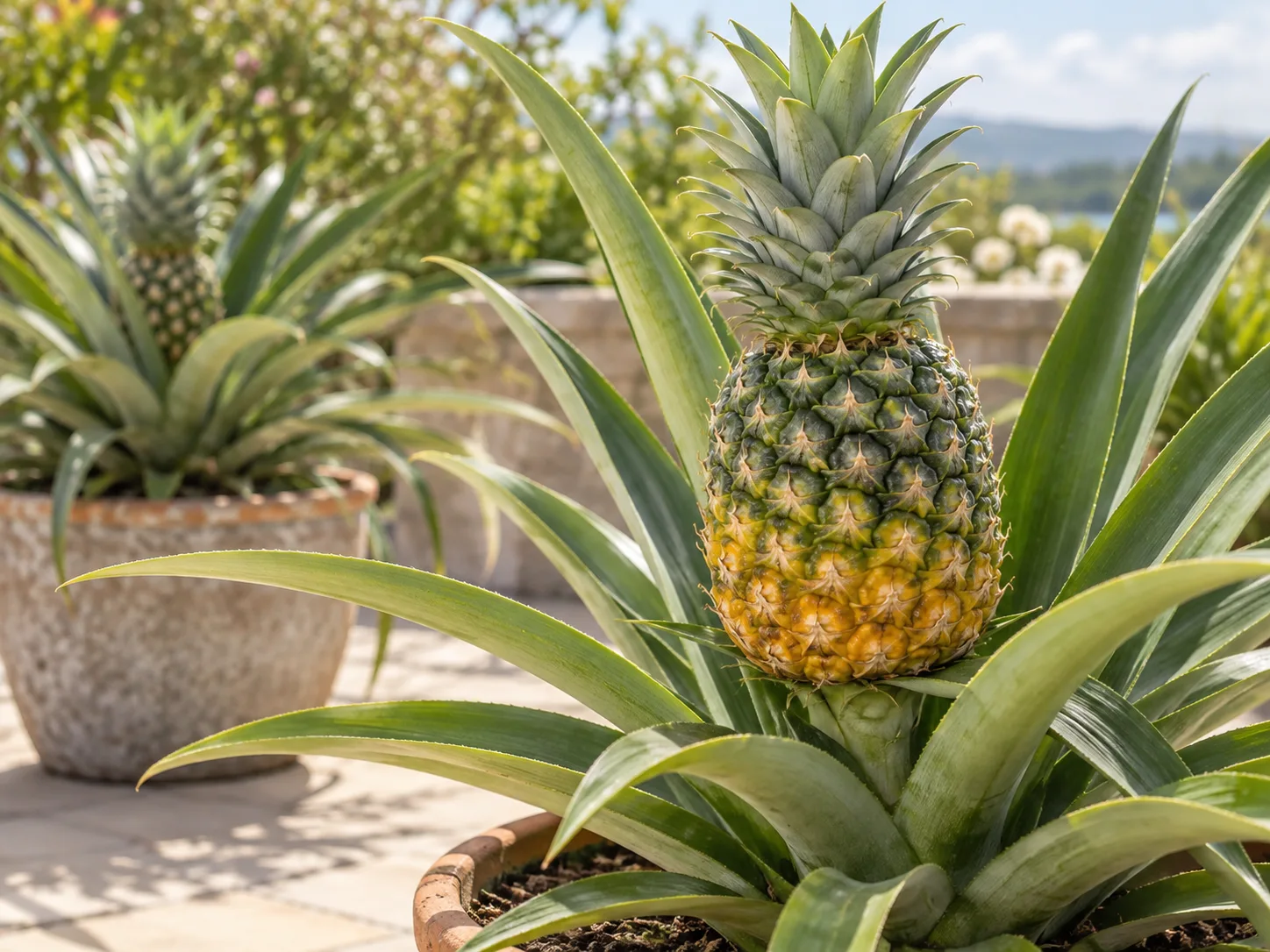
That biology explains two common surprises. First, the plant can spend most of its life making leaves while appearing to do “nothing” to a first-time grower. Second, one primary fruit does not mean the plant was a failure after harvest; its pups are the next generation, not extra fruit already waiting on the same stalk.
Size matters because the leaves are the plant’s solar panels and water-catching surface. UF/IFAS says a plant is ready to flower after producing about 70 to 80 leaves, while NC State Extension’s pineapple notes describe a fruiting-size plant as one with at least 25 normal-sized leaves, sometimes taking several years outside optimal conditions. The different counts reflect different ways of describing maturity, so use them as rough indicators rather than a leaf-count contest.
Crown, slip, or sucker: which starts fastest?
The crown is the leafy top of a harvested pineapple. It is the easiest planting material to find, but it starts with a cut stem and only root initials, so it must first establish a root system and then build a full plant. Gardening Know How puts crown root establishment at about six to eight weeks, while The Boma Garden Centre’s crown guide gives a broader one-to-three-month rooting window.
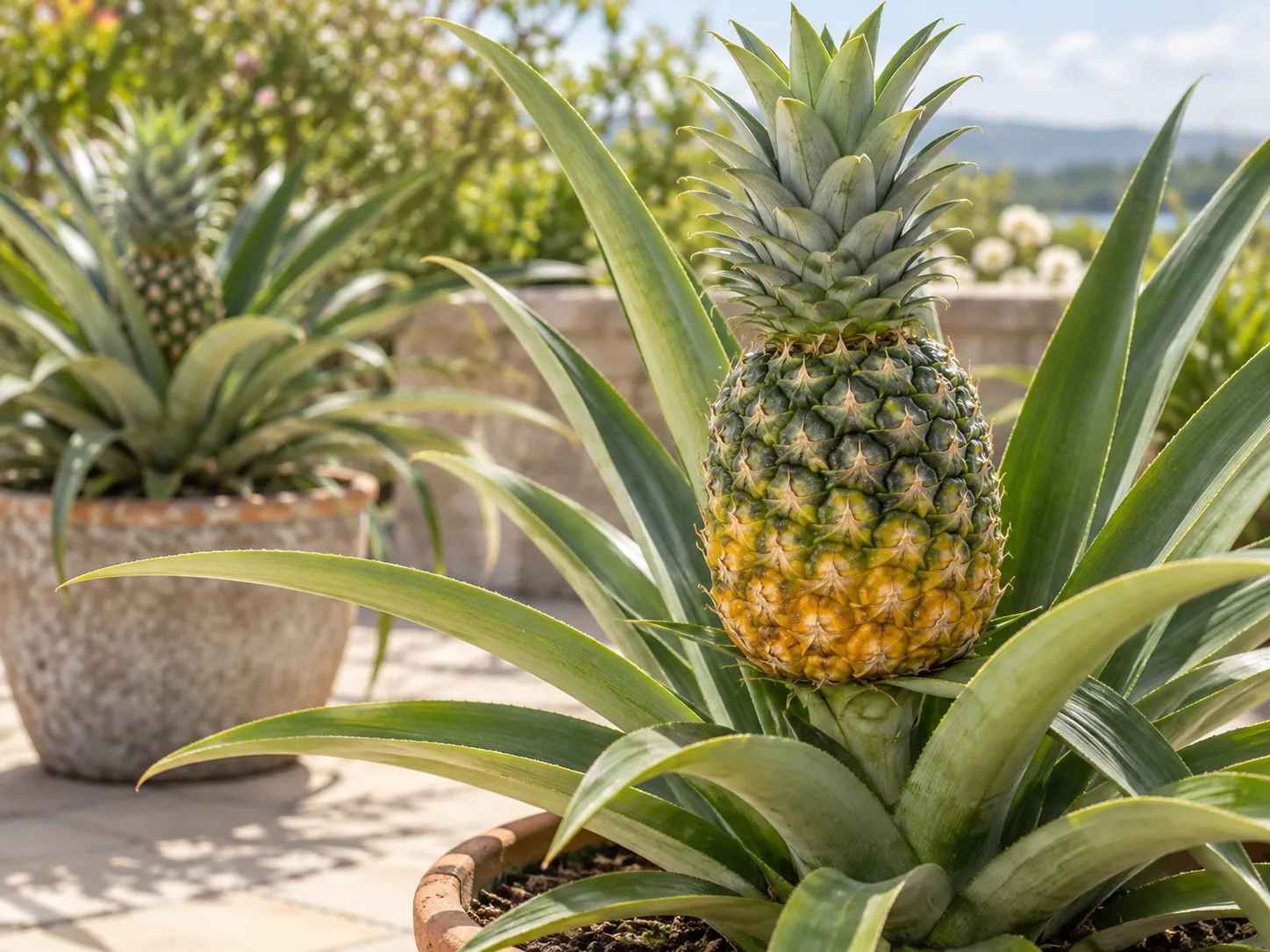
A slip grows on the fruit stalk below the pineapple. A sucker, often called a pup, grows from the leaf axils or lower stem. These offsets are already part of a mature plant’s vegetative system, so a sturdy, well-sized one commonly reaches flowering size faster than a fresh crown. UF/IFAS notes that larger crowns, slips, suckers, and other planting pieces grow faster and shorten the time to fruiting after planting.
Choose the biggest healthy offset you can identify without stripping a mother plant bare. A very small pup may be genetically “faster” than a crown but still take a long time because it has little leaf area and few reserves. The best predictor is not the name of the propagation method alone; it is the size and health of the piece when it is planted.
Stage 1: rooting and establishment
The first stage is about surviving the transition, not producing visible height. Twist or cut a fresh crown cleanly, remove all soft fruit tissue and a few lower leaves, and expose the firm stem. Let the cut end dry in shade for a few days before planting so the wound is less likely to stay wet and rot.
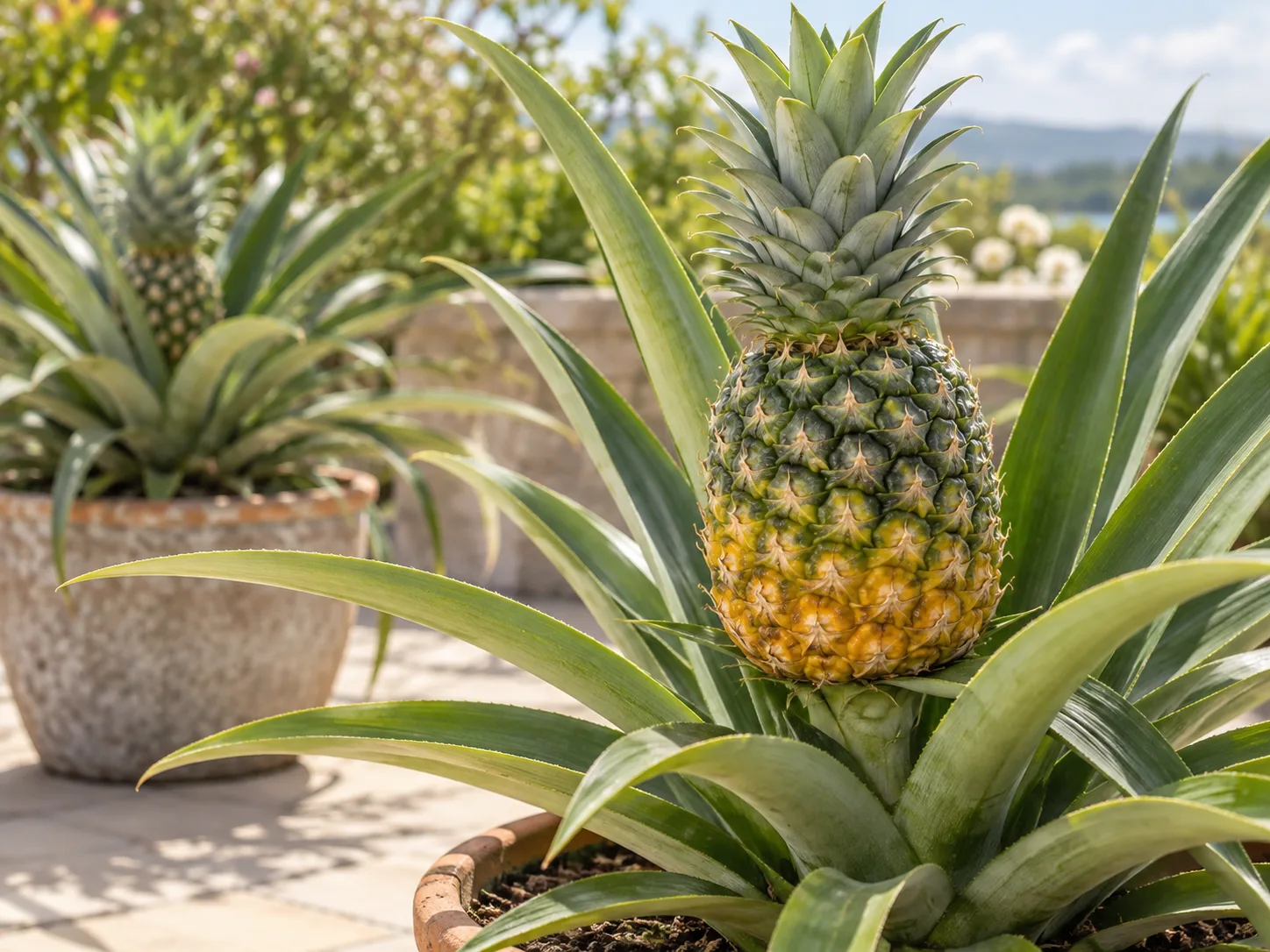
Plant the crown in a small-to-medium container of fast-draining mix, with the stem supported upright and the leafy center above the soil. You can root it in water to watch roots form, but soil is usually the more useful long-term setup because the plant does not need to be transplanted out of a water jar later. Keep the mix lightly moist, never saturated; the crown is most vulnerable when a wet cut base has too little oxygen.
During the first six to twelve weeks, judge progress by resistance and center growth. A rooted crown feels anchored when gently nudged, and a new leaf emerging from the center is more meaningful than a dry outer leaf. The UF/IFAS guidance recommends air-drying crowns, slips, and suckers in shade for a day or two before planting; the longer drying window sometimes suggested for crowns is useful only when the cut surface is still moist, not when the plant is already shriveling.
If the base turns mushy, smells sour, or pulls apart, do not bury it deeper or water more often. Unpot it, cut away soft tissue with a clean blade, allow the healthy portion to dry, and restart in clean, barely moist mix. If the entire stem is soft, the crown has failed; starting with another healthy top is usually faster than trying to rescue rotted tissue.
Stage 2: the long vegetative growth phase
Once rooted, the pineapple enters its longest stretch: making leaves and building the plant that will eventually carry the fruit. In a bright warm location, new leaves emerge from the center while older leaves arch outward, and the rosette gradually becomes broad, heavy, and difficult to ignore. This is the phase where consistent care saves more time than any flowering trick.
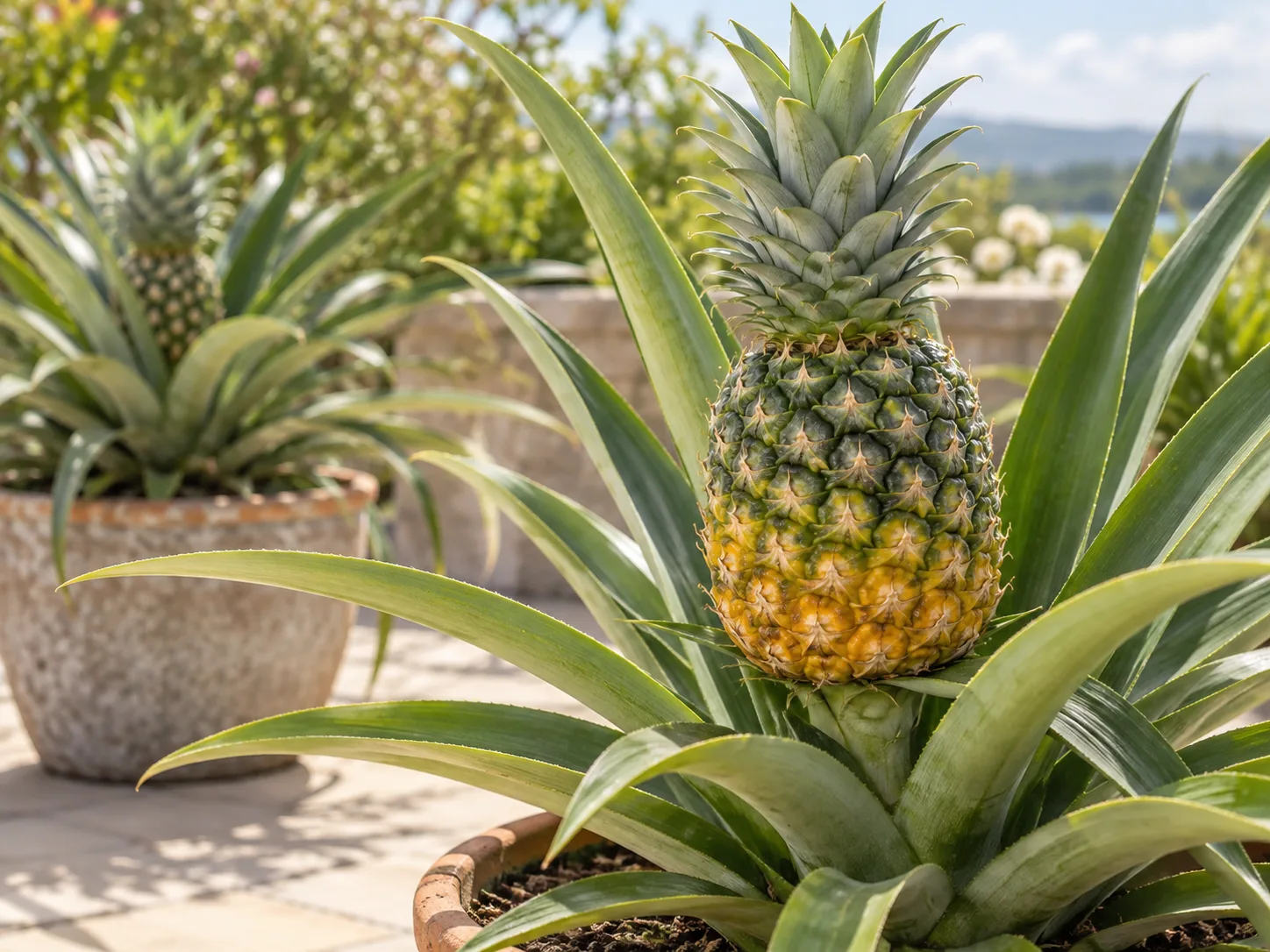
Give the plant the brightest light it can tolerate without scorching, and use a container with a drainage hole. Pineapples are drought-tolerant enough to survive a dry spell, but UF/IFAS explains that drought reduces growth and fruit production; continuously wet soil is worse because it increases root-rot risk. Water thoroughly when the mix has begun to dry, then let excess drain away rather than leaving the pot in a saucer of water.
Feed lightly and regularly during active growth if the plant is healthy. A large dose of fertilizer cannot manufacture mature leaves overnight, and excess salts can injure roots. A balanced fertilizer applied according to its label, with smaller applications rather than one heavy correction, supports steady growth while you wait for the plant to reach its natural flowering size.
How to tell the plant is ready to flower
Look for a dense, symmetrical rosette with a strong center and many normal-sized leaves, not just a tall plant with a few stretched leaves. The plant should be firmly rooted, actively growing, and free of chronic yellowing, soft tissue, or repeated pest damage. A pup that is still tiny, a crown that has only recently rooted, or a plant that spent winter cold and dim is not ready merely because it has been in your care for a year.
Leaf color and posture also tell you whether the clock is moving. Pale, narrow, widely spaced leaves usually point to insufficient light; reddish or stressed leaves can follow cold, drought, or root trouble. Fix the growing conditions first and give the plant time to make healthy leaves before you count down to flowering.
Stage 3: flower induction and blooming
Flowering begins when the growing point switches from leaf production to an inflorescence. In a mature plant, short days, cool conditions, or mild water stress can contribute to flower induction, but deliberately stressing a young plant is a poor bargain: it may flower before it has enough leaf area to support a large, sweet fruit.
Once induction has occurred, the first flowers may open after about 50 days, and the flowering period can continue for 20 to 40 days. The central stalk rises above the rosette, and the flower head looks very different from an ordinary new leaf. A reddish or colored heart at the center is an exciting milestone because the long vegetative wait is ending.
UF/IFAS describes placing ripe apple slices in the plant’s center as one possible way to provide ethylene to a mature pineapple, while explicitly cautioning against calcium carbide because impurities can contaminate soil and water and may be toxic. Treat any flower-forcing method as optional and conditional: keep the plant growing vigorously for its first 14 to 18 months, and use the plant’s size and health—not impatience—as the deciding criteria.
Flowering is not the same as fruit ripening
The end of the waiting period is not the day you see a flower stalk. Pineapple flowers open in sequence, and the developing fruit forms as the individual flower parts fuse. Once flowering begins, the plant needs continued light, water during dry periods, and enough nutrition to fill the fruit without keeping the soil constantly wet.
This is also when the plant becomes top-heavy. A heavy fruiting stalk can bend or break, especially in a container exposed to wind. Stake it loosely with a soft, natural-fiber tie if necessary, keeping the tie from cutting into the stalk as it thickens.
Stage 4: fruit fill and ripening
After flower induction, allow about five to seven months for the fruit to develop and ripen. The exact time varies with cultivar, temperature, light, and care. The fruit enlarges slowly at first, then becomes more obviously full and barrel-shaped as the shell develops.
Do not judge the harvest date by calendar age alone. A plant that flowered during a cool spell may fill more slowly, while one kept warm and bright may reach maturity earlier. During fruit development, protect the plant from repeated drought and from standing water, and watch for animals that discover the fruit before you do.
How climate and growing conditions change the wait
Warmth is the biggest external variable. UF/IFAS lists about 68–86°F (20–30°C) as the optimum range for pineapple growth; temperatures below 60°F (15.5°C) or above 90°F (32°C) can slow growth, and freezing conditions can kill the plant. A short cool night may simply pause growth, but repeated cool nights can extend the timeline and may induce a flower before the plant is large enough for a good crop.
Light is the second major lever. Full sun usually gives the best outdoor growth and fruit production, although a container moved from a dim indoor room into harsh afternoon sun can scorch. Acclimate it gradually, and prioritize a bright, stable location over a few hours of intense light followed by a week of stress.
Drainage determines whether the roots can keep working between waterings. Pineapple tolerates some dryness, but it does not tolerate a pot that stays saturated. If the plant is yellowing from the bottom, the soil smells sour, or growth has stopped while the mix remains wet, correct the container and soil before adding fertilizer.
Container versus in-ground timing
A container gives you control over drainage and winter protection, which can make fruiting possible in a climate where an in-ground plant would freeze. It also limits root volume and can dry rapidly on a hot patio. A 3- to 7-gallon container is suitable for a mature pineapple, and the larger end of that range gives the plant more room to build size and support a larger fruit.
In-ground plants can grow more steadily when the climate is warm and the soil drains freely. They are also harder to move when a cold snap arrives and easier to overwater with lawn irrigation. If your garden stays below about 50°F (10°C) for long stretches or reaches frost, the container’s mobility is worth more than the theoretical speed of a garden bed.
How to shorten the timeline without weakening the plant
Start with a vigorous, large planting piece. A fresh crown with green, undamaged leaves is a good experiment, but a robust sucker or slip from a known healthy plant usually begins with more stored energy. Remove only the offset you can separate cleanly, and do not take every pup if doing so would leave the mother plant unstable or stressed.
Give the plant the conditions that let it keep making leaves: strong light, warm temperatures, airy soil, and water only when the mix begins to dry. Keep a grass-free ring around outdoor plants so lawn equipment does not cut the leaves or stem, and move containers before frost rather than waiting for visible damage.
Control competition for energy. UF/IFAS notes that removing developing slips and suckers during growth can hasten fruit development and increase fruit size, but leaving a few provides planting material after harvest. The useful compromise is to leave one or two promising pups for the next crop and remove extras once they are large enough to replant.
Do not try to “speed” a small plant with heavy nitrogen, constant moisture, or sudden full sun. Those shortcuts tend to create soft, stressed growth or root problems, and the lost recovery time is longer than the time you hoped to save.
What stalls flowering and what to check first
If a pineapple has been leafy for two years, ask whether it is truly mature before assuming it is refusing to flower. A small crown in a cool, dim room may be two years old but still lack the leaf mass and active growth needed for a useful crop. Measure the plant’s progress by size, leaf quality, and conditions, not by the date you first planted it.
Use this diagnostic order:
- Check light. Long, floppy leaves and weak color usually mean the plant is not collecting enough energy.
- Check temperature. A cold sill, draft, or unheated greenhouse can slow growth for months.
- Check the roots and soil. Wet, sour mix or a loose, collapsing crown points to rot; a tightly root-bound pot can also restrict growth.
- Check water rhythm. Repeated severe wilting reduces growth, while daily watering in heavy soil reduces root oxygen.
- Check pests. Mealybugs, scale, and ants moving among leaf bases can weaken a plant and reduce fruit production.
- Check the planting material. A tiny pup simply needs more time, even if the mother plant was mature.
When the plant is large and healthy but still has no flower stalk, you can consider a conservative flower-induction approach described by an extension source. Do not use a chemical treatment of uncertain purity, and do not induce a visibly stressed plant just to meet a birthday or holiday deadline.
A simple season-by-season care plan
Think in quarters rather than expecting monthly drama. In the first season, the goal is establishment: keep the crown upright, keep the mix lightly moist but airy, and protect it from cold. New center growth matters more than the number of outer leaves that dry and can be removed.
During the next warm growing season, prioritize plant size. Give it the brightest suitable light, water through extended dry periods, feed lightly if growth is active, and step up to a larger container only when the roots and plant size justify it. A pot that is too large and stays wet can delay the crop more than a slightly snug pot.
As the plant approaches maturity, keep conditions steady and remove unnecessary pups if you want the main plant to direct energy toward flowering and fruit. Once a flower stalk appears, shift your attention to support, even moisture, pest checks, and protection from cold or animals. After harvest, keep the healthiest pup for the next cycle and let it size up before separating it.
When to harvest a pineapple
Harvest when the fruit is full-sized and the shell begins to change from green at the base toward yellow or golden color. A sweet pineapple aroma is a helpful confirmation. UF/IFAS recommends harvesting when about one-third to two-thirds or more of the peel has changed color, while also noting that a mature-green, full-sized fruit can be picked and ripened at room temperature.
Color is more reliable when combined with size and smell. A green fruit that is still undersized needs more time; a full-sized fruit with a fragrant base is closer. Do not rely on the old “pull the leaf from the crown” test as your only evidence, because looseness varies with cultivar and the test can damage the crown you may want to use for propagation.
Use clean, sharp shears or a knife to cut the fruit with a short piece of stalk attached. If wildlife is a problem, you can harvest at the mature-green stage and finish ripening indoors. Refrigerating an immature green pineapple can cause chilling injury and prevent it from ripening normally, so let it reach a mature stage first.
After harvest: pups, ratoons, and the next fruit
The mother plant normally produces one primary pineapple, then begins to decline. It is not expected to fruit again from the same central growing point every year. The useful continuation is vegetative: pups, slips, and suckers can be separated and grown as new plants.
You can sometimes leave one strong sucker or ratoon to produce a second crop in the same space. That crop generally takes around a year or more and is often smaller, so it is a space-saving option rather than a way to maximize fruit size. Remove competing offsets if you want the chosen ratoon to receive more of the plant’s energy, and start the largest removed pup in its own container.
After the second crop, replace the plant rather than expecting an endless cycle. A small rotation of crowns and pups started at different times is a more dependable way to get occasional fruit than forcing one aging plant to carry multiple small harvests.
Common timing mistakes
Expecting a crown to fruit as soon as it roots. Rooting is only the first checkpoint. The crown still needs a long vegetative phase before it can support a flower and a fruit.
Counting months instead of measuring growth. A plant that spends winter cold or summer in shade may be much younger physiologically than the calendar suggests. Look at leaf quality, rosette size, and active center growth.
Keeping the soil wet to “help it grow.” Roots need oxygen. Improve drainage and water deeply at a sensible interval rather than adding small amounts every day.
Forcing a small plant. Flowering early can produce a disappointing fruit and may leave the plant with too little leaf area. Build a vigorous plant first, then treat induction as an optional tool.
Removing every pup. Extra pups can compete with the main fruit, but they are also your fastest route to the next crop. Keep one or two healthy, well-placed offsets and remove only the rest.
Moving a container too abruptly. A plant grown behind glass can scorch when placed straight into intense outdoor sun. Harden it off over several days and keep it warm when nights cool.
Harvesting by shell color alone. A green fruit can be mature, and a colored fruit can still be small or damaged. Combine color progression with full size, aroma, and the plant’s overall condition.
Conclusion
For most home growers, a pineapple takes 18 to 36 months from planting to harvest, and a store-bought crown commonly lands toward the two- to three-year end of that range. Expect about six to twelve weeks for rooting, many months of leaf-building, roughly 50 days from induction to the first open flowers, and five to seven more months for fruit development and ripening.
The wait becomes easier when you track milestones instead of staring at the center every morning. Choose healthy planting material, keep the plant warm and bright, protect its roots from standing water, let it reach flowering size, and harvest by a combination of shell color, aroma, and full fruit size. The first pineapple is one fruit; the pups it leaves behind are the beginning of a more reliable planting cycle.



