How to Grow and Care for Daphne Shrubs
Learn how to grow and care for Daphne shrubs with the right light, drainage, watering, pruning, cultivar choice, container tips, and safety advice.
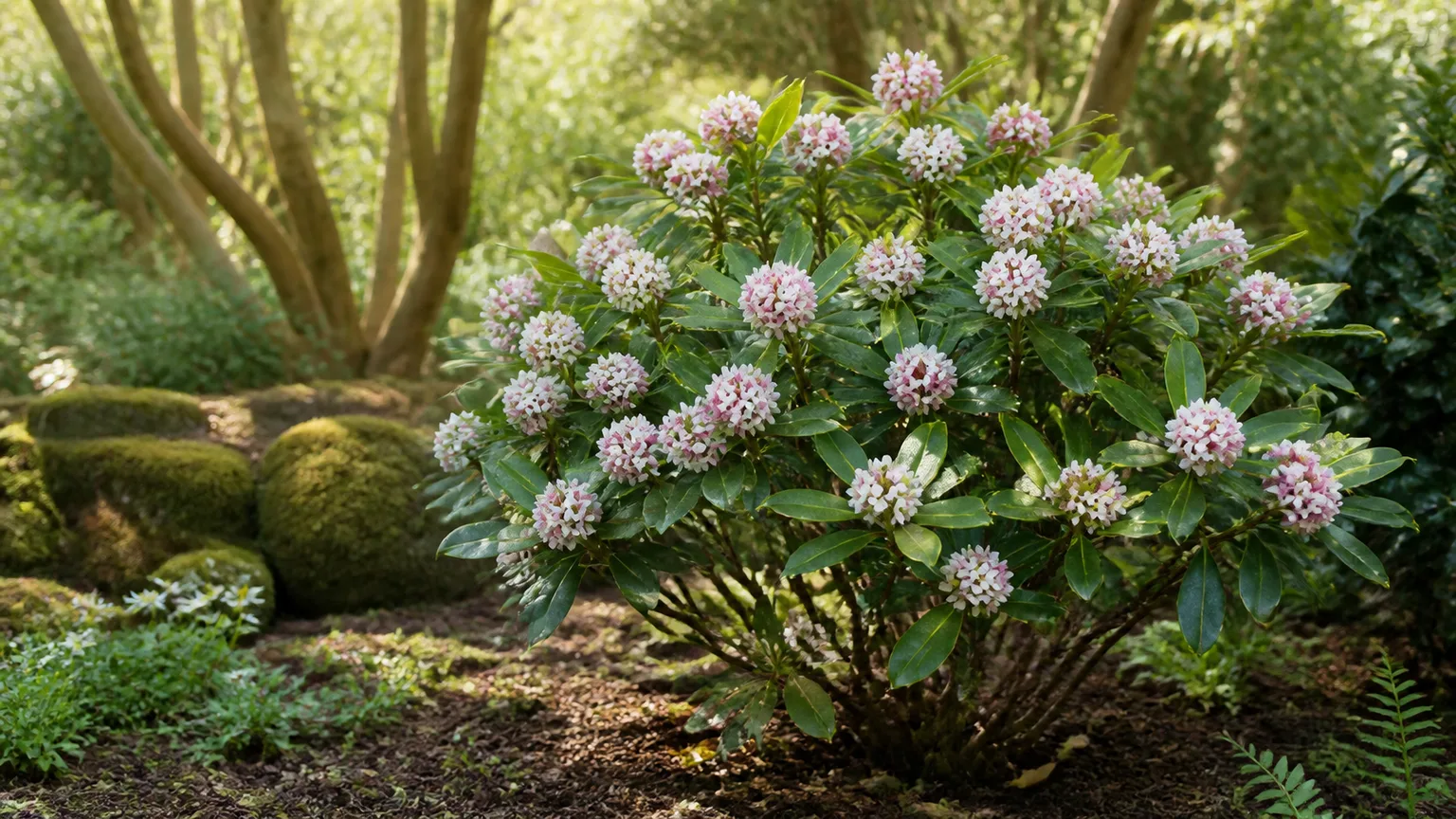
The best way to grow a Daphne shrub is to solve its site before you solve its fertilizer. Give the plant the light, drainage, moisture, and shelter that match its cultivar, then disturb it as little as possible. Once established, most Daphnes need surprisingly little routine work; the hard part is avoiding a wet root zone, a bad planting position, or a pruning job that removes next year’s flowers.
Daphne is a genus rather than a single uniform shrub. Winter Daphne (Daphne odora) is a compact evergreen with powerful late-winter fragrance, while Daphne x burkwoodii, Daphne x transatlantica, Daphne cneorum, and Daphne mezereum differ in hardiness, habit, leaf retention, and flowering season. That is why the plant tag matters more than a generic calendar for watering or pruning.
The Daphne care rule that prevents most failures
Think of Daphne as a plant that wants regular access to moisture without sitting in moisture. Its roots need water, but they also need air; heavy soil, a saucer that stays full, or frequent small drinks can keep the crown wet enough to trigger decline. NC State Extension summarizes Daphne odora as a sun-to-part-shade shrub for moist, very well-drained soil that can dry between waterings. (NC State Extension)
Use this order when something goes wrong: check the soil and drainage first, check the plant’s exposure second, and only then consider feeding or pruning. A Daphne that is yellow in wet ground does not need a stronger fertilizer; it needs more oxygen around its roots. A Daphne that is crispy in a dry, windy pot does not need shade forever; it needs a deep drink followed by a better moisture routine.
Choose a Daphne type that fits your garden
Buy the cultivar, not just the common name. Check the mature height and spread, bloom season, hardiness range, whether the plant is evergreen or deciduous in your climate, and whether it is suited to containers. If the nursery label says only “Daphne,” ask which species or hybrid you are buying before planting it beside a path or foundation.
Winter Daphne for fragrance in the cold season
Winter Daphne (Daphne odora) is the classic choice for glossy evergreen foliage and intensely fragrant pink, lavender, or white flowers in mid- to late winter. NC State lists a typical mature size of roughly 4 to 6½ feet tall and 2 to 4 feet wide, though individual cultivars can be smaller or broader. Variegated forms such as ‘Aureomarginata’ and ‘Maejima’ add cream or yellow leaf margins but still need enough light to flower well.
The trade-off is longevity and site sensitivity. D. odora can decline after only a few years even when the gardener cannot identify one dramatic mistake, so it is best planted where the soil drains reliably and the plant will not need to be moved. Treat the “evergreen” label as climate-dependent: cold winters can thin or shed foliage even when the shrub survives.
Burkwood and transatlantica types for resilience and repeat bloom
If winter Daphne is too tender or too short-lived for your conditions, look at Daphne x burkwoodii or Daphne x transatlantica. The Wisconsin Horticulture Division of Extension describes ‘Carol Mackie’ as a slow-growing, fragrant shrub that may be evergreen, semi-evergreen, or deciduous depending on climate, and notes that it has survived in colder gardens than some nursery labels suggest. (University of Wisconsin–Madison Division of Extension)
‘Carol Mackie’ flowers heavily in spring and may produce a smaller later flush. D. x transatlantica ‘Eternal Fragrance’ is useful when a longer bloom window matters because it can flower in spring and continue intermittently into summer and fall. The exact performance depends on the cultivar and climate, but choosing a type that blooms on newer growth gives you more flexibility than choosing only for the strongest winter scent.
Low-growing and deciduous Daphnes for specialist sites
Garland Daphne (Daphne cneorum) is a low, spreading choice for a rock garden, raised edge, or sharply drained slope. It is not the right plant for a damp low spot. February Daphne (Daphne mezereum) is deciduous and can flower before its leaves appear, bringing a different seasonal effect from evergreen D. odora.
The smaller a Daphne is, the easier it may be to grow in a pot, but “small” does not mean “shallow-rooted.” Low-growing forms still need a container or bed that drains freely and a stable final position. Do not select a variety solely because its nursery pot is small.
Find the right planting site before you buy
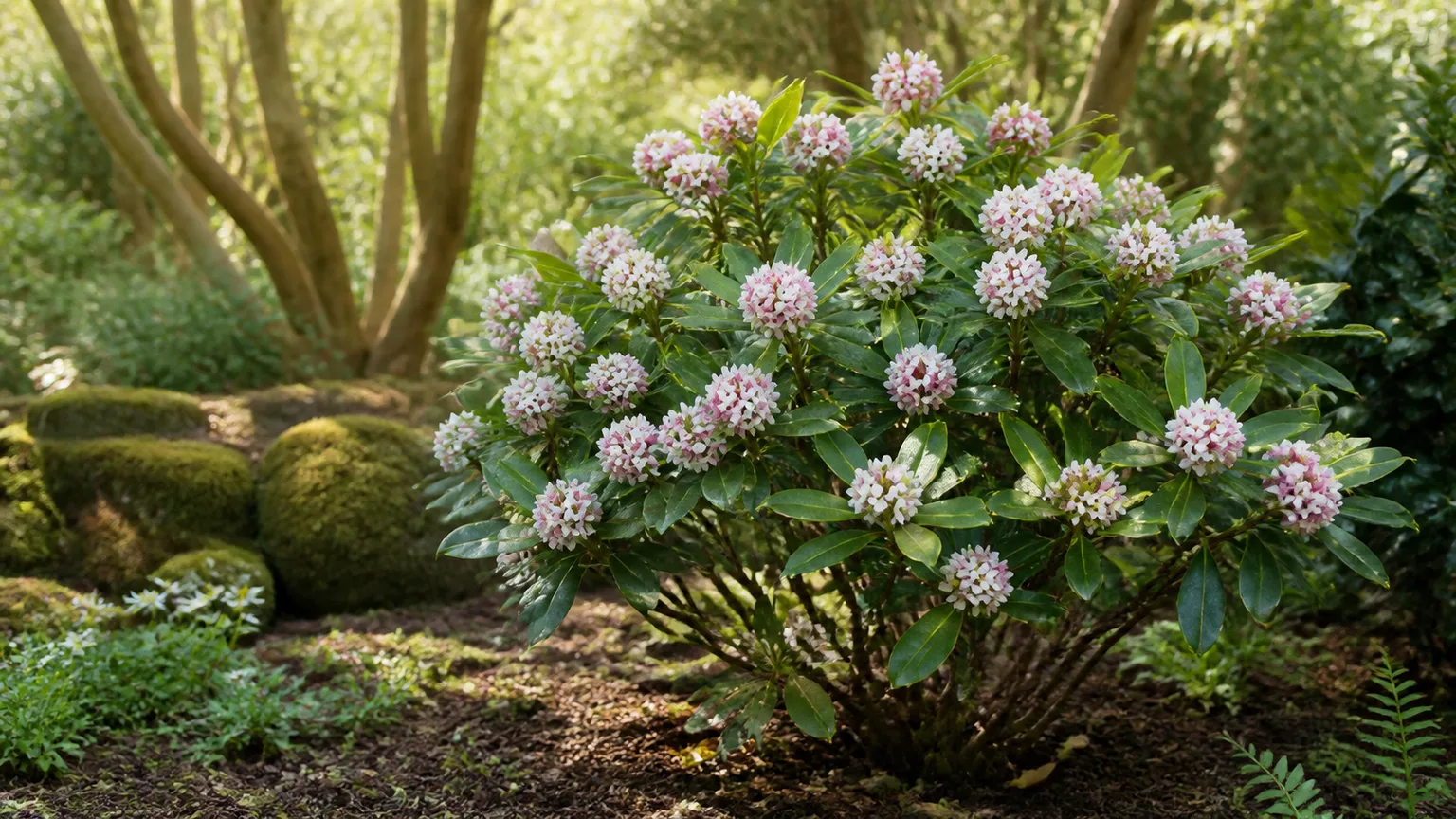
Choose the site as if the plant will stay there for its entire life. Daphnes resent root disturbance, and the Wisconsin Extension profile specifically warns that established plants do not transplant well. If the only available site is heavy clay that stays wet after rain, change the site with a raised bed or deep container—or choose a different shrub.
Light: morning sun is a safe starting point
For most garden Daphnes, start with morning sun and afternoon shade, bright dappled light, or a sheltered east-facing position. In a cool climate with moisture-retentive but well-drained soil, some types tolerate more sun. In hot climates, intense afternoon sun can scorch foliage and heat the root zone, especially in a dark container.
Full shade is not a solution for a struggling Daphne. It may reduce heat stress, but it also reduces flowering and can keep the soil wet too long. Place the shrub where air moves freely but cold winter wind does not strike it continuously; a protected woodland edge, courtyard, or the lee side of a house is often better than an exposed, windy lawn.
Soil: drainage matters more than a perfect pH number
The practical target is loose, organic, well-drained soil that holds some moisture but dries slightly between deep waterings. Many Daphnes perform in neutral to slightly acidic soil, while some nursery guidance targets a more acidic range. Test before adding sulfur or other amendments; changing pH without fixing compaction or drainage will not prevent root rot.
Improve a garden bed by building the root zone up and incorporating mature organic matter through the bed, not by packing rich compost into a small hole surrounded by clay. In heavy soil, a raised mound or raised bed is more dependable than adding a little sand. Ardcarne Garden Centre describes using an elevated, free-draining bed for heavy ground and recommends a deep, well-drained container as an alternative. (Ardcarne Garden Centre)
Avoid the opposite mistake: a very coarse, dry mix that lets the root ball turn bone-dry every few days. Daphne is not a cactus. The goal is a root zone that drains surplus water quickly while retaining enough moisture for the plant to recover between checks.
Plant Daphne once, and plant it carefully
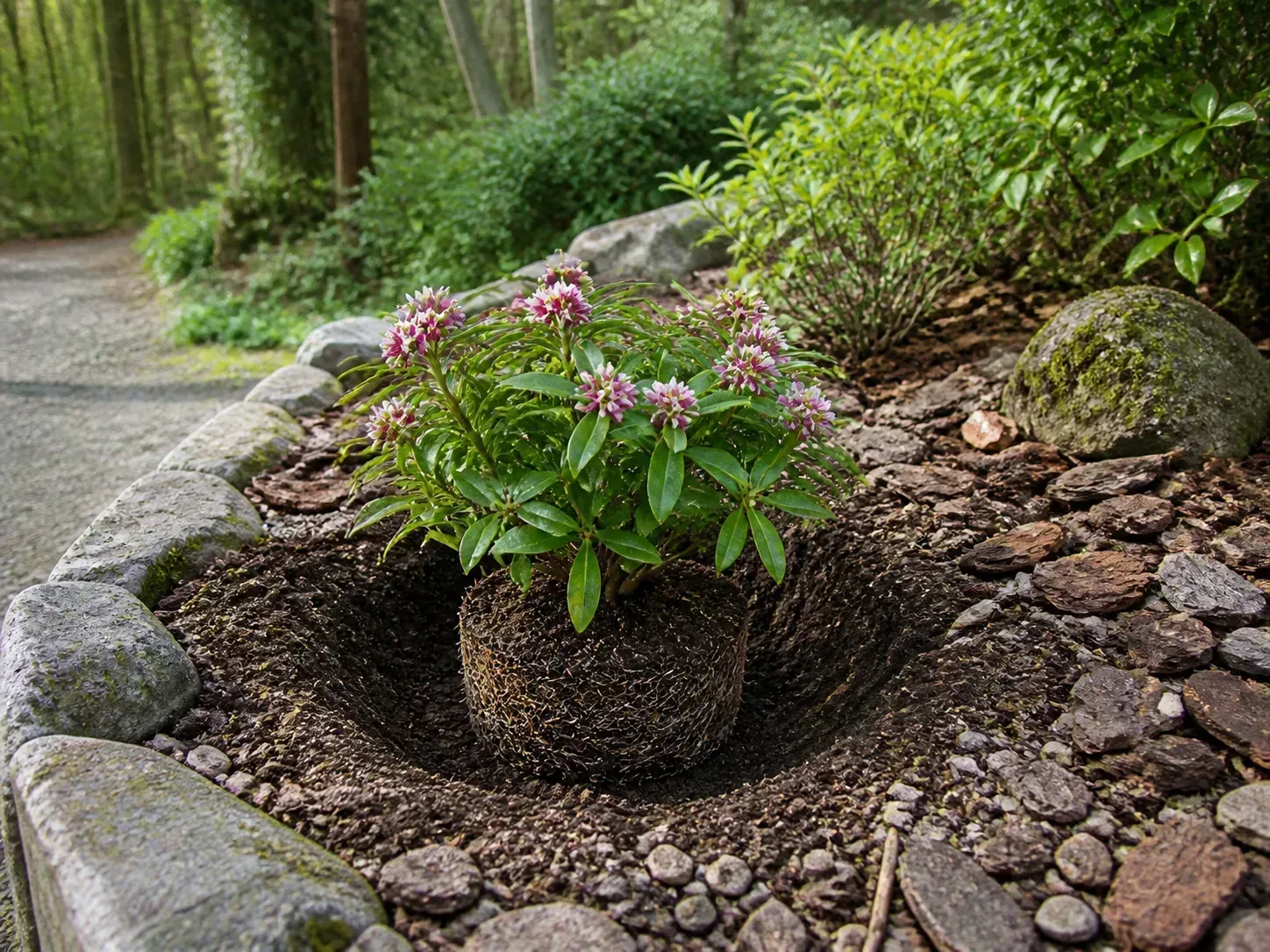
Plant in spring or early fall when temperatures are moderate and you can monitor moisture. Dig a hole about twice the root ball’s width and no deeper than the root ball. Set the shrub at the same soil level it had in its nursery container, keeping the crown and main stems above the finished soil; if it is grafted, follow the tag or nursery’s specific instruction for the graft union rather than burying it by guesswork.
Handle the root ball gently. Do not aggressively tease or wash the roots unless the plant is severely pot-bound and the nursery or local extension guidance calls for it. Backfill with the soil you removed, water slowly to settle air pockets, and add a shallow organic mulch over the root zone while keeping mulch several inches away from the stems.
The first month is a settling period, not a growth contest. Check the soil every few days, water deeply when the upper root zone begins to dry, and do not relocate the shrub because it looks temporarily quiet. Slow establishment is normal; repeated disturbance is a bigger threat than a few weeks without visible growth.
Water for a moist-but-airy root zone
Water newly planted Daphne deeply enough to wet the entire root ball and the surrounding soil, then let the surface begin to dry before watering again. In warm weather, a weekly check is a reasonable starting point, but wind, soil texture, rainfall, and pot size can move that interval dramatically. Epic Gardening recommends regular watering during establishment and using the dryness of roughly the top two inches of soil as a cue, while warning that prolonged wetness is equally damaging. (Epic Gardening)
For established plants, water during prolonged dry weather rather than automatically every week. Push a finger or a wooden skewer into the root zone; if it comes out cool and damp with soil clinging to it, wait. If the soil is dry several inches down and the leaves are losing firmness, soak the root zone slowly, then let excess water leave the bed or pot.
Do not solve a wet site by watering less and less. If the soil remains saturated for days, the repair is drainage, a raised planting position, a smaller or better-draining container, or a different plant. Do not let a decorative cachepot or saucer hold runoff against the pot base.
Feed lightly and mulch without burying the crown
Daphne is slow-growing and usually does not need a high-nitrogen feeding program. Too much fertilizer can push soft, leafy growth that is more vulnerable to breakage and winter damage, while a plant in poor light or wet soil cannot use fertilizer to repair its roots.
Top-dress with a thin layer of mature compost in spring, or use a light, slow-release shrub fertilizer only when the plant is actively growing and the label supports it. Skip feeding a declining or newly transplanted plant until the root system is functioning again. Yates’ practical guide also emphasizes well-drained soil, a slight dry-down between waterings, and feeding during the growing and flowering season rather than treating Daphne as a heavy feeder. (Yates)
Mulch is useful for moderating summer temperature and slowing evaporation, but it must breathe. Keep bark, compost, and leaf mold away from the trunk-like stems and crown. A mulch ring that touches the base can keep the most vulnerable tissue wet even when the surrounding soil looks well drained.
Prune only when the plant gives you a reason
Most Daphnes naturally form a rounded or mounded shape, so routine shearing is unnecessary. Prune only to remove dead, broken, diseased, or clearly misplaced growth, and make the cut just above a healthy node or branch junction. Wear gloves and clean tools after working on the plant.
For spring-flowering types that bloom on older wood, prune immediately after flowering if a size correction is genuinely needed. Cutting in late summer, fall, or winter can remove the next season’s flower buds. For a type that flowers mainly on new growth, the cultivar’s instructions may allow a different window, but light pruning is still safer than a hard renovation cut.
If the plant is leggy, first ask why. Low light, root stress, or a naturally open cultivar cannot be fixed by repeatedly shortening stems. Improve the site and remove only enough old or damaged growth to restore a balanced shape; severe dieback after hard pruning is difficult to reverse.
Grow Daphne in a container when the ground is wrong
A container can be the best option for a compact Daphne if your garden soil is heavy, your winter drainage is poor, or you want to move a tender cultivar into a sheltered position. It is not automatically easier. Pots dry faster in summer, freeze faster in winter, and can keep roots wet if the drainage holes are small or blocked.
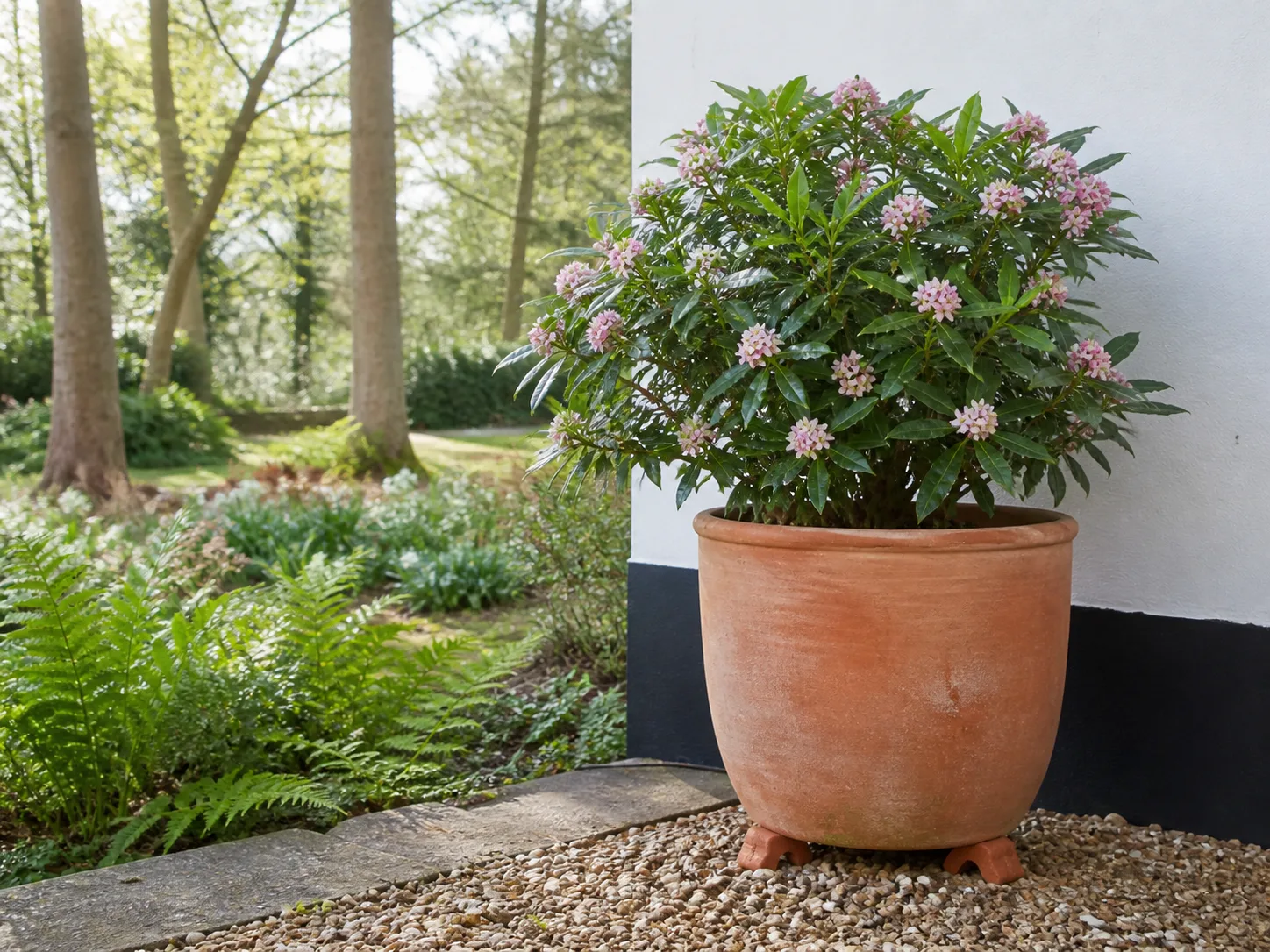
Choose a deep, stable pot with multiple drainage holes and a free-draining shrub mix that still holds some moisture. Set the pot on feet or a raised surface so water can escape, and size the container for the plant’s mature root needs rather than keeping a large shrub cramped in a decorative pot. Terracotta can help the mix dry more evenly, but it also increases summer drying and winter freeze risk.
In summer, check a potted Daphne more often than an in-ground shrub, especially in wind or full morning sun. In winter, protect the root ball from repeated freeze-thaw exposure and cold wind, but do not move the plant into a warm, dark room. A cool, bright, sheltered porch or unheated greenhouse is more appropriate for a container that is not hardy enough for your outdoor exposure.
Propagate from semi-ripe cuttings with realistic expectations
Daphne can be propagated from semi-ripe stem cuttings, but it is slower and less predictable than propagating many common shrubs. NC State notes that D. odora is easy to propagate from stem cuttings even though plants often have a short lifespan, while GardenFocused explains that some Daphnes have high cutting failure rates and are commonly grafted. (NC State Extension) (GardenFocused)
Take several healthy, non-flowering cuttings in mid- to late summer when the current season’s growth is firm but not fully woody. Make each cutting 4 to 6 inches long, cut just below a node, remove the lower leaves, and leave a small set of leaves at the tip. Dip the base in rooting hormone if desired, insert it into a sterile, airy propagation mix, and water so the mix is evenly moist but never swampy.
Cover the pot with a clear propagation lid or loose plastic that does not touch the foliage. Keep it in bright, indirect light with gentle airflow. Check for roots after several weeks, but expect the process to take months; once rooted, pot the cutting on and keep it growing until it has enough new growth and a stable root ball to survive planting out.
Seed propagation is not a shortcut to a named cultivar. Seedlings vary, and a plant grown from a cultivar’s seed may not reproduce the parent’s fragrance, foliage, size, or bloom season. If you want a reliable ‘Carol Mackie’ or ‘Aureomarginata,’ buy a correctly labeled plant or propagate vegetatively from a known specimen.
Diagnose yellow leaves, brown leaves, and sudden decline
Daphne symptoms overlap, so diagnose the root zone before reaching for spray or fertilizer. Look at the pattern, feel the soil several inches down, inspect the drainage hole, and consider what changed in the last month: a heat wave, nonstop rain, transplanting, a fertilizer application, or a sudden move into sun.
Brown, crispy foliage
Brown, crisp leaf edges usually point first to drought stress, hot wind, root damage, or a container that is drying too fast. Check the soil depth rather than watering based on the leaf alone. If the soil is dry, water the root ball deeply and protect the plant from harsh afternoon exposure while it rehydrates; if the soil is wet, do not add more water because damaged roots cannot take it up normally.
Brown patches that spread after wet weather can also reflect leaf-spot or other disease pressure. Remove badly damaged leaves, improve airflow, avoid wetting foliage late in the day, and correct the moisture problem. Do not compost diseased material if local guidance advises against it.
Yellow or drooping foliage
Yellow leaves with wet, heavy soil and a sour-smelling root zone are more consistent with overwatering or root decline than hunger. Stop routine watering, confirm that drainage holes are open, move a pot out of standing runoff, and inspect roots only if the plant is already failing badly. Healthy roots are generally firm; soft, dark, collapsing roots are a serious warning sign.
Yellowing in a dry root ball points in the opposite direction. Rehydrate gradually, then adjust the interval so the plant receives a thorough soak before the root zone becomes severely dry again. If watering and drainage are correct but new leaves remain pale, test soil pH and review light before applying a stronger feed.
Leaf drop, dieback, and a plant that will not bloom
Some leaf drop is normal for semi-evergreen and deciduous varieties, especially after a cold winter or dry summer. A sudden whole-plant collapse is different: check the crown, the drainage, recent weather, and whether the roots were disturbed. The Wisconsin Extension profile notes that Daphnes can die unexpectedly and are susceptible to root rot, which is why choosing the final site carefully matters more than trying to rescue a bad position later. (University of Wisconsin–Madison Division of Extension)
No flowers usually means the plant is too young, too shaded, stressed by drought, damaged by a late prune, or simply a cultivar that blooms at a different time than expected. Compare the tag’s bloom season with the plant’s age and recent weather. Do not force blooms with high-nitrogen fertilizer; that commonly produces foliage at the expense of the compact, flower-bearing growth you want.
Handle Daphne safely around people and pets
Treat all Daphne plant parts as unsafe to eat. Pet Poison Helpline identifies irritant toxins in the foliage, bark, and berries and reports blistering, redness, and swelling after oral or ocular contact, with vomiting and diarrhea also possible in dogs, cats, and livestock. (Pet Poison Helpline)
Keep berries and prunings away from children, pets, and grazing animals, and wear gloves when pruning or propagating. Wash sap from skin promptly and avoid touching your eyes. If a person or animal may have chewed Daphne, do not wait for symptoms or try to induce vomiting without professional direction; contact a poison-control service, veterinarian, or emergency service and identify the plant and the part involved.
Conclusion: give Daphne a permanent, breathable home
Daphne care is mostly a placement decision. Choose a cultivar suited to your climate, give it morning sun or dappled light, build a root zone that drains excess water, water deeply when the soil begins to dry, and leave the plant alone once it is settled. Feed lightly, prune only for a clear reason, and treat containers as a drainage-and-winter-management project rather than a decorative afterthought.
The shrub may still be slower or shorter-lived than you expect; that is part of the genus, not automatically proof of bad gardening. If you match the plant’s limits to the site—and keep its toxic foliage, bark, and berries away from animals and children—the reward is one of the garden’s most memorable fragrances at a time when few other shrubs are in bloom.