How to Get Rid of Grasshoppers With Vinegar
A practical grasshopper plan: test diluted vinegar around the perimeter, protect vegetables with covers, find nymphs early, and avoid plant damage.

If grasshoppers are nibbling your beans, lettuce, flowers, or young seedlings, vinegar may seem like an easy answer. It is cheap, already in the pantry, and strongly scented. The honest answer is narrower: diluted household vinegar may make a small area less appealing for a short time, but it is not a dependable way to kill or control a grasshopper population.
That distinction matters because vinegar is also an acid that can injure plants. A spray that looks harmless on a kitchen counter can scorch tender leaves, especially in hot sun, and a stronger acetic-acid product is a nonselective herbicide rather than an insect repellent. Use vinegar, if you use it at all, as a cautious perimeter experiment while you put more reliable controls in place.
The most effective sequence is simple: confirm the pest, protect the plants that matter most, look for young wingless nymphs before they spread, reduce the weedy habitat feeding the invasion, and escalate only with a product whose label allows the crop and site. That approach gives vinegar a realistic role without asking it to do a job it cannot reliably do.
The short answer: vinegar is a temporary deterrent, not a cure
Household white vinegar is usually about 5 percent acetic acid. There is no dependable, label-backed garden-control rate that turns ordinary kitchen vinegar into a grasshopper treatment. Extension IPM guidance for grasshoppers emphasizes barriers, early control of nymphs, habitat management, selective baits, and carefully chosen labeled insecticides; it does not present a vinegar spray as a stand-alone solution. See the UC IPM grasshopper management guide and Oklahoma State University Extension’s control guidance for that broader context.
So, does vinegar kill grasshoppers? Do not count on it. A direct spray might irritate or kill an individual insect if it wets the body thoroughly, but that is very different from stopping the steady arrival of new adults from a lawn, roadside, pasture, or weedy lot. A perimeter odor may buy a little time around a small bed, but rain, sun, wind, plant growth, and hungry insects quickly erase that advantage.
If the garden is already losing leaves every day, skip the vinegar experiment as your primary response. Cover the highest-value plants first, hand-pick visible hoppers where practical, and inspect the surrounding vegetation for nymphs and fresh feeding.
Confirm grasshoppers before spraying
Grasshopper damage is distinctive enough to spot, but it is easy to blame every ragged leaf on the most visible insect. Before applying any remedy, inspect the plant at dawn or dusk, look under leaves, and check the soil and weeds around the bed. A correct diagnosis prevents you from spraying an acid solution for slugs, caterpillars, rabbits, or weather damage.
Signs the damage fits
Grasshoppers have chewing mouthparts, so they remove pieces of tissue rather than leaving a fine rasped surface. Look for irregular holes with fairly clean, uneven edges, missing sections along the leaf margin, ragged flower petals, and young stems or fruit with fresh bites. Damage is often concentrated on the tender new growth that is easiest to eat.
You may also see the insect itself: a stocky body, enlarged hind legs, short antennae, and a powerful jump when you disturb the foliage. Small nymphs look like miniature grasshoppers without fully developed wings. They often cluster in grasses or weeds near the garden before moving into greener, irrigated plants.
The UC IPM life-cycle and damage notes explain why a garden can seem to be attacked overnight. Most species overwinter as eggs in undisturbed soil, nymphs feed near their hatching sites, and adults can move long distances when local forage dries out.
When another pest is more likely
Slugs and snails tend to leave shiny trails and irregular holes, often feeding overnight close to the soil. Caterpillars may leave droppings, webbing, or partially chewed leaves, and they frequently hide on the undersides of foliage. Rabbits and deer remove larger bites from outer leaves and may leave stems or plants bent rather than peppering a plant with small chewing gaps.
Sun scorch, hail, wind tearing, and herbicide drift can mimic chewing. If the damage is tan and papery without fresh edges, or if every plant on the downwind side is affected in a similar pattern, pause before spraying. Vinegar would add another source of injury without fixing the original problem.
Why grasshoppers show up in gardens
Your garden is often an oasis beside drying grass. Irrigation keeps leaves succulent, vegetables supply concentrated food, and the bed may sit next to unmowed edges, ditches, vacant lots, or pasture where grasshoppers developed. Oklahoma State Extension describes irrigated yards and gardens as especially attractive during hot, dry periods because surrounding vegetation loses moisture while the garden remains green.
The timing of the invasion tells you which control is realistic. In late summer and fall, females commonly lay egg pods in undisturbed soil such as field edges, roadsides, fencerows, and weedy margins. The following spring, nymphs hatch without wings and are easier to intercept. As they molt and become adults, they jump farther, fly, and can arrive from beyond your property.
This is why a spray can appear to “fail” even when it affected the insects that were present. New grasshoppers may simply replace them. Colorado State University Extension’s grasshopper guidance for gardens and small acreages makes the same practical point: mobility and reinvasion make area-wide timing and prevention more important than repeatedly treating one plant.
What vinegar can and cannot do
Think of vinegar as a possible short-lived deterrent around a boundary, not as a treatment that cleans grasshoppers out of the garden. A diluted scent may discourage a few insects from crossing a small, dry perimeter, and the odor may change briefly after application. That effect is inconsistent, weather-dependent, and much less useful once insects are already feeding inside the bed.
Do not confuse “natural” with “safe for plants.” Vinegar is acetic acid in water, and acid is not selective about what it touches. It can injure leaves, flowers, seedlings, tender stems, moss, and shallow-rooted plants. It can also damage weeds and desirable plants along the edge, which is why the University of Illinois explains that vinegar works as a nonselective herbicide when the concentration is high enough, with complete coverage needed for weed tissue and no residual control after it dries. Read Not Your Household Vinegar from University of Illinois IPM before treating any area near plants.
The practical rule is: if the spray has to land on the crop to work, it is the wrong tool for your edible garden. Use a barrier to stop feeding, or choose a labeled pest product after confirming the crop, target, application interval, and harvest restrictions.
The plant-burn problem
Sun, heat, drought stress, and tender foliage all make damage more likely. A leaf wet with an acidic solution can develop pale spots, brown margins, or dead patches after drying. New seedlings and soft herbs are especially poor candidates for experimentation. Spraying the soil is also a bad trade: it can harm nearby vegetation and soil organisms without creating a lasting insect barrier.
Never mix vinegar with bleach, ammonia, or other cleaners. Do not add dish soap merely because a recipe online says it improves coverage; soap can increase wetting and therefore increase leaf injury, while the mixture still has no established grasshopper-control rate. Keep any test mixture clearly labeled and away from children, pets, food-preparation surfaces, and waterways.
The safest way to test a vinegar perimeter
If you want to find out whether a mild vinegar odor helps your particular garden, test the space around the crop, not the crop itself. Use ordinary distilled white vinegar diluted with water, and treat only a small, nonporous perimeter such as a path edge or the outside of a raised-bed frame. Do not pour it into soil, spray mulch beside roots, or mist foliage.
The commonly repeated household ratio is one part vinegar to three parts water. Treat that as a cautious home experiment, not a proven pesticide recipe. The final mixture still contains acetic acid, and its results will vary by vinegar strength, weather, grasshopper species, and the availability of food nearby. Do not use concentrated horticultural vinegar in this experiment; products at 10 to 30 percent acetic acid are herbicides and require label directions and protective equipment, as University of Illinois IPM explains.
A 24-hour test protocol
- Choose a small test strip. Pick an outside edge with no leaves, flowers, exposed roots, edible mulch, pond, or pollinator plant within the spray zone.
- Mix only what you need. Use a clean, labeled spray bottle. Do not add bleach, ammonia, essential oils, or soap.
- Apply in cool, calm conditions. Early morning or evening reduces evaporation and drift, but do not spray when wind can carry droplets onto leaves. Avoid application before rain.
- Observe the boundary. For the next day, compare grasshopper activity on the treated edge with an untreated edge. A few fewer hoppers is not proof of control; they may simply be elsewhere or temporarily disturbed.
- Stop at the first sign of plant contact or damage. If droplets reach leaves, rinse the foliage with clean water promptly. If the test does not change activity within a day, abandon it rather than increasing the concentration or frequency.
Reapply only if the experiment appears to give a brief, useful buffer and the boundary remains away from plants. Rain and irrigation will dilute or remove it. Treating twice a week or every few days is not a substitute for exclusion, and constant spraying can turn a weak deterrent into repeated chemical stress on the garden edge.
Protect plants first with physical barriers
For a small vegetable bed, exclusion is usually a better first investment than a repellent. A lightweight floating row cover or insect mesh creates a physical gap between chewing insects and leaves. Drape it over hoops, bury or clip the edges, and check the entire bottom seam; one loose corner can be enough for grasshoppers to enter.
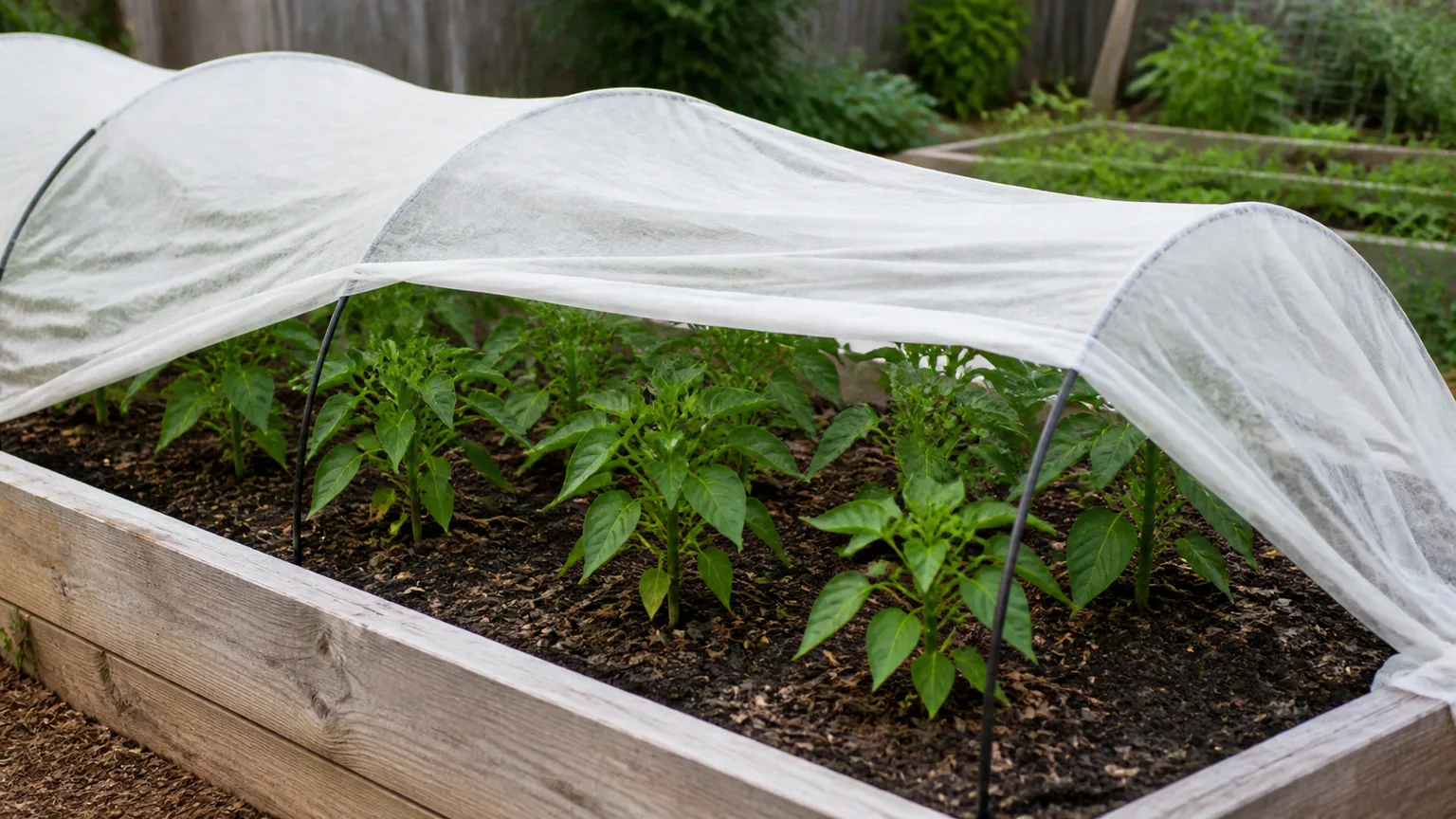
The Utah State University three-tip grasshopper guide recommends floating row cover for sensitive vegetables and herbs. This approach is particularly useful for seedlings, leafy greens, and a single high-value bed where a perimeter spray would be hard to keep off the crop.
Build a cover that grasshoppers cannot enter
Choose a fabric with openings small enough to exclude the insects you are seeing, and leave enough slack for plants to grow without pressing leaves against the material. Grasshoppers can chew or push through weak fabric when populations are high, so inspect for holes and consider sturdier metal window screening around the sides or for a short, high-pressure period. Do not assume a cover is sealed because it looks tidy from above.
Covers create trade-offs. Remove or open them when squash, cucumbers, melons, or other insect-pollinated crops need pollinators, unless you are hand-pollinating. Vent the bed during extreme heat and check moisture underneath; a protected plant can still wilt. Keep the fabric off flowers that need regular visits, and close it again after pollination or when the vulnerable stage returns.
For ornamental plants that cannot be covered, use a hand net or hand-pick grasshoppers into a container in the cool part of the day. This is tedious but precise, and it avoids coating every leaf with a substance that may harm pollinators or cause scorch.
Use timing to catch nymphs
Grasshopper control is easier when the insects are young, concentrated, and wingless. Nymphs cannot fly away from a disturbed patch as readily as adults, and they have not yet spread across the full garden. Walk the sunny border, weedy corners, and dry grass at the same time each morning for a week. Look for small hoppers moving through grass rather than waiting until large adults are sitting on the crop.
The Colorado State Extension resource notes that species and timing vary, but young stages are generally the key management window. UC IPM reports that major migrations can carry adults many miles in a day during outbreaks. Once a moving front of adults reaches the bed, no home remedy can create a reliable force field around every leaf.
When you find a local nymph hotspot, remove weeds only after deciding how to avoid flushing insects directly into the crop. Mow or manage the outside area in sections, keep the protected bed covered, and work from the garden outward when possible. If a neighboring pasture or vacant lot is the source, coordinate broad-area management rather than repeatedly treating your own plants.
Make the surrounding yard less inviting
The goal is not to make every inch of the property bare. It is to keep a green garden from being the only good food source next to dry, sheltered vegetation. Regularly remove tall weeds from paths, fence lines, and immediately around the bed. Keep grass at a manageable height where it hides hoppers, but do not remove every flowering plant or groundcover that supports beneficial wildlife.
Weeds, mowing, and trap borders
Weeds can feed young grasshoppers and provide cover, while an irrigated garden remains lush after the surrounding plants dry. Mow and weed the immediate approach routes, then monitor the border for movement. Avoid sudden, indiscriminate clearing right against the crop during an active invasion; disturbed insects may jump straight into the plants you are trying to protect.
A trap border can work when you have space and can manage it deliberately. UC IPM describes keeping a lush, attractive green border of tall grass or other plants around a garden to divert grasshoppers away from vegetables. The important catch is that the border must stay green and be monitored. If it dries out, or if you let the hopper population build unchecked, the trap crop becomes a launch pad into the bed.
Do not plant a trap border where it will shade vegetables, spread weeds, or create a permanent refuge beside seedlings. Give it a defined edge, inspect it for nymphs, and decide in advance whether you can manage it with hand-picking, approved bait, or mowing at the right time. A trap crop is a tool, not a magic ring.
Use predators and habitat carefully
Birds, toads, lizards, spiders, robber flies, and other predators eat grasshoppers. A garden with shallow water, dense native plant structure, leaf litter in appropriate places, and fewer broad-spectrum sprays can support those allies. Mother Earth News’ practical natural-control account also highlights birds, toads, poultry, garlic, hand-picking, and traps as pieces of a longer plan.
Predators help most when grasshopper numbers are low to moderate and the habitat is connected. They will not reliably stop a regional migration, and bird feeders alone do not guarantee that birds will hunt the insects in your vegetable bed. Water sources need hygiene, and poultry need fencing: chickens, ducks, and guinea fowl may eat grasshoppers, but they can also scratch up roots, flatten seedlings, and eat produce.
Avoid spraying vinegar, neem, soap, or insecticide indiscriminately across flowering plants when predators and pollinators are active. Natural does not mean harmless to every insect. If you choose neem or another botanical product, use only a product labeled for the crop and pest, follow its pollinator precautions, and do not assume “organic” removes the need for a label.
When vinegar is not enough
Switch strategies when you see fresh damage increasing for two consecutive days, more than a few grasshoppers on each plant, nymphs moving out of the border, or adults arriving from several directions. At that point, vinegar is likely to consume time without changing the outcome. Cover priority plants, remove visible insects, and focus on the source and life stage.
For a localized problem, barriers and hand removal may be all you need. For a larger garden, a monitored trap border or a properly timed, labeled bait may make more sense than spraying the entire crop. Baits containing Nosema locustae can be selective for grasshoppers but are slow acting, species-dependent, and most useful against young insects in the right setting; UC IPM details those limitations.
Escalate with labeled products, not kitchen mixtures
If crop loss justifies a pesticide, identify the exact product and read the current label before mixing anything. Confirm that the label permits grasshoppers on the specific crop or ornamental, note the application interval and preharvest interval for edible plants, and protect bees, aquatic life, and natural enemies. Never transfer a rate from a lawn product to vegetables, or from one formulation to another.
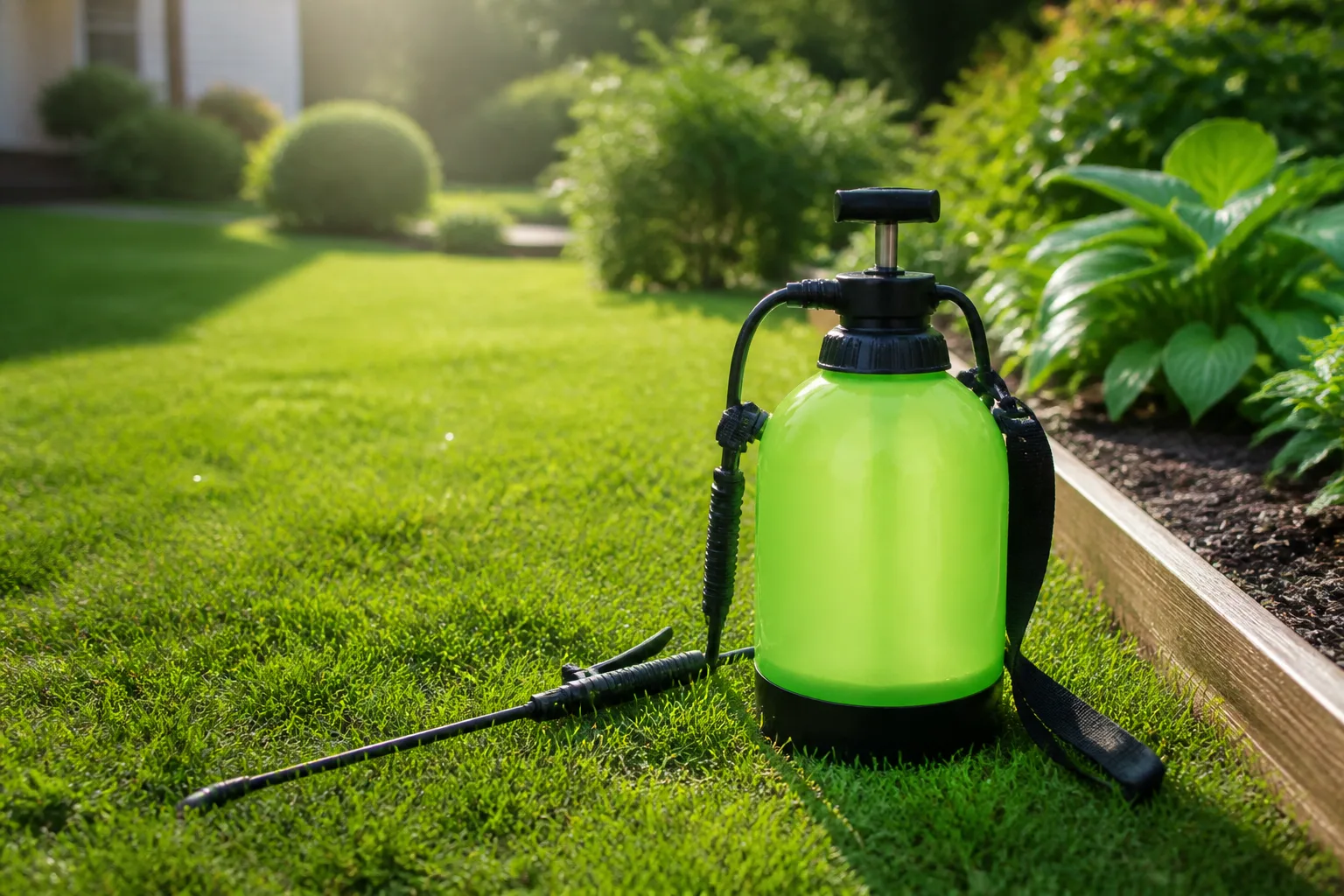
Extension sources warn that residual control can be short, especially in hot sunlight and where new adults keep arriving. The Oklahoma State guidance describes barriers, plant selection, biological options, and labeled treatments as parts of a management plan, not a single universal spray. The USU guidance likewise distinguishes baits, dusts, and sprays and stresses checking the allowed application site.
Do not use a stronger vinegar, dish-soap cocktail, or homemade “natural insecticide” as an improvised escalation. Strong acetic acid can burn skin and eyes and kill desirable plants; soap can damage foliage; and neither combination solves the reinvasion problem. If the label and the crop do not match, choose a different method or ask your local extension office for help.
A practical seven-day action plan
Day 1: Confirm and triage. Inspect at dawn or dusk, photograph the damage, count hoppers on several plants, and mark the bed edge where they enter. Cover seedlings and leafy greens immediately if you can.
Day 2: Remove the easy targets. Hand-pick visible grasshoppers, close gaps under covers, and check the nearest weeds and tall grass for nymphs. Do not spray an entire bed just because one adult jumped through it.
Day 3: Improve exclusion. Tighten clips, bury cover edges, patch tears, and ventilate under fabric if the weather is hot. If flowers need pollination, plan the open period rather than leaving the cover off all day.
Day 4: Manage the approach. Mow or weed the immediate route into the garden in sections, keeping the crop covered. Avoid turning a large refuge into a bare, disturbed strip that launches insects into your plants.
Day 5: Decide whether vinegar earns a place. If activity is light and the perimeter is plant-free, run the small diluted-vinegar test. Compare it with an untreated edge, and stop if you see drift, plant contact, or no meaningful change.
Day 6: Add habitat support. Keep clean water available for wildlife, preserve useful predator habitat, and fence poultry away from the crop. Do not expect bird feeders or companion plants to solve an active outbreak by themselves.
Day 7: Escalate based on damage, not frustration. If fresh feeding is slowing, continue monitoring and maintain the cover. If damage is accelerating, identify the life stage and crop label needs, then contact your extension service or select a properly labeled control rather than increasing a kitchen mixture.
This sequence also creates a useful record for next year. Note the first date you saw nymphs, the direction adults arrived from, which crop suffered, and when the surrounding grass dried. Early observations are more valuable than a late-season guess at what went wrong.
Conclusion
Vinegar might help a little at the edge of a small garden, but it is not a reliable grasshopper killer and it is not safe to treat as a harmless leaf spray. The safest role for a diluted household mixture is a limited, plant-free perimeter test with realistic expectations and a quick stop rule.
Your real control comes from stacking methods: identify the damage, protect valuable plants with a tight cover, catch nymphs before they grow wings, manage weedy approach routes, support predators without harming them, and use only crop-labeled products if the loss justifies escalation. When grasshoppers keep arriving from outside your yard, the answer is better timing and exclusion—not a stronger bottle of vinegar.