How to Create a Mediterranean Garden in Your Yard
Plan a Mediterranean garden with gravel hardscape, drought-tolerant plants, layout rules, and zone-specific swaps so your yard looks sun-soaked—not struggling.
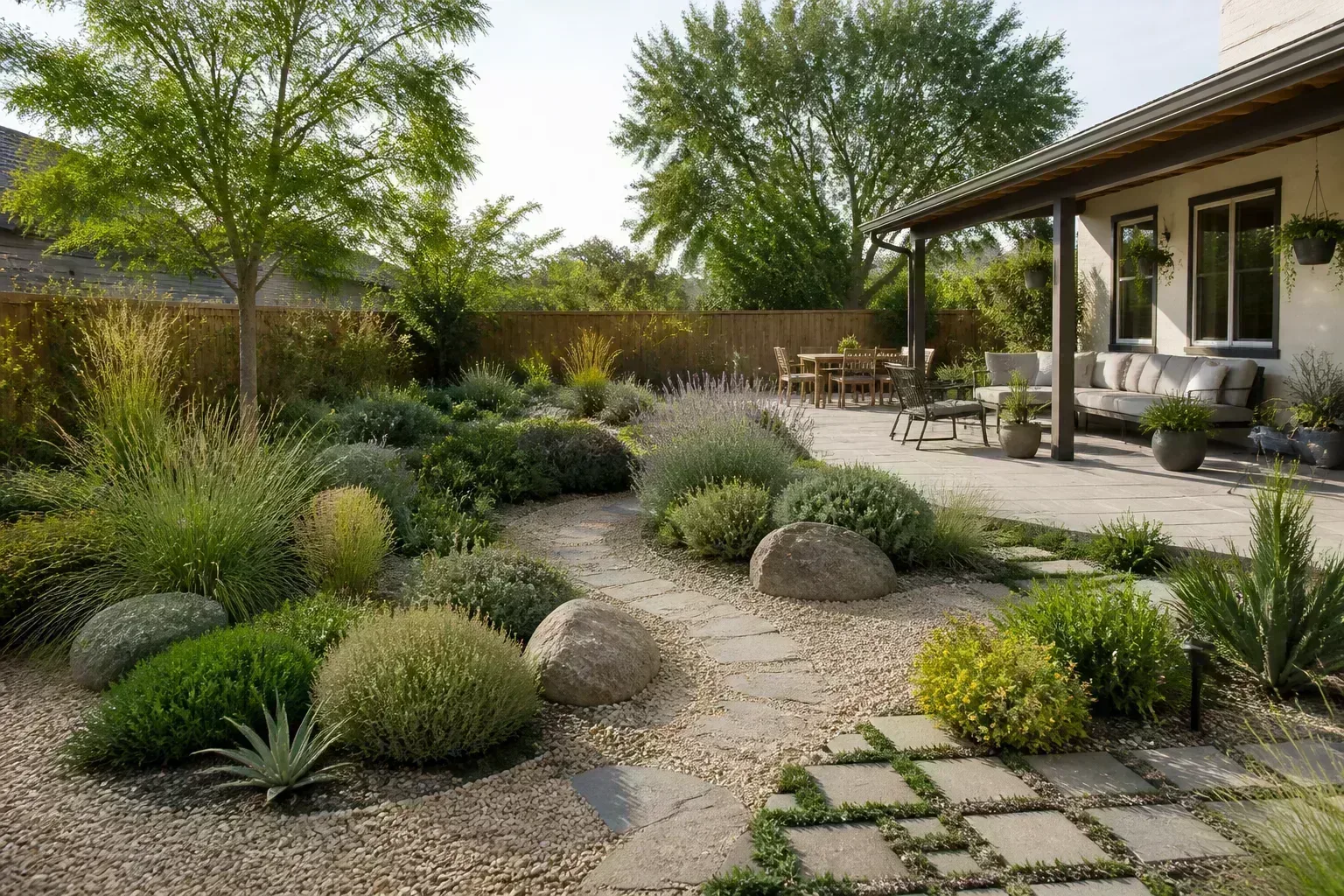
A Mediterranean garden is not a bag of lavender plugs dropped into mulch beside a struggling lawn. It is a dry-climate design language: silvery foliage, fragrant herbs, stone and gravel underfoot, and enough negative space that each plant reads clearly. Done well, an ordinary suburban yard can feel like a sun-washed courtyard in Provence or Andalusia. Done poorly, you get woody, floppy herbs in soggy soil and a patio that looks like a hotel lobby transplanted to Ohio.
The difference is almost never budget. It is sequence. You decide whether your site can support the style, fix drainage and hardscape, then plant in repeated groups that match your watering zones. This guide walks through that order so you build a yard that looks better every year instead of fighting your climate from day one.
What a Mediterranean Garden Actually Is (and Is Not)
Mediterranean gardens evolved along the Mediterranean Sea basin—southern Europe, coastal North Africa, and the Levant—where summers are hot and dry, winters are mild and wet, soils are lean and stony, and sun is intense. The look follows those constraints.
Five traits separate the style from generic “drought-tolerant landscaping”:
Silvery and grey-green foliage dominates the palette. Lavender, sage, rosemary, santolina, and many ornamental grasses reflect heat rather than chasing emerald lawn color.
Gravel or stone replaces turf as the ground plane. Decomposed granite, pea gravel, or crushed stone acts as living mulch, improves drainage at the crown of plants, and visually unifies paths with planting beds.
Terracotta, limestone, and stucco carry the hardscape story. Unglazed pots, warm flagstone, and honey-toned walls matter as much as plant choice.
Fragrant culinary herbs are structural plants, not garnish in a corner pot. Rosemary hedges, thyme between pavers, and lavender repeated along a path are the backbone.
Sparse, repeated planting with strong focal points beats a collector’s garden. One olive, a pair of cypress columns, or a wall fountain often does more design work than fifteen one-off perennials.
What it is not: an English cottage border, a tropical resort planting, or a zero-maintenance rock pile. Mediterranean gardens are lower water and lower mowing than lawns, but they are not no-maintenance. Woody herbs need seasonal pruning. Gravel needs edging and occasional top-dressing. The payoff is fragrance, texture, and a yard that thrives on neglect only after roots are established.
Is Your Yard a Good Fit for Mediterranean Style?
Before you buy an olive tree, run an honest site check. Mediterranean plants share a tolerance for lean soil, sharp drainage, and summer dryness. They do not share a tolerance for humid summers, heavy shade, or standing water.
Climate and Summer Dryness
The defining climate pattern is dry summer / wet winter. That describes much of California, the inland West, Texas, and parts of the Pacific Northwest. It does not describe the humid Southeast, where lavender and rosemary often rot in summer even when winters are mild.
Check your USDA hardiness zone for winter survival, but zone alone is not enough. A zone 7 yard in Oregon with dry summers can grow many Mediterranean plants on a raised gravel berm. A zone 8 yard in Georgia with steamy August nights may need a Mediterranean-inspired palette—hardscape, gravel, terracotta—planted with humidity-tolerant substitutes like lantana, yucca, or native drought grasses instead of classic lavender fields.
Rule of thumb: If your turf struggles from too much rain in summer, not too little, treat classic Mediterranean herbs as container or raised-bed experiments until you have proved drainage.
Soil, Drainage, and Slope
Mediterranean plants fail fastest in heavy clay that holds water. Lavender and rosemary are woody shrubs that want air at the root crown; a week of soggy soil can kill an established plant.
Dig a test hole 12 inches deep, fill it with water, and time drainage. If water sits for hours, plan one of these fixes before planting:
- Raised gravel berms 8–12 inches above grade for herbs and perennials
- Amended planting pockets with coarse sand and grit mixed into native soil—only in the hole, not the whole yard if that creates a bathtub
- Surface grading so water moves away from patios and plant crowns
Slopes help. A gentle pitch lets you mimic the hillside plantings of the actual Mediterranean. Steep slopes may need terracing; see our hillside landscaping ideas guide for retaining strategies that still leave room for gravel paths.
Start With a Layout Plan Before You Buy Plants
Inspiration photos skip the boring part: your yard’s sun map, traffic lines, and hardscape bones. UF/IFAS landscape planning guidance stresses knowing climate, topography, soil, sun and shade, and how people move through the space before selecting plants (UF/IFAS design planning tips). Mediterranean design rewards that discipline more than most styles because hardscape is half the story.
Map Sun, Views, and Daily Traffic
Spend one summer afternoon sketching:
- Sun at 10 a.m., 2 p.m., and 5 p.m. Herbs need six or more hours of direct sun for compact growth. Afternoon shade from a fence can be enough to weaken rosemary in humid regions.
- Views from windows and seating. Mediterranean courtyards often aim a fountain or potted olive at the sightline from the kitchen door.
- Daily paths. Gravel is charming; it is less charming under a stroller wheel or the dog’s shortcut to the gate. Flagstone or pavers belong on high-traffic lanes.
Mark a shade structure early. A pergola, shade sail, or small tree over the dining area is not optional in hot climates—it is how you actually use the yard in July.
Decide Hardscape First
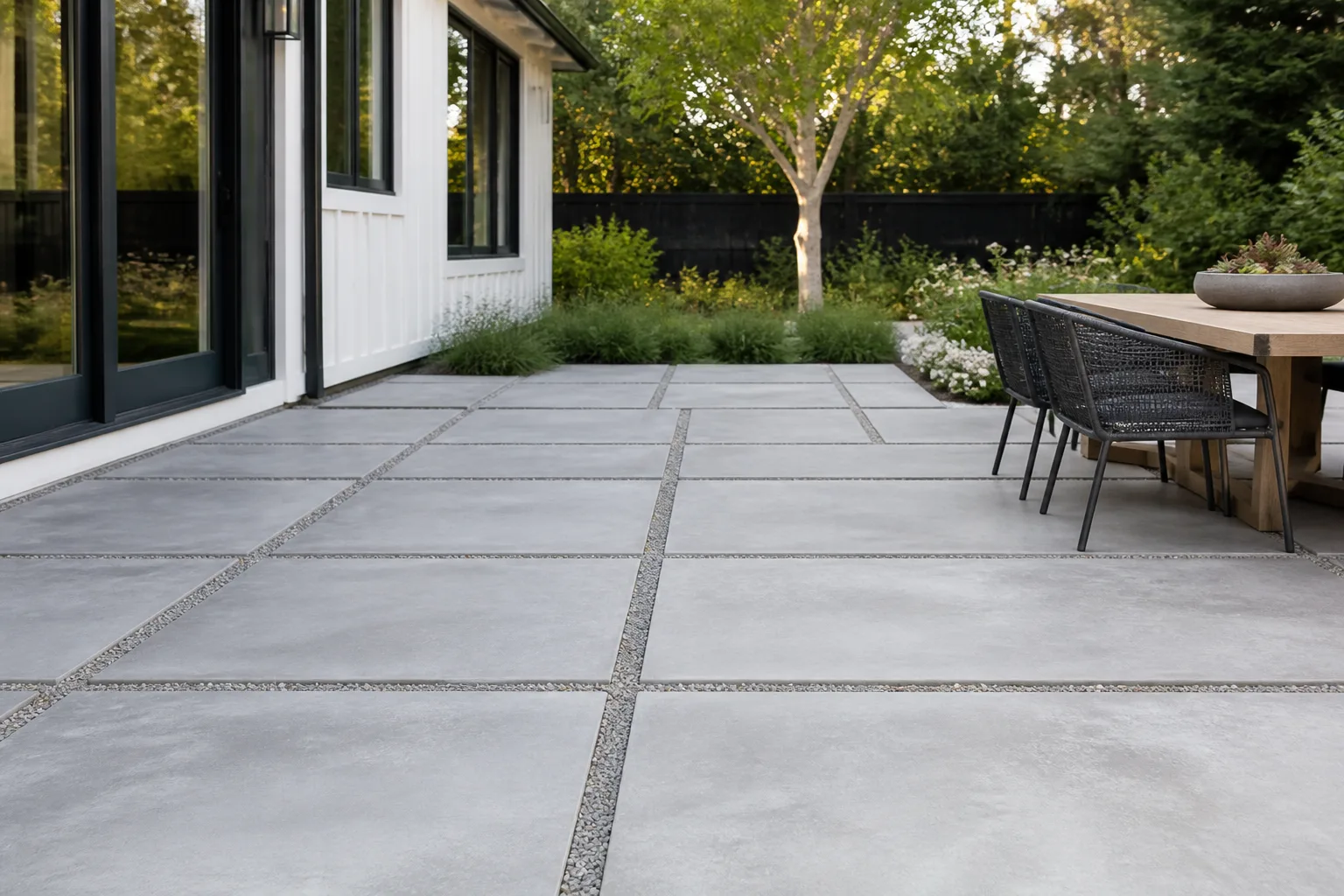
Your hardscape layout sets how many plants fit and where water flows. Hardscaping and landscaping work as one system: patios and paths define outdoor rooms; planting softens edges and manages heat.
For Mediterranean style, plan these elements on paper first:
| Element | Role | Typical material |
|---|---|---|
| Main patio or courtyard | Dining, seating | Flagstone, travertine, or concrete pavers with gravel joints |
| Paths | Circulation | Matching gravel or stone; thyme in low-traffic joints |
| Edging | Keeps gravel in place | Steel, brick, or stone border |
| Walls / fences | Enclosure, privacy | Stucco, stone, or hedge screen |
| Focal feature | Visual anchor | Fountain, urn, or specimen olive |
| Planting beds | Soft structure | Raised berms or bordered pockets in gravel |
City of Redlands, California—classic Mediterranean climate—requires at least 80% of visible front-yard area as plant material with no more than 20% hardscape such as decomposed granite or rock in some zoning contexts (City of Redlands drought-tolerant landscaping). Check local codes and HOA rules before paving a front yard entirely in gravel. A gravel courtyard behind the house often faces fewer restrictions than a front lawn replacement.
Choose Gravel, Stone, and Hardscape Materials
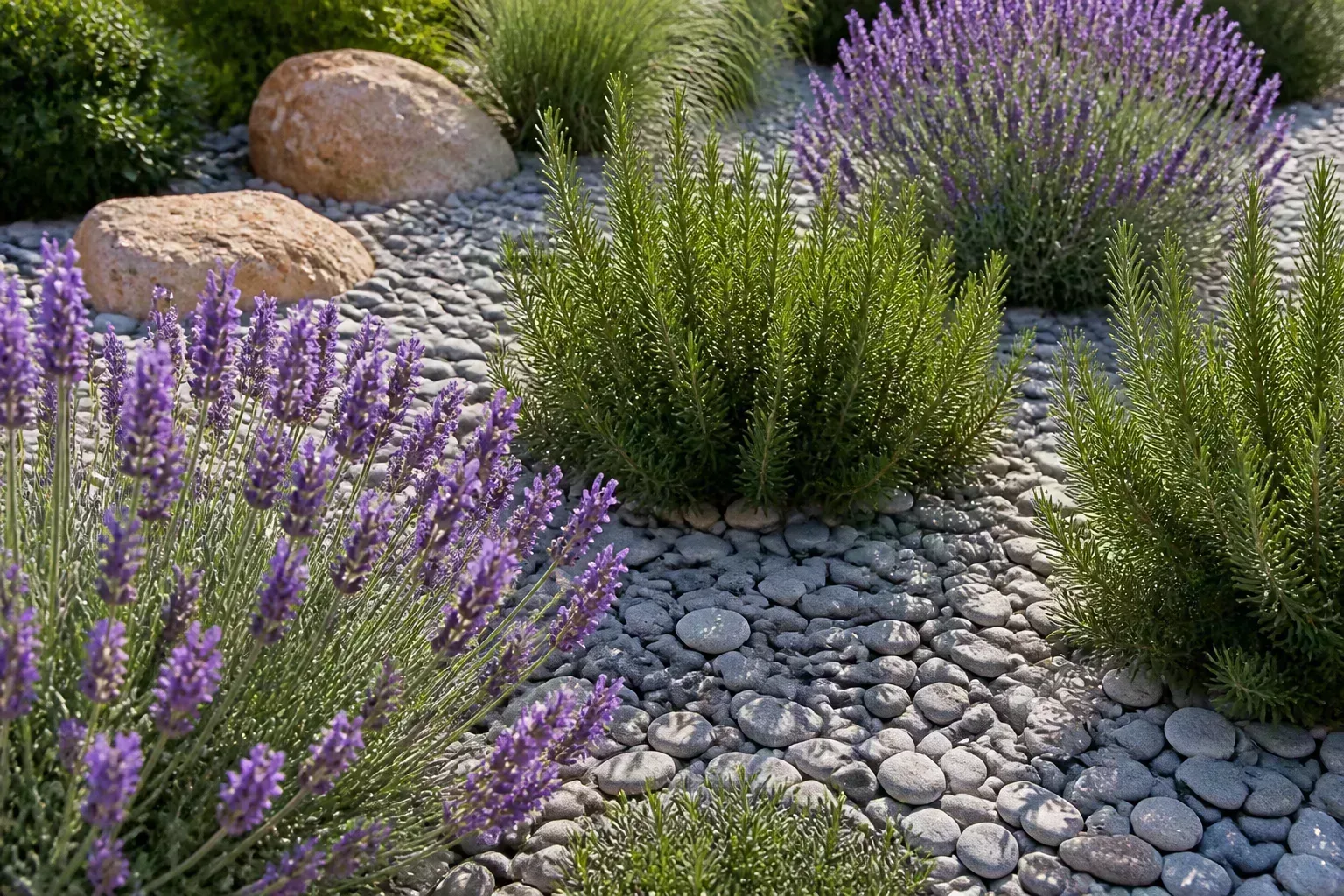
Gravel is not one product. The wrong size or color breaks the illusion fast.
Decomposed granite (often 3/8-inch minus) compacts slightly, stays put better than round stone, and reads as sun-baked earth. Pea gravel is softer underfoot and rolls on slopes without edging. Crushed angular gravel gives a crisp, structured look beside modern stucco.
Warm beige, sand, and ochre tones pair with terracotta and limestone. Cool grey gravel can work with silver foliage but fights orange clay pots. Pale gravel reflects heat upward, which Mediterranean plants often appreciate once established.
Terracotta pots should be unglazed and aged in tone—one large urn beats five medium mismatched pots. Limestone or sandstone for caps and seat walls completes the mineral palette. Skip pressure-treated decking and bright white vinyl fencing; they read as suburban default, not coastal hills.
For lawn replacement context, our no-grass backyard ideas guide covers gravel patios with the edging and traffic caveats that Mediterranean courtyards share.
Gravel Types and Installation Depth
Install gravel like a surface, not a sprinkle:
- Strip turf and remove organic debris from the area.
- Grade so water drains away from structures and does not pool in planting pockets.
- Compact a base of crushed rock on high-traffic paths if you want a firm walk.
- Lay geotextile fabric only where aggressive weeds are a known problem—not over entire tree root zones.
- Spread 2–3 inches of gravel evenly; rake smooth.
- Install rigid edging before the first rain; gravel migration is inevitable without it.
In planting beds, gravel doubles as mulch: it suppresses weeds, slows evaporation, and lets self-seeding thyme or poppies appear in gaps. Do not use shredded bark mulch in one bed while the rest is gravel—the contrast screams “unfinished project.”
Build the Plant Palette by Layer
Think in layers like a small forest edge: canopy trees, evergreen structure, herbaceous fillers, and groundcovers. Three repeats of the same shrub often look more Mediterranean than twelve different one-offs.
Structural Trees and Shrubs
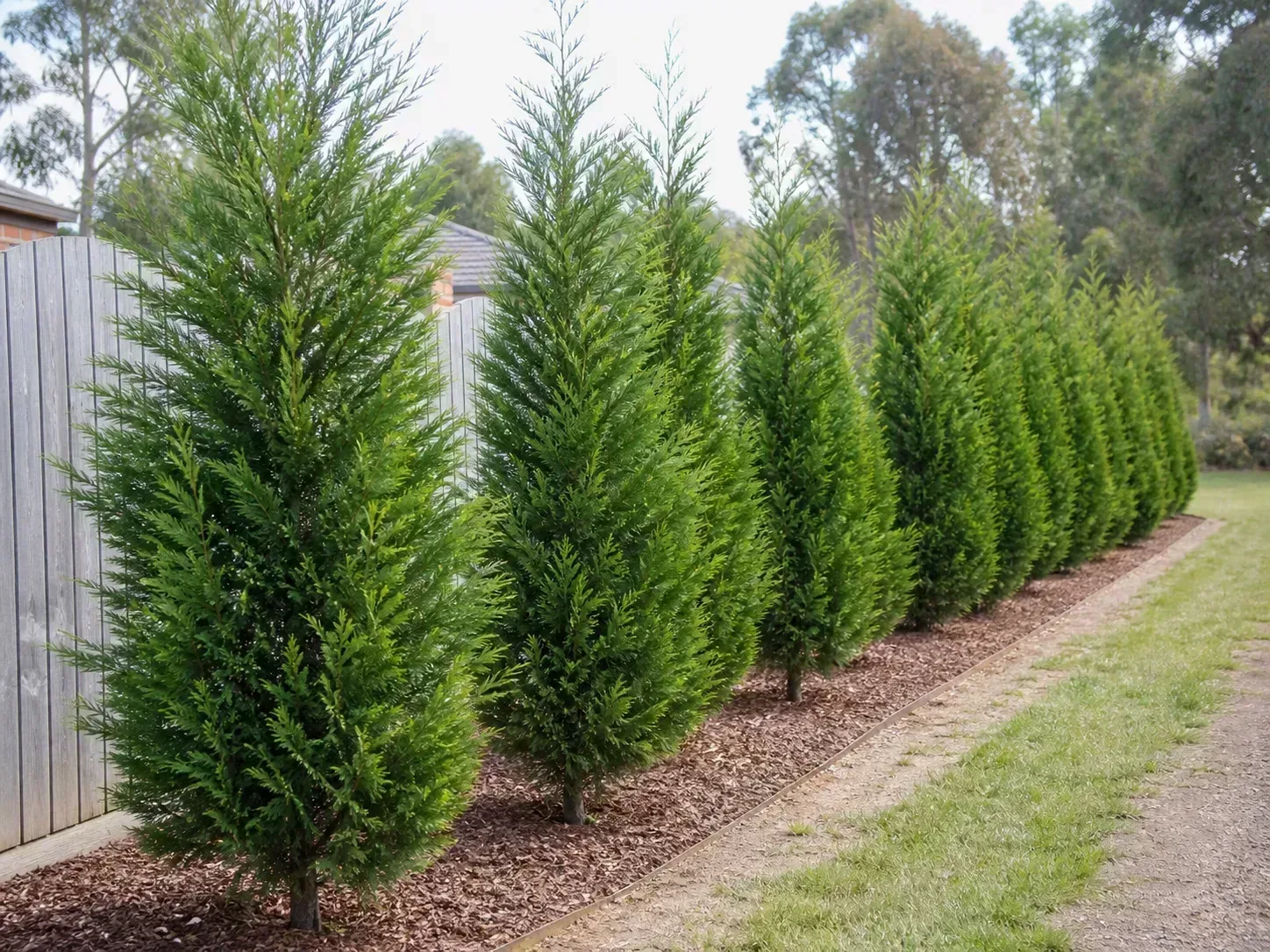
These set height and winter skeleton:
- Olive (Olea europaea) — signature silver tree; zones 8–10 in ground, or large pot with winter protection in colder zones. Buy the largest specimen your budget allows; olives are slow.
- Italian cypress (Cupressus sempervirens) — narrow vertical columns; use sparingly as pairs or a trio, not a cemetery row. Privacy-focused yards can substitute other upright evergreens; see privacy in the yard.
- Rosemary (Salvia rosmarinus) — upright forms make 3–5 foot evergreen hedges; prostrate types spill over walls. Essential structural herb.
- Lavender (Lavandula) — English lavender (L. angustifolia) is hardiest; French and Spanish types are showier but less cold-tolerant. Plant only where drainage is excellent; read where not to plant lavender before digging.
- Santolina — silver mounds with yellow buttons; excellent low hedge substitute where box struggles.
- Agave or yucca — architectural rosettes; site away from paths because spines are real.
Toxicity note: Oleander is classic in true Mediterranean climates but every part is poisonous to people and pets. Skip it in yards where children or dogs chew plants.
Herbs and Perennials That Carry the Look
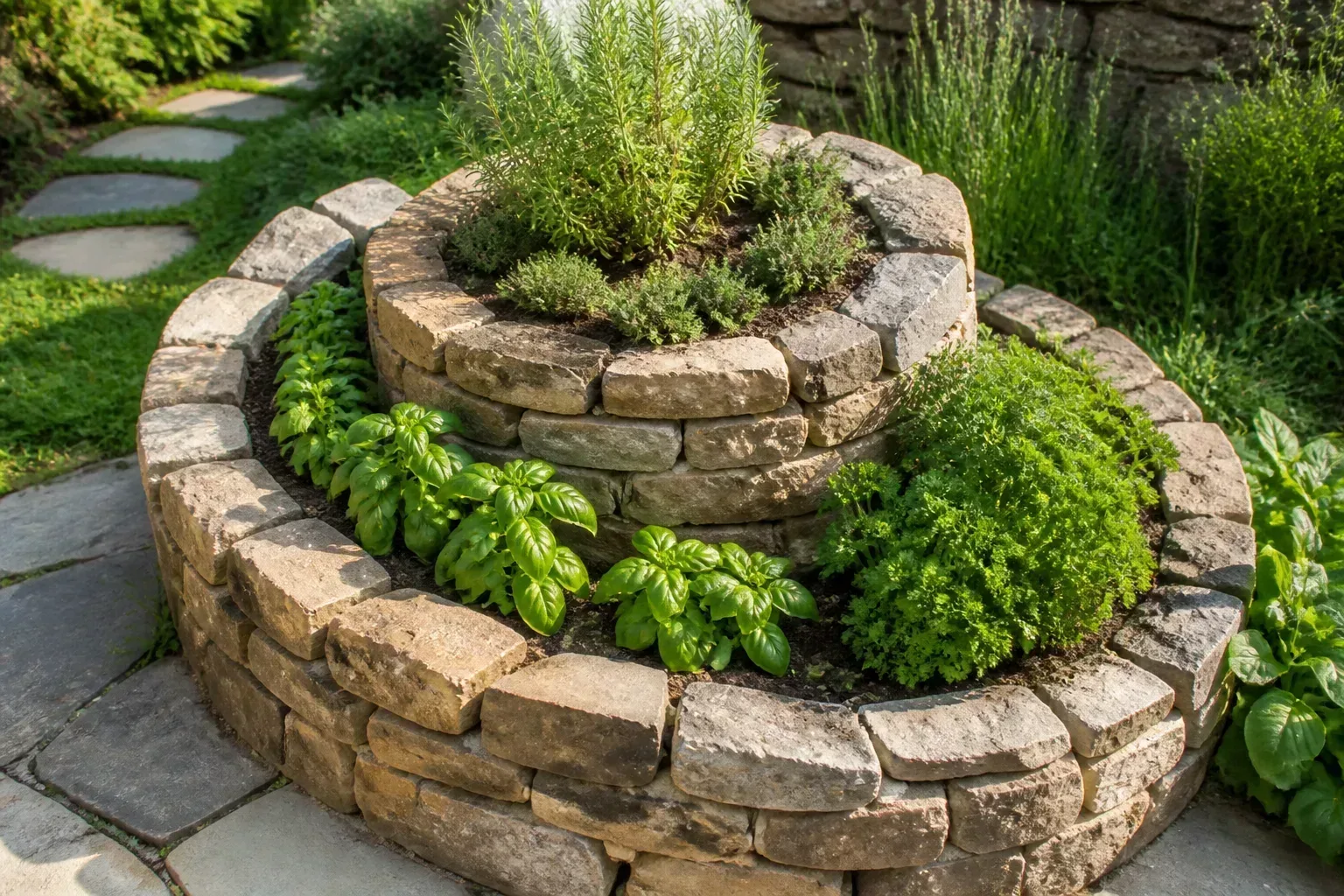
Fill the middle and ground plane with plants that tolerate dry feet:
- Thyme — creeping types between pavers and in gravel; fragrance on foot traffic.
- Common sage (Salvia officinalis) — silver leaves year-round.
- Ornamental oregano and marjoram — soft mounds for bed edges.
- Salvia greggii — long bloom in hot colors for accent, not mass.
- Cistus (rock rose) — papery flowers on the driest banks.
- Ornamental grasses — blue fescue, lavender cotton (Santolina adjacent), or miscanthus for motion in full-sun borders.
- Santa Barbara daisy, sedum, sempervivum — filler for hot, dry pockets.
Culinary herbs belong in the ground only when watering matches the bed. Basil and parsley want more moisture than rosemary; our herb garden ideas guide splits Mediterranean and leafy herbs into separate zones or pots so one irrigation schedule does not rot roots.
Planting Plan: Spacing, Repetition, and Hydrozones
Repetition creates calm. A common winning formula for a small yard: one olive or cypress focal point, lavender repeated three times along a wall, two large rosemary pots flanking a seating area, thyme in path joints, and gravel everywhere else. That is fewer than ten plant types total.
Spacing depends on mature size, not the quart pot in your cart. Crowded lavender turns woody in the center and dies out. Allow 2–3 feet between lavender clumps, 3–4 feet for upright rosemary, and 15–20 feet for olive crown clearance from structures unless you plan annual pruning.
Hydrozoning groups plants by water need (City of Redlands drought-tolerant landscaping). Mediterranean shrubs and gravel-bed perennials belong in one zone on drip irrigation; any vegetable or basil patch belongs in another. Mixed zones are how rosemary drowns while parsley wilts.
| Zone | Plants | Irrigation approach |
|---|---|---|
| Dry Mediterranean | Lavender, rosemary, sage, santolina, agave | Drip emitters; deep infrequent soak first two summers, then minimal |
| Moderate | Ornamental grasses, some salvias | Drip; allow slight drying between cycles |
| Moist (separate bed) | Basil, parsley, cilantro | Own bed or pots; more frequent shallow watering |
When to plant: In mild-winter climates, fall planting lets roots grow through cool wet months before the first dry summer. Where ground freezes, plant after last frost in spring and commit to extra summer watering the first year. Avoid planting lavender into cold wet soil in November in zone 5; wait for spring and a raised berm.
Set plants slightly high in clay—crown at or above grade—so water sheds away. In gravel beds, plant into soil pockets cut through fabric, then backfill with native soil amended with grit, not rich compost.
Irrigation and Establishment Watering
Mediterranean gardens are drought-tolerant after establishment, not drought-tolerant on delivery day. EPA WaterSense guidance emphasizes choosing climate-appropriate plants and efficient irrigation so you give each zone only the water it needs (EPA WaterSense — what to plant).
First season: Water deeply 1–2 times per week in dry weather so roots chase moisture downward. Finger-test soil 4 inches down; soggy is worse than dry.
Second season: Stretch intervals. Many established lavender and rosemary plantings need supplemental water only during extreme drought or heat waves.
Long term: Overwatering is the primary killer. If leaves yellow and stems blacken at the base, cut irrigation before reaching for fertilizer.
Install drip emitters on a timer with rain override if available. Overhead spray keeps foliage wet and encourages mildew on sage and lavender. Mulch with gravel after emitters are placed and tested.
Pruning and Seasonal Maintenance
Low maintenance does not mean zero maintenance. Mediterranean woody herbs do not reliably sprout from old bare wood. Let them get leggy and you are buying replacements.
Lavender: Shear lightly after main bloom—about one-third of soft growth—never into hard woody stems unless you accept bare patches. In spring, shape mounds before new growth hardens.
Rosemary: Trim after flowering to keep hedges dense; take no more than one-third at a time. Prostrate forms need edge trimming so paths stay clear.
Santolina and thyme: Spring shear or clip after bloom to refresh mounds; thyme paths may need a mid-summer haircut if foot traffic mats them.
Gravel beds: Hand-pull weeds while small; rake leaves off gravel in autumn so organic debris does not build soil layers that feed weeds.
Annual tasks: Top-dress gravel where traffic scatters it; check emitter flow in spring; divide overcrowded thyme; refresh terracotta pots if flaking salts bother you.
A garden that smells like warm rosemary on a July evening is the dividend for an hour of pruning twice a year.
Common Mediterranean Garden Mistakes
Planting into clay without drainage fixes. Lavender dies quietly; you blame the variety.
Rich soil and heavy fertilizer. Lean conditions keep herbs compact. Overfed lavender flops open and lives half as long.
Bark mulch in a gravel design. One mulched island breaks the visual language and holds moisture against crowns.
Too many species, too little repetition. Collector gardens read as nursery displays, not coastal hills.
Wrong tree for the style. A shade maple in the middle of a Mediterranean bed fights every other choice. Pick olives, cypress, citrus, or a silver-leaved substitute suited to your zone.
Overwatering after year two. If plants are established, sympathy watering in a wet week causes more damage than a dry spell.
Ignoring humidity. In the Southeast, insist on raised beds and choose plants proven locally; do not copy a California plant list verbatim.
Skipping shade over seating. A beautiful gravel yard nobody uses after 11 a.m. is a hardscape failure, not a plant failure.
Phase Your Project to Control Cost
You do not need to gravel the entire lot in one weekend. A phased build often looks more intentional:
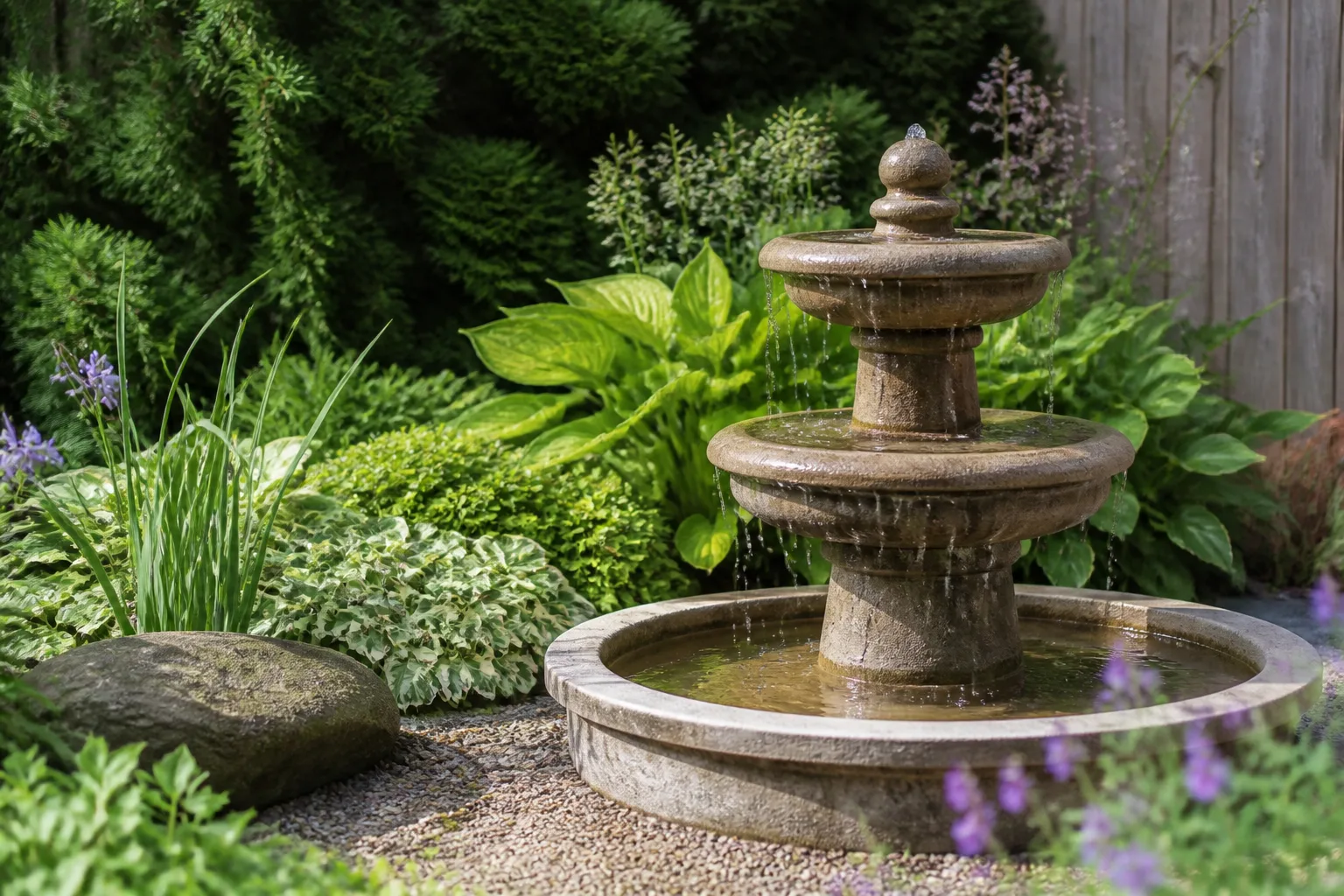
Phase 1 — Structure: Fix drainage, install main patio or seating pad, lay primary paths with edging, add one focal feature (fountain or large pot).
Phase 2 — Skeleton planting: One tree or cypress pair, rosemary or lavender along the dominant wall, drip irrigation to those plants only.
Phase 3 — Fill and detail: Groundcover thyme, remaining gravel in beds, terracotta accents, pergola or shade sail.
Phase 4 — Refine: Prune, adjust emitters, add accent pots, expand gravel to secondary areas once you like the maintenance rhythm.
Test one pilot bed for a full season before repeating plant choices across the yard. Soil and microclimate vary more than catalog zones suggest.
Conclusion
A Mediterranean escape in an ordinary yard comes from matching the style to your climate, building gravel and stone bones first, then planting repeated groups of fragrant, silver-leaved plants on sharp drainage with honest establishment watering. The look is spare, sun-soaked, and mineral-rich—not a crowded perennial border with a lavender garnish.
Run the site check, draw hardscape before shopping, hydrozone your irrigation, and prune woody herbs before they go bare at the base. Do that and your yard gains the relaxed permanence of dry hillsides: less lawn, less guilt in drought years, and more evenings where the air smells like thyme and warm stone.