Hardscaping vs. Landscaping: What Real Estate Pros Say
Does hardscaping matter as much as landscaping? See NAR outdoor ROI data, drainage rules, and a budget framework for patios, paths, and planting.
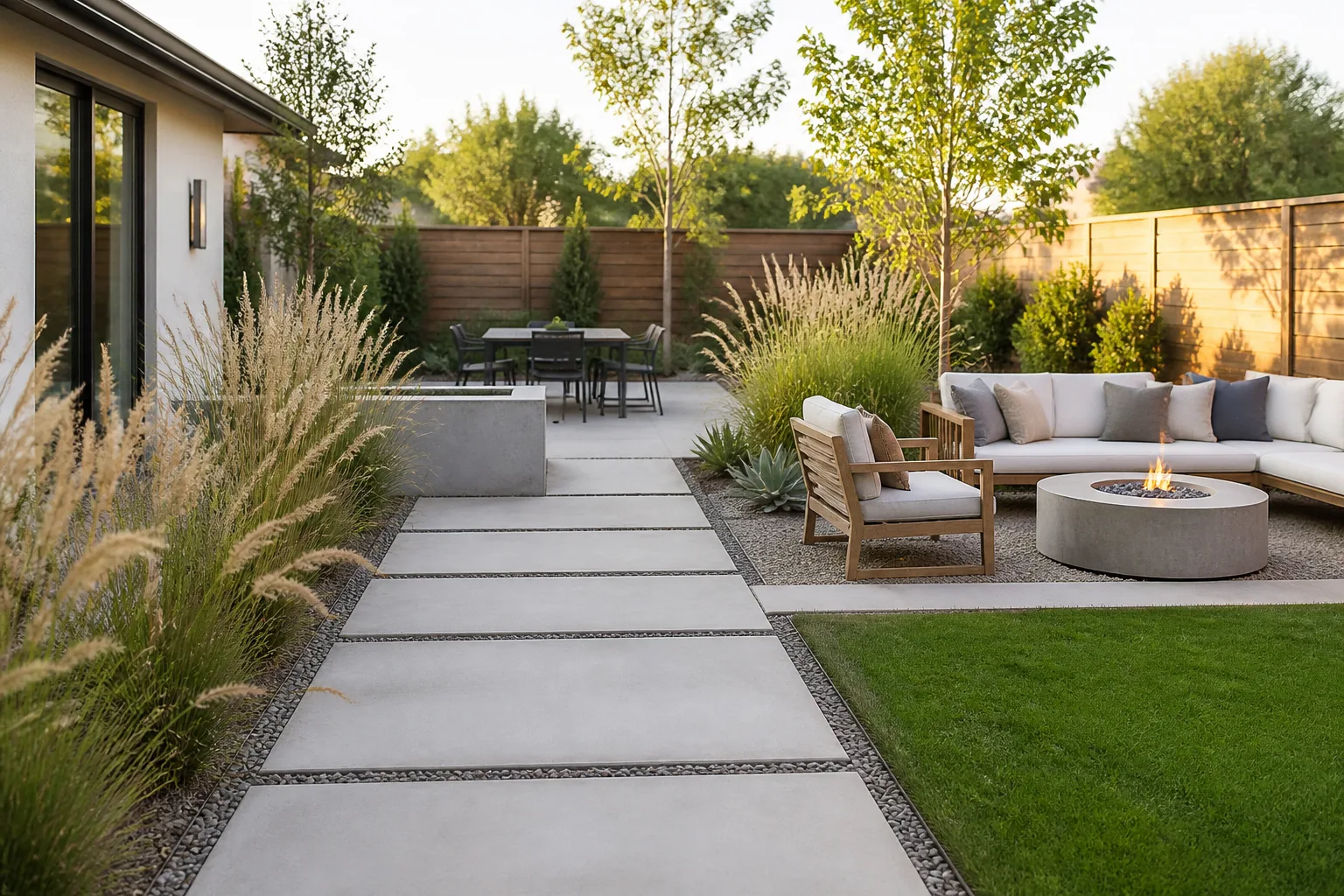
Hardscaping and landscaping are not rivals on a scoreboard — they are two halves of the same outdoor system. Hardscaping is the fixed structure: patios, paths, walls, steps, edging, and drainage. Landscaping is the living layer: lawn, trees, shrubs, groundcovers, and seasonal color. Real estate professionals care about both, but they weight them differently depending on whether you are fixing a drainage problem, building an outdoor room, or prepping a listing photo that has to work in February as well as July.
The short answer: hardscaping matters as much as landscaping when function, safety, and year-round curb appeal are on the line — but landscaping often delivers faster, cheaper wins before a sale, according to National Association of Realtors (NAR) cost-recovery estimates on outdoor projects. The mistake is treating them as separate shopping lists. Integrated planning is where value actually shows up.
What Hardscaping and Landscaping Actually Mean
If you cannot name what belongs in each bucket, you will overspend in the wrong category. Pros use the split because installation, permits, maintenance, and resale math are completely different.
Hardscaping: Structure, Function, and Outdoor Rooms
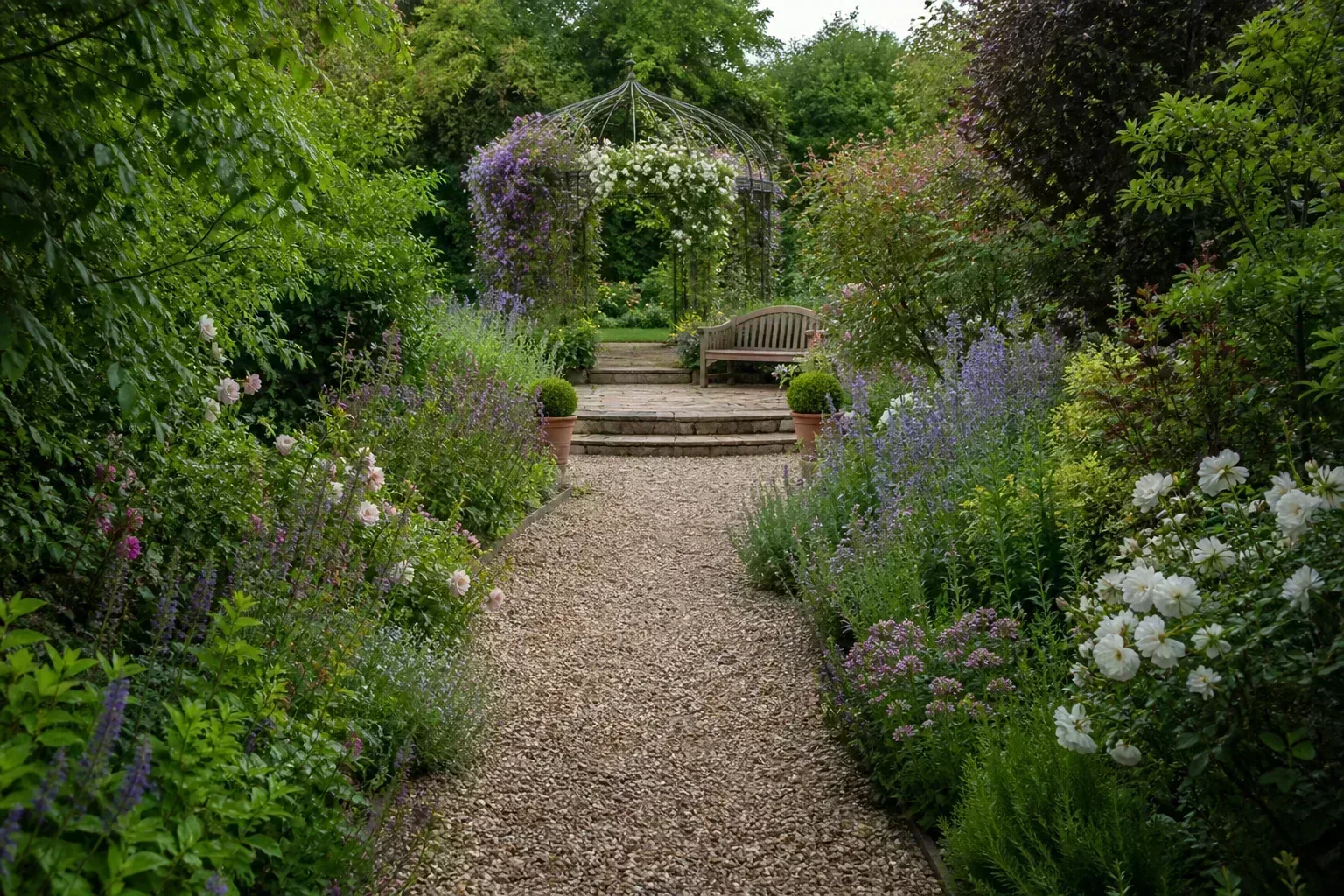
Hardscaping covers non-living built elements: poured or paver patios, gravel paths, retaining walls, steps, driveways, fences, pergolas, fire features, outdoor kitchens, and site drainage (swales, catch basins, channel drains). University of Wisconsin–Madison Extension describes successful home landscapes as extensions of indoor living that require careful planning and often several years of phased construction — hardscape is usually the phase that defines how those rooms work (UW–Madison Extension landscape planning).
Hardscape answers practical questions: Where do guests walk? Where does rainwater go? Can you put a table and grill on level, stable ground? A finished patio or retaining wall looks the same in January as in July — which matters when buyers tour in the off-season or when dormant grass and bare beds would otherwise make the yard feel neglected.
Landscaping: Living Layers That Shift With the Seasons
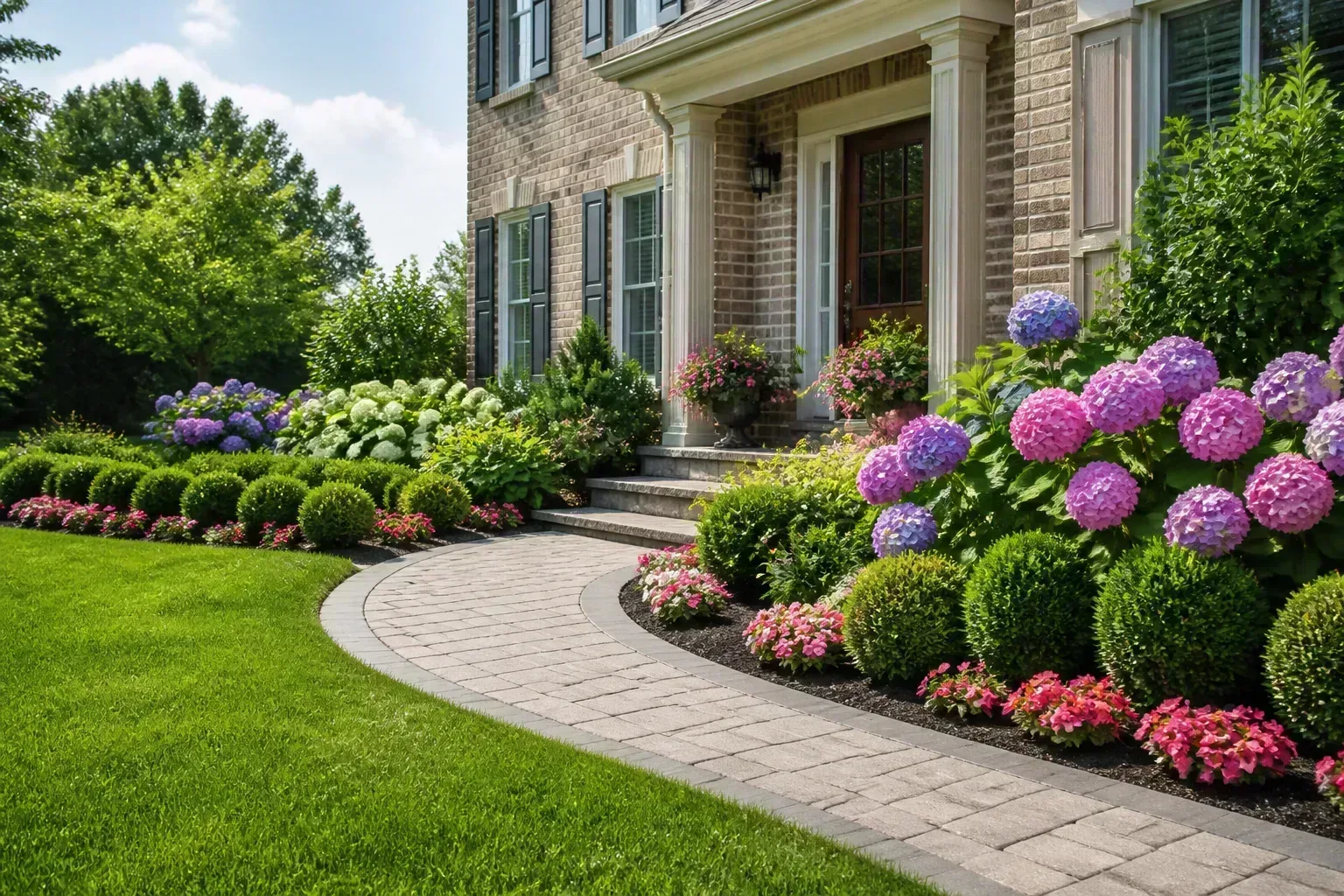
Landscaping is everything that grows: turf, trees, shrubs, perennials, mulch, and soil preparation. It provides color, texture, shade, privacy, and ecological benefits — and it changes constantly. A flower-filled front bed can steal the show in spring and look tired by late summer if irrigation, soil, or plant choice were wrong.
Landscaping is often the first thing people notice because it is literally green and alive. It is also the first thing that declines when ignored. Realtors consistently flag curb appeal as a listing priority: in NAR’s 2023 Remodeling Impact Report: Outdoor Features, 92% of Realtors suggested sellers improve curb appeal before listing, and 97% said curb appeal is important for attracting buyers (NAR Outdoor Features report). That appeal is usually delivered fastest through maintained lawn, trimmed beds, and healthy trees — landscaping tasks — not through a new outdoor kitchen.
What Real Estate Pros and Remodeling Data Say
Ask ten agents whether hardscaping “matters as much” as landscaping and you will hear the same theme with different emphasis: buyers need the yard to feel intentional, safe, and usable — and plants alone rarely deliver that if the bones are missing.
Why Structure Shows Up in Every Season — Especially Off-Market Months
Agents working in wet or cold markets see this repeatedly: a lush summer lawn does not help a January showing if the only path to the door is mud, the patio ponds after every rain, or a retaining wall is visibly failing. Hardscape holds the composition together when planting is dormant. Covered or roofed outdoor living areas can also read as extended square footage in buyer conversations when they are well integrated with the house — not as a random slab in the far corner of the lot.
That does not mean you should pave the backyard. It means structure sets the stage. Without logical paths, level entertaining areas, and controlled drainage, even expensive planting looks like decoration on a dysfunctional site.
NAR Outdoor Features Data: Where Landscaping and Hardscaping Win on ROI
NAR and the National Association of Landscape Professionals (NALP) surveyed outdoor projects for the 2023 Outdoor Features report. Cost recovery is an estimate of what sellers might recoup at resale, not a profit guarantee — but it is useful for comparing categories.
Highest Realtor-estimated cost recovery (landscaping-heavy):
- Standard lawn care service — 217% (typical project cost about $415)
- Landscape maintenance — 104% (about $4,800)
- Overall landscape upgrade — 100% (about $9,000)
- Tree care — strong Joy Scores; 44% of Realtors recommended it pre-sale
Hardscape and specialty features (mixed recovery):
- New patio — about $10,500; among the highest Joy Scores (9.9)
- New wood deck — about $16,900
- Outdoor kitchen — about $15,000; 100% estimated recovery but only 1% of Realtors recommended one before listing
- Fire feature — about $9,000; 56% cost recovery
- In-ground pool — about $90,000; 56% recovery; 1% pre-sale recommendation
What this means in plain language: For selling soon, landscaping maintenance and a coherent plant refresh usually beat statement hardscape on agent recommendations and cost recovery. Landscape maintenance was recommended by 74% of Realtors before listing; standard lawn care by 53%. Patios and decks can still be excellent investments for how you live — NALP members reported rising demand for overall landscape upgrades (61%), maintenance (58%), and new patios (55%) — but they are not always the first dollar agents tell sellers to spend.
Hardscaping matters as much as landscaping when your goal is daily use, drainage correction, or off-season presentation — not when you only need a six-week listing polish.
When Hardscaping Should Come First
Prioritize hardscape when the yard fails on engineering before aesthetics.
Drainage, Grading, and Foundation Protection
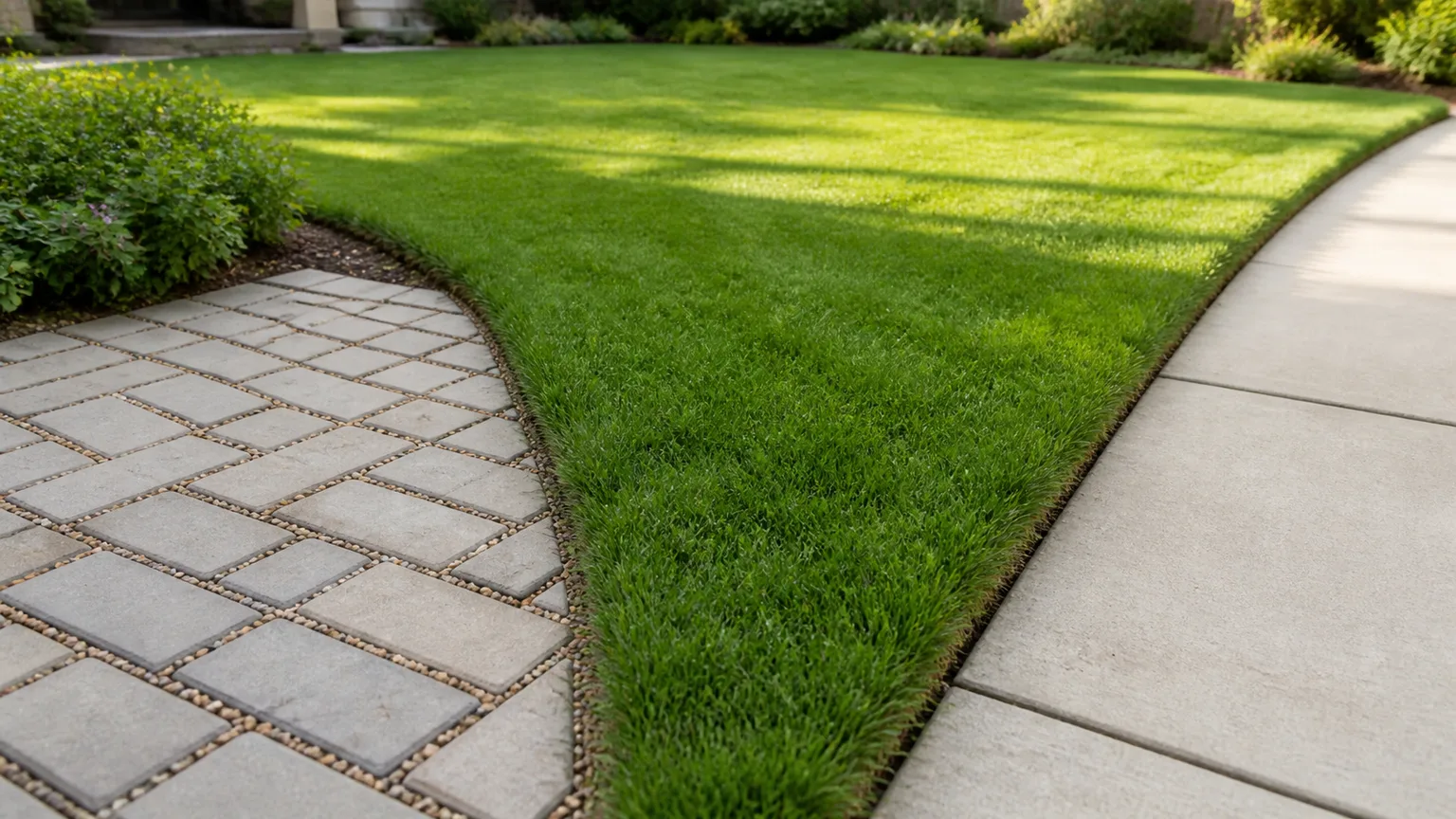
Every patio, walkway, and driveway changes how water moves. UF/IFAS landscape planning guidance stresses knowing topography, drainage, and how people will circulate before choosing materials (UF/IFAS design planning tips). Slopes should direct runoff away from the foundation; flat patios need pitch — often about 1/4 inch per foot toward a drain or lawn edge — so water does not sit on the surface.
Getting grade wrong is expensive. Industry pros commonly cite repair costs two to three times the original install when pavers must be lifted to fix pitch or when standing water damages footings. If you are choosing between new shrubs and fixing a patio that sends water toward the basement, hardscaping matters more than landscaping until drainage is solved. Our guide to pervious vs. impervious hardscape explains when permeable surfaces help lawn edges and when they still need proper base prep.
Usable Outdoor Rooms and Safe Circulation
Hardscape also comes first when you lack usable outdoor square footage: no level dining area, no clear path from driveway to door, or dangerous steps without lighting. Retaining walls on slopes, wide steps with handrails, and slip-resistant pavers are not glamorous — but they are what make a yard feel finished to buyers who imagine kids, guests, and daily mail runs.
If you are building for long-term living, a modest new patio (NAR typical cost about $10,500) often delivers more joy and function than a plant collection that cannot be reached without trampling beds. Consumers in the NAR report rated completed outdoor projects with a typical Joy Score of 9.7; patios and pools scored at the top for happiness — even when pools recovered less money at resale.
When Landscaping Deserves Priority
Landscaping should lead when the structure is already sound and the problem is presentation, ecology, or maintenance cost.
Pre-Listing Curb Appeal on a Realistic Budget
If you are listing within a season, start with what agents actually recommend: mow, edge, mulch, weed beds, prune foundation shrubs, and address dead or hazardous trees. Those are landscaping tasks with documented pre-sale support in the NAR data — not a full outdoor kitchen.
A $400–$500 season of standard lawn care outperforms many hardscape projects on estimated cost recovery (217%) because buyers read “maintained” instantly. Landscape maintenance at roughly $4,800 for a professional refresh also estimated 104% recovery. Compare that to a $9,000 fire feature at 56% recovery when your only goal is a quicker sale.
Landscaping also wins when you need privacy or softness without construction: layered shrubs, ornamental grasses, and hedges can frame hardscape so it does not feel harsh. For screening ideas that work with structure, see our backyard privacy guide.
Three Rules Pros Use to Balance Hardscape and Plants
Whether you lead with stone or shrubs, these three rules prevent the expensive mistakes agents see on walkthroughs.
Plan Drainage and Slope Before You Choose Materials
Drainage is a hardscape decision with landscaping consequences. Set finished elevation, swales, and downspout discharge before picking paver color. Plant beds placed uphill of a poorly graded patio become soggy; tree roots lift walkways when planting zones were drawn after paving. Call 811 for utility locates before any dig, and confirm whether retaining walls or large patios need permits in your municipality.
Match Scale, Architecture, and Neighborhood Context
Bigger and trendier is not better. A massive fire pit in a small courtyard reads as clutter, not luxury. Materials should echo the house: brick with brick, warm stone with craftsman trim, clean concrete with modern lines. UW–Madison Extension advises considering architectural features and neighborhood character in the master plan — outdoor rooms should look like they belong to the house, not like a catalog dropped on the lot.
Keep Structure-to-Greenery Ratios Proportional
Aim for balance, not maximum pavement. In tight urban lots, one well-proportioned patio plus generous planting pockets often photographs better than full-yard hardscape. In large suburban lots, wide lawns benefit from defined edges — walkways, low walls, or hedges — so the space feels designed instead of empty. UF/IFAS recommends linking zones with clear paths so movement feels natural; that usually means alternating hardscape corridors with planted islands.
Integrate Both on One Plan — Not Two Separate Line Items
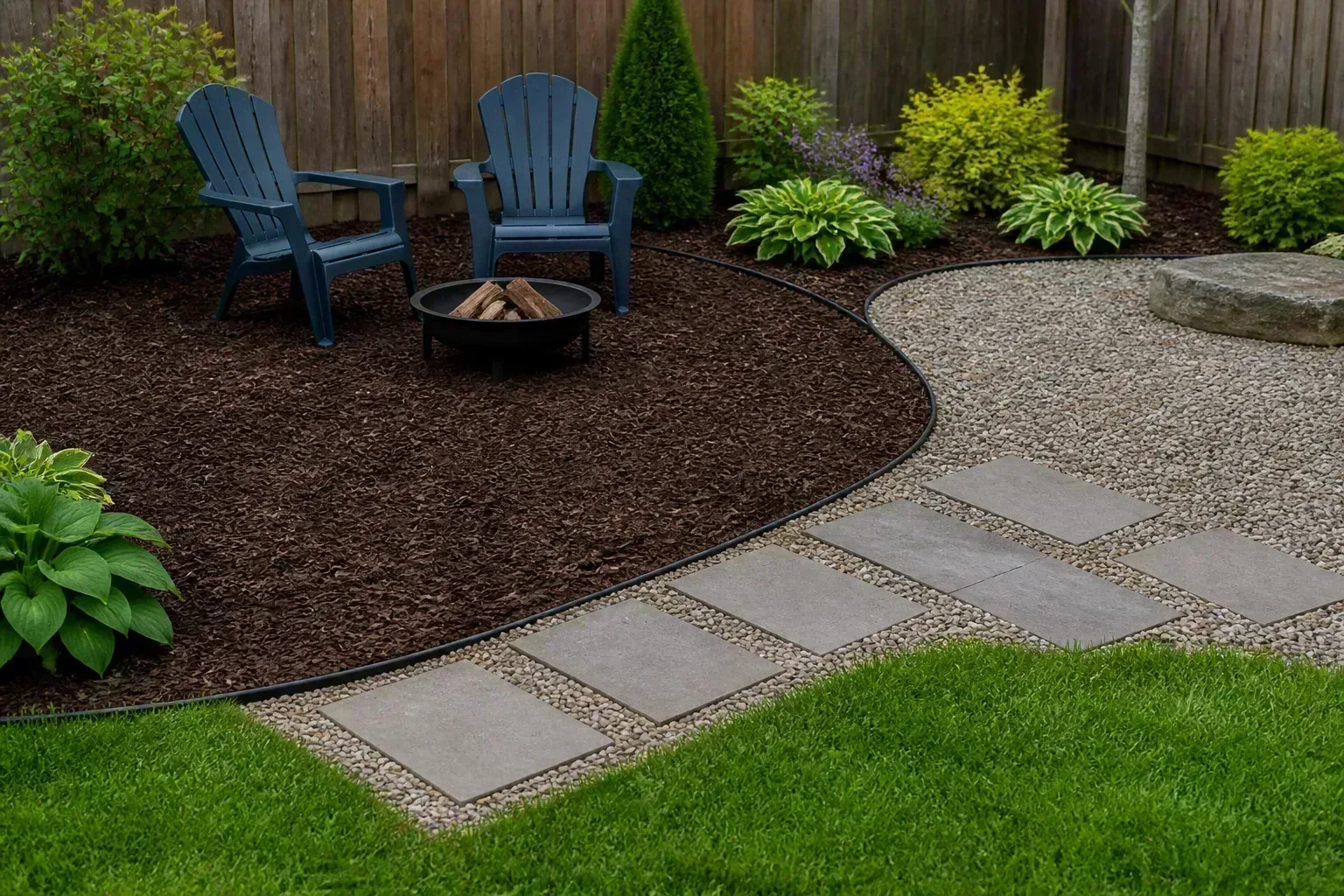
The costliest error is sequencing hardscape and landscaping as unrelated projects. Tree roots heave pavers. Overhanging limbs stain decks. Downspouts dump mulch onto walkways. Agents and landscape designers describe the same fix: one site plan that places beds, root zones, irrigation, and structures together.
The Build Sequence That Prevents Expensive Do-Overs
Use this order unless a specific emergency (active drainage toward the foundation) forces a shortcut:
- Survey and utilities — property lines, easements, 811 locate, existing drainage patterns.
- Major grading and drainage — swales, French drains, downspout extensions, retaining walls.
- Primary hardscape — main patio, front walk, driveway repairs, steps.
- Irrigation and lighting rough-in — before final planting soil is graded.
- Soil prep and planting — trees and shrubs before delicate perennials if possible.
- Mulch, lawn repair, and finishing touches — edging, furniture zones, accent planting.
Skipping steps is how homeowners pay twice: once for a patio, again to move it when a tree was planted in the wrong zone. For phased backyard makeovers that respect budget, our budget-friendly backyard makeover ideas walk through ground-and-path upgrades before big plant spends.
Budget Tiers: What to Fund First at $500, $5,000, and $50,000
Around $500 (listing in weeks): Mow, edge, weed, refresh mulch, prune visible shrubs, spot-seed bare lawn, clean walkways, and add one container or entry planting. This aligns with the NAR finding that inexpensive standard lawn care had the highest estimated cost recovery.
Around $5,000 (one-season upgrade): Fix the worst drainage issue, repair or define the front walk, add a modest gravel or paver pad for seating, reshape one foundation bed with evergreen structure, and install simple path lighting on safe circuits. At this tier, hardscaping matters as much as landscaping only where mud, trip hazards, or water against the house exist.
Around $50,000 (multi-year outdoor living): Engineer grading, build a primary patio or deck tied to the kitchen door, add retaining walls if the lot requires them, install irrigation, plant privacy layers, and leave budget for landscape maintenance the first two years while plants establish. Skip the in-ground pool or outdoor kitchen if resale is the main driver — NAR data shows 1% of Realtors recommended those before listing despite high owner satisfaction.
For layout inspiration that mixes paths, terraces, and planting, see modern backyard ideas and no-grass backyard layouts that reduce turf without turning the lot into a heat island.
Conclusion
Hardscaping does matter as much as landscaping — but not always at the same time or for the same reason. Hardscape delivers structure, drainage, safe circulation, and year-round presence. Landscaping delivers the green first impression, ecological value, and the pre-sale upgrades Realtors recommend most often. NAR’s Outdoor Features data makes the trade-off clear: maintenance and plant-focused projects lead on agent recommendations and cost recovery; patios and decks lead on daily enjoyment and Joy Scores.
Plan both on one sheet of paper. Fix water flow before you fall in love with paver patterns. Match scale to your house and lot. Fund landscaping first if you are selling soon; fund hardscape first if the yard fails on function or winter curb appeal. Get those priorities right and the two categories stop competing — they start working like architecture and interior design: one defines the space, the other makes it feel like home.



