Houseplant Exposed Roots: Causes, Diagnosis and Fixes
Exposed houseplant roots are not always a crisis. Tell aerial roots from eroded soil and root-bound crowding, then decide when to cover, support, or repot.
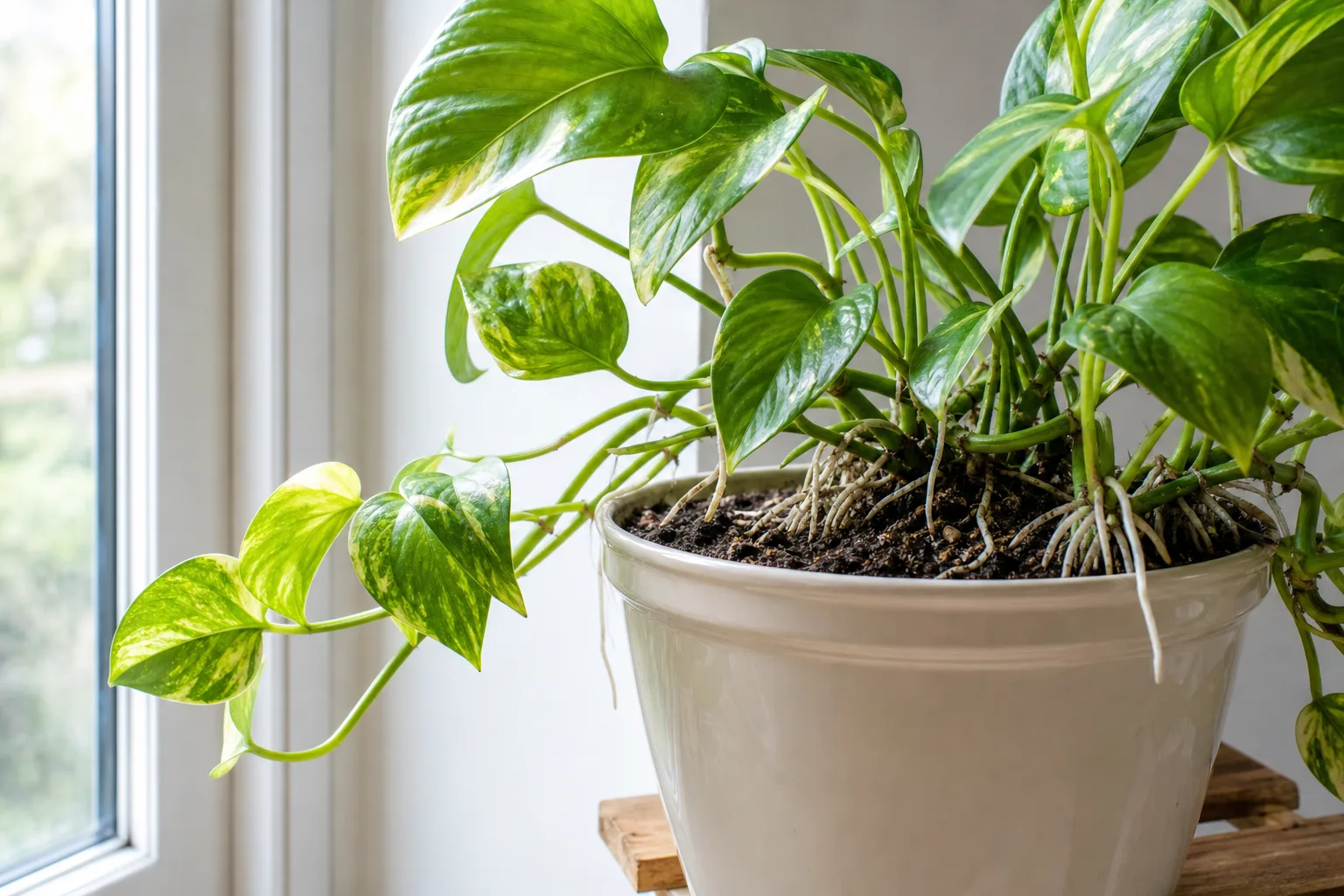
You glance at a pot and see pale or brown roots sitting on top of the mix, curling over the rim, or dangling into the air. The instinct is to bury them. Sometimes that helps. Often it does nothing useful — and for some plants it starts crown rot.
Exposed houseplant roots are a clue, not a single diagnosis. The same visible symptom can mean normal aerial roots on a climber, soil roots uncovered by settled or washed-away mix, root-bound crowding, or — on plants like string of hearts — aerial tubers that only look like roots. This guide is the cross-plant triage page: identify the pattern, then choose leave, top-dress, support, or repot. It is not a full Monstera training manual and not a deep root-bound severity guide — those jobs live on sibling pages linked below.
Three Patterns You Must Separate First
| Pattern | What you see | Typical cause | First move |
|---|---|---|---|
| Aerial / adventitious | Roots emerge from stem or node above the mix | Normal climbing or epiphytic habit | Leave, guide to support, or leave alone |
| Eroded / settled soil roots | Ordinary root-ball roots now sit on a low surface | Media settlement, washout, shallow potting | Thin compatible top-dress if crown depth stays safe |
| Root-bound crowding | Dense mat at surface or many roots at holes; little usable mix left | Container filled with roots | Confirm by unpotting; modest pot-up or refresh |
If you cannot tell which row fits, photograph the plant from the side, mark where the stem or crown meets the media, and gently slide the root ball partway out. Guessing from one stray root at a drainage hole is how people overpot healthy plants.
For a shorter cross-plant symptom overview after you know which pattern you are dealing with, use the exposed roots symptom hub.
UC Statewide IPM groups pot-bound growth, compacted media, poor drainage, and overwatering among overlapping causes of weak roots and decline. (UC IPM) That overlap is why you diagnose before you dig.
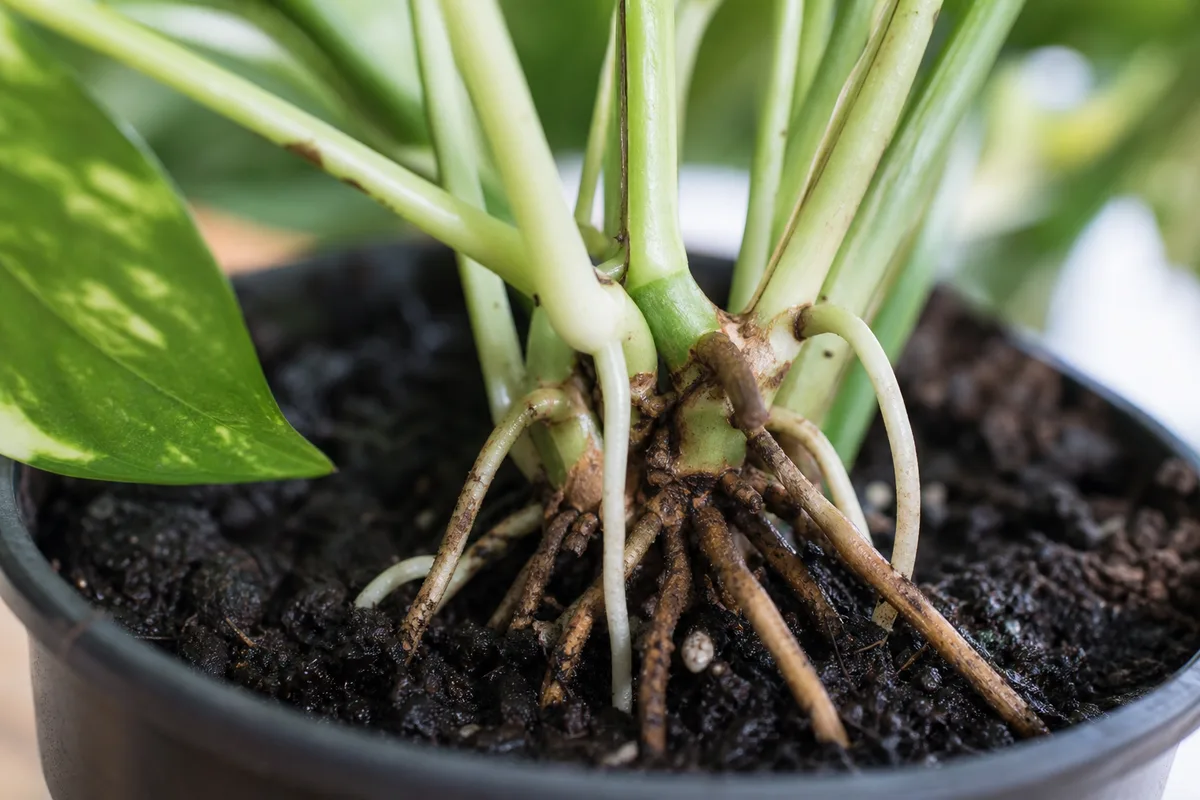
Aerial Roots From Stems and Nodes
Aerial roots start on the stem or at a node, not from the buried root ball. On Monstera deliciosa, Penn State Extension describes a tropical climber that uses aerial roots forming at the base of its leaves to attach to trees as it becomes epiphytic in the canopy. (Penn State Extension) Wisconsin Horticulture notes the same habit: long aerial roots attach to supports, and roots that reach the ground can root into soil. (Wisconsin Horticulture)
Clemson Extension likewise notes that pothos grown on totem posts give aerial roots a place to attach for support. (Clemson HGIC) Those roots are not proof the pot is too small. For Monstera-specific decisions on cutting, training, and misting, use our Monstera aerial roots guide rather than burying every tentacle for neatness.
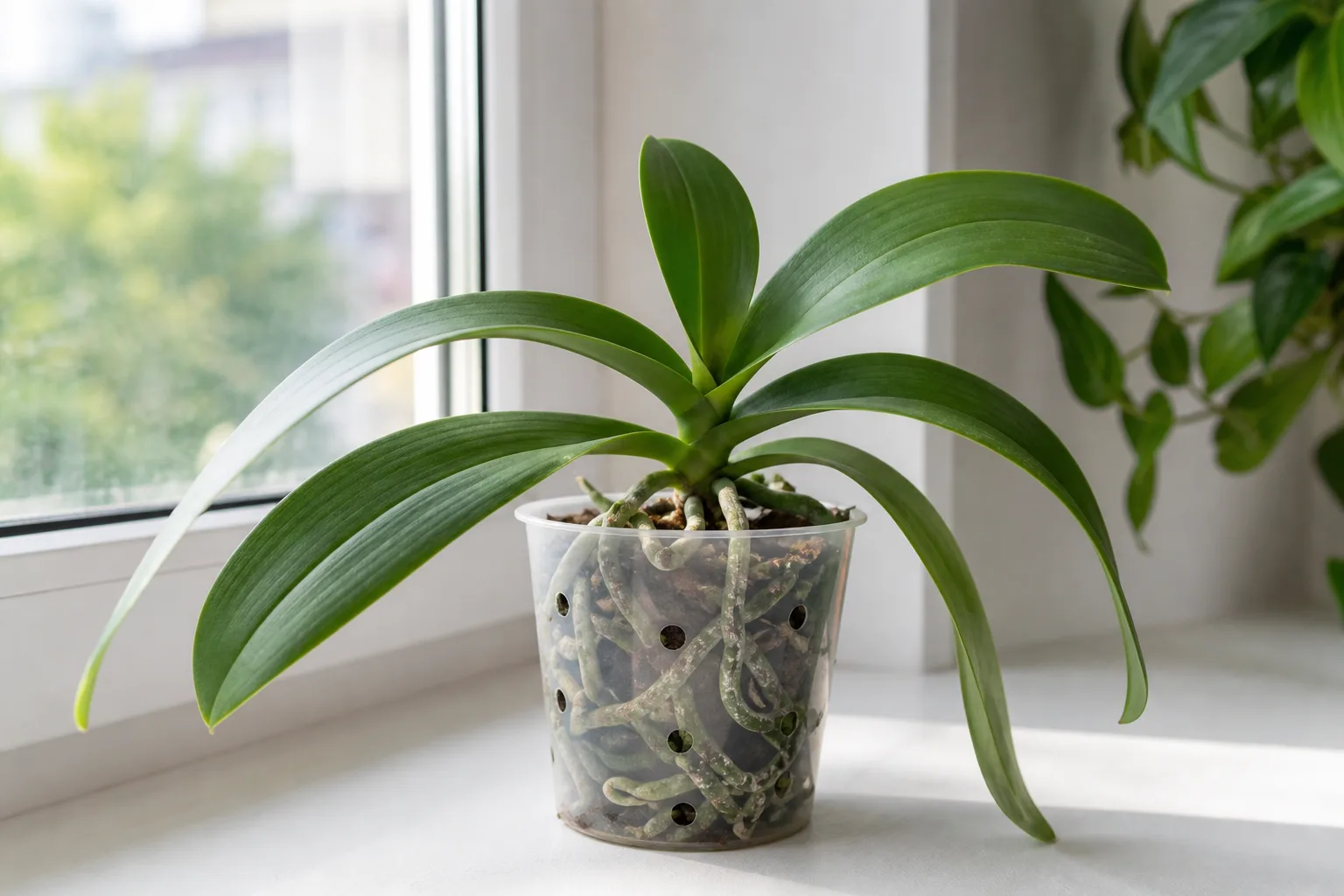
Orchids are a sharper exception. The RHS tells growers not to bury Phalaenopsis roots growing into the air, because covering them with compost can cause rot; those aerial roots help epiphytic moth orchids cling and take moisture from their surroundings. (RHS) If the plant is an orchid in bark, “cover the roots” is usually the wrong project.
Soil Roots Uncovered by Settlement or Erosion
These roots began inside the potting mix. They become visible when the surface drops. Organic media settles as particles decompose and pack into gaps after watering. Forceful watering excavates a crater around the stem. Fine particles wash down through large drainage holes. Extremely dry peat-rich mix can shrink away from the pot wall, leaving roots along the rim.

RHS guidance on houseplant growing media stresses that roots need air: compacted or waterlogged media kills roots because oxygen cannot reach them. (RHS) A surface that keeps falling after every watering is not just a cosmetic gap — it can signal a failing structure underneath. Measure the drop with a side photo or a mark on the nursery pot. A one-time settle after repotting is normal. Ongoing washout needs gentler watering, a better particle mix, or a full refresh — not endless mounding.
Root-Bound Crowding That Pushes Roots Into View
True crowding looks different from one explorer root. Penn State Extension lists pot-bound clues: watering much more often, roots through drainage holes, and — after you unpot — roots circling so densely that little mix remains in the bottom third of the root ball. (Penn State Extension) The RHS defines pot-bound plants as those whose roots fill the container, densely packed and intertwined, and notes those roots often will not explore new compost unless loosened. (RHS)
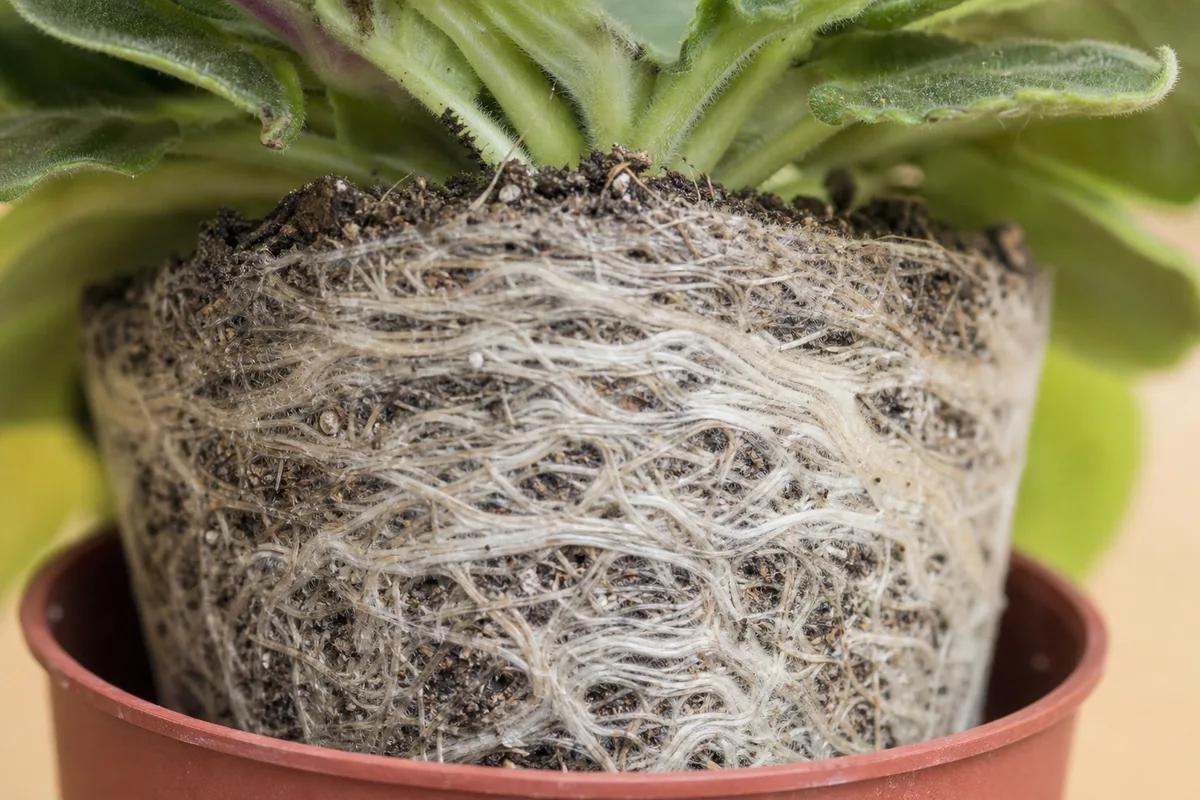
One root at a hole can simply follow moisture. Pair surface roots with rapid dry-down, stalled growth, a hard-to-rewet ball, or a plant that lifts when you tug gently. For severity scoring, pot-size decisions, and root-prune vs upsize trade-offs across species, use the dedicated root-bound houseplants guide. For Monstera-specific crowding checks, see is my Monstera rootbound. For the short cross-plant symptom pattern, compare the root-bound symptom hub.
Lookalikes: Aerial Tubers and Other Surface Organs
Not every round lump on the soil or stem is a feeder root. String of hearts (Ceropegia woodii) forms bead-like aerial tubers (tubercles) along the vines. NC State Extension notes those aerial tubers develop between leaves and will root and produce another plant if the stem contacts soil. (NC State Extension) Wisconsin Horticulture describes the same “beads” as small potato-like tubers at nodes that can be pressed into mix to propagate — and notes underground roots may also form tubers that fill a pot. (Wisconsin Horticulture)
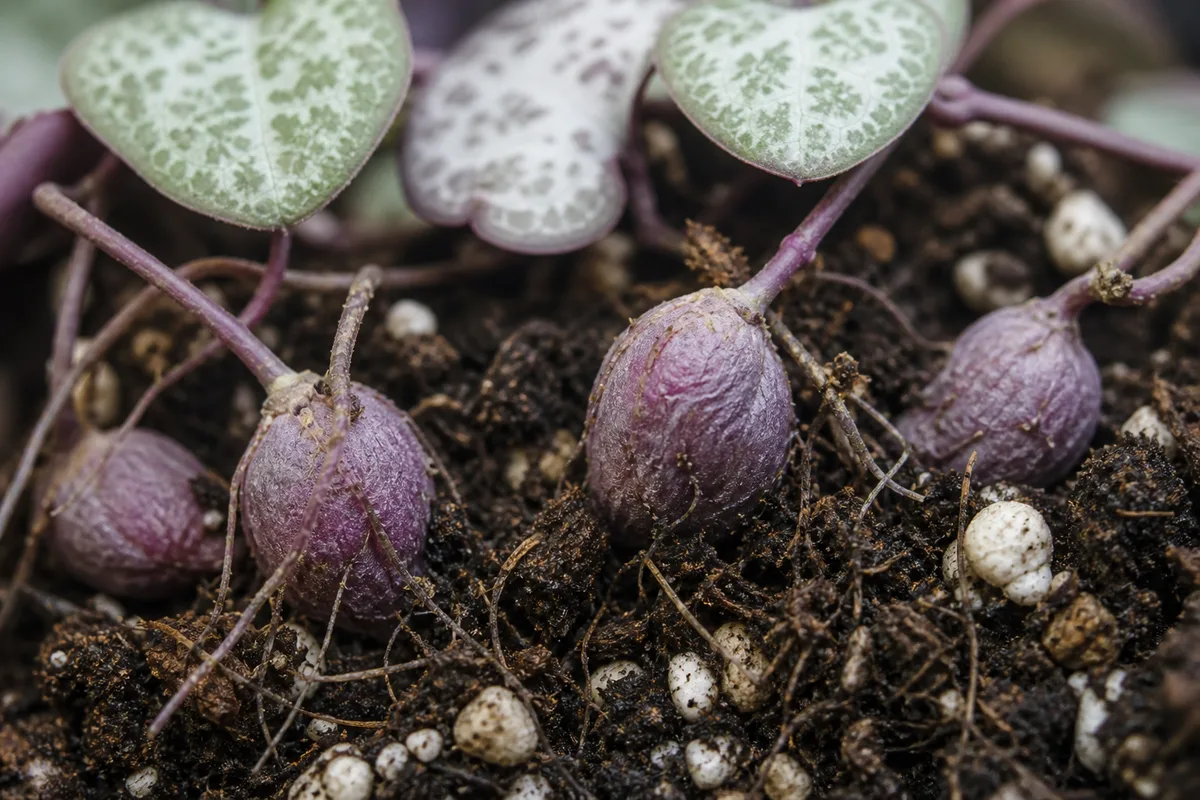
Do not treat those beads as proof of root-bound stress or as something that must be buried under a deep soil mound. Leave them on the vine, or use them for propagation. If the plant is drying out daily and the pot is packed with underground tubers or roots, that is a separate crowding check — still confirm by unpotting, not by guessing from aerial beads alone. Species detail: string of hearts exposed roots.
When Exposure Means Trouble
Exposure alone is not an emergency. Trouble shows up when roots keep drying and dying, the plant wobbles, water channels down the sides, growth stalls in good light, or soft tissue appears at the crown.
UC IPM notes that drainage worsens as potting media ages, settles, loses aeration, and compacts — conditions linked to root rot — and that wilting with wet soil warrants root inspection. (UC IPM) The RHS flags dark, mushy roots among clear overwatering signs on a poorly houseplant. (RHS) Missouri Botanical Garden likewise reminds growers that wilt can mean dry soil or wet, rotting roots that cannot take up water — and that tipping a plant out to examine roots is a valid learning step. (Missouri Botanical Garden)
Ask four questions before you cover anything. Is the plant stable in the pot? Does water soak the root ball evenly instead of racing down the sides? Does the mix dry at a pace that fits the species and season? Is new growth healthy? Four yes answers favor observation or a thin top-up. Multiple no answers favor unpotting.
Firm vs Mushy Roots Quick Check
| Check | Usually workable | Stop and treat as rot |
|---|---|---|
| Feel | Firm, plump, or slightly flexible | Soft, hollow, collapsing |
| Color / smell | Tan, white, or healthy orchid silver-green; clean smell | Black or brown mush; sour or foul odor |
| Attachment | Still anchored to stem or root ball | Slips off in strands |
| Next step | Pattern-matched cover, support, or modest pot-up | Follow root rot on houseplants; do not top-dress decay |
Check the crown — the transition where stems or leaf bases meet the substrate. It should sit at the species-correct depth and stay firm. A water-soaked, dark, or soft crown is a stop sign for adding moist mix on top. African violets and similar rosette plants often show a bare “neck” as lower leaves are removed; burying that crown to hide roots invites rot.
Should You Bury or Cover Exposed Roots?
Default rule: cover soil roots that belong underground, and only when the crown stays at the right depth. Do not bury aerial roots or organs that evolved to live in air or at the surface.
Cover (thinly) when ordinary feeder roots are uncovered by settlement or gentle erosion, the plant is otherwise healthy, and you can restore a shallow protective layer without raising the stem. Leave alone or redirect when roots emerge from nodes on climbers, orchids, or other epiphytes. Repot instead of burying when crowding, collapse, or rot is the real issue.
Safe Top-Dressing Without Burying the Crown
Use a mix that matches what is already in the pot — same texture family, not a heavy garden soil dump. Moisten it lightly so it does not float away. Add only enough to just cover the exposed soil roots, keeping the original crown line. Leave a watering rim below the pot lip so water does not spill before it soaks in.
Do not pack the new layer hard. RHS media guidance exists because roots need air spaces; compressing a cosmetic top layer recreates the compaction problem you are trying to avoid. (RHS) Water gently in two or three passes. If the surface crater returns after every watering, change how you water or refresh the whole mix rather than stacking more soil each month.
When Covering Makes Things Worse
Do not bury Phalaenopsis aerial roots in compost — the RHS warns those roots may rot if covered. (RHS) Do not coil long Monstera aerial roots into wet mix just to tidy the pot; Penn State and Wisconsin both frame those roots as climbing and attachment organs that need support, not forced burial. (Penn State Extension) (Wisconsin Horticulture)
Do not raise a soft or rot-prone crown. Do not fill an oversized pot with extra mix around a small root ball to “hide” roots — RHS overpotting guidance exists because excess compost stays wet and encourages rot. (RHS) Do not use mulch that stays saturated against a woody stem indoors. If roots are mushy, covering them only traps decay against living tissue.
How to Fix Each Pattern
Match the fix to the row you identified. Mixing fixes — burying aerial roots, or upsizing a pot that only needed a top-up — creates new problems.
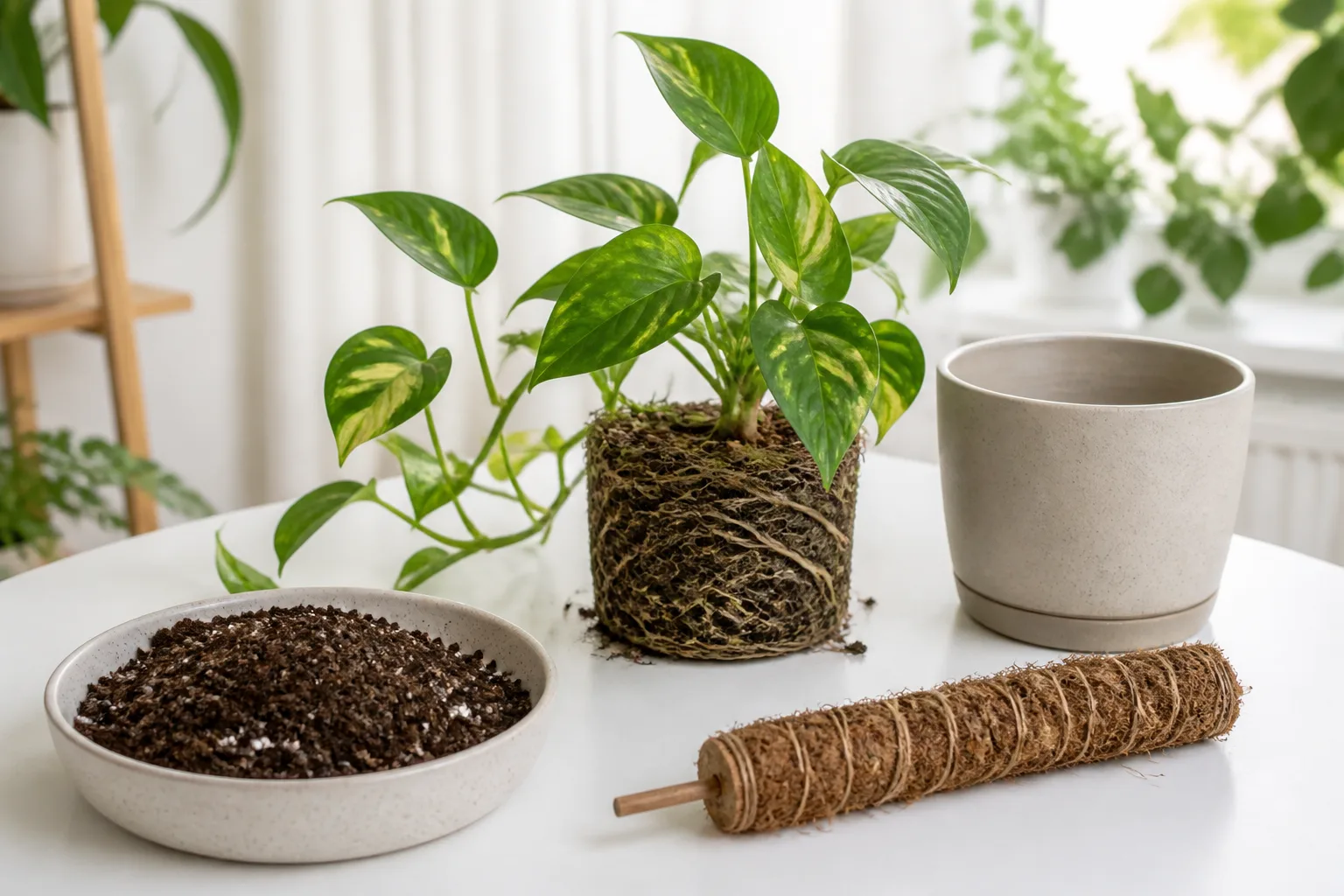
Guide Aerial Roots to Support Instead of Soil
For climbing aroids, give aerial roots a job. Wisconsin recommends a tree-bark or moss-covered support sunk in the pot so aerial roots can attach, and watering that moss so those roots can obtain moisture and nutrients. (Wisconsin Horticulture) Penn State lists moss sticks, trellises, bamboo stakes, and moss-covered boards as indoor supports, with gentle attachment using roots or stalk. (Penn State Extension)
Train selected roots toward the pole; leave others if they are firm and the plant is stable. Cut only dead, damaged, or hazardous roots with clean tools — not every aerial root because it looks untidy. Mist can help in hot, dry rooms for orchids — the RHS suggests misting foliage and aerial roots daily in hot weather — but misting is not a substitute for a support on a heavy climber. (RHS) Species detail for Monstera lives in the aerial roots guide; for DIY support builds, see moss pole DIY.
Top Up Settled Mix the Right Way
When the pattern is eroded or settled soil roots and the plant checks out healthy, top-dress as above. If old mix has collapsed into a sour, waterlogged, or hydrophobic mass, topping up only hides failure. Unpot, inspect, and refresh per repotting houseplants. Timing still matters: Penn State notes spring, when growth resumes, as the best general window to repot. (Penn State Extension)
Repot When Crowding Is Confirmed
Confirm crowding by sliding the plant out. Circling mats with little visible mix in the lower third justify action. Move up modestly: the RHS recommends that for pots under 25 cm (10 in), aim about 2.5–5 cm (1–2 in) wider and deeper. (RHS) Penn State likewise says the new container should be only slightly larger. (Penn State Extension)
Tease circling roots so they can enter fresh mix. Trim only soft, rotten sections. Keep the plant at the same depth it grew before. If you do not want a larger plant, root-prune and refresh in the same pot rather than upsizing — the RHS describes root pruning as an option when larger containers are impractical. (RHS) For timing and pot-size rules across houseplants, use when to repot alongside the full repotting guide and the dedicated root-bound guide.
This Guide vs Root-Bound vs Aerial-Roots Pages
Use this page when the question is “what kind of exposed root is this?” across any houseplant. Use sibling pages when the next question is already narrowed:
| Your question | Best page |
|---|---|
| Aerial vs settlement vs crowding triage | This guide |
| How severe is crowding, and should I upsize or root-prune? | Root-bound houseplants |
| Should I cut, mist, or train Monstera aerial roots? | Monstera aerial roots guide |
| Soft, black, foul roots after wet soil | Root rot on houseplants |
| Short symptom map before a species page | Exposed roots symptom hub |
Keeping those jobs separate avoids burying every Monstera aerial root “because the root-bound article said to repot” and avoids skipping a needed pot-up because “aerial roots are normal.”
Aftercare and Prevention
After a top-dress, water gently and watch that the new layer does not wash away. After a repot, expect a short pause in growth while roots explore fresh media. Keep light stable, hold fertilizer for a couple of weeks if you cut roots, and empty saucers so the mix can dry at the right pace.
Watch for wilting with wet soil, sour smell, or a soft crown — those mean you should recheck for rot, not water more. Firm new leaves and a pot that dries on a predictable schedule are the success signals. Aerial-root plants should show attachment or steady growth on their support, not forced burial success.
Choose pots with real drainage holes and a mix matched to the plant — chunky and airy for epiphytes and aroids, finer but still porous for many terrestrials. (RHS) Water in passes that soak without blasting. Leave a rim below the lip so you are not forced to under-water. Check root balls during spring growth instead of waiting for crisis. Give climbers a support early so aerial roots attach instead of roaming the floor. Refresh degraded media before it shrinks away from the roots it once covered.
First-Hand Notes From Diagnosing Exposed Roots
These are LeafyPixels editorial observations from plants we diagnosed in ordinary home conditions — not controlled trials.
- Golden pothos, 6-inch plastic nursery pot (March 2026): Hard faucet watering carved a crater around the stem and left a ring of white feeder roots on the surface. Plant was stable, mix drained evenly below the crater, and unpotting showed plenty of mix left — not a circling mat. A thin top-dress of the same chunky aroid mix covered the roots; the crater stayed filled for three weeks when we switched to two slow pours per watering.
- Monstera deliciosa on a moss pole (April 2026): Several thick aerial roots hung past the rim. We guided two toward a damp sphagnum wrap and left the rest alone. After about 10 days the guided roots had gripped the moss; growth continued without burying any aerial roots in the pot mix.
- African violet with a bare neck (February 2026): Lower leaves had been removed over months, exposing stem and a few surface roots. Temptation was to mound mix to the leaf bases. Instead we added only enough matching mix to cover the feeder roots while keeping the crown high and dry. No crown softness at the two-week check.
- False alarm drainage-hole explorer (May 2026): One root poked from a hole on a philodendron that still dried on a normal schedule. Unpotting showed explorers at the wall with usable mix in the bottom third — we returned it to the same pot. Two months later it was still not root-bound by Penn State’s “bottom third” test.
Related Guides
Highest-intent next steps:
- Root-bound houseplants — crowding severity, pot-up vs root-prune
- Monstera aerial roots guide — train, mist, or cut climber aerial roots
- Repotting houseplants and when to repot — modest upsizing and fresh mix
- Moss pole DIY — giving aerial roots something to attach to
- Root rot on houseplants — when exposed roots are soft, black, or foul-smelling
- Exposed roots symptom hub — short cross-plant triage
Species examples when architecture differs: pothos exposed roots for vines that settle and trail; African violet exposed roots when a bare neck tempts deep burial; philodendron gloriosum exposed roots for surface-rooting aroids; string of hearts exposed roots when beads are tubers, not feeder roots.
Conclusion
Do this in the next 10 minutes:
- Side photo + crown line mark — note whether roots start on the stem/node or from the buried ball.
- Rule out lookalikes — bead-like string of hearts organs are tubers, not eroded feeder roots.
- Firm vs mushy pinch — soft, foul roots go to rot care, not a top-dress.
- Choose one move — leave/guide aerial roots; thin top-dress settled soil roots; unpot only if crowding signs stack up.
- If you pot up, go only 1–2 inches wider for typical small pots — do not overpot to hide roots.
Identify the pattern, protect the crown, and choose the smallest safe move. That sequence keeps more plants alive than any instinct to hide every root under a mound of mix.