How to Grow and Care for Eucalyptus Indoors
Learn how to grow eucalyptus indoors with the right species, bright light, careful watering, seasonal temperatures, pruning, and realistic size expectations.
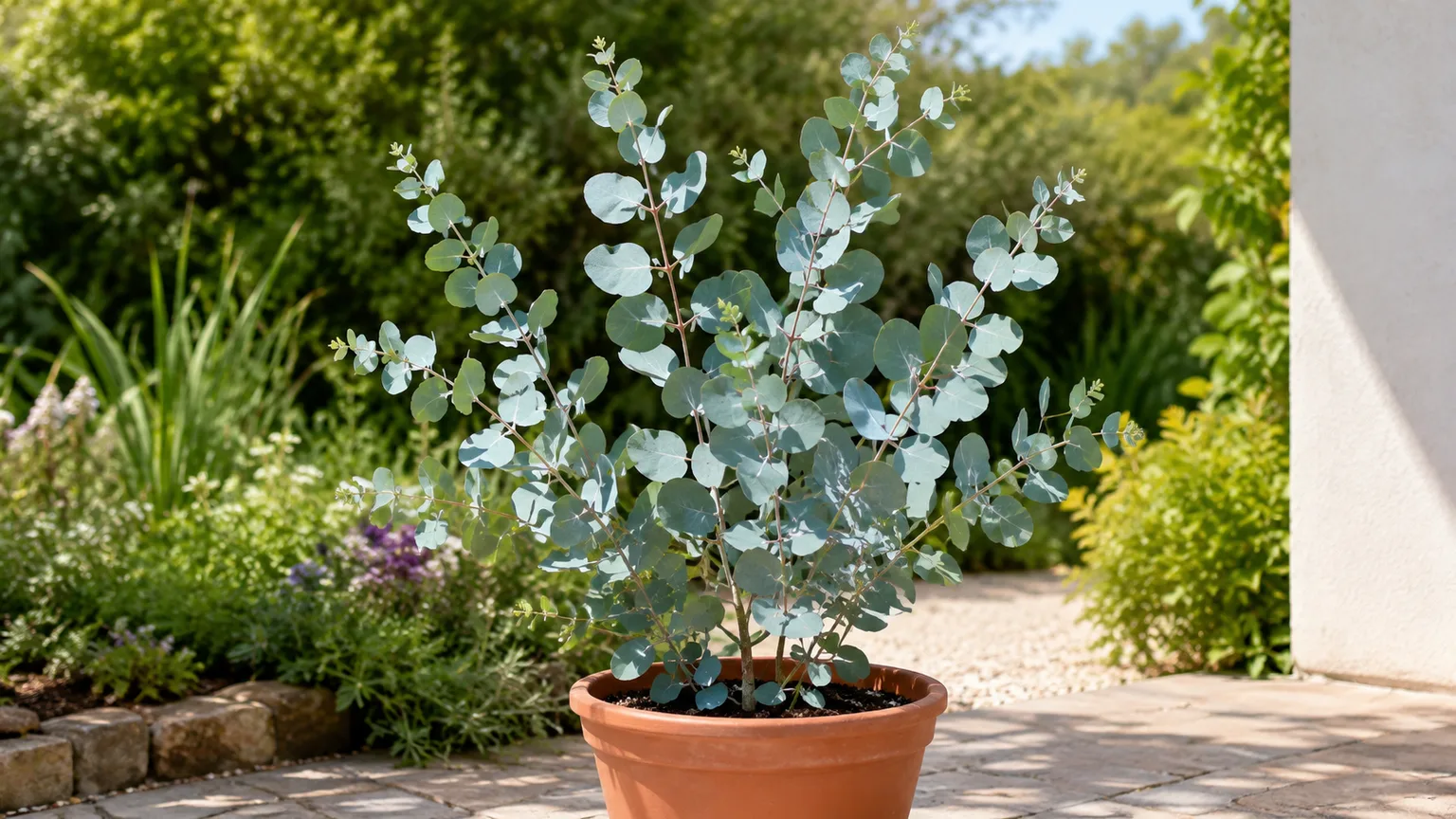
Eucalyptus can grow in a pot indoors, but it is not a set-and-forget houseplant. A young silver dollar tree may look compact on a shelf, yet the plant is still a fast-growing tree that needs strong direct light, careful root-zone watering, and enough room for its canopy. Many indoor specimens are best treated as temporary container plants that can move outside in suitable weather or be replaced when they outgrow the space.
Before you buy one, check two things: the botanical name on the label and the brightest spot in your home. If you cannot offer several hours of direct sun, eucalyptus is likely to lose vigor no matter how carefully you water or fertilize it.
Is indoor eucalyptus a realistic long-term houseplant?
The short answer is yes, with conditions. Eucalyptus is a genus with hundreds of species, from shrubs to very large trees, so “eucalyptus” does not describe one fixed size or one uniform care routine. Indoor plants are usually juvenile specimens chosen for their rounded, blue-gray leaves; some retain that foliage for a while, but they do not all stay small. NYBG describes eucalyptus as a challenging houseplant that may outgrow a home in a few years, with the indoor lifespan varying by species and cultivar. Its Eucalyptus Houseplants guide makes the trade-off clear: the fragrance and foliage are appealing, but light and eventual size are real constraints.
Think of it as a sun-loving container tree, not a compact tropical foliage plant. If you have a very bright window, space to prune, and a plan for moving it outdoors or rehoming it later, it can be rewarding. If your only available place is a dim bathroom or a north-facing room in the Northern Hemisphere, choose a plant adapted to lower light instead of trying to compensate with more water or fertilizer.
Which eucalyptus should you choose?
Start with the botanical name, not the sales label. Eucalyptus cinerea, commonly sold as silver dollar or argyle apple, is popular for its rounded, silvery juvenile leaves and is often sold as a potted foliage plant. Eucalyptus gunnii cultivars such as ‘Silver Drop’ also have attractive juvenile foliage, but the species can become a substantial tree outdoors. ‘Baby Blue’ is a named form of Eucalyptus pulverulenta prized for rounded leaves and cut stems. These are not permanent dwarfs simply because a young plant fits on a windowsill.
Lemon-scented gum is now often classified as Corymbia citriodora. Its mature tree size makes it a poor choice for a small indoor pot if your goal is a long-term houseplant. The Royal Horticultural Society’s eucalyptus guide describes a broad range of sizes and notes that even container-grown plants eventually become too large for their pot. For practical home growing, Gardening Know How’s indoor eucalyptus overview also identifies silver dollar eucalyptus as a common indoor option, while emphasizing its need for bright direct light.
Read the label and judge the plant you have
Common names are inconsistent between nurseries. Ask for the full botanical name and cultivar, whether the plant was grown in a pot or recently dug, and whether it is intended for indoor display, seasonal patio use, or cut foliage. A “dwarf” or “compact” label may describe the cultivar relative to other eucalyptus, not a tree that will stay tabletop-sized indefinitely.
Look for a plant with firm stems, evenly colored leaves, and roots that have not formed a dense, circling mass at the drainage holes. Avoid a plant that is already badly wilted, has widespread crispy foliage, or is planted in a decorative cachepot with no inner pot or drain hole. A healthy, small starter is easier to acclimate and shape than an overgrown specimen that has already spent weeks in low light.
Give it the brightest window you can provide
Light is usually the make-or-break factor. NYBG recommends at least six hours of full sunlight a day for good leaf color and warns that eucalyptus deteriorates quickly in low-light conditions. A south-facing window is often the strongest option in the Northern Hemisphere; in the Southern Hemisphere, a north-facing window is usually sunnier. Keep the plant close to the glass, while avoiding contact with very cold panes in winter.
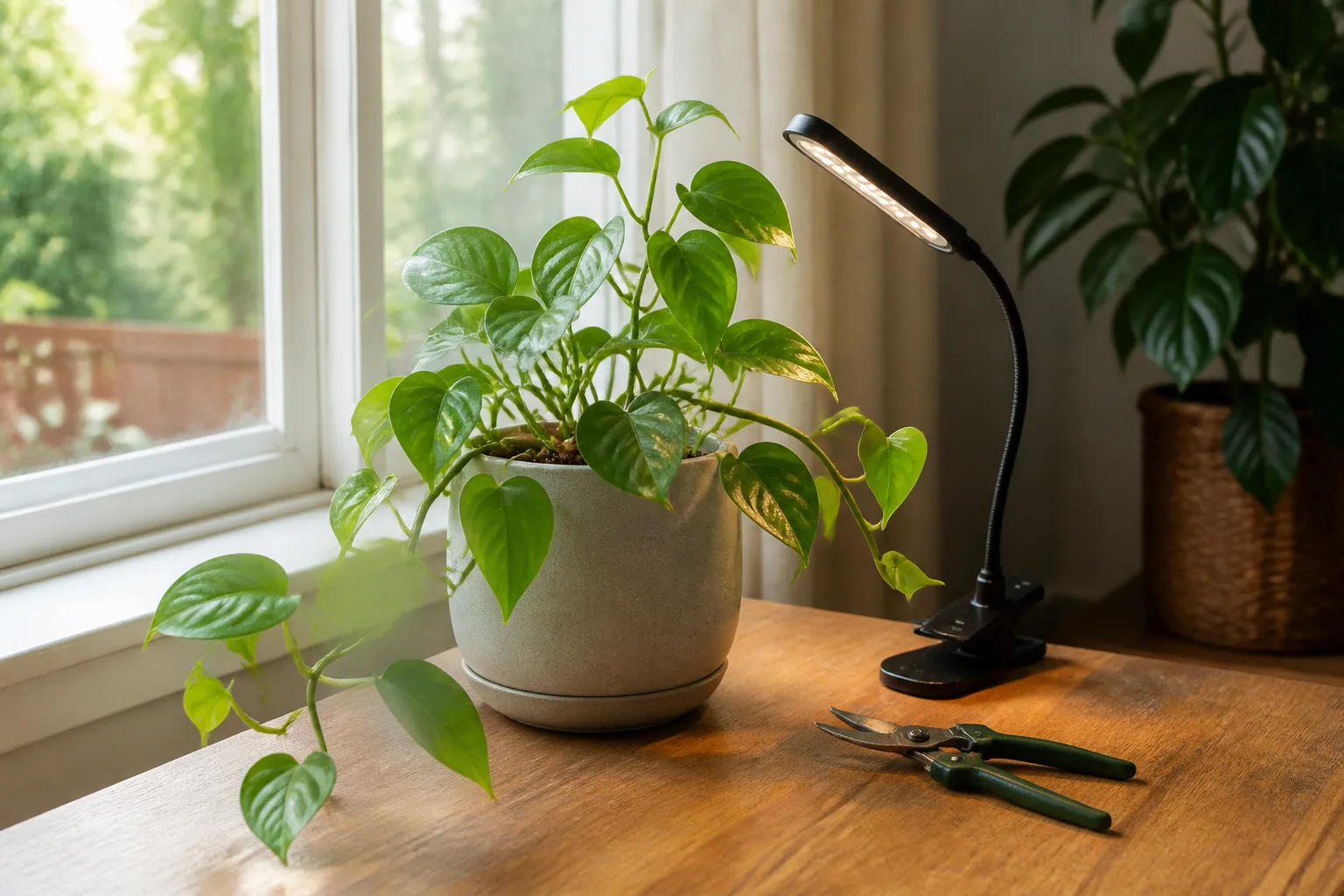
If your best window still provides only a few hours of sun, a grow light can supplement it, but treat it as a measured aid rather than a guarantee. Use a full-spectrum lamp sized for the plant and follow its distance and daily-use instructions; a weak desk lamp across the room will not replace strong daylight. Rotate the pot a quarter turn every week or two if growth leans toward the window, but do not keep moving the plant between very different light levels.
A plant that stretches between leaves, leans, produces smaller growth, or sheds foliage is asking for more light. Move it closer to the window or add a grow light before increasing fertilizer. When taking it outside for summer, acclimate it over one to two weeks: begin in bright shade, then add morning sun gradually. A plant that has lived behind glass can scorch if placed all at once in intense outdoor sun, even though eucalyptus ultimately wants abundant light.
Use a draining nursery pot and airy mix
Choose a sturdy pot with several open drainage holes. A nursery pot set inside a decorative cover works well if you remove the inner pot for watering and let it drain completely before returning it. A heavy outer pot can help stabilize a top-heavy tree, but water must never sit around the roots. Do not put gravel in the bottom as a substitute for drainage; the holes and the texture of the potting mix matter more.
Use a quality peat-free houseplant mix amended with roughly one part perlite or pumice to three or four parts mix. The goal is a root zone that holds some moisture after watering but releases excess water and re-aerates as it dries. A dense, water-retentive mix can stay wet too long indoors, while a very coarse mix may dry before the plant can use the water. If the potting mix stays soggy for days, improve the mix and drainage rather than trying to correct the problem with a strict watering calendar.
Water deeply, then let the root zone partly dry
Do not water eucalyptus by weekday. Check the soil with a finger or wooden skewer several centimeters below the surface; when the upper portion has dried and the mix is approaching dry, water slowly until water runs freely from the drainage holes. Empty the saucer or cachepot after it drains. NYBG advises watering thoroughly and allowing the soil to nearly dry before watering again, with less water during winter rest.
The exact interval changes with pot size, root density, light, temperature, and whether the plant is outside. A small pot in summer sun may need water much more often than a large pot in a cool winter room. If water rushes down the sides without wetting the root ball, the mix may have pulled away from the pot or become difficult to rewet; soak the pot briefly from below, then let it drain fully. Do not leave it standing in that water.
A drooping plant is not automatically thirsty. Feel the mix first. If it is dry several centimeters down and the pot is light, water thoroughly; if it is wet and the plant is yellowing, adding water worsens oxygen stress at the roots. This simple check prevents a common cycle in which a grower sees a stressed plant, waters more, and unintentionally keeps the root zone saturated.
Match temperature and humidity to the species
Most eucalyptus tolerate ordinary household humidity, so misting is unnecessary. Repeated misting does not correct dry roots or low light, and wet foliage in a stagnant corner can invite leaf problems. Keep the plant away from heater and air-conditioning vents, radiators, drafty doors, and sudden blasts of cold air; rapid temperature changes can trigger leaf curl or drop.
Winter needs depend on the species. NYBG says many eucalyptus sold as houseplants, including E. gunnii, benefit from a cooler rest around 45 to 50°F (7 to 10°C) from roughly November through February, alongside much less water and no fertilizer. That is specialist guidance for the plants it discusses, not a universal target for every species or a reason to expose a tender plant to frost. Check the plant’s identity and nursery instructions before trying to create a cold rest; if you cannot provide the needed cool conditions safely, choose a species suited to your actual home rather than placing the pot beside an unheated, freezing window.
Fertilize lightly during active growth
Eucalyptus does not need a heavy feeding schedule. Once new growth is underway in spring, use a balanced houseplant fertilizer at the label’s low or standard rate, depending on the product, and repeat only as directed while the plant is actively growing. Stop feeding during winter rest or when growth has slowed in low light. NYBG suggests monthly feeding from spring to fall; BBC Gardeners’ World Magazine’s eucalyptus guide notes that established eucalyptus outdoors generally needs little maintenance, which is another reason not to overfeed a small container specimen.
More fertilizer will not fix an undersized pot, poor drainage, or a dark location. Excess salts can damage roots and create brown tips, especially when a plant is watered infrequently or the container has poor drainage. If you see a crust on the soil or pot rim, pause feeding and flush the mix with clean water only if the pot drains freely; otherwise address the drainage problem first.
Prune for structure, not to fight the plant’s biology
Pruning helps a young eucalyptus stay balanced and gives you aromatic stems, but it cannot turn a vigorous tree into a permanently miniature plant. Use clean, sharp bypass pruners. Remove dead, damaged, or crossing shoots first, then shorten an overly long stem just above a leaf node or side shoot so the remaining growth can branch. Take a little at a time rather than removing a large fraction of foliage in one session; leaves are how the plant fuels its regrowth.
If you want a single upright leader, preserve the strongest central stem and shorten competing shoots. If you prefer a bushier plant, tip-prune young stems once they have enough healthy growth to recover. Make these cuts during active growth when the plant has strong light. Avoid frequent trimming in winter or after a recent move, repot, or major leaf drop, when the plant has less capacity to replace foliage.
Pinching, harvesting, and hard pruning are different
Pinching a soft tip encourages branching; harvesting a few leafy stems gives you cut foliage; hard pruning removes much more of the structure and asks the plant to resprout. Do not assume every cultivar tolerates severe cutting equally. The RHS describes eucalyptus cuttings as difficult to root and its outdoor pruning guidance varies by growth habit; BBC Gardeners’ World explains that E. gunnii can tolerate hard pruning outdoors, but that is not a blanket prescription for every indoor species in a restricted pot.
If a plant is already too tall for the ceiling or too wide for the window, first confirm its identity and whether it is healthy enough to recover. You can reduce a few branches over time, but repeated drastic pruning, poor light, and a small root system can leave it weak. Sometimes the sensible choice is to move the plant outside where locally appropriate, give it away to someone with space, or start over with a more manageable cultivar.
Repot only when roots need more room
Fast growth means eucalyptus may fill a pot quickly, but a calendar alone is not a reason to repot. Check for roots circling densely inside the pot, a root ball that dries unusually fast, water that runs through almost immediately, or roots emerging from multiple drainage holes. If the plant is still growing well and the soil drains normally, it may not need a larger container yet.
When repotting is warranted, choose a pot only one size larger, with drainage holes, and water the plant the day before if the mix is dry. Slide out the root ball gently and keep it as intact as possible; eucalyptus can react poorly to root disturbance. Set it at the same depth in fresh, airy mix, fill gaps without packing the soil hard, and water until the excess drains. Then give it a stable bright spot and avoid fertilizing until new growth resumes. NYBG recommends spring repotting and notes that some fast-growing types may need it more than once in a year, while the NYBG houseplant FAQ identifies root loss, a pot much larger than the old one, and abrupt temperature changes as possible contributors to curling after transplant.
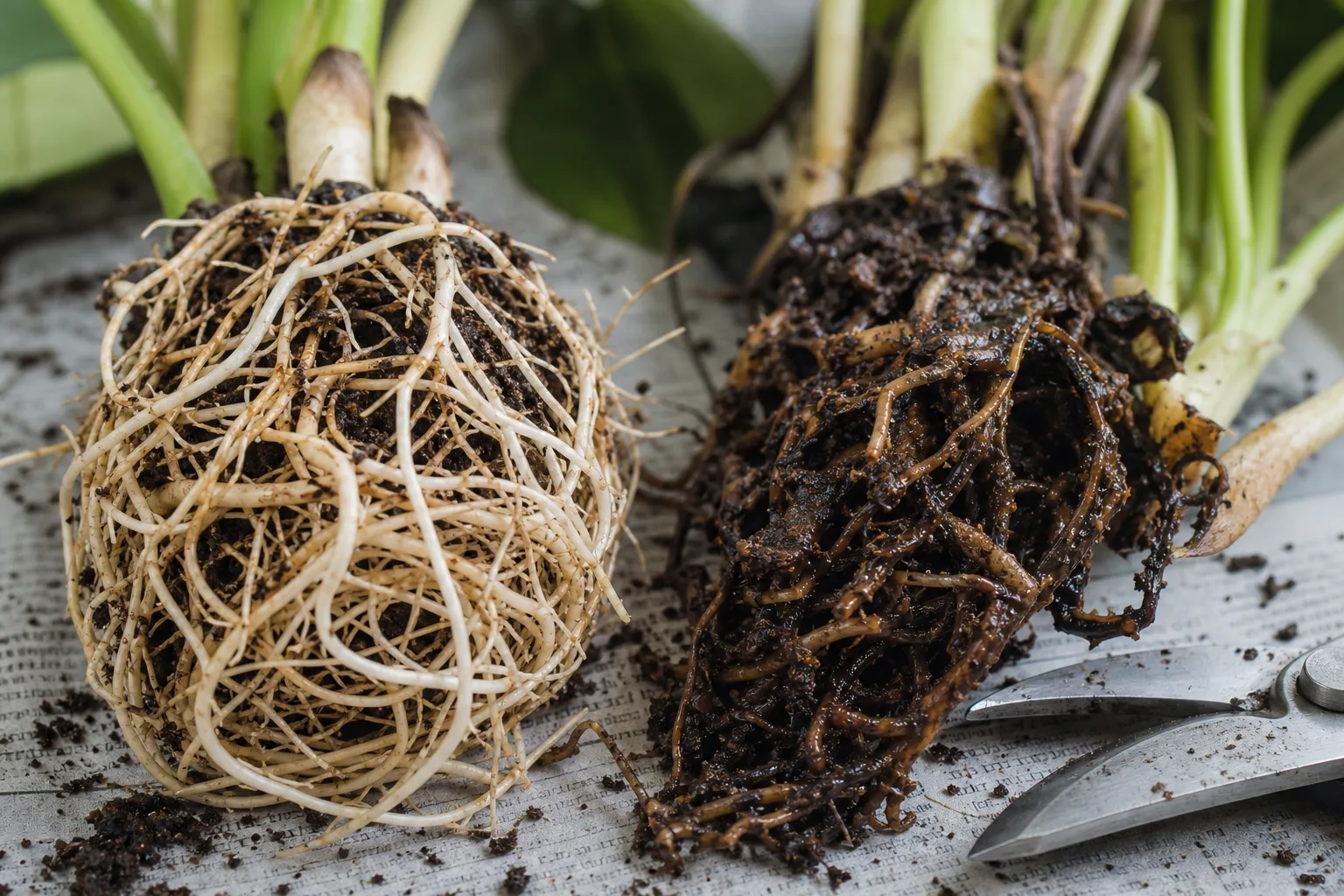
Do not tease apart or trim healthy eucalyptus roots just to fit them into a decorative container. If a specimen is too large for the next practical pot, a larger container, careful pruning, or moving the plant outdoors may be safer than repeatedly cutting the root system. Always use a pot with drainage, even if it sits inside a cachepot.
Propagate eucalyptus with seeds or cuttings
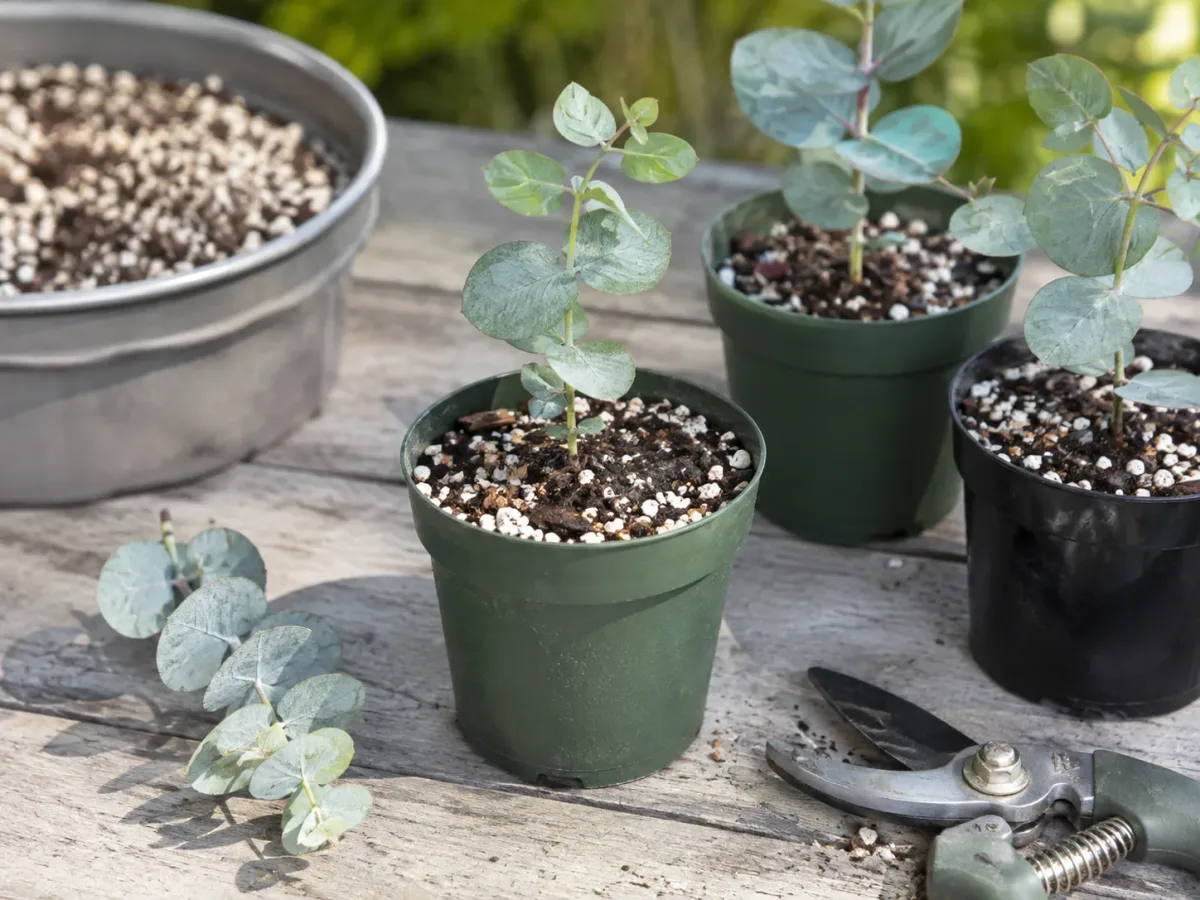
Seed is generally the more dependable route for home propagation. Sow fresh seed in spring in a clean seed-starting mix, follow the packet’s species-specific depth, and keep it evenly damp rather than waterlogged. NYBG recommends a covered propagator in bright, indirect light at about 70 to 75°F (21 to 24°C); once seedlings develop true leaves, pot them individually while they are still small. Use a deeper cell or small pot and handle the roots gently, because eucalyptus dislikes root disturbance.
Cuttings can be attempted, but set expectations modestly. The RHS says eucalyptus cuttings are extremely difficult to root, so a handful of cuttings may all fail even when the setup is careful. If you want to try, take several young, non-woody tips from a vigorous plant, remove the lower leaves, insert them into a moist airy propagation medium, and keep them warm in bright indirect light with humidity around the foliage. Keep the medium damp, not saturated, and ventilate a covered setup to reduce rot. Do not pull repeatedly to test for roots; wait for visible new growth or gentle resistance, and accept that seed may be the better option if the plant matters to you.
Diagnose stress by reading the leaf pattern
Eucalyptus leaves respond to several different stresses in similar ways. Before changing care, note which leaves are affected, whether the mix is dry or wet, and what changed recently: a move, repotting, temperature swing, reduced daylight, or a missed watering. Check the roots and pot drainage only if the symptoms or soil condition point there; unnecessary handling can add stress.
A useful first pass is to check moisture, drainage, light, and recent changes—in that order. The NYBG’s plant-care guidance treats leaf curl as a stress signal rather than a diagnosis and lists inadequate sun, over-wet soil, a tight pot, transplant stress, and missed winter rest among possibilities.
Crispy or curled leaves
Dry, curled leaves with brittle edges often follow a root ball that became too dry, especially if the pot is small and the plant sits in direct sun. Water thoroughly once the mix is dry, then monitor the pot more frequently during hot, bright weather. Leaves that have already turned crisp may not recover; judge improvement by whether new growth emerges without the same damage.
If the mix is wet, do not add more water. Check whether the container drains and whether the saucer has standing water; correct those conditions first. Curling that begins after repotting or a move can reflect temporary stress, so stabilize light and temperature instead of changing several variables at once. Brown patches after moving outdoors may be sun scorch: return the plant to bright shade and acclimate it more gradually.
Gray, stiff juvenile leaves are not necessarily diseased. As NYBG explains, rounded young leaves can develop a waxy gray coating as they mature. Look for spreading spots, soft tissue, or a visible pest before treating normal leaf color as a problem.
Yellowing or sudden leaf drop
A few older leaves yellowing and falling may be normal turnover, but a quick wave of yellow leaves often points to roots staying too wet. Let the mix dry toward the appropriate point before watering again, empty standing runoff, and make sure air can reach the root zone through a free-draining mix. If the soil smells sour or stays wet for many days, inspect the roots only if needed and repot into fresh medium after removing clearly dead, mushy material with clean tools.
Sudden leaf drop can follow low light, a cold draft, a hot vent, a change in watering, or relocation. Move the plant to a stable, bright location, keep the root ball evenly managed, and avoid fertilizing or pruning heavily while it recovers. Eucalyptus may take time to adjust after shipping or repotting; steady conditions are more useful than repeatedly moving it between rooms. If stems are dry and brittle throughout, scratch a tiny area of bark to check for green tissue; dead sections can be removed, but do not cut back healthy wood just because the plant has shed leaves.
Keep eucalyptus away from pets and handle cut foliage carefully
The ASPCA lists eucalyptus as toxic to dogs, cats, and horses and identifies essential oils, including eucalyptol, as the toxic principle; listed signs include salivation, vomiting, diarrhea, depression, and weakness. Keep the potted plant, pruned stems, dried leaves, and any eucalyptus oil out of reach of animals. If a pet chews or ingests eucalyptus or develops symptoms, contact a veterinarian or ASPCA Animal Poison Control promptly. Do not assume a dried bouquet or a scented product is safe simply because it is not growing in soil.
For home fragrance or floral use, harvest only a few healthy stems with clean pruners. Hang them loosely in a dry, ventilated place out of direct sun until the leaves feel dry and papery, then store them away from children and pets. A living plant will not reliably perfume a whole home; the scent is strongest when foliage is bruised or cut. Do not ingest leaves or use concentrated essential oil as a substitute for the ornamental plant.
Conclusion
Eucalyptus can succeed indoors when you begin with a correctly identified plant, give it strong direct light, and match water and winter care to its species. A draining pot, airy mix, cautious repotting, and light pruning help keep a young specimen healthy, but they do not cancel its natural tree growth.
Choose eucalyptus if you have the right window and room to manage a fast-growing plant for a few years. If the light, winter conditions, mature size, or pet-safety concerns do not fit your home, enjoy eucalyptus as cut foliage and choose a more adaptable houseplant for the windowsill.