How to Use Rhododendron in Your Landscape
Use rhododendrons in foundation beds, hedges, woodland borders, and containers—with cultivar picks, spacing, light, soil pH, and companion-plant rules.
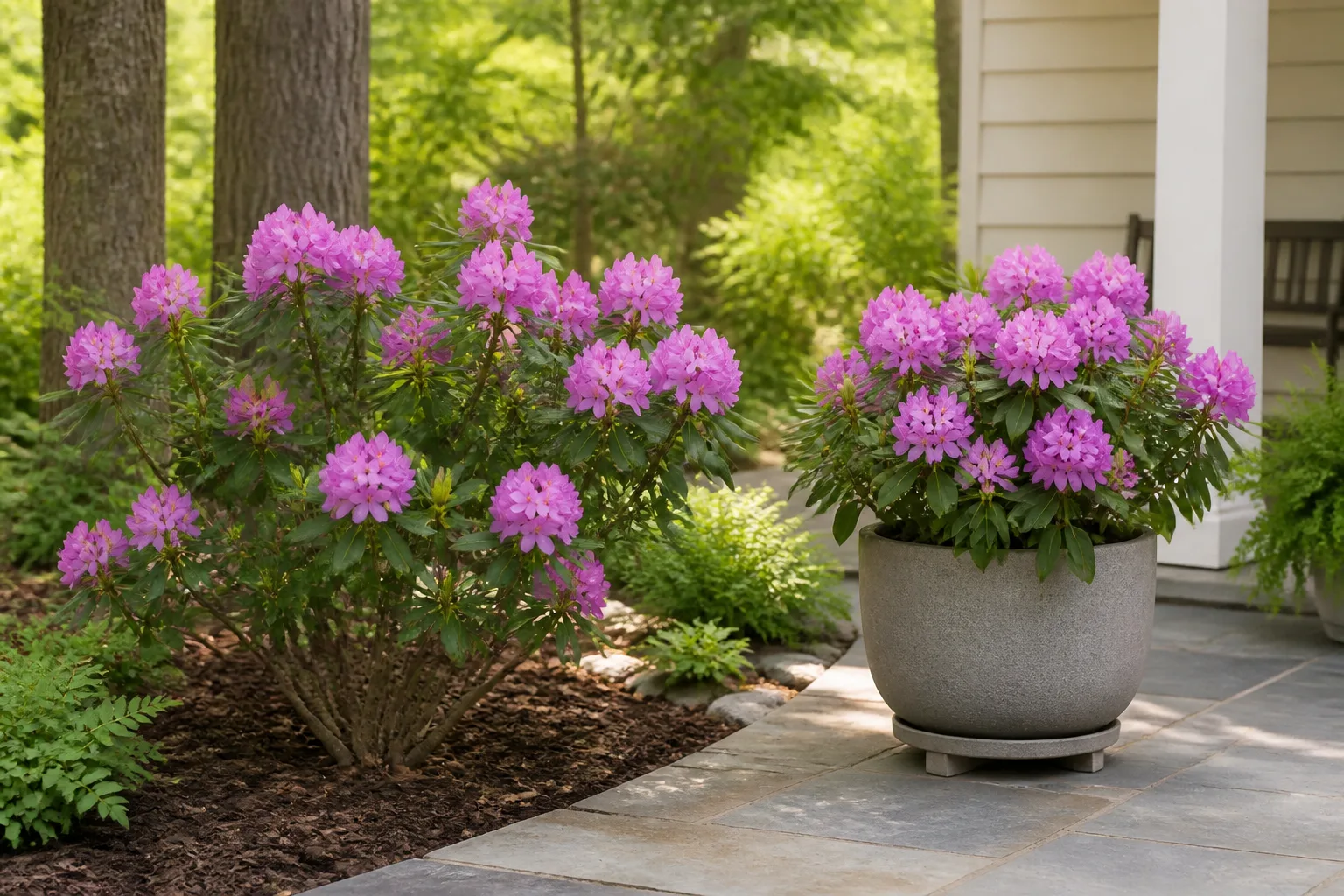
A rhododendron landscape fails for boring reasons: the shrub was bought for spring color, then planted in alkaline clay beside a south-facing wall where it slowly yellows, stops blooming, and develops a bare skirt of stems. The flowers were never the problem. The design role, cultivar size, soil, and light were never matched to the site.
Rhododendrons can anchor a foundation bed, knit into a privacy screen, lift a woodland edge, or carry a shaded patio in a pot—but only when you treat them as structural evergreens with a short spring performance, not as interchangeable flowering shrubs. The plan below walks site audit first, then five proven landscape roles, then the design and planting details that keep the composition sharp after the blooms fade.
The short answer: match the cultivar to the job and the site
Use rhododendrons where soil stays acidic (roughly pH 5.0–6.0), drainage is good, and plants get dappled light or morning sun with afternoon protection. Pick low, compact cultivars for foundation lines and pots; choose taller, dense-foliaged types for hedges and back-of-border screens; group in threes in woodland and mixed beds so the planting reads as intentional, not polka-dotted.
If your soil is alkaline, your only sunny strip is a baking driveway edge, or you need a fast formal hedge in dry sand, rhododendron is probably the wrong plant—no amount of fertilizer fixes a fundamental site mismatch. When pots or raised acid beds are the only option, our rhododendron in pots vs. ground guide covers that branch of the decision in depth.
Start with a site audit before you choose a design role
Landscaping with rhododendron starts with the ground and sky, not the nursery tag photo. The American Rhododendron Society stresses soil type, drainage, temperature extremes, sun, shade, and wind when selecting plants—because a cultivar that thrives in a woodland chapter garden may sulk against reflected heat from siding or pavement. (American Rhododendron Society: Rhododendron and Azalea Selection)
Walk the proposed planting area at three times: mid-morning, early afternoon, and late afternoon. Note where direct sun hits for more than two hours, where tree canopies create moving shade, and where walls, fences, or paving radiate heat. Rhododendrons are not deep-shade plants; they are bright-shade plants that need enough light to set flower buds without scorching evergreen leaves.
Soil pH and drainage decide whether rhododendron belongs in the bed
Rhododendrons want moist but well-drained, humus-rich acid soil. The RHS growing guide recommends pH between 5.0 and 6.0 for in-ground plantings. (RHS: How to grow rhododendrons) Run a soil test on every bed you intend to use—not just one corner of the yard. If pH is above 6.5 and your irrigation water is hard, fighting the whole property is a long, expensive project.
Drainage matters as much as pH. Shallow, fibrous roots rot quickly in heavy clay that holds winter wet. Dig a test hole, fill it with water, and watch how fast it drains. If water sits for hours, either choose another site, build a raised ericaceous bed, or grow in containers. Our acid-loving plants guide explains when a dedicated acid bed makes more sense than repeating soil amendments every season.
Light is the lever that makes or breaks spring bloom
A common landscaping mistake is tucking rhododendrons under dense evergreens where they survive but rarely flower. Spring-blooming types set buds from late summer into fall; dry soil or too little light during bud formation produces empty stems the following May. The ARS landscape page is explicit: deep shade yields few flowers, while too much sun burns leaves. (American Rhododendron Society: Landscape Use)
Aim for dappled shade under high deciduous trees, morning sun with afternoon shade, or bright eastern exposure. Avoid frost pockets and east-facing sites where rapid morning thaw after a freeze can damage buds and open flowers—advice the RHS repeats for site selection. Sheltered conditions matter too: drying winter wind desiccates broad evergreen leaves on exposed hedges.
Five landscape roles rhododendrons do well
Once the site passes the audit, assign each rhododendron a job: frame the house, block a view, layer a border, naturalize under trees, or carry a container vignette. Mixing roles without checking mature height is how taller plants shade out shorter ones within five years.
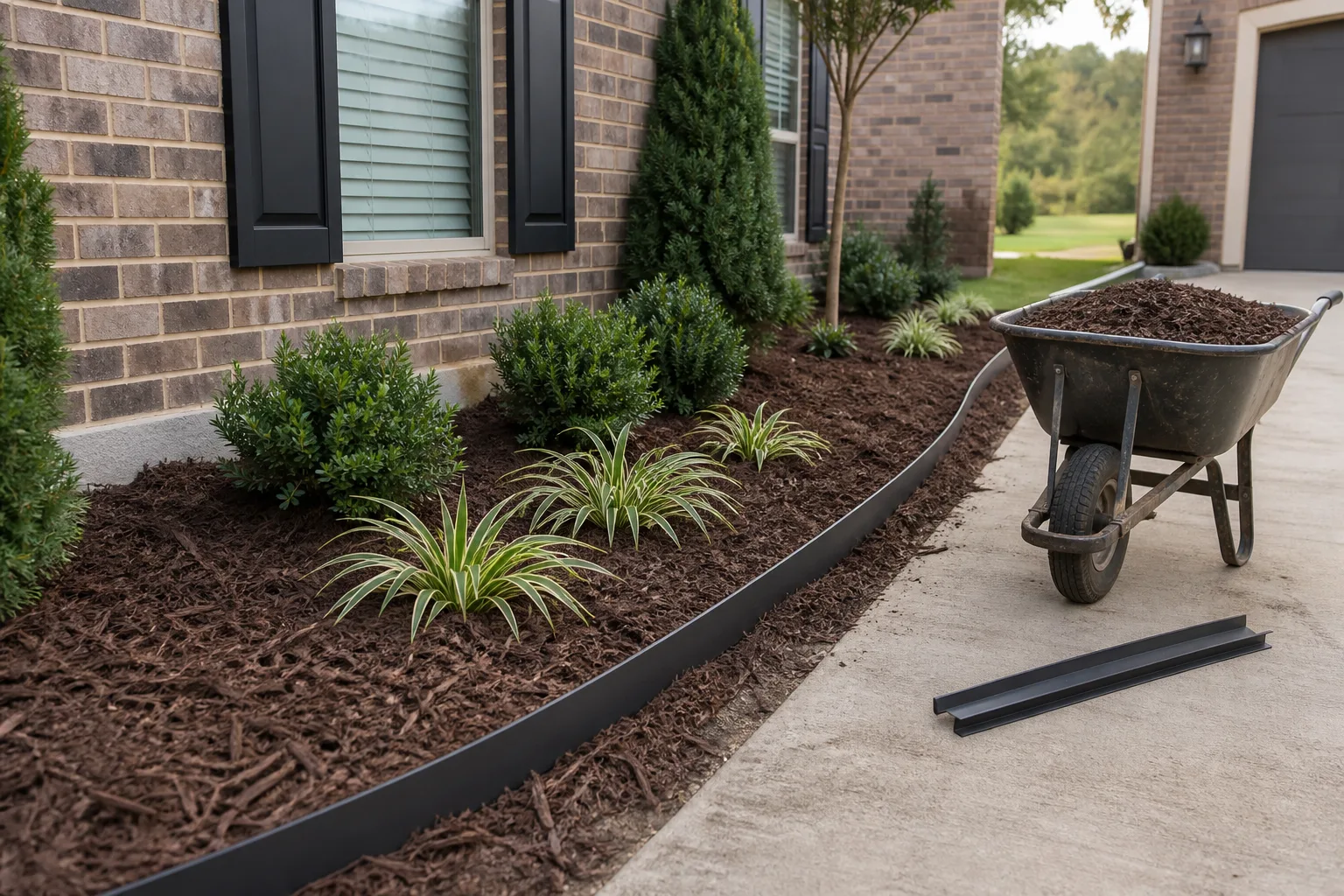
Foundation shrubs that frame the house without outgrowing it
Foundation plantings need predictable height, winter structure, and bloom color that works with siding, stone, and trim—not a shrub that grows into the windows. Low and compact cultivars keep the line clean:
- Carolina rhododendron (R. carolinianum): roughly 3–6 feet tall and wide at ten years; pale lilac, pink, or white flowers in late spring.
- Chapman’s rhododendron (R. chapmanii): 3–5 feet; rounded habit; heat-tolerant enough for many southern foundation beds on the east or north side.
- ‘Northern Starburst’: about 4 feet; burgundy-flushed foliage and large pink blooms for contrast against neutral siding.
- PJM hybrids: near 4 feet; mahogany-bronze winter foliage and profuse pink to lavender flowers—excellent where you want color in spring and leaf interest in winter.
Place the root ball so the top sits slightly above grade, never buried. Mass two or three of the same cultivar rather than one of everything; the ARS suggests groups of three to avoid a spotty, collector’s-garden look along a facade. Leave air space between plants and siding for painting, gutter work, and airflow.
Evergreen hedges and screens for privacy without a wall
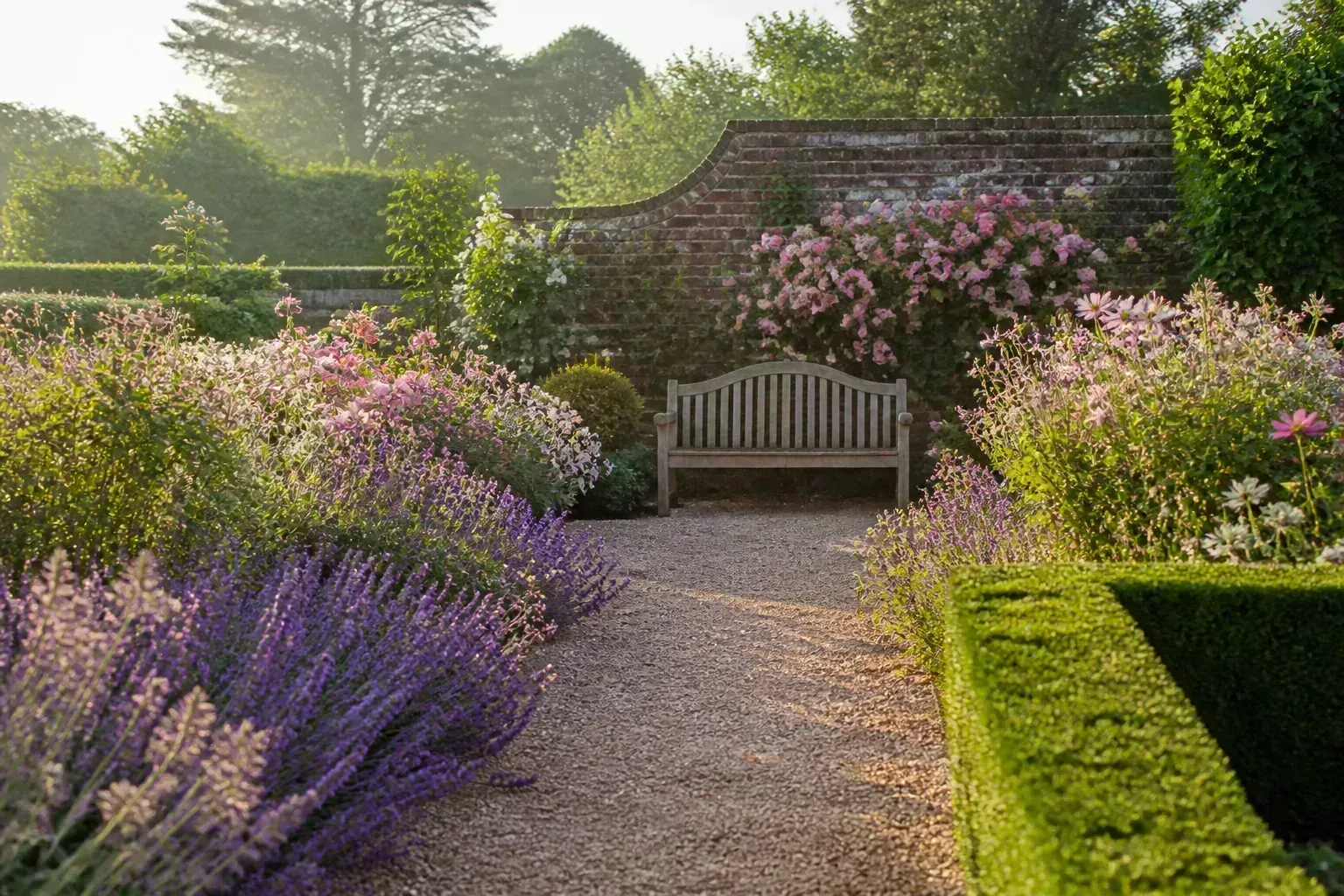
Rhododendrons make visual screens, not security fences. Their value is year-round foliage plus a spring flower wave. Choose dense, upright or rounded cultivars with similar mature height:
- ‘Roseum Elegans’ (Rhododendron catawbiense hybrid): 6–8 feet; lavender trusses; widely used in Northeastern screens.
- ‘English Roseum’: 6–8 feet; large deep pink flowers; strong landscape presence.
- Rosebay rhododendron (R. maximum): up to 15 feet in ideal woodland conditions; white to pale pink summer blooms—only for large properties with space and shade.
Space plants at one-third to one-half of their expected mature spread for a knitted hedge, adjusting wider on slopes or windy sites. Staggered double rows fill faster than a single tight line but need more square footage. For more evergreen screen comparisons—including faster conifer options when rhododendron scale does not fit—see our top evergreens for privacy hedges guide.
Prune lightly after flowering if branches reach walkways; hard renovation is possible on some rough-barked types but costs you a year of bloom. Plan height at planting so you are not shearing constantly—a rhododendron hedge trimmed into a box looks pinched and blooms poorly.
Mixed borders and layered beds along walks and fences
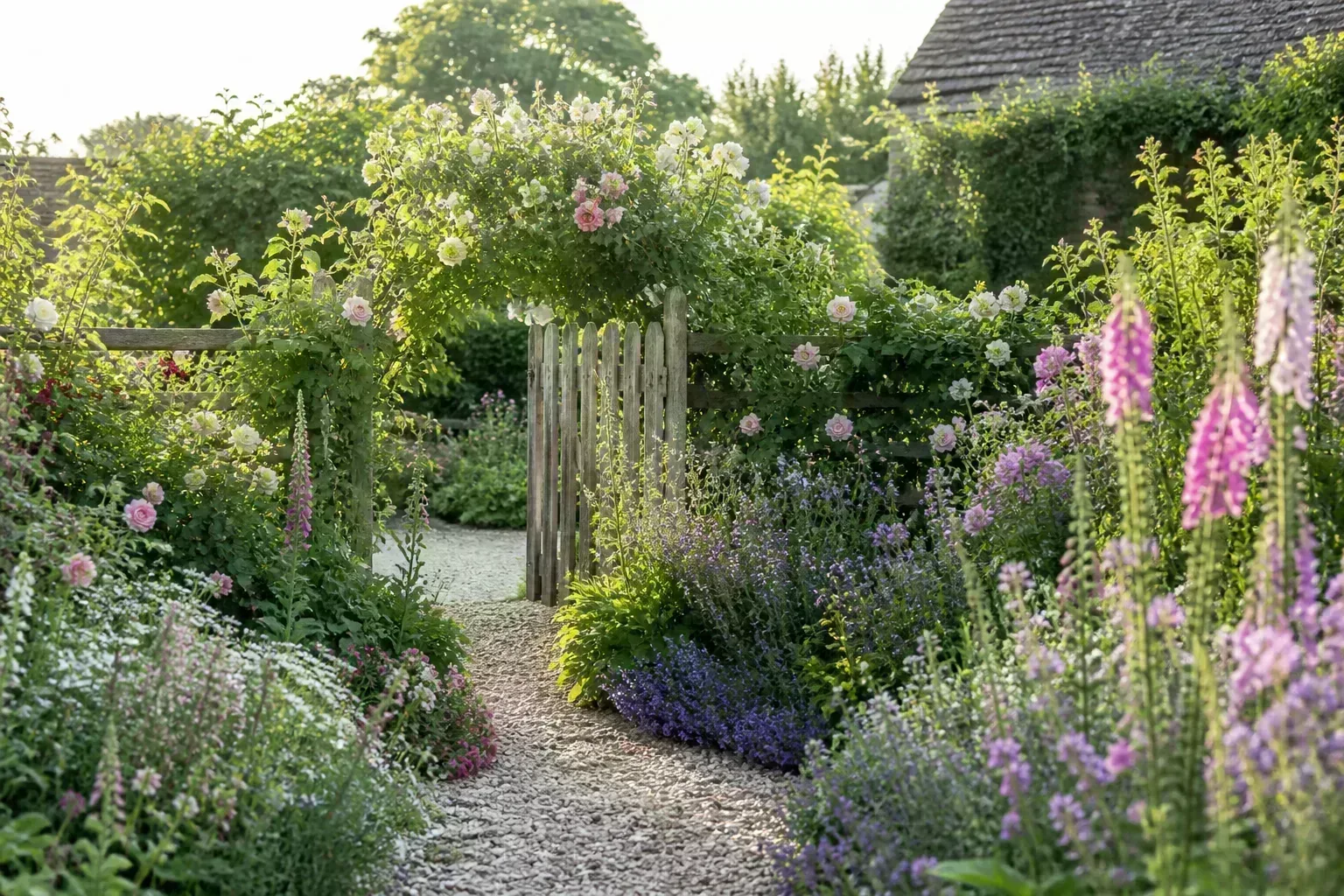
In mixed beds, rhododendrons work best as mid- to back-layer evergreens that provide spring drama and summer structure behind perennials and bulbs. Late-spring blooms pair naturally with early daffodils, tulips, and snowdrops planted at their feet; as bulb foliage dies back, rhododendron leaves carry the bed.
Along fences, pools, and patios, use taller cultivars as a soft backdrop to hardscape. The glossy, elliptical leaves contrast well with fine-textured grasses and large-leaved hostas. Repeat one flower color in groups of three or five rather than mixing every hue in a single bed—your eye reads massed color as design; scattered individuals read as leftovers.
Keep a foreground layer of lower shrubs, grasses, or perennials in front of leggy-base cultivars (see companions below). Without that lower tier, mixed borders look like floating clouds of bloom on bare stems by year eight.
Woodland and naturalistic plantings under trees
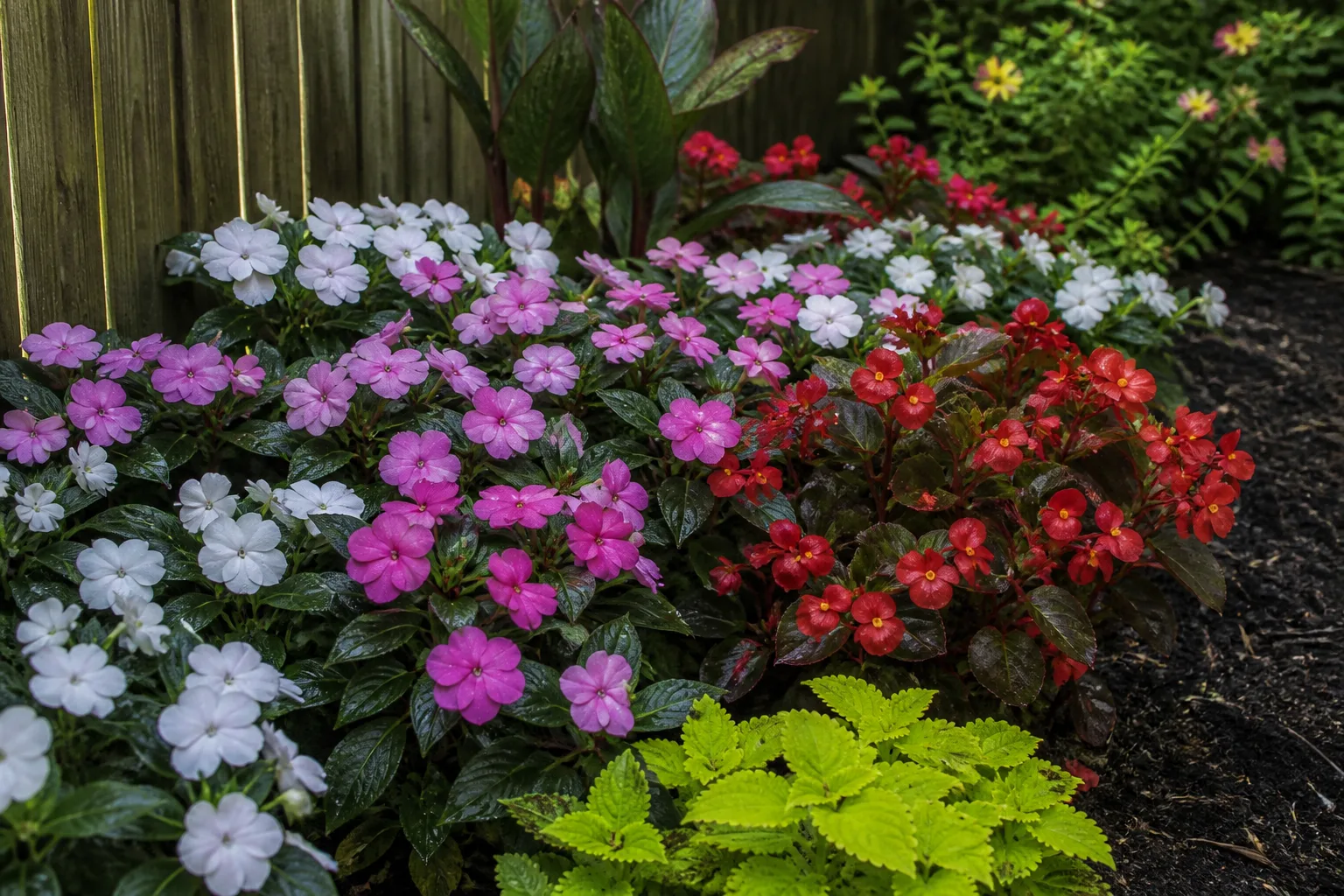
Woodland is the native aesthetic for many rhododendrons: filtered light, organic soil, and neighbors that share acid conditions. Here they shine as specimens or loose drifts along paths and tree lines. Plant on the outer drip line where light is brighter, not in the dry, root-competitive center under mature maples or beeches.
Use height layering: tall R. maximum or large hybrids at the rear, mid-size hybrids in the middle band, and low growers along paths. Allow fallen leaves to remain as mulch, but pull packed maple leaves away from stems in spring to prevent matting. Our shade garden tips cover broader shade-bed structure when rhododendrons are only part of the planting.
Foliage can carry the design when flowers finish. Some cultivars show silvery or tan indumentum on leaf undersides; others push bronze or red new growth in spring. The ARS landscape page highlights those leaf traits as year-round assets—worth prioritizing when flowers are only two weeks of the calendar. (American Rhododendron Society: Landscape Use)
Containers and patio specimens when the garden soil fights back
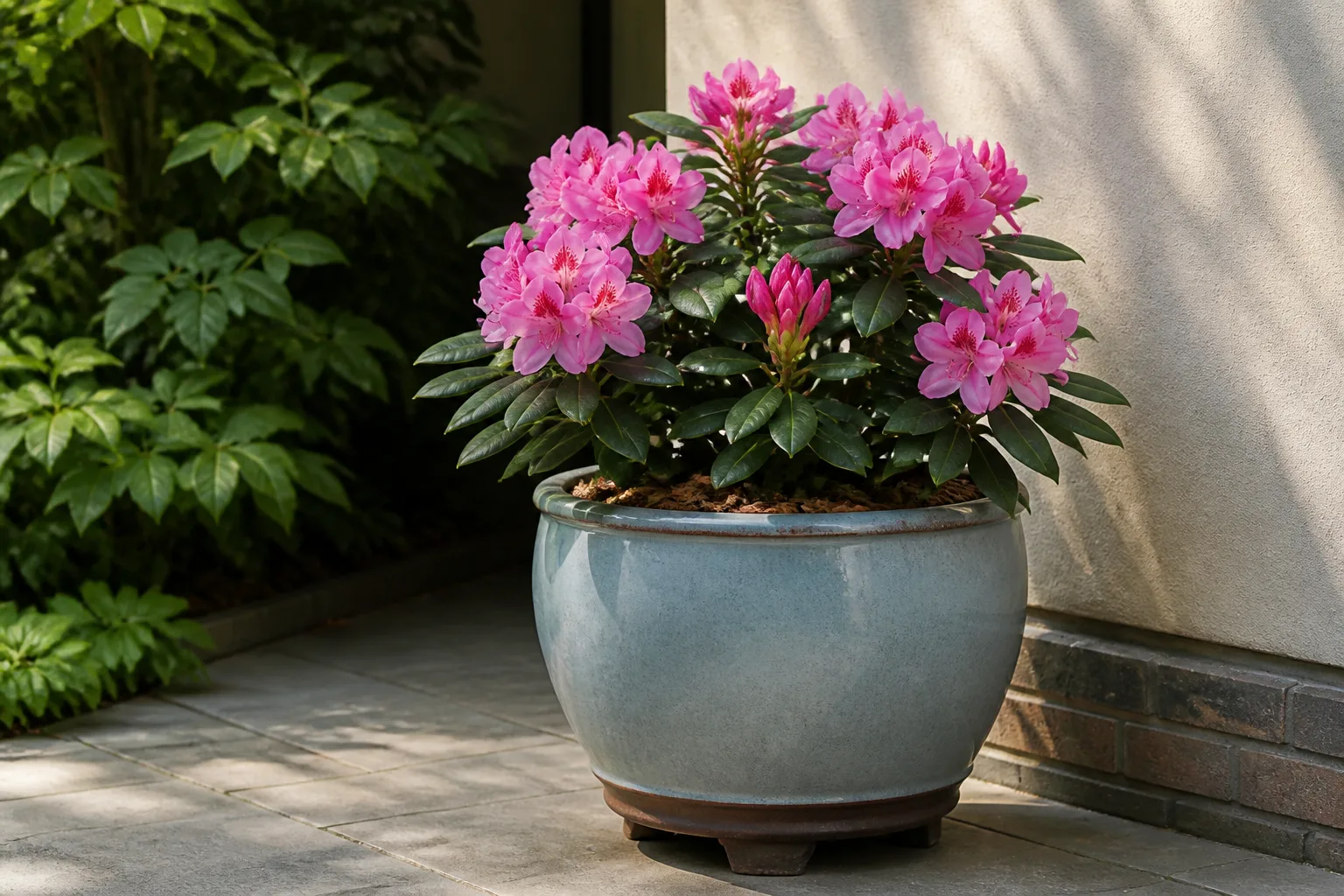
When in-ground planting is impossible—alkaline soil, paved courtyards, rented yards—compact rhododendrons in pots still deliver landscape impact on a deck or entry terrace. Shallow roots suit wide, stable containers with drainage holes; use ericaceous potting mix, not garden soil.
Strong container candidates include ‘Peter J. Mezzit’ (violet-purple midspring bloom on a dense mound), ‘Yaku Sunrise’ (picotee magenta edging on white), and ‘Ginny Gee’ (pink to white, about 2 feet). Expect more frequent watering and winter protection in cold zones than for in-ground plants. The RHS notes that container mixes can slump and become airless after a few seasons—refresh the top layer annually and repot every other year when growth slows. (RHS: How to grow rhododendrons)
Design choices that keep the planting cohesive year-round
Bloom color, foliage, and mature size on the same plan
Build a simple matrix before you shop: ten-year height, bloom week, flower color, leaf texture, and winter foliage color. Nurseries list bloom color prominently; mature size is the field that prevents foundation disasters. If two cultivars flower the same week, choose harmonizing hues—pink with white, lavender with burgundy foliage—not competing hot reds on the same sight line.
Remember that USDA zone shifts bloom time. A cultivar that flowers in mid-April in the mid-Atlantic may bloom weeks later in the upper Midwest. When sequencing with azaleas—which are botanically rhododendrons but often read as a separate layer—deciduous azaleas can extend the season before evergreen types peak.
Companion plants that hide bare legs and extend the season
Mature rhododendrons often expose bare lower stems as they age. Plan low evergreen or mounding partners now instead of scrambling later:
- Ferns for texture in consistent shade and acid soil.
- Hellebores for late-winter bloom before rhododendron trusses open.
- Hostas for bold summer leaves—choose slug-resistant types in wet climates.
- Astilbe for plumes in partly shaded, moist beds.
- Spring bulbs for early color at the shrub base; avoid digging deeply among shallow roots once rhododendrons are established.
- Mountain laurel (Kalmia) and Oregon grape (Mahonia) where hardiness and soil match—both appreciate similar conditions.
Repeat one or two companion species in sweeps rather than planting a different perennial every eighteen inches. The goal is a continuous skirt that draws the eye across the bed, not a ring of polka dots around each trunk.
Planting and spacing so the layout still works at maturity
Plant in autumn or early spring when soil is workable and roots can settle before heat or hard freeze. Set the plant so the top of the root ball sits at or slightly above native grade; rhododendrons are surface-rooting and suffocate when buried. (RHS: How to grow rhododendrons)
Dig a wide, shallow hole—two to three times the root-ball width, not a deep bucket. Backfill with native soil amended with compost or pine bark only if drainage is already decent. In heavy clay, raise the entire planting zone or use a berm; a small amended hole in clay becomes a bathtub.
Apply 3 inches of pine bark or leaf mold mulch after planting, keeping mulch off the stem. Renew mulch in spring while soil is still moist. Space using mature spread, not nursery pot width: a 6-foot-wide shrub planted 3 feet from its neighbor will collide within a few years. The ARS warns that taller plants will shade shorter ones if height is ignored at layout time. (American Rhododendron Society: Landscape Use)
Because rhododendrons are shallow-rooted, they transplant more easily than many woody plants if you must move a miscast specimen within the first few years—best done in cool weather with a wide soil ball and faithful aftercare.
Ongoing care that protects the landscape investment
Landscape rhododendrons are not high feeders in good acid soil. Over-fertilizing burns roots and leaves; a soil test should precede any fertilizer. If needed, use a complete acid-loving formula after bloom as new growth emerges, following label rates.
Watering shapes next year’s display. Buds form in late summer; drought then produces bud drop or blind shoots in spring. Water deeply during dry spells from July onward, especially for newly planted hedges and container specimens. Rainwater is ideal where tap water is alkaline; short-term tap use in summer is acceptable on the RHS guidance when rain barrels run dry.
Remove spent flower trusses when practical—deadheading redirects energy to foliage and next year’s buds without the formal look of hedge shearing. Rake heavy wet snow off hedge tops to prevent splitting.
Watch for lace bug stippling on leaves in hot, sunny sites—often a sign the plant wants more shade or better moisture, not only pesticide. Yellow leaves with green veins on alkaline or compacted soil may indicate iron deficiency; fix the soil reaction rather than spraying leaves repeatedly.
Pets and people: Rhododendrons contain grayanotoxins. The ASPCA lists rhododendron as toxic to dogs and cats, with vomiting, drooling, and weakness among possible signs. (ASPCA: Rhododendron) Place hedges and foundation plants away from chronic chewing zones if you have curious animals, and pick up pruned material promptly.
Common mistakes that make rhododendron plantings look tired
Planting in deep shade under low evergreens produces green meatballs with no flowers. Open the canopy or move the shrub to brighter filtered light.
Ignoring mature size leaves windows blocked and walkways swallowed. Read ten-year dimensions; design for year ten, not the quart pot in your cart.
Using one plant per color along a long foundation creates a candy-dot effect. Group the same cultivar in threes.
Skipping the lower layer exposes bare stems as plants age. Underplant with intentional companions from day one.
Burying the root flare invites crown rot and slow decline. Plant high, mulch wide, never pile mulch against the trunk.
Reflecting heat from south-facing walls and dark pavement scorches leaves even when the tag says “part shade.” Pull foundation plants outward or choose a heat-tolerant chapmanii-type where appropriate.
When rhododendron is the wrong shrub for the job
Do not force rhododendron where:
- Soil pH stays above 6.5 without a dedicated acid bed or container strategy.
- The site is full sun on hot pavement with no afternoon relief.
- You need a fast, narrow formal hedge in dry, windy exposure—yew or holly may serve better.
- Deer pressure is extreme unless you fence; buds and tender growth are attractive browse.
- You want a single week of color with no evergreen structure the rest of the year—deciduous shrubs or perennials may fit better.
Saying no is part of good landscape design. A beautiful yard uses plants that match conditions, not plants that require heroic rescue every season.
Conclusion
Rhododendron landscaping works when you treat design as site matching first, flower color second. Audit soil pH, drainage, and light; assign each cultivar a clear role—foundation, screen, border layer, woodland drift, or container focal point; group plants for mass and height logic; and underplant for the bare-leg years ahead. Get those decisions right and rhododendrons deliver the glossy winter structure and spring color that justifies their place in the bed long after the last truss fades.
For alkaline yards or paved courtyards, branch to container culture in our rhododendron in pots vs. ground guide. For broader shade-bed planning, pair this page with shade garden tips. With the right cultivar on the right site, rhododendron is not a fussy one-week wonder—it is the evergreen backbone of a layered, acid-loving landscape.