How to Grow and Care for Irish Moss
Learn how to grow Irish moss in the right light and soil, plant plugs or seed, water without causing rot, and troubleshoot brown patches.
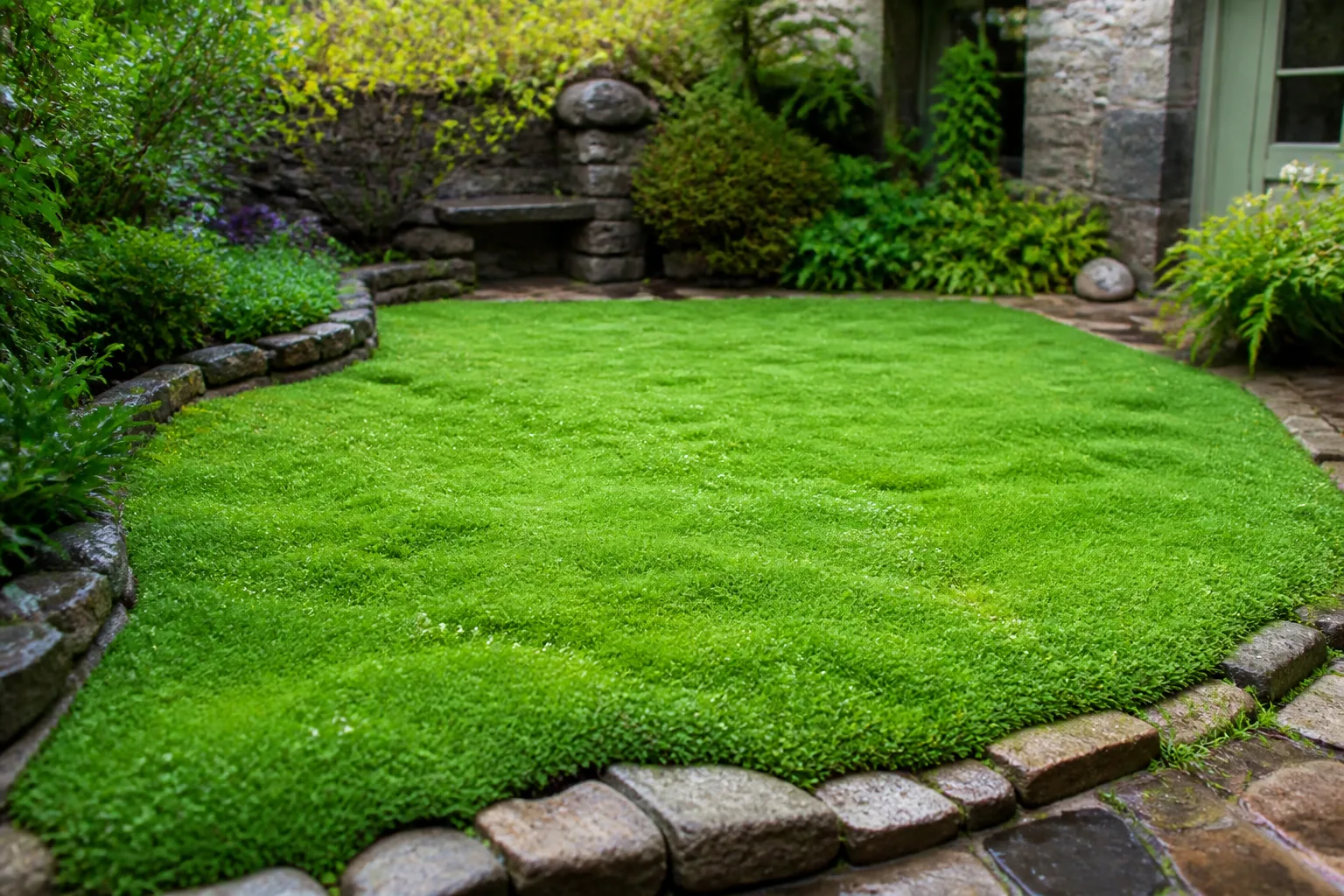
Irish moss is best treated as a very low, flowering groundcover, not as a miniature version of the moss growing on a shaded stone. The plant sold as Irish moss, Sagina subulata, is a mat-forming perennial in the carnation family. It makes a soft-looking carpet of fine green leaves and small white flowers, but it needs light, regular moisture, and soil that drains freely.
That combination is why the same plant can thrive in a cool path joint and struggle a few feet away in hot, compacted lawn. Before buying plugs, decide where the soil stays moist without holding standing water, how much afternoon sun the area receives, and whether people will walk across it every day. Those choices matter more than adding fertilizer or following a fixed watering calendar.
Quick Answer: The Conditions Irish Moss Needs
Grow Irish moss in a bright site with full sun or partial shade, adjusting for summer heat. It prefers cool conditions and evenly moist, well-drained soil; in a hot climate, afternoon shade can prevent scorching, while in a wet or shady pocket, better drainage and more light can keep the mat compact. NC State Extension describes it as a low-growing perennial that does poorly in intense heat or drought and can also suffer from overwatering. (NC State Extension)
Plant rooted plugs in spring or early fall when temperatures are mild, keep them moist while they knit into the soil, and space them closer if you want coverage sooner. Irish moss can handle occasional light steps once established, but it is not a substitute for a durable lawn or a path that gets constant traffic. If the site is hot, dry, shaded, or waterlogged, solve that mismatch before planting; watering and feeding cannot compensate for the wrong growing conditions.
What Is Irish Moss?
Irish moss is a flowering perennial, not a true moss. Its botanical name is usually given as Sagina subulata; it belongs to Caryophyllaceae, the carnation family, and forms a compact mat roughly 1 to 2 inches high. Small, star-shaped white flowers rise just above the foliage, often beginning in late spring and appearing sporadically afterward. The Wisconsin Extension description notes that the slender stems root at nodes, which helps explain how a patch can fill nearby gaps over time. (UW–Madison Extension)
Despite its name, Irish moss does not want the deep shade and saturated conditions many people associate with moss. It behaves more like a shallow-rooted groundcover: roots need dependable moisture, but oxygen must remain available in the soil. A low carpet also does not mean no maintenance; weeds, drought, soggy soil, and repeated foot traffic can all open holes in the mat.
Irish Moss and Scotch Moss Aren’t Always the Same Plant
Plant labels are inconsistent. Irish moss is generally sold as green Sagina subulata. “Scotch moss” is sometimes used for the golden-leaved cultivar ‘Aurea’ of that species, but UW–Madison Extension also uses the name for Sabulina verna, formerly Arenaria verna, a separate species. Both are tiny mat-forming plants with similar garden uses, so rely on the botanical name and foliage color rather than the common name alone.
If a specific color matters, check the pot label before buying. Green Irish moss and golden forms can mingle or self-seed into one another, so a sharp green-and-gold checkerboard may blur as the plants grow. For a single-color patch, buy a consistent named form and remove any seedlings with a different leaf color while they are small.
Where Irish Moss Works—and Where It Does Not
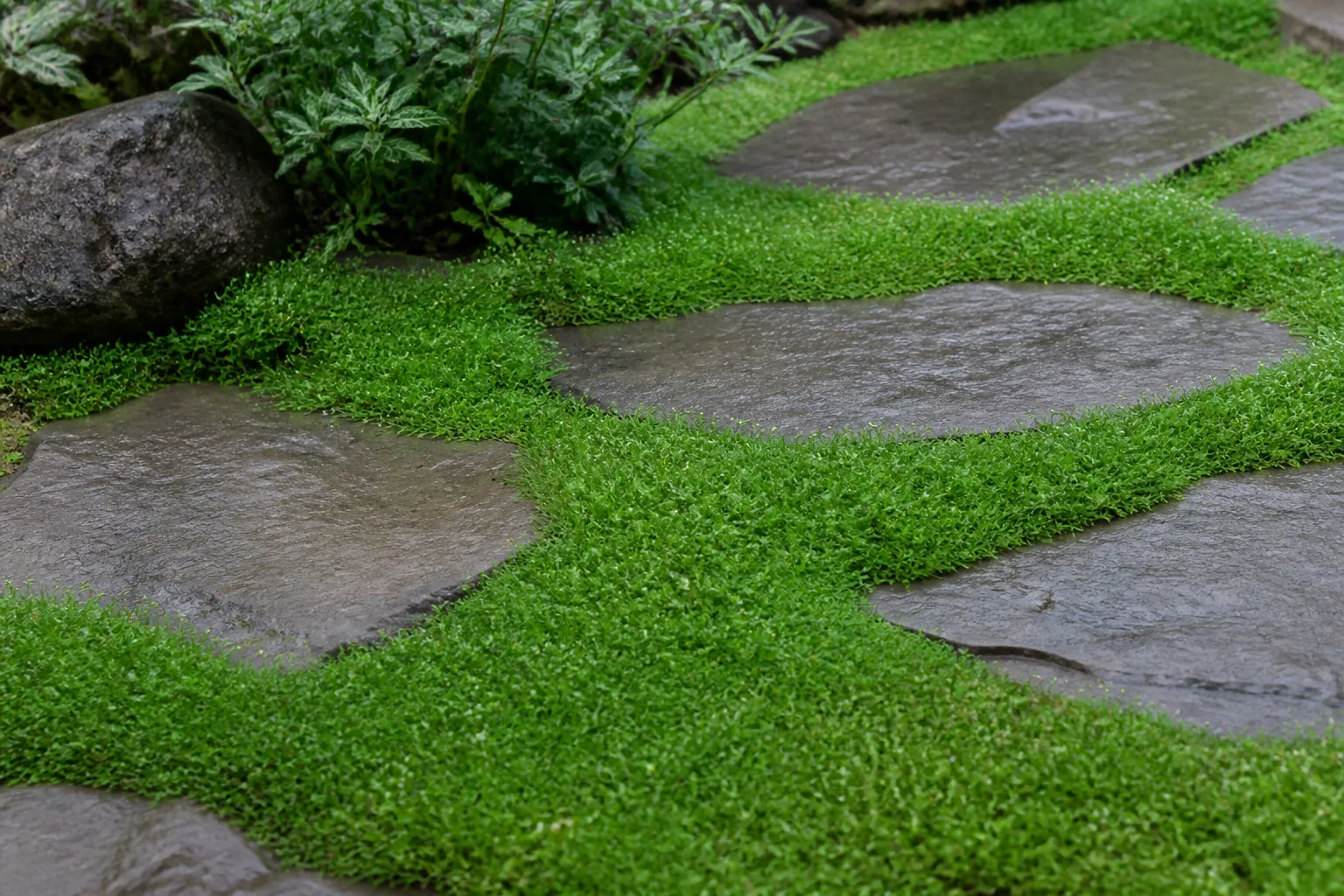
Irish moss earns its place in narrow, low-use spaces: between stepping stones, along the edge of a path, in a rock garden, around a small water feature, or in a shallow container. It softens the hard lines of stone without growing tall enough to hide most edging. The established mat can tolerate light foot traffic, but that means occasional careful steps, not children playing, dogs running, or a walkway used many times a day. Wisconsin Extension suggests creeping thyme as a tougher option where people walk more often.
It can also replace grass in a small decorative pocket where the climate is cool and the soil stays moist but drains well. Think of it as a planted carpet for a low-use courtyard or a strip between pavers, not a lawn that will take sports, a mower, and summer drought. If you need a resilient walkable surface, keep a stepping-stone route or choose a groundcover that matches the traffic rather than expecting Irish moss to toughen up with fertilizer.
Choose a Site Before You Plant
The best site is bright, cool enough through summer, and evenly moist without puddles after rain. Observe the area at the hottest part of the day, not only in the morning: a location that looks pleasantly sunny in April can become an exposed heat trap by July. Also notice where roof runoff, sprinklers, or compacted footpaths leave the soil wet long after nearby beds have drained.
Hardiness references give different kinds of guidance rather than a single universal climate promise. NC State lists the species for USDA zones 4a through 8b, while the RHS rates it H6 in the UK system and specifies moist but well-drained conditions. These ratings describe winter survival in particular systems; they do not mean the plant will enjoy a hot, dry summer or saturated ground. (NC State Extension; RHS)
Light, Heat, and Climate
In a cool-summer region, Irish moss can grow in full sun if moisture is steady. In warmer areas or sites with strong afternoon exposure, partial shade is safer, especially during the first summer after planting. Epic Gardening’s growing guide also recommends afternoon protection where heat is intense, while NC State notes that hot, dry conditions are a poor fit. (Epic Gardening)
Too little light creates a different problem: stems stretch, the carpet loosens, and weeds find openings. If a patch is thinning under dense tree cover, first ask whether it receives enough bright light for compact growth before adding water or fertilizer. Dappled light can work; deep, dry shade under large roots often cannot, because the tree competes for the same shallow moisture.
Soil and Drainage
Choose soil that holds some moisture but releases excess water. Moderately fertile loam or sandy soil is easier to manage than heavy clay that stays saturated; in a compacted bed, loosen the planting area and correct the drainage pattern before setting plants. The RHS lists chalk, loam, and sand as suitable soil types and emphasizes moisture with good drainage, while NC State points to rocky or sandy ground and warns that both drought and overwatering cause trouble.
Do not create a rich, fluffy pocket surrounded by impermeable clay and assume the amendment fixed drainage. Water can collect in the softer planting hole like a basin. Instead, improve a wider area, redirect runoff if possible, or choose a raised edge or container. Irish moss likes consistent moisture, but it will not thrive with roots sitting in stagnant water.
How to Plant Irish Moss for Reliable Coverage
Plant when the weather is mild and the soil is workable, usually after frost danger in spring or early in fall where the roots have time to establish before severe weather. Weed thoroughly first; pulling deep-rooted weeds from a finished mat can tear the shallow growth. Rake the surface lightly, water the nursery plants, and set each plug so the top of its root ball is level with the surrounding soil rather than buried under it.
Press the soil gently around each plug so there are no large air pockets, then water the area to settle it. Do not bury the crown under compost or bark mulch. Keep the planting evenly moist during establishment, and avoid walking directly on new plugs; their shallow roots need time to anchor and spread into the surrounding soil.
Spacing Plugs and Setting Expectations
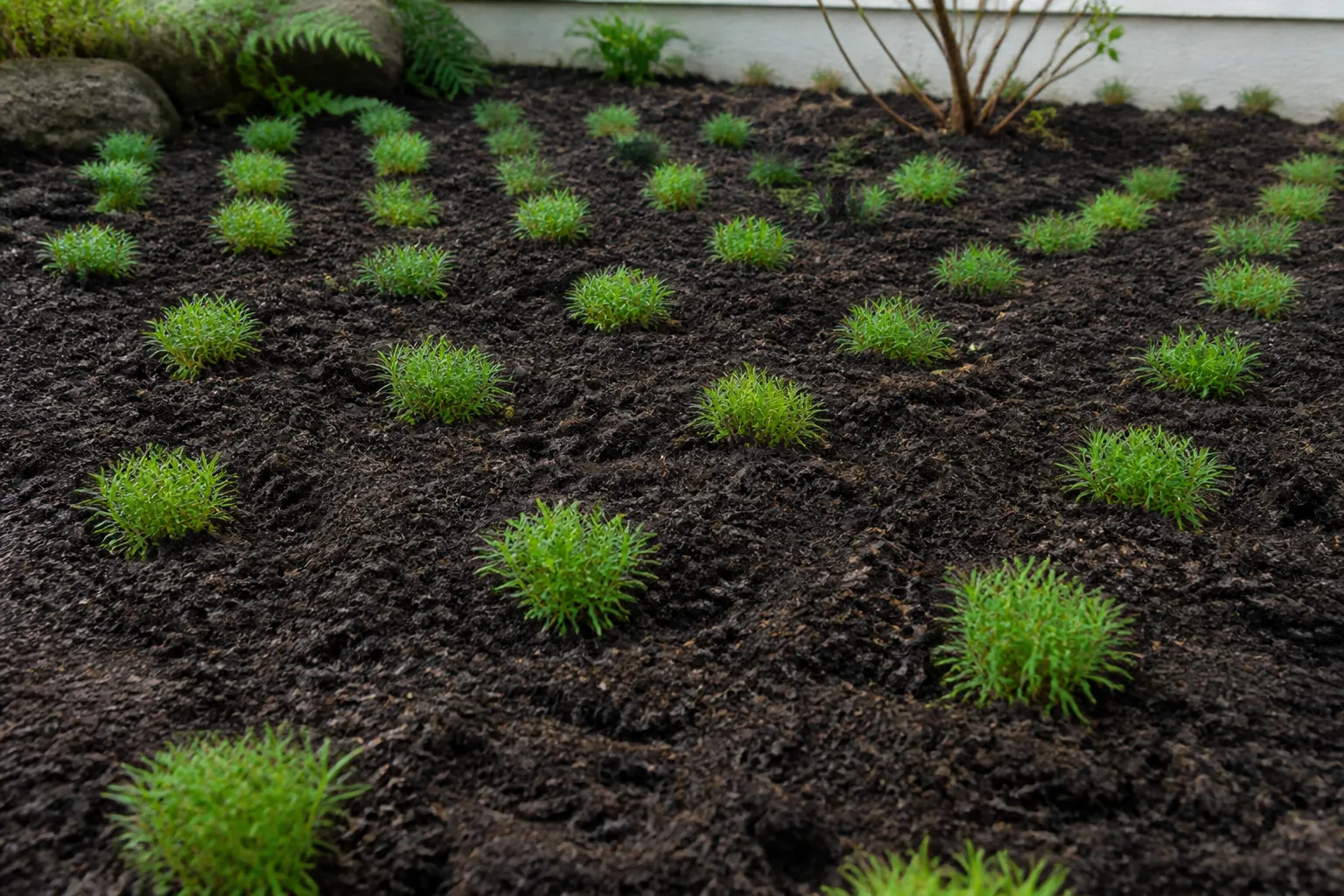
Spacing is a trade-off between upfront plant cost and the time you are willing to wait. Close spacing makes a continuous carpet sooner; wider spacing saves plugs but leaves more bare soil for weeds to occupy. Gardening Know How gives about 12 inches as a starting distance, while UW–Madison Extension notes that closer small transplants shorten the wait for coverage. For a decorative patch, lay out the area first and use the mature width on the plant tag as a guide, then narrow the gaps where you want a faster join. (Gardening Know How; UW–Madison Extension)
Avoid promising yourself a finished lawn by the end of the season. A newly planted patch may look sparse for months, and growth is strongest during cool, moist periods. If time is critical, buy more rooted plugs and reduce the spacing rather than adding heavy fertilizer, which can push uneven foliage instead of building a neat low mat.
Watering: Keep the Root Zone Even, Not Wet
There is no reliable “every few days” schedule for every garden. A newly planted patch, a shallow container, sandy soil, and a heat wave all dry at different rates. Check the soil around the plugs with a finger; when the surface is beginning to dry, water slowly enough to moisten the root zone, then let excess water drain away. During establishment, check more often and do not let the small root balls dry out completely.
Once the mat is established, adjust to rain and soil rather than watering by habit. Morning watering gives foliage time to dry and makes it easier to notice whether water is soaking in or running off. A soaker hose or gentle stream is less likely to dislodge new plants than a hard spray. In a hot spell, shade and a thorough drink may help a dry patch; adding more water to already saturated ground can accelerate decline.
Brown foliage does not tell you by itself whether the plant is too dry or too wet. Check the soil below the surface and inspect the edge of a damaged patch: dry, crumbly soil points toward drought or competition, while persistently wet soil, soft crowns, or a sour smell suggest poor drainage or rot. Both NC State and UW–Madison caution that Irish moss can brown with insufficient as well as excessive water. (NC State Extension; UW–Madison Extension)
Fertilizing Without Making the Mat Leggy
Irish moss is not a high-feeding lawn grass. If the soil is reasonably fertile and the plant is growing compactly, skip routine feeding. If growth is weak after you have checked light, drainage, and moisture, use a small amount of balanced, slow-release fertilizer in spring according to the product label, or lightly top-dress with finished compost without covering the leaves.
Too much nitrogen encourages lush, mounded growth rather than a flat carpet. That is especially counterproductive between pavers, where you want a low cover that stays below the walking surface. UW–Madison Extension advises fertilizing sparingly and notes that high nitrogen can make the plants mound; solve a site problem before reaching for a fertilizer bag.
Trimming, Weeding, and Renewing Thin Areas
Routine mowing is unnecessary. Use clean scissors to trim growth that creeps onto a path, covers a stone edge, or rises above the desired profile. Keep the cut shallow; the goal is to tidy the boundary, not scalp the crown or expose the soil across the entire mat.
Weed early while unwanted plants are small. Pull by hand after rain when the soil is loose, holding the Irish moss around the weed so you do not lift the surrounding carpet. Avoid letting vigorous weeds root deeply through the mat, where removing them can leave larger holes than the weed did.
For a small dead or bare spot, remove loose dead material and inspect the underlying soil before replanting. If drainage and light are suitable, set in a healthy rooted section, press it into contact with soil, and keep it moist as it re-establishes. If the same place browns repeatedly, move or redirect the water, change the shade pattern if possible, or use a different plant there; repeatedly patching a poor site wastes plugs.
Propagating Irish Moss
You can increase Irish moss by dividing an established patch or growing it from seed. Division gives you a rooted piece that can fill in faster and is easier to keep true to the plant’s foliage color. Seed is useful for covering a wider area inexpensively, but tiny seedlings take careful moisture management and longer to form a walkable carpet.
The plant can also self-seed after flowering. Let a few flowers mature if you want seedlings in nearby gaps, but remove unwanted seedlings while small. This is a gradual way to fill a border, not a shortcut to instant coverage; NC State and UW–Madison both list seed and division as propagation options.
Divide an Established Mat
Divide during mild weather, typically in spring when active growth is returning. Water the patch beforehand if the soil is dry, lift a strip or small clump with a hand trowel, and separate it into pieces that each have foliage and attached roots. Tiny unrooted scraps may desiccate before they reconnect with the soil, so use substantial sections rather than shredding the mat.
Replant each division at the same depth it was growing, firm the soil lightly around the roots, and water it in. Keep the divisions evenly moist until you see fresh growth, then return to moisture checks based on weather and drainage. If you are renewing an old planting, divide only part of the mat at a time so you retain established cover while the new sections settle.
Grow Irish Moss From Seed
Sow seed on the surface of a fine, moist seed-starting mix and press it gently into contact; do not bury it deeply. Keep the tray consistently moist but not waterlogged in bright light and cool conditions. Wisconsin Extension reports that seed can be started indoors several weeks before the last frost or sown directly in spring, with germination commonly taking about two to three weeks. (UW–Madison Extension)
Once seedlings are large enough to handle, move them carefully into small plugs or a nursery bed and let them develop roots before transplanting to their final positions. Protect outdoor seed from drying and from disturbance by birds or runoff. Do not expect a packet of seed to create an even lawn without thinning, weed control, and patient establishment.
Growing Irish Moss in Containers
A wide, relatively shallow container suits the plant’s spreading habit better than a narrow, deep pot. Make sure it has drainage holes, use a moisture-retentive but free-draining potting mix, and empty any saucer that holds standing water after rain or watering. A clay pot may dry faster than plastic, which can help in a wet climate but requires more frequent checks in a hot, windy spot.
Place the container where it gets bright light and protection from intense afternoon heat. Because a pot has less soil volume than a garden bed, it can dry quickly even when the ground nearby is moist; check it more often during warm weather. If the mat begins to crowd itself or thin at the center, divide it and refresh the mix rather than letting it become a dense, failing plug.
Irish moss in a pot can accent a trough, miniature garden, or patio arrangement, but it is not an indoor houseplant in the usual sense. Outdoors, rain and seasonal temperature changes help match its needs. Indoors, dry heated air, limited light, and uneven watering can make keeping a compact mat difficult.
Troubleshooting Brown, Thin, or Damaged Patches
Start by comparing the damaged area with a nearby healthy one. Feel the soil below the foliage, look for water pooling after rain, check how many hours of direct sun the patch receives, and note whether people cut across that spot. This quick site check is more useful than treating every brown patch as a fertilizer deficiency.
If the soil is dry, water deeply and review nearby tree roots, roof overhangs, or hot paving that may be drying the patch. If the soil is wet for days, stop supplemental irrigation and fix the drainage or runoff; moving plugs to a raised or better-drained area may be more effective than waiting for soggy ground to improve. In exposed heat, give the mat afternoon shade or relocate container-grown plants to a cooler position.
Repeated compression can break the low stems and compact the shallow rooting layer. Reroute the path or place stepping stones so feet land on stone, leaving Irish moss for the joints. Thin patches can be replanted after the underlying cause is addressed; otherwise the replacements are likely to fail in the same spot.
Slugs may chew foliage in damp gardens, while aphids are possible but not usually the main reason a whole patch declines. Look for actual feeding damage or visible insects before treating. Hand-remove slugs at dusk and reduce hiding places beside the bed; if you choose a control product, follow its label and keep it away from children, pets, and nontarget wildlife as directed.
Seasonal Care and Winter Protection
Spring is a good time to plant, divide, or patch Irish moss because cool weather supports root establishment. As temperatures rise, check moisture more often and watch exposed paving edges for heat stress. During the hottest part of summer, a little afternoon shade may matter more than added fertilizer or repeated shallow sprinkling.
In mild climates the foliage may remain green through winter; colder weather can bronze or brown it temporarily. Let the soil drain and avoid trampling frozen or waterlogged mats. In spring, wait for new growth before removing material that may only be dormant, then trim clearly dead sections and fill gaps once conditions are mild.
Container roots are more exposed to freeze-thaw cycles than roots in the ground. In a cold winter, move the pot to a sheltered outdoor position, insulate the container, or sink it into the soil where practical, while keeping its drainage holes clear. Do not bring it into a heated room for winter; warmth and low light can disrupt the cool-season conditions the plant prefers.
Conclusion: Match the Plant to the Microclimate
Irish moss is most reliable where the soil stays evenly moist, drains quickly after rain, and receives enough light without baking through the hottest part of the day. Use it for decorative groundcover, paver joints, and low-use lawn accents; keep frequent traffic on stone or another more durable surface. Once established, it needs little trimming, but it still depends on the right site.
Before planting a large area, test a small patch through one warm season. If it remains compact and green, expand with rooted divisions or additional plugs; if it repeatedly browns, adjust the drainage, shade, or traffic before investing in more plants. That simple trial turns Irish moss from a hopeful purchase into a groundcover chosen for conditions it can actually handle.