Red Light for Plants: What It Really Does
Red light can support photosynthesis and flowering, but it is not the whole answer. See when to use it, how to set it up, and what to do when growth goes wrong.
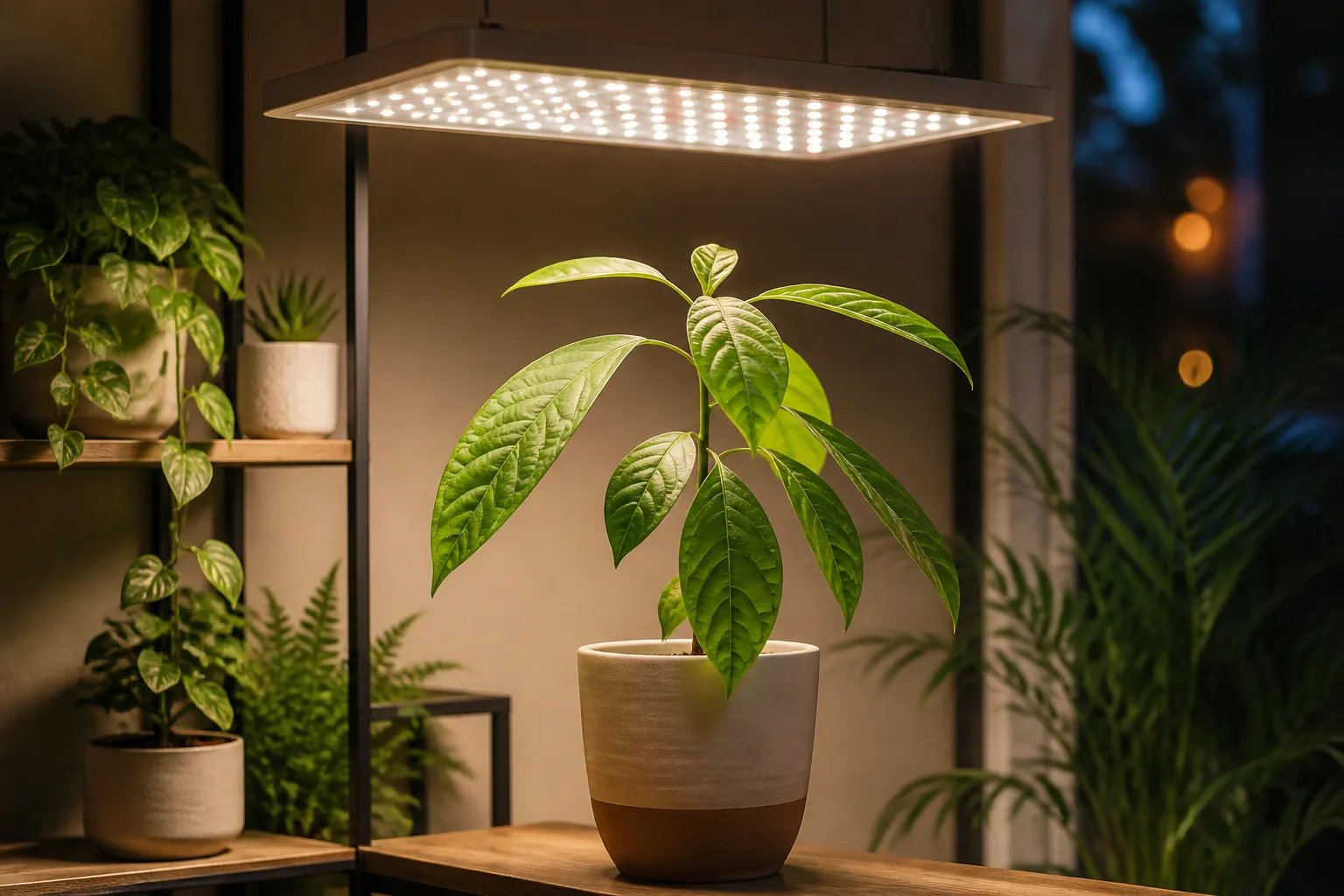
The short answer: yes, but red is not a complete grow-light plan
Red light can help plants. It is one of the most useful parts of the light spectrum for photosynthesis, and red wavelengths also influence the signals plants use to control stem growth, leaf expansion, and flowering. That is why red LEDs appear in everything from seed-starting fixtures to greenhouse lighting.
The catch is that a red-looking bulb is not automatically a good grow light. A plant needs enough usable light at the leaves, an appropriate daily schedule, and a spectrum that supports the shape you want. A red-only fixture may keep a plant alive or push fast, soft growth, but it can also produce stretched stems and poor structure when it supplies too little blue light or too few total photons. For most home gardeners, a balanced full-spectrum LED is the easier starting point; a red channel becomes more useful when you understand what you are trying to change.
What red light does at the plant level
Light has two jobs in a plant. It provides energy for photosynthesis, and it carries information about the plant’s surroundings. Red light participates in both jobs, which is why the answer cannot be reduced to “red is good” or “red is bad.” The result depends on wavelength, intensity, duration, the rest of the spectrum, and the species receiving it.
Red light supplies photosynthetic photons
During photosynthesis, chlorophyll and other pigments capture photons and use that energy to build sugars from carbon dioxide and water. Red light around the longer-wavelength end of the visible photosynthetic range is absorbed efficiently by the photosynthetic machinery, so a red diode can deliver useful energy even though the fixture may look dim or oddly colored to you.
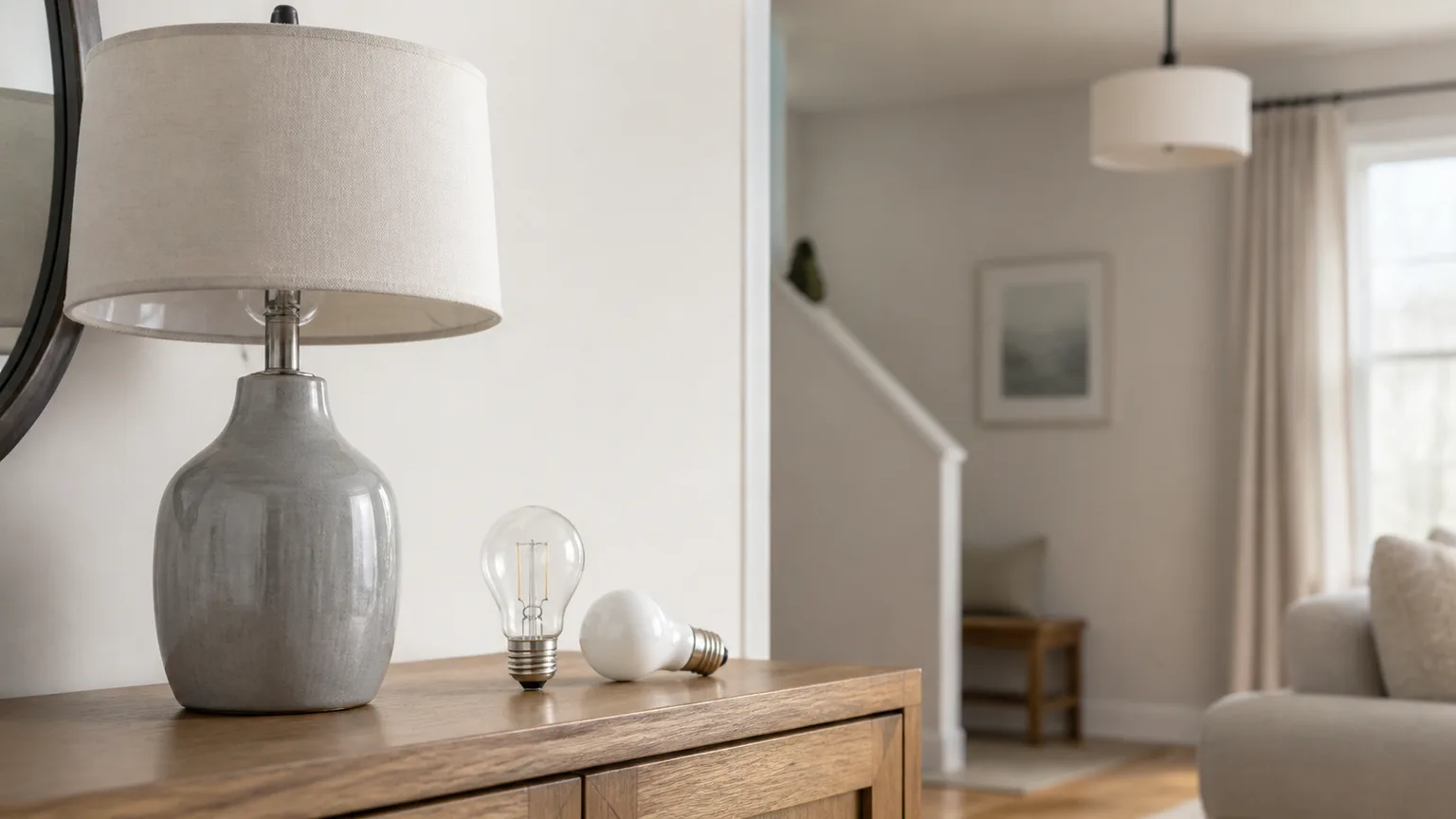
That last point matters. Human eyes judge brightness very differently from a leaf. A purple or deep-red panel may look intense while delivering uneven coverage, and a warm household bulb may look bright while providing little light that the plant can use efficiently. A fixture’s appearance tells you almost nothing about the dose landing on the canopy.
Plants also use more than the red and blue peaks often shown in marketing graphics. Green wavelengths can reach deeper into a dense canopy, and a broad white spectrum can make it easier to see the actual color of leaves while still delivering photosynthetically useful light. The seed-starting guidance from Epic Gardening makes the practical case for full-spectrum fixtures because seedlings benefit from access to the broader PAR range, not just an attractive red-blue glow.
Red and far-red light also act as growth signals
Red light is not the same as far-red light. In a useful gardening shorthand, visible red is roughly 600 to 700 nanometers, while far-red is commonly discussed from about 700 to 760 nanometers. The exact boundaries depend on the measurement convention, but the distinction matters because plants detect these bands through a family of photoreceptors called phytochromes.
Phytochromes shift between forms in response to red and far-red light. In simplified terms, red light favors the active Pfr state and far-red light shifts the balance back toward Pr; darkness and temperature also affect the signal. That molecular switch helps plants interpret whether they are in open light, under a canopy, or moving through a seasonal day. A Nature Communications review describes phytochromes as red- and far-red-light receptors that regulate development across the plant life cycle, while a recent review in Frontiers in Plant Science explains why phytochrome A can affect flowering time and growth in different crops.
This is where simplistic red-light advice falls apart. A plant may respond to the red-to-far-red balance as a signal about crowding and shade. A red-heavy fixture with little blue can encourage a taller, more open shape. Far-red can influence flowering or elongation in some species, but the same response is not universal across houseplants, herbs, vegetables, and ornamentals. Research on Arabidopsis, rice, soybean, and other crops does not translate into one guaranteed flowering recipe for every plant on a windowsill.
Is red better than blue or full-spectrum light?
Red is not competing with blue for the title of “best” plant light. They do different work, and a grower who removes one to chase the other is usually solving the wrong problem. Think of red as a strong engine for photosynthetic output and blue as an important controller of architecture and behavior.
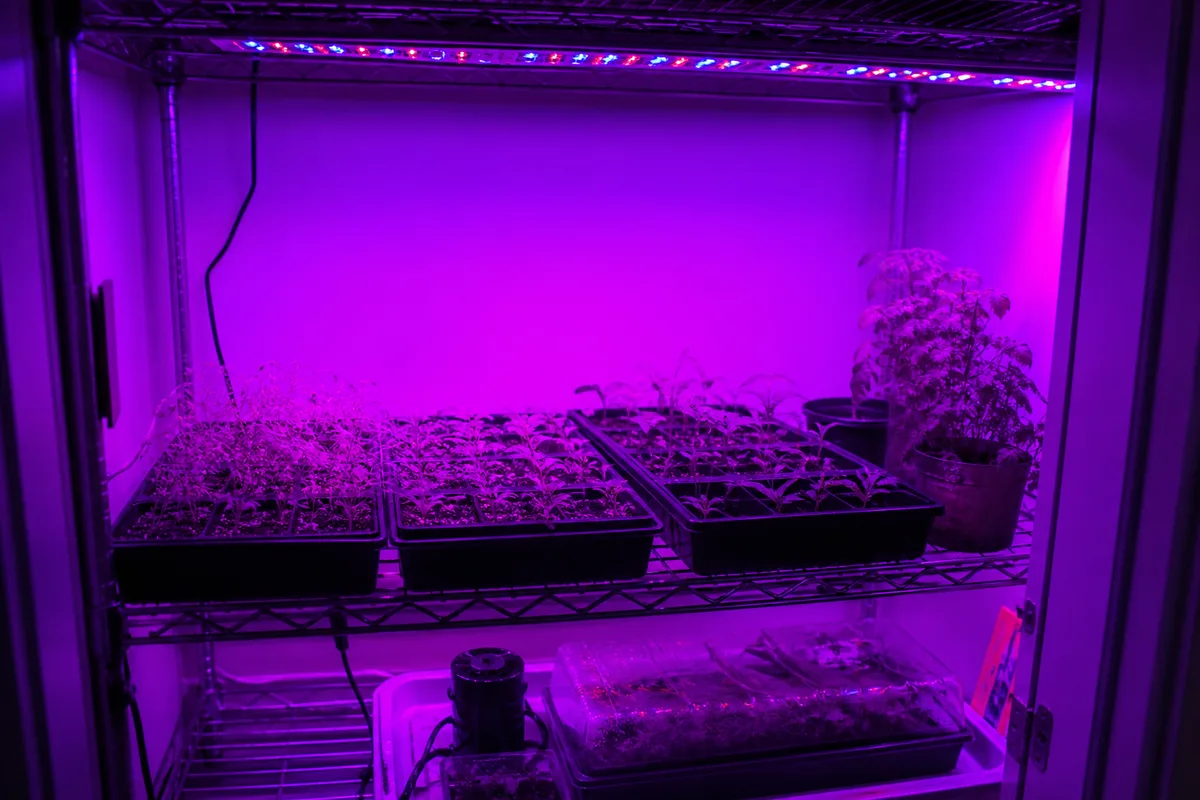
Blue light balances shape and sturdiness
Blue light helps regulate compact growth, leaf development, and stomatal behavior. When a seedling receives very little blue light, it may keep growing upward toward the source, creating long internodes and a thin stem. This is the familiar leggy look: the plant is not necessarily starving, but it is building an awkward body because its light environment says “keep searching.”
That does not mean a blue-heavy fixture is automatically better. Too much blue can keep some plants overly compact, change leaf expansion, and make the fixture harsh to work around. The practical goal is balance, not a color contest. A red-and-blue fixture can work, but a broad white or full-spectrum fixture often gives a home grower better coverage, more natural color rendering, and less guesswork.
Full-spectrum white is the practical default
For seedlings, leafy herbs, propagation, and most houseplant maintenance, choose a reputable full-spectrum LED when you have no special reason to tune the spectrum. In this context, “full-spectrum” is a useful product category, not a guarantee that every fixture is equal. Look for a published coverage area, dimming or hanging options, a real power rating, and preferably PPFD information at a stated distance.
The visual difference is easy to understand. A full-spectrum white panel resembles daylight and lets you inspect a leaf for pale new growth, pests, or scorch without the magenta cast of a blurple fixture. A balanced white fixture can also spread light more evenly across a shelf, which matters more than a dramatic peak wavelength if the outer seedlings sit in shade.
GrowVeg’s practical advice for home seed starting reaches a similar conclusion: use full-spectrum LEDs for seedlings, propagation, and winter houseplant support, and choose a fixture that matches the space rather than buying the most powerful light on the shelf. Its grow-light shopping guide also points out that low-heat LEDs simplify temperature management compared with older fluorescent or high-heat fixtures.
Far-red is useful, but it is a specialty tool
Far-red light is often bundled into conversations about red light even though it is a separate band with separate effects. In the right combination, far-red can contribute to photosynthesis alongside red light and can affect flowering or plant architecture through phytochrome signaling. It may be valuable in a controlled greenhouse or research-oriented setup where the grower can measure light and observe a known crop response.
For an ordinary houseplant shelf, far-red is rarely the first upgrade to make. If a pothos, basil plant, or seedling is weak, start with light quantity, coverage, distance, and schedule. Adding a far-red channel to a plant that is already stretching can make the visual problem worse, especially if the fixture has very little blue or the plant is responding to a low red-to-far-red ratio. Use it as a deliberate experiment, not as a magic flowering button.
Match red light to your growing goal
The same fixture can be helpful for one job and poorly matched to another. Before choosing a red bulb, name the outcome: compact seedlings, fresh leaves, winter survival, flowers, or fruit. That choice determines whether red light should be the background spectrum, a supplemental channel, or not a priority at all.
Seedlings and leafy herbs
Seedlings need enough light to develop short, sturdy stems and healthy true leaves. Red photons help power photosynthesis, but red-only illumination is a poor default for seedlings because young plants also need spectral cues that support sturdy structure. A full-spectrum white LED placed close enough to deliver strong, even light is generally more forgiving than a narrow red panel.
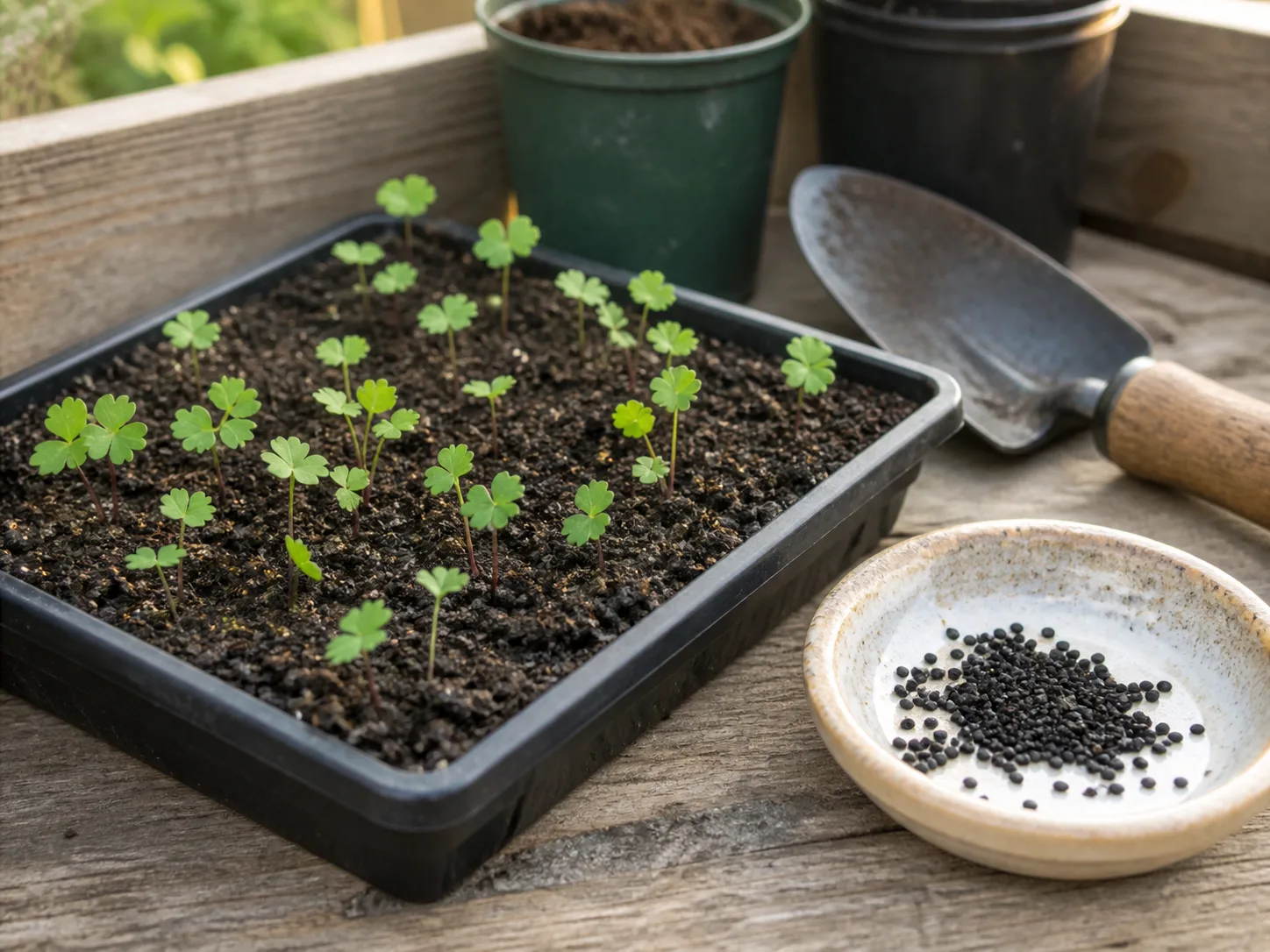
Start the light as soon as seedlings emerge, unless the seed packet or species has a specific darkness requirement during germination. For many home seed-starting setups, a timer delivering roughly 14 to 16 hours of light per day is a workable starting point, followed by a consistent dark period. GrowVeg’s seedling guide recommends keeping a grow light close to the canopy and running it for up to 16 hours, then raising the fixture as plants grow.
Use the plant as the feedback system. If stems lengthen dramatically between leaves, first check whether the lamp is too far away or the edges of the tray are outside the strongest coverage. If leaves are pale, curled, or hot to the touch, lower the intensity or raise the lamp gradually. Red light can supply energy without producing a well-built seedling when the rest of the setup is wrong.
Flowers and fruit
Red light often earns its reputation because it can support flowering and fruiting in controlled growing systems. That reputation is partly deserved: red light supplies photosynthetic energy, and phytochrome-mediated signals can influence flowering time. But flowers are not triggered by red photons alone. Many plants respond to day length, uninterrupted night length, temperature, maturity, nutrition, and pollination conditions.
For a flowering houseplant, a red channel may supplement a balanced fixture, but increasing red will not compensate for a plant that is too young, too warm, root-stressed, or growing under an unsuitable photoperiod. Some long-day plants flower when days are sufficiently long; some short-day, or long-night, plants need a longer uninterrupted dark period. Other species are relatively day-neutral. The crop’s biology comes before the color dial.
For fruiting vegetables indoors, light quantity becomes even more important. A small red bulb may change the visual cast of a tomato or pepper shelf without delivering enough daily light to support vigorous flowering and fruit fill. If fruit production is the goal, buy or borrow a PAR meter when possible, measure at the top of the canopy, and make sure airflow, water, temperature, and nutrition can keep up with the brighter environment.
Houseplants and winter maintenance
Most foliage houseplants do not need a red-only light to get through winter. They need a reliable amount of usable light that matches the plant’s tolerance. A broad, white full-spectrum lamp can support growth while making it easier to spot spider mites, yellowing, dust, and scorch.
For a low-light-tolerant plant that is only being maintained, use a modest fixture and a shorter schedule than you would use for a tray of vegetable seedlings. For a bright-light tropical plant, succulent, or citrus grown indoors, the same lamp may need to be closer, stronger, or paired with natural window light. The University of Minnesota Extension’s indoor-lighting guidance emphasizes matching supplemental light to the plant and its growth stage rather than treating one schedule as universal.
Light quantity matters more than color alone
The most useful question is often not “What color is this bulb?” but “How many usable photons reach the leaves, for how many hours, and how evenly?” Spectrum affects form and signaling, but a beautiful red spectrum cannot rescue a fixture that is too weak, too distant, or concentrated in one small hot spot.
PPFD and DLI in plain English
PPFD, or photosynthetic photon flux density, describes the instantaneous flow of photosynthetically useful photons landing on a square meter each second. It is reported in micromoles per square meter per second, written as µmol/m²/s. In plain language, PPFD is the speed of the light dose at a particular point on the canopy.
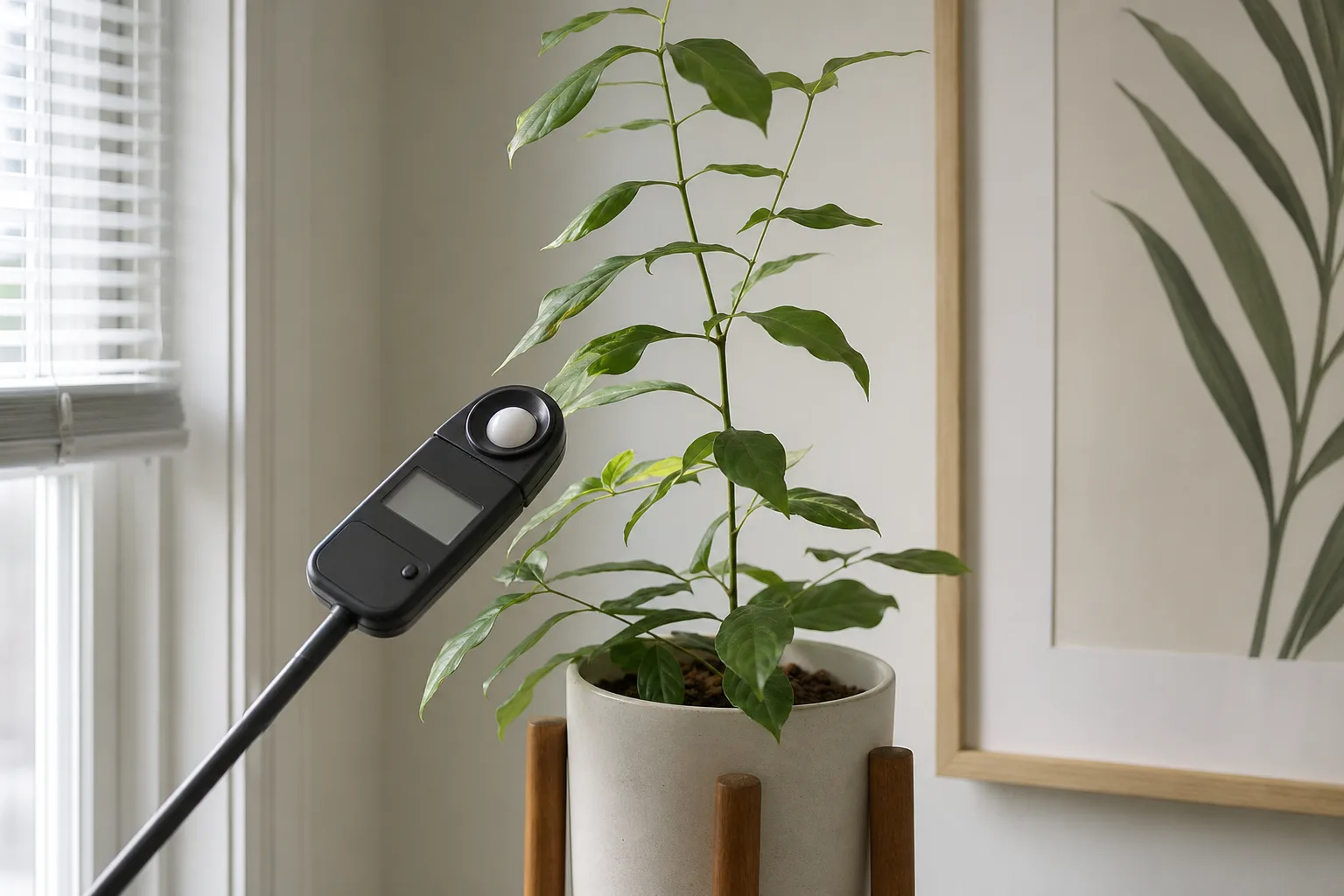
DLI, or daily light integral, describes the total photosynthetic light received over a day. It accounts for both PPFD and the number of hours the light is on. A modest PPFD for a long day and a higher PPFD for a shorter day can deliver a similar daily total, although the plant’s temperature, water use, photoperiod response, and ability to process the light may differ. Photone’s measurement guide explains the distinction between PPFD, DLI, PAR, illuminance, and color temperature in practical terms.
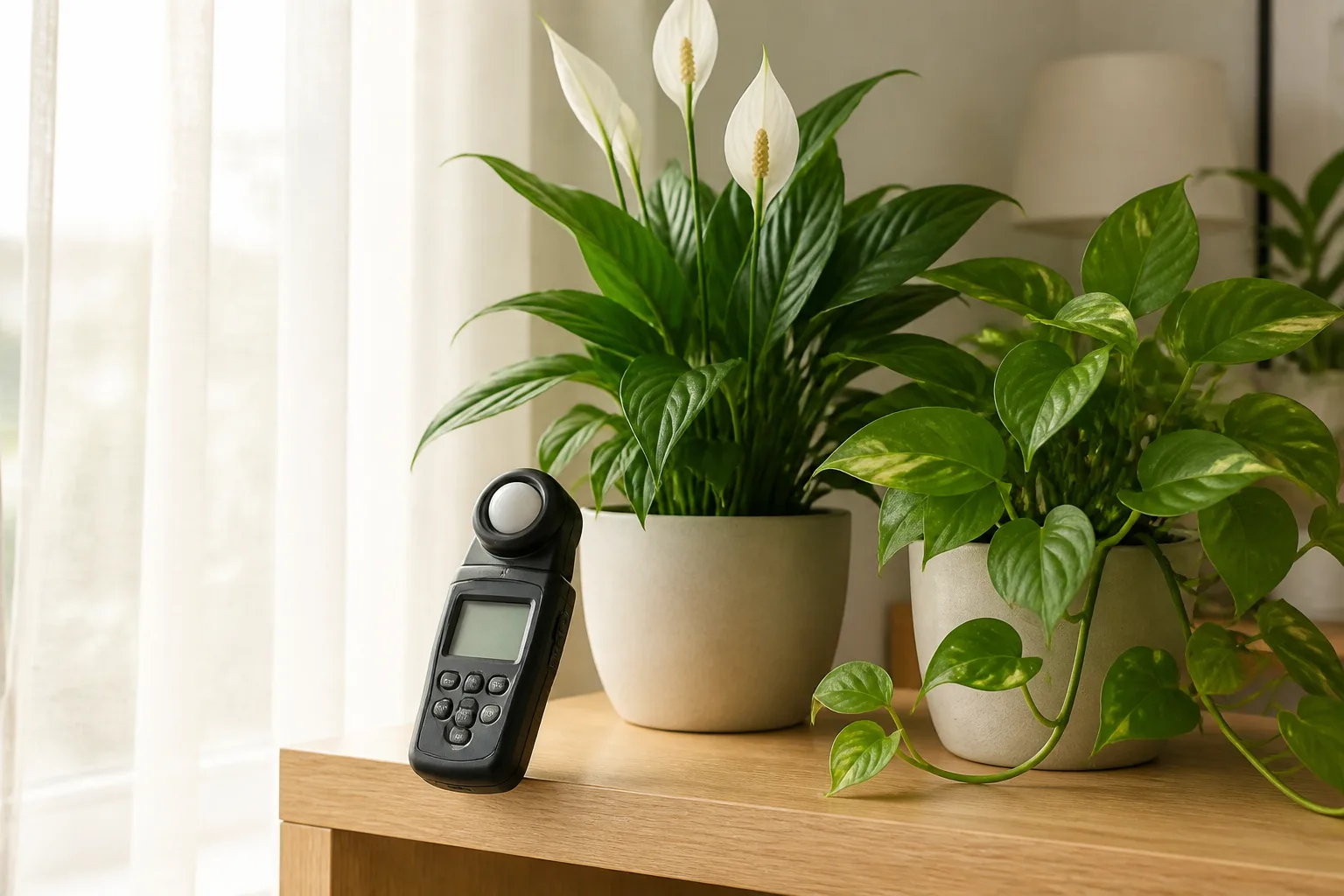
You do not need a laboratory to make better lighting decisions, but you do need to stop treating watts or lumens as plant-dose measurements. Watts describe electricity use; lumens describe brightness as seen by humans. Neither tells you the photon rate at a leaf. A phone-based meter can be useful for comparing positions within one setup, while a quantum or PAR meter is a better choice when you are dialing in a valuable crop or a large shelf.
If a fixture does not publish PPFD maps, use a simple observation-and-measurement loop. Put the light at the manufacturer’s starting distance, check the center and edges of the canopy, and watch new growth for two or three weeks. Rotate plants if coverage is uneven, raise or dim the fixture if leaf stress appears, and write down each change. The goal is not a perfect number; it is a repeatable setup where the whole plant receives a reasonable dose.
Set up red or full-spectrum LEDs without stressing plants
Get distance and coverage right
Light intensity drops quickly as the fixture moves away from the plant. A red bulb six inches above a seedling and the same bulb two feet above it are not equivalent, even though the color is identical. Narrow panels and clip-on lamps can also create a bright center with dim edges, so inspect the entire tray instead of judging the plant directly beneath the diode.

For a modest seedling fixture, a starting distance around 4 to 8 inches above the canopy is common, but the correct distance depends on the fixture’s output, optics, dimmer setting, and heat. GrowVeg suggests roughly 4 to 6 inches for many seedling setups, while Epic Gardening describes 4 to 8 inches as a starting range. Treat those numbers as a place to begin, not a universal rule. Raise the lamp as the plants grow, and follow the product’s PPFD or hanging instructions when they are available.
Aim for coverage, not just intensity. White walls or reflective panels can soften dark edges, but do not enclose a hot LED fixture so tightly that heat builds up. Keep foliage from touching the diodes, leave room for the plant to grow, and check the temperature at leaf level rather than assuming a “low-heat” LED cannot cause stress.
Give plants a consistent schedule and dark period
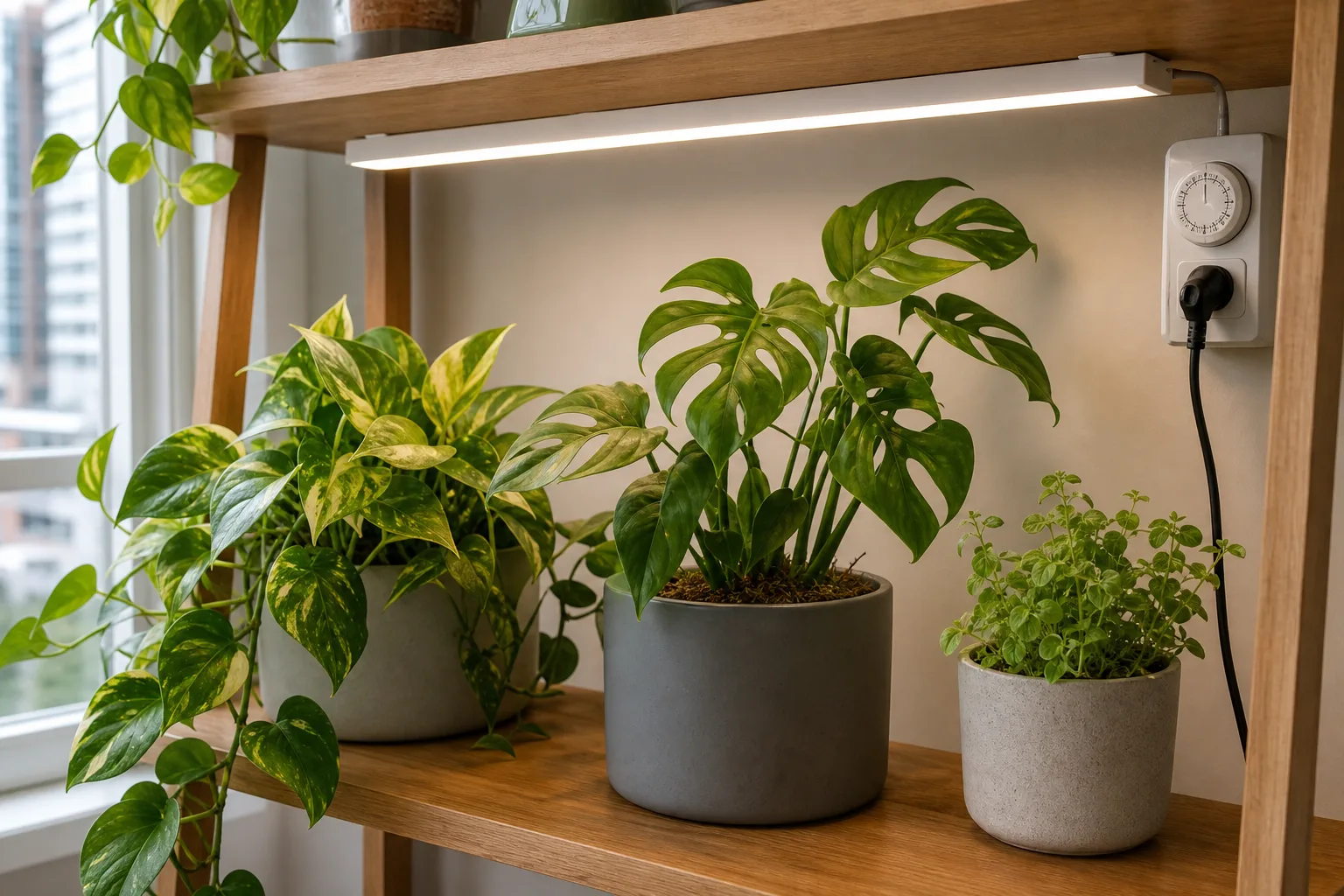
An outlet timer is one of the most useful pieces of a grow-light setup. It prevents the common pattern of forgetting the light for two days, leaving it on all night, then trying to compensate with an extra-long weekend. Plants respond to light over time, and many also use the length of uninterrupted darkness as a developmental signal.
For seedlings and leafy herbs, begin around 14 to 16 hours of light with 8 to 10 hours of darkness, then adjust to the plant’s response and the fixture’s intensity. For established houseplants, a shorter supplemental window may be enough. For photoperiod-sensitive flowering plants, protect the dark period from room lights, open doors, and bright equipment indicators when flowering depends on night length. The exact schedule belongs to the species, not to the red LED.
Avoid using a red light as a night light for plants just because it looks gentle to human eyes. Red is precisely one of the bands plants use to read their environment. If the plant needs a dark period, a red lamp that remains on after the scheduled day can alter the signal even when the room feels dim.
Troubleshoot a red-light experiment before replacing the bulb
Long, weak stems: Check distance and coverage first. A lamp that is too high, too narrow, or too dim at the tray edges is the usual explanation. Then look at the spectrum: a red-heavy fixture with little blue can encourage stretch. Correct the light gradually, add gentle airflow for seedlings, and avoid burying a weak stem in a deep pot as a substitute for better illumination.
Pale leaves or slow growth: Confirm that the light actually reaches the whole canopy and that the timer is working. A red glow can make a fixture seem powerful even when the usable photon dose is low. If intensity and coverage are reasonable, inspect roots, watering, temperature, pests, and nutrition before assuming the plant needs more red.
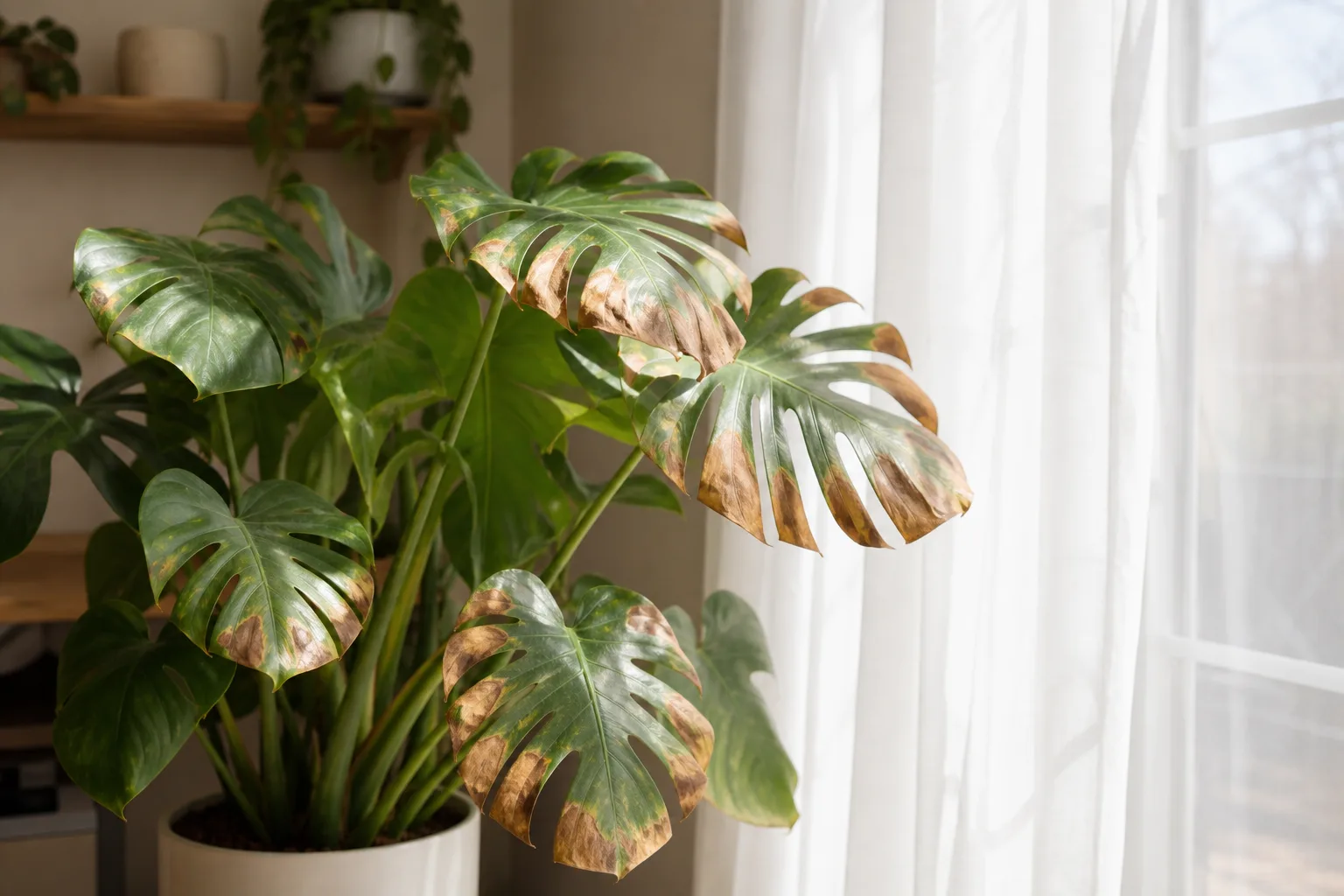
Bleached, curled, crispy, or hot leaves: The fixture may be too close or too intense, especially after a sudden move from a dim window. Raise it or dim it, improve airflow, and give the plant time to acclimate. Do not respond by adding fertilizer to a leaf-burn problem. A lighting change can also increase water use, so recheck moisture without keeping the pot constantly wet.
New growth looks tall and soft: Reduce the red-heavy bias by using a balanced full-spectrum fixture or adding the manufacturer’s recommended blue channel, then verify that the plant is not shaded by neighboring leaves. If far-red is present, turn that channel off while you establish compact growth. The aim is to change one variable at a time so you can tell whether the response came from spectrum, intensity, or distance.
There are leaves but no flowers: Red light is only one input. Check plant maturity, species-specific day length, uninterrupted darkness, temperature, pollination, root health, and fertilizer balance. A flowering response observed in a research crop cannot be assumed for every ornamental. More red may create more foliage or stretch without crossing the plant’s actual flowering threshold.
Maintenance matters too. Dust on a fixture, a failing timer, dimming LEDs, a crowded canopy, and a lamp that has slowly been raised can all reduce the delivered dose. GrowVeg recommends cleaning and checking plant-light equipment before a new seed-starting season; that small routine can prevent you from “fixing” a light problem with a new bulb when the real issue is coverage or hardware.
Conclusion: use red light as part of a system
Red light is good for plants when it is part of a light plan that fits the plant. It can contribute strongly to photosynthesis and influence growth and flowering signals, but it cannot replace adequate intensity, balanced spectrum, even coverage, a suitable photoperiod, or a healthy root and canopy environment.
For most indoor gardeners, start with a full-spectrum LED, put it close enough to reach the entire canopy without heating or touching the leaves, run it from a timer, and judge the result by new growth rather than by the color of the glow. Add or adjust red only when you have a specific reason and a way to watch the trade-offs. That approach gives red light its proper role: useful, measurable, and powerful in combination, but never a shortcut around the rest of plant care.