Lemon Tree Leaves Turning Yellow: Causes and Fixes
Diagnose yellow lemon tree leaves by pattern and timing. Learn how to check roots, correct watering, feed safely, and protect container trees.
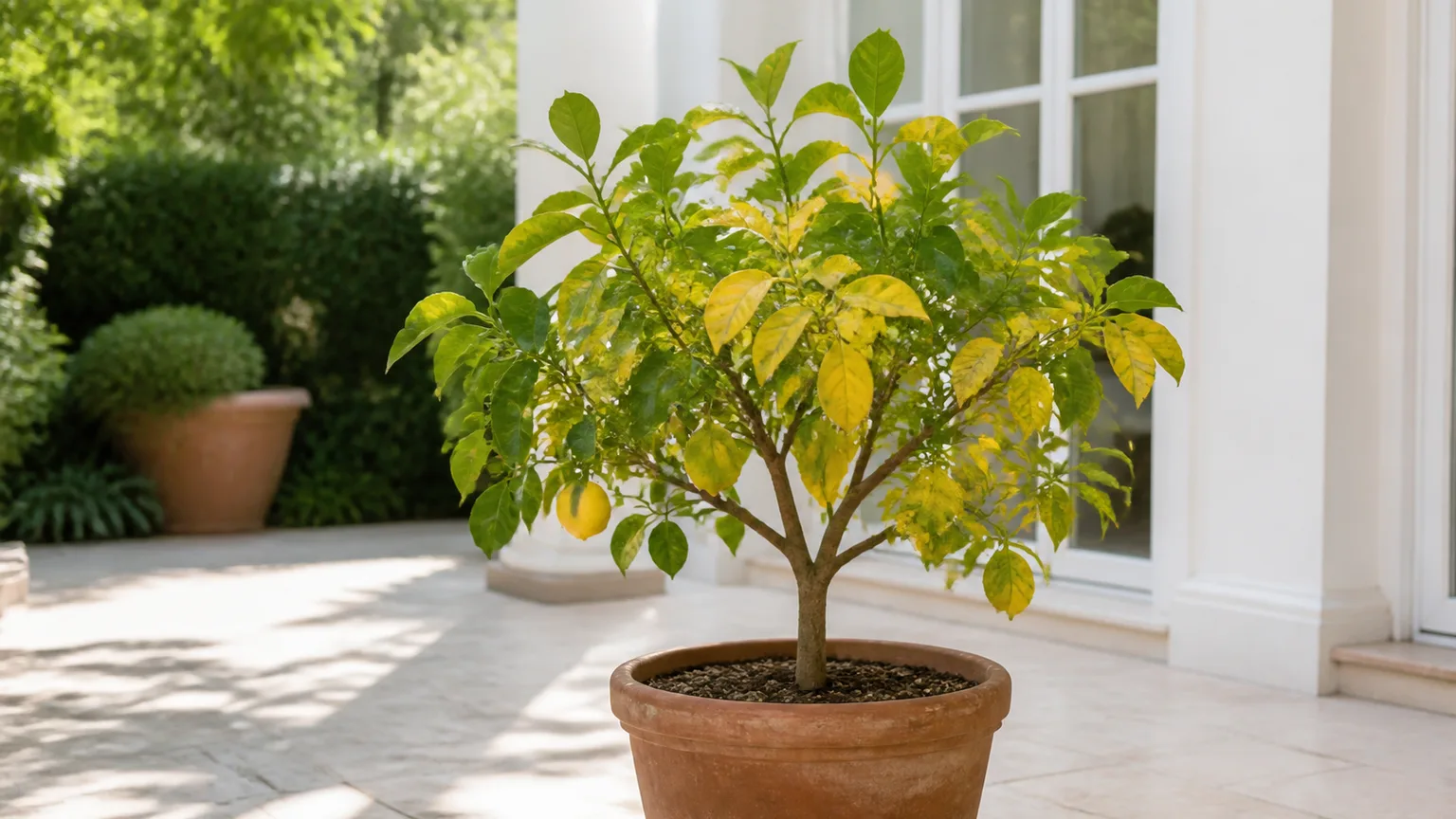
Yellow leaves on a lemon tree are a symptom, not a diagnosis. The same color change can come from dry roots, saturated roots, a nutrient that is missing, a nutrient that roots cannot absorb, cold exposure, pests, or a disease affecting the roots or trunk.
That is why the first move should not be more water or fertilizer. Read the pattern, check the root zone, and then correct the most likely cause. A few old leaves may be normal aging; a tree that is yellowing across new growth and losing vigor needs a faster investigation.
Start With the Pattern Before You Treat
Look at the whole tree before focusing on one leaf. Note whether the yellowing began on older leaves near the inside or bottom of the canopy, or on the newest leaves at the tips. Then check whether the yellow is even, sits between green veins, forms spots, or appears as a mottled pattern.
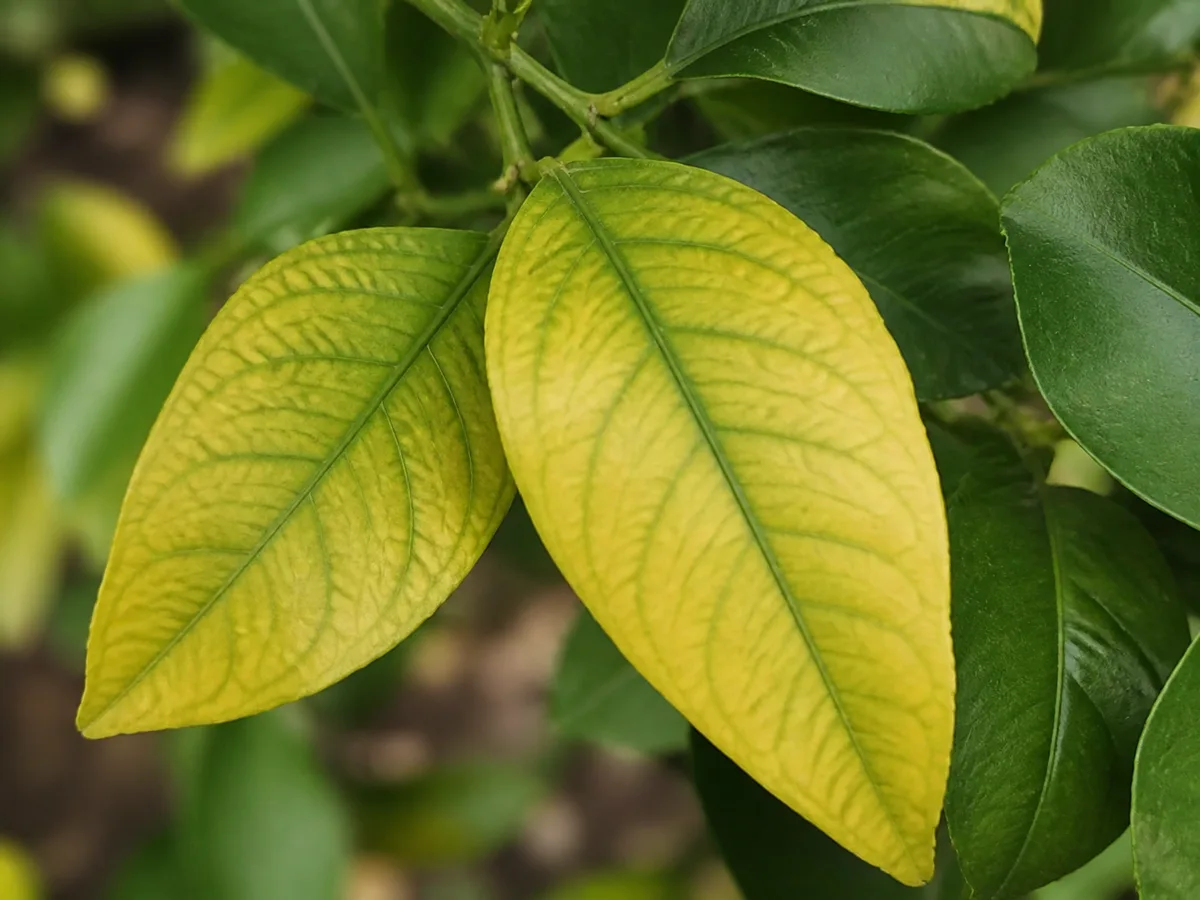
Yellow tissue between green veins is a useful clue, but soil moisture, leaf age, and root health determine whether the cause is nutrient availability or root stress.
The RHS describes chlorosis simply as yellowing, with causes ranging from nutrient problems and waterlogging to drought, cold, pests, and root disease (RHS guide to chlorosis). In other words, “chlorosis” describes what you see; it does not tell you what to spray.
Four Checks That Narrow the Cause
Work through these checks in order:
- Feel the soil below the surface. Push a finger or a wooden skewer 2 to 4 inches into a container, or dig a small test hole in the tree’s root zone. Wet soil plus limp or yellow leaves points toward root stress, not thirst.
- Compare old and new leaves. Uniform yellowing that starts on older leaves often fits nitrogen shortage or root stress. New leaves that emerge pale with green veins raise the possibility of iron or manganese unavailability.
- Flip several leaves over. Look for scale bumps, aphids, webbing, whiteflies, sticky honeydew, or black sooty mold. One clean leaf does not rule out a pest; inspect new shoots and sheltered leaf joints too.
- Check recent changes. Ask whether the tree was moved indoors, repotted, exposed to frost, placed in stronger sun, or fertilized after a long dry spell. A sudden change can create yellowing even when the routine that follows is otherwise reasonable.
Use This Quick Diagnosis Table
| What you see | Most likely direction | First safe check |
|---|---|---|
| Older leaves fade evenly while new growth stays green | Nitrogen shortage, root stress, or normal aging | Check soil moisture and feeding history before fertilizing |
| New leaves are yellow between green veins | Iron or manganese unavailable, often linked to pH or wet roots | Test soil or potting mix pH and inspect drainage |
| Yellow leaves are limp while soil stays wet | Overwatering, poor drainage, or root rot | Stop watering temporarily and inspect roots if the tree is potted |
| Leaves curl, crisp, and yellow after dry weather | Underwatering, heat, or damaged fine roots | Rehydrate the root zone slowly and check moisture again the next day |
| Fine yellow stippling, webbing, bumps, or sticky residue | Mites, scale, aphids, or whiteflies | Inspect leaf undersides and new growth before spraying |
| Yellowing with spots, ooze, bark cracks, dieback, or rapid decline | Foliar disease, collar disease, or a root problem | Isolate the cause and contact a local extension service or qualified arborist |
These clues overlap. A tree can be both underfed and overwatered, for example, because saturated roots cannot take up nutrients normally. Treat the condition you can confirm first, then reassess rather than applying every possible remedy at once.
Water Stress: Too Wet or Too Dry
Water is the most common wrong turn because both drought and excess moisture can make lemon leaves yellow. Lemon roots need water and oxygen; the goal is a root zone that is moist but not continuously saturated.
For potted citrus, RHS guidance recommends letting the surface of the compost partially dry in winter, then watering thoroughly and allowing excess to drain. It specifically warns that winter overwatering can yellow leaves and rot roots (RHS citrus growing guide). Epic Gardening gives the same practical rule for Meyer lemons: water deeply, wait until the top few inches dry, and empty standing water from the saucer (Meyer lemon care guide).
Overwatering and Root Damage
An overwatered lemon tree may have yellow, drooping, or limp leaves even though the mix feels wet. Growth slows because damaged roots cannot take up water properly, and the canopy can look thirsty while the pot is saturated. In advanced cases, the soil smells sour and roots are brown, gray, or mushy rather than firm and pale.
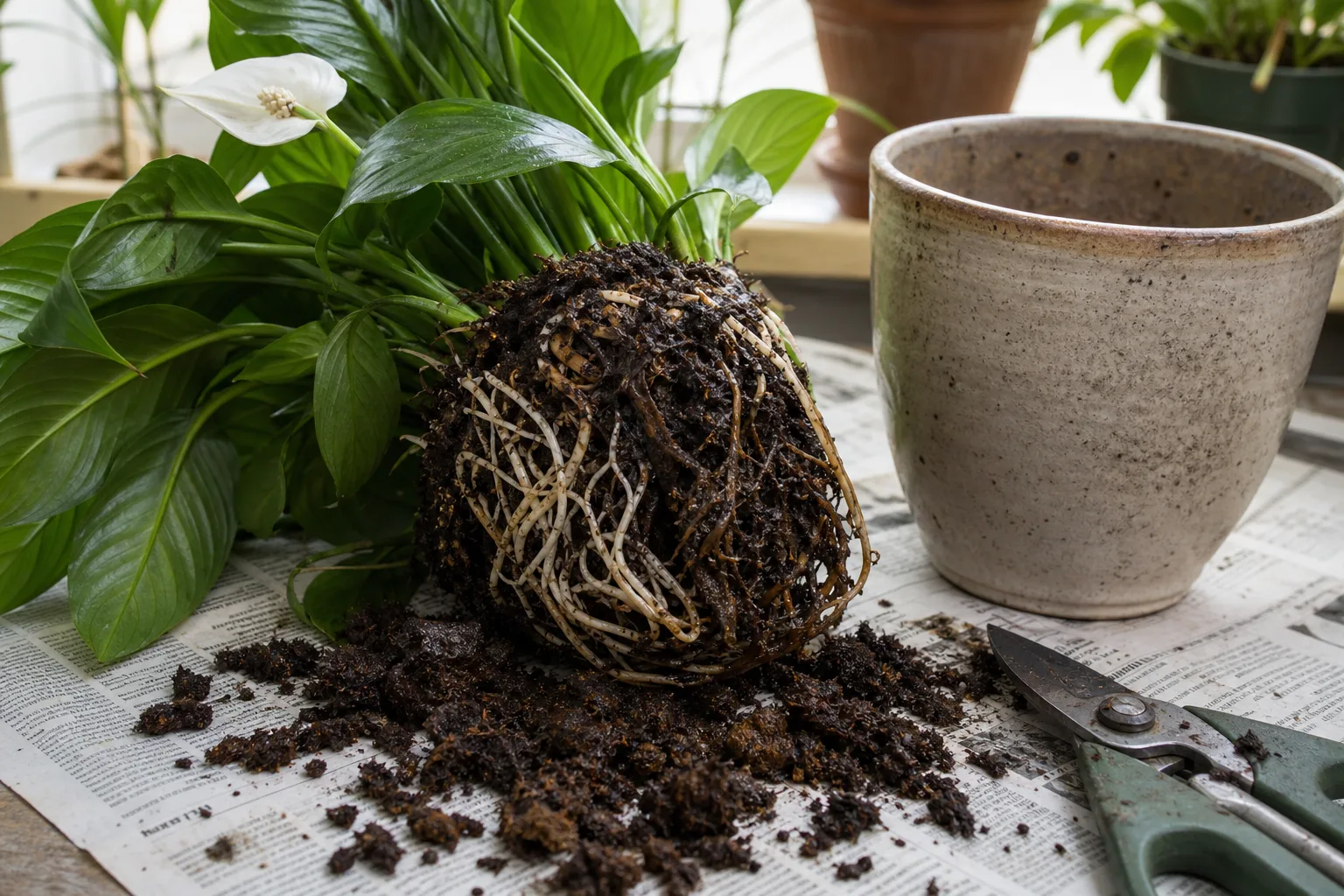
The usual causes are a pot without a working drainage hole, a saucer that stays full, a container much larger than the root ball, dense soil, or frequent watering during cool weather. A thick decorative cachepot can also hide standing water after irrigation.
If the tree is potted, stop watering and confirm that water can escape. If the soil remains saturated for days or the tree continues to decline, slide it from the pot and inspect the roots. Remove only roots that are clearly dead or mushy, then repot into a clean container with drainage and a fast-draining citrus mix. Do not fertilize a freshly stressed, root-pruned tree until it is taking up water and producing signs of new growth.
RHS citrus advice also recommends avoiding a large jump in pot size because excess unused mix stays wet longer. Repot in spring when the roots are crowded, using a container only slightly larger than the root ball.
Underwatering and Heat Stress
An underwatered lemon tree usually has dry soil, leaves that curl or feel papery, and yellowing that progresses toward brown edges or premature drop. Container trees can dry out rapidly in full sun or hot wind, while a newly planted in-ground tree may lose moisture from a small, shallow root system before it is established.
Rehydrate slowly rather than alternating between bone-dry soil and a flood. Water at the soil line until the root zone is thoroughly moist and excess runs from the container; if the mix has pulled away from the pot, water once, wait several minutes, and water again. For in-ground trees, use a slow soak over the root zone instead of a short splash at the trunk.
There is no universal “every seven days” schedule. Heat, wind, pot size, soil texture, rainfall, root density, and season all change how quickly the root zone dries. Check the soil and canopy together, then adjust the interval. Mulch can slow evaporation around an in-ground tree, but leave a clear gap around the trunk and do not use mulch to disguise poor drainage.
Nutrient Deficiency and Soil pH
Lemon trees are heavy feeders, but yellow leaves do not automatically mean the tree needs fertilizer. Nutrients may be absent, washed from a container, tied up by unsuitable pH, or inaccessible because roots are too wet or too dry.
The RHS notes that nutrient deficiencies can resemble drought, waterlogging, poor light, or poor establishment. Its symptom guide is especially useful for separating patterns: nitrogen deficiency tends to start on older leaves, while iron deficiency appears first on young leaves; magnesium and manganese symptoms more often begin on older foliage (RHS nutrient deficiency guide).
Read Nitrogen, Magnesium, and Iron Patterns
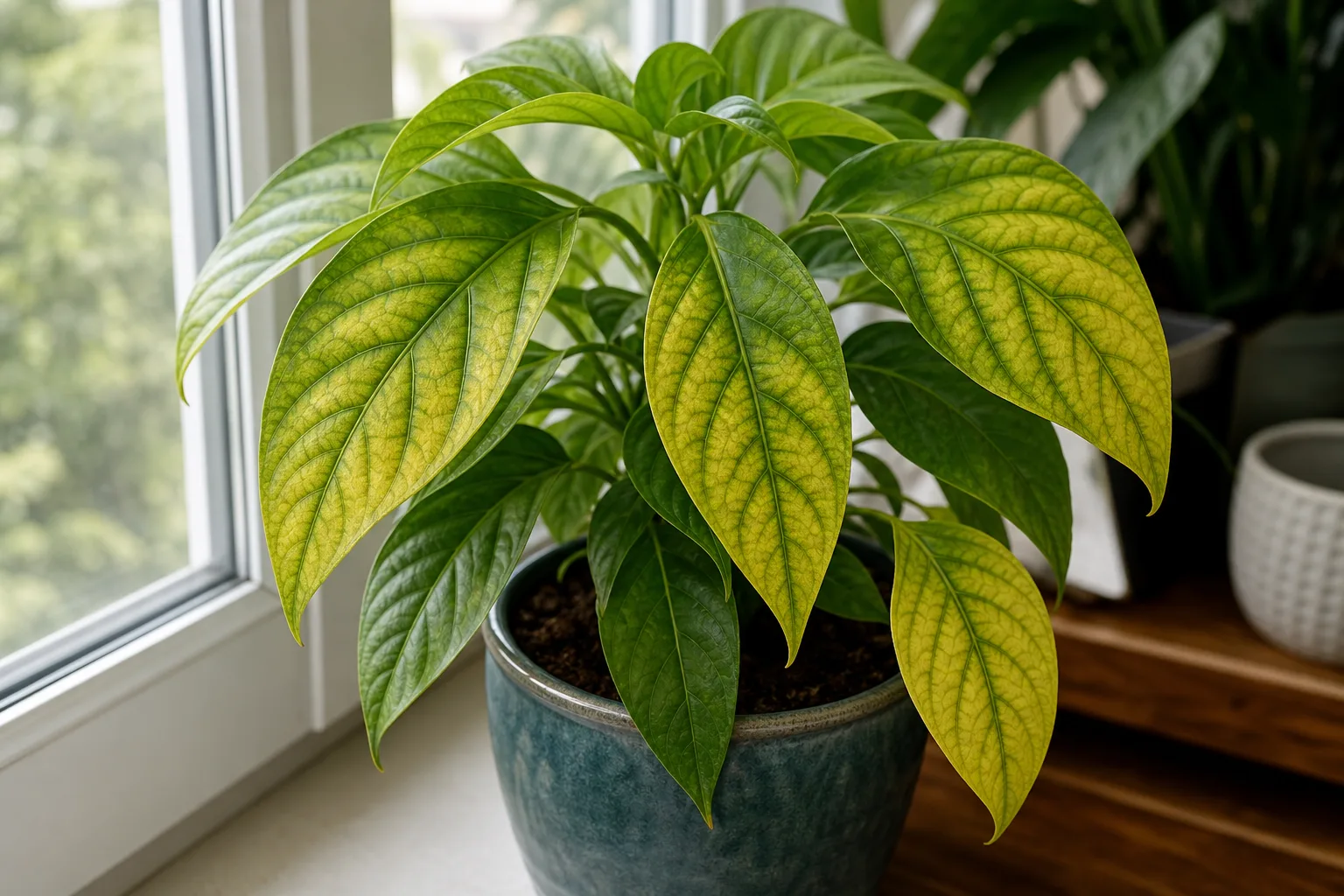
Nitrogen shortage usually creates a general, fairly even pale color beginning with older leaves. Growth may be weak and the whole canopy can look washed out. If the tree has dry or waterlogged soil, fix that first because roots cannot use a fertilizer well under either extreme. Once moisture is stable, use a citrus fertilizer at the label rate rather than a concentrated rescue dose.
Magnesium shortage can cause older leaves to yellow between the veins while the veins remain greener. It is more plausible on very light soils or after repeated use of high-potassium fertilizer, but a similar pattern can come from root stress. Epsom salt is not a universal citrus tonic: use it only when a soil or tissue test, local extension recommendation, or strong diagnostic pattern supports magnesium deficiency.
Iron or manganese unavailability usually shows on newer leaves as interveinal chlorosis—yellow tissue with a green vein network. High or low pH, compacted or waterlogged soil, and damaged roots can all reduce availability even when the soil contains the nutrient. Iron products may help only when the cause is confirmed; adding more iron to a wet or alkaline root zone may produce little improvement.
Do not pile on nitrogen, iron, zinc, manganese, Epsom salt, and compost at the same time. Excess fertilizer can burn roots, raise salt levels, worsen imbalances, and make the original diagnosis impossible to read. A soil test is more useful than a shelf full of amendments, especially for an in-ground tree that has been fed regularly.
Light, Cold, and Sudden Changes
Lemons need strong light to maintain dense foliage and fruit, but a tree that is suddenly moved from shade into intense sun can develop bleached or scorched patches. New growth may also be pale when a container tree spends winter in a dim room.
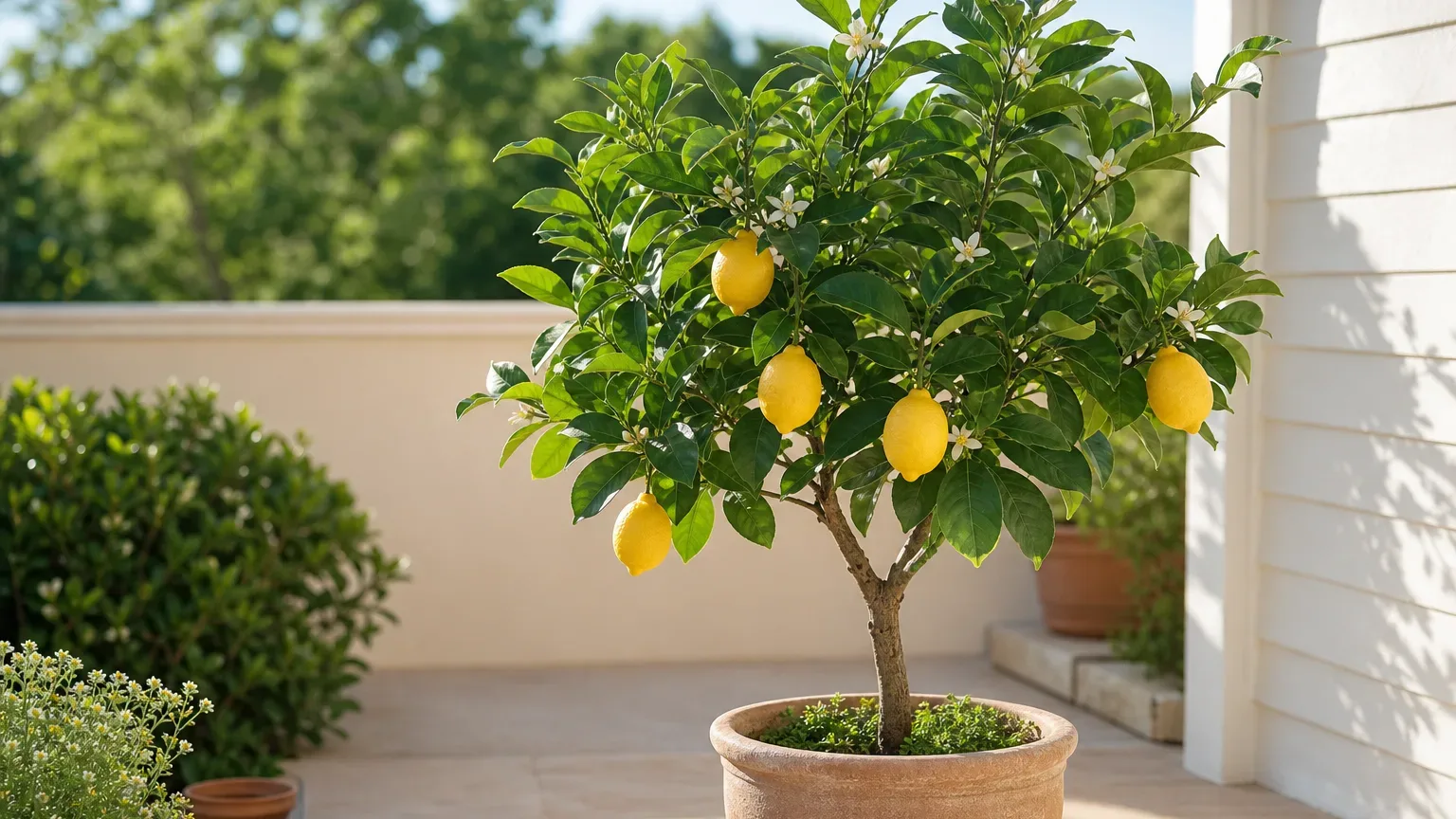
Aim for the brightest practical location and change light gradually when moving a potted tree outdoors. Epic Gardening describes Meyer lemons as high-light plants and recommends acclimating a container tree rather than exposing it to a sudden jump in brightness (Meyer lemon care guide). A grow light can help an indoor tree when a bright window is not enough, but it will not correct soggy roots or a nutrient lockout.
Cold is another common trigger, especially for containers moved near a drafty window or left outside after nights become chilly. RHS guidance notes that citrus may yellow or drop leaves when temperatures fluctuate, and that individual citrus types have different minimum temperatures. Protect the tree according to its variety and local forecast; do not assume a generic temperature threshold applies to every lemon rootstock.
When moving a tree indoors for winter, inspect for pests first, keep it in bright light, reduce watering as growth slows, and keep it away from hot radiators and cold drafts. Yellow leaves that appear after a move can reflect combined light, humidity, temperature, and watering changes rather than one missing nutrient.
Pests That Cause Yellow Spots and Honeydew
Sap-feeding pests can create yellow stippling, pale patches, distorted new leaves, or general loss of color. Scale insects look like stationary brown or tan bumps on stems and leaf veins; aphids cluster on tender shoots; spider mites cause fine stippling and sometimes webbing; whiteflies fly up when foliage is disturbed.
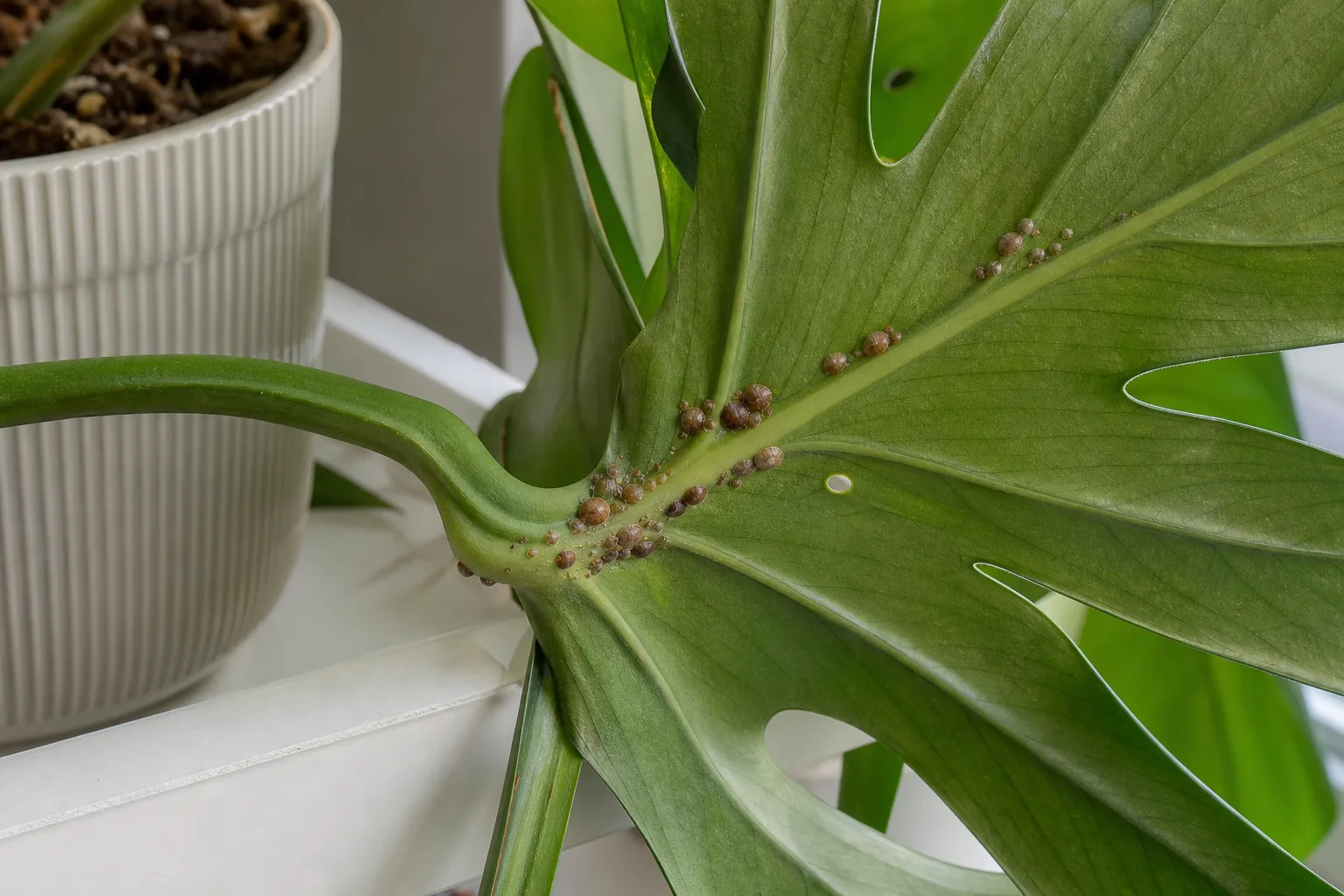
Sticky leaves or black sooty mold point toward honeydew produced by sap feeders. Gardening Know How recommends inspecting the undersides of leaves and stems because aphids, scale, mealybugs, whiteflies, and mites can all damage lemon foliage (lemon yellow-leaf troubleshooting).
Start with a close inspection, not a spray. Rinse light aphid or mite infestations with a firm stream of water that reaches the undersides, then repeat the inspection in a few days. For scale or a persistent infestation, use only a horticultural oil or insect-control product labeled for citrus, the target pest, and your growing situation. Follow the label for dilution, temperature, application timing, harvest interval, and pollinator precautions.
Avoid spraying oils in high heat or on drought-stressed foliage, and do not use homemade detergent mixes as if they were labeled insecticidal soap. Wash sooty mold from leaves only after addressing the insects producing the honeydew; otherwise it will return.
Diseases and Root or Trunk Symptoms
Yellowing is more concerning when it is paired with symptoms outside the leaf. Look for dark spots, water-soaked lesions, blackened twig tips, bark cracks, oozing sap, a sunken collar, dieback, small new leaves, or a tree that declines despite stable moisture.
Root rot often begins below ground but shows above ground as yellow leaves, leaf drop, weak growth, or wilting with wet soil. RHS citrus guidance lists rotting roots as a common cultivation problem and advises checking root condition when the reason for decline is unclear (RHS citrus problem guide). Gardening Know How also describes Phytophthora gummosis as a bark problem associated with oozing sap and cracking or sloughing bark, which needs more than a routine fertilizer adjustment (common lemon diseases).
Do not scrape a trunk aggressively, paint it with an unlabelled product, or prune heavily because a few leaves are yellow. If the trunk is bleeding, the collar is soft, roots are badly decayed, or branches are dying back, photograph the symptoms and ask a local extension service, certified arborist, or experienced citrus specialist for a diagnosis. Some diseases are regional and require a sample or in-person inspection.
How to Fix Yellow Leaves in the Right Order
Use this sequence when the cause is not obvious:
- Pause automatic care. Do not add water or fertilizer until you feel the soil and note recent weather or care changes.
- Correct the root-zone extreme. Drain standing water and improve drainage if saturated; rehydrate slowly if dry.
- Scout the canopy. Flip leaves, inspect stems and new shoots, and look for pests, honeydew, webbing, spots, or trunk lesions.
- Stabilize light and temperature. Move a container only as needed and acclimate it to brighter conditions.
- Test before treating a suspected deficiency. Use a citrus fertilizer only after moisture and drainage are under control, and apply the label rate.
- Recheck new growth. Existing yellow tissue may remain yellow, but new leaves should be stronger and greener if the cause was corrected.
Container Lemon Tree Reset
For a potted lemon, drainage is the first priority. Empty the saucer, clear the drainage holes, and check whether the potting mix is still wet several inches down. If the tree is rootbound but otherwise healthy, repot in spring into a slightly larger container; if roots are mushy, repot immediately into fresh, well-draining mix after removing only dead tissue.
Place the tree in bright light, protect it from cold drafts, and water only when the root zone begins to dry. Do not chase leaf color with daily misting, a pebble tray, or repeated feeding. Humidity can help a dry indoor environment, but it cannot replace light, oxygen at the roots, or a correctly sized pot.
In-Ground Lemon Tree Reset
For a tree in the ground, check whether irrigation or rain is pooling near the root zone and whether competing weeds are dense beneath the canopy. Keep a shallow mulch layer over the root area to moderate moisture, but keep mulch away from the trunk. Redirect irrigation away from the trunk and use a slow soak that wets the feeder-root zone rather than a brief daily sprinkle.
If the soil is compacted, the tree is planted too deeply, or the site stays wet after rain, fertilizer will not solve the underlying problem. Improve drainage where practical, avoid disturbing major roots, and seek local advice before excavating around an established tree.
Should You Remove Yellow Leaves?
Remove leaves that are fully dead, badly diseased, or likely to fall into a persistently wet container surface. Use clean pruners and avoid stripping a large percentage of the canopy; green leaves are still producing energy the tree needs for root recovery and fruit support.
Do not remove every yellow leaf simply to make the tree look better. A yellow leaf will not turn green again if its chlorophyll has already broken down, so judge recovery by the condition of the stems, roots, and new leaves. If yellowing is spreading rapidly, pruning is only a cosmetic step until you correct water, nutrient availability, temperature, pests, or disease.
Prevent Yellow Leaves Next Season
Prevention starts with a root zone that can hold moisture without staying saturated. Choose a pot with real drainage, use a coarse citrus-appropriate mix for containers, and repot only when roots or mix condition justify it. For in-ground trees, choose a sunny site with good drainage and avoid planting in a low pocket where water collects.
Build a simple routine: check soil moisture before watering, feed during active growth with a citrus fertilizer according to its label, inspect leaves and stems weekly, and adjust indoor winter care as light and temperature change. RHS recommends seasonal feeding for citrus, with a higher-nitrogen summer feed and a more balanced winter feed in its UK guidance; local products and climates may call for a different schedule, so use the label and regional extension advice as the final authority (RHS citrus growing guide).
Keep weeds from competing with young in-ground trees, mulch without touching the trunk, protect containers from frost and hot drafts, and acclimate trees when moving them between indoor and outdoor conditions. These small habits prevent the stress cycle in which a dry tree is flooded, then fertilized while its roots are still unable to function.
When to Seek a Local Diagnosis
Ask for help when yellowing affects most of the canopy, new growth is stunted, roots are extensively rotten, the trunk oozes or cracks, leaves show unusual mottling, or the tree continues to decline after moisture and light are stable. A local expert can account for rootstock, soil chemistry, regional citrus diseases, irrigation water, and weather patterns that a general guide cannot see.
Bring clear photos of the whole tree, one affected leaf from the top and underside, the trunk base, and the soil surface. Include the variety if known, whether it is potted or in the ground, your last fertilizer application, and how often you water. That history often shortens the diagnostic process more than another round of generic treatments.
Conclusion
Lemon tree leaves turn yellow when the tree cannot maintain normal chlorophyll production or when roots, leaves, or vascular tissues are under stress. The most useful first distinction is not “which fertilizer should I buy?” but where the yellowing began, what pattern it makes, and whether the root zone is wet or dry.
Check the soil, inspect roots when needed, scout for pests, stabilize light and temperature, and test before feeding. Existing yellow leaves may stay yellow, but healthy new growth, firm roots, and a stable canopy are evidence that the correction is working. If yellowing comes with trunk lesions, severe root loss, rapid dieback, or persistent decline, move from home troubleshooting to a local diagnosis.



