How to Grow and Care for Lily of the Valley
Learn how to grow lily of the valley in shade, when to divide it, how to control spreading, and what its toxicity means for children and pets.
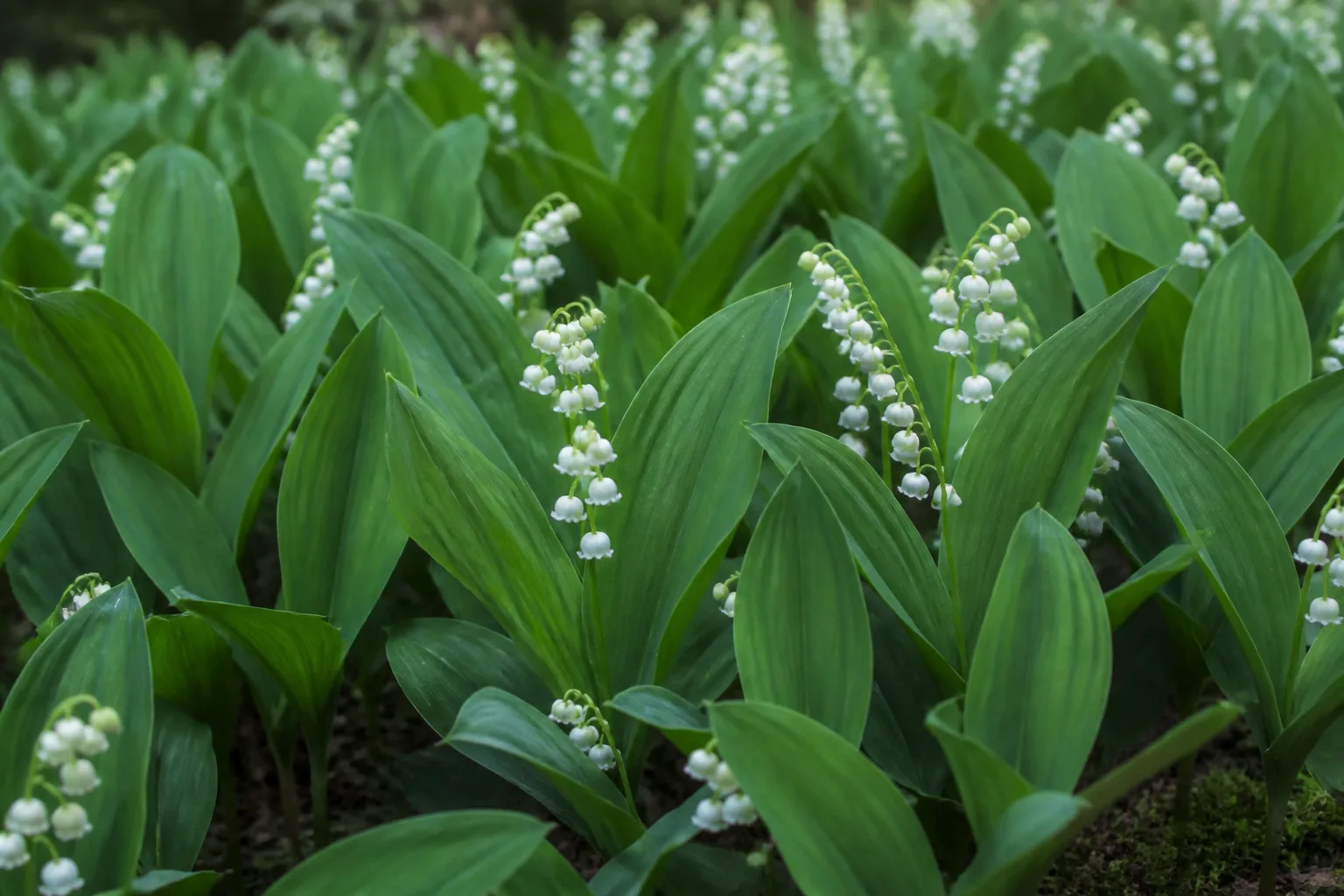
Lily of the valley (Convallaria majalis) is a small perennial with a surprisingly large personality. In spring, arching stems carry white, bell-shaped flowers with a powerful fragrance; by early summer, the plant settles into a low green carpet beneath trees and shrubs. That makes it an excellent answer for a cool, shady corner—but also a plant that can outstay its welcome.
The most important part of lily of the valley care happens before planting. Check whether it is considered invasive or restricted where you live, decide whether children or pets could reach the foliage or berries, and choose a location with a physical edge you can monitor. If those conditions work for your garden, lily of the valley is generally durable and long-lived. If they do not, there are safer and easier-to-contain shade plants.
Decide Whether Lily of the Valley Belongs in Your Garden
Lily of the valley is a good fit when you want a spring-blooming ground cover for partial shade to full shade, have soil that stays moderately moist without remaining waterlogged, and can keep the colony away from lawn edges, natural areas, and neighboring beds. It is particularly useful beneath deciduous trees, where spring light reaches the ground before the canopy fills in.
It is a poor fit for a hot, dry site, a bed that drains slowly, or a small border where every plant must remain exactly within its allotted space. It is also a poor fit for a yard where a dog, cat, child, or grazing animal routinely chews plants. The plant’s reputation for being “easy” describes establishment—not safe placement or effortless containment.
Spread is regional and site-dependent. Rhizomes can move outward and form dense colonies, while small pieces left in disturbed soil can resprout. Before buying, check your state or provincial invasive-plant resources; a plant that behaves politely in one climate can become a management problem in another.
Quick Profile: Habit, Flowers, and Seasonal Rhythm
| Trait | Lily of the valley |
|---|---|
| Botanical name | Convallaria majalis |
| Family | Asparagaceae |
| Type | Herbaceous perennial |
| Typical height | 6–12 inches |
| Spread | Expanding colony; spacing is controlled by rhizomes |
| Bloom season | Spring, often for several weeks |
| Flower color | Usually white; pink cultivars exist |
| Light | Partial shade to full shade |
| Soil | Rich, moisture-retentive but well drained |
| Hardiness | Commonly listed for USDA zones 3–8 |
| Safety | Toxic if eaten; keep away from children and pets |
This is not a true lily. It belongs to the asparagus family and grows from branching underground rhizomes that produce pointed growing buds called pips. Each pip can develop into a leafy shoot and, when mature enough, a flower stem. The plant usually goes dormant after the growing season, especially where summers are hot or winters are cold, then returns from the underground network in spring.
Choose a Site With Bright Shade and Reliable Moisture
Light and temperature
Aim for morning light, filtered light, or bright shade. A little direct sun in the cool part of the day can improve flowering, but strong afternoon sun dries the foliage and soil faster than this woodland plant prefers. In warm climates, deeper shade is often more successful than a sunny border; in cool climates, too much darkness can produce foliage without many flowers.
Lily of the valley prefers cool to moderate conditions. Summer browning can be a natural response to heat rather than proof that the colony is dead. If the foliage declines during a hot spell but the soil is not constantly wet and new growth returns the following spring, leave the underground crowns undisturbed rather than digging them up in panic.
Soil, drainage, and mulch
The ideal soil is rich in organic matter, evenly moist, and well drained. A layer of compost worked into poor soil can improve structure, but do not bury the planting site under a thick layer of fine material that stays saturated. In heavy clay, solve drainage first; adding fertilizer to a waterlogged bed will not prevent rhizome rot.
A two-inch layer of leaf mold, compost, or shredded bark helps keep the root zone cool and reduces watering swings. Keep mulch slightly away from emerging shoots and from the crowns themselves. The goal is woodland moisture, not a permanently wet blanket around the plant.
Plant Lily of the Valley Pips Correctly
Nurseries commonly sell lily of the valley as dormant pips in fall or early spring, or as actively growing divisions in containers. Dormant pips may look unimpressive, but the pointed bud is the part that matters. Handle them gently and plant them soon after purchase so they do not dry out.
- Soak dry-looking pips in room-temperature water for a few hours, unless the seller gives different instructions.
- Loosen the soil and remove perennial weeds, especially at the edge of a bed where later removal will be difficult.
- Set each pip with the pointed growing bud facing upward.
- Cover the bud with roughly half an inch of soil. Planting too deeply can delay emergence or cause rot.
- Space pips about 6 inches apart if you want a colony to fill in gradually; use more space if you want closer monitoring between plants.
- Firm the soil lightly, water thoroughly, and mark the area so dormant plants are not mistaken for an empty bed.
Do not plant a single pip in the middle of a lawn and expect it to remain a tidy specimen. Lily of the valley is a colony-forming ground cover. An enclosed bed, large container, or area bounded by paving is easier to manage than an open woodland edge connected to loose soil.
First-Year Watering and Ongoing Seasonal Care
Water deeply after planting, then check the soil every few days while roots establish. Water when the upper inch begins to dry, applying enough to moisten the root zone rather than sprinkling the leaves briefly. Once the colony is established, rainfall may be sufficient except during prolonged heat or drought.
The common mistake is alternating between drought and flooding. A dry colony may grow slowly and flower poorly; a saturated colony may develop soft crowns and fungal problems. A simple finger test, a small trowel, or a moisture check beneath the mulch is more useful than watering on a fixed calendar.
Fertilizer is rarely necessary in a bed with reasonable soil and annual organic-matter additions. If a soil test shows a nutrient deficiency, use a mild, slow-release product according to its label in early spring. Avoid high-nitrogen feeding that produces lush leaves at the expense of flowers and can increase soft growth.
After flowering, leave healthy foliage in place while it is green. The leaves replenish the underground rhizomes for the next season. Remove only foliage that has yellowed or collapsed, and use clean shears if disease is suspected. Do not cut healthy leaves immediately after bloom simply because the flowers have faded.
Cultivars and Container Options
The straight species is the usual choice, but named cultivars can change the flower form or foliage. ‘Rosea’ has pink flowers, ‘Fortin’s Giant’ is selected for larger blooms, and ‘Flore Pleno’ has double flowers. Variegated forms such as ‘Albostriata’ or ‘Hardwick Hall’ can brighten shade, but their light leaf markings do not change the plant’s spreading habit or toxicity.
Containers are useful when you want the fragrance and flowers without giving the rhizomes an open route through the landscape. Use a pot with drainage holes and a quality potting mix; keep it outdoors in a sheltered, shady location during the growing season. A wide container is more stable than a narrow one, and a saucer should not hold standing water.
Container culture reduces spread but does not eliminate care. Rhizomes can become crowded, soil can dry quickly in warm weather, and a pot left outdoors may freeze more severely than the surrounding ground. Refresh or divide the contents when flowering declines, and dispose of unwanted rhizomes in the trash rather than a compost pile.
Propagate by Division Without Spreading It Everywhere
Division is the dependable way to propagate lily of the valley. Fall after the foliage dies back is a good window, and early spring before vigorous growth is another. Division also lets you thin an old, congested colony and move only the amount you truly want.
Water the area first if the soil is hard, then dig well outside the visible leaves so you do not slice through the rhizome network. Lift a section, tease apart connected pieces, and keep a pointed pip with each division. Replant immediately at the original depth and water well.
Work over a tarp or paved surface when possible. Any rhizome fragments left in loose soil may grow, and tools or boots can move pieces to other beds. Shake excess soil into the original planting area, not across the yard. Wear gloves, wash your hands afterward, and keep plant material away from children and animals.
Growing this plant from seed is slower and less predictable because the berries and seeds are toxic and germination can be irregular. For a garden colony, division is safer, faster, and easier to keep true to the cultivar.
How to Get More Flowers From an Old Colony
A mature colony may produce fewer flowers when it becomes too dense, the site has become darker, or the plants are competing with tree roots. Start with the least disruptive checks: confirm that spring soil is not bone-dry, look for a recent change in shade, and make sure foliage was not removed immediately after last year’s bloom.
If the patch is crowded, divide it during dormancy and replant vigorous pips with room between them. Do not respond by adding large amounts of fertilizer. Nutrient excess can make a leafy patch look healthier while failing to address the real issue—insufficient light, drought, age of the colony, or competition.
A newly planted pip may produce leaves before it flowers. Give it time to establish. If a healthy colony has never bloomed after more than one full growing season, reassess light and planting depth before buying more plants.
Pests, Diseases, and Browning Leaves
Lily of the valley is usually more troubled by site stress than by insects. Aphids or spider mites may appear on crowded or drought-stressed growth, but a small population can often be rinsed from leaves or left for predators. Avoid spraying a plant simply because you see an insect; identify whether damage is increasing and whether the plant is otherwise under stress.
Brown foliage in midsummer often points to heat or drought, particularly in climates warmer than the plant prefers. Water the soil deeply, improve mulch, and wait for cooler conditions. Brown margins that progress from a persistently wet crown suggest drainage trouble, while dark spots spreading during wet weather may indicate fungal leaf disease.
Remove badly affected leaves and place them in household waste, not compost. Improve air movement by thinning crowded growth, water at the soil line, and correct drainage. If the crown is soft or foul-smelling, digging and discarding the affected section may be more effective than repeated fungicide applications.
Control, Contain, or Remove an Aggressive Patch
For a manageable colony, define the boundary with a path, edging, or a container and inspect the edge twice a year—once when shoots emerge and again after flowering. Pulling only the visible leaves is not control; the rhizomes remain underground. Dig beyond the edge, sift the soil for pale root pieces, and recheck the area through the following seasons.
To remove a patch, work when the soil is workable and the foliage makes the colony easy to locate. Dig deeply and broadly, remove the rhizomes and pips, and bag the plant material. Do not till the area, because chopping one colony into many pieces can make the follow-up harder. Expect repeat visits; a small fragment can produce a new shoot later.
If the colony is near a natural area, a drainage ditch, or a neighbor’s garden, ask a local extension office about the most appropriate control method and any restrictions. Herbicide decisions depend on the site, nearby plants, and local regulations, and should never be improvised around water or edible crops.
Lily of the Valley Safety for People and Pets
Every part of lily of the valley should be treated as poisonous if eaten, including leaves, flowers, red berries, and underground parts. The plant contains cardiac glycosides that can affect the heart. Garden work is not automatically dangerous, but children and animals should not be allowed to chew the plant, and cut flowers should be kept away from curious pets.
Use gloves when handling large amounts, wash hands before eating, and remove fallen berries from accessible paths. Do not use the flowers or berries in food, drinks, or homemade remedies. If someone may have swallowed any part, contact a poison-control service or medical professional promptly; do not wait for symptoms and do not induce vomiting unless instructed.
For a pet exposure, call your veterinarian or an animal poison service with the plant name, the amount that may have been eaten, and the time of exposure. Symptoms can be serious, so online identification alone is not a substitute for professional guidance. ASPCA and Pet Poison Helpline resources are useful for keeping the correct contact information available before an accident happens.

Better Alternatives for Toxicity or Spread Concerns
If you want a white-flowering shade ground cover but cannot accept lily of the valley’s risks, look at plants suited to your region rather than searching for a “safe lily of the valley.” Bunchberry (Cornus canadensis) is a North American woodland ground cover that can provide white bracts in cool climates, though it has its own soil and moisture requirements.
Other alternatives may include native sedges, wild ginger, foamflower, or certain ferns, depending on your state and site. “Native,” “non-invasive,” and “non-toxic” are different claims, so verify each plant with a local extension service and a current poison-control reference. A plant that is safer for pets may still spread or be unsuitable for a dry site.
A Simple Yearly Care Calendar
Late winter to early spring: Mark the colony before surrounding plants hide it. Plant or divide dormant pips as soon as the soil is workable, and water new divisions.
Spring: Watch for shoots, maintain a thin mulch layer, and keep the soil evenly moist while flowering stems develop. Inspect the boundary before the colony expands into paths or lawns.
After flowering: Leave green foliage intact. Remove spent flower stems only if you want to prevent berries, and do so carefully because all plant parts remain toxic.
Summer: Expect possible dormancy or browning in hot climates. Water during drought, but do not keep heavy soil saturated. Check for mites or leaf spots only after correcting obvious stress.
Fall: Divide crowded patches, remove dead foliage, and bag unwanted rhizomes. Recheck the edge after digging so leftover pieces do not establish beyond the intended bed.
Conclusion: Plant It With a Boundary and a Plan
Lily of the valley earns its place in a cool, shady garden when its fragrance and spring flowers are worth the responsibility of a spreading, toxic perennial. Give it bright shade, moisture that drains, shallow planting, and a little room; let healthy foliage restore the rhizomes after bloom; and divide crowded colonies during dormancy.
The best lily of the valley care plan is also a management plan. Confirm local spread concerns, protect children and pets, contain the roots, and monitor the edge before the plant becomes difficult to remove. If those safeguards do not fit your yard, choose a locally appropriate shade ground cover that matches your household and your landscape rather than forcing this one to work.