6 Yard Features That Are Hard to Maintain
These six yard features are not always wrong, but they can create hidden work. Learn when to keep, redesign, or replace them with easier options.
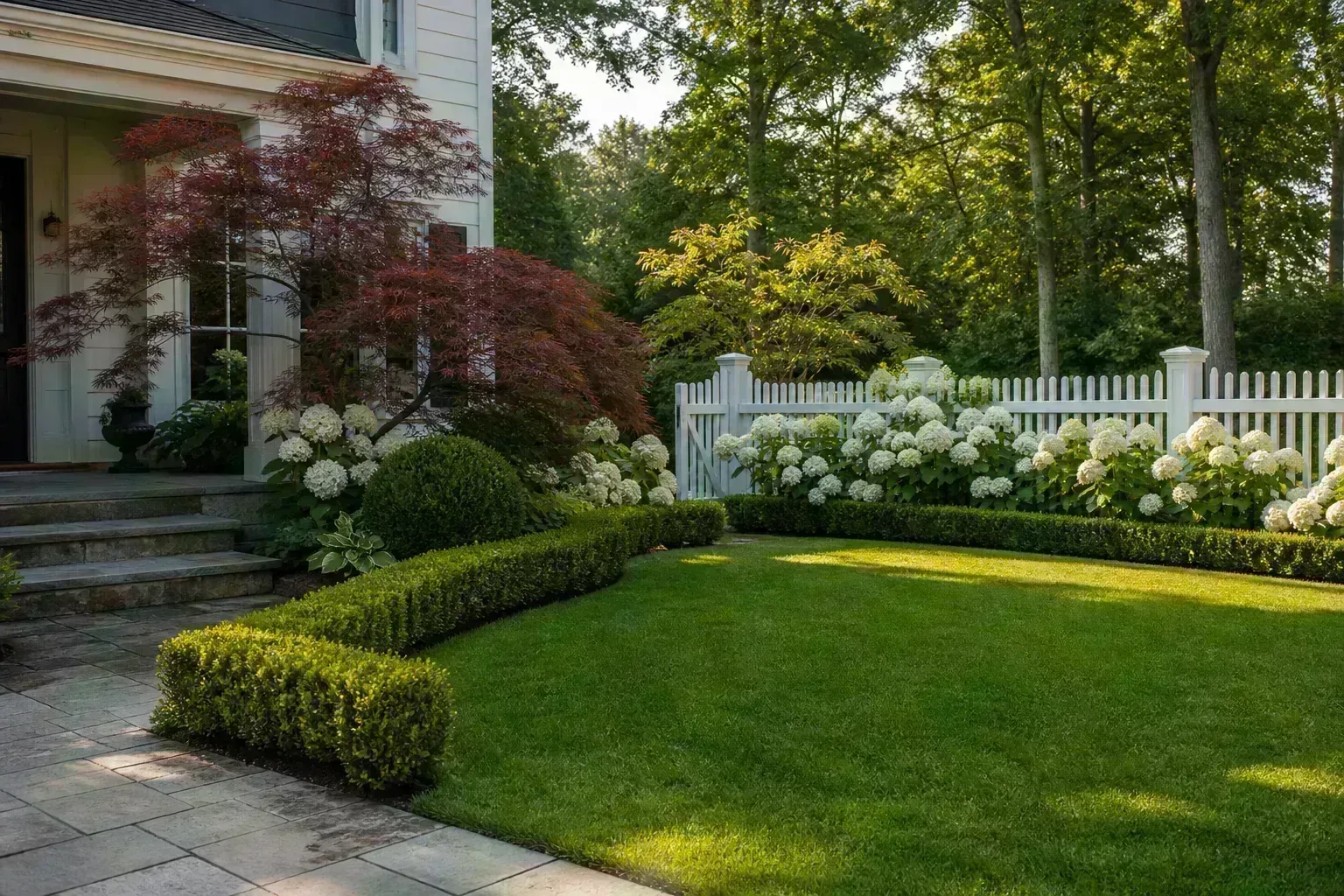
The better question is not whether a feature is outdated
“Outdated” is often shorthand for a feature that asks more work than the homeowner wants to give it. A large lawn may be perfect for a dog or a child’s soccer game, while a small lawn on an unused slope may be an expensive green carpet that needs mowing, irrigation, and feeding simply to look acceptable.
The same distinction applies to ground covers, raised beds, vertical gardens, ponds, and formal planting. None is automatically a mistake. The problem starts when a feature is installed as a default, ignores the site, or is judged only by how it looks on installation day instead of how it behaves in August, after a storm, or when the gardener’s back hurts.
The Royal Horticultural Society makes the useful point that no garden is truly maintenance-free; the goal is to replace intensive tasks with better planning and lower-input choices (RHS). Use that as the standard here. Keep features that serve a real purpose, redesign the ones with fixable problems, and remove only what repeatedly fails the way you use your yard.
Run a five-minute maintenance audit first
Before you tear out a lawn or order a raised-bed kit, walk the yard with a note on your phone. For each feature, record the recurring task, how often it happens, and what makes it difficult. “Watering” is not enough: note whether the hose reaches, whether the soil dries in one day, and whether you have to carry a can up steps.
Count time, not just money
Installation price hides the real cost of a landscape. A feature can be inexpensive to build and expensive to maintain, or costly to install and easy once established. Count mowing passes, edging, hand-weeding, pruning, filter cleaning, refilling, hauling mulch, and the trips required to reach the area.
Also separate establishment work from routine work. A new planting bed may need irrigation and weeding during its first season, then settle into a much lighter rhythm. A small wall planter may look finished on day one but require frequent watering for as long as its small pockets remain exposed.
Match the feature to the site
Sun, slope, drainage, wind, foot traffic, mature plant size, and water access matter more than whether a feature is currently fashionable. A ground cover selected for shade can struggle in reflected heat; a formal hedge that is naturally slow-growing may need less correction than a fast-growing hedge planted too close to a walk.
Ask one practical question: What job must this part of the yard do? If the answer is play, keep a durable surface. If the answer is pollinator habitat, a layered planting may work better than a clipped bed. If the answer is food production, put the garden where you will actually visit it.
| If the feature keeps creating… | First redesign question |
|---|---|
| Mowing and edging | Can one broad bed or path replace several narrow edges? |
| Hand-watering | Can the planting be grouped by water need and connected to a reachable hose or drip line? |
| Repeated pruning | Is the plant too large or too fast for the space at maturity? |
| Weeding and spreading | Does the feature have a defined boundary, mulch buffer, and an appropriate plant density? |
| Cleaning and repairs | Can the pump, filter, drain, or surface be reached without dismantling the planting? |
This table turns a vague feeling that the yard is “too much” into a solvable design problem. If the same row appears for several features, fix the infrastructure once—such as a water point, wider path, or continuous bed edge—before buying more plants. Better infrastructure often saves more work than a fashionable plant list.
Large lawns that no longer earn their footprint
The classic oversized lawn is the clearest example of a feature that can be beautiful yet inefficient. Turf is useful where people walk, sit, play, or need a clear view, but the unused strips around trees, side yards, steep slopes, and narrow front beds often demand the same mowing and irrigation as the useful center.
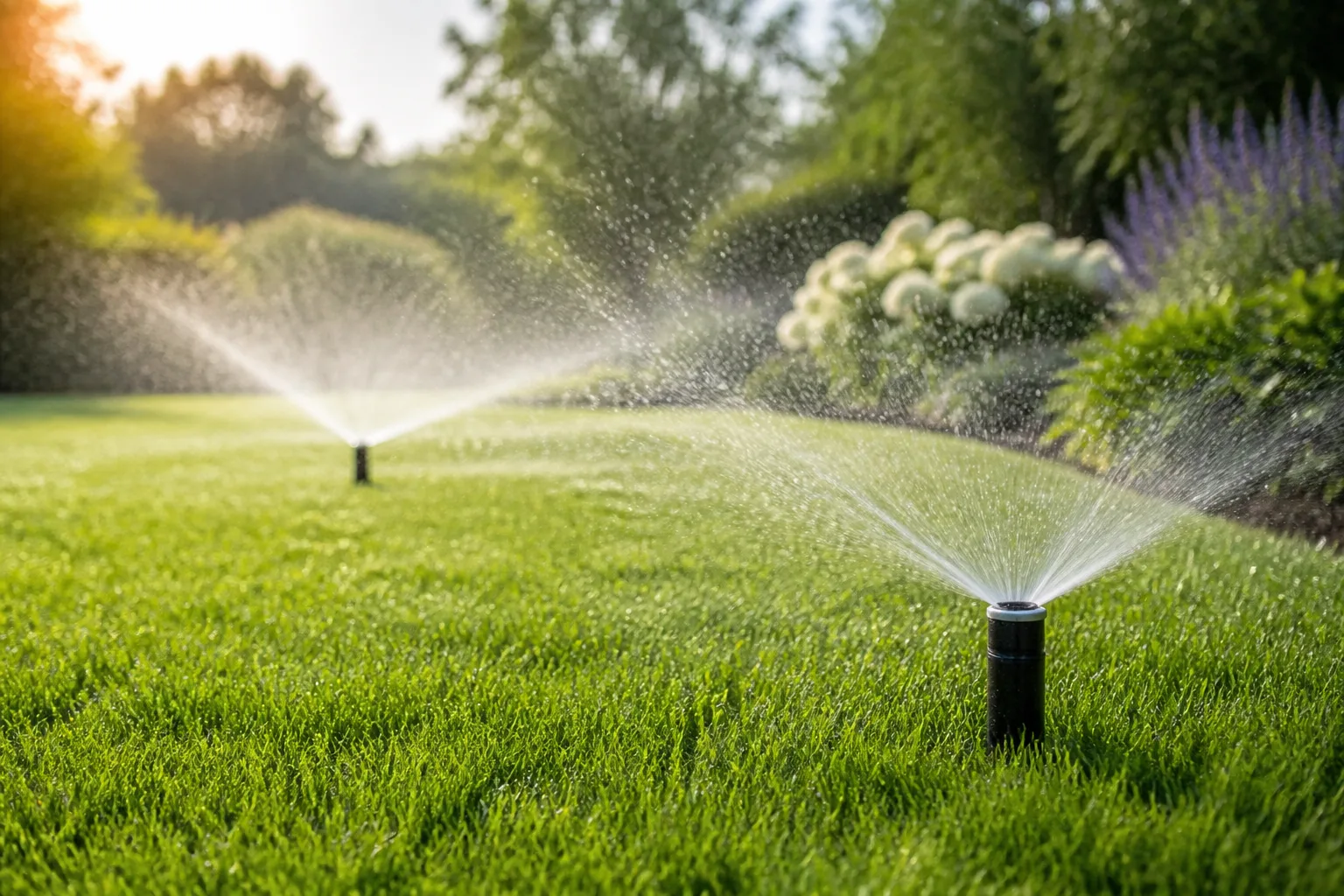
Water is part of that hidden workload. EPA WaterSense guidance recommends designing landscapes around water needs, maintaining irrigation, using mulch, and choosing plants suited to the site rather than treating every square foot as thirsty turf (U.S. EPA WaterSense). The EPA also notes that efficient landscape design can reduce outdoor water use, but the size of the reduction depends on the design, climate, and irrigation system—not on swapping grass for one universally superior plant.
Keep functional turf
Do not remove a lawn just to replace it with a different monoculture. Keep the areas that earn their space: a play rectangle, a path to the shed, a dog run, a sitting area, or a patch that stabilizes a slope. A smaller, healthy lawn is often easier to manage than a yard split into dozens of fiddly planting islands that require edging and handwork.
Convert the least useful section first. A broad bed with shrubs, perennials, and mulch is usually easier to mow around than a collection of tiny islands. Use one continuous edge, leave enough room for mature plants, and group plants with similar water needs so irrigation is not scattered across the whole property.
If you want more habitat, a clear meadow-style area or a purposeful pollinator bed is easier to explain and maintain than simply letting a lawn become patchy. Remove turf thoroughly, control perennial weeds, and expect watering and weeding while the new plants establish. “No mow” describes the finished routine, not the renovation weekend.
There is also a middle option between a high-input lawn and a full planting conversion. Mow less frequently where the site allows it, keep a path through taller grass, and leave a clean transition at the edge of the house or patio. The RHS suggests reducing cutting in less formal areas and relaxing some feeding and moss control; that approach can make a lawn more resilient without forcing you to give up every open space.
Groundcover used as a blanket
Ground cover gets blamed for looking messy, but the category is too broad for that verdict. A well-chosen ground cover can hold soil, soften a slope, cover difficult shade, and reduce exposed ground that would otherwise grow weeds. A poorly chosen one can run into paths, hide irrigation heads, compete with shrubs, and create a dense layer where you cannot see what needs attention.
The practical distinction is designed groundcover versus uncontrolled spread. Choose plants by mature width, winter behavior, foot-traffic tolerance, moisture, and whether they can be contained with a path or hard edge. Leave a visible mulch or paving buffer around trees, structures, and the plants you need to inspect.
Gardening Know How notes that warm-climate ground covers often need water and weeding while they fill in, may not tolerate heavy foot traffic, and become much easier only after establishment (Gardening Know How). That is a much better expectation than buying a flat of plants and assuming the bed will take care of itself.
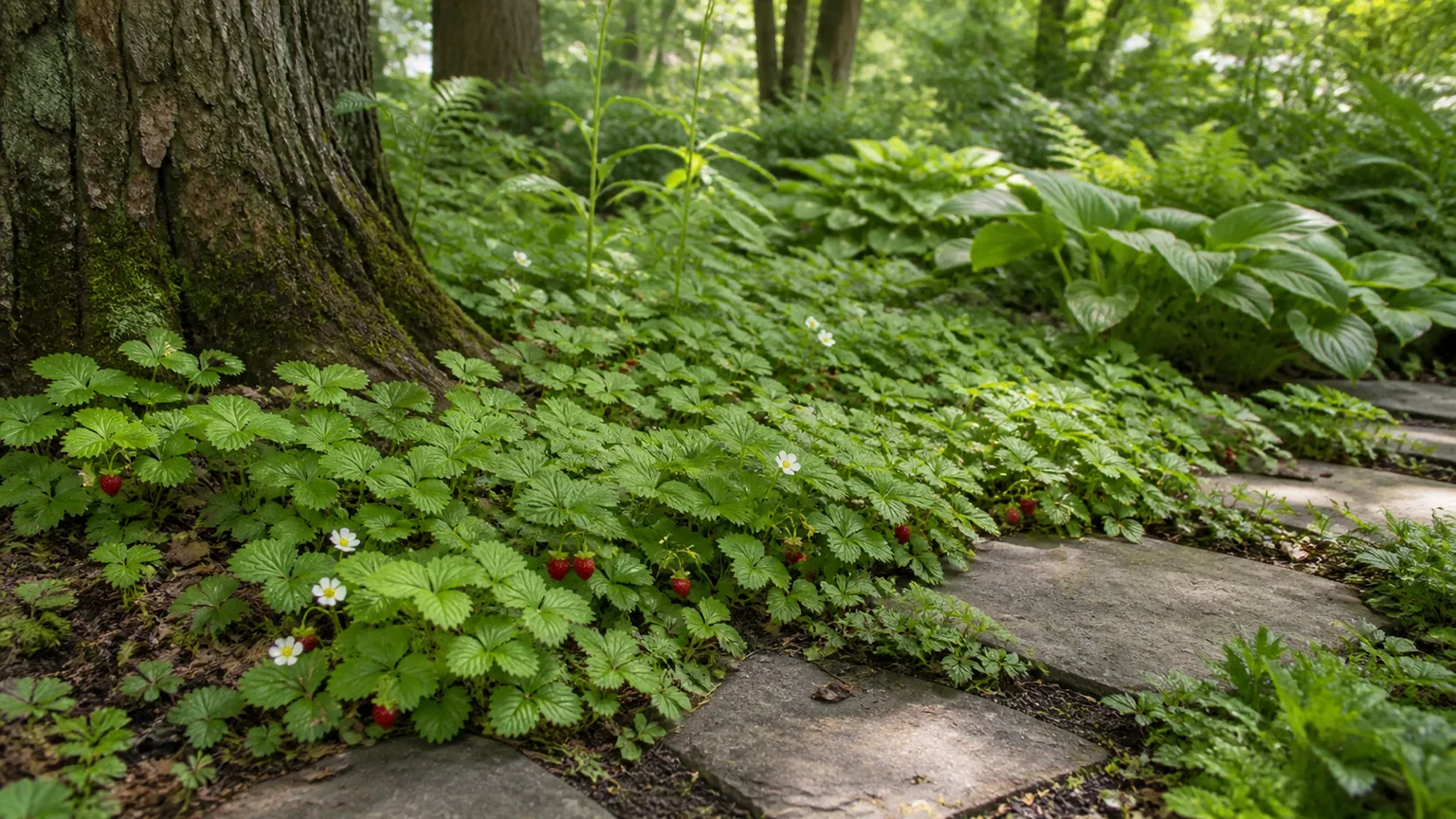
When groundcover is the right tool
Use ground cover when the site has a clear job: stabilize a slope, cover dry shade where turf fails, fill a broad bed, or create a soft transition between shrubs and a path. Pick a plant whose mature spread fits the area, then plant enough to close the canopy without forcing an overcrowded, disease-prone mat.
Avoid using one aggressive spreader as a universal solution. If the feature already feels impossible to edit, remove it in sections rather than turning the whole yard at once. Rebuild the area with a few compatible plants in drifts, a defined path, and mulch that makes the boundary obvious while the planting fills in.
In-ground vegetable gardens in hard-to-work soil
An in-ground vegetable garden is not outdated; it is often the most forgiving option when the soil is healthy, the plot is sunny, and the gardener can reach it easily. It becomes a poor feature when the bed is far from the house, compacted, poorly drained, shaded by roots, or so large that harvesting and weeding feel like a weekly obligation.
Raised beds solve some of those problems by concentrating good soil and keeping pathways outside the planting area. Utah State University Extension says raised beds can improve access, bypass poor or contaminated soil, reduce compaction, and make weeding easier, while also warning that the raised soil warms and dries faster and must be irrigated (Utah State University Extension).
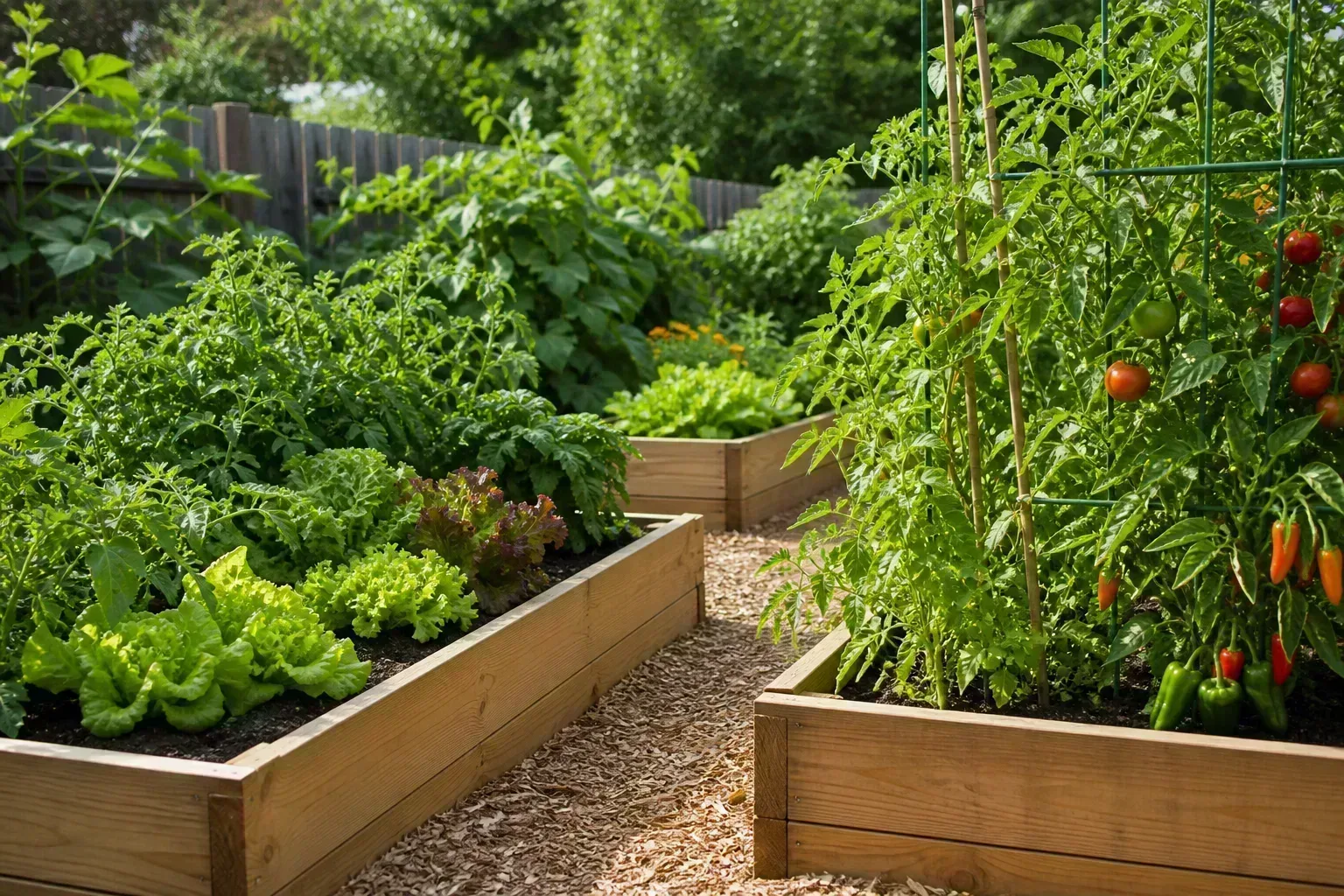
Raised beds help—but they are not maintenance-free
Choose a raised bed when you need soil control, drainage, easier reach, or a smaller growing area—not simply because a box looks more finished. University of Maine Cooperative Extension recommends widths that allow easy reach from both sides and notes that raised-bed and container gardening can make growing possible for people with limited mobility (University of Maine Cooperative Extension). That is a functional reason to raise the soil, not a trend reason.
The trade-off is water. Raised soil loses moisture more quickly than surrounding ground, especially in hot weather, so plan a hose route or drip line before filling the bed. Mulch the surface, keep paths wide enough for the tools or mobility equipment you use, and start with one or two beds rather than building a small farm you must service every evening.
If your existing soil drains well and you can reach it without kneeling, improve it in place. A low, unframed mound with a mulched path may give you most of the access and drainage benefit without the cost of lumber, soil delivery, and future frame replacement.
Vertical gardens designed like living walls
Vertical gardening is still useful; the overbuilt version is what often disappoints. A trellis for cucumbers, beans, peas, or a climbing flower increases growing space and keeps produce off the ground. A wall of shallow pockets or small containers adds a large number of exposed root zones, each with little room for error when the weather turns hot.
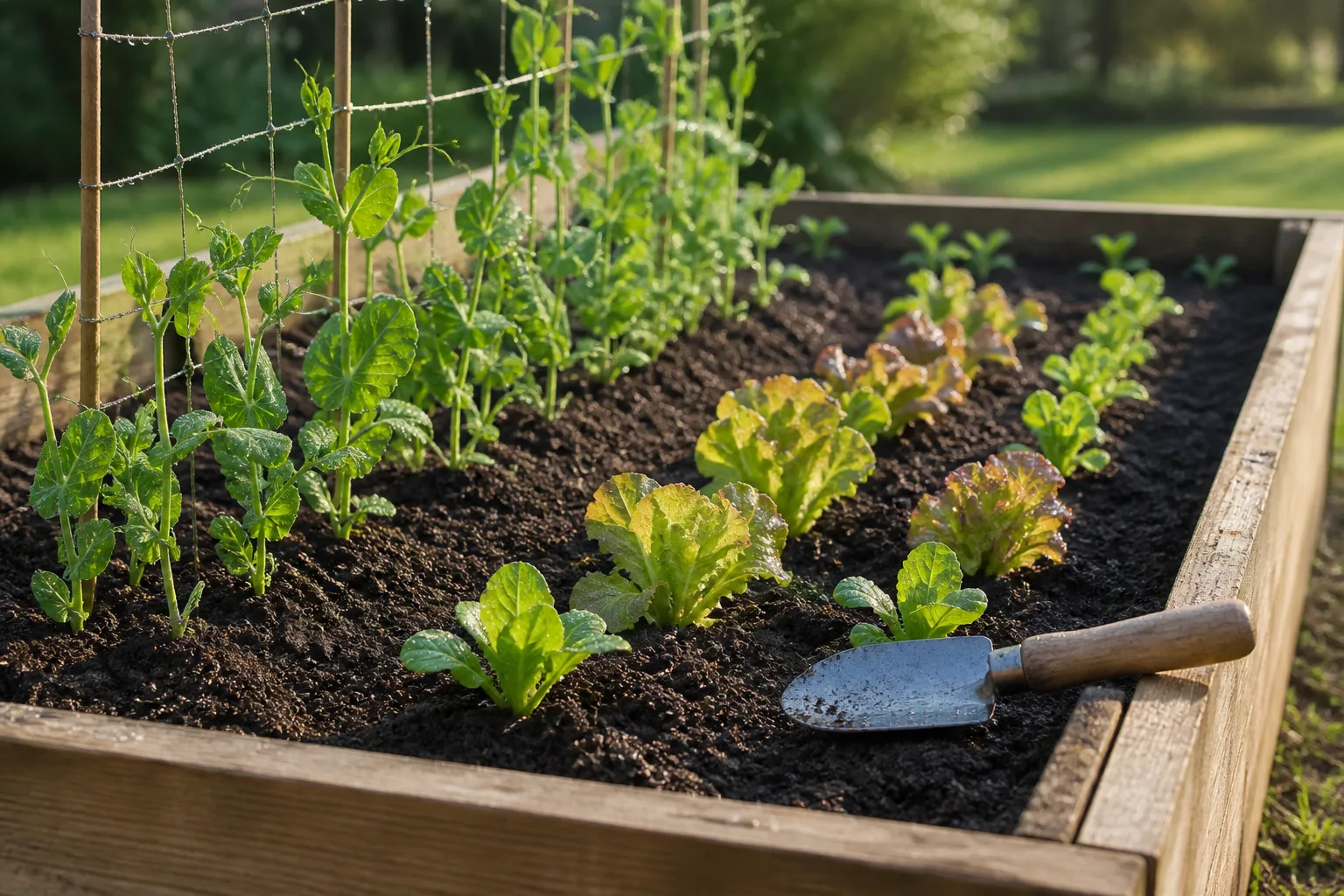
Vertical structures also carry physical and structural work that photos rarely show. They need a secure frame, suitable plants, access for pruning and harvesting, and a watering system that reaches the top and bottom evenly. A mature vine can catch wind and weigh much more than the empty trellis did.
Use a trellis before a pocket system
Start with a support beside a bed, not a grid of thirsty containers. Growing in the Garden’s practical vertical-gardening guidance describes inexpensive options such as bamboo, cattle panels, conduit, netting, and rebar, with the important caveat that the support must match the crop’s weight and be secured safely (Growing in the Garden).
For a pocket system, reduce the maintenance risk before planting: choose larger reservoirs or containers where possible, use a timer or drip system, install a shutoff you can reach, and test the top-to-bottom flow. Put herbs or edible plants where you can harvest them without a ladder. If a wall garden requires daily hand-watering and you already skip container care, it is not a low-maintenance choice for your household.
Decorative ponds and fountains that demand a service schedule
Water is visually powerful, which makes it easy to underestimate the work behind it. A fountain needs a pump, clean intake, adequate water level, and occasional debris removal. A pond adds plant management, sediment, algae, wildlife, overflow, winter, and water-quality decisions—especially if it contains fish.

Penn State Extension reports that 77 percent of pond owners in a survey had at least one problem, including algae, nuisance wildlife, or water-quality issues, and recommends routine inspection and controlling sediment and nutrients entering the pond (Penn State Extension). That does not mean you should never build one. It means a pond is an ecosystem and should be designed as one, not treated like a bowl that only needs topping up.
Design for balance, not constant cleaning
The lowest-care water feature is usually the smallest one that delivers the experience you want and can be reached from the path. A fish-free wildlife pond can reduce the need for pumps and filters; the RHS recommends considering fish-free ponds because they often settle into a more natural balance and may have fewer algae problems (RHS water-feature guidance).
University of Georgia Extension also emphasizes choosing manageable aquatic plants, using plants that shade and filter the water, and researching species before introducing them so an attractive plant does not overwhelm the pond or become invasive (University of Georgia Extension). Avoid very shallow features that evaporate quickly, hide the pump under a tangle of roots, or require you to kneel in mud to clean them.
For a small yard, a planted container water garden may deliver the sound and reflection you want with less excavation. For a larger pond, include a maintenance shelf, a stable access point, an overflow route, and a planting buffer that keeps fertilizer and grass clippings out of the water.
Fountains deserve the same honesty. A recirculating bowl is not a zero-care object: evaporation lowers the water level, leaves clog the intake, and mineral deposits can reduce flow. Put it where you can reach the reservoir, choose a pump that is easy to remove, and decide in advance whether you will empty it seasonally. If those jobs already sound irritating, a dry creek bed, rain garden, or planted basin may deliver movement and habitat with less mechanical equipment.
Formal landscapes that require weekly correction
Formal landscaping is not bad design. Symmetry, clipped hedges, repeated shapes, and a strong path can make a small yard feel calm and intentional. The maintenance problem appears when every plant must stay within a narrow outline, the hedge grows faster than the owner can prune, or the design depends on seasonal bedding that must be replaced several times a year.
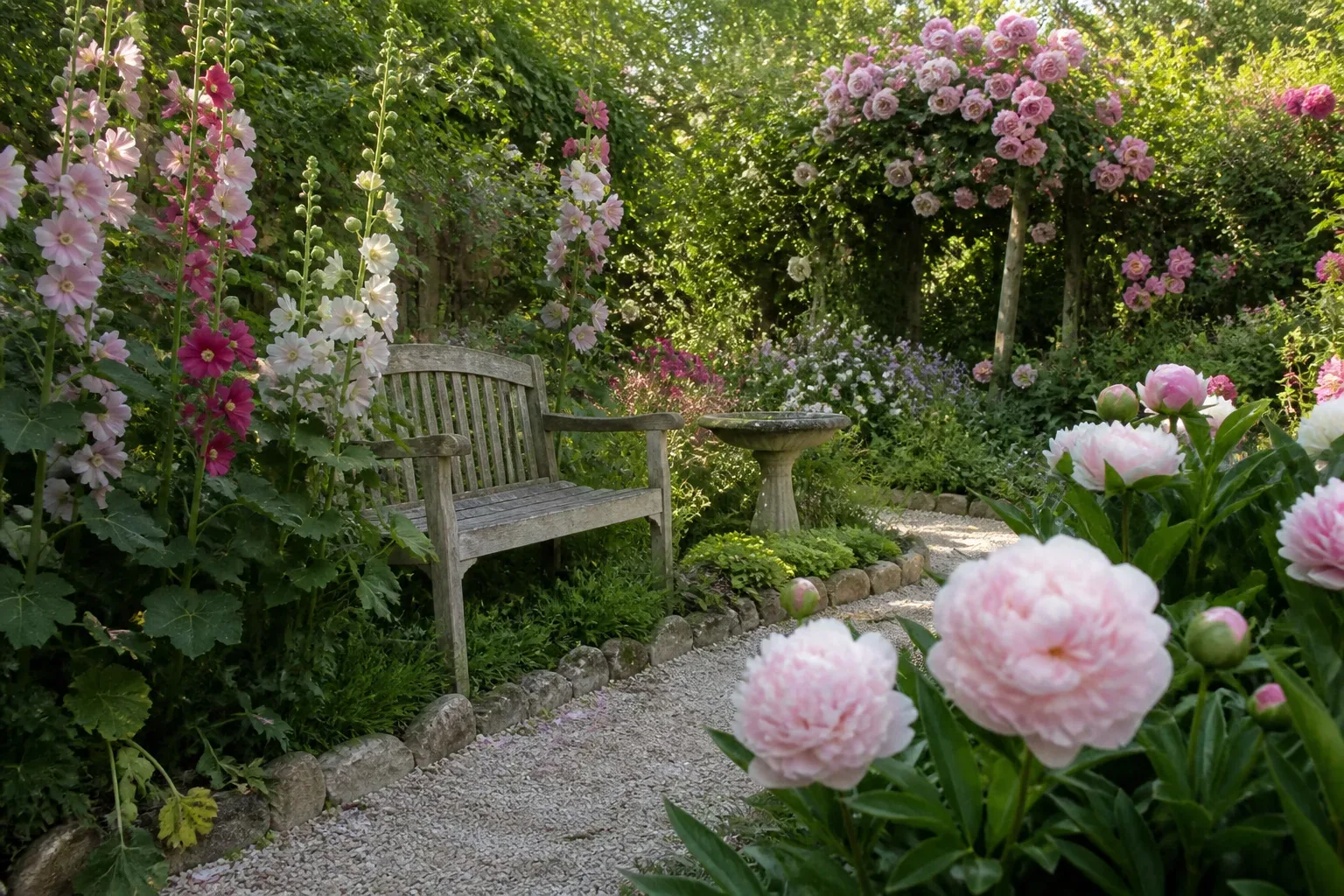
RHS guidance specifically cautions against plants that need intensive pruning, fast-growing hedges, fine lawns, and repeated temporary plantings when the goal is lower maintenance. Fine Gardening reaches a similar practical conclusion from another direction: choose plants suited to the region’s water pattern, establish them with temporary irrigation, and use mulch to suppress weeds and conserve moisture (Fine Gardening).
Keep the bones, loosen the pruning
You do not have to turn a formal garden into an unstructured jungle. Keep one strong line—a path, a hedge, a small lawn, or a repeated evergreen—and relax the rest. Replace a row of identical high-maintenance shapes with a few shrubs at their mature size, then layer in perennials or grasses with different heights and bloom times.
Before planting, look up mature width and seasonal behavior. A plant that fits a two-foot border in its nursery pot may need constant cutting when it reaches six feet. Use slower-growing plants near walks and windows, reserve vigorous plants for places where they can spread, and leave enough space for a mower or wheelbarrow to pass without pruning becoming the path.
A lower-maintenance replacement plan
The safest yard renovation is not a weekend demolition. It is a small experiment that exposes the new work while the old feature still gives you a baseline. You can then keep the parts that function and change the parts that do not.
Start with one pilot area
Begin with the section that is least useful and most annoying: a narrow side yard, a hot lawn strip, a groundcover edge that has swallowed the path, or a raised bed you cannot reach. Photograph it, note how much time it takes for one season, and identify the task you want the redesign to eliminate.
Next, fix access and infrastructure before adding plants. Put paths where you naturally walk, bring water close to the planting, remove buried obstacles, and make the mature footprint visible with a hose or stakes. A beautiful feature in the wrong place remains a chore.
Plant in layers rather than filling every inch. Use a small number of climate-appropriate plants with similar water needs, mulch the open soil, and leave inspection space around trunks, valves, drains, and the house. The first year will still require watering and weeding; judge the design after establishment, not after the planting party.
Only expand after the pilot survives your busiest month. If it needs more attention than the feature it replaced, the problem is useful information: change the plant list, simplify the edge, improve irrigation, or choose a different job for that part of the yard. A lower-maintenance landscape is not one with no work; it is one whose work is predictable, accessible, and worth doing.
Use a simple scorecard at the end of that first season: hours per month, gallons or watering trips, awkward movements, emergency repairs, and enjoyment. The last measure matters because a garden that produces food, shade, habitat, or a place to sit can justify some work. If a feature scores poorly on every measure, remove it with confidence; if it scores well on enjoyment but poorly on labor, redesign the access or equipment before you remove the experience.
Conclusion
The six yard features most likely to fall out of favor are not automatically large lawns, ground covers, in-ground gardens, vertical gardens, ponds, or formal landscaping. They are unexamined versions of those features—installed for appearance, mismatched to the site, or maintained by a homeowner whose time and access have changed.
Keep turf where it earns its space, use ground cover with boundaries, raise beds for a real access or soil problem, choose trellises over thirsty wall pockets, design water features for ecological balance, and keep formal structure without demanding constant clipping. Start with one pilot area, measure the actual work, and let the yard become easier because the design fits your life—not because a trend says one feature is permanently out.



