How to Grow Painted Daisies: Planting and Care Guide
Get practical painted daisy care advice for planting, watering, heat stress, pests, and winter, plus cultivar choices and ways to encourage more flowers.
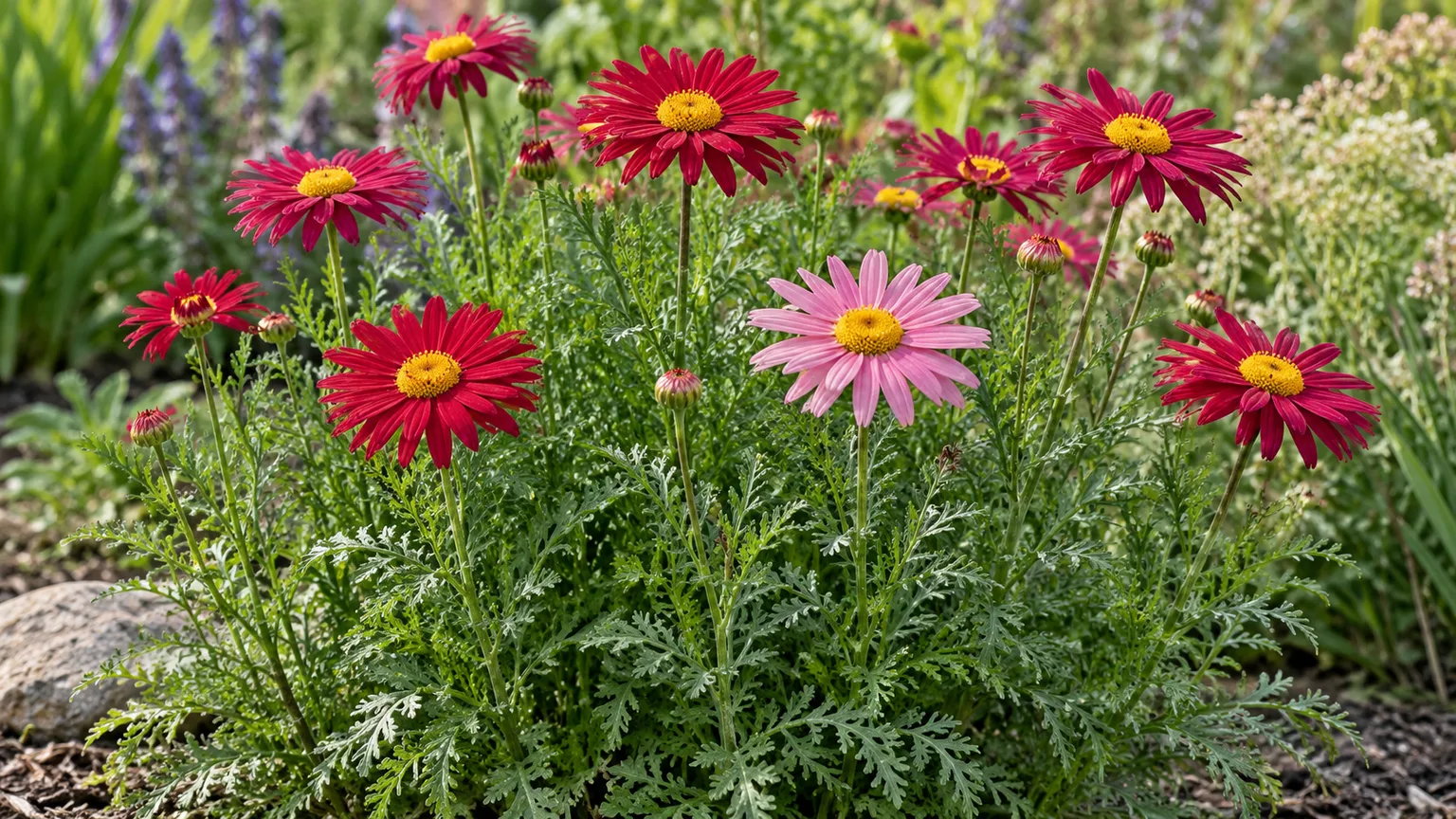
Painted daisies are cool-climate perennials with ferny foliage and flat, yellow-centered flowers in red, magenta, pink, or white. Give them a bright site with soil that drains after rain, then keep the root zone evenly moist while plants establish. Their best flowering usually comes in late spring or early summer; hot afternoons, soggy soil, or an overgrown clump can shorten the show.
The useful care distinction is that painted daisies like moisture but not wet roots, and they like sun but can wilt when heat builds. A little observation solves more problems than a fixed watering or feeding schedule: check the soil, note whether wilt lifts in the evening, and look at the crown before reaching for fertilizer or pesticide.
Painted Daisy at a Glance
| Feature | What to expect |
|---|---|
| Botanical name | Tanacetum coccineum (also treated as T. coccineum subsp. coccineum) |
| Habit | Clump-forming herbaceous perennial |
| Typical size | About 1–3 feet tall; roughly 1–2 feet wide, depending on cultivar and conditions |
| Flowers | Single daisy-shaped heads with a yellow disk and red, pink, magenta, or white rays |
| Bloom | Usually late spring into early summer; a second flush is possible after deadheading in favorable weather |
| Light | Full sun in cooler regions; afternoon shade can help where summers are hot |
| Soil | Moist but well-drained; sandy or loamy soil is easiest |
| Hardiness | NC State Extension lists USDA zones 3–7 |
| Uses | Cottage borders, cutting gardens, containers, and pollinator plantings |
The plant forms a leafy mound first, then sends up wiry flower stems. It is a clump former rather than a runner, so a fading center or smaller blooms usually call for division or better growing conditions rather than a battle against aggressive spread. For regional expectations, the NC State Extension Gardener Plant Toolbox profile lists the plant as a perennial for zones 3–7 and notes its flower, foliage, and propagation traits.
Identify the Right Pyrethrum
Common names make this group confusing. Painted daisy is Tanacetum coccineum, formerly classified as Chrysanthemum coccineum. It is related to the plants called pyrethrums, but a nursery label that only says “pyrethrum” may refer to a different species, hybrid, or seed mixture. Check the botanical name when you want this particular perennial and its pink-to-red single flowers.
The name also creates an easy but misleading pest-control assumption. NC State notes that painted daisy produces pyrethrins, while the Epic Gardening growing guide distinguishes it from T. cinerariifolium, the species primarily used as a commercial pyrethrin source. A painted daisy in a border should be treated as an ornamental, not as a reliable way to control insects; do not make homemade sprays from its flowers or assume nearby plants are protected.
Choose a Site That Fits Your Summer Climate
In a mild or cool summer, choose a spot with at least six hours of direct sun. Strong light supports sturdy stems and abundant flowers. In a hot-summer garden, prioritize morning sun with light afternoon shade; the plant can tolerate partial shade, but deep shade tends to produce loose foliage and fewer flower stalks.
USDA hardiness zones describe winter cold, not the whole climate. A garden can be within the listed zone range and still have long, hot, humid summers that stress this plant. If your afternoons routinely run hot, site it where a fence, shrub, or open-canopy tree filters late sun without leaving the foliage in dense shade. Air movement matters in humid regions because crowded, constantly damp leaves stay wet longer.
Do not diagnose every droop as thirst. Painted daisy foliage can sag temporarily during the hottest part of the day even when the soil is damp; if it recovers in the evening, shade and cooler conditions may matter more than additional water. Persistent wilt the next morning deserves a soil check and a look at the crown.
Prepare Soil That Drains Reliably
Aim for soil that holds some moisture but sheds excess water. Sandy loam or ordinary garden loam with organic matter is a good starting point. The RHS profiles for ‘Robinson’s Red’ and ‘Eileen May Robinson’ both favor full sun and well-drained conditions; the latter advises avoiding wet, heavy soil.
Before planting, water the site or observe it after rain. If water still ponds hours later, move the plant to a raised bed, a slope, or a container rather than trying to fix heavy clay with a small handful of grit. For a bed, loosen a broad area and blend in compost to improve structure; do not create a tiny, highly amended planting pocket that drains differently from the surrounding clay. Keep mulch shallow and clear of the crown so stems do not sit in damp material.
Water to Keep Roots Evenly Moist, Not Wet
Water newly planted daisies deeply enough to wet the root ball and adjacent soil, then let the surface begin to dry before watering again. During the first growing season, check every few days in warm weather because small transplants have not yet explored the surrounding soil. After the plant is established, rainfall may be sufficient in a temperate summer, but water during a prolonged dry spell when the soil is dry several inches down.
Use your finger or a narrow trowel to check below the surface. If the upper inch is dry but the root zone remains cool and slightly moist, wait; if soil at root depth is dry and crumbly, water slowly at the base. A thorough morning soak is more useful than frequent splashes that wet only the foliage. In pots, check more often because a limited volume of mix dries faster than a garden bed.
Fertilizer is usually a smaller lever than drainage and light. Start with compost worked into the bed; if growth is weak despite good conditions, use a balanced, slow-release fertilizer at the label rate rather than a heavy dose of nitrogen. Too much nitrogen can favor leafy, floppy growth over firm flowering stems. If you suspect a nutrient problem, test the soil before adding a specialized high-phosphorus product.
Plant Nursery-Grown Daisies in Spring
Plant nursery starts after the ground is workable and severe frost has passed, or in early autumn where roots have time to settle before hard freezes. Spring planting is the simpler choice in colder regions because it gives the crown a full growing season to establish. Set the root ball at the same depth it grew in its pot, firm soil around it, and water well to close air gaps.
Space plants about 18–24 inches apart for airflow and mature spread; follow the cultivar label if it specifies a different size. The closer end of that range works in a small border that you plan to divide regularly, while wider spacing is safer in humid climates. Keep the crown at soil level. Planting it too deep can trap moisture around the base and make establishment harder.
Before planting a row or a large group, observe the spot through a warm afternoon rather than judging it only in the morning. A bed that gets early sun and then bright shade may suit a hot-summer garden better than a location with blazing late-day exposure. In a cool, breezy garden, the sunnier position usually gives the stems enough light to stay compact and flower well.
Grow Painted Daisies From Seed
Seed is a cost-effective way to fill a bed, but seed-grown plants can vary in color and vigor. If you want a particular named cultivar, buy a plant carrying that label or propagate an established clump; a mixed packet will not guarantee that every seedling matches the parent. Expect a small seedling to spend its first season building roots and foliage before it produces its fullest display.
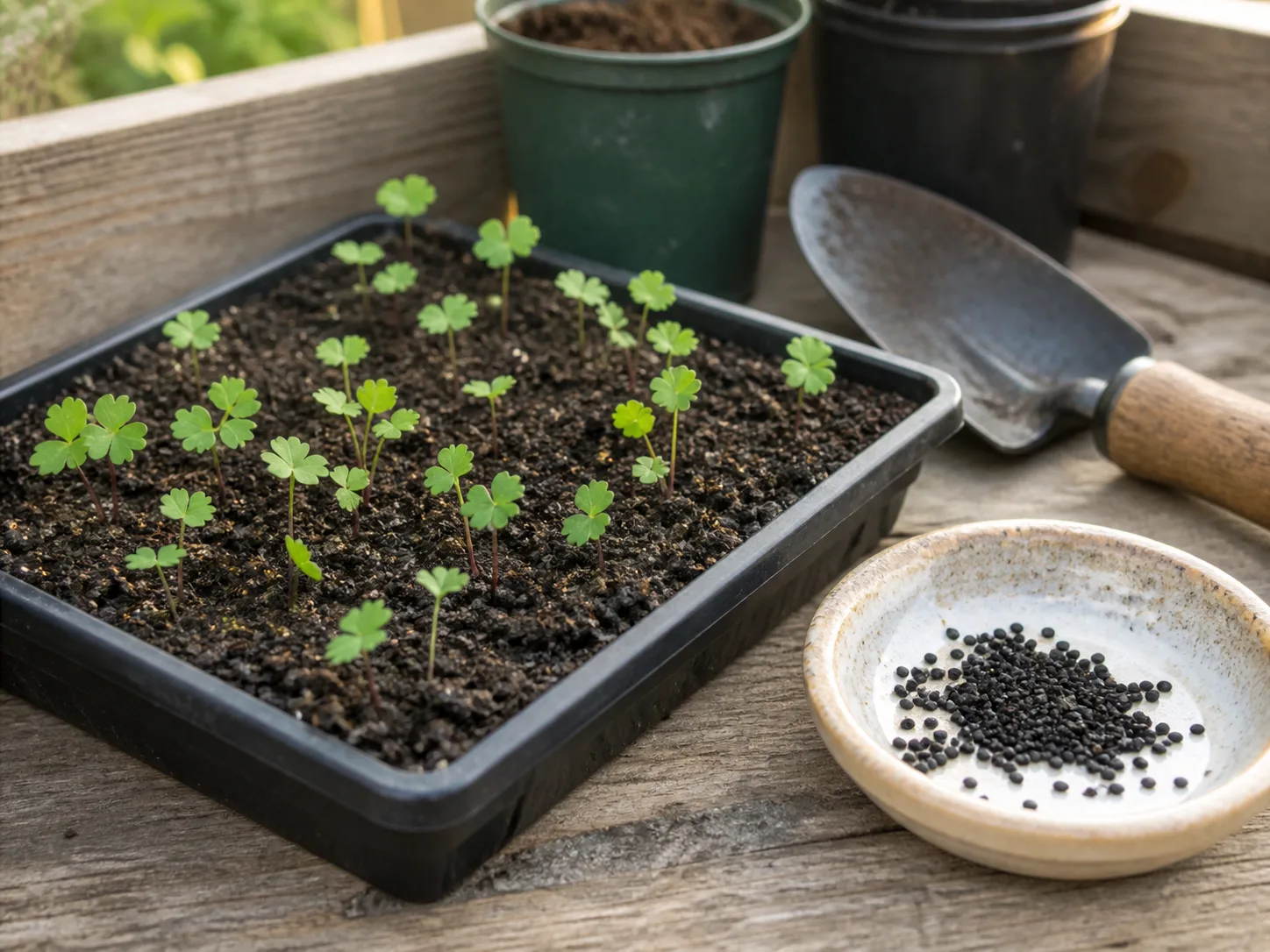
Start indoors about six to eight weeks before your average last frost, or sow outdoors after frost danger has passed and soil has warmed. Use clean seed-starting mix in trays with drainage holes. Scatter the small seeds on the surface or cover them only lightly according to the seed packet; deep burial and a crusted, dry surface both make emergence harder. Keep the mix evenly moist, not waterlogged, and provide bright light once seedlings emerge.
When seedlings have several true leaves, pot them on if crowded. Harden them off over about a week by increasing their outdoor exposure gradually, then plant them at the same depth they grew in the pot. Direct-sown seedlings also need thinning: leave enough space for mature airflow rather than letting a carpet of seedlings compete for light and moisture. The seed and propagation section in Epic Gardening’s guide offers practical timings, but follow your own seed supplier’s depth instructions because seed lots and sowing systems differ.
Handle young roots gently when transplanting. If roots are circling the bottom of a cell, tease only the outermost layer loose; pulling the whole root mass apart can set a small seedling back. Water the tray before moving seedlings, plant on a cloudy day or in late afternoon, and keep them out of strong direct sun for the first day or two. Once new leaves resume growth, treat them like established plants and gradually increase their exposure to the site’s normal light.
Pinch Early Growth and Deadhead for More Flowers
Pinching is useful only while the plant is still making leafy growth. Once new shoots reach roughly 6–8 inches, pinch the tips once to encourage branching and a bushier mound. Stop pinching as flower buds begin to form; continuing to remove growing tips at that stage delays the display and can remove the very stems you want to bloom. This is an early-season shaping step, not repeated shearing.
Painted daisies generally flower in late spring or early summer, with timing shifting by latitude, weather, and cultivar. To deadhead, follow each spent flower stalk down to a healthy set of leaves or a side shoot and cut just above it. This keeps the clump tidy and may prompt additional side blooms. A second flush is most plausible when the plant is not heat-stressed and the first flowering ends early enough for fresh shoots to mature; do not promise continuous summer color in a hot climate.
For cut flowers, harvest stems when the outer petals have opened and the centers still look fresh. Use clean snips and place stems in water promptly. Leave enough flower stalks for pollinators and seed if you want to observe the plant’s natural cycle, but remove diseased or collapsed stems rather than leaving damp debris packed against the crown.
Choose a Cultivar by Color and Garden Use
Named cultivars help you select color and approximate size, though actual height depends on soil, light, and growing season. The RHS ‘Eileen May Robinson’ profile describes light-pink flowers and a mature height around 75 centimeters; its ‘Robinson’s Red’ profile describes dark pink-red blooms with yellow centers. NC State also lists ‘Brenda,’ ‘James Kelway,’ ‘Mont Blanc,’ and ‘Mrs. James Kelway’ among common varieties.
| Cultivar or group | Typical flower color | Best reason to choose it |
|---|---|---|
| ‘Brenda’ | Magenta pink with yellow center | Strong saturated color in a cottage border |
| ‘Eileen May Robinson’ | Light pink with yellow center | Softer color and a tall cut-flower stem |
| ‘James Kelway’ | Red to scarlet | A bold contrast against pale flowers |
| ‘Mont Blanc’ | White with yellow center | A calmer palette that still has the species’ fine foliage |
| ‘Mrs. James Kelway’ | Cream aging toward pink | A subtler, changing flower tone |
| Robinson’s mixture | A range of pink, red, and white | A varied bed when exact color is not essential |
Treat bloom-color descriptions as a guide, not a guarantee for seed-grown plants. Nursery labels are the safer route when color is important, and a division preserves the traits of the clump you already know performs well.
Divide a Mature Clump Without Weakening It
Divide painted daisies when the center thins, the clump becomes crowded, or flowers get noticeably smaller despite suitable light and soil. Spring, as new growth begins, is a practical time because the divisions can re-establish before flowering. The RHS recommends spring division for painted daisy cultivars, and the general approach is to retain healthy roots and shoots in each piece.
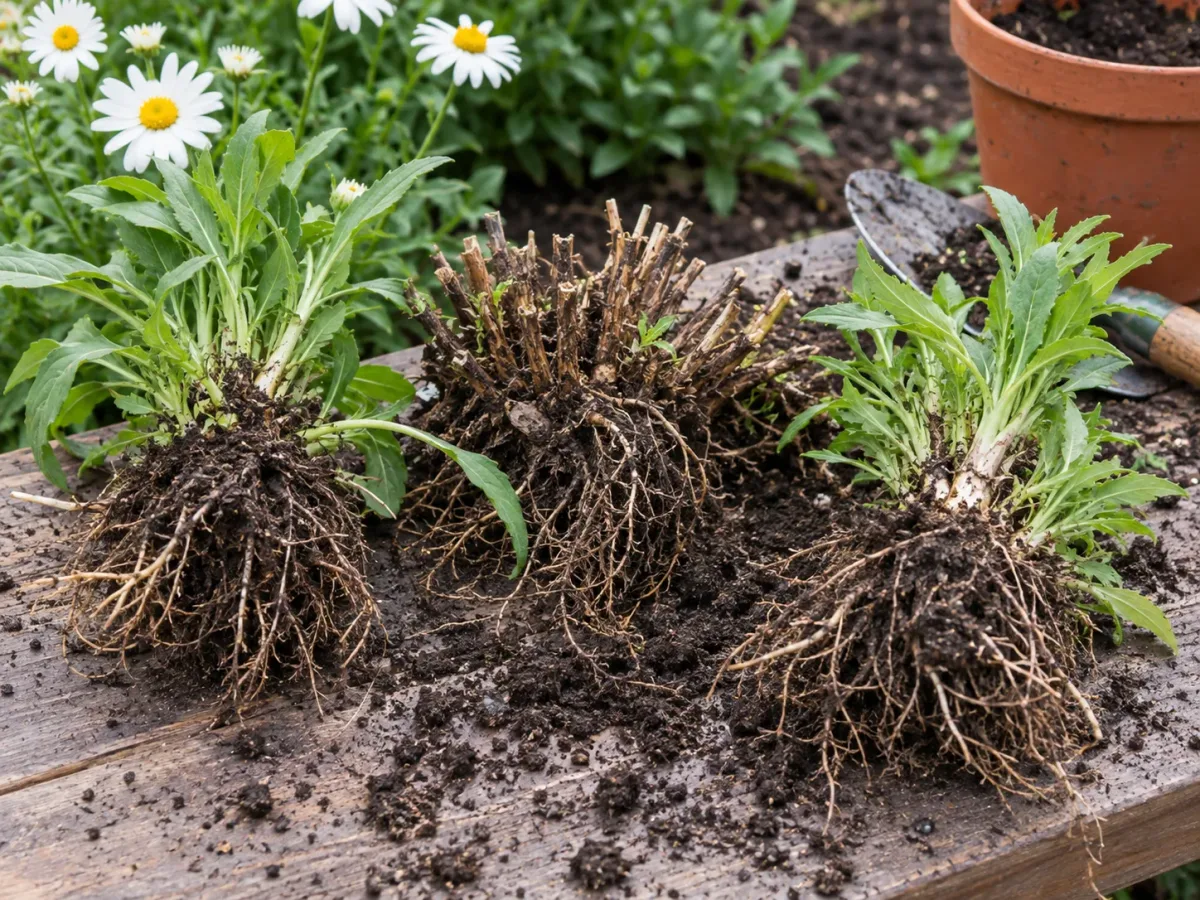
Water the clump the day before if the soil is dry. Lift the root mass with a fork, shake away loose soil, and separate it into sections with several live shoots and a substantial set of roots. Discard dead, mushy, or badly depleted central pieces; do not turn one strong plant into many weak fragments. Replant divisions promptly at their former depth, water them in, and keep the soil evenly moist while new roots take hold.
Avoid dividing during a heat wave or while the plant is in full flower. If you must move it outside spring, reduce foliage and flower demand modestly, keep the root ball intact, and give the transplant temporary afternoon shade. Basal cuttings are another option, but division is usually the straightforward method for a mature garden clump.
Grow Painted Daisies in Containers
Choose a pot with generous drainage holes and enough volume to hold the root ball plus space for a season of growth. A small cultivar is easier to manage, but avoid an undersized pot that dries by midday. Use a free-draining potting mix; a dense garden soil in a container tends to remain wet while the exposed sides of the pot heat up.
Place the pot where it gets strong morning light and, in hot regions, shelter it from the most intense afternoon sun. Check moisture more often than you would in a border, lifting the pot or probing the mix when unsure. Water until excess drains from the bottom, then empty any saucer so roots are not left in standing water. Refresh or divide the plant when roots fill the container and flowering declines, rather than repeatedly moving it into a much larger pot.
A container also makes winter hardiness less predictable: roots in a pot experience colder swings than roots insulated by garden soil. In a cold region, group pots beside a sheltered wall or move them to an unheated protected space after dormancy, keeping the mix barely moist rather than bone-dry or saturated. Avoid bringing a dormant perennial into a warm room, where it may break growth without enough light.
Diagnose Common Painted Daisy Problems
Start with the pattern: when the symptom appears, whether the soil is wet or dry at root depth, and whether it affects old leaves, new growth, or the whole plant. One yellow leaf is not enough to diagnose a nutrient deficiency, and a drooping stem does not automatically mean the plant needs water.
Separate Heat Wilt From Water Stress
If leaves droop only on a hot afternoon but recover by morning, the plant may be losing water faster than roots can replace it. Keep the root zone consistently moist, add afternoon shade, and avoid watering the foliage as a substitute for fixing site heat. If the plant remains wilted at dawn, test the soil: dry soil calls for a deep watering, while wet soil points to poor drainage or damaged roots.
Flower stems that flop while foliage remains green often indicate excessive moisture, rich nitrogen, shade, or a naturally tall cultivar. Improve light and avoid overfeeding; a discreet support ring can hold stems without tying them into a tight bundle. Do not keep adding water to a plant whose soil is already saturated.
Check Leaves and Crowns for Disease
Powdery mildew looks like a pale dusty coating on leaves, while root or crown rot is more likely when the base turns soft, dark, or foul-smelling and the plant declines in persistently wet soil. Give plants room for air movement, water near the soil rather than over the foliage, and remove affected debris. If rot is advanced, correcting the drainage and replacing the plant may work better than trying to rescue a collapsed crown.
Look for Aphids, Leaf Miners, and Mites
Inspect the undersides of young leaves and the tender tips for aphids; look for winding pale trails if leaf miners are suspected, and fine stippling or webbing when mites may be present. Confirm that pests are active before treatment. A strong water stream can dislodge a small aphid colony; for other problems, identify the insect and choose a product labeled for that plant and pest, following its directions and pollinator precautions. The presence of pyrethrins in the plant is not a reason to spray homemade extracts or apply insecticide preemptively.
Overwinter Plants and Maintain a Healthy Clump
In zones 3–7, an established plant can return after winter when its crown has good drainage. After frost has browned the foliage, cut back dead stems in late autumn or leave them until early spring if winter structure is useful in your garden. In exposed or exceptionally cold sites, a light mulch after the ground cools can reduce freeze-thaw disturbance; pull it back from the crown when growth resumes.
If your summers are very hot or humid, survival from one winter to the next may be less reliable than the zone number suggests. Treat a weak return as a site-fit signal: improve drainage and afternoon shade, divide a crowded clump, or replace it with a plant better suited to persistent heat. The RHS cultivar profiles list good drainage as a key condition, while NC State’s zones offer a useful but not absolute winter-hardiness range.
Handle Painted Daisies With Care
Wear gloves when pinching, deadheading, dividing, or cutting stems. NC State flags low-severity poison characteristics and notes that foliage and sap can irritate skin; RHS profiles likewise warn that contact may cause skin irritation or allergies. Wash hands and tools after handling, avoid touching your eyes, and keep cuttings and plant parts away from children and pets that might chew them.
If a person or animal eats the plant, contact a poison-control or veterinary professional for advice rather than trying a home remedy. The practical point is not to panic over a garden planting; it is to avoid ingestion and direct skin exposure, especially for anyone with sensitive skin.
Conclusion
Painted daisies are at their best in a bright, freely draining bed where their roots stay lightly moist and their crowns do not sit wet. Plant or divide them in spring, pinch only while shoots are young, and deadhead selectively when you want the clump to stay tidy or try for another round of flowers.
When a plant wilts, check soil moisture and timing before watering; afternoon recovery suggests heat, while persistent decline in wet ground suggests a root problem. Choose a named cultivar if color matters, give hot-summer plants afternoon relief, and handle the foliage with gloves. Those small choices do more for a healthy, returning clump than a rigid fertilizer or pruning calendar.



