23 Patio Garden Ideas for Spring Containers and Beds
Twenty-three patio garden ideas for spring—containers, raised beds, vertical walls, and themed planting—plus sun, drainage, and pot-size rules so the look lasts past May.
A patio is not a consolation prize for gardeners without a lawn—it is a controlled stage. Hardscape gives you edges, elevation changes, and seating zones that in-ground beds rarely offer. The catch is physics: roots sit in a small volume of soil that heats, dries, and freezes faster than anything in the earth. Patio garden ideas that only look good in a March photo fail by July unless you match plants to measured sun, real drainage, and how you actually use the space for grilling, lounging, and hauling trash cans.
The 23 ideas below are grouped by what you are trying to solve—containers, vertical height, ground-level planting, mood, focal drama, or outdoor living—not by whatever looked pretty on a design feed. Start with the audit, pick two or three ideas that fit your light and maintenance budget, then use the spring calendar so bulbs, herbs, and summer annuals land at the right time.
Start With a Five-Minute Patio Audit
Before you haul home flats of petunias, answer four questions on your phone. How many hours of direct midsummer sun hit your main growing spots at 8 a.m., noon, and 4 p.m.? South- and west-facing patios bake; north entries stay cool. Count beams, not general brightness. Full sun means six or more hours of direct sun. Part sun is roughly three to six hours. Full shade is less than three—reflected light helps but does not replace a sunbeam on leaves.
Second, where does water go when it rains? Low corners against the house, pots without holes, and saucers left full all winter kill more patio plants than forgetful watering. The RHS stresses that drainage holes are essential and that winter waterlogging is a common killer when trays are left in place.
Third, map traffic: door swing, grill path, hose reach, garbage rollout. Gardens that fight daily movement get trampled. Fourth, on balconies and roof decks, note weight limits—wet soil in large ceramic pots adds up fast. Only then shop.
Map Sun Hours, Drainage, and Daily Traffic
Place an empty pot (or a box the same size) where you plan to grow. On a clear summer day, note whether direct sun hits it at your three check times and add the hours. Write the number down before the nursery. Afternoon sun is harsher than morning sun—shade lovers may tolerate eastern exposure but cook on a western railing.
For drainage, tip water into the spot after rain. If it pools for hours, raise pots on bricks or pot feet and skip sunken saucers in winter. Drill holes in any decorative pot that lacks them—the RHS lists functional drainage as non-negotiable for almost all container plants.
Match Pot Size and Weight to Your Hardscape
Large containers hold more compost, dry out more slowly, and look better with fewer, bigger pieces than a clutter of tiny pots. The RHS recommends fewer large pots over many small ones for easier maintenance. Tall, narrow pots blow over in wind—add a layer of stones in the base for ballast and tuck them in a sheltered corner.
For long-term shrubs and small trees, choose a pot only slightly larger than the rootball. Overpotting leaves excess wet compost around roots and invites rot. Match material to climate: unglazed terracotta breathes but cracks in freeze-thaw cycles unless rated frost-proof; plastic holds moisture longer and weighs less for balconies.
Container Ideas That Work on Any Patio
Most patios lean on containers at least somewhere. The ideas in this section—movable pot collections, large specimen planters, spring tulips, window boxes, and tall narrow pots for balconies—share the same rules: drainage holes, quality peat-free potting compost, and the thriller, filler, spiller formula Penn State Extension uses for balanced upright combos.
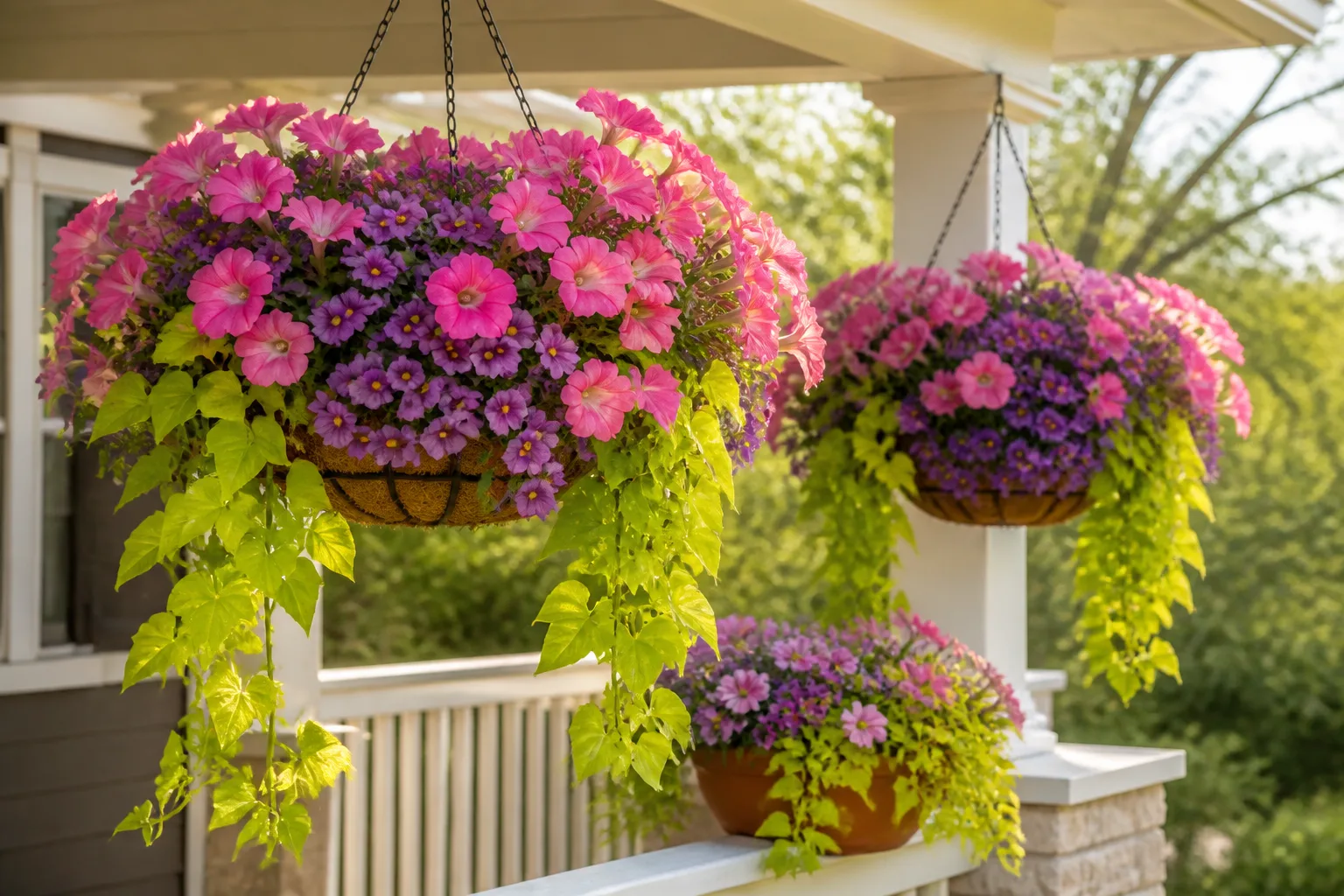
Thrillers add height and drama in the center or back. Fillers mound the middle. Spillers trail over the rim. Viewed from all sides, center the thriller and ring spillers around the edge. Viewed from one side, place the thriller at the back with fillers in front and spillers along the front lip.
Spillers, Large Specimens, and Movable Pot Collections
Idea 1 — Spillers along a retaining wall: Let trailing plants cascade over a low wall onto the patio edge. Siberian iris or upright perennials on the upper level give height; creeping jenny, trailing petunias, or sweet potato vine soften the lip. Secure pots on ledges if wind is an issue.
Idea 6 — Large container specimens: A single big pot with a panicle hydrangea, dwarf citrus, or ornamental grass reads as furniture-scale greenery. Large pots dry slower than small ones but still need a finger-test watering schedule—stick your index finger two inches into the soil; if dry, water. Morning watering beats scorching midday splashes on leaves.
Idea 7 — Rely on movable potted plants: Wheels or lightweight plastic tubs let you shift seating layouts, chase sun in spring, or pull pots under an eave before a frost. Group odd numbers of pots (three or five) for a designed look rather than a clearance-rack scatter.
Idea 5 — Surround yourself with plants: On a tiny urban patio, stack vertical layers—trellis vine on the wall, mid-height shrubs in corners, small pots on the step. Vary leaf size and color so the space feels lush without one flat green wall.
Tulips in Pots, Window Boxes, and Narrow Balcony Planters
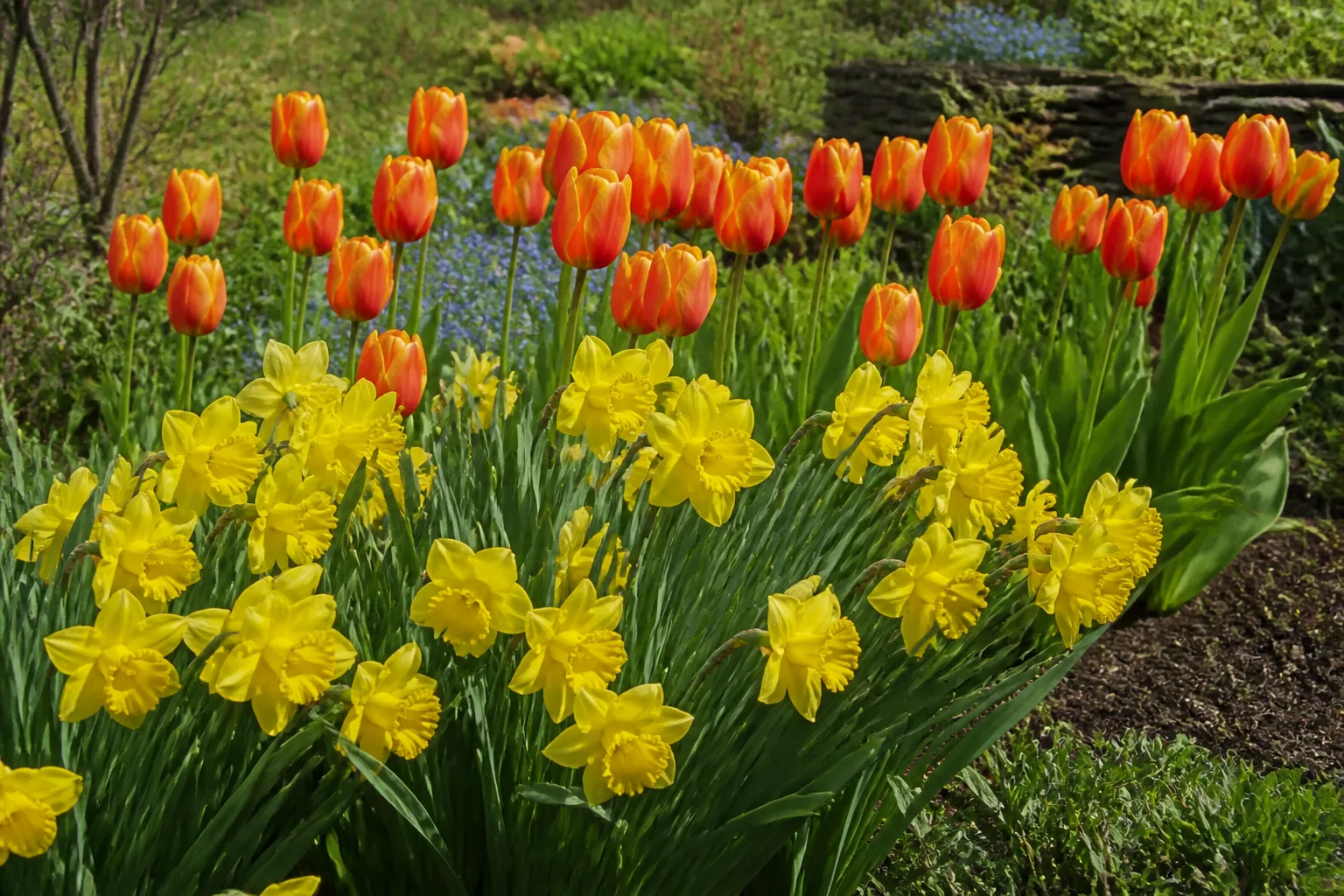
Idea 14 — Tulips in pots: You do not need a yard for spring tulip drifts. Plant bulbs in autumn in large pots with drainage holes, using quality potting mix. In cold climates, store pots in an unheated garage or against a north wall so roots get chill hours without repeated freeze-thaw in a saucer of ice water. Bring out after hard frost passes.
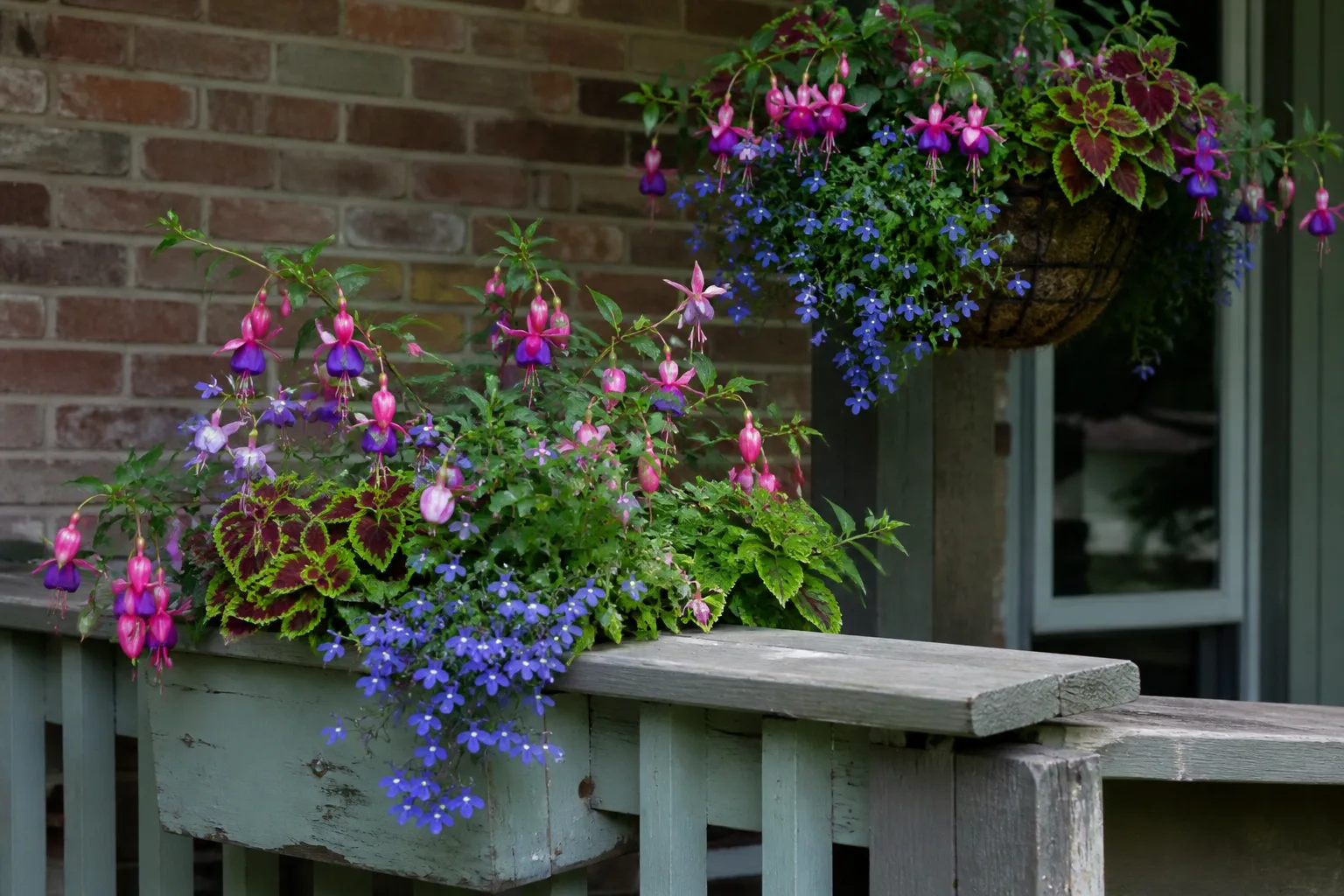
Idea 15 — Easy-care window boxes: Mount boxes on a railing or below a patio window for flowers at eye level without sacrificing floor space. Use a lightweight peat-free mix with slow-release fertilizer mixed in at planting. Window boxes dry fastest of all—check them daily in hot weather.
Idea 22 — Narrow potted plants for tight balconies: When only a bistro set fits, go vertical: columnar evergreens, slim citrus, African milk tree, or a single tall geranium in a tall narrow pot. One vertical plant beats three squat pots that block the walkway.
For deeper container rules—drainage, feeding, hardening off—see our container garden tips for beginners guide.
Raised Beds and Ground-Level Planting on Pavement
Not every patio is pots-only. A sliver of soil along a fence, a gravel strip, or a purpose-built box on hardscape expands root room and cuts watering frequency compared with a 10-inch tub.
Simple Raised Beds on Gravel or Pavers
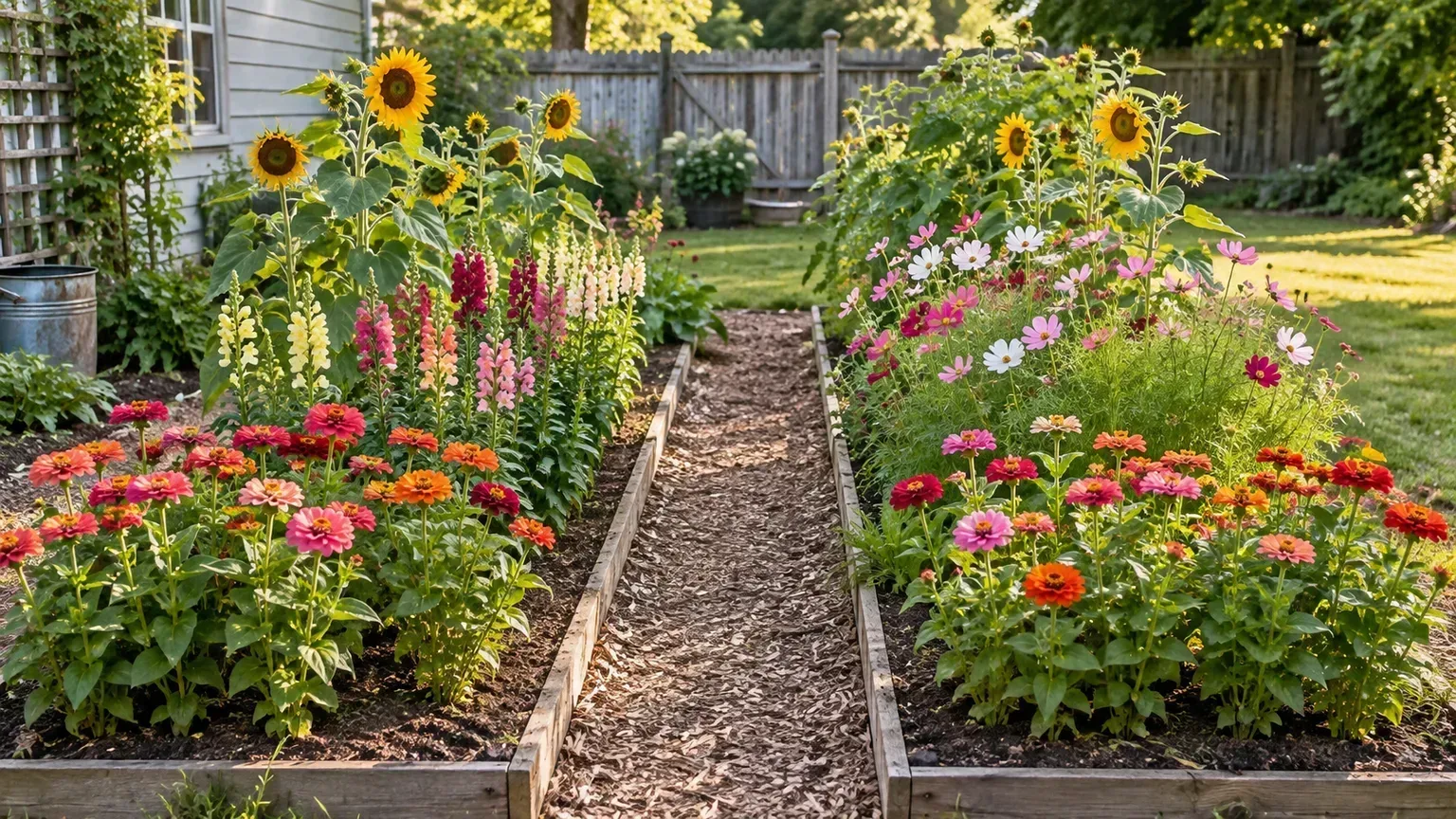
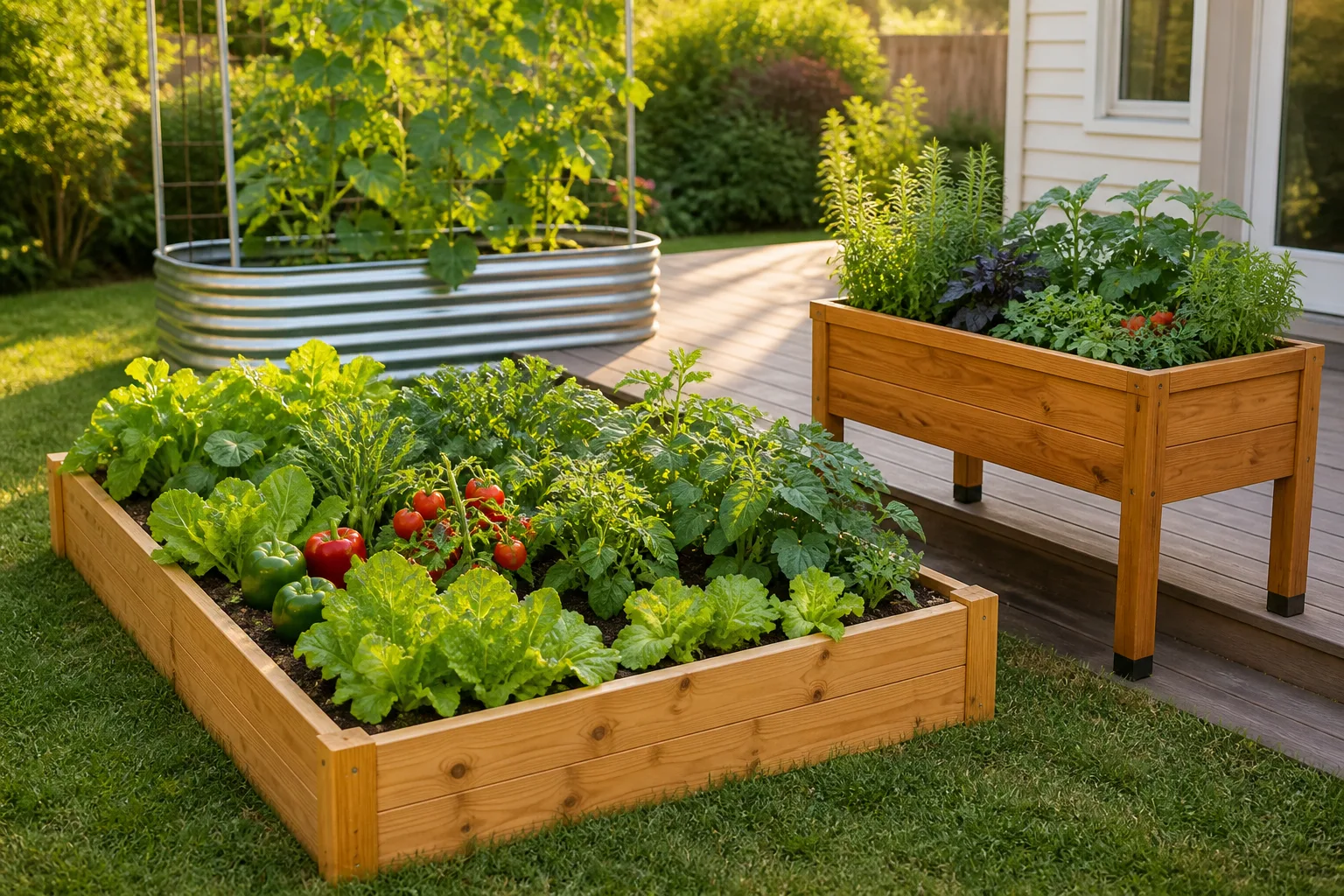
Idea 8 — Simplify with raised beds: A raised planter on a gravel patio gives 12–18 inches of root depth for lettuce, herbs, or compact flowers without digging into pavement. Use food-safe lumber or stock tanks with drilled drainage; sit the bed on gravel so water exits the bottom. Add a few clay pots beside the bed for seasonal color you can swap without rebuilding.
Raised beds on patios still need lining consideration—do not trap water against house siding. Leave an air gap or use a waterproof membrane on the house side if the bed sits flush to the wall.
Retaining-Wall Spillers and Edge Plantings
Idea 1 (ground-level version) — Retaining-wall spillers: If your patio steps down, plant the upper bed with perennials that arch over the wall face. Combine upright bloomers (iris, salvia) with trailing edges so the stone or block disappears behind soft growth by late spring.
Idea 10 — Soften straight lines with green textures: Angular concrete patios feel cold. Break geometry with one round shrub bed cut into a corner, ornamental grasses in a rectangular planter, or a single in-ground shrub where paving meets planting. Organic shapes balance rigid lines without filling every square foot.
Go Vertical When Floor Space Is Tight
When the floor is spoken for by furniture and a grill, grow up the walls and overhead.
Green Walls, Trellis Vines, and Layered Surround Plantings
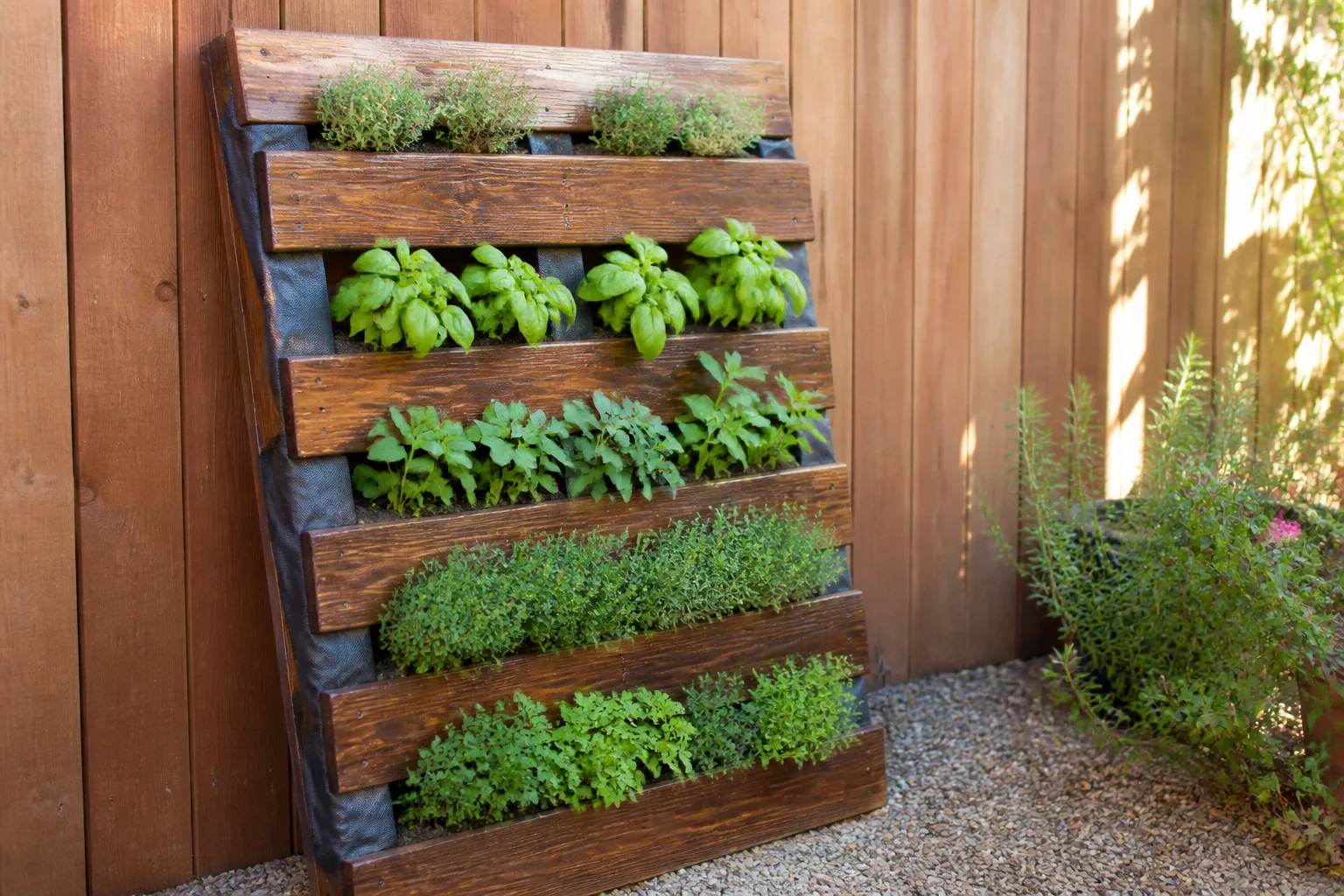
Idea 21 — Vertical green walls: Combine clipped hedges in narrow beds, espalier fruit on a fence, and wall-mounted planters. Climbing hydrangea or clematis on a trellis adds height without a wide footprint. Free-form grasses at the base blur the line between paving and planting.
Idea 5 (vertical emphasis) — Surround planting: Layer a trellis with a climbing vine, mid-height pots on either side of a bench, and low herbs on the step. The eye reads “garden room” instead of “furniture on concrete.”
Flowering Canopies and Wisteria Overhead Structure
Idea 3 — Define space with a canopy: A pergola or tension cable draped with wisteria, grape, or annual morning glory creates a seasonal ceiling. Know the maintenance cost—wisteria needs strong structure and yearly pruning so it does not lift lumber off posts. Plan bloom times so something flowers when the vine is between shows; spring bulbs in pots below extend the season.
Design Themes That Set the Mood
Once structure and sun are handled, theme planting pulls the patio together. These three moods—French country, tropical, and cottagecore—are popular for good reason, but each demands different light and water.
French Country Lavender and Stone-Edged Beds
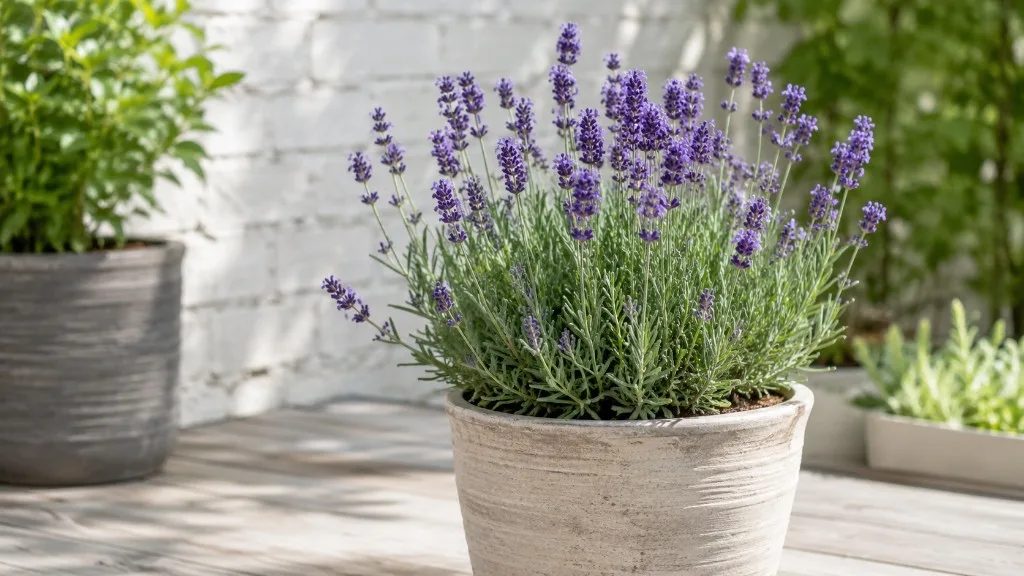
Idea 9 — Lavender for a French country look: Pair lavender with sun-baked stone or gravel and silvery herbs like rosemary. Lavender wants full sun and sharp drainage—raise beds or use gritty potting mix, never heavy clay in a flat saucer. The scent is a bonus on warm evenings and may help deter some flying insects near seating.
Tropical Foliage for Shade and Heat
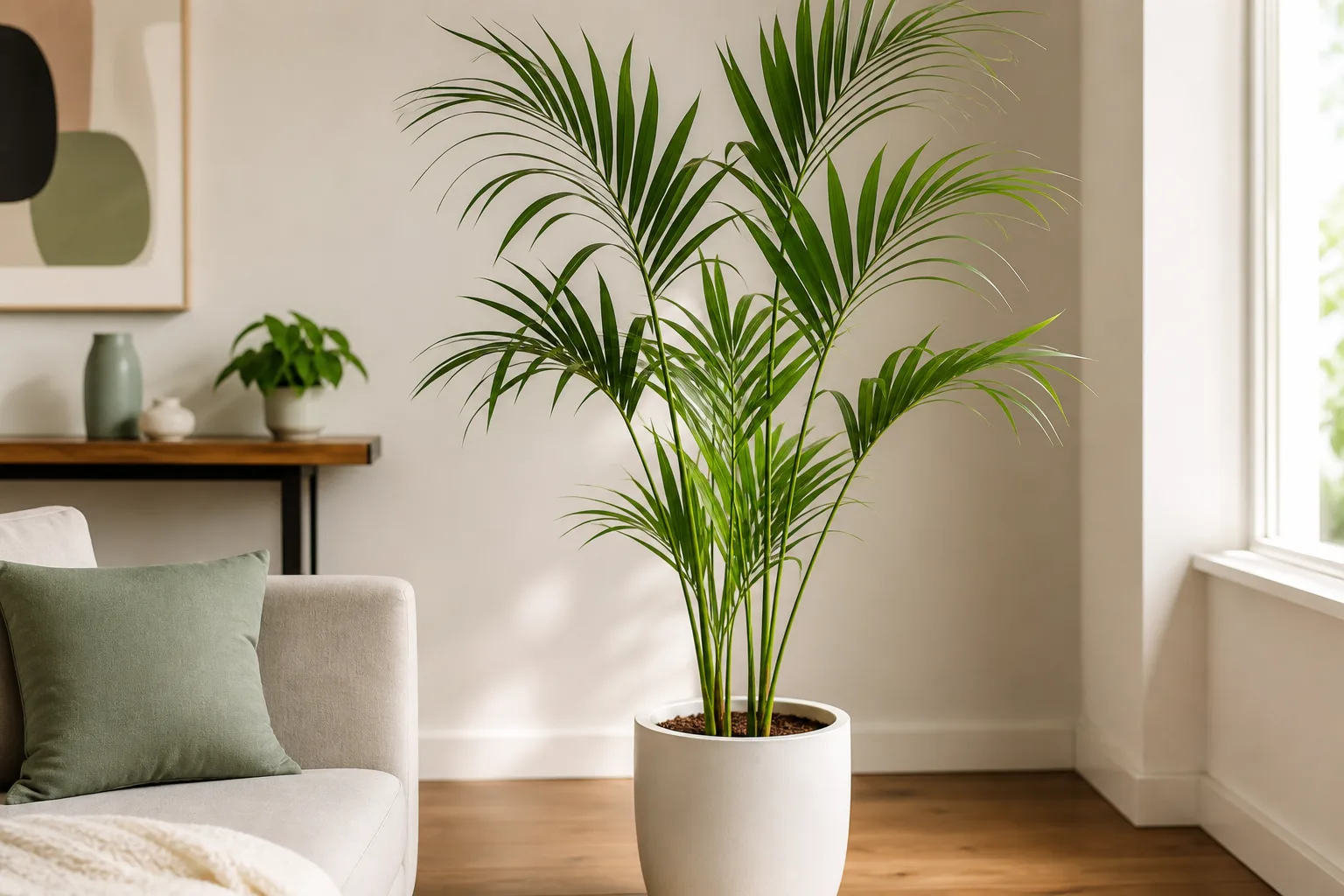
Idea 16 — Tropical paradise: Large-leaved palms, ferns, and cannas turn a shaded or humid patio into a cool green room. In hot dry climates, afternoon shade prevents leaf scorch; in cool zones, treat tropicals as seasonal container plants and move pots indoors before frost. A crape myrtle or hardy banana in a large pot gives height where winter allows.
Idea 2 — Palms to echo a water feature: Repeat the upright shape of a fountain or urn with a single sculptural palm in a glazed pot. Match scale—the fronds should relate to the water feature height, not tower awkwardly above it.
Cottagecore Hydrangeas, Herbs, and Flower Boxes
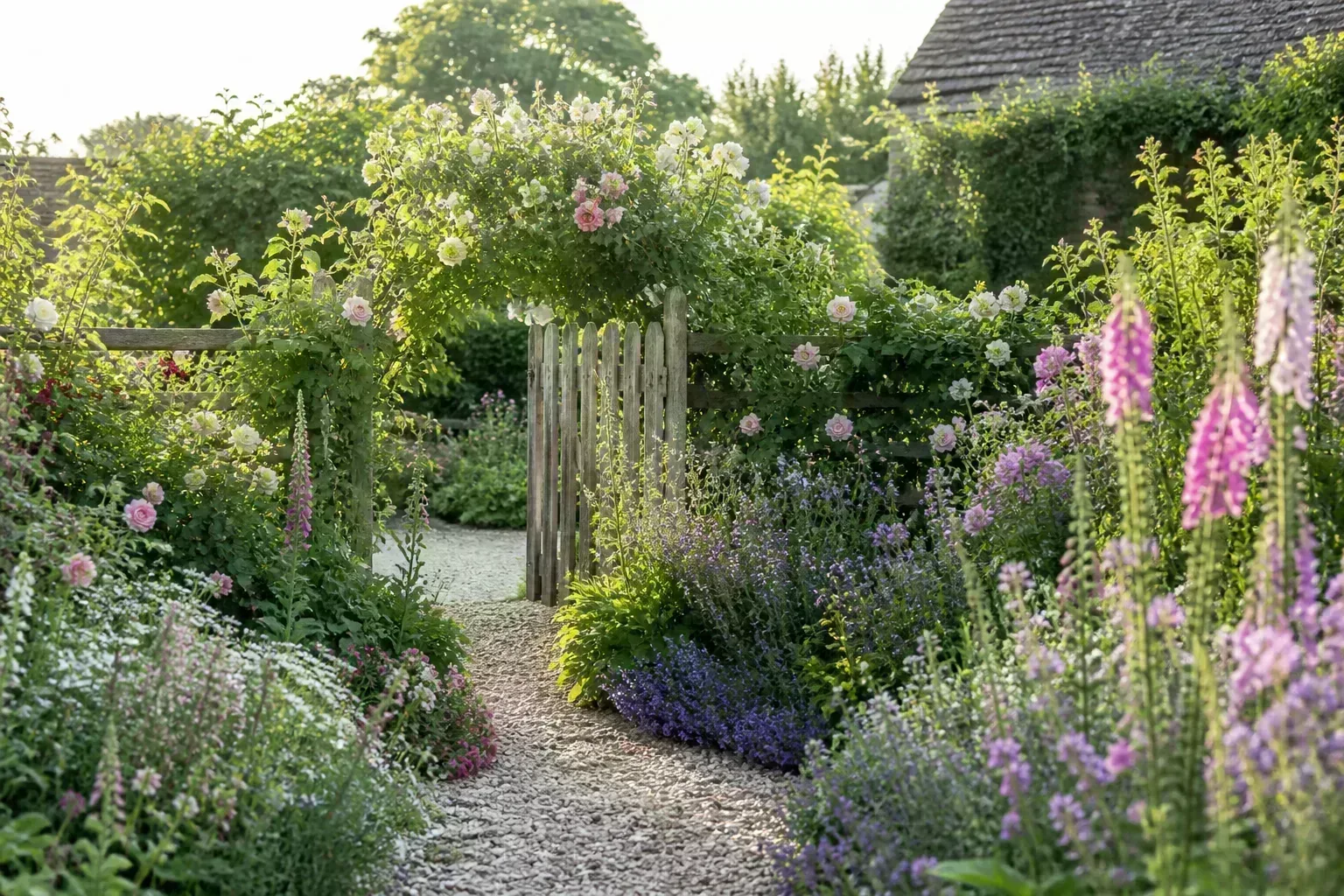
Idea 23 — Cottagecore style: Potted hydrangea, sweet woodruff, and herb-filled window boxes create a soft, nostalgic patio. Hydrangea color shifts with soil pH in some varieties—know your cultivar before chasing blue. Herbs in matching terracotta add fragrance; pinch flowers on basil if you want leaves for the kitchen.
Focal Points vs Quiet Background Planting
Some patios need one showstopper; others need a calm green backdrop for black-and-white furniture.
One Statement Vine or Tree
Idea 13 — One statement plant: A single flowering vine on a trellis, a mature Japanese maple in a large pot, or a standard rose can carry an entire patio if everything else stays neutral. Give the specimen the biggest pot you can move and the best sun on the patio—do not tuck your star behind the grill.
Colorful Foliage and Subtle Container Accents
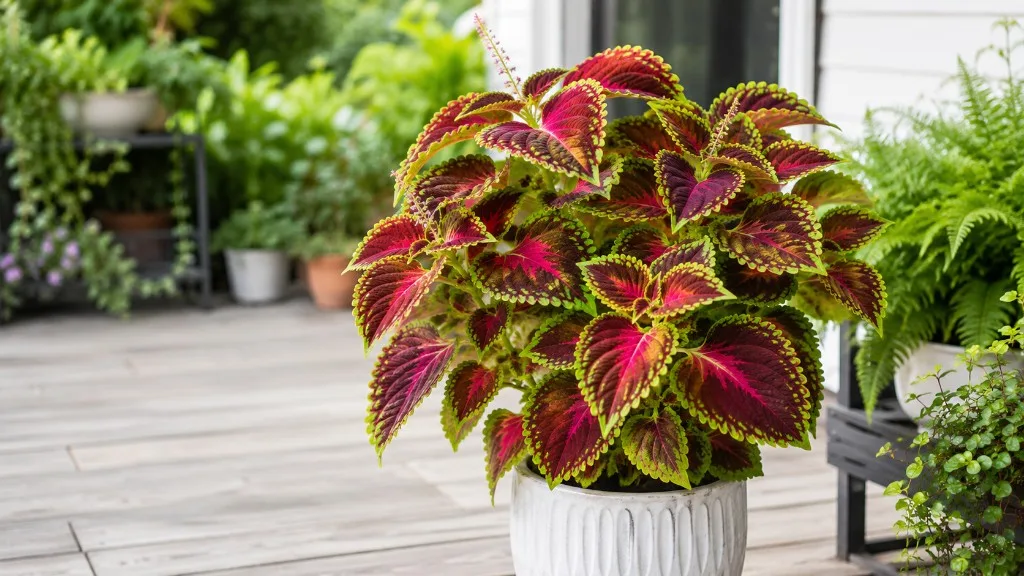
Idea 11 — Colorful foliage plants: Japanese maple, purple smoke bush, or coleus deliver season-long color without relying on blooms. Foliage-led pots shine in part shade where petunias struggle.
Idea 12 — Subtle background plantings: Sleek patios with strong furniture benefit from fine-textured greens—fern, asparagus fern, or small-leaved box in simple cylinders. Keep containers repetitive in material and color so plants whisper instead of shout.
Frame a Vista With Planters
Idea 4 — Create a vista: If your patio overlooks trees or a skyline, place colorful planters at the railing without blocking the view. Low, wide bowls of annuals draw the eye outward; tall plants at the sides frame the scene like curtain panels.
Functional Patio Gardens for Cooking and Dining
The best patio gardens earn their square footage by supporting how you live outside.
Herb Stations and Harvest Tables
Idea 17 — Culinary herbs by the grill: Group basil, thyme, rosemary, and parsley in pots on a work table or rail within arm’s reach of the cooking zone. Herbs want the sunniest spot you have—six or more hours for Mediterranean types. Mint gets its own pot; it bullies neighbors through drainage holes.
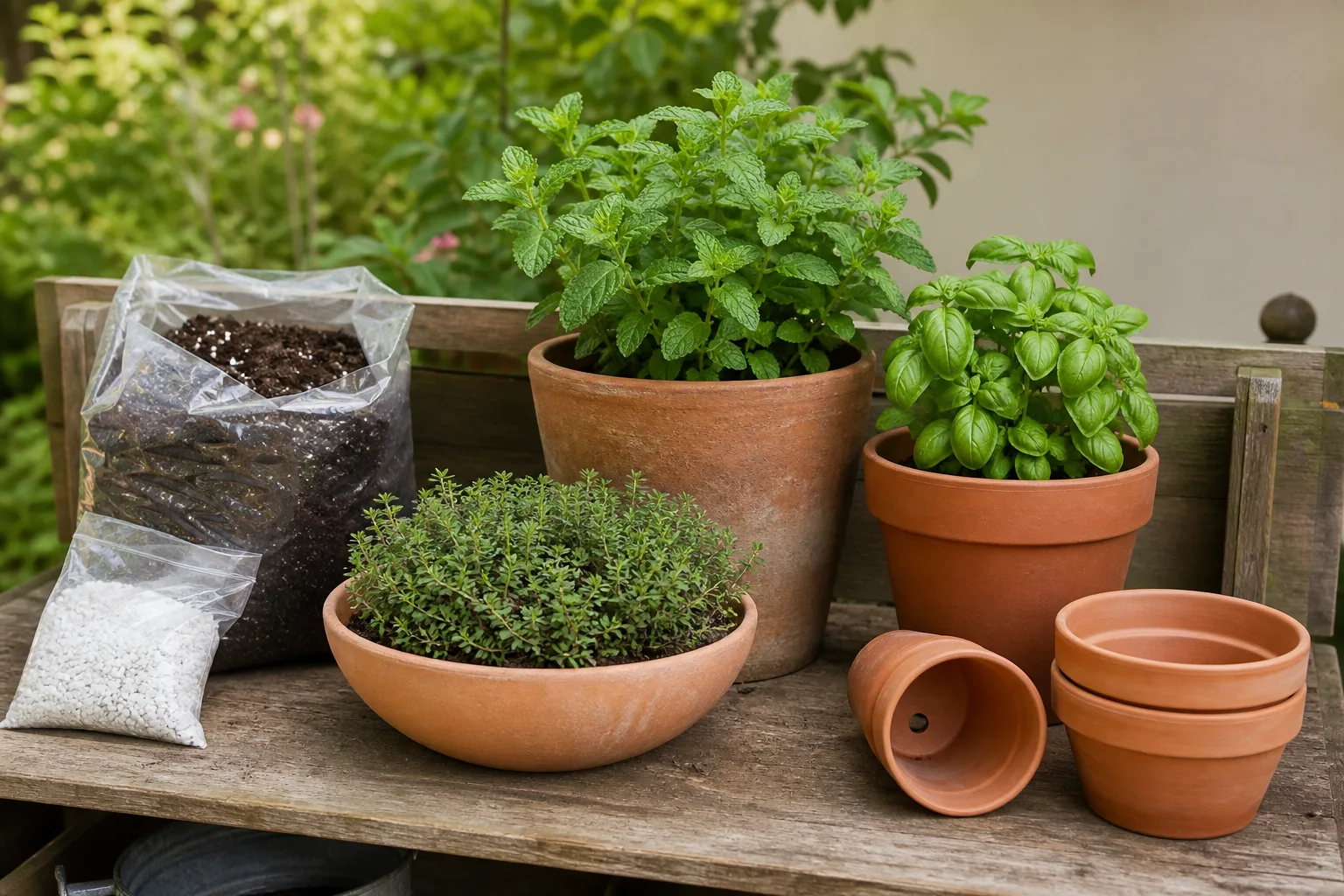
Greenery Around Outdoor Dining Sets
Idea 19 — Fill the dining area with greenery: Ring a rustic table with mixed-height pots—upright rosemary or salvia, mounding lavender, trailing oregano. Leave clearance for chair legs and a path with the hose. Dining areas collect crumbs; avoid plants with painful thorns at elbow height.
Small-Space Benches With Rustic Planting
Idea 18 — Make the most of a small space: A slim stone or paver pad with a bench, one side table, and three pots (tall grass, mid perennial, trailing edge) becomes a reading nook. Choose plants that look good when you are sitting, not only from the kitchen window.
Idea 20 — Keep it simple: A corner with two midcentury chairs, a sisal rug, and three uniform pots in ascending heights defines zones without a full planting plan. Repeat one plant species three times for cohesion.
Soften Geometry and Keep Corners Simple
Idea 10 (detail) — Soften straight lines: Inset a single shrub planting in a circular cutout on a rectangular patio, or place one round bowl planter in the geometric center of a square slab. The contrast between paving angles and plant curves is the whole design trick.
Idea 20 (minimal) — Keep it simple: When in doubt, subtract. One beautiful pot, one great chair, one view line often beats a crowded collection that competes for water and attention.
Spring Planting Calendar for Patio Gardens
Timing separates a patio that peaks in April from one that still looks intentional in August.
Late winter to early spring: Prune dormant vines and roses on the patio structure. Clean pots, drill drainage if needed, and refresh the top third of compost in permanent planters.
After last frost (check your local date): Plant summer annuals, tender herbs, and tropical pots outdoors. Harden off greenhouse-grown plants for seven to ten days in partial shade before full patio sun.
Early spring: Sow cool-season greens and peas in raised beds on the patio. Plant pansies and violas in window boxes for instant color.
Autumn (plan ahead): Plant tulip and daffodil bulbs in patio pots for next spring. Store cold-hardy pots where roots stay chilled but pots do not sit in standing water.
Monthly through summer: Feed container plantings every one to two weeks with diluted liquid fertilizer or rely on slow-release mixed at planting. Deadhead spent blooms on hydrangea and annuals to extend show.
Common Patio Garden Mistakes and Quick Fixes
Overfilling pots on planting day: Penn State Extension warns that crowded containers fight for root space and airflow. Leave room for growth or plan to transplant by June.
Gravel in the pot bottom: It does not improve drainage; it creates a perched water table above the gravel line. Use holes and quality potting mix instead.
Dark pots in full sun: Black plastic and metal heat roots above air temperature. Shade the pot exterior with lighter sleeves or double-pot with an air gap.
Saucers in winter: Remove trays so pots are not ice bathing for months. Lift pots on feet year-round if paving stays wet.
Matching sun tags to wishful thinking: Move pots after two weeks if leaves bleach or stretch—no amount of fertilizer fixes wrong light.
For more small-space layout ideas beyond the patio slab, see small garden ideas and apartment gardening for beginners.
Conclusion
Twenty-three patio garden ideas sounds like a mood board—but the ones that last share boring fundamentals: measured sun, drainage you can see, pots sized for the plant’s mature habit, and a realistic spring calendar. Pick a container cluster, a vertical wall, or a themed herb corner that matches how you use the patio, then let everything else be subtraction. A patio garden that still works when you drag the grill out in September is better than a spring photo that quietly dies behind the shed in July.