7 Deer-Resistant Plants for Winter Gardens
Seven evergreen shrubs and conifers that hold winter color and usually survive deer pressure — with zones, site tips, honest limits, and what to do when browsing continues.
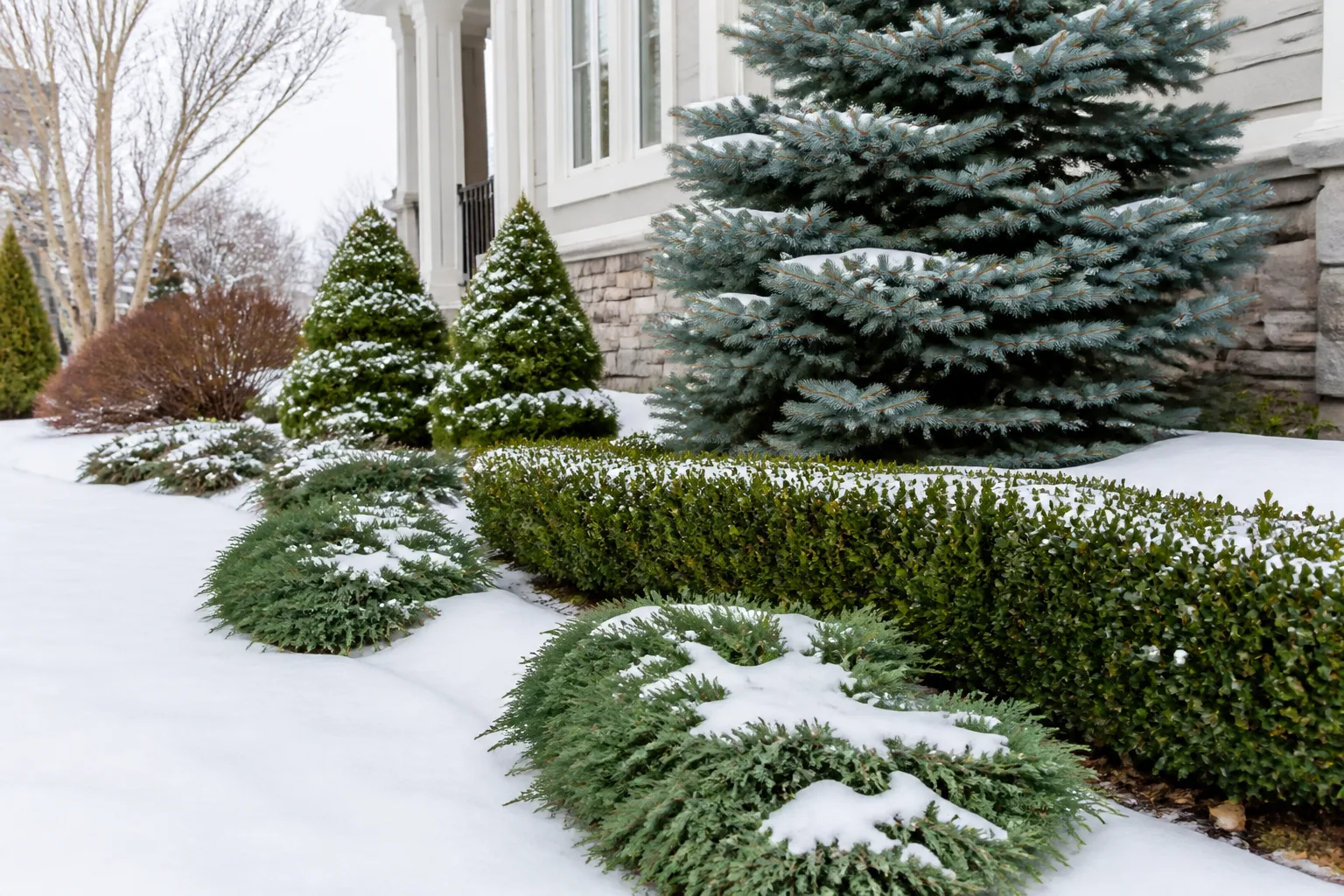
A gray January yard needs more than good intentions. It needs evergreen structure, something green at the foundation line, and plants tough enough to survive the season when deer are hungriest. The seven shrubs and conifers below are not magic shields — no plant is — but they combine traits deer usually avoid with real winter presence: persistent foliage, early bloom, or conifer texture that still looks intentional under snow.
Extension lists from Georgia, Cornell, and the RHS consistently rank boxwood, spruce, juniper, pieris, and related conifers among plants deer rarely or seldom severely damage. That is useful intelligence, not a guarantee. Use these plants to lower risk, then protect new installs and high-value beds the way you would protect any expensive landscape investment.
Why Winter Changes What Deer Eat
Deer do not disappear when herbaceous perennials die back. They shift from buffet to survival mode. With fewer tender shoots, acorns gone, and snow covering groundcovers, herds widen their menu and test plants they ignored in summer. The RHS notes that deer feed year-round and that new plantings are especially at risk because deer investigate anything fresh in the garden.
Winter browsing also targets different plant parts. Deer may strip flower buds in late fall, chew twig tips during thaw cycles, or rub antlers on young trunks — damage that has nothing to do with whether the foliage tastes bad. Understanding that pattern helps you place resistant plants where they earn the most protection and cage vulnerable newcomers before the first hard freeze.
Food scarcity and browsing pressure
When natural forage is scarce, resistance ratings slide on a spectrum. A juniper that went untouched in October may get a exploratory nip in February. Population density matters as much as plant chemistry: Cornell Cooperative Extension warns that no plant is completely deer-proof when deer densities are high. A suburban herd of six behaves differently from twenty deer compressed into a wooded lot with little understory left.
Track your yard for one winter. Note which plants were touched, whether damage was feeding or antler rubbing, and whether only soft new growth disappeared. That log beats any national list for your specific property.
New growth vs mature foliage
Deer resistance is often a texture and chemistry story told at the leaf level. Mature spruce needles are stiff and resinous. Boxwood leaves are leathery and pungent when crushed. Mountain laurel foliage contains compounds that burn mouths. Those traits protect established plants far better than a newly planted shrub pushing soft juvenile growth.
Water and mulch new installs through their first winter. Stressed plants smell and taste more appealing, and drought-weakened evergreens are easier for deer to strip. Healthy, well-hydrated shrubs hold their natural defenses longer.
Deer-Resistant Is Not Deer-Proof
Deer-resistant means a plant is less likely to be severely damaged — not that deer will never touch it. UGA Extension groups Japanese andromeda, boxwood, junipers, spruce, and eastern redcedar among trees and shrubs deer rarely browse, while Cornell places common boxwood and spruce in its “rarely damaged” woody category. Eastern red cedar, however, appears on Cornell’s “occasionally damaged” list, which is exactly the nuance a good planting plan needs.
Treat resistance like weather probability, not a contract. Combine less-palatable plants with physical protection where failure is expensive: front foundation beds, driveway entries, and any screen you cannot afford to replace. Our deer-resistant shrubs guide covers a wider shrub palette; this article focuses on winter structure plants that stay visible when everything else is dormant.
What resistance actually means in extension lists
Most reputable lists sort plants into tiers: rarely damaged, seldom severely damaged, occasionally damaged, and frequently damaged. The same species can land in different tiers depending on region, cultivar, and herd behavior. Spruce and boxwood sit near the top in many northeastern lists; hollies are more variable because some species attract deer while others do not.
Resistance traits cluster into a few categories deer tend to avoid: strong scent (boxwood, juniper), tough or spiny texture (spruce, holly), bitter or toxic compounds (mountain laurel, pieris), and difficult chewing mechanics (stiff conifer needles). A plant with two or three of those traits usually performs better than one with only a mild scent.
When even “safe” plants get sampled
Starvation browsing overrides preference. After heavy snowpack or ice storms, deer may trim boxwood hedges they previously ignored. Young plants with thin bark are vulnerable to buck rubs regardless of taste. And regional exceptions abound: a pieris thriving in a lightly browsed New Jersey suburb may be stripped in a rural valley with high whitetail pressure.
If more than one shrub in a bed shows ragged tips or bark shredding, plant choice alone will not solve the problem. Move to fencing, individual cages, or repellents on a schedule — and accept that repellents are a supplement, not a substitute for a physical barrier on high-value plantings.
How to Choose the Right Plant Before You Dig
Deer resistance is the third filter, not the first. A juniper planted in wet clay will yellow and weaken — and a weak plant is easier prey. Start with hardiness zone, sun exposure, and soil pH, then narrow to deer-resistant candidates that actually thrive on your site.
Match hardiness, sun, and soil first
Japanese andromeda and mountain laurel want acidic, well-drained soil and suffer in alkaline or waterlogged beds. Boxwood tolerates a wider pH range but hates standing water and heavy shade, where thin growth invites winter burn. Eastern red cedar handles drought and poor soil but needs room — it is a tree, not a foundation puck. Spruce cultivars range from dwarf mounds to 60-foot specimens; read the tag and believe the mature spread.
Walk the planting area at noon in winter. South- and west-facing walls create microclimates that dry evergreen foliage; north-facing beds stay cooler and moister. Match the plant to the microclimate and deer resistance becomes more reliable because the shrub stays vigorous.
Layer plant choice with barriers for high-stakes beds
The RHS identifies deer-proof fencing as the most effective protection, even when you choose resistant plants. For a single prized shrub, a rigid mesh cage staked so deer cannot reach through the openings often costs less than replacing a $80 plant twice. For a bed, an approximately 8-foot fence is the standard extension recommendation for excluding whitetails, with the bottom edge secured to the ground so deer cannot lift wire and squeeze underneath.
Protect every new planting with netting or a cage until roots establish — typically one full growing season. Remove protection only when the plant is large enough to tolerate minor tip browsing. For broader strategies, see how to keep deer away from hostas — the cage and fence logic applies equally to evergreen foundation plants.
Japanese Andromeda (Pieris japonica)
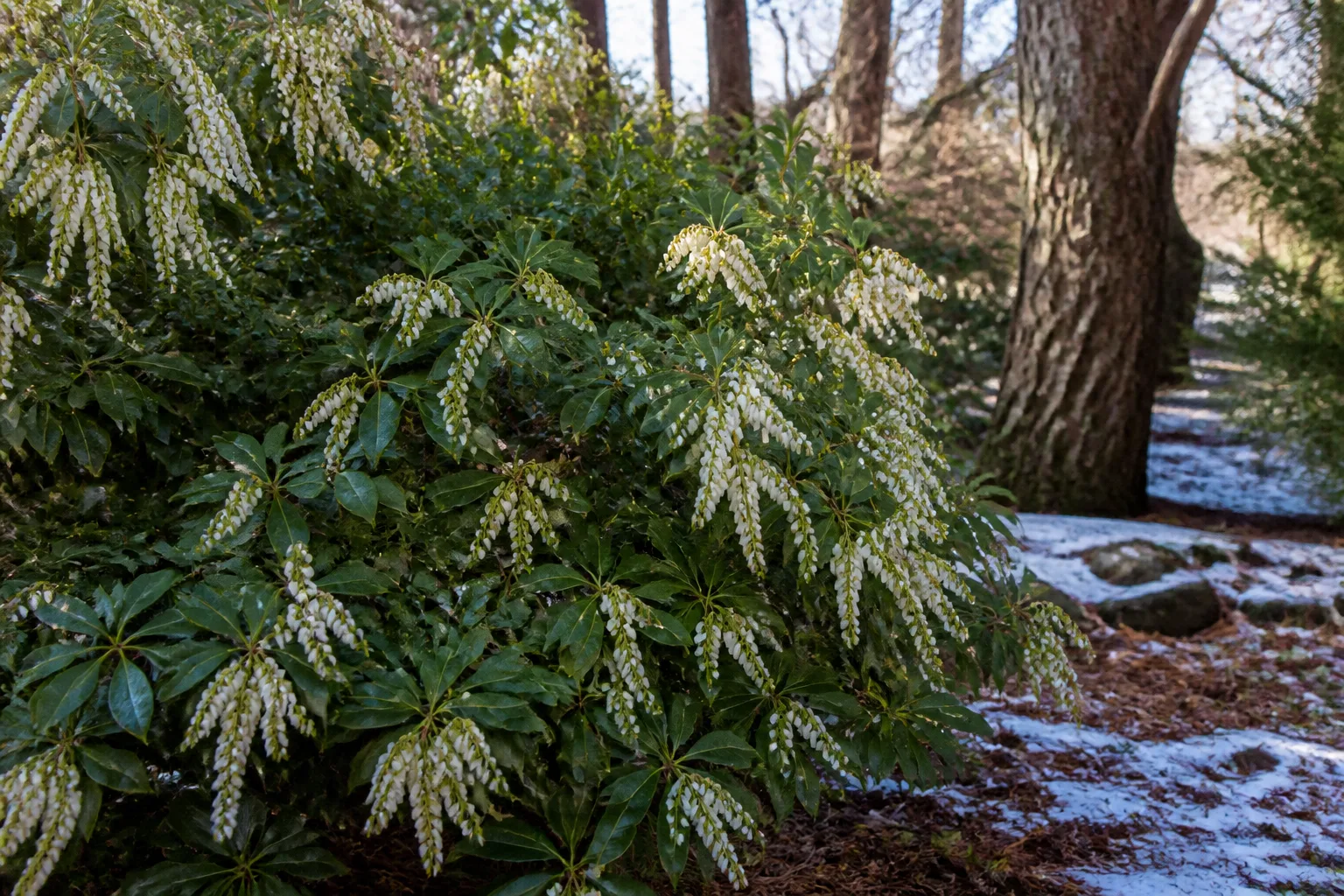
Japanese andromeda — the common name for Pieris japonica — is the plant I recommend when someone wants early-season flowers and evergreen structure deer usually skip. NC State Extension lists it as deer resistant, and UGA Extension places it among shrubs deer rarely browse. Pendulous white or pink flower clusters open in late winter to early spring, often while snow still sits on the bed — a genuine morale boost in a gray yard.
The glossy evergreen leaves hold through winter, and many cultivars push bronzy-red new growth that adds color before bloom. Pieris prefers partial shade in hot climates, acidic soil enriched with organic matter, and protection from desiccating winter winds on exposed sites. In USDA zones 5 through 8, it works as a foundation anchor, woodland edge shrub, or mixed-border specimen between 6 and 12 feet tall depending on cultivar.
Why deer avoid it: foliage is leathery and part of the Ericaceae family, which deer tend to pass over compared with soft deciduous shrubs. Caveats: pieris is toxic to dogs and cats if ingested, according to the ASPCA pieris profile. Do not plant it in a pet-chewing zone. It also struggles in alkaline soil — test pH before buying.
Spruce (Picea spp.)
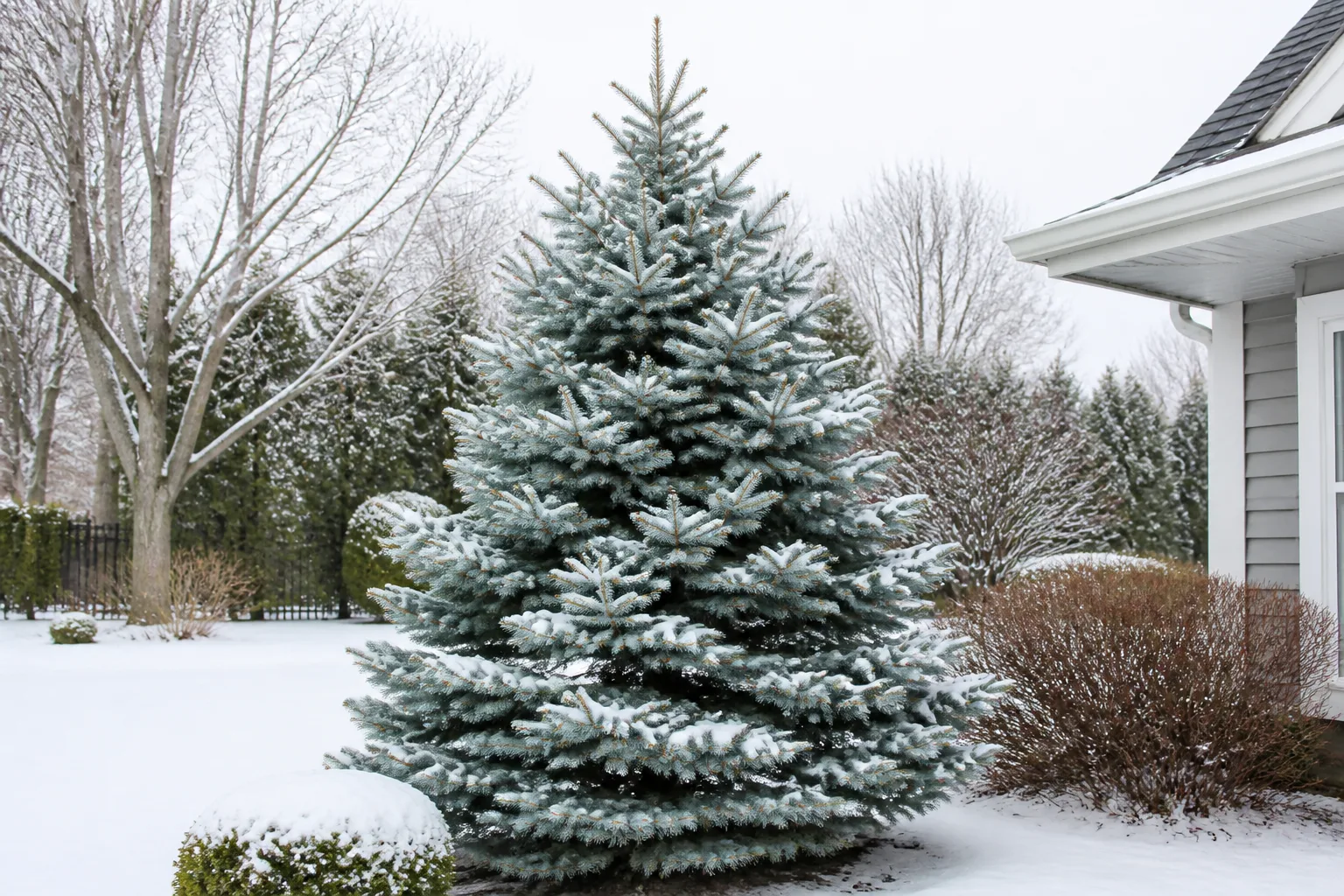
Spruce earns its place on winter deer lists for a simple reason: stiff, resinous needles are unpleasant to chew. UGA Extension lists the genus among trees deer rarely browse; Cornell ranks spruce among woody plants rarely damaged. In the landscape, spruce delivers what winter gardens need most — height, color, and a silhouette that still reads clearly against a white sky.
Colorado blue spruce (Picea pungens) adds silvery-blue tone to foundation corners and windbreaks. White spruce and Norway spruce build privacy screens in cold climates. For smaller spaces, dwarf Alberta spruce (Picea glauca ‘Conica’) stays compact and pyramidal, with needles stiff enough that deer typically move on — the same trait landscape designers cite when substituting spruce for deer-mauled arborvitae.
Cultivars that fit small yards vs privacy screens
Match cultivar to space before deer resistance matters. A generic blue spruce seedling becomes a 50-foot tree; ‘Fat Albert’, ‘Montgomery’, or ‘Hoopsii’ stay in the 10- to 15-foot range for decades. Dwarf Alberta spruce tops out around 6 to 8 feet and works in pots or flanking entries. For larger cold-climate options and planting timing, our evergreen trees for cold weather guide compares spruce against fir, pine, and hemlock.
Spruce needs full sun and excellent drainage. It struggles in hot, humid southern zones above USDA 7 and in compacted clay where roots suffocate. Water new trees deeply before ground freezes; mulch the root zone but keep mulch off the trunk. Deer may still rub antlers on young trunks — wrap or cage the bottom 4 feet on new installs.
Eastern Red Cedar (Juniperus virginiana)
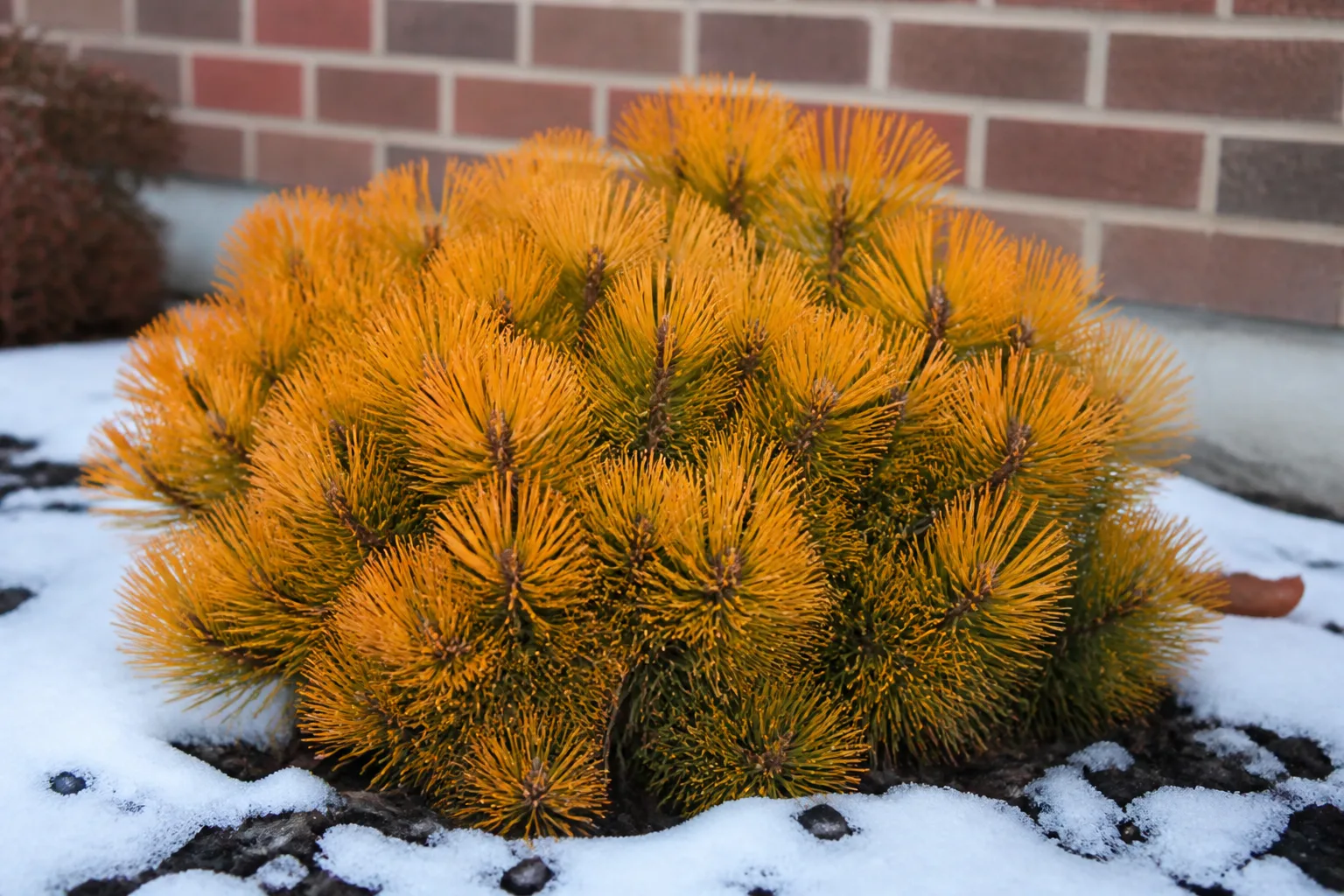
Eastern red cedar is not a true cedar — it is a native juniper — but the common name persists in nurseries and extension bulletins. UGA Extension lists eastern redcedar among trees deer rarely browse. It offers the upright, evergreen screen many gardeners want from arborvitae, without the “deer candy” reputation Thuja cultivars carry in high-pressure areas.
Mature trees reach 30 to 40 feet with a narrow to medium spread. Cultivars with golden tips (‘Corcorcor’ and similar) add winter color without flowers. Female plants produce blue-gray berries that feed birds — useful winter wildlife value when you are designing for more than curb appeal.
Arborvitae swap logic: If deer have stripped Thuja hedges twice, eastern red cedar is a reasonable conifer alternative when you have the space and want a native evergreen. Cornell lists eastern red cedar as occasionally damaged, so it is not bulletproof — but in practice it outperforms arborvitae in many northeastern and mid-Atlantic gardens with moderate deer pressure.
Plant in full sun, tolerate drought once established, and avoid planting under power lines unless you commit to cultivar size on the label. Cedar-apple rust can be an issue where apples grow nearby; choose rust-resistant cultivars if that applies to your property.
Boxwood (Buxus spp.)
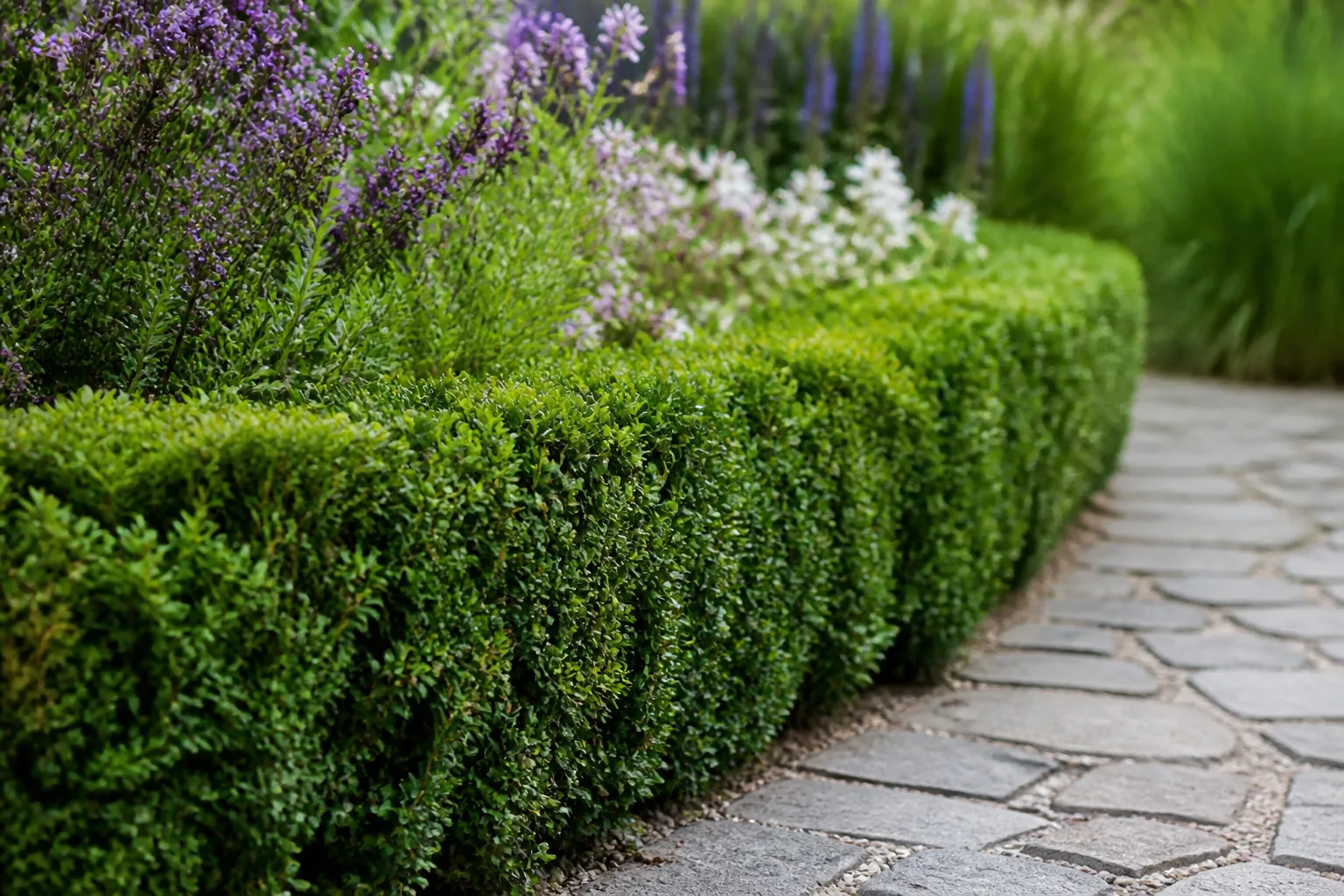
Boxwood is the classic winter foundation plant for a reason. It holds a crisp outline under snow load, clips into formal hedges, and carries a pungent, bitter scent deer dislike. UGA Extension and Cornell both place boxwood among woody plants deer rarely damage under normal conditions.
English boxwood (Buxus sempervirens ‘Suffruticosa’) and Korean boxwood (Buxus sinica var. insularis) are common choices for cold-hardy hedges. Newer hybrids bred for blight resistance are worth seeking in regions where boxwood blight is established — disease-weakened plants are more attractive to pests and browsers alike.
When deer still nibble boxwood
Boxwood resistance has a seasonal footnote. Under normal winter conditions, deer may take light nibbles and move on. In extremely harsh winters when preferred foods vanish, boxwood can become a last-resort meal — tips trimmed, not always killed, but unsightly until spring flush. That is not failure of the plant; it is starvation browsing.
Reduce risk by choosing a vigorous cultivar for your zone, avoiding reflected heat that causes winter burn, and fencing new hedges for the first year. Boxwood leafminer and blight are bigger long-term threats than deer in many gardens; inspect foliage in late winter and treat problems before spring growth begins.
Japanese Holly (Ilex crenata)
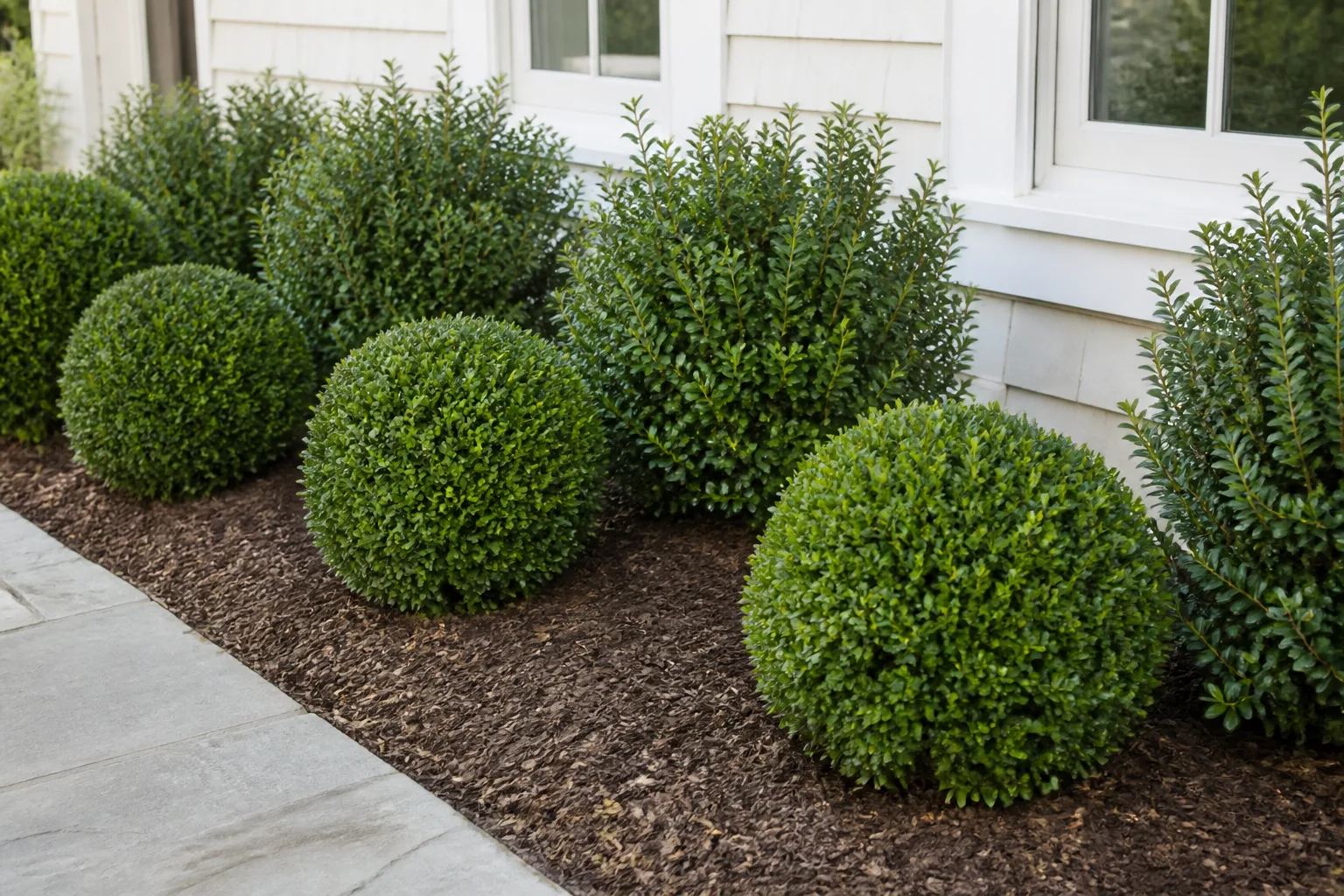
Japanese holly solves a specific design problem: you want the rounded, fine-textured evergreen look of boxwood in a site with tougher winters or slightly more deer pressure, without switching to a needled conifer. The small, spineless leaves read like boxwood from a distance, but the plant tolerates cold and wind differently and sits on UGA’s rarely-browsed shrub list alongside other holly species deer tend to avoid more than they do soft-leaved shrubs.
Compact cultivars such as ‘Helleri’, ‘Soft Touch’, and ‘Convexa’ stay between 2 and 4 feet for edging. Taller forms like ‘Sky Pencil’ create vertical accents deer usually skip because of the leathery leaf texture. Japanese holly prefers acidic to neutral, well-drained soil and partial to full sun.
Winter advantage over boxwood: Japanese holly often shows less winter bronzing and burn than boxwood on exposed sites, though neither plant loves drying winds. Mulch roots in fall and water before freeze-up. Hollies are generally less toxic concern than pieris, but berries on female plants should be kept away from curious children; verify species with the ASPCA database if pets chew plants.
Juniper (Juniperus spp.)
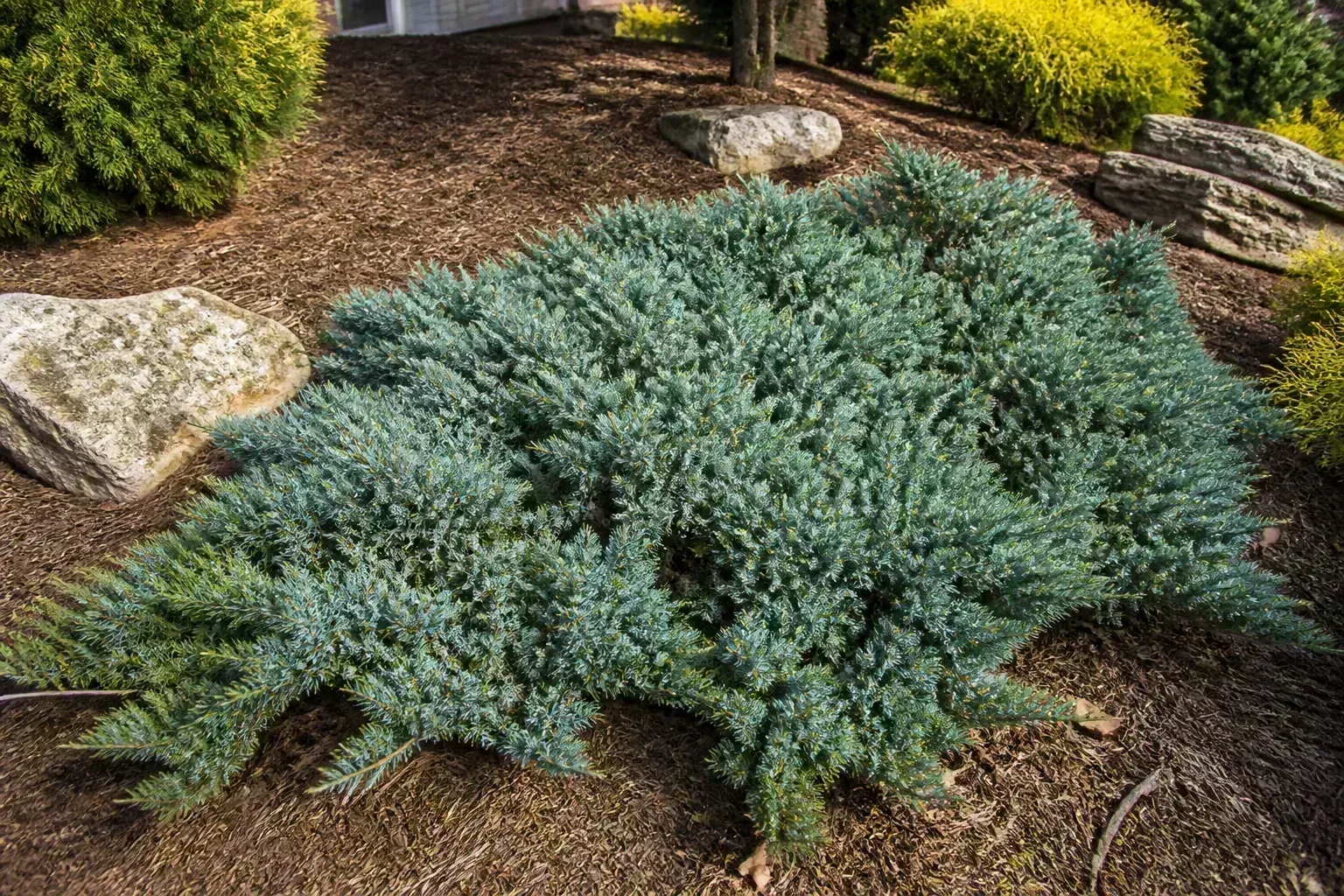
If deer treat your yard like a salad bar, juniper is the aromatic, spiny-textured contrast they often refuse. UGA Extension lists junipers among shrubs, trees, and groundcovers deer rarely browse. The genus spans ground-hugging ‘Blue Star’ mounds, upright ‘Skyrocket’ columns, and spreading shore junipers that hold slopes — all with volatile oils and sharp needle-like foliage deer dislike.
Why it works: deer prefer easy calories. Juniper’s combination of strong scent, tough foliage, and awkward mouthfeel fails that test unless the animal is desperate. Deer may sample tips in famine conditions, but established junipers recover faster than deer-favorite yews or arborvitae.
Match form to job. Use prostrate cultivars on berms and rock gardens where winter erosion matters. Use upright junipers as vertical punctuation between windows. All junipers want full sun and sharp drainage; they rot in wet clay. For more compact evergreen options including juniper cousins, see our small evergreen shrubs list.
Mountain Laurel (Kalmia latifolia)
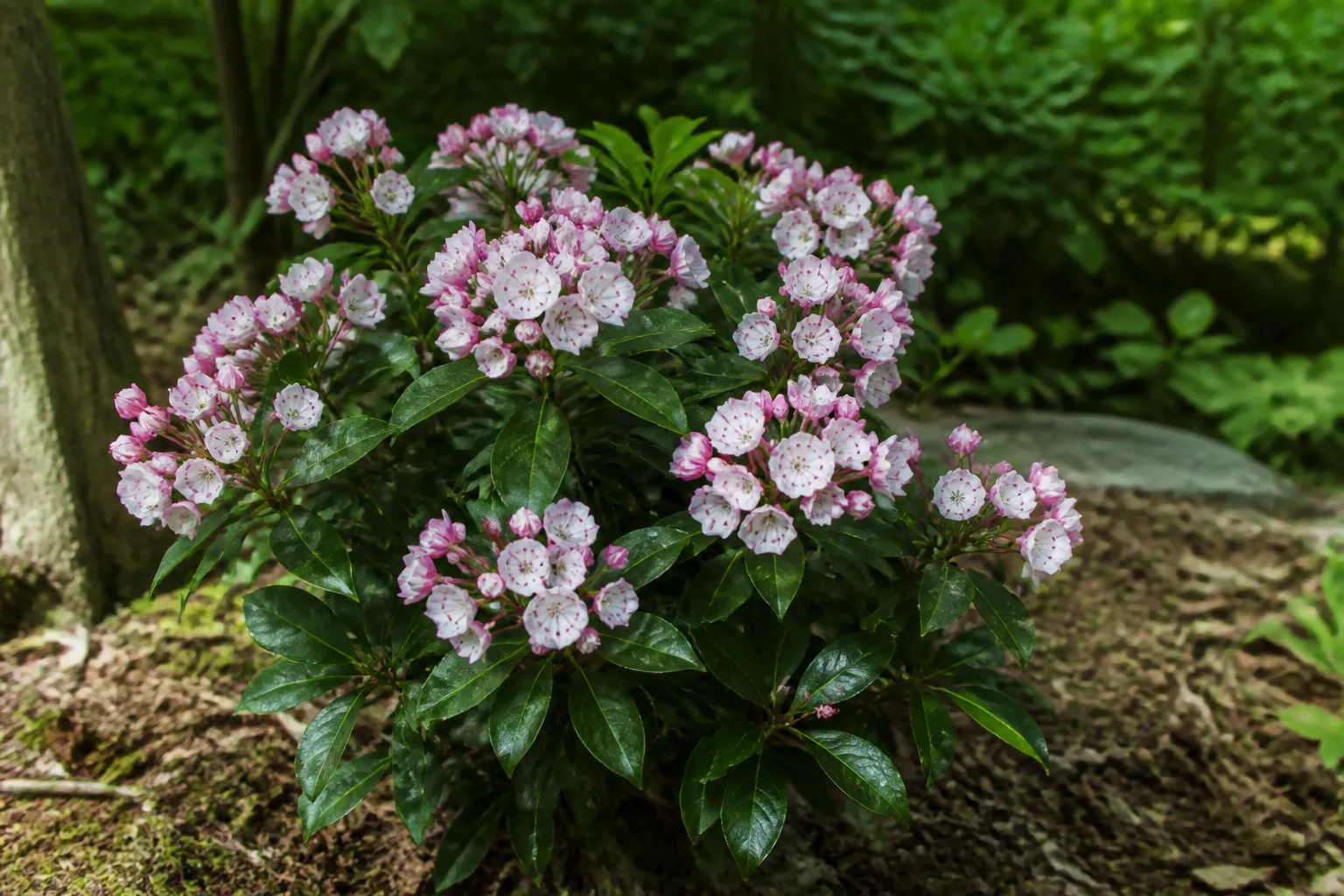
Mountain laurel is the native evergreen shrub that proves toxicity can be a landscape ally — ethically, with eyes open about pets and kids. The leathery leaves contain compounds that burn mouths, so deer sample once and usually retreat to tastier options. It delivers winter structure, glossy foliage, and flower buds that swell visibly through late winter before the pink-and-white clusters open in late spring.
Plant in partial shade, acidic soil, and consistent moisture — not the dry, baking strip next to a south-facing driveway. Hardy in USDA zones 4 through 9 depending on cultivar, mountain laurel works in woodland edges and shaded foundation beds where boxwood struggles. Cultivars like ‘Minuet’ and ‘Olympic Fire’ stay smaller than wild-type plants and fit suburban lots better.
Toxicity is real: mountain laurel is poisonous to people, pets, and livestock if ingested. Check the ASPCA toxic plant database before planting near dog runs or toddler play areas. Deer resistance does not make a plant safe for chewing children.
For total protection on a prized specimen, a temporary fence still helps during the first two years while roots establish — resistance and fencing are complementary, not either-or.
Plants to Pair With Your Deer-Resistant Backbone
Structure plants earn their keep in winter, but a one-species bed looks flat by March. Layer height and texture without inviting deer back to the buffet. Tall spruce or eastern red cedar at the back, boxwood or Japanese holly as the mid-layer hedge, and juniper mounds or mountain laurel at the front edge create depth deer rarely flatten in a single night.
For winter and early-spring color beyond pieris bloom, add deer-resistant bulbs such as daffodils and ornamental onions in the gaps — our flowers deer won’t eat guide covers flowering options that complement evergreen bones. Avoid planting tulips or hostas in the same bed unless you fence them; those are deer magnets that undermine the logic of a resistant backbone.
Repeat one plant in groups of three or five rather than planting seven different species as singles. Massing reads better in winter and survives browsing better because losing one tip on a grouped plant is less visually catastrophic than losing the only specimen in a bed.
What to Do When Deer Still Browse Your Shrubs
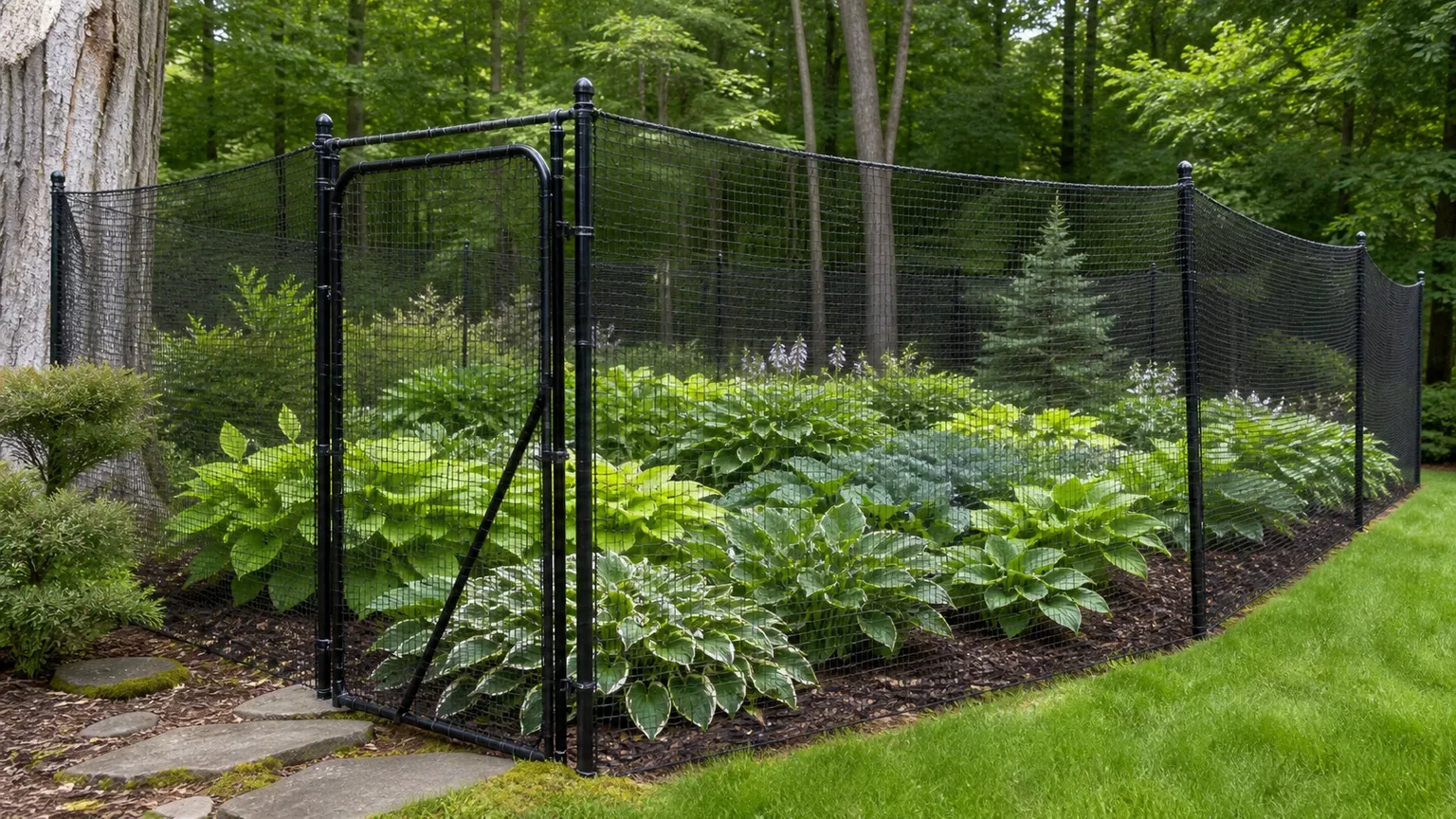
Start with diagnosis. Ragged, torn stems suggest feeding. Vertical bark scoring on trunks suggests antler rub. Clean cuts on low branches may be rabbit damage, not deer. Each cause needs a different fix — rub guards for bucks, height for deer, hardware cloth for rabbits.
Short term: install a staked cage wider than the plant so deer cannot reach through. Reapply repellents after rain if you use them, and rotate products so deer do not habituate. Long term: an 8-foot perimeter fence with secured bottom edge, or a double fence with 4 to 5 feet between runs, excludes deer more reliably than any single shrub choice. The RHS recommends protecting new additions with netting until established regardless of resistance rating.
Keep a photo log through winter. If damage always follows heavy snow, plan supplemental feeding areas away from beds (where legal) or increase fencing before the next storm cycle. One rough winter does not mean your plant list failed — it means hunger overrode preference, and your backup barrier needs to be ready.
Conclusion
A winter garden that survives deer is built in layers: plants deer usually avoid, sites where those plants stay healthy, and barriers that protect new installs until they can defend themselves. Japanese andromeda, spruce, eastern red cedar, boxwood, Japanese holly, juniper, and mountain laurel each solve a different piece of that puzzle — early bloom, conifer height, native screening, formal hedges, fine texture, groundcover, or native shade evergreen.
None of them is deer-proof. All of them are stronger choices than repeating arborvitae, hosta, or tulip losses every spring. Match the plant to your soil and zone first, mass resistant species where structure matters most, cage newcomers before the first freeze, and fence when the landscape investment justifies it. Do that, and winter stops looking like a waiting room for deer damage — it starts looking like the season your garden was designed for.



