7 Plants That Need Cages, Stakes, or Trellises
Learn which plants need cages, stakes, or trellises, when to install support, and how to keep heavy fruit and tall flowers upright without damage.
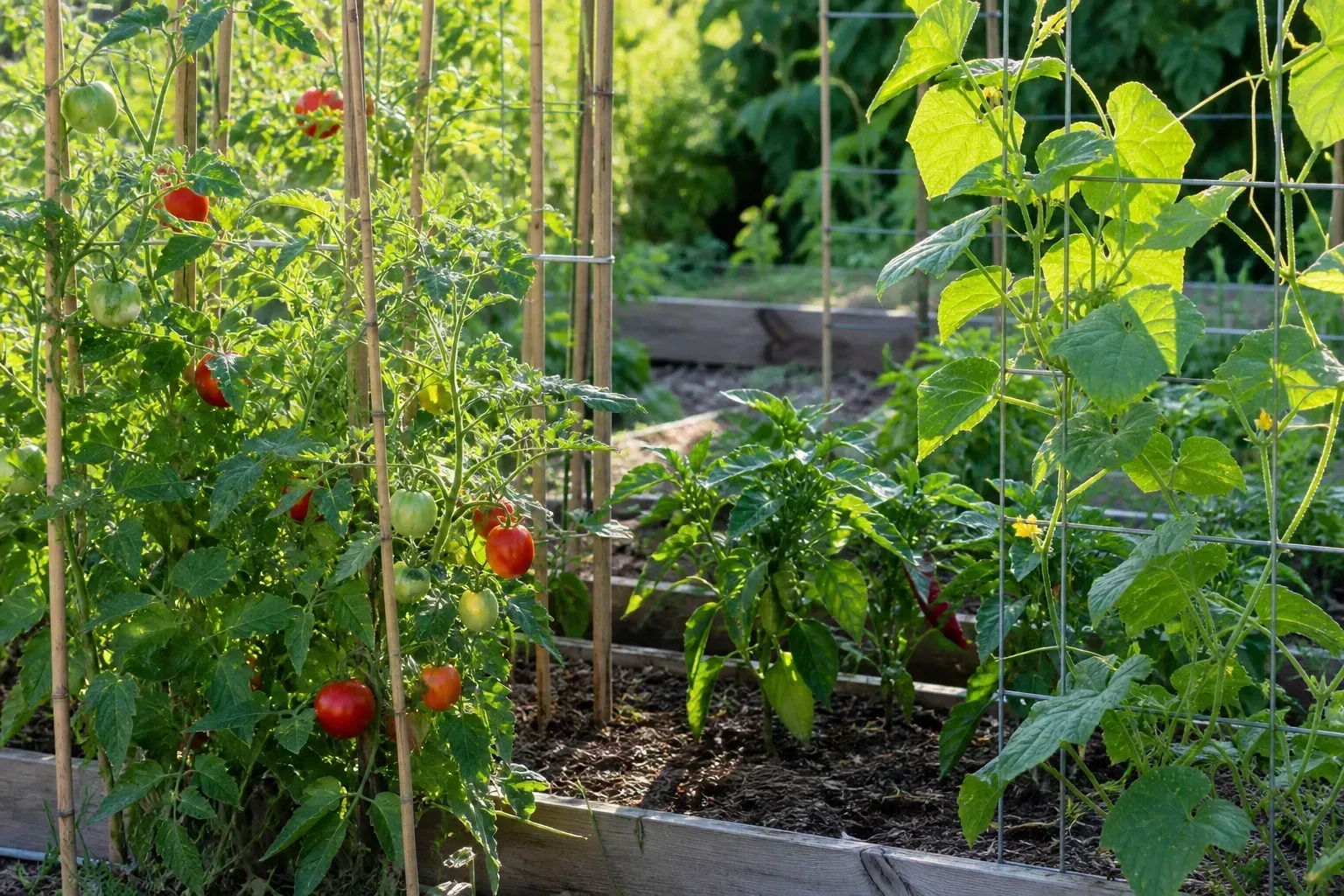
The plants that need support are not all climbers. Some spread into a broad, heavy clump; some carry fruit that turns a flexible branch into a lever; others send up tall flower spikes that catch wind and rain. The right support keeps stems off the soil, makes harvesting easier, and prevents a healthy plant from collapsing after one storm.
Tomatoes are the obvious example, but they are not the only plants that benefit from a cage or other structure. Purdue Extension’s tomato guide treats caging and staking as different training choices, which is a useful distinction here too. The seven below include four bushy or fruit-heavy plants that suit a cage or corral, two tall flower spikes that usually need a stake, and peas, which need a trellis they can climb. That distinction matters: a support that helps a peony can be nearly useless for a pea vine.
What kind of support does your plant actually need?
Think about the plant’s shape at maturity rather than the size of the seedling in front of you. A cage surrounds a plant and supports several branches at once, a stake gives one stem or a small plant a fixed anchor, and a trellis provides a surface that tendrils or twining stems can climb.
| Plant shape or problem | Best first choice | Why it works |
|---|---|---|
| Broad clump with many stems | Cage, ring, or twine corral | Holds the outside stems before they splay under flowers or fruit |
| One tall flower spike | Single stake and soft tie | Anchors the stem without crowding the whole plant |
| Tendrils or a climbing vine | Trellis, mesh, or teepee | Gives the plant something it can grip and climb |
| Fruit-heavy row crop | Stake-and-weave or sturdy cage | Shares the load and keeps foliage and fruit off the ground |
Support does not make a plant healthier by itself. It helps the plant use its existing light, water, and space more effectively. Utah State University Extension describes support for eggplant, pepper, and tomato as optional but useful: fruit on supported plants can mature earlier and be cleaner and easier to pick, while pruning and tying add labor. That is a better promise than assuming every cage automatically creates a bigger harvest.
Install support before the plant leans
The safest time to install a permanent support is before planting or while the plant is still small. Once roots fill the surrounding soil, pushing a stake through the root zone can cause avoidable damage, and lifting a sprawled stem into a cage can snap branches that were never trained to carry that load.
For flowers, install a cage, ring, or netting before the stems reach the height at which they normally flop and before blooms make the support obvious. For vegetables, put the structure in place at planting or when plants are roughly 6 to 12 inches tall. Penn State Extension and Kansas State Research and Extension both emphasize starting tomato support early, before the plants are large or drooping; the same prevention-first logic applies to these other support-loving plants. Harvest to Table’s support guidance makes the same practical point: support is easier to install before stems sprawl and roots make placement awkward.
Match the support to the growth habit
Measure the mature plant, not the support’s label alone. A short, narrow cage may disappear around a young pepper but become a rigid collar that cannot contain fruit-laden branches. A thin decorative trellis may look adequate for peas and then tip when a thick wall of vines catches wind.
Anchor cages with one or two stakes when soil is loose or the bed is exposed. Set the base deeply enough to resist rocking, leave the harvest side accessible, and keep the structure wide enough that stems do not rub constantly against wire. If the support moves when you tug it gently, it is not ready for a mature plant after rain.
1. Peonies need a cage before heavy blooms open
Herbaceous peonies (Paeonia spp.) can stand perfectly well when young or when they carry single flowers. The trouble starts when a mature clump produces large, double blooms: rain-soaked petals add weight at the very end of a long stem, and the whole plant can spread across the soil overnight.
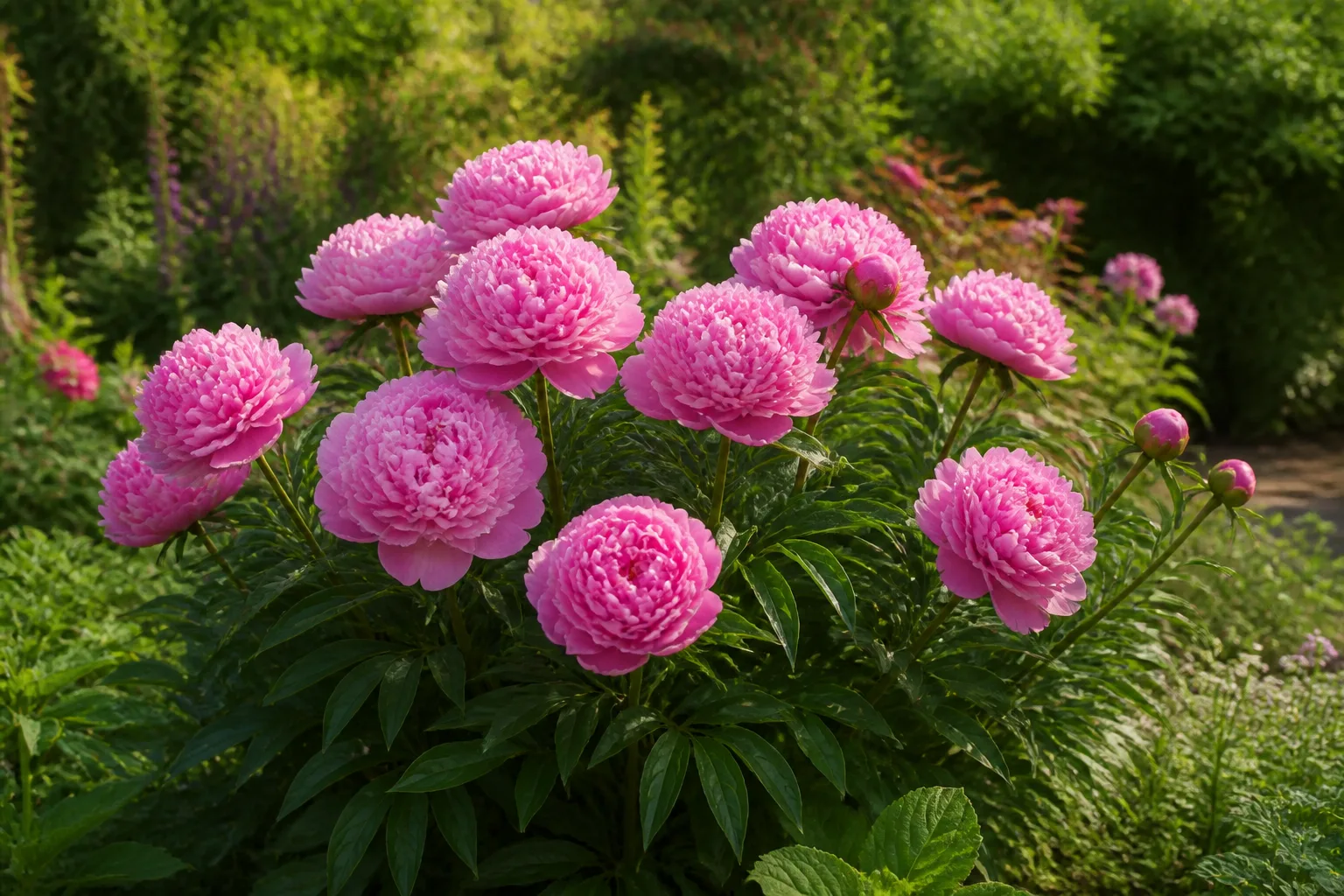
The best time to support a peony is early spring, before the leaves and flower buds fill the plant. A peony ring or tomato-style cage installed after the stems have grown tall forces you to bend and thread them through the openings, which can break tender growth and leaves the structure sitting on top of the plant instead of inside it. Epic Gardening’s flower-staking guidance uses the same early-support principle for peonies, dahlias, delphiniums, and foxgloves.
Support the whole peony clump, not one flower
Choose a cage or ring that is wider than the crown and tall enough for the variety. As stems grow, they rise through the grid and hide most of the support. For a row of peonies, four stakes with soft twine around the outside can corral several plants more naturally than a separate cage around each one.
Do not tie every stem tightly to the wire. Peonies need room to move in wind, and the support should share the load rather than turn each stem into a rigid attachment point. If a peony still flops after caging, check whether the support was installed too late or is too short; adding fertilizer will not correct a structural problem.
2. Peppers benefit from support when fruit loads the branches
Peppers (Capsicum annuum) do not always need a cage. Compact plants in a sheltered bed may hold themselves upright, while tall varieties, container plants, and heavily fruited branches can lean or split at the first fork. Support is especially useful when the plant is exposed to wind or when you grow large bell peppers that pull down lateral branches.
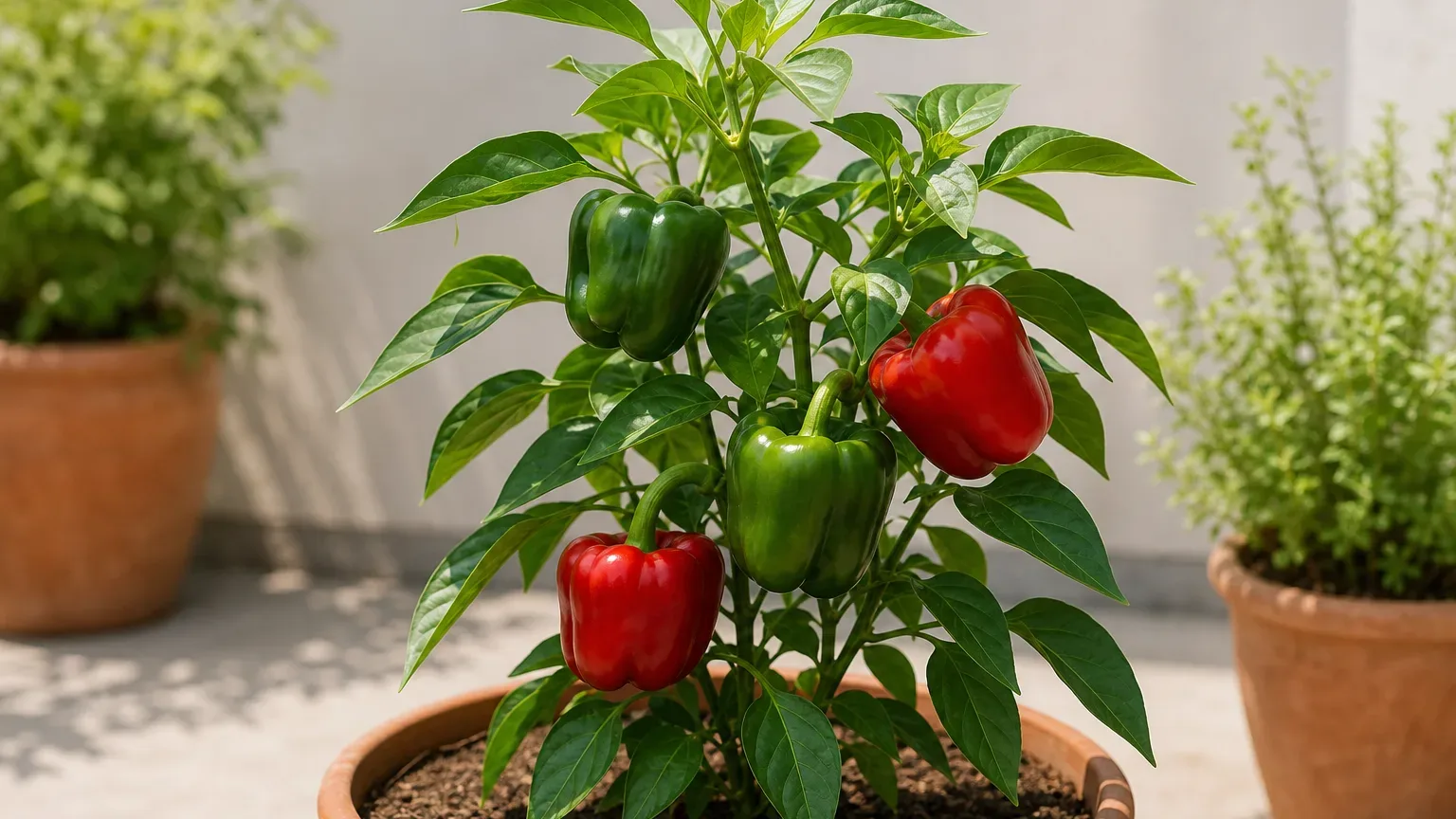
Use a small cage, a central stake, or two stakes with soft ties. Set the support while the plant is young, before the root ball expands through the bed. A cage is convenient because it supports multiple branches without requiring you to predict which side will carry the next fruit.
Anchor the plant before the first fork gets crowded
Place a stake a few inches away from the main stem rather than driving it directly through the root crown. Attach the stem loosely below and above the first major fork, then add a tie only where a branch is beginning to bow. Do not bind the fruiting branches tightly against the stake; leave a little space for expansion and air movement.
The support should help you harvest, not turn the plant into a wire puzzle. Leave the largest cage openings toward the side you use most often, and check that a pepper can be picked without bending the branch backward. If the plant is falling because its soil is dry, crowded, or shaded, correct that cause as well; a cage cannot replace steady moisture or sufficient sun.
3. Dahlias need support for a growing, top-heavy clump
Dahlias (Dahlia spp.) produce multiple stems from a tuber and keep adding flowers over a long season. Their hollow stems and heavy blooms can look upright in the morning and lean after rain or a gusty afternoon, especially in tall cultivars grown for cutting.
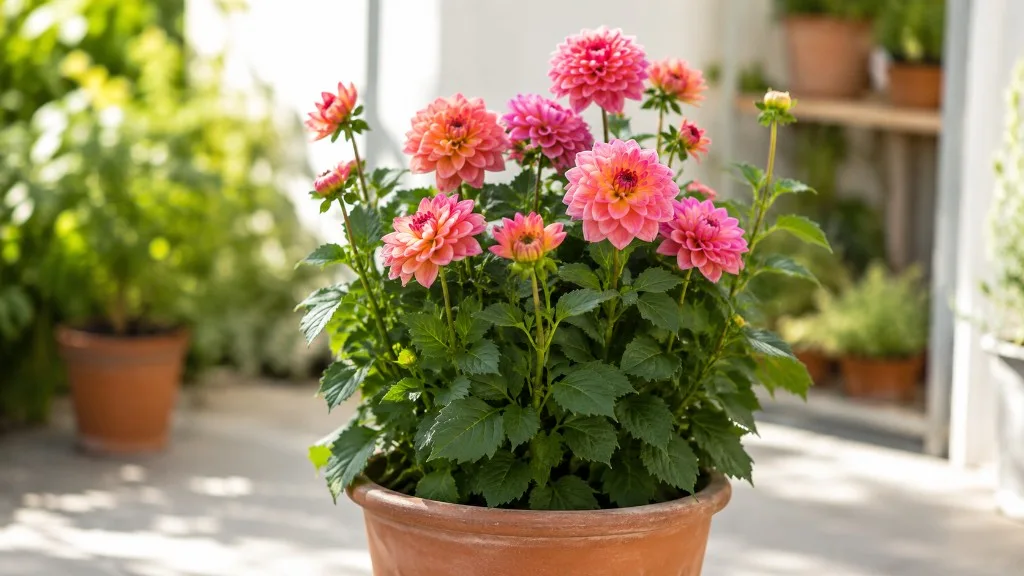
Install a cage, ring, or corral soon after planting the tuber. A single stake can help one isolated stem, but it is usually a poor match for a dahlia clump because new stems emerge around the original one. A cage or a rectangle of stakes and twine supports the plant from several sides while allowing new growth to fill the frame.
Keep the support outside the crown and avoid driving a stake where the tuber is planted. If you are growing several dahlias in a row, one shared corral can be easier to maintain than a forest of individual stakes. Use taut but not tight twine, and raise the next layer as the plants grow rather than waiting until flowers pull the first layer down.
4. Eggplants need a brace before fruit enlarges
Eggplants (Solanum melongena) have sturdy-looking stems, but their branches can carry surprisingly heavy fruit. A plant may remain upright until two or three eggplants develop on one side, then lean far enough for foliage and fruit to touch the soil.
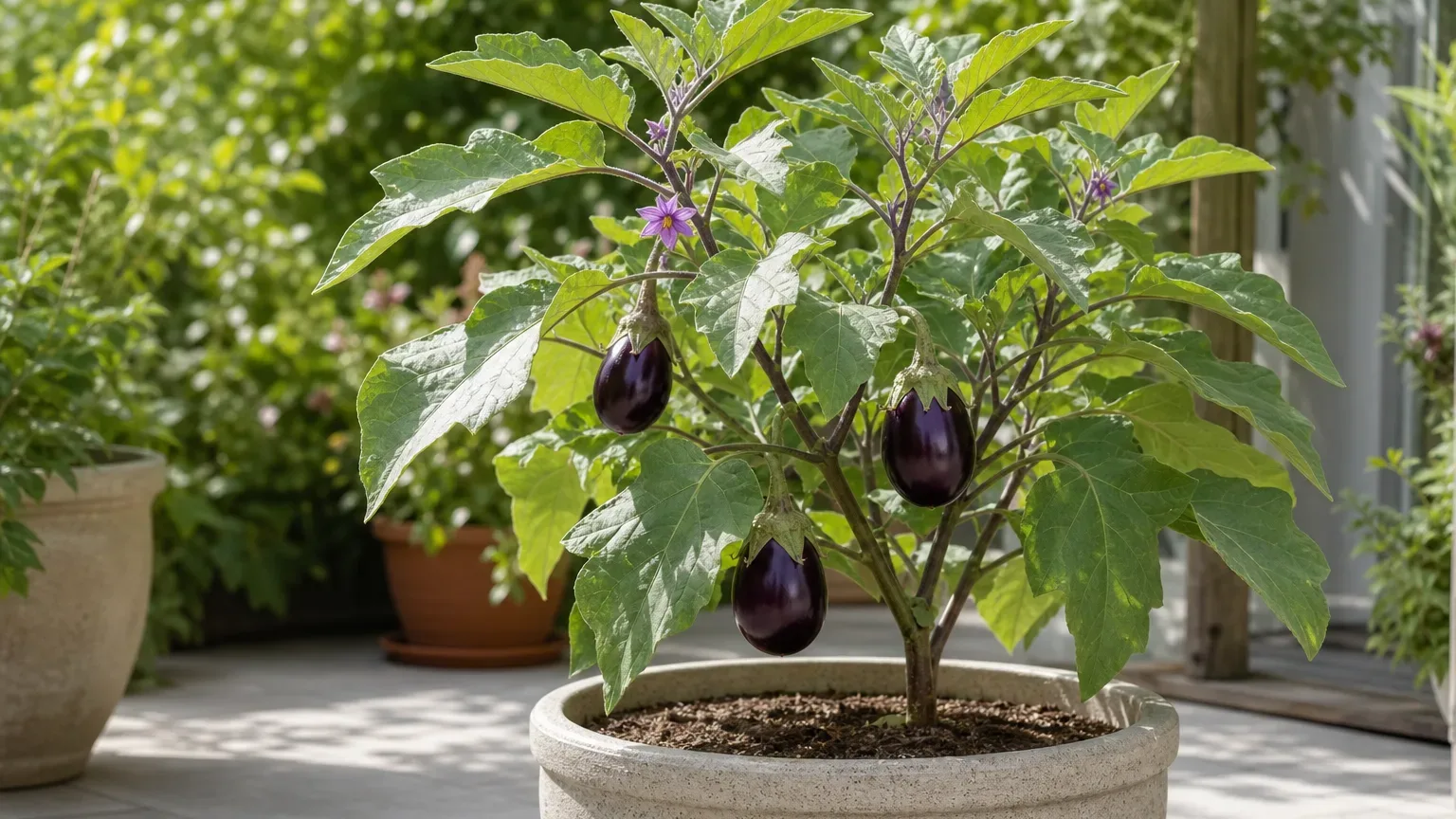
A tomato cage is a practical choice for a young eggplant because the horizontal rings support branches while leaving openings for harvest. A short trellis or two stakes can work just as well in a container, provided the support is anchored before the plant becomes top-heavy. Utah State University Extension groups eggplant with pepper and tomato as a crop that does not require support in every garden but can produce cleaner, easier-to-pick fruit when supported.
Guide the main branches over the cage’s horizontal supports as they lengthen, but do not force a brittle branch into a new direction after fruit has enlarged. Keep the cage wide enough for leaves to dry after irrigation and for your hand to reach the fruit. If a branch has already cracked, remove the damaged section cleanly rather than cinching a tight tie around a split stem.
5. Delphiniums need a stake before tall spikes bloom
Delphiniums (Delphinium spp.) are naturally vertical, which is exactly why wind and rain can topple them. The taller the cultivar and the more exposed the planting bed, the more useful early staking becomes. Short varieties in a sheltered, densely planted border may stand without help.
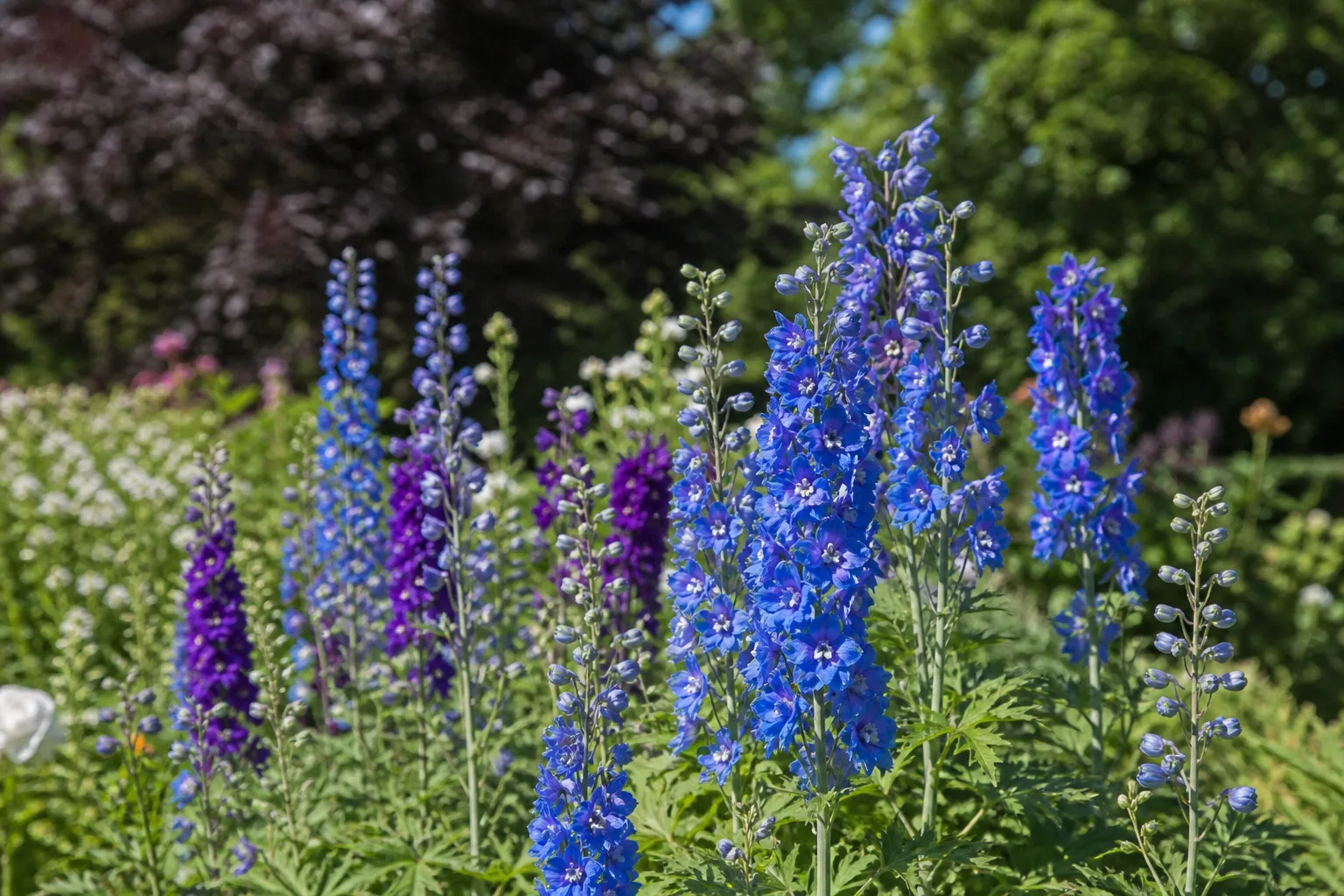
For one or two plants, place a slender stake near the base while the stems are still about 6 to 12 inches tall. Tie the stalk loosely at two points as it grows, keeping the tie below the flower head and leaving enough slack for the stem to sway rather than rub against the stake.
Several delphiniums can be supported with a low net or a corral of stakes and twine. Install that frame before the spikes open so the foliage grows through it and hides the structure. If you want a lower-maintenance planting, choose a shorter cultivar or place tall delphiniums among sturdy neighbors, but do not assume a sheltered spot will stay sheltered after the plants are in full bloom.
6. Peas need a trellis their tendrils can grip
Peas (Pisum sativum) are the clearest example of a plant that needs a climbing surface rather than a cage that merely surrounds it. Their tendrils need mesh, netting, twine, rough bamboo, or another narrow structure they can wrap around; a smooth, solitary stake gives them little to hold.
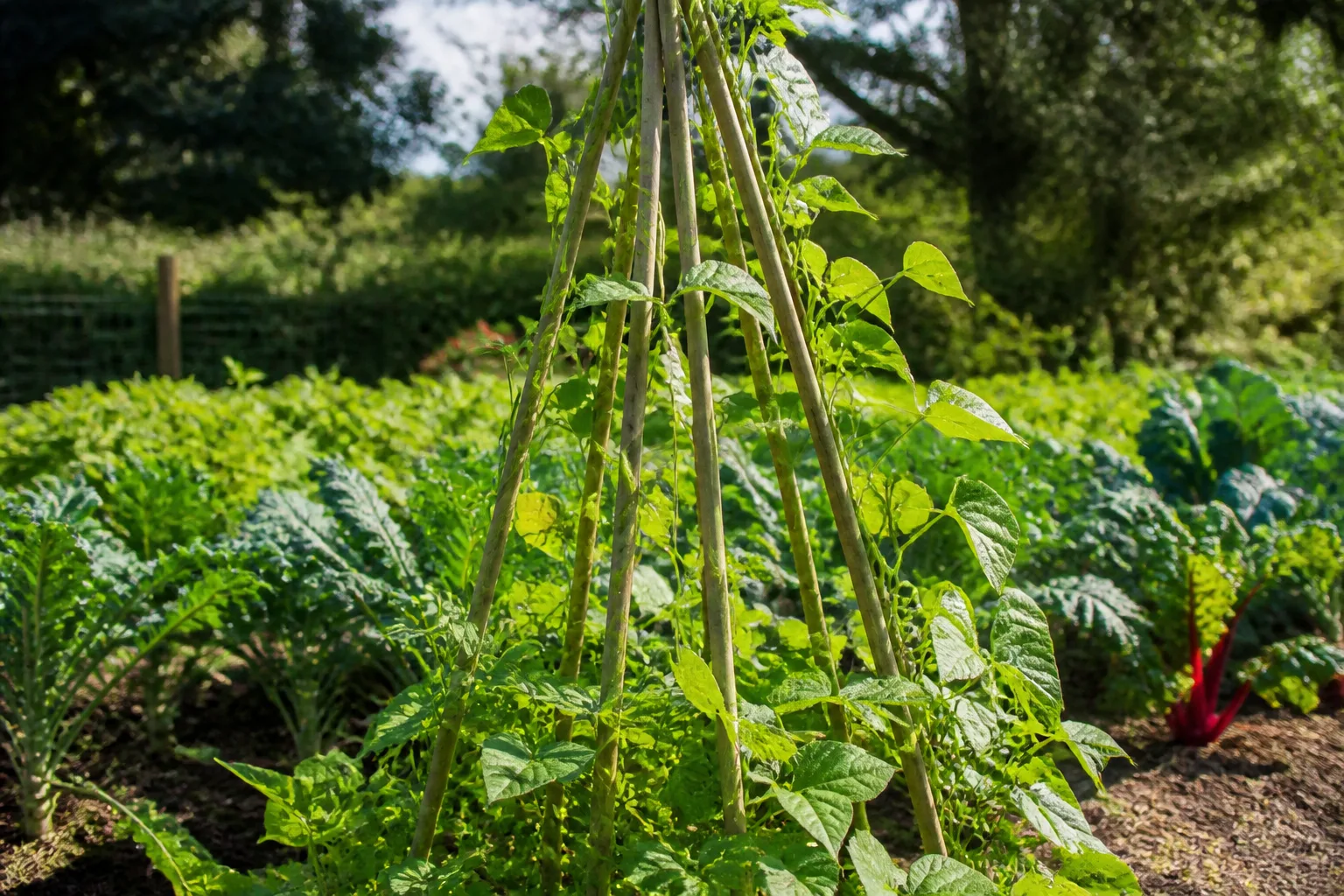
Install the trellis before sowing because pea roots are shallow and easy to disturb. A panel trellis, pea netting, cattle panel, or bamboo teepee can work, as long as it is stable and the openings are small enough for young tendrils to reach. Gardenary’s practical support guide also separates broad plants that may need a stake from long, vining plants that need a trellis, and recommends putting the structure in before peas or beans are planted.
An inverted tomato cage can be a useful container workaround: bury the wide end a few inches and sow peas around its legs so the vines can climb the narrowing frame. It is not the best choice for a long row or a windy site, where a properly anchored trellis gives more climbing area and is less likely to tip. Help the first tendrils find the support, then let them do most of the climbing.
7. Foxgloves benefit from support in windy or exposed beds
Foxgloves (Digitalis spp.) often grow as a biennial or short-lived perennial and can send up tall flower spikes in their second season. Some stand without intervention, but tall stems in an open bed can bend under their own flowers or after a storm. A single stake is usually less visually intrusive than a full cage for one foxglove.
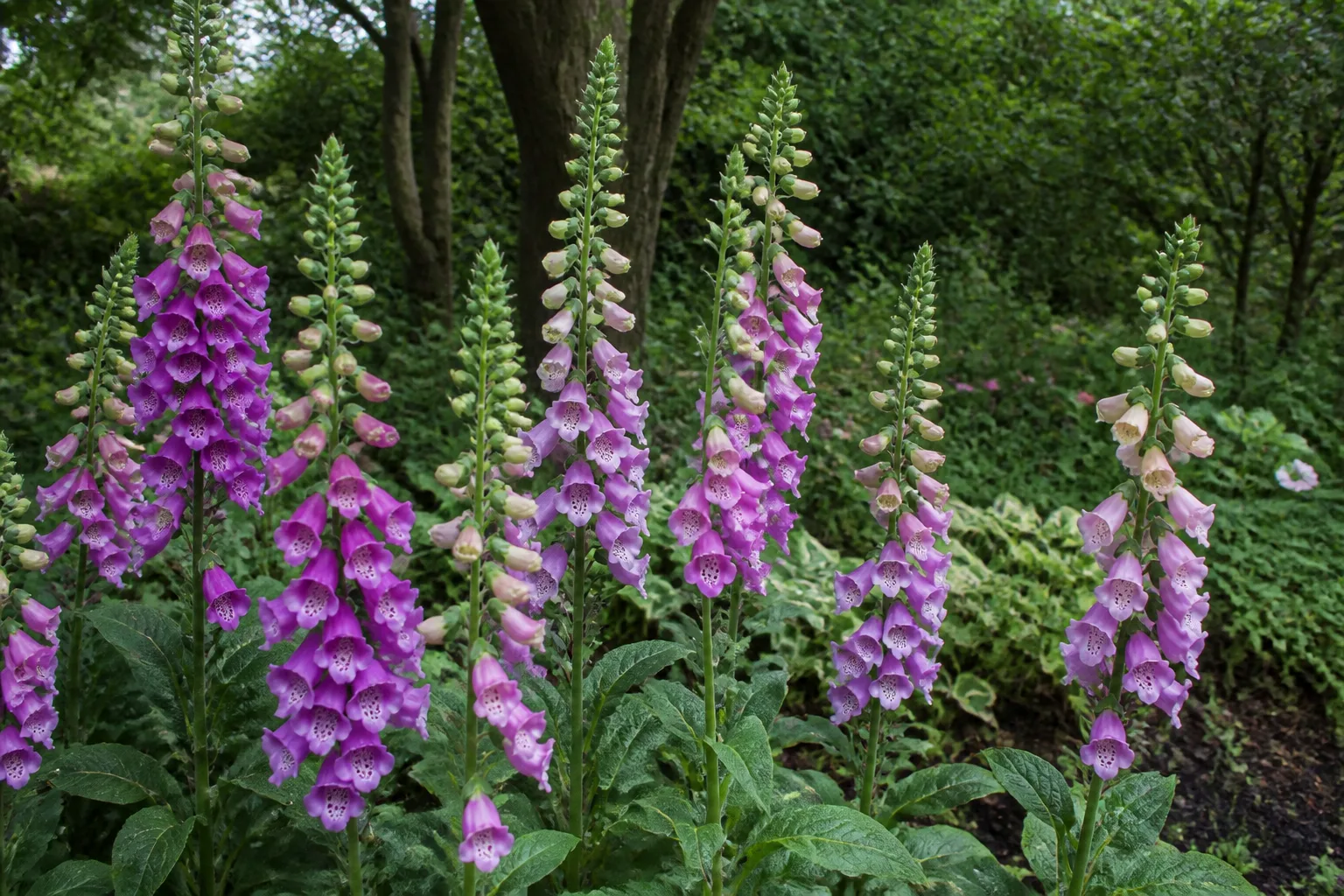
Install the stake or low corral before the flowers open. Place one stake close to the base, secure the stem with a soft tie, and check it after rain. If you grow a group, a low net or two-sided corral can support several spikes while leaving the front of the planting open for viewing and cutting.
There is also an important safety consideration that has nothing to do with support. The ASPCA’s foxglove profile lists foxglove as toxic to dogs, cats, and horses and identifies cardiac glycosides as the toxic principle. Keep the plant away from animals that chew garden foliage, remove fallen leaves and spent spikes from accessible areas, and contact a veterinarian or poison-control service promptly if ingestion is suspected.
How to tie plants without damaging them
The support is only half the system; the tie is the part that touches the stem. Use soft garden twine, stretchable tie tape, hook-and-loop material, or a purpose-made clip. Avoid bare wire, fishing line, and thin plastic that can cut into a stem as it expands or moves in wind.
Check every tie after a week of growth and after heavy rain. A tie that was loose at installation can become tight surprisingly quickly, especially on peppers, dahlias, and fast-growing flower spikes. When removing seasonal supports, cut the tie rather than pulling a knot against a tender stem.
Use soft, loose figure-eight ties
A figure-eight tie keeps the stem from rubbing directly against the stake. Loop one side around the support, cross the material before it reaches the stem, and leave enough room for the stem to thicken and sway. The tie should guide the plant, not hold it rigidly in place.
For cages and corrals, you often need fewer ties than you expect. Let the frame carry the branches, then use one or two soft ties where a stem wants to escape or a fruit-laden branch is beginning to bow. Over-tying creates a crowded center, limits airflow, and makes harvest harder.
When a cage is the wrong fix
Do not cage a plant simply because it is leaning. First check whether the plant is reaching for inadequate light, growing in waterlogged soil, drying out repeatedly, or carrying more top growth than its roots can support. A support can prevent a branch from touching the ground, but it cannot correct a stressed root system or a site that is fundamentally wrong for the plant.
Avoid a cage when the plant needs to climb. Peas need a grippable trellis, not a wide wire cylinder. Avoid a single stake when a plant produces a broad clump. One stake at the center of a peony or dahlia may hold one stem while the rest of the plant still collapses around it.
Size also matters. A cage that is too small can rub foliage, trap fruit against wire, and make disease scouting or harvesting frustrating. A support that is too light can become a sail in a storm. Give tall plants a strong base, give broad plants room to expand, and leave enough access to water and pick without pushing through the structure.
A simple support plan for the season
Support becomes easy when it is treated as part of planting rather than an emergency repair. Use this rhythm:
- Before planting: choose the support from the mature height and growth habit, then anchor large cages, trellises, and corrals.
- At 6 to 12 inches: add stakes or the first soft ties before a stem leans. For peas, sow beside the finished trellis instead of adding it later.
- During active growth: guide branches through cage openings, help the first pea tendrils, and add a new tie or layer of twine only when the plant reaches it.
- After rain or wind: look for rocking supports, cracked stems, fruit touching soil, and ties that have tightened.
- After harvest or frost: remove annual vines, wash soil from reusable cages, sanitize supports that touched diseased plants, and store them where they will not rust or deform.
This routine also tells you when a support is not working. If you are constantly lifting a plant back into a cage, the cage is too short or too narrow. If a trellis leans, anchor it before the next flush of growth. If a tie cuts into the stem, replace it immediately rather than waiting for the plant to outgrow the damage.
Keep a small support kit with the seasonal tools you already use: soft twine, stretch tie tape, a few spare stakes, and disinfectant for reusable equipment. Cleaning a cage or stake that touched diseased foliage before it goes to the next bed is a modest habit, but it reduces the chance of carrying problems forward. Support should also leave room to inspect leaves and stems; a dense cage that hides the center of the plant can make pest or disease checks harder.
Conclusion
The best plants that need cages are usually the ones with a broad, branching shape or a heavy load of flowers or fruit: peonies, peppers, dahlias, and eggplants. Delphiniums and foxgloves are usually better with a single stake or a light corral, while peas need a trellis their tendrils can actually grip.
Install support before the plant becomes difficult to reach, anchor it for the mature weight, and use loose soft ties that let stems flex. When a plant still leans, look beyond the cage for light, water, spacing, and cultivar problems. That small amount of planning keeps fruit cleaner, blooms upright, and the garden easier to harvest without turning every plant into a rigid, over-supported bundle.