6 Heat-Loving Plants for Extreme Summer Heat
These six heat-loving plants handle full sun and dry spells. Learn which fits your soil, how to establish it, and what to do during a heat wave.
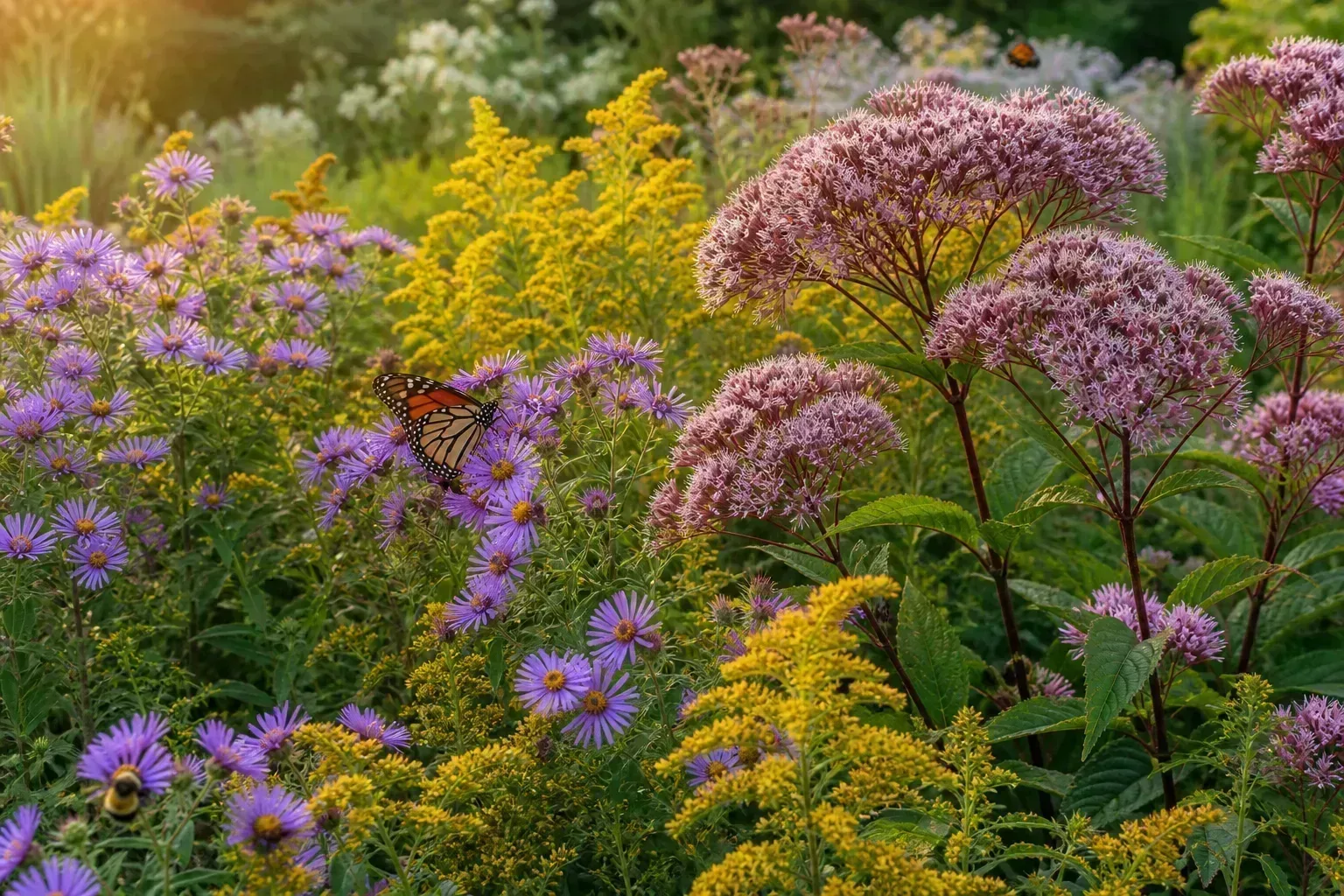
When a garden turns into a hot, bright, fast-drying patch of soil, the answer is not always more irrigation. The better fix is to match the plant to the site, then give it enough water to build a deep root system before expecting it to cope on its own.
The six plants below cover different jobs: sedum for lean, dry soil; black-eyed Susan for a native-style pollinator bed; lavender and rosemary for a Mediterranean border; agastache for long flower spikes and hummingbirds; and blanket flower for vivid color in poor soil. None is indestructible, but all can handle intense summer conditions when drainage, establishment, and plant selection are right.
What makes a plant genuinely heat tolerant?
Heat tolerance is a combination of biology and placement. Succulent leaves can store water, silvery or hairy foliage can reflect heat and slow moisture loss, and deep or fibrous roots can keep working after the top inch of soil dries. Some plants also evolved in prairies, rocky slopes, or Mediterranean climates where hot days are normal rather than exceptional.
The New York Botanical Garden notes that drought-adapted plants commonly rely on traits such as hairy or woody surfaces, deep roots, and silvery leaves. It also emphasizes that the garden must be designed around drainage, watering method, spacing, and the time a plant needs to establish—not just a “drought tolerant” label. Read its drought-tolerant garden guidance when planning a larger low-water bed.
Heat tolerance is not the same as drought tolerance
A plant can tolerate high temperatures while still needing regular moisture. A newly planted lavender, rosemary, or agastache has a small root system and can dry out in a day even if an established plant of the same kind can go through a dry spell. Likewise, a plant that survives drought in loose soil can fail in a hot, waterlogged bed because its roots cannot get oxygen.
Think of the two traits separately:
- Heat tolerant: keeps leaves, stems, or flowers functioning during high temperatures and strong sun.
- Drought tolerant: can maintain growth during limited water after its roots and tissues are adapted to dry conditions.
- Site tolerant: can handle the actual combination of your soil, humidity, wind, reflected heat, and winter wetness.
This is why a rosemary plant may thrive beside a sunny patio but decline in a humid corner with clay soil, while a Rudbeckia may handle a wider range of soils. The best choice is the one that matches the hardest condition in your garden, not the one with the most impressive marketing label.
The planting-site test that matters more than a plant label
Watch the site after a heavy rain. If water remains pooled into the next day, do not put lavender, rosemary, sedum, or agastache straight into that spot. Use a raised bed, a berm, a container, or a different plant that tolerates more moisture. “Full sun” cannot compensate for roots sitting in saturated soil.
Also note reflected heat. A south- or west-facing wall, pale paving, dark container, or metal fence can make the root zone much hotter than an open bed. That extra heat may be useful for rosemary or a container herb, but it can scorch a young plant that has not hardened off. Give new plants a transition period, and use temporary afternoon shade during a severe heat wave if leaves are burning.
Quick picks by garden problem
| If your main problem is… | Start with… | Why it fits | Watch for… |
|---|---|---|---|
| Dry, rocky, or shallow soil | Sedum | Succulent leaves and tolerance for poor, dry soil | Wet soil and flowerhead flopping on tall types |
| A sunny pollinator border | Black-eyed Susan | Adaptable perennial or biennial forms with nectar and seed value | Powdery mildew in crowded, humid growth |
| Fragrance and silvery foliage | Lavender | Aromatic, sun-loving growth with strong drought potential once established | Clay, acidic soil, poor airflow, and wet winters |
| Tall flower spikes and hummingbirds | Agastache | Long-blooming, fragrant, heat- and drought-tolerant perennials | Winter-wet soil and the wrong cultivar for your climate |
| An edible Mediterranean border | Rosemary | Evergreen culinary foliage that prefers dry, sunny conditions | Overwatering and humid, poorly ventilated sites |
| Bright flowers in poor soil | Blanket flower | Taprooted or drought-tolerant forms that bloom in heat | Waterlogged soil, reseeding, and short-lived cultivars |
1. Sedum: the low-water choice for dry, lean soil
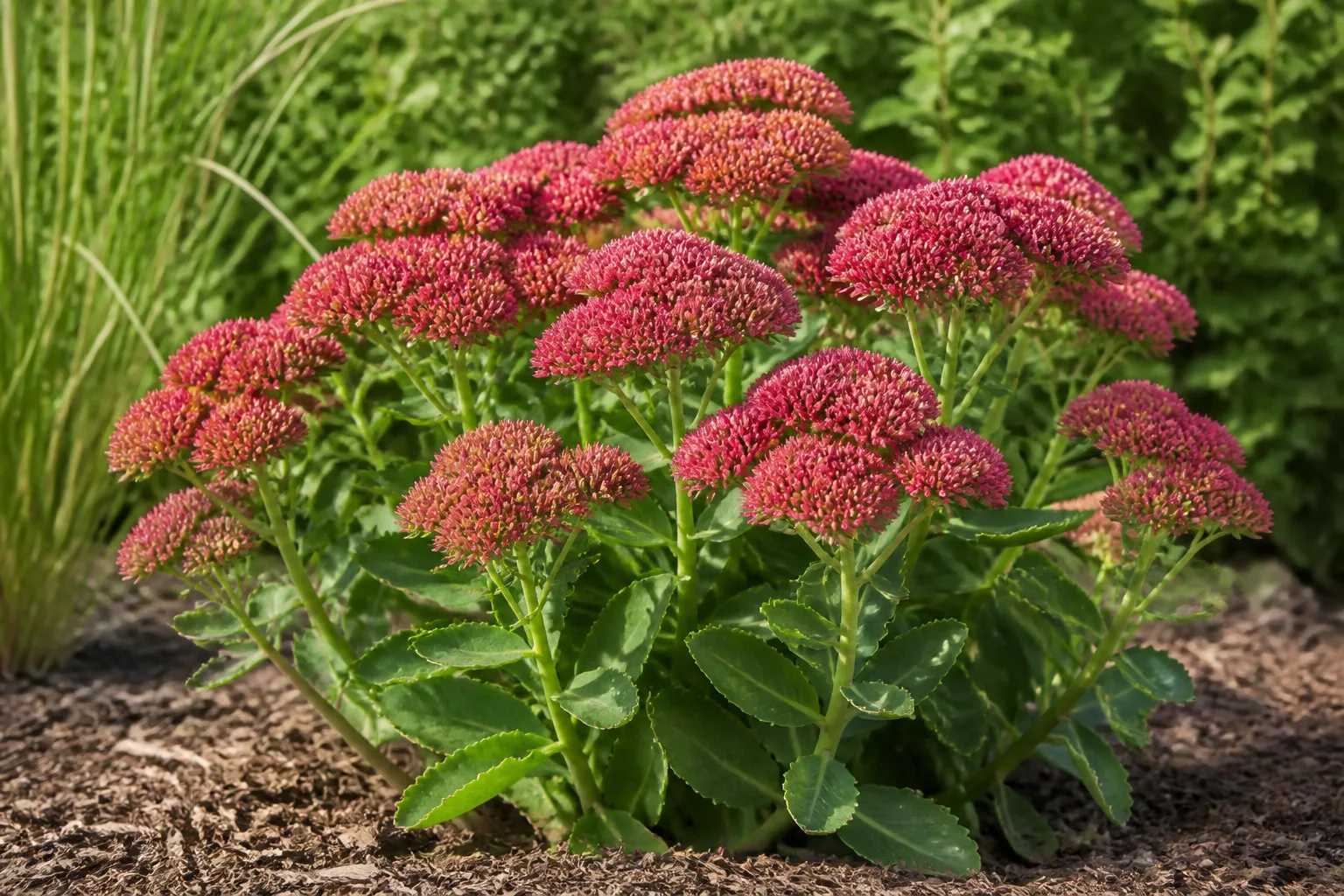
Sedum, also called stonecrop, is one of the most dependable choices for a bed that dries quickly. Its fleshy leaves hold water, and many types tolerate rocky or poor soil once they are rooted. Low-growing sedums spread along the ground, while taller forms produce broad clusters of pink, red, white, or yellow flowers that bring late-season structure to a border.
Why sedum handles heat
The North Carolina Extension Gardener Plant Toolbox profile for sedum describes the genus as succulent, drought tolerant, and suited to coarse, well-drained soil. That combination is useful in a sunny slope, rock garden, green roof, gravel strip, or the hot edge of a patio where moisture disappears quickly.
Sedum is also a good choice when you want foliage interest rather than a plant that must flower continuously. The leaves can remain attractive through a dry period, and taller varieties offer a strong flower display later in the season. If your goal is a groundcover, choose a low type; if you want a pollinator border, look for an upright Hylotelephium or tall stonecrop selection.
Best use and one caution
The main mistake with sedum is treating it like a thirsty bedding plant. Frequent shallow watering or a heavy, wet soil mix can cause soft growth and root problems. Water a new plant deeply enough to settle the root ball, then let the soil dry somewhat before watering again.
Tall sedums can flop when grown in rich soil, shade, or excess moisture. Full sun and a light spring pinch can encourage sturdier stems, but do not keep cutting a plant during a heat wave just to make it look tidy. Leave the dried flower heads through fall and winter if you want structure and bird interest, then cut them back in late winter or early spring.
2. Black-eyed Susan: a reliable pollinator perennial
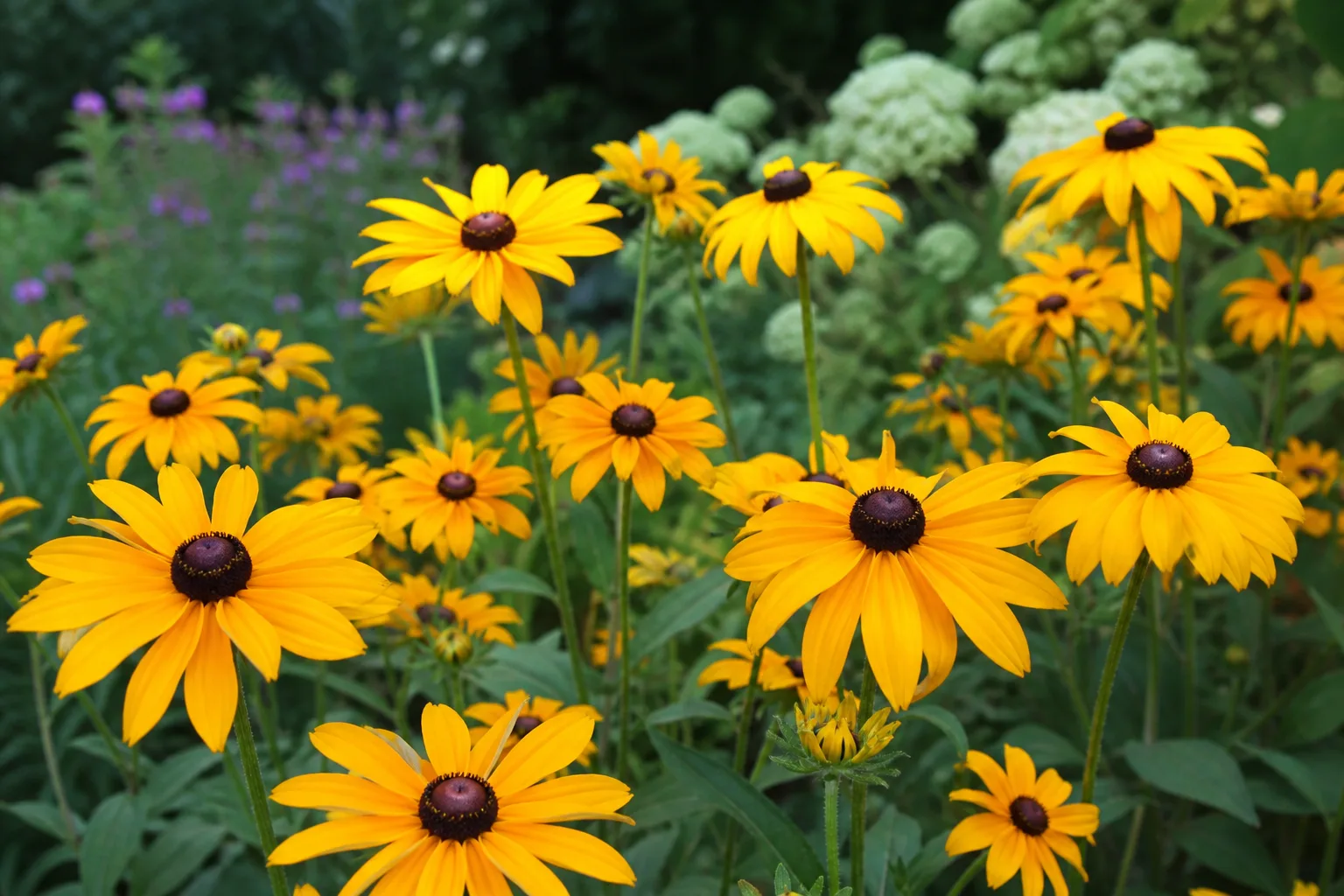
Black-eyed Susan usually refers to Rudbeckia hirta, although the genus contains several annual, biennial, and perennial species. That distinction matters: one plant may return for years, while another may flower strongly for a season or two and then reappear from seed. Check the botanical name and the mature size on the plant tag instead of assuming every yellow Rudbeckia behaves the same way.
Rudbeckia is a strong choice for a hot, open border because it tolerates full sun to partial shade, dry to moist conditions, and poorer soils. The NC State Extension profile for Rudbeckia also records its value to pollinators and seed-eating birds. Its dark-centered yellow flowers are easy to combine with agastache, ornamental grasses, coneflower, or a blue-flowering salvia.
Keep blooms coming without losing the seedheads
Deadheading is optional, not mandatory. Remove spent flowers through summer if you want the plant to look freshly clipped and produce more blooms. Stop deadheading in late summer if you want goldfinches and other birds to use the seedheads, or if you want the plant to self-sow in a naturalized bed.
Give black-eyed Susan enough air movement in humid climates. Dense clumps that stay wet overnight are more likely to develop leaf spots or powdery mildew, and adding more water will not solve that problem. Water at the base in the morning, thin crowded growth when needed, and avoid planting it where a sprinkler keeps the leaves wet every evening.
3. Lavender: fragrant, bright, and particular about drainage
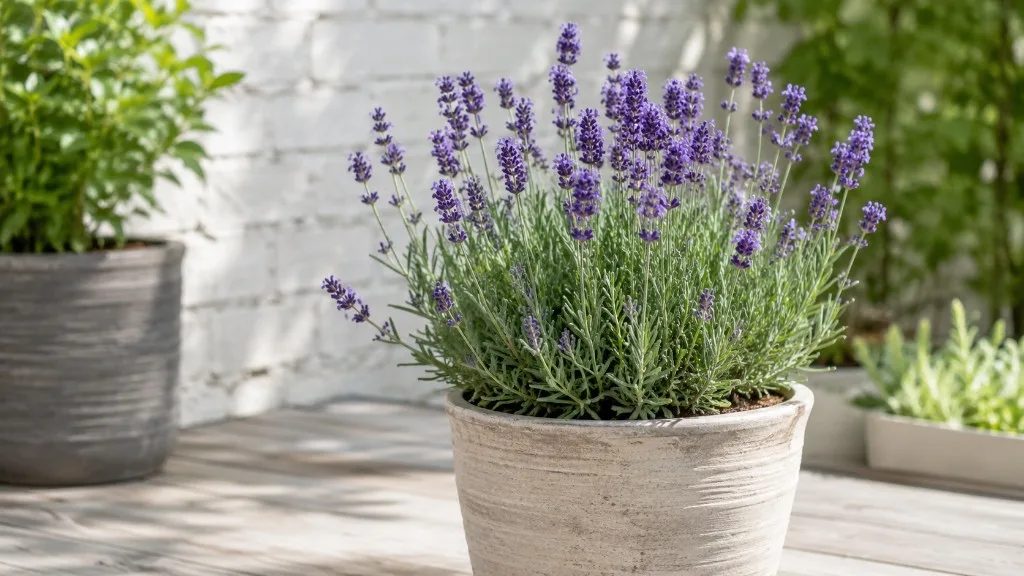
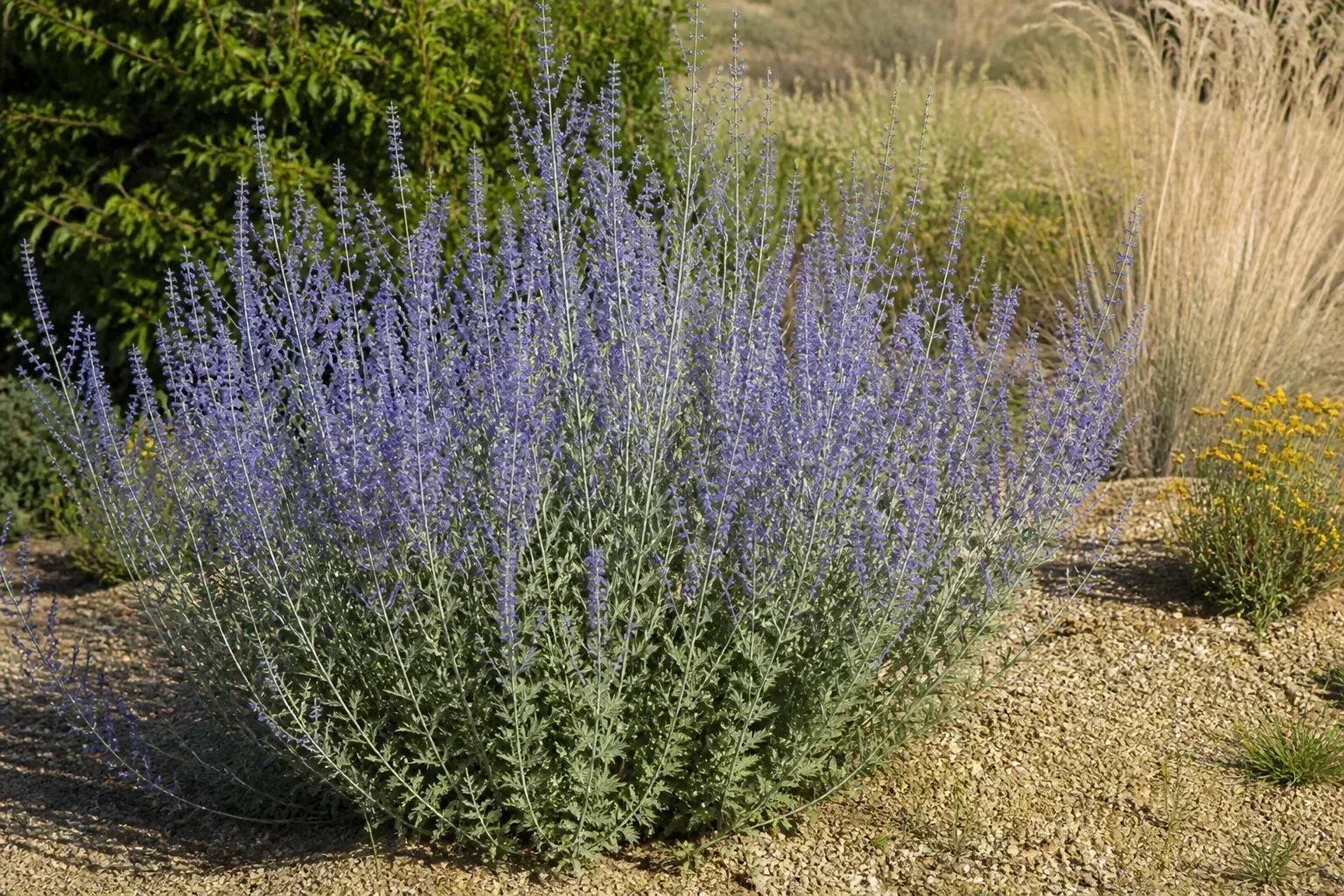
Lavender looks like an obvious heat-wave plant, and it can be—provided the roots are in fast-draining soil and the variety fits the climate. Its gray-green foliage and fragrant flowers are adapted to bright conditions, but lavender is less forgiving of wet clay than many gardeners expect.
The NC State Extension lavender profile makes an important regional distinction: lavender prefers cool-summer conditions and may struggle in the Southeast. In a hot, humid climate, choose a locally recommended cultivar, prioritize airflow, protect it from the hottest afternoon exposure while it establishes, and consider a container or raised bed where you control the soil mix.
Lavender should not sit in a saucer of water or in a pocket where irrigation collects. If your soil is heavy clay, a raised planting area is usually more reliable than digging a small hole and filling it with a dramatically different mix. A hole of loose soil surrounded by dense clay can behave like a bathtub after rain.
Once established, lavender generally needs less supplemental water than lush, soft-leaved flowers. Water when the soil is genuinely dry below the surface, not every time the leaves look slightly less perky at midday. Prune lightly after flowering to keep the plant compact, but avoid cutting deep into old, leafless woody stems because lavender may not regrow from them.
4. Agastache: long flower spikes for hot pollinator borders
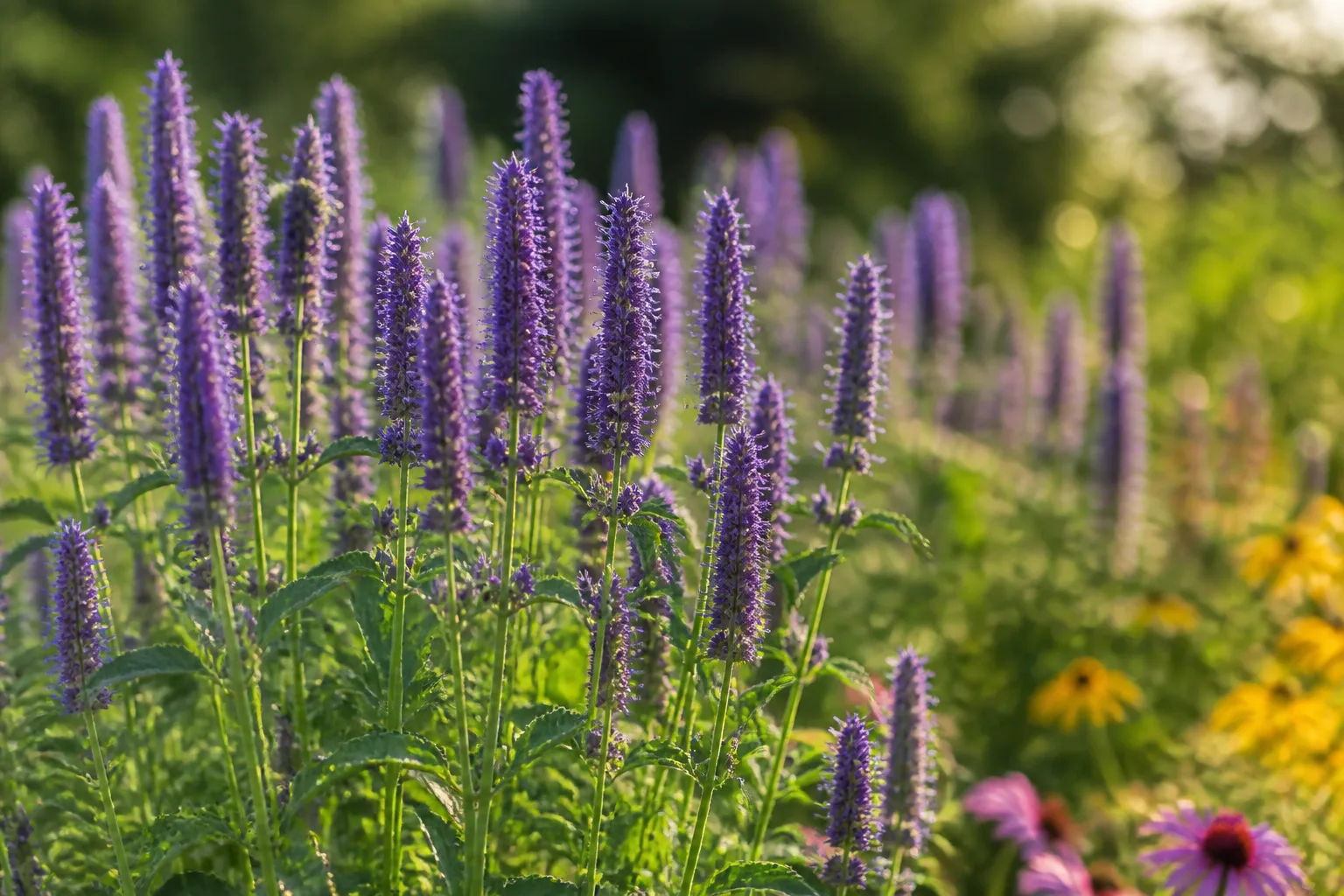
Agastache, often sold as giant hyssop or hummingbird mint, gives a hot garden vertical flower spikes, fragrant foliage, and a long period of pollinator activity. Depending on the species or cultivar, flowers can be blue, purple, pink, orange, or white. It is especially useful when a dry border needs height and nectar rather than another low mound.
Agastache is not merely tolerant of heat; it also needs the right winter and rainy-season drainage. NC State Extension says well-drained soil is essential and recommends a raised bed or container when necessary. Its Agastache profile also points gardeners in hot, humid southeastern conditions toward selections such as ‘Blue Fortune,’ ‘Blue Boa,’ or the Acapulco group rather than treating every species as interchangeable.
Give it at least six hours of direct sun, leave space around the stems, and water consistently while the root ball expands. After establishment, it can handle dry periods, but regular moisture during a prolonged drought usually supports better flowering. The Gardenia Agastache growing guide likewise recommends full sun, well-drained soil, and thorough watering during the first weeks after planting.
Agastache often looks better when you resist over-fertilizing. Too much nitrogen can produce lush foliage that is less sturdy and less useful in a dry border. Cut old stems back in late winter or early spring, then deadhead during summer if you want a tidier look or another flush of flowers. Leave some seedheads if birds are part of the garden’s purpose.
5. Rosemary: a heat-loving herb that hates wet roots
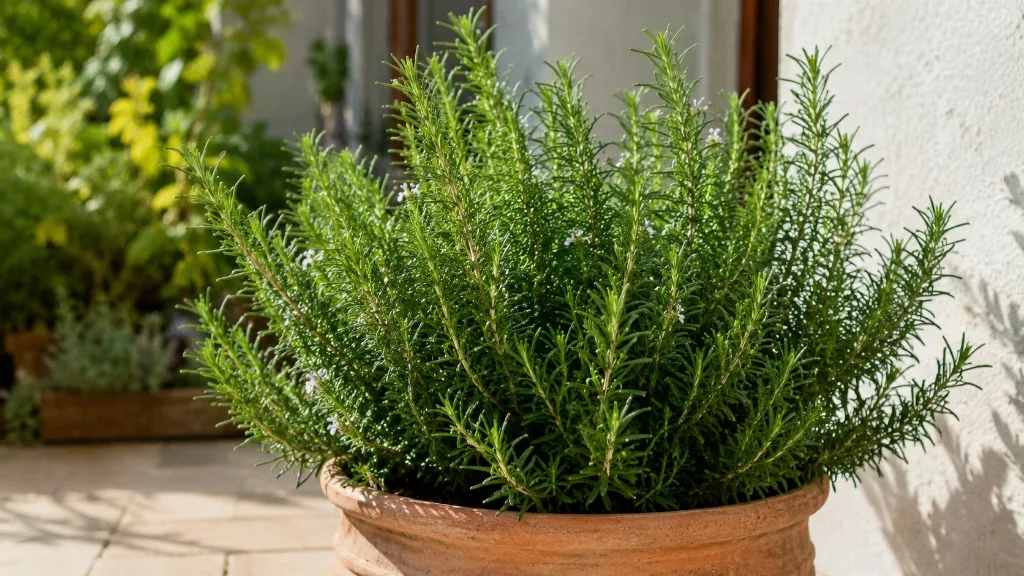
Rosemary is a Mediterranean evergreen shrub with culinary value, fragrant needle-like foliage, and small blue, lavender, or white flowers. It is one of the best choices for a sunny herb border, dry retaining wall, or patio container—especially where you can harvest it regularly and enjoy the scent when you brush past.
The NC State Extension rosemary profile describes rosemary as drought tolerant and suited to light, well-drained soil in full sun. It also warns that wet, humid environments require careful site selection and that overwatering is a common cause of decline or death. That is the practical limit hidden behind the phrase “heat-loving herb.”
In a humid region, rosemary is often easier in a terracotta container or raised bed than in low garden soil. Use a pot with a drainage hole, a coarse mix that does not stay saturated, and enough space for air to move around the foliage. A container dries faster, so check it more often than an in-ground plant; do not compensate for the fast-drying pot by keeping it constantly wet.
Prune after flowering or harvest lightly from the green growth to keep the shape dense. Avoid removing all the leaves from a thick, old branch at once. If an indoor rosemary plant declines after being brought inside, check light, airflow, and watering before blaming the heat outdoors; the transition to a dim, humid room can be harder than summer itself.
6. Blanket flower: nonstop color for poor, dry soil
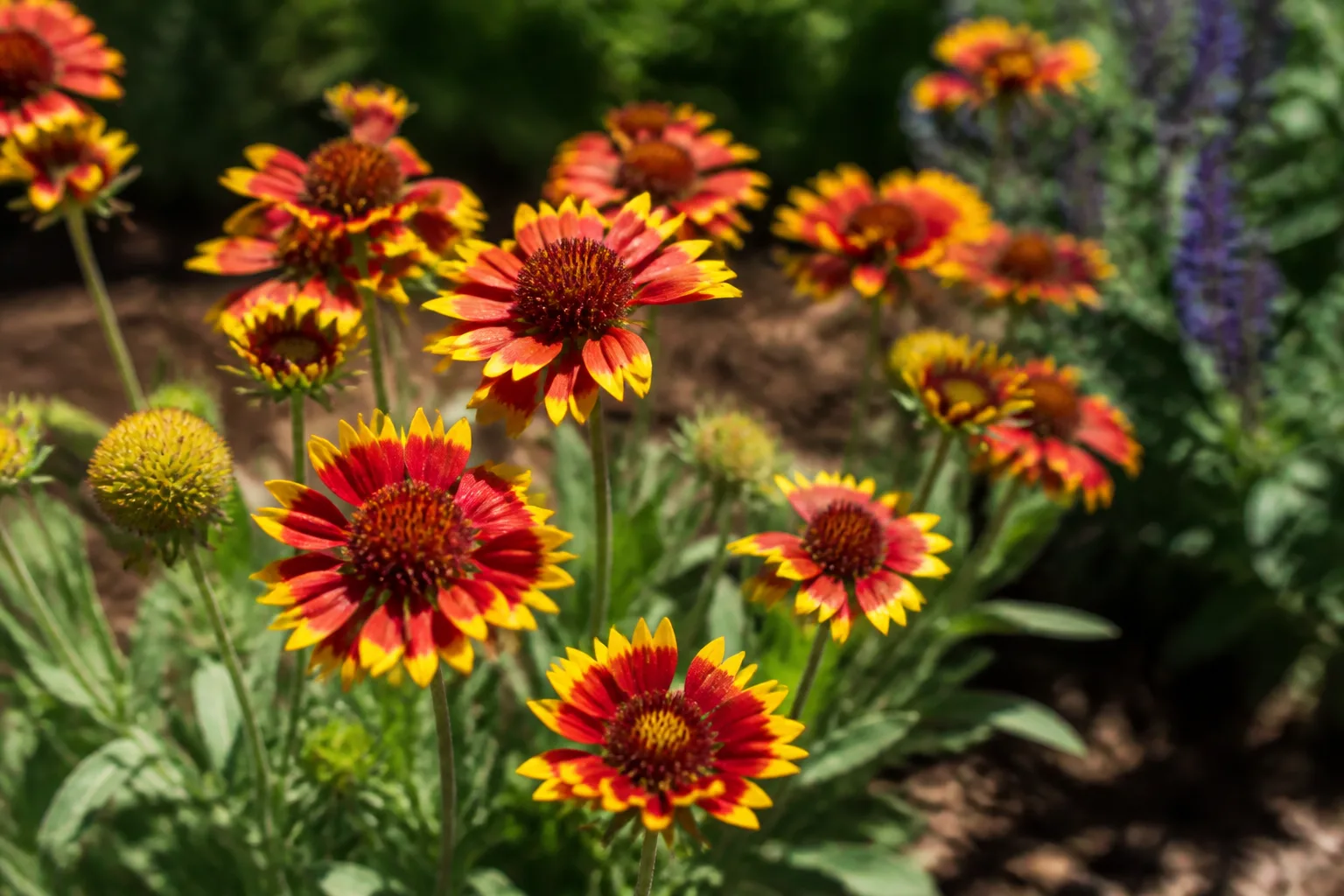
Blanket flower, Gaillardia, is built for bright, exposed conditions. Its red, orange, and yellow daisy-like blooms can keep a summer border colorful when softer flowers flag, and its gray-green foliage fits naturally with ornamental grasses, lavender, sedum, and other plants that prefer lean soil.
The NC State Extension profile for perennial blanket flower describes it as a taprooted native perennial that grows well in hot, dry sites and full sun, though supplemental water may still be needed during extended drought. It also notes that the flowers attract bees and butterflies while the seedheads attract birds.
Blanket flower is a useful choice for a difficult strip because it does not need a rich, heavily fertilized bed to perform. In fact, excessive fertility can encourage soft growth rather than the compact, sturdy habit you want in heat. Water new plants thoroughly, keep the soil lightly and evenly moist while they root, then taper to deeper, less frequent watering.
Annual versus perennial blanket flower
Do not assume every packet or nursery label represents the same life cycle. Gaillardia aristata is a perennial, while Gaillardia pulchella can act as an annual or perennial depending on climate and growing conditions. The NC State profile for Indian blanket flower notes that it is highly heat, drought, and salt tolerant but will not survive waterlogged soil.
Deadhead if you want to keep flowers coming and prevent generous reseeding. Leave a portion of the seedheads if you want birds or a looser, more natural planting. If a blanket flower declines after a wet winter, moving it to a berm or a sharper-draining section will usually help more than fertilizing it.
How to plant for extreme heat
The first summer is when heat-tolerant plants most often fail. They have not yet built enough roots to reach deeper moisture, and a small nursery root ball can become hotter and drier than the surrounding bed. Planting technique matters as much as the plant list.
Water new plants without training shallow roots
Start by soaking the root ball and the surrounding soil slowly so water moves below the surface. A few minutes of surface sprinkling can leave the root ball dry while making the topsoil look wet. Use a watering wand at the base, a soaker hose, or drip irrigation rather than repeatedly wetting the foliage.
For the first weeks, check the soil several inches below the surface. The New York Botanical Garden recommends deep, less-frequent watering over shallow, frequent watering and suggests using a trowel to check moisture. It also notes that many plants need one to two years to establish a strong root system, so “drought tolerant” should never mean “ignore it immediately after planting.”
The right interval changes with soil, wind, temperature, plant size, and rainfall. Sandy soil may need checking more often than loam; a large established plant may need less attention than a small transplant; and a container can dry out in hours during a hot, windy spell. Water based on the root zone, not a calendar.
Mulch, spacing, and fertilizer rules
Apply about two to three inches of mulch to slow evaporation and reduce weed competition, keeping it a few inches away from crowns and woody stems. Use bark or shredded leaves for a conventional border; gravel can suit a rock garden, sedum bed, lavender, or rosemary where you do not want a damp organic layer against the plant.
Space plants for their mature width rather than the size of the nursery pot. Airflow is especially important for lavender, rosemary, and agastache in humid summers, while crowded Rudbeckia is more likely to hold moisture against leaves. If a label gives a range, use the wider spacing in a humid climate or where irrigation is frequent.
Do not fertilize a visibly water-stressed plant during extreme heat. The New York Botanical Garden cautions that fertilizer salts can injure weakened roots, and high-nitrogen feeding can push soft growth when the plant should be conserving water. Wait until the soil is moist and temperatures moderate, then use only the product and rate appropriate for the plant.
What to do during a heat wave
When temperatures spike, inspect the garden early in the morning rather than reacting to every afternoon slump. A plant that wilts at 3 p.m. and stands upright again at dawn may be limiting water loss; a plant that is still limp in the morning needs a closer look at soil moisture, roots, and recent watering.
Use this sequence:
- Check the root zone. Push a finger or trowel below the mulch. If it is dry several inches down, water slowly at the base. If it is wet and the plant is wilting, do not add more water automatically; saturated roots can mimic drought stress.
- Prioritize new plants and containers. Established sedum or rosemary may cope while a newly planted specimen nearby fails. Pots and hanging baskets have little soil volume and heat from every side, so they need more frequent checks than in-ground beds. The National Garden Bureau specifically warns that containers dry quickly even when the plant itself is drought tolerant.
- Water early. Morning watering gives the root zone time to absorb moisture before the hottest part of the day and reduces evaporation. If a plant is in immediate danger and the soil is bone dry, water it when you find the problem rather than waiting for a perfect schedule.
- Give transplants temporary relief. A breathable shade cloth or afternoon shade from a nearby structure can protect a new plant during the worst days. Remove the protection once the heat breaks so full-sun plants do not become weak or leggy.
- Pause major pruning and feeding. Remove broken or fully dead material, but avoid hard pruning, transplanting, or fertilizing a stressed plant unless there is a safety reason. Let it stabilize before asking it to replace foliage.
Heat-tolerant plants are not plants that never wilt, never lose a leaf, or never need water. They are plants that recover more reliably when their roots are established and the site matches their needs. Choose the right plant for the wettest part of the bed, give every new planting a careful first season, and the garden will ask for far less rescue work when the next extreme summer arrives.
Conclusion
For the driest, fastest-draining spot, start with sedum or blanket flower. Choose black-eyed Susan when you want adaptable yellow flowers and bird value, agastache when nectar-rich spikes and fragrance matter, lavender when you can provide excellent drainage, and rosemary when you want an edible evergreen in a sunny, airy location.
The winning combination is not a plant name alone. It is a heat-capable plant, a root zone that drains, deep watering while it establishes, mulch that does not smother the crown, and a gardener who checks the soil before reaching for the hose or fertilizer. Build those conditions first, and extreme summer heat becomes a design constraint—not a season that automatically wipes out the garden.



