Should You Remove Potato Flowers? A Practical Guide
Should you remove potato flowers? Get an evidence-aware answer, learn what green potato berries mean, and use better signs to harvest new or mature potatoes.
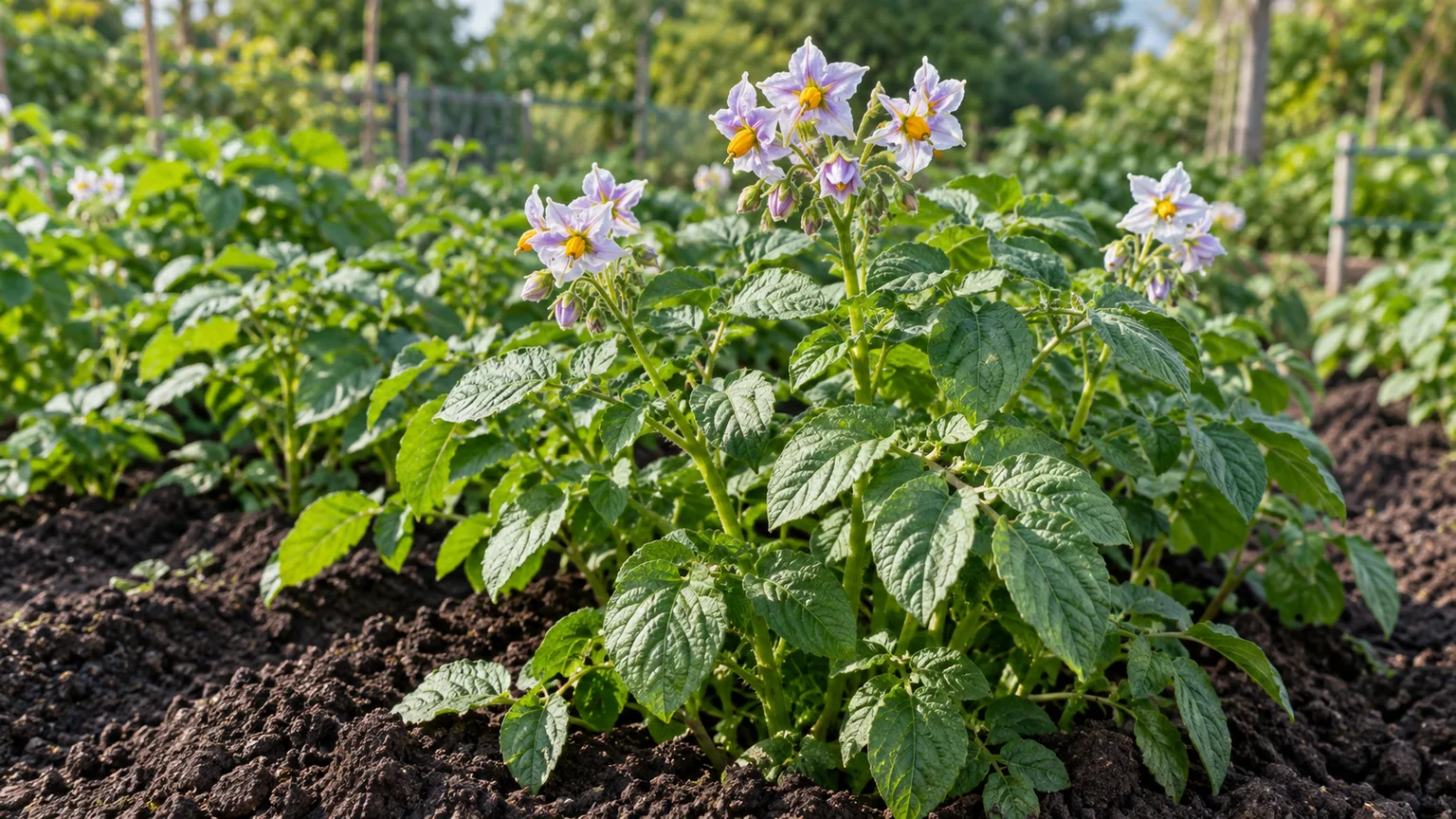
Usually, no. You can leave potato flowers on the plant; removing them is optional and is not a proven shortcut to a bigger harvest. Flowers are a normal part of the potato’s reproductive cycle, but their appearance does not tell you how many tubers are belowground or precisely when the crop is ready.
If you want to keep the plant simple to manage, leave the blooms alone. If flowers have set green fruit where a child or pet can reach, remove the fruit or clip that small fruiting cluster. If you enjoy a tidy plant, pinching a few spent blossoms is fine, but there is no dependable reason to strip every flower in expectation of more potatoes.
The practical move is to focus on the crop: keep moisture reasonably even, protect developing tubers from light, check the seed supplier’s maturity range, and make a small test dig when you want new potatoes. For a storage crop, wait for the variety’s mature stage and dying-back foliage rather than treating the first bloom as a harvest alarm.
The short answer: usually, you can leave them
A potato plant does not need its flowers removed to make edible tubers. Most garden potatoes are propagated from seed tubers, and the tubers develop from underground stolons; flowers are the plant’s route to sexual reproduction. Those processes are related parts of the plant’s biology, but snipping a blossom is not the same as switching on tuber growth.
Leave flowers if they are healthy, attractive, and not setting fruit that someone might eat. Consider removing flowers only if you have a specific reason, such as preventing berries in a high-traffic bed or keeping a container planting neat. You may also remove a few to observe your own plants, but treat that as an experiment rather than a yield technique with a guaranteed payoff.
This answer is intentionally modest: there is a plausible argument that seed or fruit production uses resources, yet that does not prove that flower removal measurably increases the edible crop in a home garden. Variety, temperature, day length, water, nutrition, and the plant’s overall health influence tuber development, and the blossoms are only one visible event in that larger cycle.
What flowering tells you—and what it cannot tell you
Flowering tells you that a potato plant has entered a reproductive phase. It may be a useful rough milestone in the season, especially if you are growing an early cultivar and want to begin checking for tender new potatoes. But it is not a direct view of the underground crop: one flowering plant can have small tubers, large tubers, or a crop still developing, depending on cultivar and growing conditions.
The timing can also be misleading because tuber formation can start before blooms appear. WVU Extension describes tubers developing from underground stolons and says formation may begin when plants are about 6 to 8 inches tall, commonly four to eight weeks after planting.
That is an extension guide for its growing region, not a universal calendar for every seed potato, but it illustrates why “the plant is blooming, so tubers are only just starting” is not a safe assumption. WVU Extension’s potato-growing guide explains the stolon and tuber sequence.
Think of bloom as one observation, not a diagnosis. If a plant is flowering while the leaves remain vigorous and the stems are healthy, continue ordinary care. If it is flowering while the foliage is yellowing unusually early, spotted, collapsing, or stressed by drought or waterlogging, investigate those symptoms separately; the flower itself does not explain the problem.
Flowers, berries, seeds, and tubers are different structures
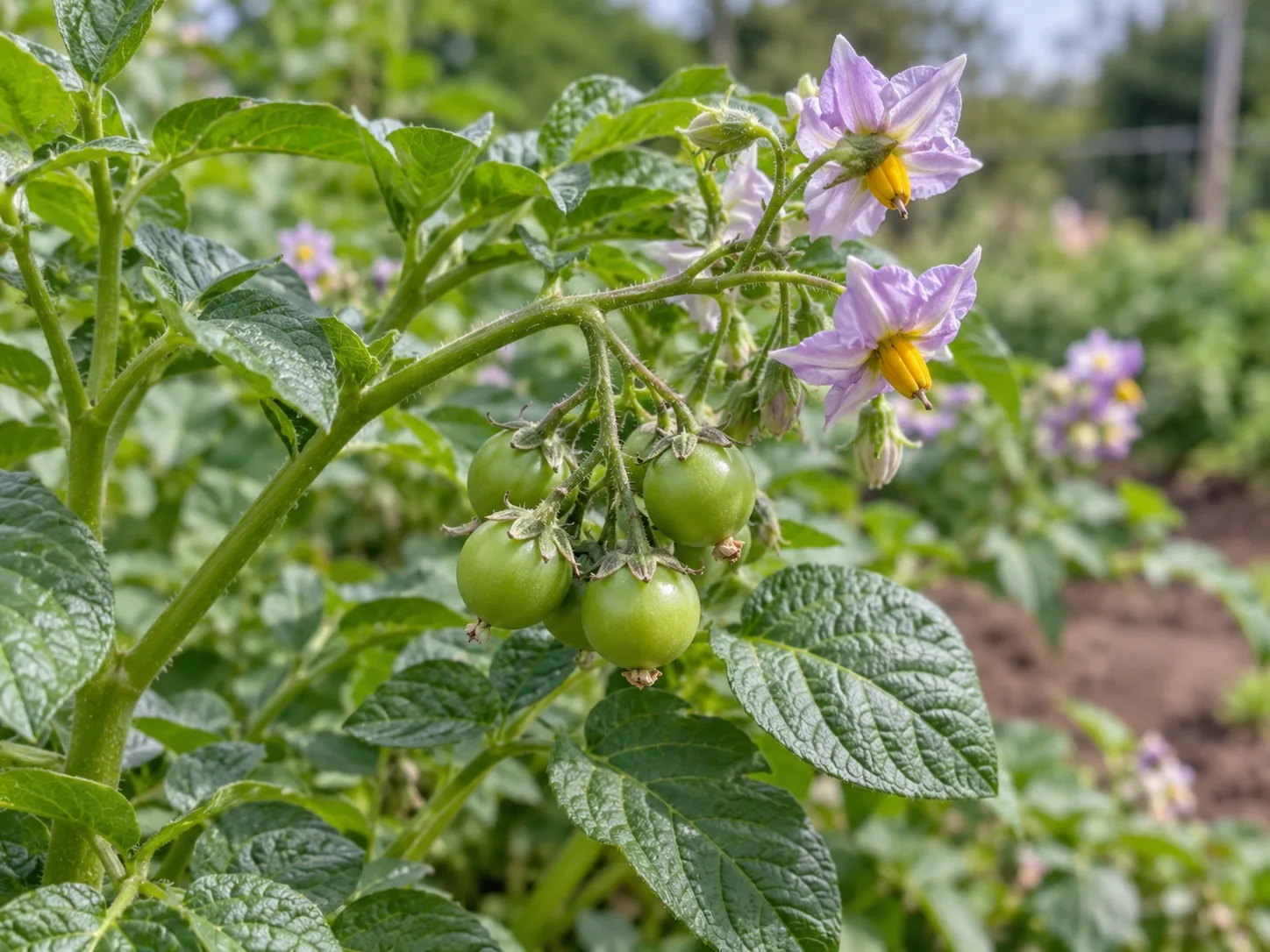
The white, pink, purple, or blue blossoms are flowers. If pollination and fertilization succeed, a flower may develop into a small green berry aboveground. Inside that berry are true botanical seeds.
By contrast, the familiar potato is an underground storage tuber: a swollen stem that can sprout a genetically similar plant when conditions are right. “Seed potato” usually means a tuber or tuber piece planted to grow the next crop, not the tiny seeds inside the berry. NC State Extension’s potato profile describes both the underground tubers and the plant’s flowers and fruit.
That distinction matters when you decide what to remove. Cutting a flower does not pull out a developing potato, and harvesting tubers does not require the plant to set berries. A potato that never flowers can still produce tubers; a potato that flowers has not promised you a particular number, size, or maturity of them.
What potato flowers look like
Potato blooms are small, five-part flowers, often gathered in clusters near the ends of stems. Their colors vary by cultivar and can include white, pink, lavender, purple, or blue tones. The yellow center is made up of reproductive structures; the flower’s shape can look familiar if you have grown tomatoes or eggplants, since potatoes belong to the same nightshade family.
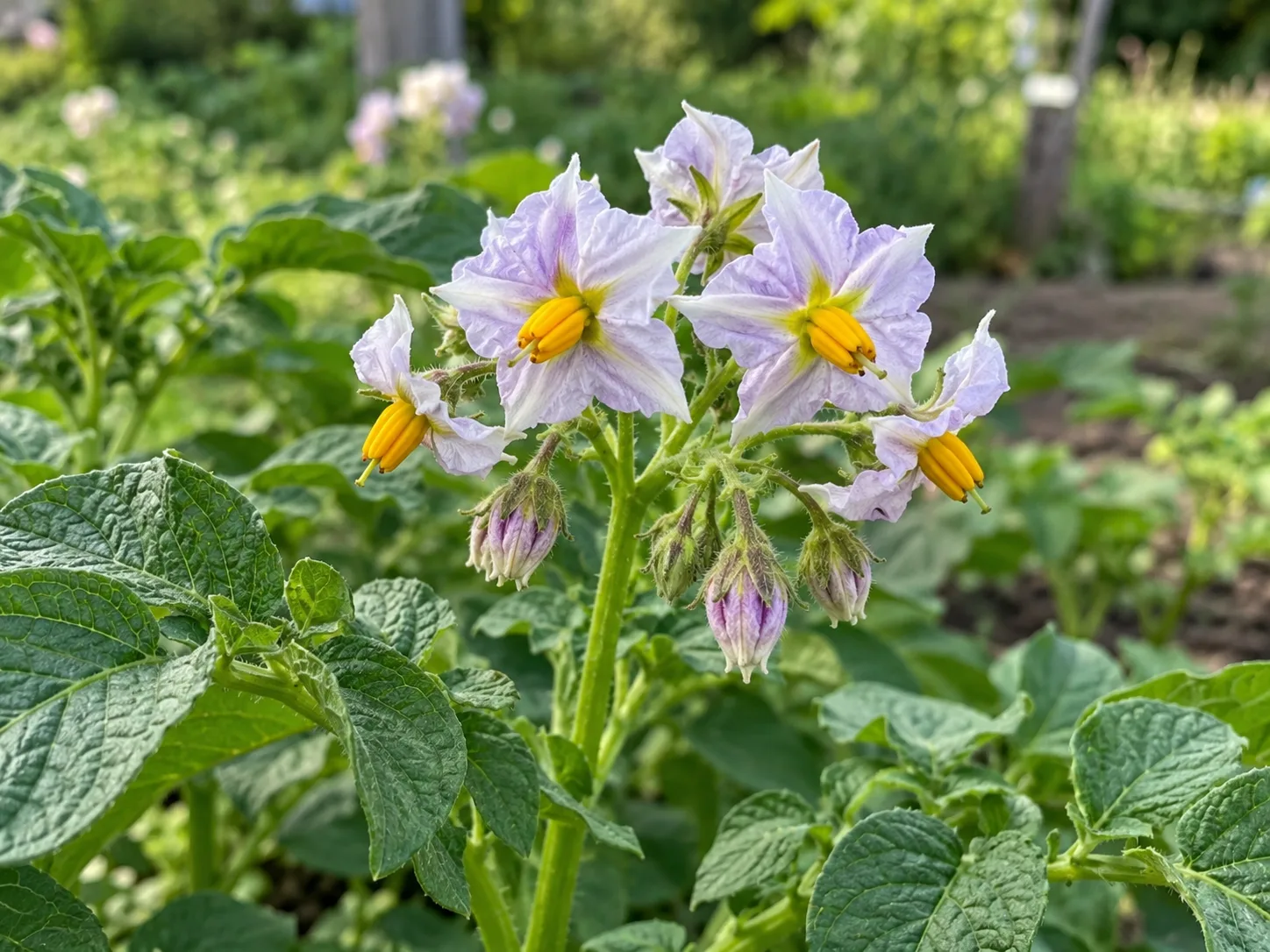
The flowers may open over a stretch of days rather than all at once. Some drop without forming fruit, while others may leave behind a small round green berry.
This variation is normal; Gardening Know How’s overview of potato flowering also describes blossoms that either fade or develop into fruit. Do not assume that a flower has been pollinated just because it faded, and do not mistake a berry for a potato growing above the soil.
Flower color is not a reliable way to identify the variety or predict the color of the underground tubers. If you want to know which cultivar you planted, use the seed-potato label or your planting notes. Flowers can be interesting to observe, but the useful crop decisions still come from plant health, the variety’s expected season, and a gentle check of the tubers.
Why one potato variety blooms and another may not
Potatoes vary in how readily and when they flower. Some cultivars bloom heavily; others set only a few blossoms or rarely flower in a particular garden. Temperature, day length, plant age, light, nutrition, and other growing conditions can influence flowering and reproductive success, so comparing two varieties side by side does not mean one is automatically healthier or more productive.
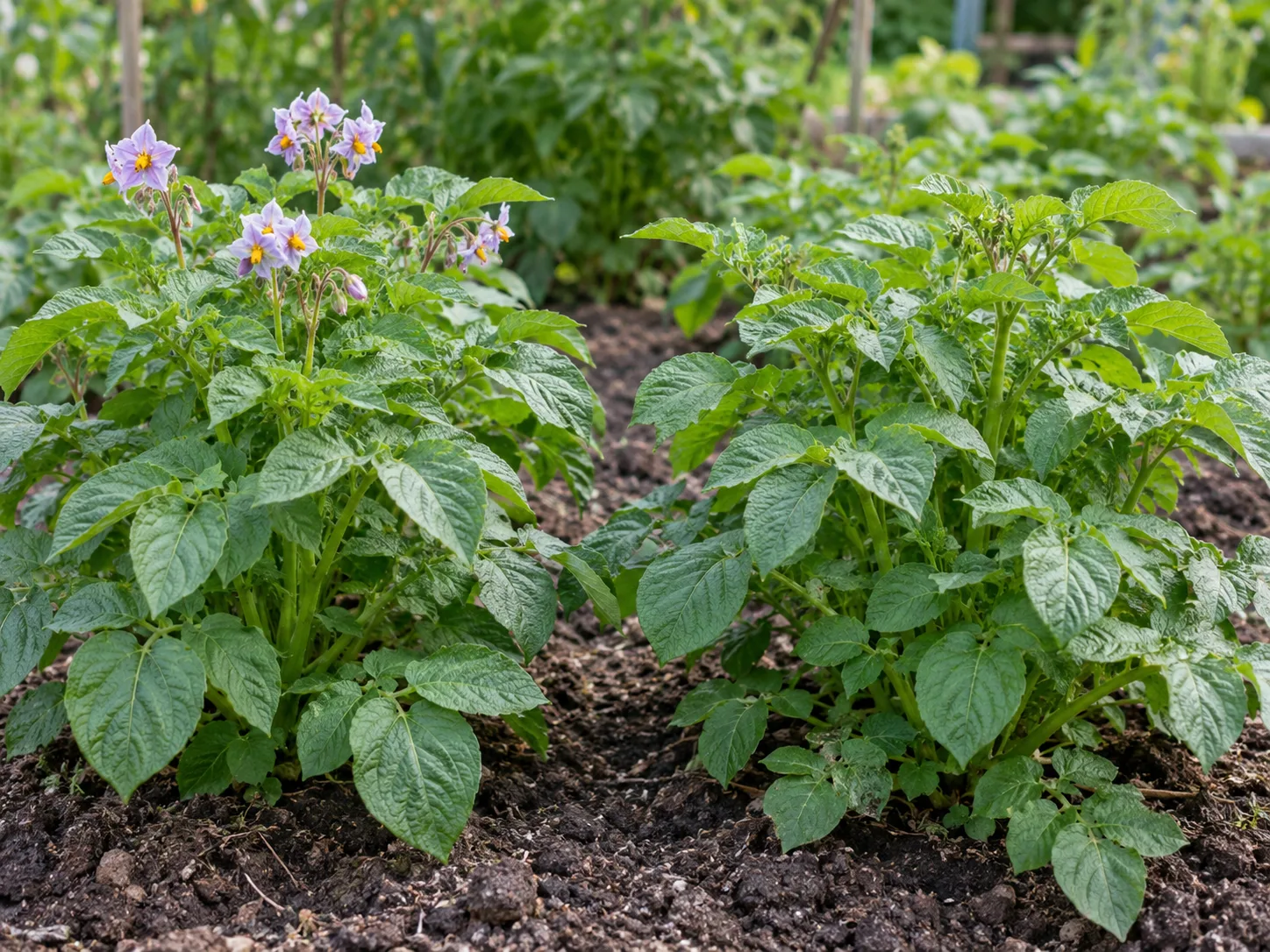
Potato research treats flowering and tuber formation as distinct developmental processes with shared regulatory signals and environmental influences. A 2025 review in Physiologia Plantarum describes how the two processes respond to overlapping pathways, while also noting gaps in what is known about potato flowering.
That is another reason to avoid turning bloom into a universal yield gauge. The peer-reviewed review focuses on potato flowering and tuberization biology.
If your plants are leafy and healthy but do not flower, keep caring for them according to the cultivar and local season. Do not dig the crop early solely because you expected blooms by a certain week, and do not add extra fertilizer to “force” flowering. Excess nitrogen can encourage leafy growth at the expense of tuber development, as WVU Extension cautions in its growing guidance.
Does removing potato flowers increase yield?
There is no dependable, across-the-board yield increase that a home gardener should expect from removing potato flowers. The popular theory is that the plant will spend less energy on flowers, berries, or seeds and direct more toward tubers. That reasoning sounds possible, but the plant’s energy budget is not a simple one-for-one exchange, and an explanation of resource competition is not the same thing as evidence that clipping flowers makes a measurable difference to the harvested crop.
Potato tubers are storage organs produced on stolons belowground, while flowers and possible berries develop on aboveground shoots. Both draw on the plant’s photosynthesis and growth, and crop development responds to cultivar and environment.
A review of potato reproductive success discusses competition between reproductive structures and tubers among the factors involved in reproduction; it does not establish a universal home-garden yield benefit from pinching off blooms. That distinction is important: a biological interaction may be real without supporting a blanket pruning recommendation.
For a gardener, the cost-benefit calculation is straightforward. Removing one bloom takes little time, but repeatedly inspecting and stripping a whole row takes time and can break stems or remove leaves if done carelessly. Without a reliable yield benefit, leave flowers unless there is a concrete reason to remove them, such as unwanted berries within reach of children or pets.
What the evidence does and does not establish
The extension and research sources reviewed for this guide support three practical conclusions: flowering is normal, tuber formation is governed by its own underground developmental process, and bloom timing varies. They do not provide a robust replicated home-garden trial showing that flower removal reliably increases potato yield across cultivars and conditions. That means the honest answer is “not demonstrated as a dependable practice,” rather than “it can never matter in any cultivar or environment.”
If you want to test the idea, keep the comparison small and fair. Use the same cultivar, planting date, spacing, soil, watering, and care in two similar sections, remove blossoms from only one, and harvest both at the same maturity.
Weigh the total crop and compare tuber size and quality, not just the largest potato from each side. One season in one garden cannot establish a universal rule, but it can tell you whether the extra work seems worthwhile in your own conditions.
When removing flowers makes sense
Remove flowers when you have a clear management goal, not because the plant is doing something wrong. If flowers are developing into fruit in a play area, shared garden, or pet-accessible container, removing the forming berries is a sensible precaution. If you would rather prevent fruit before it forms, you can pinch off a flower cluster, though a missed bloom may still produce fruit and removing every flower can become repetitive.
You might also trim a few blossoms for appearance or to keep a small container planting tidy. That is a preference choice. Flowers can add seasonal interest and are part of the plant’s normal cycle; there is no horticultural emergency when they appear.
Skip flower removal if it means pulling, bending, or cutting into the main stems. A potato plant needs healthy foliage to gather energy, and aggressive pruning of leaves or stems can reduce its capacity to grow. If a stem is diseased or badly damaged, diagnose and manage that issue separately instead of treating all flowers as the cause.
How to remove potato flowers with minimal disturbance
Choose a dry moment when the foliage is easy to see and the plant is not wilted from midday heat. Wash your hands or use clean scissors; then pinch the flower cluster just below its small stem or snip the flower stalk without cutting into the main shoot. The goal is only to remove the bloom or berry cluster, not to shorten the leafy stem.
If the flowers have already faded and small green berries have formed, remove the berries at their short stalks. Check underneath leaves and among neighboring stems, since fruit can be partly hidden. Collect all removed material in a container and discard it in household trash if children or pets could access it; do not leave questionable fruit where it can be picked up later.
Do not strip all the leaves to remove flowers, and do not dig around the plant to “help” the crop when it is flowering. If you are curious about harvest progress, a careful test dig at the edge of the plant is more informative than flower removal. Re-cover the exposed soil after checking so remaining tubers stay protected from light.
If flowers become green berries, here is what to do
Potato berries can look like tiny green tomatoes. Their appearance is normal when flowers have been pollinated and the fruit has developed; it does not mean your potatoes have turned into tomatoes or that the edible tubers have stopped growing. Many plants never produce visible berries, and some flowers simply fade and drop.
The NC State Extension profile identifies solanine and other alkaloids as toxic compounds in potato plant parts, including fruits, leaves, stems, sprouts, and green tuber skin. Treat potato berries as inedible: do not taste them, cook with them, or let children or pets play with them. If fruit is out of reach and no one will handle it, you can leave it attached; removing it is a household safety choice, not a way to make the underground crop safe or larger.
Potato berries are not edible potatoes
The berry is a fleshy fruit that contains true seeds. It is botanically different from an edible tuber, which is a swollen underground stem.
A green berry is not a “baby potato,” and its tomato-like appearance is not a reason to taste it. NC State Extension lists the fruit and other green parts among the inedible, toxic parts of the plant; keep the berries away from children and animals, and seek appropriate poison-control or veterinary advice if ingestion is suspected.
True potato seed can be used by breeders and gardeners interested in growing from seed, but it is a different project from growing a predictable food crop from certified seed tubers. Seed-grown plants can vary and take more time to evaluate. For a typical edible harvest, use sound seed potatoes and follow the cultivar’s directions rather than harvesting berries to replace them.
When to harvest: better cues than the first bloom
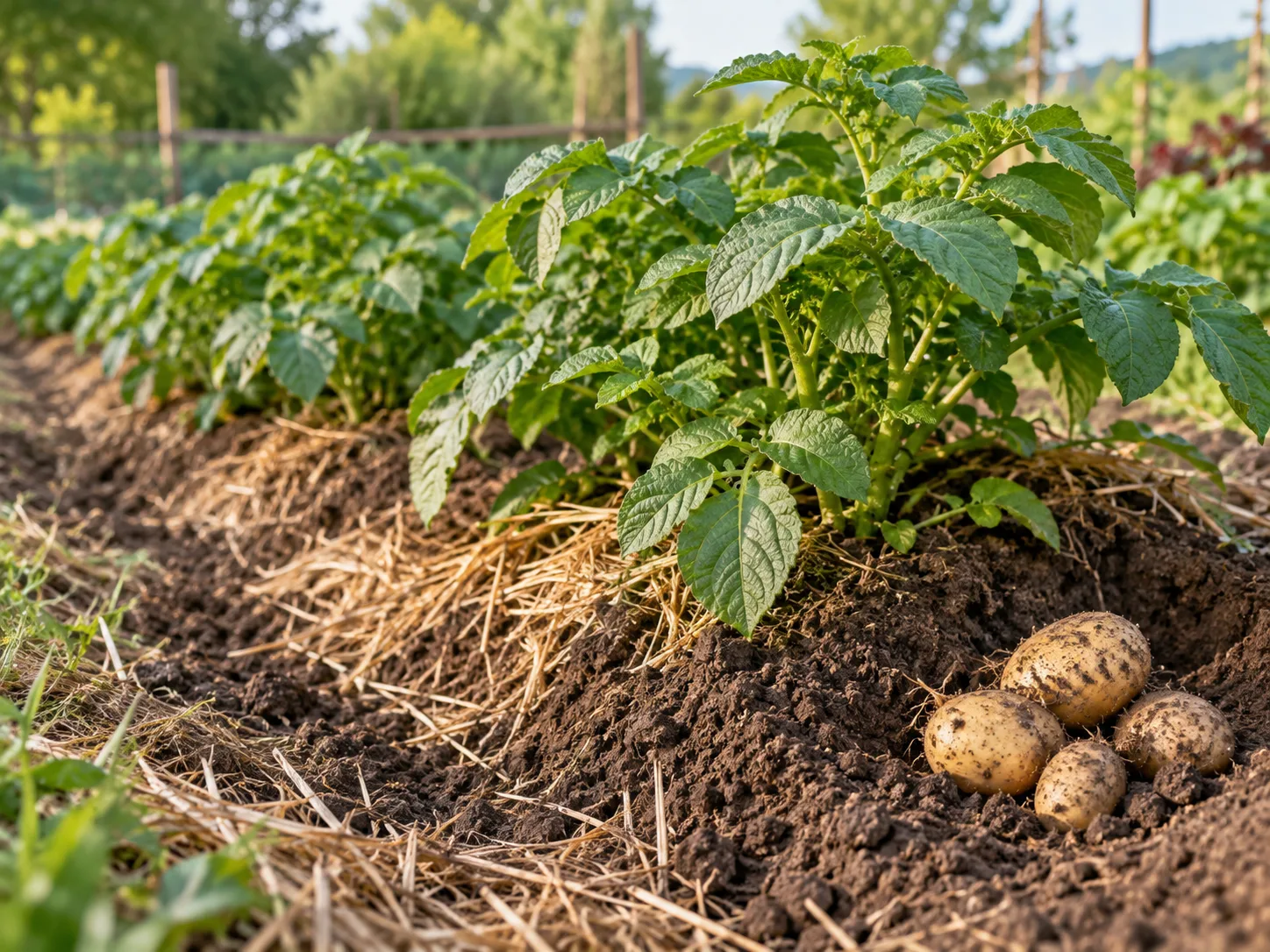
Use flowers as a prompt to check, not as a countdown clock. If you want new potatoes, gently test one plant or the edge of a row after the crop has had time to develop.
NC State Extension notes that new potatoes can be harvested once plants begin to flower; other local guidance uses a short waiting period after bloom. The practical answer is to feel for the size you want and avoid disturbing the rest of the plant if the tubers are still too small.
For a mature storage crop, wait until the cultivar has approached its expected days to maturity and the tops yellow and die back naturally, unless disease or frost forces an earlier harvest. WVU Extension describes harvesting new potatoes around three weeks after flowering and the main crop after vines die back; its date ranges are useful regional examples, not fixed dates for every garden. BBC Gardeners’ World Magazine’s potato guide likewise distinguishes small early potatoes from maincrop potatoes harvested after foliage dies back.
A test dig removes guesswork without requiring you to uproot the whole row. Loosen soil gently a few inches away from the stem, feel for tubers, and lift one or two from the outer part of the root zone.
Stop if you find only very small tubers and the foliage is healthy; replace the soil and check again later. If the tubers have reached the size you want and you are ready to eat them fresh, harvest selectively.
New potatoes and storage potatoes have different readiness signs
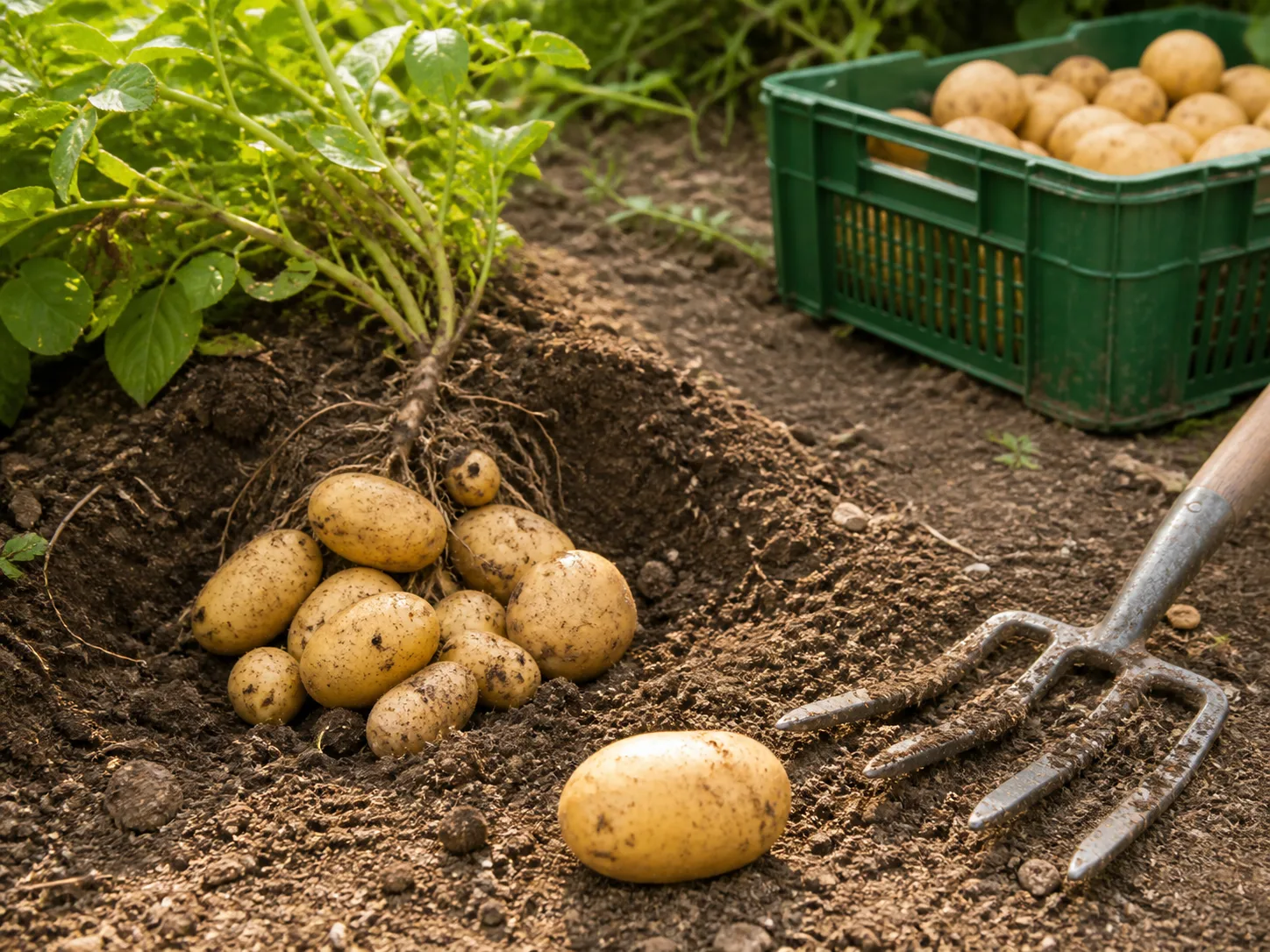
New potatoes are immature tubers harvested for their thin skins and tender texture. You do not need to wait for all foliage to die, but the tubers should be large enough for your use. Their skins can rub or bruise easily, so handle them gently, harvest only what you plan to use soon, and expect a shorter storage life.
Mature potatoes for longer storage need time for the skins to set. A common sign is that the vines have yellowed and died back as the crop reaches maturity; a sample tuber should have a skin that does not rub off readily when handled gently.
The expected time depends on whether you planted an early, midseason, or maincrop cultivar, as well as weather and local planting date. Use the seed supplier’s maturity estimate as a guide and the plant and test dig as the decision check.
Harvest on a day when the soil is workable rather than saturated. Use a fork carefully, starting outside the plant’s base to reduce cuts and punctures. Brush soil away rather than washing potatoes intended for storage, let damaged tubers be used first, and cure/store the rest using a local extension recommendation for your conditions.
What to do for the crop while it is flowering
Keep soil moisture steady, especially through tuber development, but avoid leaving the root zone waterlogged. WVU Extension emphasizes consistent moisture during bloom and tuber formation; the exact water need changes with rainfall, temperature, soil texture, and whether the potatoes are in a bed, container, or grow bag. Check the soil rather than watering on a rigid weekly schedule, and make sure containers drain freely.
Maintain the soil cover around the base of the stems so developing tubers are not exposed to light. If rain or settling exposes a potato, cover it with soil or an appropriate mulch. NC State Extension notes that tubers exposed to sunlight can green and develop toxic compounds; hilling is a practical way to keep the underground crop protected as stems grow.
Do not apply a heavy high-nitrogen fertilizer just because flowering has begun. Extra leafy growth is not the same as extra potatoes, and late-season nutrient additions are not a substitute for adequate light, moisture, and sound soil structure. If foliage is pale or growth is weak, look at the growing conditions and follow a soil-test-based plan rather than using blooms as a fertilizer signal.
Mistakes that make the flower signal misleading
The first mistake is harvesting the entire crop as soon as the first bloom opens. That may be too early for larger tubers, particularly if you are growing maincrop potatoes. Use the flower as a prompt for a test dig and let the tuber size you want determine whether to harvest a few now or wait.
The second is assuming that a plant without flowers has failed. Flowering varies by cultivar and conditions, and potatoes form tubers belowground. Check the plant’s overall growth and the seed variety’s maturity window; if you need to know what is happening, inspect one plant carefully rather than waiting for a bloom that may not appear.
The third is believing flower removal guarantees a larger crop. No pruning choice can offset poor drainage, uneven moisture, insufficient soil cover, disease, heat stress, or a variety that does not match your growing season. Keep notes on planting date, cultivar, bloom timing, and harvest results if you want to understand your own garden’s pattern.
Finally, do not confuse potato berries with edible tomatoes or edible tubers. Their appearance may be surprising, but the safe response is straightforward: leave them alone or remove them carefully, keep them away from children and pets, and never taste them.
Conclusion
You usually do not need to remove potato flowers. Leave them if they are harmless and you enjoy seeing them; remove flower clusters or berries when you have a practical reason, especially to prevent children or pets from reaching the fruit. The evidence does not support promising a larger potato harvest from routine flower pinching.
Use bloom as a rough seasonal clue, then make the real decisions from cultivar maturity, foliage condition, and a careful test dig. Harvest new potatoes when they have reached the size you want, and allow storage potatoes to mature until the tops die back and the skins set. A flower tells you the plant is flowering; it cannot tell you the tuber count or exact harvest date.



