How to Grow and Care for Protea Plants
Choose a protea for your climate, then get the lean soil, careful watering, pruning, and container details needed for healthy growth and blooms.
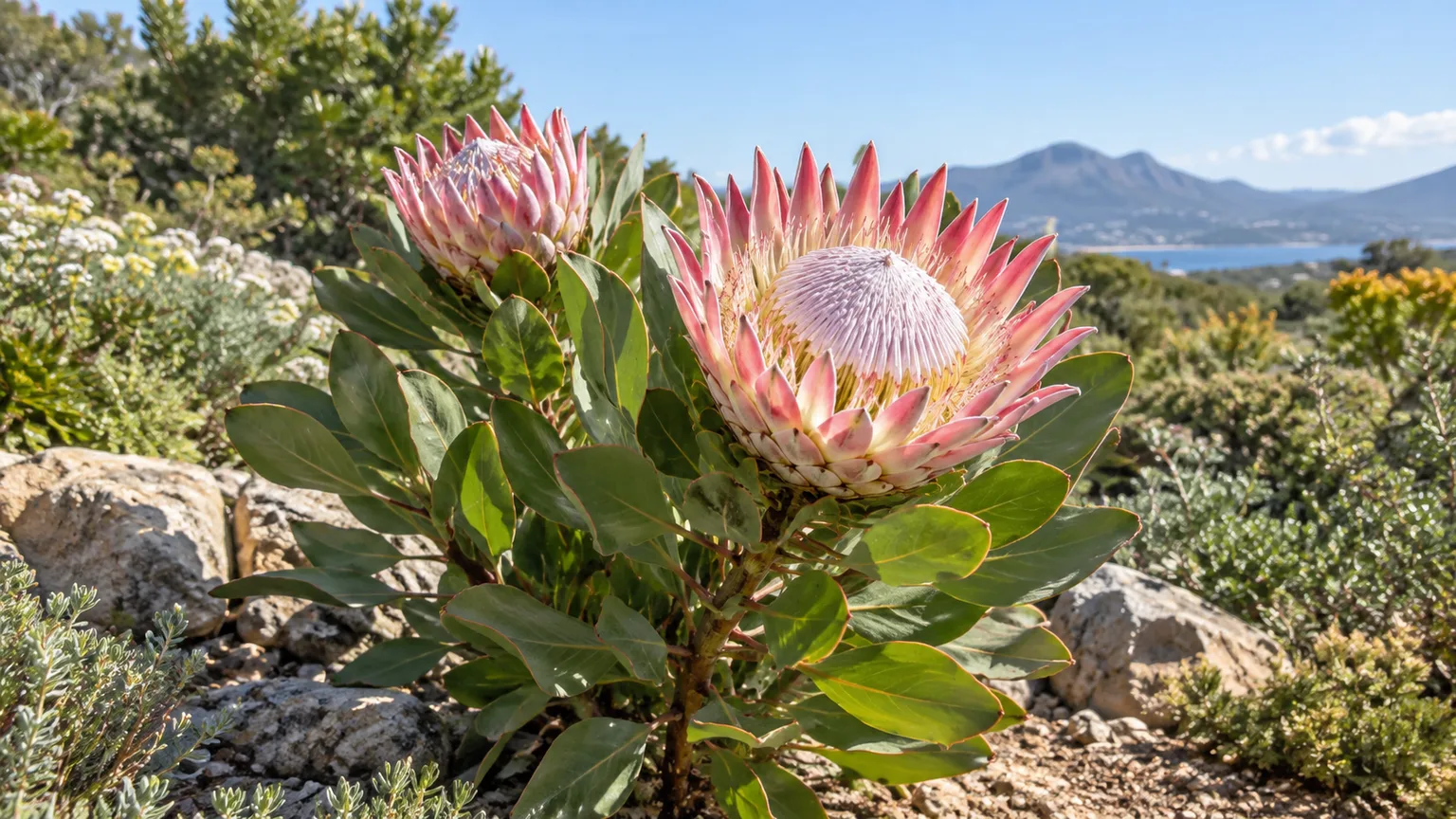
Proteas reward the right site with long-lasting, architectural blooms, but they are not interchangeable with ordinary shrubs. Read the botanical name on the tag and check climate needs: species come from different rainfall patterns, elevations, and frost conditions, and related Proteaceae such as pincushions are not true Protea. Start with plant identity, then provide sun, moving air, an oxygen-rich root zone, and establishment water without leaving the roots wet.
The practical rule is simple: choose for your climate first, build drainage second, and water according to the plant’s age and soil—not a fixed calendar. Most established garden proteas need little fertilizer, and phosphorus-rich products can be especially risky. The details below help you tell when that general pattern fits your plant and when a species label or local Protea nursery should take precedence.
Start With the Right Kind of Protea
Distinguish Protea From the Larger Proteaceae Family
“Protea” can mean the genus Protea or, informally, several dramatic flowering shrubs in the wider Proteaceae family. The distinction matters because the familiar pincushion is usually Leucospermum, conebush is Leucadendron, and spiderhead is Serruria. They share a family and some broad needs—sun, air movement, and careful attention to drainage—but their growth habits, flowering cycles, frost response, and pruning tolerances are not identical. The botanical name, rather than a nursery’s shorthand “protea,” is the best starting point for care.
True Protea species range from low shrubs to large, spreading plants. The King Protea (P. cynaroides) is prized for its broad crown-like flower head; sugarbush (P. repens) and P. neriifolia have different forms and site tolerances. The Protea Atlas Project describes the group’s leathery leaves as adaptations to water-saving and nutrient-poor conditions, but leaf shape and surface still vary by species. Do not assume that the leaf or flower in a photograph represents every plant sold under the same common name. The Protea Atlas Project’s leaf overview explains why protea foliage looks and behaves differently from softer garden shrubs.
Choose a Species for Your Climate and Space
Use the tag or ask the grower for the full species or cultivar name, mature height and width, expected bloom season, and minimum temperature for the plant’s provenance. A label that says only “Protea” does not give enough information to assess winter risk. If a local specialist recommends a plant for coastal conditions, that advice may not transfer to a hot inland valley or a humid summer-rainfall region.
| Plant sold as | What it is | What to check before buying |
|---|---|---|
| King Protea | Protea cynaroides | Mature spread, local cold exposure, and whether a compact cultivar suits a pot |
| Sugarbush | Protea repens | Local rainfall pattern, size, and the nursery’s guidance for your site |
| Pincushion | Usually Leucospermum | Species-specific heat, frost, and pruning needs; it is related, not a Protea |
| Conebush | Leucadendron | Species or cultivar, because foliage, sex expression, size, and hardiness vary |
The table is a shopping filter, not a universal care chart. In the grower-oriented guide, GrowVeg emphasizes selecting a size and variety suited to the local garden; a named plant’s requirements are more useful than a generic “proteas are hardy” claim. GrowVeg’s Proteas Grow Guide likewise recommends choosing by site and notes that these shrubs vary considerably in size.
If pets or young children may chew plants, do not infer safety from a common name. I could not verify genus-wide toxicity in the searchable ASPCA plant database or Cornell’s dog database; absence from a list is not proof of safety. Keep an unidentified plant out of reach and contact a veterinarian or poison-control professional after ingestion.
Check Climate Before You Plant
Climate fit involves more than the lowest winter temperature. South African proteas come from coastal and mountain habitats, and their native rainfall spans very different patterns. The SANBI/Kirstenbosch cultivation reference Grow Proteas distinguishes winter-rainfall plants that need excellent air circulation and cool nights from summer-rainfall species that are generally more tolerant of humid summers. It also describes meaningful frost differences among species and even ecotypes; some are only tolerant of short, light frost after establishment, while others withstand colder brief events. The full Grow Proteas reference is a useful species-level source for these differences.
Treat a hardiness-zone number as a rough screen, not a promise. A plant may survive a brief dip but lose flower heads, or a young shrub may be damaged at a temperature an older plant tolerates. Cold air collecting in a low spot, wet soil during a cold spell, and exposure to wind can make the same temperature more damaging. Conversely, a protected coastal garden may avoid extremes that occur a few miles inland.
Humidity and warm nights also matter. A sunny, dry site with space between shrubs is generally safer for a species from a Mediterranean-type climate than a sheltered, crowded corner that stays damp after irrigation. But “all proteas need hot, dry weather” is too broad: species from different habitats differ, and some occupy naturally moist sites while still requiring an aerated root zone. Match the plant’s provenance to the region’s seasonal pattern, and ask a specialist if summer humidity or winter frost is close to the plant’s limit.
If your climate is marginal, buy from a local specialist rather than trusting a zone chart for an unidentified seedling. Use a container only if the cultivar suits it and you can protect the roots from seasonal extremes; pots can overheat in summer and chill faster in winter. If neither setup fits, choose a locally adapted Proteaceae.
Decide Between a Garden Bed and a Container
Plant in the ground when you have a sunny, well-drained location and can leave the shrub undisturbed for years. A slope, raised bed, or open coastal border can provide the drainage and air movement many proteas prefer. Give the mature plant room on all sides; close spacing reduces airflow and makes later pruning or diagnosis more disruptive.
A container makes sense for a compact species or cultivar when winter cold would otherwise be risky, or when the existing soil stays wet. It also lets a gardener control the growing medium. Choose a stable pot with generous drainage holes and enough volume for the plant’s expected roots, but avoid placing it inside a watertight decorative cachepot where water can collect. Use a coarse, low-fertility medium labeled appropriate for proteas or other phosphorus-sensitive Proteaceae; ordinary potting mix may be too moisture-retentive or nutrient-rich unless adjusted.
Container roots face a different problem from in-ground roots: the potting mix can swing from soaked to dry quickly, and direct sun can heat the pot wall. In hot weather, water as often as needed to keep the root ball from drying, but let excess drain fully; a daily check is more useful than a promise to water daily. The SANBI/Kirstenbosch book advises regular container watering and protection from overheating, with smaller species or cultivars being more suitable than large, vigorous shrubs. A compact King Protea cultivar is a better candidate than a full-size shrub that will soon outgrow its pot.
Do not repot just because a calendar says so. If roots have filled the pot or the plant is unstable, repot in mild weather into a slightly roomier container, preserving the root ball rather than teasing or washing sensitive roots. 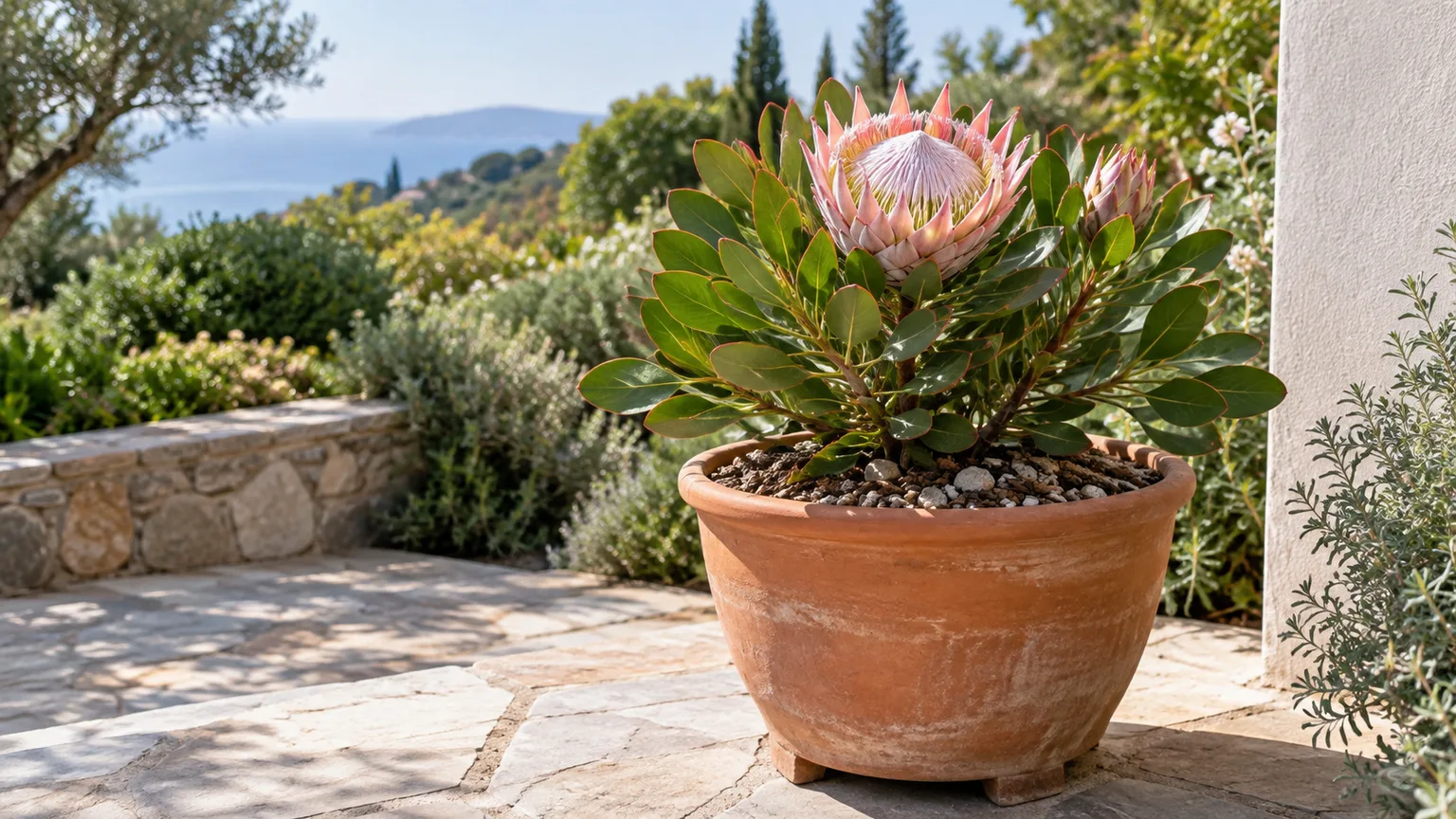
Give Protea Roots Drainage and Lean Soil
Assess Texture, pH, and Drainage
Most South African proteas perform best in nutrient-poor, well-aerated soil with an acidic to mildly acidic reaction. Grow Proteas gives a broad pH range of about 5 to 7 or lower for most species, while also noting exceptions that tolerate unusual soils. That range is a guide, not permission to force every species into the same pH target. If you do not know the plant’s identity, begin with a soil test and the nursery’s recommendation instead of adding lime, sulfur, compost, or fertilizer by guesswork.
Drainage is the first physical test. After a period of rain or irrigation, look for water that pools around the root collar or remains in a planting hole. If the site stays saturated, roots lack air and may decline even when leaves initially look thirsty. A useful pre-plant check is to dig a hole in the proposed spot, fill it with water once to wet the surrounding soil, then refill it and observe how readily the water disappears. Slow drainage is a signal to choose a different site, build a broad raised mound, or select a plant better suited to that soil.
Texture and nutrient level are separate questions. Sand drains quickly but can dry fast; clay holds water and compacts, while some loams work if water moves freely. Proteas are not simply “desert plants”: some use seasonal seepage and all need water while establishing. Aim for a root zone that drains after irrigation without drying out completely.
Fix a Slow-Draining Site Without Enriching the Whole Bed
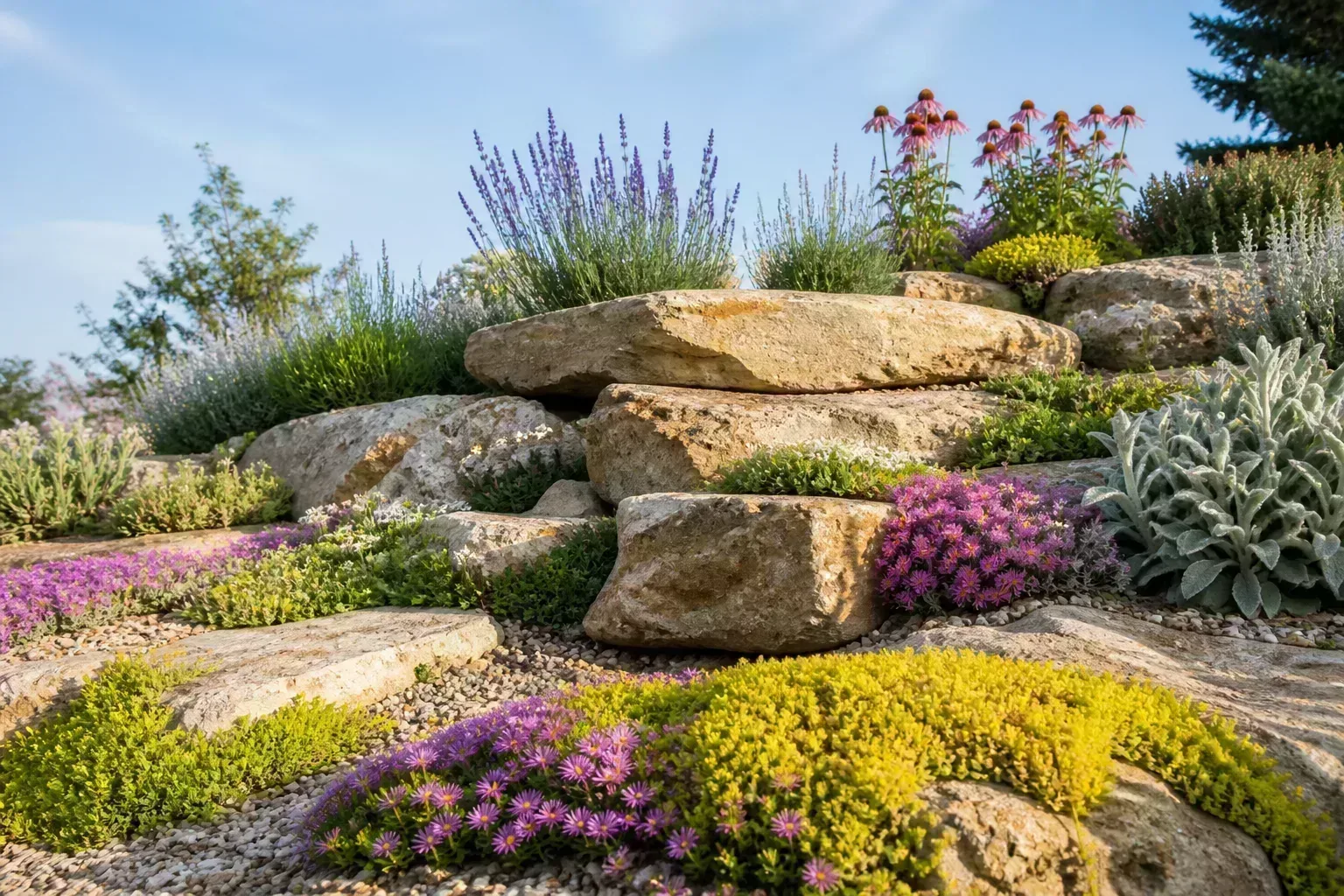
Do not solve compacted clay by digging a small hole and filling it with a sharply different mix. That can create a pocket where water collects at the boundary between textures. Choose a naturally higher, sloping site if available, or build a broad mound that allows runoff to move away from the crown. Work with the site’s soil across a wide area rather than creating a narrow, amended “bathtub.”
Some Proteaceae tolerate heavier soils better than others, so species selection may be safer than wholesale amendment. SANBI/Kirstenbosch names a limited group that can handle clay and recommends slopes or mounds where conditions are poor. If you build a mound, make it wide enough for future roots and use a lean, draining mix suited to the species.
Mulch can limit surface drying and weeds, but use a thin, breathable layer instead of piling wet material against the stem. Aged bark or pine needles may suit the site; avoid manure, bone meal, mushroom compost, and rich blends around phosphorus-sensitive roots. Since surface roots are easily damaged, cut weeds at soil level rather than pulling them. Do not bury the crown or seal the soil surface.
Plant With Minimal Root Disturbance
In a winter-rainfall climate, plant as the cool, moist season begins; in a summer-rainfall climate, follow the local window that avoids both frost and peak heat. The Grow Proteas guide describes these differences and advises setting a nursery-grown plant at the same soil level it had in its container. For a home garden, that is a safer default than burying the stem deeply or exposing the root ball to sun and wind while you prepare a complicated amendment.
Water the nursery pot before planting if the mix is dry enough to crumble, then ease the plant out while supporting the root ball. Do not loosen or wash roots unless a specialist has identified a specific problem; proteas can be slow to recover from root disturbance. Set the root ball level with the surrounding soil, backfill gently, and water once to settle the soil without compacting it into a hard ring. If the potting mix is peat-heavy and water-repellent, moisten the root ball slowly rather than blasting it with a hose.
Set the top of the root ball at grade, especially in heavy soil, and do not form a deep basin around the stem. Keep mulch away from the base and mark the plant to protect shallow roots from routine digging. Hand-weed nearby; the Protea Atlas Project also advises minimizing disturbance around established plants.
Water According to Establishment Stage
During the First One to Two Years
A nursery plant has a concentrated root ball, so a drought-adapted species can still wilt during its first summers. Water deeply enough to wet the ball and nearby soil, then wait until the surface begins to dry before watering again. Check a few inches down; the interval depends on heat, wind, soil, rain, plant size, and drainage.
The SANBI/Kirstenbosch reference recommends thorough watering during the first two summers, with extra attention in very sandy soil. This is not a universal schedule: irrigation in cool or clay soil can deprive roots of oxygen. In hot, windy weather, check sandy soil daily; extend the interval when rain is steady or soil stays moist. Check containers more often because their limited volume dries faster.
Water at the soil line in the morning when possible, so the plant does not stay wet through a cool night. Afternoon wilt may be heat stress; repeated morning wilt or yellow leaves in wet soil should prompt a drainage check before more watering.
Once Established
After roots have spread into the garden soil, reduce irrigation gradually rather than abruptly stopping it. In a suitable site, many proteas can tolerate dry periods and may need only occasional deep water during prolonged drought. The exact threshold varies: a sandy raised bed dries faster than a cool loam, and a species adapted to seasonal seepage should not be treated like a cactus.
Use leaf condition and soil moisture together. Firm, leathery leaves in dry soil may reflect a normal dry cycle; yellowing, leaf drop, or whole-plant wilt in wet soil calls for a drainage and root-health check. Saturated soil can damage roots and reduce water uptake, so adding water may accelerate decline. The Protea Atlas Project’s disease notes describe root rot and dieback, problems that make standing water worth addressing promptly.
Provide Full Sun and Airflow
For most South African proteas, choose an open location with full sun and room for air to move through the branches. The SANBI/Kirstenbosch growing reference recommends full sun and good ventilation, especially for winter-rainfall species. GrowVeg also lists a sunny position and emphasizes air movement; both points are safer as starting conditions than trying to compensate for deep shade with extra fertilizer.
Observe the site through the day before planting: late-afternoon-only sun may be inadequate, while an exposed wall can heat a pot or young shrub. In very hot regions, protect containers from overheating without moving them into a humid, enclosed corner. For in-ground shrubs, prioritize airflow and drainage over shelter that traps moisture.
Avoid Phosphorus-Heavy Fertilizer
Most garden proteas do not need routine feeding in lean soil. Some Proteaceae have root adaptations for acquiring phosphorus where it is scarce; conventional high-phosphorus fertilizer can overwhelm this low-nutrient adaptation. The peer-reviewed review “Phosphorus Nutrition of Proteaceae in Severely Phosphorus-Impoverished Soils” explains this family-level ecology, supporting a conservative rule: do not feed by habit.
Read the fertilizer label, not only the word “bloom.” Bloom boosters, manure, bone meal, and some composts may add more phosphorus than a protea needs. If a container plant in lean mix grows poorly, first check drainage, light, temperature, pH, and identity. Use only a product recommended for that species; there is no universal safe dosage.
Small leaves and slow growth do not prove a nutrient deficiency; root damage, temperature, or low light can also suppress growth. Fertilizer may compound root stress. A soil test and expert identification are more useful than a speculative dose.
Prune After Bloom and Preserve Next Season’s Stems
Prune after the plant’s main flowering period, when you can tell which stems have carried flowers. Remove spent flower heads with a section of leafy stem below them, cutting above healthy leaves so new growth has nodes from which to emerge. Use clean, sharp pruners and remove dead or diseased branches separately. The goal is a light, selective cut that shapes the shrub while preserving vigorous stems, not a shearing that strips it into bare wood.
Keep unflowered stems unless the plant’s species-specific guide says otherwise: they may carry next season’s flowers. The SANBI/Kirstenbosch manual explicitly warns that nonflowering stems in Protea should not be pruned because they are expected to bloom the following season. This is more useful than a blanket instruction to “deadhead everything,” since a protea’s flower-bearing cycle is tied to particular shoots.
Avoid cutting below the last healthy leaves on an ordinary stem. Some species have a lignotuber or other resprouting capacity that permits harder pruning, but that exception should not be transferred to a plant just because it shares the Proteaceae family. If you are unsure of the species, remove only dead, damaged, or recently flowered growth and ask the nursery before making a major renovation cut. Newly planted shrubs need time to establish; wait until growth is healthy before using tip pruning to encourage branching.
Diagnose a Struggling Plant Before Adding Water or Food
Proteas can show similar aboveground symptoms for different root problems. A wilted plant in dry soil may need a deep drink, while a wilted plant in saturated soil may have roots that cannot breathe or are beginning to decay. Check moisture beneath the mulch and near the root ball; then inspect drainage, recent weather, and whether the plant has been moved or fertilized. Change one factor at a time so you can tell whether the plant responds.
Yellow leaves and leaf drop are not a diagnosis by themselves. Look for patterns: symptoms beginning on one branch, lesions or cankers on stems, distorted new growth, a wet crown, or decline that follows prolonged rain. The Protea Atlas Project describes root rot, shoot blight, canker, and leaf-spot problems across Proteaceae, but also notes that some leaf marks are mostly cosmetic. Remove clearly dead or infected material with clean tools, avoid wetting foliage late in the day, and improve air movement where possible.
Do not spray until you identify the problem and confirm a product is labeled for that plant and pest in your area. If several stems decline, photograph symptoms and note watering history for a local botanical garden, extension office, or Protea specialist. Avoid digging up suspected diseased roots; first correct standing water and keep traffic out of the root zone.
Inspect new growth and leaf undersides for sticky residue, webbing, or clustered insects. Identify any pest before treating and use the least disruptive control that fits the species. Protea Atlas and GrowVeg both describe pest or disease concerns, but leathery foliage does not make a plant immune; observation beats routine spraying.
Propagate From Seed or Cuttings
Proteas can be grown from seed or semi-hardwood cuttings, but neither method is as simple as sowing a common bedding annual. Seed-grown plants may differ from the parent and can take longer to flower; a cutting can preserve a named cultivar, though rooting may be slow and success depends on species and conditions. Buy from a nursery if you need a specific flower color or plant that matches your climate.
For seed, use fresh, correctly identified seed from a reputable supplier and follow its species-specific instructions. Sow in a sterile, free-draining medium, keep the surface evenly moist rather than waterlogged, and provide bright conditions with ventilation. The Protea Atlas disease guide identifies damp, crowded, poorly ventilated seed trays as conditions that favor damping-off, so do not pack seedlings together or leave trays standing in water. When the seedlings are large enough to handle, transplant them with the root plug intact.
Take cuttings from healthy semi-hardwood growth, not drought-stressed or diseased shoots. Use a clean blade, remove lower leaves, and set them in a sterile, airy medium. Limit wilting without keeping the medium saturated. Epic Gardening’s propagation guide describes tip cuttings as a starting point; follow species-specific advice for timing and rooting hormone. For rare cultivars, ask a specialist nursery.
Cut Blooms for Arrangements and Drying
Use clean, sharp pruners to harvest a bloom once the flower head has opened to the look you want. Cut with a useful length of leafy stem, but remember that every cut is also a pruning decision: do not remove unflowered stems just to make a bouquet. Harvesting a few flowers from a mature shrub can be compatible with maintenance, while stripping a young plant of most of its flowering shoots can reduce its display and future branching.
For a vase, remove leaves that would sit below the water line, place the stem in a clean container, and refresh the water regularly. Vase life depends on species, cut stage, and handling, so treat any exact number of weeks as an estimate rather than a guarantee. If you want to dry a bloom, choose a fresh, undamaged head and hang it upside down in a dry, dark, ventilated spot; protect it from humidity and direct sun, which can dull color or encourage mold.
If blooms are scarce, review sunlight, plant age, winter damage, and whether pruning removed future flowering stems. A seedling or recently planted shrub may take seasons to settle. Fertilizer will not correct a climate or root problem; fix the limiting condition and allow new growth time.
Conclusion
Growing protea successfully is mostly a matter of matching the plant to the place. Identify the species or cultivar, compare its climate needs with your winter lows and summer humidity, then give it a sunny, ventilated site with an aerated root zone. Water more carefully while it establishes, taper irrigation only when roots are settled, and skip routine phosphorus-rich fertilizer.
Once the shrub is established, prune only the stems that have finished flowering, preserve leafy growth, and diagnose decline before changing water or nutrients. Protea care rewards patient, species-aware decisions; a good label, an honest look at the site, and a light hand with roots and fertilizer will do more than a complicated maintenance schedule.