How to Prune and Train Pumpkin Vines
Pumpkin vines do not always need pruning. Choose a space-saving plan, make careful cuts, and support small-fruited varieties safely.
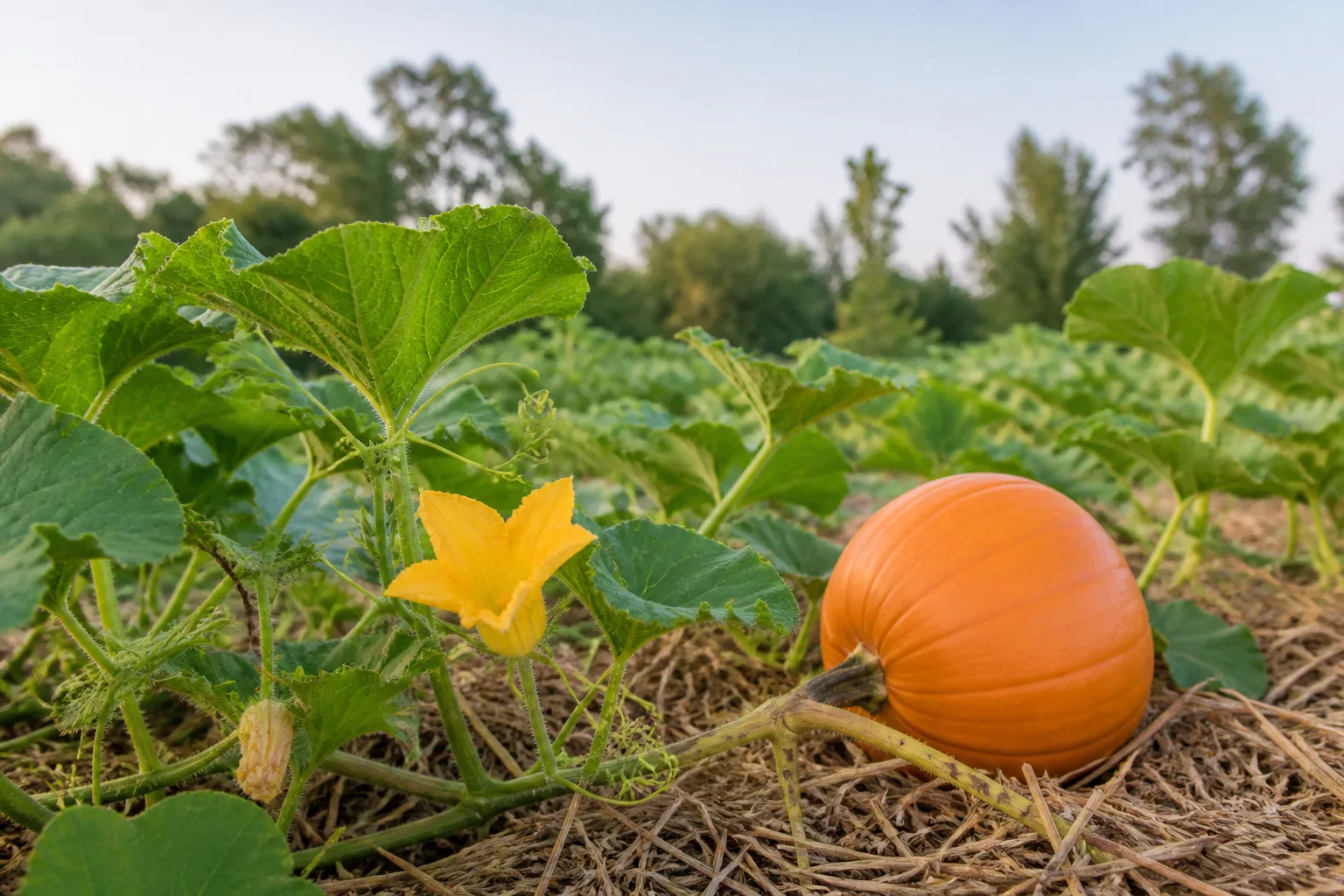
Pumpkin vines are supposed to sprawl. A long, leafy stem is not a sign that the plant is out of control; it is how many pumpkins cover enough ground to support large leaves and developing fruit. Manage the vines when their direction creates a real problem—such as blocking a path, crowding another crop, or carrying more fruit than you want—not simply because the patch looks untidy.
There is no universal pruning schedule that makes every pumpkin plant produce more. A cut can improve access and direct growth, but it also removes leaves that feed the fruit. Start by choosing your goal, identifying the vine you are touching, and checking whether the plant is established enough to tolerate the change.
What a pumpkin vine is doing as it grows
Pumpkins are annual cucurbits. Many varieties send out one dominant stem, then side runners that lengthen and produce leaves, tendrils, flowers, and sometimes more shoots. The plant may also form roots at nodes that contact moist soil, which can help anchor long runners. Growth habit varies: compact bush types, semi-vining plants, and vigorous long-vining cultivars need different amounts of room. The Royal Horticultural Society’s pumpkin-growing guide notes that trailing varieties can spread several metres, while bush forms remain more compact but still need space.
The large leaves are working solar panels, not disposable clutter. They capture light and supply carbohydrates to growing stems and fruit, so a severe haircut can slow a plant even when it makes the patch easier to walk through. The job is usually to steer the vine network and remove only growth that conflicts with your goal.
Find the main vine at the crown
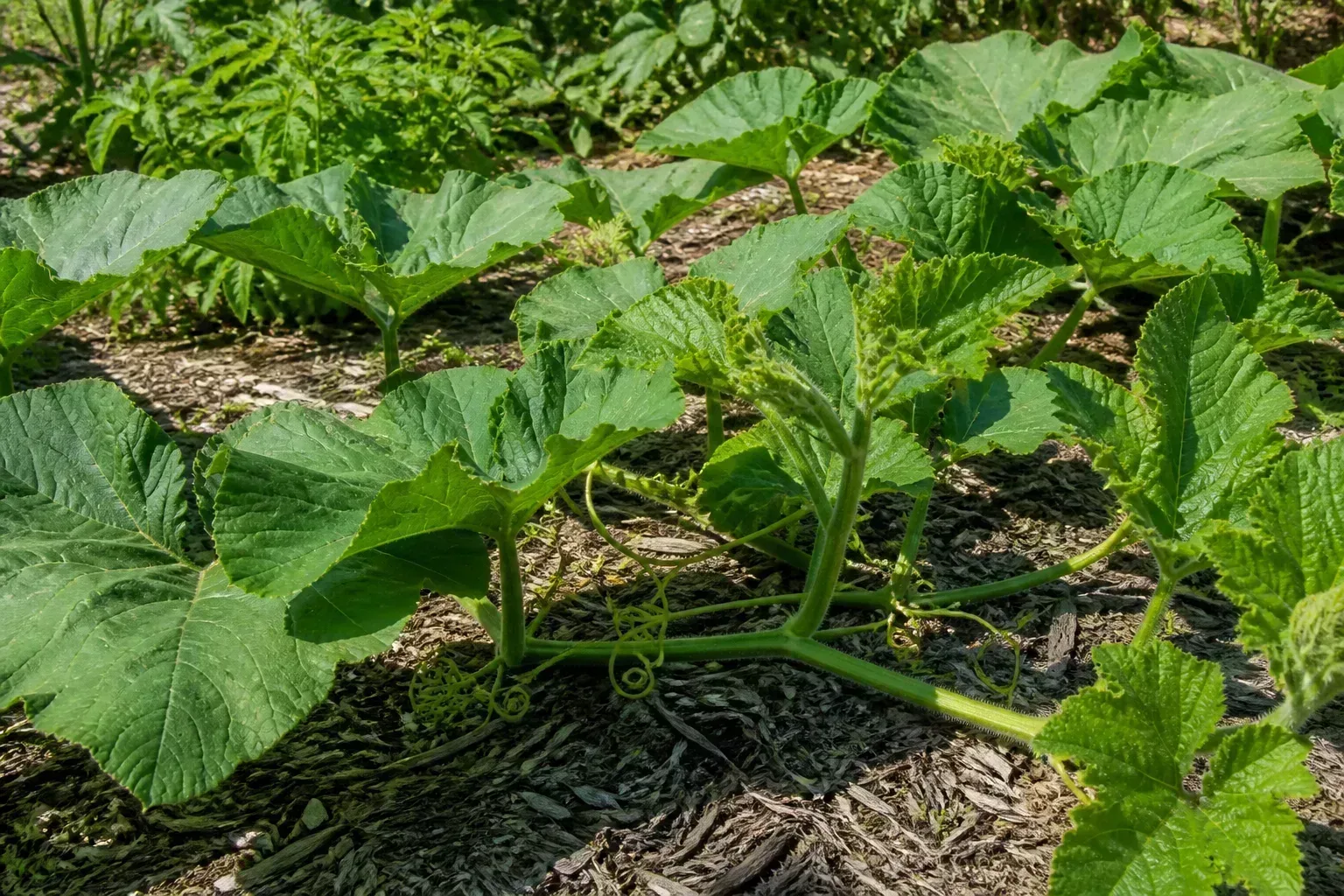
Follow the thickest stem back to the point where the plant emerges from the soil. That is the main vine, also called the primary vine. It is usually the easiest stem to trace continuously from the plant’s crown, and it often carries a large share of the plant’s leaves and fruiting sites.
Do not identify the main vine by whichever stem looks longest at a glance. Several runners can become substantial, especially after they cross or disappear beneath leaves. Move foliage aside gently and trace the stem before cutting; if you cannot tell where a branch begins, postpone pruning until you can inspect it clearly.
Tell secondary runners from tertiary shoots
Secondary vines branch directly from the main stem. Tertiary shoots branch from those secondary runners. Pumpkin flowers can form at nodes along more than one branch, so it is too absolute to assume every tertiary shoot is incapable of fruiting. In practice, gardeners often remove tertiary growth to simplify a crowded plant or focus a giant-fruit effort, but leaving some shoots is reasonable when the plant has space and is healthy.
Look at the attachment point rather than the shoot’s size. A short shoot that starts from a secondary vine is tertiary; a much longer stem that starts at the main vine is secondary. This distinction matters because a cut near the wrong junction can remove more productive growth than you intended.
Choose a management goal before you prune
Use the least disruptive method that solves the actual problem. If vines are only spreading across open soil, let them run. If they are heading into a path, redirect them while their tips are still flexible. If a healthy plant carries more fruit than you can mature or more than your chosen cultivar can support at your desired size, selective fruit thinning may matter more than shortening every stem.
| Your priority | First move | Main trade-off |
|---|---|---|
| Keep a walkway open | Guide runners along the bed edge or circle them into spare ground | Some repeated hand-guiding may be needed |
| Grow a few larger pumpkins | Keep the strongest fruit and limit competing fruit or shoots selectively | Fewer pumpkins overall; size is still affected by variety and conditions |
| Grow small pumpkins vertically | Install a sturdy trellis early and support each developing fruit | More setup and regular checks; heavy fruit can strain the structure |
| Improve access in a dense patch | Remove only crossing, damaged, or genuinely surplus growth | Cutting healthy leaves can reduce productive area |
| Avoid unnecessary work | Leave a vigorous, well-spaced plant alone | Vines occupy their natural footprint |
Choose one primary goal for the season. Trying to maximize fruit count, grow record-size pumpkins, and keep the plant inside a tiny footprint at the same time creates conflicting demands. University of Connecticut pumpkin trials found that closer plant spacing increased fruit numbers but reduced average fruit weight in the tested varieties; yield responses also depended on irrigation and location. That is a useful reminder that “more” can mean more fruit or larger fruit, and the two are not always the same outcome.
Plan space around the cultivar, not the calendar
Check the seed packet or variety description before choosing a spacing plan. A bush pumpkin may need a few feet of growing room, while a long-vining carving or giant type can occupy a far larger patch. Alabama Cooperative Extension distinguishes bush, semi-vining, and vining habits and gives different row and in-row spacing ranges for each. Those commercial-style measurements are not a universal backyard prescription; they show why one spacing number cannot fit every cultivar.
For a small garden, identify the direction the vine can safely travel before it reaches a path, lawn, or neighboring bed. A compact cultivar may solve the space problem better than repeated pruning. The RHS recommends selecting varieties to match available space and notes that smaller-fruited trailing types can be grown up substantial supports, while large-fruited pumpkins are better kept on the ground.
Space also affects air movement and access. When leaves overlap densely, it is harder to inspect stems and fruit, and wet foliage can dry more slowly. Epic Gardening’s pumpkin guide similarly emphasizes spacing and airflow as part of managing fungal-disease pressure. Leave yourself a narrow route to reach the crown and check the underside of leaves without stepping over the vines.
Guide ground-running vines without snapping them
Choose a route early, while the growing tips are soft and easy to reposition. Move a vine by supporting it close to the ground and easing a broad curve into place; do not lift the entire stem from the tip or pull against a tendril, flower, or fruit. A slow adjustment over several days is safer than trying to force a sharp turn in one session.
Keep runners from crossing where you expect to walk or water. You can turn a vine toward open soil or lay it in a wide arc around the plant, but do not coil it tightly around the crown. If a node is already rooted, treat that spot as an anchor rather than dragging the vine free. A small amount of overlap is less damaging than breaking a mature stem simply to make the patch look orderly.
When a trellis is safe for pumpkins
Vertical growing can save ground space, but it is best suited to small-fruited pumpkins and sturdy supports. Use a rigid arch, cattle-panel-style frame, or strong trellis anchored firmly into the ground; a light tomato cage or loose netting is unlikely to hold a vigorous vine and its fruit securely. Install the structure before the plant becomes large, then weave or loosely tie the stem through it as it grows.
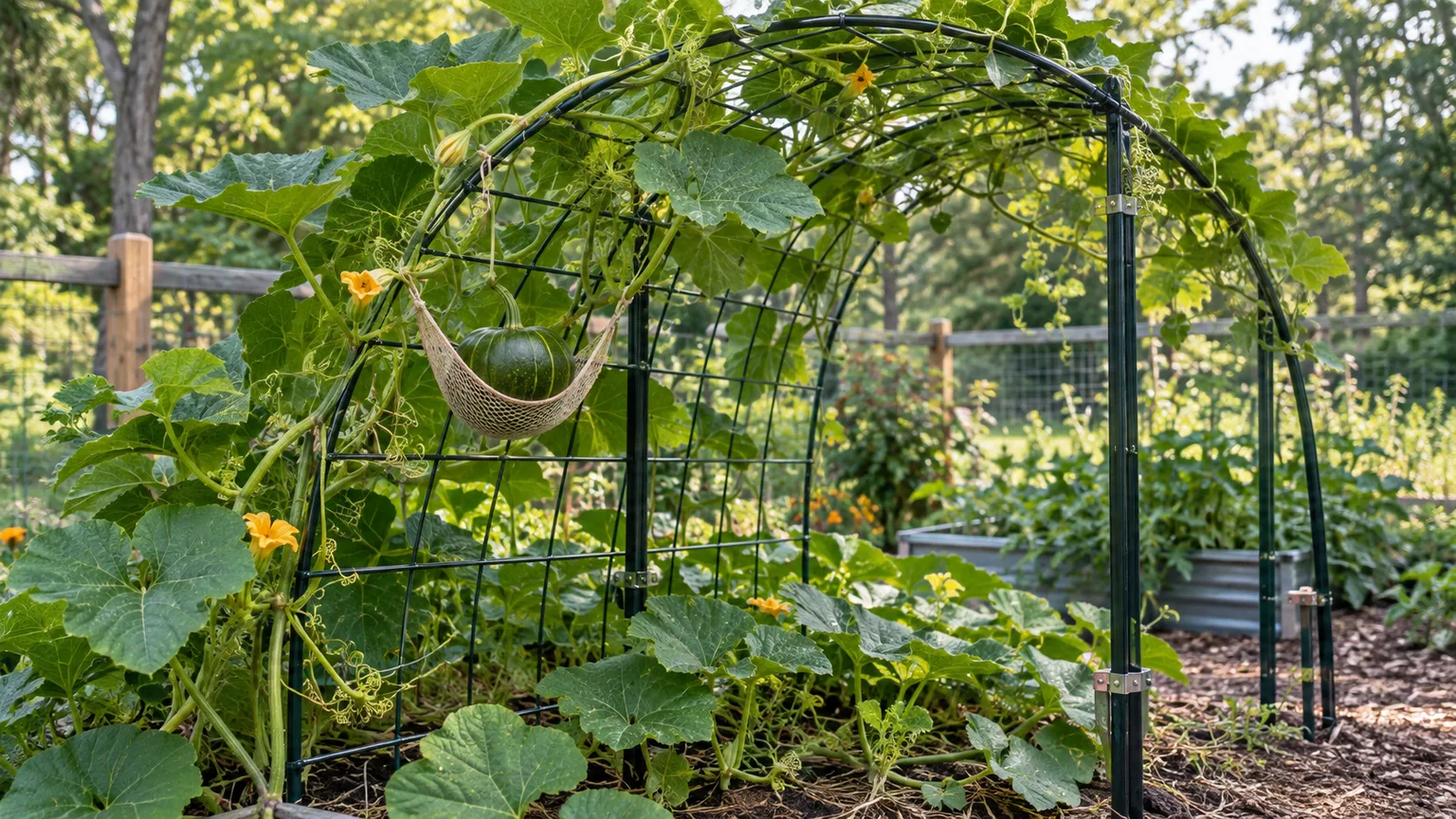
Support fruit individually as it enlarges. A broad mesh sling, fabric cradle, or other breathable support can distribute the weight across the trellis rather than leaving the fruit hanging from its stem. Check slings often so the stem is not constricted and the fruit has room to expand. The RHS recommends sturdy arches, wigwams, or trellises for trailing types with smaller fruits and says larger-fruited varieties are best grown flat on the ground.
Do not lift a heavy pumpkin onto a trellis after it has already formed. Moving the fruit can twist or split the stem, and a snapped stem cannot be repaired by tying it back together. When in doubt, let the vine stay on the ground and use mulch or a dry board beneath the fruit to keep it off wet soil.
When to prune pumpkin vines
Pruning is optional for most home gardens. It makes sense when a runner is invading a path or another crop, when a plant is so tangled that you cannot inspect it, or when you are deliberately directing the plant toward a limited number of fruit. If none of these applies, leaving healthy vines alone avoids unnecessary wounds and preserves leaf area.
Wait until the vine system is established and you can see which flowers have set fruit before making major cuts. A practical rule used by Gardener’s Path is to let vines reach roughly 10 to 15 feet before routine trimming and to wait until fruit is established; treat that as a field guideline, not a biological switch. Cultivar, weather, available space, and the reason for pruning matter more than hitting an exact tape-measure mark.
Avoid heavy pruning on a hot, dry day or when foliage is wet. Drought stress makes the plant less able to recover, while wet leaves and stems are harder to inspect cleanly. If a vine is broken or clearly diseased, remove the affected section promptly with clean, sharp pruners rather than waiting for an ideal length.
Set boundaries for the main and secondary vines
If a main vine is headed into a walkway, first see whether you can redirect it. If the space problem cannot be solved by training, cut the stem beyond the last fruit you intend to keep, leaving a length of healthy vine and leaves past that fruit rather than cutting directly beside its stem. Gardener’s Path suggests allowing several feet beyond the last selected fruit; the exact buffer is a practical choice, not a guarantee of pumpkin size.
You can shorten a secondary runner when it is out of bounds or crowding the plant. Follow it back to its junction with the main vine so you know what you are removing. Avoid cutting all side runners by default: they add leaves and may carry additional flowers and fruit, which can be valuable when your goal is a useful harvest rather than a single large show pumpkin.
Decide what to do with tertiary shoots
Tertiary shoots are the first candidates for selective removal in a cramped or carefully trained plant because they can create a tangled layer of growth. Snip a tertiary shoot near its origin on the secondary runner, without nicking the runner itself. Remove them gradually, then give the plant a few days before deciding whether more trimming is actually needed.
There is no need to strip every tertiary shoot from a healthy plant simply because it has appeared. If a small side shoot is flowering or carrying a fruit you want, and it does not create crowding, it may be worth keeping. When your goal is one giant pumpkin, follow the chosen variety’s growing guidance and remove competing growth more decisively; for ordinary carving or cooking pumpkins, retain enough foliage and fruiting sites for a balanced crop.
Make a clean cut and protect growing fruit
Use sharp hand pruners for stems they can cut cleanly without crushing. Put on gloves because pumpkin stems can be rough and prickly, and move leaves aside instead of stepping on them. Before cutting, trace the vine to its origin, mark the fruit you want to keep, and check that the cut will not leave the selected pumpkin hanging from a short, stressed section.
Cut cleanly rather than twisting or tearing the stem. Avoid cutting flush against the junction you are keeping; leave a small stub so the cut does not damage the main or secondary runner. Some practical pruning advice, including Gardener’s Path, suggests burying a healthy cut tip so it may root; consider that an optional training technique, not a way to seal every wound. For an ordinary containment cut, leave the cut surface exposed to air, keep the root zone appropriately watered, and monitor the plant for wilting or disease symptoms.
If you need to remove diseased material, work when the foliage is dry and clean the blade between plants. Bag or discard diseased material according to local extension guidance rather than leaving it tangled in the patch. A small, targeted removal of damaged tissue is different from routinely stripping healthy leaves to increase airflow.
Match fruit thinning to the pumpkin you want
Fruit thinning is a separate choice from vine pruning. A plant that sets several pumpkins may produce more total fruit, but each fruit competes for water, leaf-made sugars, and time before frost. If you want one exceptionally large pumpkin, growers commonly keep one well-positioned fruit on a vigorous plant and remove the others early; this is a specialized goal, not a requirement for a normal harvest.
For a household crop, choose a reasonable number based on cultivar size and growing season, not a universal rule. Keep fruits that are growing steadily, have sound stems, and sit where the vine will not be pulled whenever someone walks past. Remove misshapen or rotting fruit, but do not discard healthy young pumpkins just because you have heard that pruning always makes the remaining ones larger.
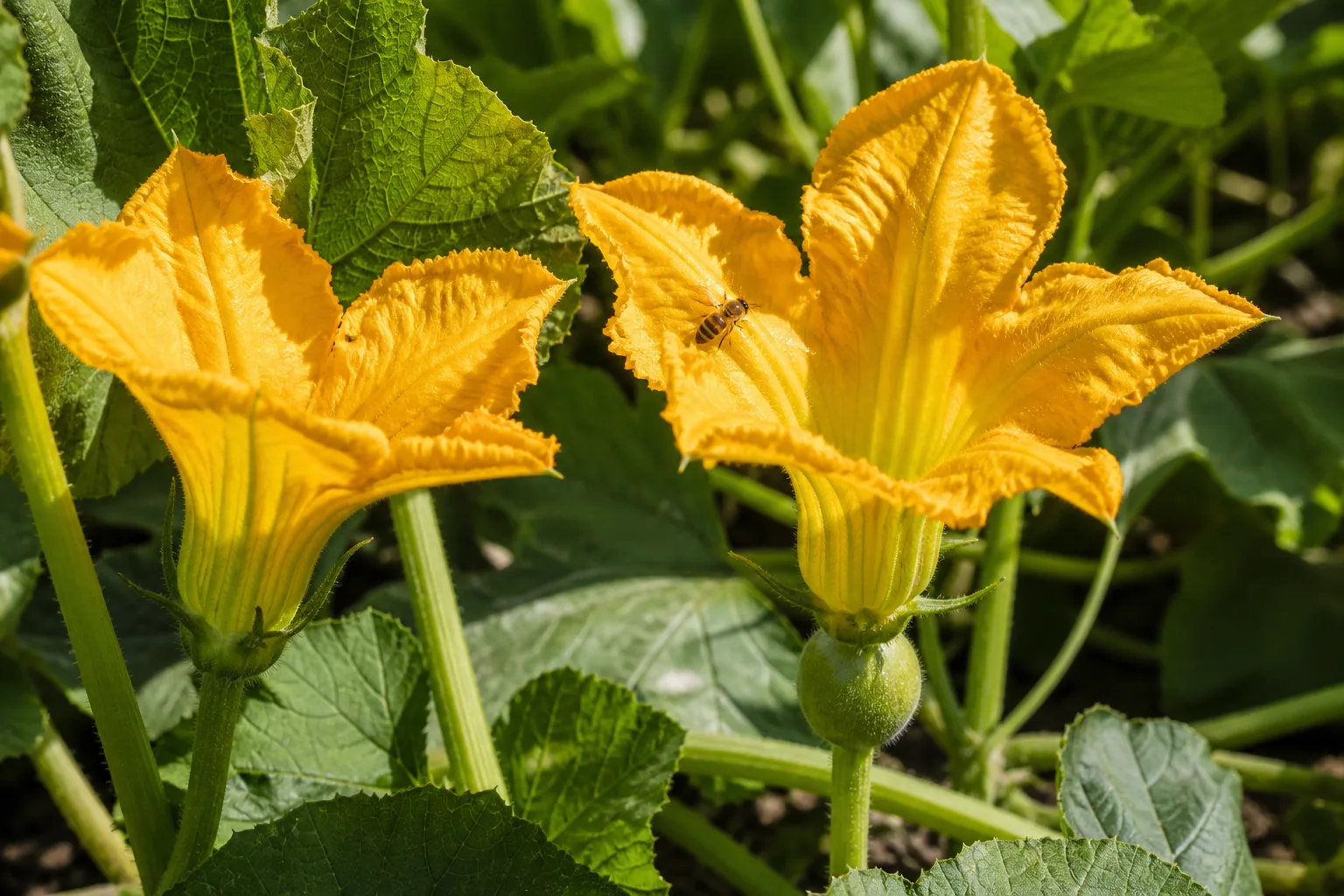
Pollination also affects fruit set. Pumpkin plants produce separate male and female flowers; the female flower has a small swollen ovary behind its petals. If that flower is not pollinated, the tiny fruit may yellow and drop, a problem pruning cannot fix. Give pollinators access to flowers and avoid disturbing vines when blossoms are open; the UConn production trials show how spacing, water, and variety can affect crop outcomes, while Alabama Extension’s crop guidance recommends drip or soil-level irrigation to reduce foliage wetness.
Use nodes and roots to stabilize the plant
At a node, a leaf, tendril, flower, or side shoot joins the vine. Nodes that rest against moist soil can form additional roots, helping a long runner stay anchored. If a vine is being buffeted by wind or drifting into a path, gently pinning a healthy section near a node or allowing it to contact soil can stabilize it without cutting the growing tip.
Some giant-pumpkin growers intentionally encourage rooting at nodes as part of a high-input training system. That does not mean every backyard gardener should bury every stem or cover every pruning cut. Keep soil away from flowers and developing fruit, avoid burying diseased tissue, and do not disturb roots that have already taken hold. The simplest option is often to route the runner across the ground and let it root naturally where conditions suit it.
Keep airflow without stripping away useful leaves
Air movement is one part of disease management, not a cure. Crowded vines and persistent leaf wetness can favor fungal problems, but powdery mildew spores can still reach a well-spaced plant. Maintain reasonable spacing, water near the soil in the morning when possible, remove weeds that block access, and inspect both leaf surfaces and the lower stems.
If you see white powdery patches, angular spots, or sudden wilting, first identify the problem before removing large portions of the canopy. Powdery mildew, bacterial disease, insect feeding, and ordinary aging do not call for the same response. Extension publications can help with local diagnosis because disease pressure and control options vary by region; Alabama Extension also recommends rotation and resistant varieties as parts of broader crop management.
Leave healthy leaves that shade fruit and feed the plant. Remove a leaf only when it is dead, broken, severely diseased, or causing a clear obstruction. Excessive leaf removal can expose fruit to sunscald and reduce the plant’s capacity to fill pumpkins, even if the patch looks more open afterward.
Care for the patch after training or pruning
After guiding or cutting a vine, water the root zone consistently rather than soaking the leaves. Pumpkin water needs rise during flowering and fruit enlargement, but saturated soil can stress roots. Check moisture a few inches below the surface and adjust for rainfall, soil texture, container versus ground growing, and local heat; a fixed weekly amount will not fit every garden.
Do not compensate for pruning with an unmeasured dose of high-nitrogen fertilizer. Extra leafy growth may make the patch denser without solving poor fruit set or lack of water. Alabama Extension advises soil testing so fertilizer additions reflect what the soil actually needs, and UConn trial results caution that added nitrogen can increase foliage without reliably increasing yield under every soil condition.
Keep a simple map or take a quick photo after training. The route of a long vine becomes hard to remember under a canopy of leaves, and a record helps you avoid stepping on a buried node or accidentally cutting the main stem during a later cleanup. Recheck trellis ties and fruit slings as stems thicken and pumpkins gain weight.
Common vine problems and the right first response
A vine wilts after you moved it. The stem may have kinked, cracked, or lost contact with a rooted node. Stop moving it, water the plant if the soil is dry, and check the stem for a break; do not add more pruning until you know whether the main vine remains intact.
Leaves look crowded but fruit is healthy. Redirect a few flexible tips and clear a walking route before cutting. If the center stays humid or you cannot inspect the plant, selectively remove crossing or damaged shoots rather than stripping a ring of leaves around the crown.
The vine has flowers but no growing pumpkins. Look for female flowers and bee activity before blaming the vine length. Male flowers often appear first; a female flower needs pollen while open, and a small ovary that shrivels after flowering may not have been pollinated. Pruning will not make an unpollinated fruit develop.
A trellised pumpkin is pulling on its stem. Add a sling that supports the fruit’s weight and secure it to the structure, not to the vine. If the fruit is already large or the frame flexes, move the support under the fruit with minimal disturbance or let it rest on the ground rather than risking a snapped stem.
The plant is producing lots of leaves and few fruits. Check sunlight, water, pollination, cultivar, and fertilizer history before pruning harder. Excess nitrogen can favor foliage, but removing leaves does not fix low bee activity, heat stress, or a short growing season.
Conclusion
Good pumpkin vine management starts with restraint and a clear goal. Give the cultivar room, guide young tips before they become woody and tangled, use a trellis only when the plant and fruit size suit it, and prune selectively after the plant is established. For a healthy vine with open ground to occupy, letting it sprawl is often the best care.
When you do cut, identify the branch, protect fruit you intend to keep, and remove only enough growth to solve the problem. That approach preserves useful leaf area, reduces the chance of broken stems, and lets the plant spend the season doing what it is built to do: grow leaves, set fruit, and ripen pumpkins.



