How to Use Pyrethrin Insecticide Safely in Gardens
See when pyrethrin insecticide makes sense, how to read its label, and why a home-extracted flower spray has no reliable dose or safe-use interval.
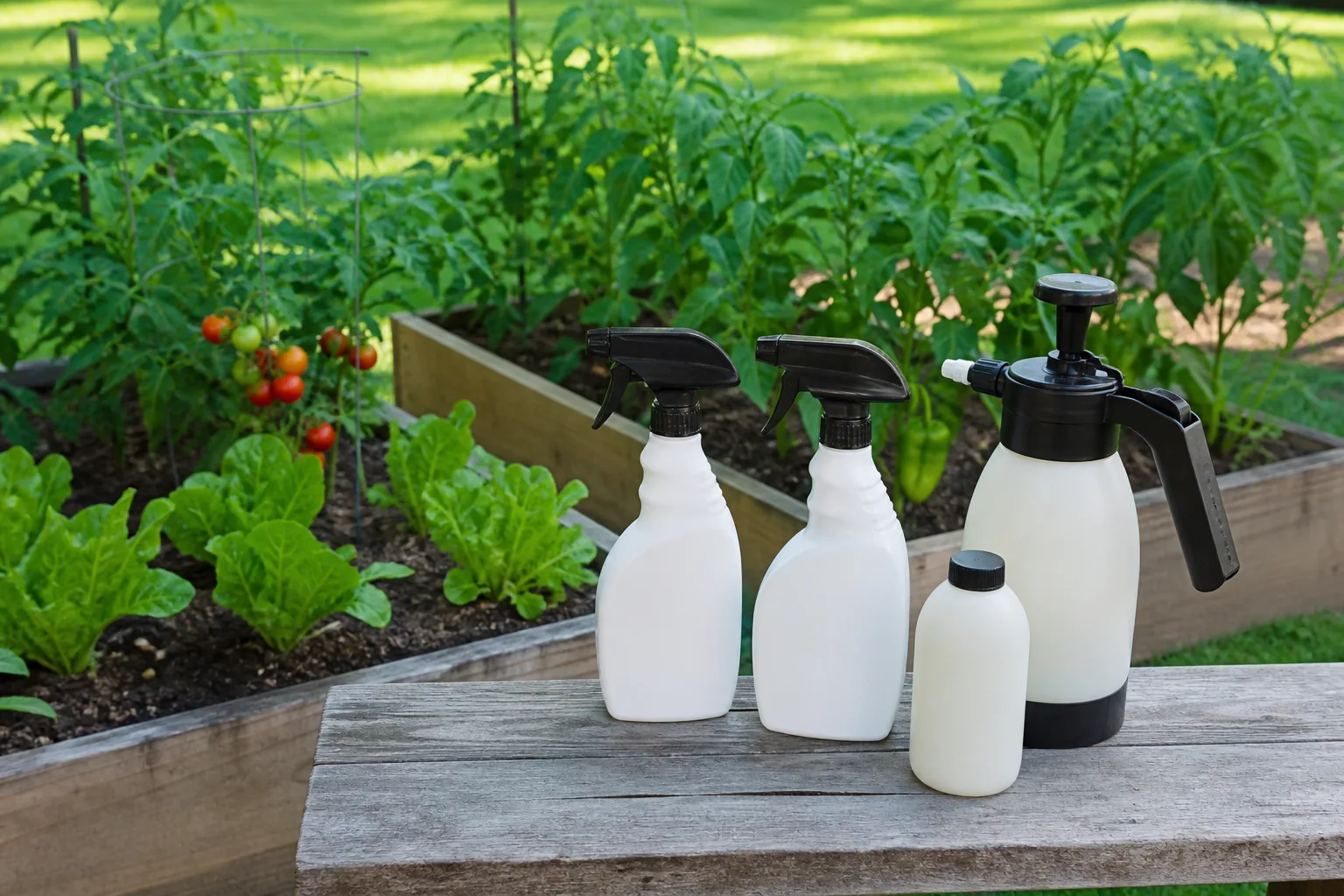
The safest answer to “how do I make pyrethrin insecticide?” is not to extract it at home. Garden-grown flower heads do not give you a tested concentration, a predictable dose, or directions for a specific pest, plant, harvest window, or water hazard. If you decide treatment is warranted, buy a product whose label specifically allows the pest and site you need to treat, then follow that label exactly.
“Make” can mean two different things here. Mixing a packaged concentrate with water is allowed only when that exact product label gives dilution directions; extracting an insecticidal mixture from flowers is a separate process with no comparable quality control. This guide explains how to tell the products apart and use a labeled garden pesticide with fewer preventable risks.
Pyrethrin can act quickly against insects, but “plant-derived,” “botanical,” and “organic” do not mean harmless. The National Pesticide Information Center (NPIC) says pyrethrins are highly toxic to honey bees and highly to very highly toxic to fish and several aquatic organisms. Sunlight can break pyrethrins down quickly, but that does not cancel the danger from a direct spray, drift, or runoff. (NPIC)
Start With the Label, Not a Flower Recipe
A pyrethrin product is a formulated pesticide, not simply a flower in a bottle. Its complete label connects an exact formulation to allowed use sites, target pests, mixing and application directions, protective equipment, environmental precautions, first aid, storage, and disposal. Two containers that both say “pyrethrin” may have different concentrations, added ingredients, and legal uses, so directions from one product do not transfer to another.
For a home gardener, the practical “make” step is limited to preparing a labeled concentrate exactly as its directions allow. If you have a ready-to-use product, do not dilute it or add soap, oil, or another pesticide unless the label explicitly directs you to do so. If a product has no clear garden directions for your crop and pest, do not create your own by borrowing a recipe or rate from a different label.
A useful rule is to keep the product label in charge from purchase through cleanup. It is the only place to find the interval before harvest, any re-entry restriction, maximum applications, and conditions that can make use unsafe for that particular formulation. When those details are missing or unclear, pause and ask the manufacturer, a local extension office, or your state pesticide regulator instead of guessing.
What Pyrethrin Is—and What It Isn’t
Pyrethrins are a mixture of six naturally occurring insecticidal compounds found in certain chrysanthemum-family flowers, especially the pyrethrum or Dalmatian daisy (Tanacetum cinerariifolium, also listed as Chrysanthemum cinerariifolium). Commercial products generally use compounds separated from the flowers and blended into a formulation. The plant species matters: an ordinary garden mum or daisy is not a dependable substitute for a product made with standardized active ingredients. (NPIC)
After an insect touches or eats pyrethrins, the compounds disrupt its nervous system and can cause paralysis and death. That contact action is one reason product coverage matters: a spray that never reaches the pest may not control it. Pyrethrins do not readily move through a plant, so a spray is not a systemic treatment that travels from a leaf to every hidden insect. (NPIC)
Pyrethrins, Pyrethrum, and Pyrethroids
The terms are related but not interchangeable. Pyrethrins are the insecticidal compounds; pyrethrum may refer to the flower material or a crude preparation from it; pyrethroids are synthetic chemicals designed to act in a similar way. Permethrin is a pyrethroid, not a naturally extracted pyrethrin. A product can also contain a synergist, such as piperonyl butoxide, or other ingredients that change how the finished product behaves. (NPIC, Epic Gardening)
| Term | What it describes | What to check |
|---|---|---|
| Pyrethrins | Six insecticidal compounds derived from certain flowers | The listed concentration and complete product directions |
| Pyrethrum | Flower material or a crude botanical preparation | Whether the container is a registered, labeled product for your site |
| Pyrethroids | Synthetic insecticides modeled on pyrethrins | The exact active ingredient and its own label; do not treat it as the same pesticide |
The word “natural” describes origin, not the full risk profile. A commercially formulated botanical pesticide can still harm non-target insects and aquatic life, while a product with the same active ingredient can differ because of concentration, synergists, solvents, or application instructions. If organic production matters to you, check the exact finished product with the certifier or approved-input listing you use; the origin of one active ingredient does not establish that the whole formulation qualifies.
What Pyrethrin Kills—and What It Doesn’t Solve
Pyrethrin products are labeled against different insects depending on formulation. Garden labels may list pests such as aphids, leafhoppers, whiteflies, beetles, caterpillars, or other insects, but the list is not universal. A pest named on one brand’s website or on a gardening page is not automatically covered by every pyrethrin product. Verify the exact target pest on the container before treating.
Because pyrethrin acts when it reaches an insect, it may miss pests protected inside rolled leaves, dense webs, stems, soil, or other sheltered places. Eggs may not be controlled by a product that targets active adults or larvae. If a plant is showing damage but the insect is gone, already out of reach, or not susceptible at its current stage, an additional broad spray may expose more organisms without solving the original problem.
Quick knockdown also is not the same as long-term prevention. NPIC reports that pyrethrin 1 breaks down rapidly in sunlight on water, soil, and plant surfaces, but the rate depends on conditions and the formulation; pyrethrins can persist longer in dark water or sediment. That short residual effect is not a reason to spray on a calendar, shorten a harvest interval, or repeat an application more often than the label allows. (NPIC)
Decide Whether an Insecticide Is Warranted
Start by deciding whether the damage is serious enough to justify a broad-spectrum contact insecticide. A few aphids on a large plant, a single leaf with chewing damage, or insects that predators are already reducing may not call for a spray. On the other hand, young seedlings, a rapidly expanding infestation, or a crop close to a vulnerable growth stage may need a faster response. The right threshold depends on the plant, the pest, the damage, and your tolerance for loss.
A small patch treatment is usually easier to control than a blanket application across a whole bed. Treating one infested plant or one affected section can reduce the area exposed, but it does not make the active ingredient selective: any susceptible insect hit by the spray may be harmed. Choose a nonchemical action first when it can solve the problem with less risk, such as hand removal, pruning a heavily infested tip, or rinsing a small colony from a sturdy plant.
Integrated pest management begins with repeated observation rather than automatic spraying. Horticulturist Stephen Albert of Harvest to Table describes close scouting, hand removal, water sprays, and barriers as steps gardeners can use before reaching for a pesticide. That sequence is practical because it may resolve a small outbreak without affecting beneficial insects across the garden. (Harvest to Table)
Identify the Pest, Not Just the Damage
Look under leaves and at new growth before choosing an insecticide. Aphids often cluster on soft stems and leaf undersides; whiteflies scatter when disturbed; spider mites may leave stippling or fine webbing; caterpillars may leave frass and ragged holes. Those patterns are clues, not a diagnosis by themselves. Drought, disease, nutrient problems, and physical injury can create similar symptoms, and a pesticide will not correct those causes.
Use a hand lens or take a clear photo to compare the actual pest with a university extension identification guide. If you are unsure, send a sample or photo to your local extension office before treating. This small pause helps avoid applying a broad-spectrum product to beneficial predators, pollinators, or harmless insects that happen to be on the plant.
Even when you identify an insect, check its life stage and location. A contact spray is most useful only when the target is exposed and the label lists it. If most of the population is protected or has moved, remove damaged material or use a more targeted management method instead of repeatedly wetting the plant and surrounding soil.
Why We Don’t Recommend Making a Flower Extract
A home-extracted flower mixture does not come with a measured active-ingredient concentration. The amount of pyrethrins in plant material can vary with the exact species, cultivar, growing conditions, flower maturity, drying, storage, and preparation. A cup of powder or a number of flower heads therefore cannot be translated into a consistent dose for a vegetable leaf, ornamental shrub, or houseplant.
The missing information matters because a registered product is evaluated and labeled for specific use patterns. A home extract has no reliable direction for target pests, mixing rate, spray interval, crop tolerance, preharvest interval, re-entry, first aid, protective equipment, or runoff restrictions. Adding kitchen soap or cooking oil does not fill those gaps; it can change leaf injury and exposure without making the active ingredient more predictable.
A label is also where you learn what to do if the product gets in someone’s eyes, on skin, or into a drain. An improvised extract has no product-specific first-aid statement or disposal instructions. For those reasons, we do not provide a flower-grinding, soaking, or straining recipe, or recommend dusting plants with homemade pyrethrum powder.
State pesticide rules can add another layer. California’s Department of Pesticide Regulation, for example, says pesticide products must be registered before they can be sold or used in California; federal and state requirements are not identical in every situation. Check your own state regulator for rules on the exact product and use, especially before selling or distributing any homemade preparation. (California DPR)
Choose a Product for the Site and Pest
Choose a product only after you can name the pest, plant or crop, and treatment area. The label must cover all three. A product labeled for ornamental shrubs does not automatically cover herbs; a greenhouse or indoor label does not automatically permit outdoor use; a food-crop product does not automatically cover every vegetable. Follow the container’s crop and site language even if the active ingredient seems familiar.
Read the full label before you buy, not only a shelf tag or the front-panel claim “botanical insecticide.” The EPA Pesticide Product and Label System lists products and accepted labels by registration number. If the container carries an EPA Registration Number, match the name and number to the specific product record; the latest label may differ from an older copy online. (EPA Pesticide Product and Label System)
Verify the Label Before Buying
| Label item | Why it matters before treatment |
|---|---|
| Active ingredients and percentages | Shows what is in the product and whether a synergist or second active ingredient is included |
| Target pest and use site | Confirms the insect, crop or ornamental plant, and indoor or outdoor setting are covered |
| Application method and rate | Tells you whether the product is ready to use or must be mixed, plus the product-specific limits |
| PPE and first aid | Defines the equipment and response for the actual formulation |
| Pollinator and environmental warnings | Identifies restrictions around blooms, bees, drift, runoff, drains, ponds, and streams |
| Harvest and re-entry directions | Sets the required interval before picking edible crops or allowing people back into treated areas |
| Storage and disposal | Prevents unsafe storage or disposal of leftover concentrate or rinsate |
An EPA registration number does not authorize every possible use of the product; the label determines the allowed use pattern. If a product is sold under a state-specific registration, verify it with the state regulator. California DPR’s registration page explains that states may regulate pesticide sale or use under federal authority and may have their own product-registration process. (California DPR)
Do not treat “organic,” “natural,” or “botanical” as a shortcut through this review. The product can still be toxic to pollinators or aquatic organisms, and the finished formulation may include ingredients beyond pyrethrins. Epic Gardening’s horticulture-reviewed overview also emphasizes checking the complete ingredients and directions, but any application detail still has to come from the label for the exact product you own. (Epic Gardening)
Understand the Formulation
A ready-to-use spray is already diluted for the labeled use. Do not add water or extra ingredients unless its directions say to. A concentrate requires dilution only if the label gives a specific rate and a compatible application method; household measuring spoons or amounts copied from a different brand are not substitutes for those directions.
Some products are formulated for indoor cracks, stored-product pests, fogging, or animal use rather than garden foliage. Do not put those formulations on edible plants because they share the same active ingredient. Likewise, never use a garden insecticide as a pet shampoo or household flea treatment. A product made for one site, species, and exposure route is not interchangeable with a different one.
Avoid mixing pyrethrin with soap, oil, fertilizer, or another pesticide unless the label explicitly allows that tank mix. Combining products can change the dose delivered, increase plant injury, alter how the spray moves, and create exposures the label did not evaluate. When the instructions are unclear, use a different product with directions that fit or ask the manufacturer or your extension office.
Use the Product According to Its Label
Use the product only after confirming that treatment is necessary, the label names your plant and pest, and you can meet every precaution. EPA explains that label statements for outdoor pyrethrin and pyrethroid products address drift and runoff so that treatment is less likely to reach non-target areas and water bodies. These directions are part of the product’s permitted use, not optional suggestions. (US EPA)
A careful application is a sequence of checks rather than a guessed recipe. The same sequence works whether the label permits a ready-to-use spray or a concentrate: prepare the site, wear the named protective equipment, follow the directions exactly, keep the spray on the target area, then observe the plant and pest before any later action.
Prepare Before Opening the Container
Read the label from start to finish, including small-print environmental hazards and first aid. Confirm the exact dilution and amount of finished spray required, maximum number of applications, minimum interval between treatments, weather restrictions, PPE, harvest interval, re-entry instructions, and cleanup directions. If the print is unreadable or the directions do not match the site, do not use the container until you have resolved that mismatch.
Choose conditions that keep spray from drifting or washing away. Do not apply in wind or when rain or irrigation could carry the product off the target, unless the label gives a different site-specific condition. Check nearby flowers, flowering weeds, vegetable beds, storm drains, ponds, streams, and any surface water before bringing out the sprayer. Do not spray when people or pets can walk through the wet application area.
Set up only the labeled amount and keep the original container nearby so you can refer back to its instructions. Use a dedicated sprayer only if the label permits that application equipment and the equipment is clean and in good working order. Do not use food containers, drink bottles, or unlabeled vessels for mixing or storage; keep product and mixed spray in properly identified containers as required by the label.
Mix and Apply Without Guesswork
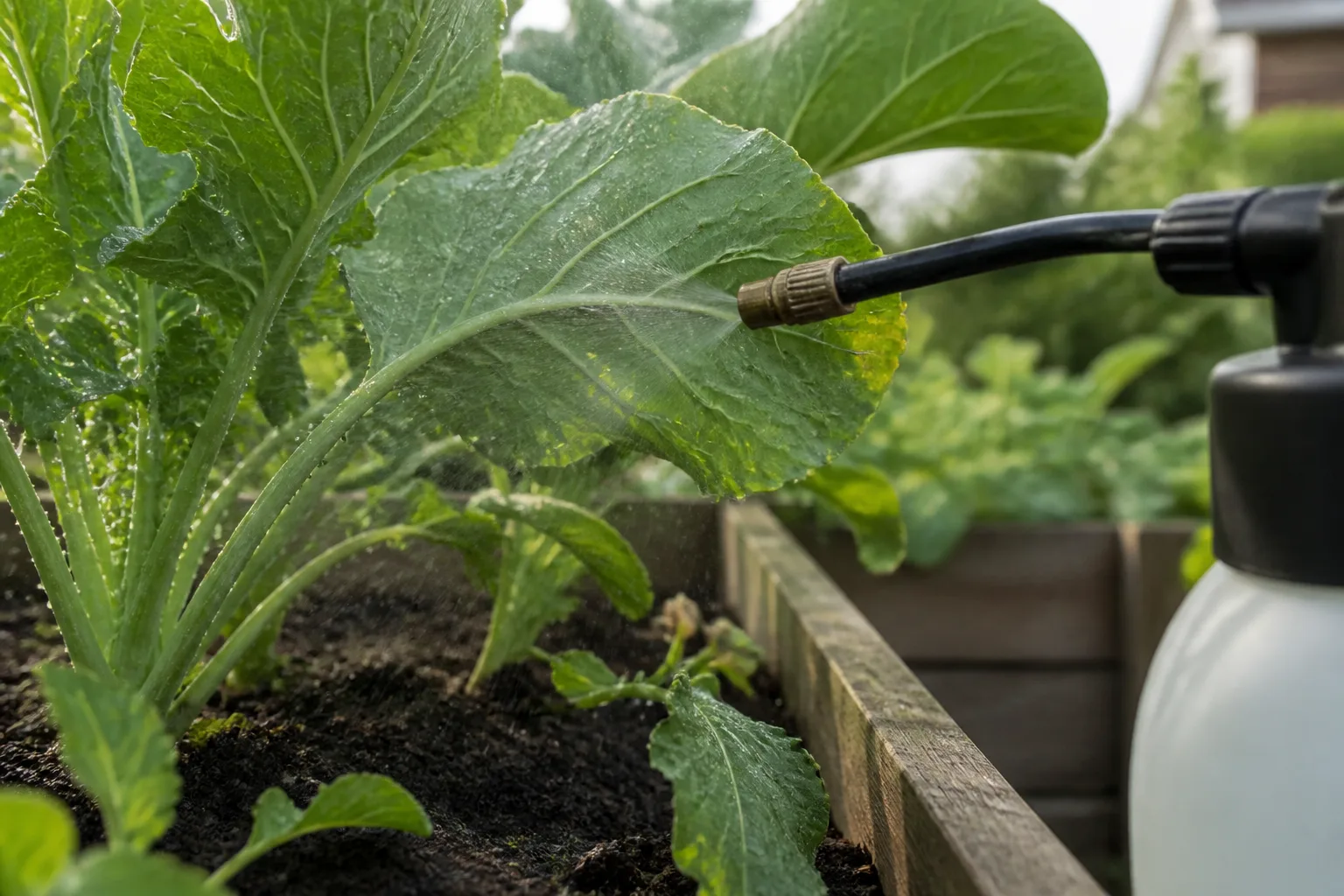
If the product is a concentrate, measure and dilute it exactly as its label directs; do not use a generic pyrethrin-to-water ratio. Mix only what the label allows you to prepare and use, and do not add a homemade sticker, dish detergent, oil, or other chemical. Wear the gloves, eye protection, clothing, or respiratory protection specified by the label. If you cannot meet a required protective measure, choose a different control or ask a qualified pesticide professional for help.
Aim the spray only at the labeled target area and pest. Many contact sprays require contact with the insect, so leaf undersides may matter when the target is present there; however, coverage directions vary by crop and product. Use the nozzle and pressure described in the label to avoid misting flowers, neighboring plants, soil, sidewalks, drains, or the air around you. Never broadcast-spray a whole garden to catch an insect you have not identified.
Stop if conditions change, the wind rises, runoff begins, or people and animals enter the area. Do not stretch the label’s application rate to force a faster result. A stronger mixture is not a safer or more dependable way to treat a pest, and a missed target should be diagnosed before a second application is considered.
Respect Harvest, Re-entry, and Cleanup Limits
For edible crops, the preharvest interval (PHI) is the label’s minimum wait between the final application and harvest. It varies by product and crop; some products may permit a short interval, while others may not be labeled for that crop at all. Do not infer a zero-day interval from the word “natural,” from rapid sunlight breakdown, or from a different brand’s directions.
Follow any re-entry interval and keep people and pets away until the label says the area can be used again. Wash hands and exposed skin as the label directs, clean equipment only in an allowed place, and prevent rinse water from reaching storm drains or surface water. Keep concentrate in the original container with its label, secured as directed, and dispose of unused product and containers according to the product instructions and local hazardous-waste rules.
Do not save diluted spray unless the label specifically permits storage. A leftover mixture may not remain effective or stable, and an unlabeled bottle can be mistaken for something else. If the label’s disposal directions are difficult to follow, call the product maker or your state pesticide agency before pouring anything into a sink, storm drain, or garden soil.
Protect Pollinators, Water, and Other Wildlife
Pyrethrins are not selective for “bad” insects. NPIC classifies them as highly toxic to honey bees and highly to very highly toxic to fish and several other aquatic organisms. A direct hit can harm a beneficial insect just as readily as a pest, while drift or runoff can carry the pesticide beyond the leaves you intended to treat. (NPIC)
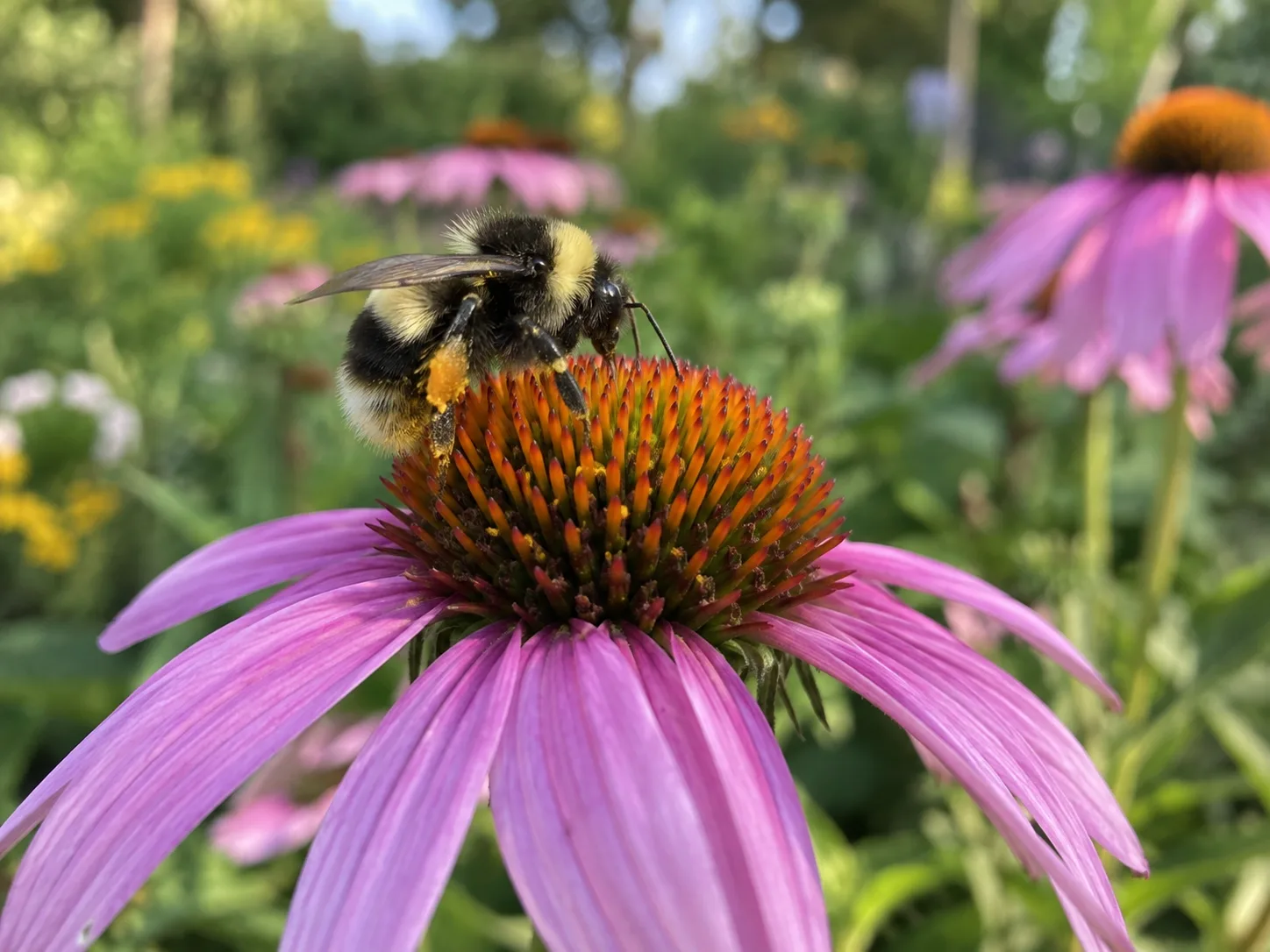
Do not spray open flowers, flowering weeds, or plants where bees are actively foraging unless the product label clearly permits that exact use and gives precautions you can meet. Penn State Extension recommends reading both the environmental-hazards and use-instructions sections of pesticide labels because pollinator exposure can occur through more than a direct spray. (Penn State Extension)
Choosing a time when pollinators are less active may reduce the chance of direct contact only when the product label allows it; it does not make the treatment pollinator-safe. Do not rely on “spray after sunset” or “wait until the spray dries” as a universal workaround. Keep the application away from ponds, streams, drains, gutters, and runoff routes, and skip treatment when wind or water could move droplets off-site. EPA’s pyrethrin and pyrethroid labeling initiative specifically addresses drift and runoff to water bodies. (US EPA)
Protect People, Pets, and Indoor Air
People can be exposed by breathing spray, getting it on skin or in eyes, or accidentally swallowing it. NPIC reports that pyrethrins can irritate skin and eyes and that breathing exposure has been associated with airway irritation, coughing, and difficulty breathing. Follow the label’s protective-equipment directions, keep children and pets out of the treatment area, and avoid spraying where mist can enter an occupied room or travel through open doors and windows. (NPIC)
Use an indoor product indoors only when the label permits that site and pest. A garden-use spray is not automatically safe for houseplants, kitchens, pet bedding, or enclosed rooms. Some shampoos or veterinary products contain pyrethrins, but that does not make a garden concentrate safe to use on an animal; dose, ingredients, route, and label are different. (NPIC)
If a spill or exposure occurs, stop the application and follow the product label’s first-aid instructions. For a U.S. human exposure, contact Poison Control at 800-222-1222; call emergency services for severe symptoms or breathing trouble. NPIC can also answer pesticide questions at 800-858-7378. Keep the container or a photo of its label available when asking for help, but do not delay urgent care to look for it. (NPIC)
If Application Misses the Mark
If pests remain after treatment, do not immediately spray again or make a stronger batch. Recheck the pest identification, its life stage, the label’s target list, and whether the pest was exposed to the spray. Contact insecticides can miss insects hidden in webbing, curled leaves, dense plant growth, or soil; the surviving population may also be outside the labeled target range.
Inspect the plant and record where insects remain and when damage appears. If the label’s minimum reapplication interval has not passed, wait; if the maximum number of treatments has been reached, stop. Repeated broad-spectrum applications can harm predators that were helping control the pest and may create more exposure without addressing the cause.
If leaf injury appears, stop further use and compare the damage with the label’s phytotoxicity precautions. Do not rinse or wash treated plants unless the label or manufacturer directs that response; removing residue may not reverse injury and can send pesticide into runoff. For a serious exposure or unexplained plant injury, contact the product manufacturer, local extension office, state pesticide regulator, or poison-control service as appropriate.
Consider a Lower-Impact First Step
For a small infestation, removing a few insects by hand or pruning a heavily infested shoot can be enough. A steady stream of water may dislodge some aphids, mites, and other exposed pests from sturdy plants. Use a row cover or other physical barrier before insects arrive when the crop and pollination needs make that practical. None of these methods fits every pest, but each can reduce the number of situations that call for a broad-spectrum spray.
If treatment is necessary, match the tool to the insect. Insecticidal soap products work only when they contact susceptible pests and may injure some plants; oils and microbial products have their own crop, pest, temperature, and pollinator limits. Buy a product with directions for your exact use, read the label, and avoid substituting kitchen ingredients for a tested formulation.
The point of choosing pyrethrin is not that it is the mildest possible option. It is that a labeled product may fit a defined pest problem when nonchemical controls are insufficient and the gardener can follow its safeguards. If those conditions are not met—especially around flowering plants, pollinator activity, nearby water, or a crop without a clear harvest interval—choose another method or ask a local extension specialist.
Conclusion
Pyrethrin insecticide can be a useful contact treatment, but it is still a pesticide with meaningful risks to bees, aquatic organisms, and anyone exposed to spray. Do not extract it from garden flowers or use an improvised dose. For a garden treatment, identify the pest, confirm that a labeled product covers your crop and site, follow its mixing and protective directions exactly, and keep the spray away from blooms, water, people, and pets.
The label—not the word “natural,” a general recipe, or a product with a similar name—sets the safe use. When you cannot meet those directions, leave the sprayer put away and use a different control.



