How to Grow and Care for Saskatoon Serviceberry
Grow Saskatoon serviceberry with the right cultivar, sun, soil, and pruning plan. Learn when fruit ripens, how to protect berries, and what problems to watch.
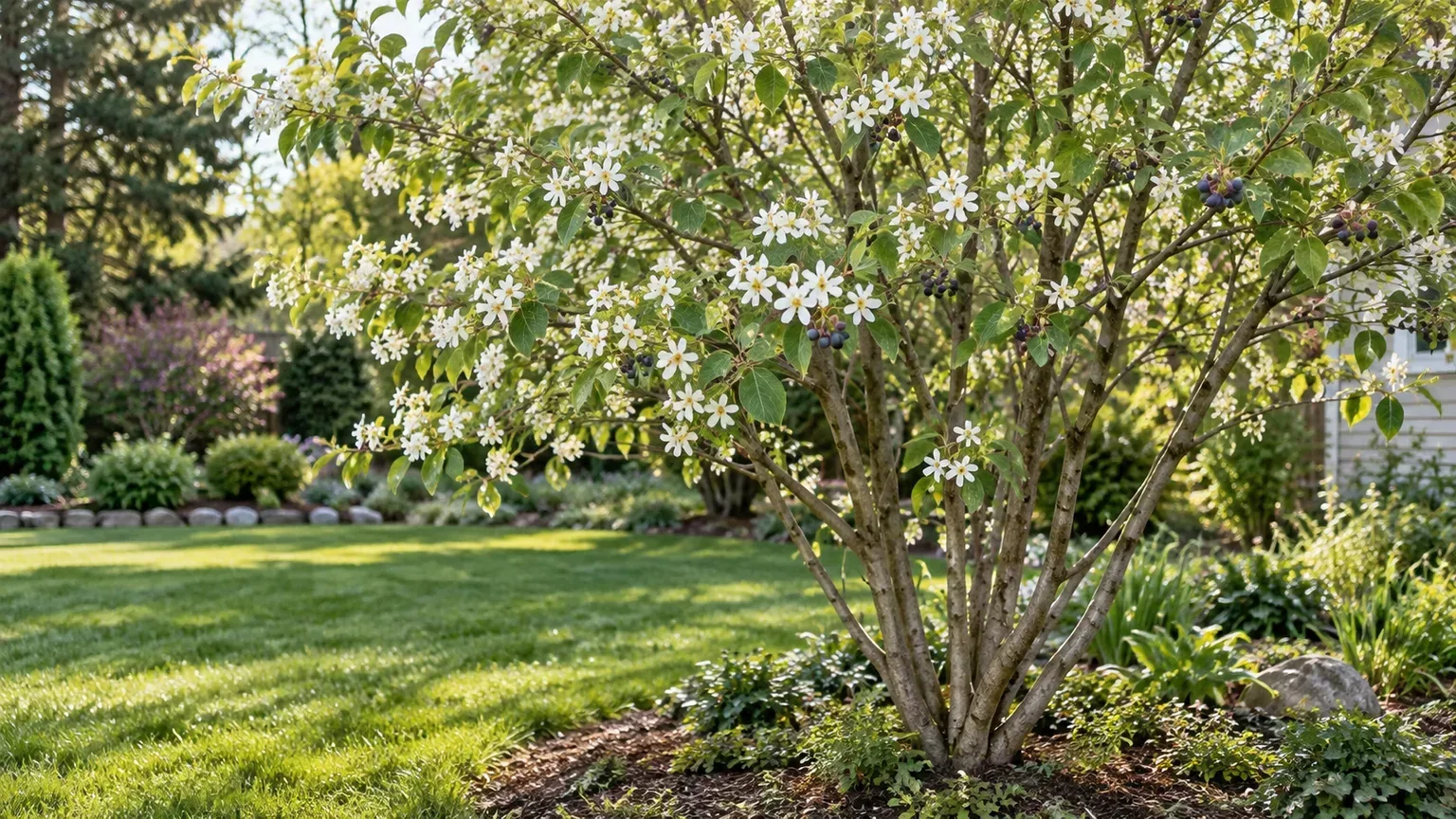
Saskatoon serviceberry earns a place in a garden twice: first with clusters of white flowers in spring, then with sweet, dark fruit in early summer. Its leaves turn warm shades in fall, and its branching habit offers structure after leaf drop. The catch is that this is not one uniform shrub: cultivar size and suckering can make the difference between a tidy specimen and a thicket.
The species, Amelanchier alnifolia, is a cold-hardy North American shrub or small tree in the rose family. It is also called western serviceberry, alder-leaved serviceberry, or Saskatoon berry. Choose a named cultivar for a predictable size, give it well-drained soil and enough sun for the job you want it to do, then let its natural multistem habit work for you instead of repeatedly shearing it.
Saskatoon serviceberry at a glance
Expect a deciduous, usually multistemmed shrub that may form a small tree or gradually spread into a colony by root suckers. Species and cultivars vary substantially in height and width; a compact selection may stay around 4 to 6 feet, while larger forms can be several times that size. The nursery label and cultivar name matter more than a generic “serviceberry” tag when you are planning a small yard.
Its spring flowers are brief, and its edible fruits are technically pomes, like apples, despite the familiar name Saskatoon berry. The plant tolerates partial shade and a range of soils, but full sun and evenly moist, well-drained ground favor a heavier crop. Montana State University Extension describes Saskatoon as a native species for parts of the western landscape and lists cultivars selected for different habits and hardiness. (Montana State University Extension)
If you want to compare Saskatoon with other plants in the genus, see this serviceberry species guide. It helps avoid a common buying mistake: treating every plant sold as “serviceberry” as if it had the same mature shape, climate range, or fruiting habit.
Choose a cultivar for your yard and harvest goal
Buy by botanical name and cultivar, not just by the word “serviceberry.” A. alnifolia is generally grown as a cold-hardy shrub with edible fruit, but the named forms differ in size, shape, suckering, and the emphasis breeders placed on ornamental traits or berry quality.
| Cultivar or type | Useful fit | What to check before buying |
|---|---|---|
| ‘Regent’ | A smaller garden, border, or compact edible planting | Extension references describe it as a compact clump, often about 3 to 6 feet tall and wide; confirm the local nursery’s expected spread. |
| ‘Standing Ovation’ | A narrow, upright accent where height is welcome | It can grow much taller than a compact shrub while staying relatively narrow; do not mistake “upright” for “dwarf.” |
| ‘Northline’ | A hedge, screen, or naturalized patch | It can sucker freely, useful for filling space but demanding if you need a sharply contained edge. |
| ‘Smokey,’ ‘Thiessen,’ or ‘Pembina’ | A planting where fruit size or quality is a priority | Confirm that the offered plant is A. alnifolia and ask about local harvest timing, fruit traits, and mature spread. |
This is a starting comparison, not a guarantee of what every nursery-grown plant will do. Montana State University Extension’s cultivar table lists ‘Regent’ and ‘Standing Ovation’ as hardy to USDA Zone 2, while University of Wisconsin–Madison Extension describes ‘Regent’ as a compact clumping selection and names several cultivars selected for fruit quality. Local stock, site, and regional provenance can change how a plant performs. (Wisconsin Horticulture Extension)
If fruit matters, ask whether the plant is a fruiting Saskatoon cultivar rather than an ornamental hybrid from another Amelanchier species. One shrub can set fruit, but a second, genetically distinct cultivar with overlapping bloom may improve pollination and gives you a backup if frost or poor weather affects one plant’s flowers. (Gardener’s Path)
Choose a site that balances sun, moisture, and space
For the best chance of harvesting, choose a site with at least six hours of direct sun if your climate allows it. Saskatoon tolerates part shade, so a woodland edge can still work for flowers and wildlife value, but a deeply shaded shrub often produces fewer berries and a more open, reaching shape. In hot, dry regions, morning sun with some afternoon protection can reduce heat stress while preserving useful light.
Drainage matters more than a precise soil recipe. Saskatoon can adapt to sandy, loamy, or somewhat heavier soil, but roots struggle in ground that stays saturated after rain. Montana State University Extension gives a preferred soil pH range of 5.5 to 7.0 and notes tolerance of more alkaline soil; do not try to force a perfect number with amendments unless a soil test and local advice indicate a need. (Montana State University Extension)
Plan for the cultivar’s mature width plus the space its suckers may claim. If the shrub is meant to be a screen or wildlife thicket, that spreading habit is an asset. Near a walkway, lawn edge, or small foundation bed, choose a low-suckering compact cultivar and expect to remove occasional shoots; serviceberry is a poor choice where you need a permanently clipped, narrow hedge with no maintenance.
Planting a Saskatoon serviceberry
Plant bare-root stock in early spring while dormant. Container-grown plants can usually go in during spring or fall, when moderate temperatures make it easier to keep the root ball moist as new roots establish. In a region with very hot summers or frozen autumn soil, use the planting window recommended by a local nursery or extension service.
- Clear perennial weeds and turf from a broad circle around the future shrub. This reduces early competition for water and makes later sucker removal easier.
- Dig a hole about twice as wide as the root ball and no deeper than its root system. Roughen glazed sides in compacted soil so roots can move outward.
- Set the plant so the root flare and top of its root mass sit at or just above finished grade. Spread bare roots naturally rather than bending them into a narrow hole.
- Backfill with the excavated soil, firm gently, and water slowly until the root zone is evenly moist. If the soil sinks, add soil to restore grade rather than burying the stem base.
- Apply a loose mulch layer across the root zone, leaving a few inches of bare space around stems. Keep the mulch broad and shallow enough that it does not form a wet collar against the crown.
Do not fill a small planting hole with rich potting mix in otherwise compact ground. A sharply different pocket can hold water or encourage roots to circle inside the amended area instead of exploring the surrounding soil. If drainage is persistently poor, choose a better site or raise a broad planting area rather than creating a deeper sump.
Water, mulch, and fertilize with restraint
During the first growing season, water deeply whenever the root zone is drying; do not use a rigid weekly schedule if rain or soil type changes the need. A simple check is to feel soil a few inches below the surface. If it is dry there, water slowly at the base; if it is still cool and damp, wait. Once established, Saskatoon can tolerate dry spells, but prolonged drought during flowering and fruit development can reduce berry size and yield.
Keep the root zone covered with organic mulch and replenish it as it breaks down. Mulch moderates soil moisture and suppresses weeds, but it should not be heaped against stems. In a rainy climate or heavy soil, use a thinner layer and prioritize air movement and drainage over moisture retention.
Do not automatically feed a healthy shrub every spring. Montana State University Extension recommends a soil test to identify nutrient needs and links fertilizer to plant performance; excess fertility is not a shortcut to more fruit. If growth is weak, first check drainage, light, competition, and whether the plant is still establishing. Add nutrients only when the soil test or a clear deficiency supports that choice.
Pruning for a sturdy shrub and reliable bloom
Let a young plant establish its framework. For roughly the first three years, remove dead, broken, crossing, or clearly weak stems, but avoid shaping it heavily. Flowers form on older stems, so regular tip-shearing can remove the wood you want to keep and leave you with a dense exterior and little fruit.
For maintenance, prune in late winter or early spring before bud break. Remove selected stems at ground level to improve light and airflow through the center, preserve strong young canes, and take out damaged or crowded growth. As a multistem shrub ages, removing about one-third of the oldest growth in a year can renew it without sacrificing the whole crop at once. Montana State University Extension notes that serviceberry flowers develop on two- to four-year-old stems, which is why a gradual rotation is more dependable than cutting everything back every year. (Montana State University Extension)
Avoid shearing the outside into a tight ball. That cuts off flowering tips, encourages crowded shoots, and hides the structure you could have shaped with a few selective cuts. If the plant is oversized, spread renewal across several winters; drastic rejuvenation may restore a neglected shrub, but it can cost you flowers and berries for more than one season.
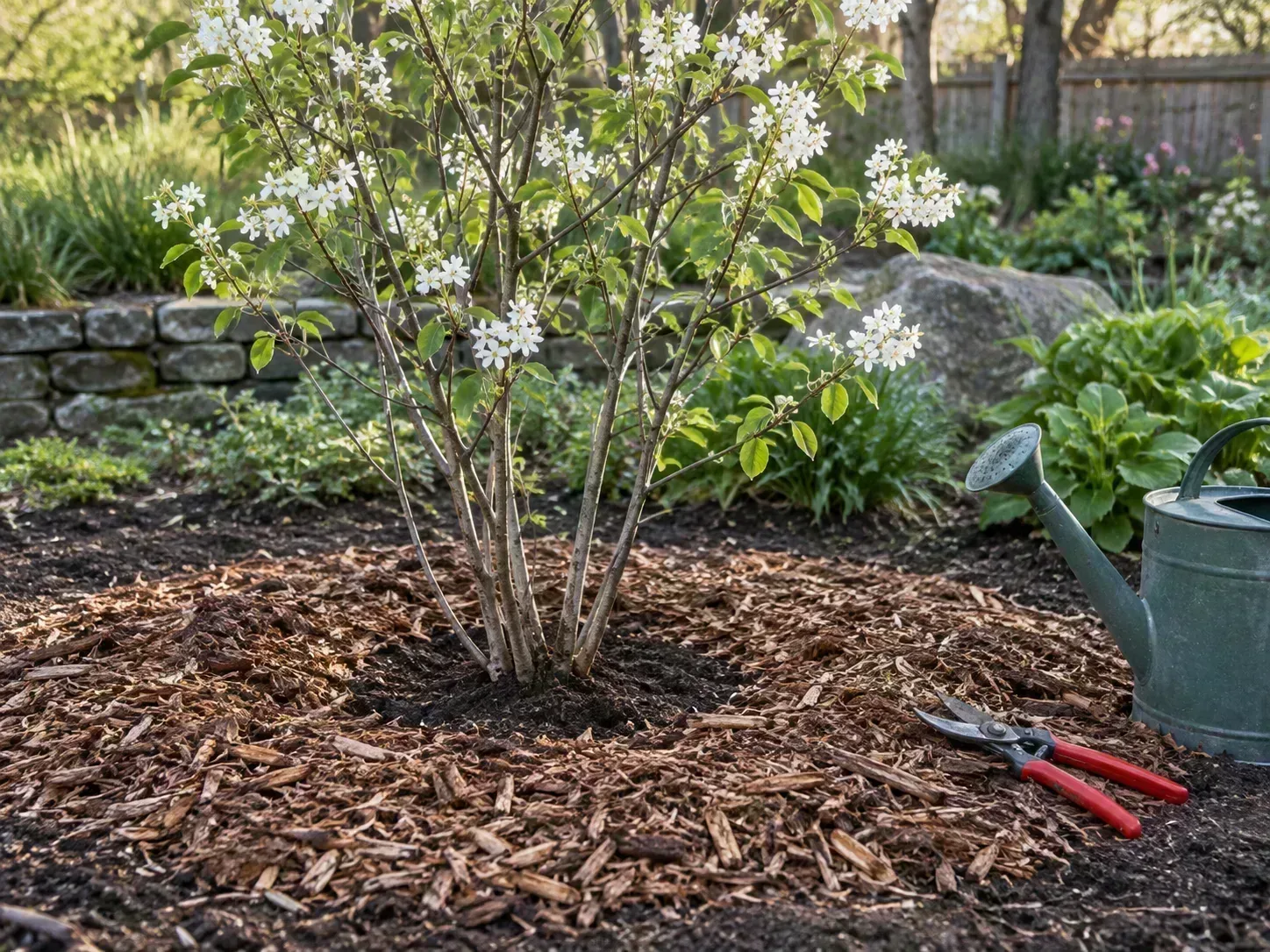
Rainy Side Gardeners also recommends keeping pruning light and removing crossing or wayward stems rather than shearing the shrub. (Rainy Side Gardeners)
Control root suckers without fighting the plant
Suckers rise from roots beyond the main clump and are part of how many Saskatoons spread. Keep them where you want a colony or hedge; remove them when they enter paths, beds, or lawn. Cut an unwanted sucker as close to its point of origin as you can reach, rather than repeatedly shortening the visible tip, which may encourage more shoots.
If you want a single small tree form, select a strong central stem while the plant is young and remove competing basal stems gradually. It will still need occasional sucker control, and the resulting canopy may be less dense than a natural shrub. Choose the form that suits the site instead of trying to force a thicket-forming plant into a maintenance-free topiary.
Flowering, pollination, and the wait for fruit
White flowers usually open early in spring, but the calendar date shifts with region, weather, and cultivar. A brief bloom can be followed by uneven fruit set if frost damages flowers or cold, wet, windy weather limits pollinator activity. Keep the soil adequately moist through bloom and avoid pruning off flower-bearing stems immediately beforehand.
Most serviceberries are self-fruitful, so one plant may produce fruit. That does not mean every plant will crop heavily alone: a compatible second cultivar blooming at the same time can improve cross-pollination, and a group also provides more flowers for pollinators. University of Wisconsin–Madison Extension notes that fruit generally follows bloom after about two to three months; Montana State University Extension describes only light production in the first two years, with heavier crops as the shrub matures. (Wisconsin Horticulture Extension; Montana State University Extension)
Do not judge a new plant by its first season. Establishment, cultivar, sun, pruning history, weather during bloom, and fruit loss to birds all affect what reaches your bowl. The bloom itself is short, and a late freeze can damage it even when the shrub’s woody stems are perfectly winter-hardy.
Harvest fruit at full flavor
Saskatoon fruit often ripens in June or July, but local conditions and cultivar can shift that window. Berries change from green to red and then to deep purple or nearly black; wait until the fruit is fully colored and tastes sweet, not merely until it looks dark from a distance. A ripe pome should be plump and yield gently without feeling mushy.
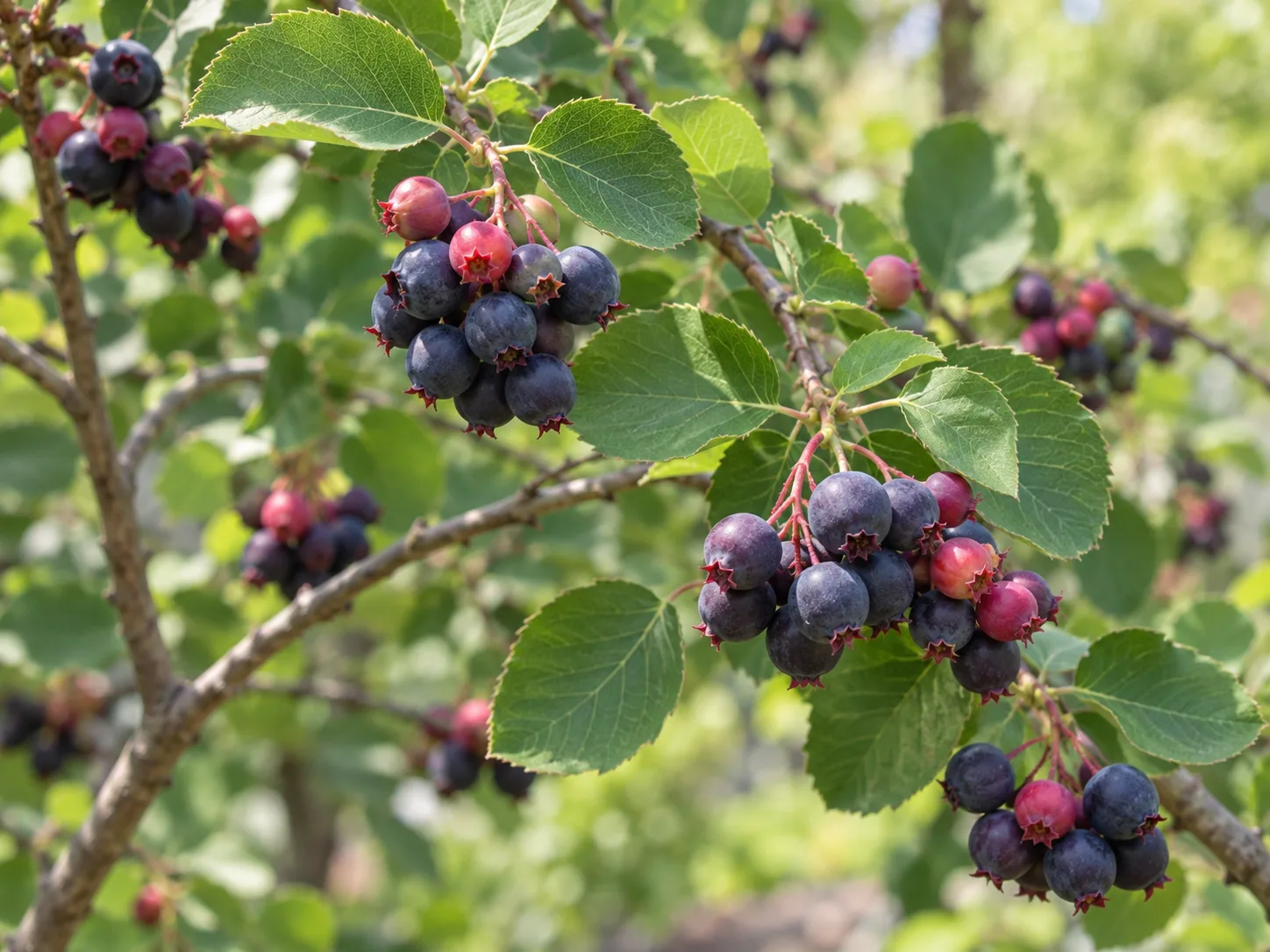
Harvest in several passes because fruits on a shrub may not ripen together. Taste a few berries from different parts of the plant before picking a large batch. If they are still tart or firm, return in a few days; the best flavor develops on the plant, and picking too early will not reliably reproduce a fully ripe berry at home.
Pick into a shallow container so the lower fruit does not crush. Cool the harvest promptly, sort out leaves and damaged fruit, and rinse shortly before using or freezing. Saskatoons work well fresh, in pies and muffins, or frozen on a tray before being transferred to a sealed container. Gardener’s Path also recommends harvesting by cultivar and local ripeness rather than relying on a single date. (Gardener’s Path)
Protect berries and manage wildlife
Birds often find the crop before a gardener does. Decide early whether you are growing primarily for wildlife, for a family harvest, or for both; a few shrubs can support both goals better than trying to chase every bird away from one small plant.
For fruit you intend to pick, place bird netting over a frame before berries begin to color, and secure the edges so birds cannot become trapped beneath it. Check it frequently and remove it when harvest ends. Montana State University Extension identifies birds as a major fruit-loss pressure and recommends netting, while a naturalized planting can simply leave a share for wildlife. (Montana State University Extension; U.S. National Park Service)
Young stems may also need protection from rabbits or other browsers. A mesh guard around the base is more dependable than household scent remedies, especially through winter when food is scarce. Keep guards loose enough to avoid rubbing or trapping moisture against the bark, and check that they have not become constricted as stems grow.
Common pests and diseases
Saskatoon can host several of the same diseases that affect plants in the rose family, including fire blight, rust, and fungal leaf or fruit spots. A plant that is otherwise established may tolerate modest cosmetic spotting; repeated wet foliage, dense growth, and poor air circulation raise the chance that disease will become more noticeable.
Water at soil level rather than wetting the canopy, prune selectively to keep air moving, and remove fallen or clearly infected material. Do not diagnose every brown leaf as a nutrient problem and reach first for a spray. Identify the pattern, check recent weather and irrigation, and consult a local extension office before using a pesticide or fungicide on an edible crop.
Diagnose before you prune or spray
| What you notice | A likely explanation | First response |
|---|---|---|
| Small angular brown leaf spots, sometimes with yellow halos; damaged fruit | Entomosporium leaf and berry spot is one possibility, especially after wet weather | Stop overhead irrigation, remove badly affected material, and improve airflow. |
| Orange or yellow lesions, sometimes with swollen or gelatinous growths | A Gymnosporangium rust may be involved; these fungi use a juniper and a rose-family host at different stages | Inspect nearby junipers and serviceberry, remove badly infected debris, and ask extension to confirm the diagnosis. |
| Shoots or leaves suddenly wilt and turn brown or black, often with a hooked tip | Fire blight is possible | Prune well below affected growth in dry weather and sanitize tools between cuts; contact local extension if symptoms spread. |
| Fine pale stippling or distorted new growth | Insect or mite feeding, drought, and other stresses can look similar | Inspect leaf undersides and check soil moisture before deciding on treatment. |
These are diagnostic clues, not a confirmed diagnosis from a photograph. Montana State University Extension describes leaf spot, rust, and fire blight symptoms and management; Wisconsin Horticulture Extension also notes serviceberry’s susceptibility to several apple-family diseases. Avoid removing nearby junipers just because a serviceberry has spots: first confirm that rust is present and whether the alternate host is relevant. (Montana State University Extension; Wisconsin Horticulture Extension)
Propagate from suckers or seed
If you want a plant true to a named cultivar, a rooted sucker is usually more dependable than seed. Seedlings may vary from the parent, and seed propagation takes patience; use seed if you enjoy raising plants or want genetic variation, not when you need an identical replacement.
In early spring before bud break, select a healthy sucker with roots attached. Expose its connection to the parent, sever it cleanly with a sharp shovel or pruners, and transplant it at the depth where it was growing. Water thoroughly and keep the soil evenly moist while it establishes. Montana State University Extension recommends choosing suckers with roots and notes that cuttings have limited success. (Montana State University Extension)
For seed, collect fully ripe fruit, clean the pulp from the seed, and expect cold-moist stratification before germination. A seedling will not necessarily reproduce the parent’s fruit quality, mature size, or growth habit. Label the seed source and plant date so you can compare the eventual shrub with its parent rather than assuming it will be identical.
Growing Saskatoon serviceberry in a container
A compact cultivar such as ‘Regent’ can be grown in a large, sturdy container for a period, but an in-ground planting is the more reliable long-term choice. Shrubs need room for roots, and container soil dries and freezes faster than garden soil. A pot also limits the sucker-forming habit, but that advantage comes with more frequent watering and a need to protect the root ball in severe winter conditions.
Use a wide container with drainage holes, a well-draining woody-plant mix, and enough volume to support the shrub’s expected growth. Set the pot in a sunny location, check moisture during summer, and avoid keeping the mix saturated. Repot or root-prune only when the container is genuinely crowded, and recognize that flowering and fruiting may be less dependable than in a suitable garden site.
Troubleshoot weak flowering or a small crop
If a mature shrub flowers poorly, first ask whether last year’s pruning removed too much older wood. Next check whether it receives enough direct sun, whether its roots stay waterlogged, and whether drought affected it during bud formation or fruit development. A plant grown mainly for flowers in shade may remain healthy yet produce fewer berries.
If flowers appear but little fruit follows, consider a late frost, cold wet bloom weather, pollinator activity, and whether a second compatible cultivar could help. Also look closely for fruit spot or signs of bird feeding; an apparently empty shrub may have set berries that were eaten before you noticed them. Only after checking these conditions should you test soil and consider fertilizer.
Slow growth alone is not evidence that a Saskatoon needs feeding. A plant may be establishing roots, growing in poor drainage, or dealing with competition from turf. Correct the limiting condition rather than applying fertilizer as a catch-all, which can create leafy shoots without solving the underlying problem.
Seasonal care calendar
- Late winter to early spring: Before bud break, remove broken or crowded stems and thin a portion of the oldest canes if needed. Plant bare-root stock while dormant.
- Spring bloom: Avoid heavy pruning, maintain steady moisture, and note whether frost coincides with flower opening.
- After bloom through summer: Water new shrubs when the root zone dries; keep established plants from prolonged drought. Watch for leaf or fruit spots, and cover fruit with secured netting before it ripens if you plan to harvest.
- Harvest season: Pick fully colored, flavorful fruit in more than one pass, cool it promptly, and remove netting once the crop is finished.
- Fall: Plant container-grown stock where autumn establishment is suitable, refresh mulch without covering stems, and collect healthy suckers only when you are ready to transplant them.
Use local bloom and harvest dates as your calendar. “Juneberry” is a common name, not a promise that berries will ripen in June in every climate or every year.
Conclusion
Saskatoon serviceberry is a practical choice when you have room for a cold-hardy, multistem shrub and can accept some sucker control. Choose a cultivar for its real mature size and fruiting purpose, give it sun and drainage, and preserve older stems instead of shearing it into shape.
Once established, it asks for little routine feeding and only occasional thoughtful pruning. A little planning up front—especially around cultivar, spacing, and bird access—makes the difference between a shrub that merely survives and one that gives you spring bloom, useful fruit, fall color, and a place for wildlife in the garden.



