9 Types of Serviceberry Trees and Shrubs for Your Yard
Compare nine serviceberry trees and shrubs by size, hardiness, fruit, and form, then learn how to plant, prune, water, and protect the crop.
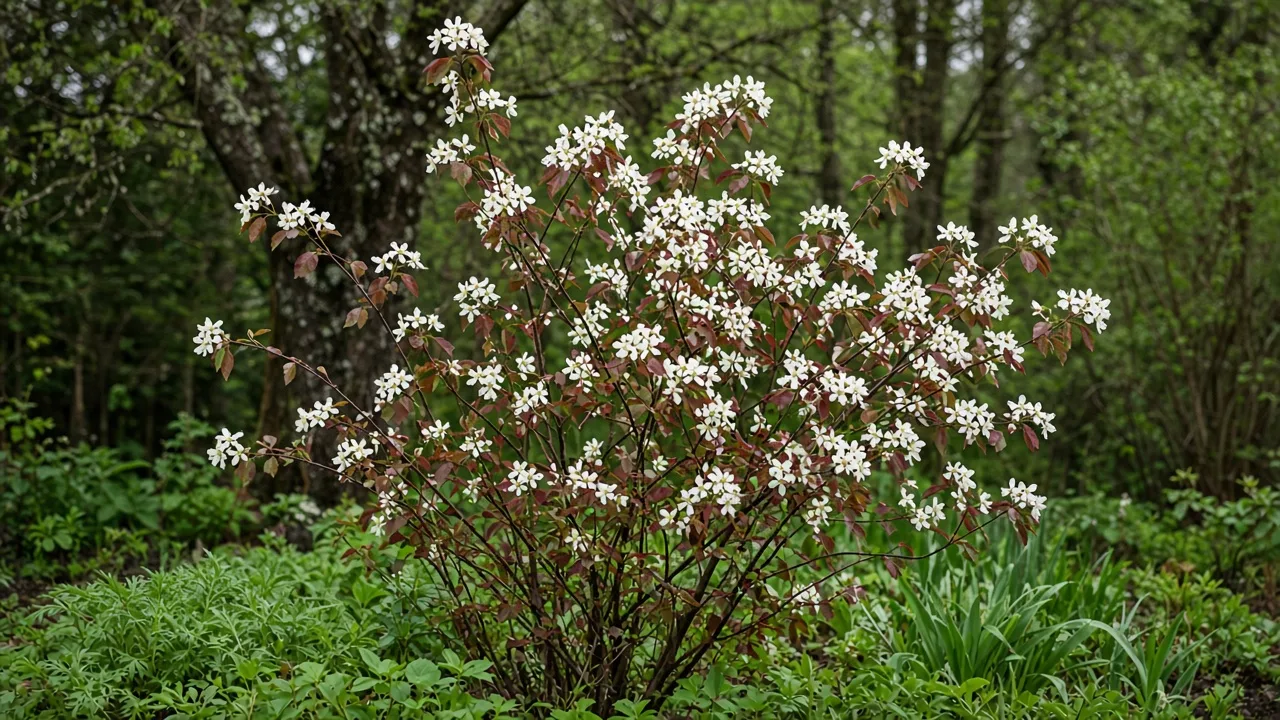
Serviceberry is one of the few woody plants that earns its space in every season: white flowers before or with the leaves, berry-like fruit in summer, red or orange fall color, and attractive branching after leaf drop. The name covers a group of Amelanchier trees and shrubs, so the plant you buy may be a single-trunk ornamental, a multi-stemmed thicket, or a compact fruiting shrub depending on the species and cultivar.
That variety is the good news—and the reason a generic “serviceberry” label is not enough. A 25-foot downy serviceberry is a poor fit beneath a low window, while a compact Saskatoon cultivar may be ideal there. A moisture-loving Canadian serviceberry can struggle on a hot, dry slope even though a Utah serviceberry could manage it. The best choice starts with your site, not the prettiest spring photograph.
What serviceberries add to a yard
Serviceberries belong to the rose family, alongside apples and pears. Their flowers are usually five-petaled and white, opening early enough to help mark the transition from winter to spring. The fruit matures through shades of red, purple, and blue-black, and it is eaten by birds as readily as people. The NC State Extension plant profile describes the genus as useful in edible, native, pollinator, wildlife, and screening plantings, while also warning that shade, alkaline soil, wind, and dropped fruit can change how well it performs in a landscape.
The common names are regional rather than perfectly standardized. You may see serviceberry called juneberry, shadbush, shadblow, shadwood, sarvisberry, or Saskatoon, and some species have more than one accepted common name. The National Park Service notes that Amelanchier also hybridizes readily, which helps explain why plant labels and species lists do not always agree.
Think of serviceberry as a small habitat tree with an edible bonus, not as a blueberry substitute that happens to grow tall. Early flowers support emerging pollinators, dense branches give birds cover, and the fruit can disappear quickly once cedar waxwings, robins, and other birds discover it. If a clean patio is your priority, place the plant over a mulched bed rather than directly over paving.
How to choose the right serviceberry before you buy
Write down six constraints before visiting a nursery: your hardiness zone, the hours of direct sun, how quickly water drains, the mature width you can spare, whether you want fruit for people or birds, and whether you prefer one trunk or several stems. Those answers eliminate more poor choices than a long variety list.
Choose a serviceberry by the mature form you want: a small tree, a spreading multi-stem shrub, or a compact thicket.
Start with mature width, not the container size. Most serviceberries look modest in a nursery pot and then widen as trunks multiply and suckers emerge. If the plant will sit near a walkway, septic line, foundation, or overhead wire, choose a cultivar with a published mature spread and leave room for air movement.
Treat hardiness zones as a filter, not a guarantee. A zone range describes winter minimums, but it does not describe summer heat, humidity, wind, drainage, late frosts, or local disease pressure. A plant at the warm edge of its range may need afternoon shade and more reliable moisture; one at the cold edge may need shelter from drying winter wind.
Decide whether suckers are a feature. Root suckers let a plant become a screen or wildlife thicket, but they also push shoots into lawns and formal beds. If you want a tidy small tree, plan to remove unwanted shoots at ground level once or twice a year. If you want erosion control or nesting cover, allow some stems to develop and thin only the oldest or weakest ones.
Separate fruit goals from ornamental goals. Serviceberries are generally self-fertile, but a second compatible plant can improve pollination and extend the visual impact of a planting. Fruit production also depends on sun, moisture, spring weather, birds, and cultivar—not just the botanical name.
Quick comparison of nine serviceberry types
The figures below are practical starting points, not promises. Serviceberries hybridize, cultivars vary, and nursery tags sometimes use a familiar common name for a related plant. Confirm the exact scientific name and cultivar before planting.
| Type | Typical mature size | Best fit | Watch for |
|---|---|---|---|
| Allegheny | 15–40 ft tall; 15–20 ft wide | Eastern woodland edge or specimen tree | Can become large and multi-stemmed |
| Apple hybrid | 15–25 ft tall and wide | Four-season ornamental with stronger drought tolerance | Cultivar form and fruiting vary |
| Canadian | 15–20 ft tall and wide | Moist border, pond edge, or pollinator planting | Less forgiving of prolonged drought |
| Common/downy | 15–25 ft tall and wide | Native specimen or urban landscape | Several trunks and occasional disease |
| Juneberry | 15–25 ft tall and wide | Spring flowers and edible fruit in a small tree | Botanical identity can be confusing |
| Roundleaf | 3–8 ft tall; about 6 ft wide | Compact shrub, edge, or naturalized planting | Less tree-like and still capable of spreading |
| Saskatoon | 4–15 ft tall; 6–8 ft wide | Edible berries, cold climates, and hedgerows | Birds may harvest fruit first |
| Snowy mespilus | 3–20 ft, depending on cultivar | European-style garden or dwarf accent | Verify cultivar size and local adaptability |
| Utah | 6–15 ft tall; 6–10 ft wide | Dry western site and wildlife planting | Needs drainage and room for an informal form |
1. Allegheny serviceberry
Allegheny serviceberry (Amelanchier laevis), also called smooth serviceberry, is one of the strongest choices when you want a graceful small tree with a woodland character. New leaves can open with bronze or purplish tones, followed by white flowers, dark fruit, and red, orange, or yellow fall color. Its smooth gray bark adds winter interest after the foliage disappears.
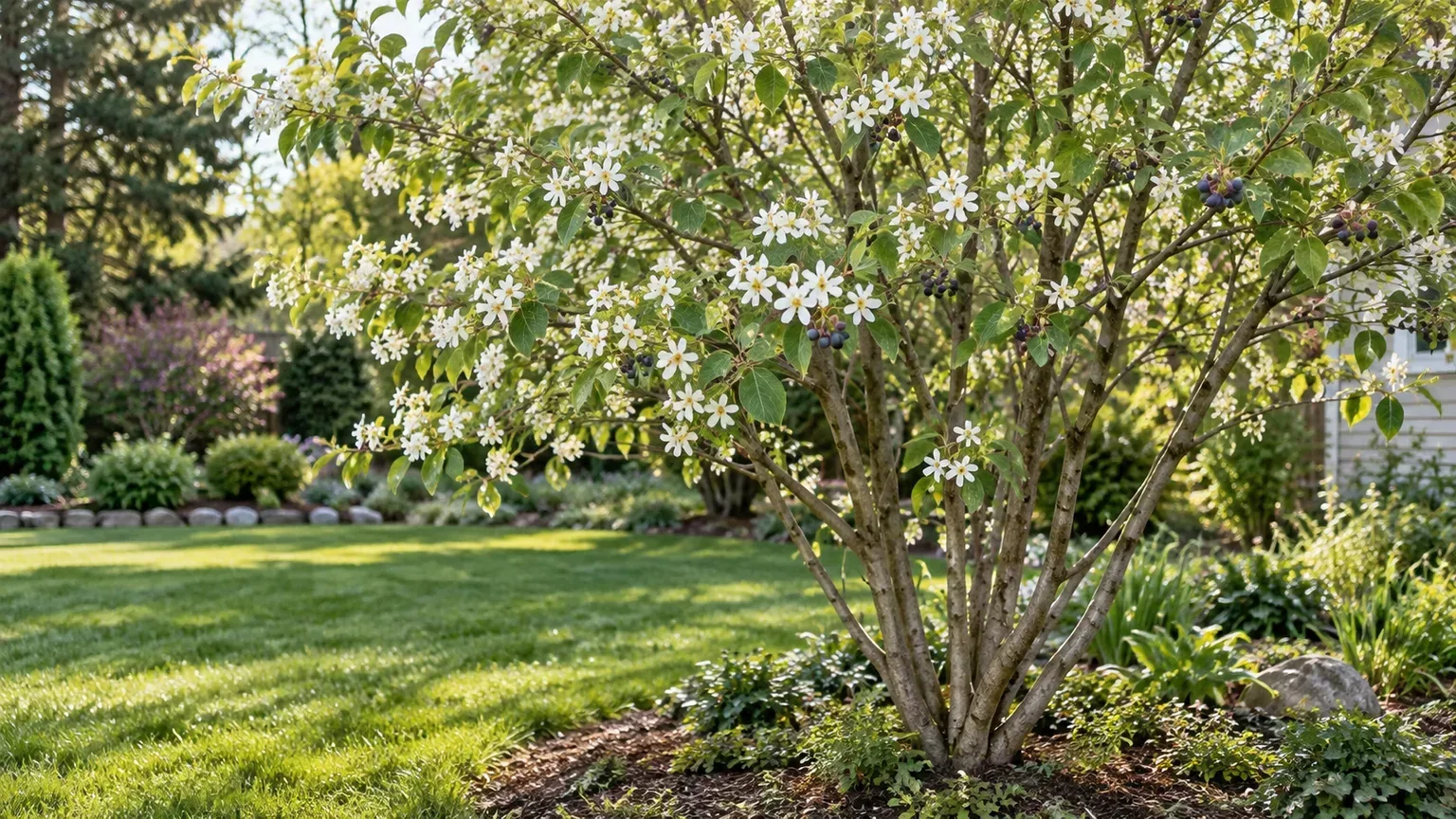
It commonly grows as a multi-trunked plant, but young specimens can be trained to a central leader if you want a more tree-like silhouette. Expect roughly 15 to 40 feet of height and a broad spread, with the final size shaped by cultivar, light, soil, and pruning. Give it full sun to partial shade and soil that stays moderately moist without becoming waterlogged.
Best for: a specimen near a woodland edge, lawn, or naturalistic border in Zones 4–8. Skip it when: the only available spot is a narrow foundation strip or a windy, exposed site where the crown will be constantly stressed.
2. Apple serviceberry
Apple serviceberry (Amelanchier × grandiflora) is a hybrid group created from downy and Allegheny serviceberries. It is often selected for large white flowers, adaptable landscape performance, and strong red-orange fall color. Cultivars such as ‘Autumn Brilliance’ are popular because they combine a manageable small-tree scale with reliable seasonal interest and, in some selections, better disease resistance.
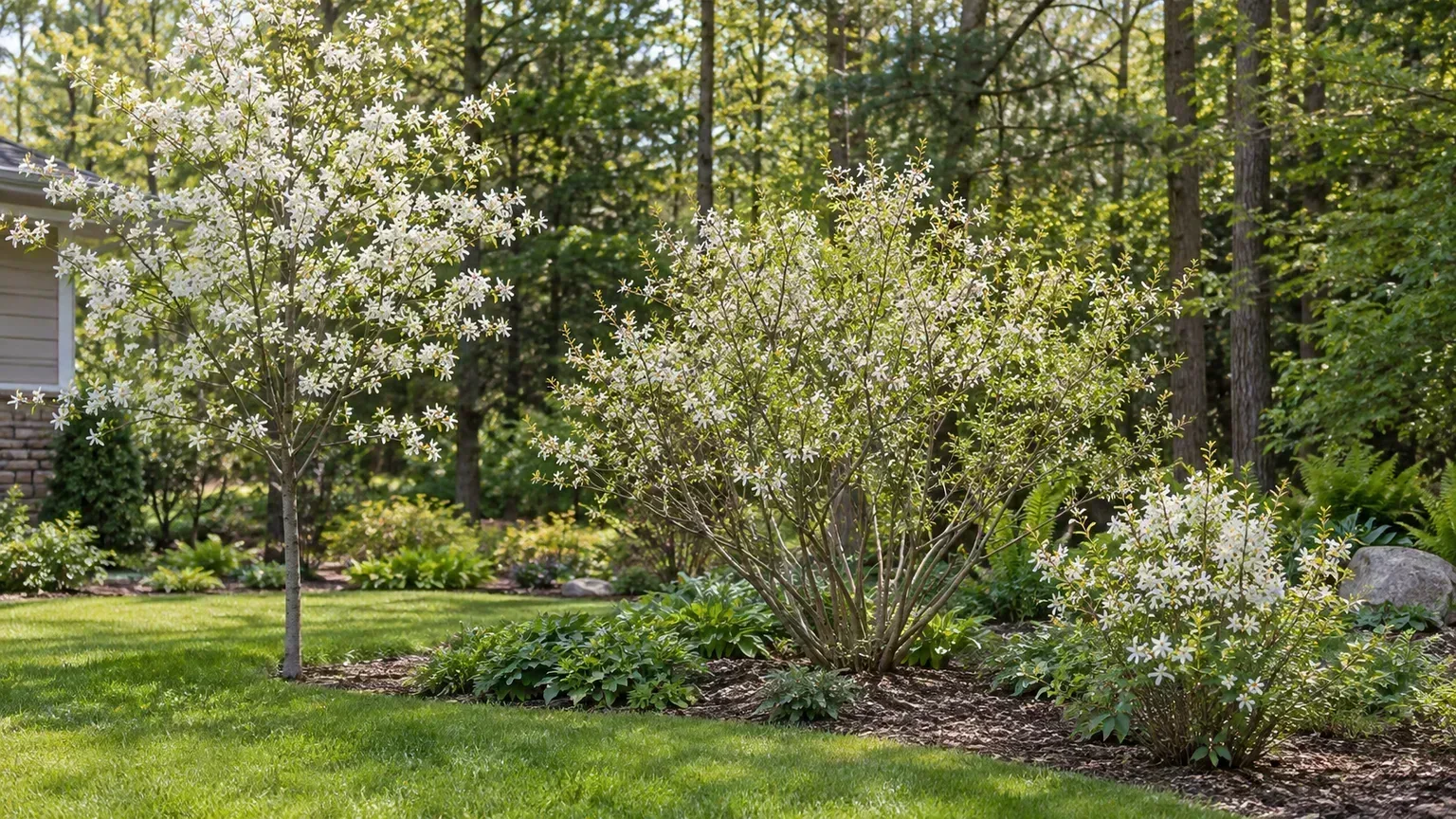
You can leave it multi-stemmed for a fuller shrub or remove competing trunks over time to create a small tree. Most plants mature around 15 to 25 feet tall and wide, so check the cultivar rather than assuming the hybrid will stay compact. It is among the better options for a yard that has occasional dry spells, but “drought tolerant” still means watering during establishment and during prolonged heat.
Best for: a four-season focal point when you want a tree form, fall color, and more drought flexibility than a wet-site species usually offers. Trade-off: named cultivars can be harder to compare because size, fruit, and fall color differ from one selection to another.
3. Canadian serviceberry
Canadian serviceberry (Amelanchier canadensis), sometimes called shadblow serviceberry, is a moisture-loving eastern North American species with a naturally upright, multi-stemmed habit. Its starry white flowers appear early, often before the canopy is fully leafed out, and the fall display can move through orange, red, gold, and yellow. In a moist, well-drained landscape it makes an excellent small tree or loose screening shrub.
This is the serviceberry to consider for a rain-garden edge, pond margin, or soil that dries slowly but never stays stagnant. It can tolerate some dry soil once established, yet prolonged drought usually shows up as leaf scorch, reduced fruit, or premature leaf drop before it kills the plant. Space it for its mature width instead of planting several close together and hoping pruning will solve the crowding.
Best for: a cool, moist border in roughly Zones 4–7. Avoid: hot reflected heat beside a south-facing wall unless irrigation and afternoon shade are dependable.
4. Common or downy serviceberry
Common serviceberry (Amelanchier arborea) is also called downy serviceberry because young leaves and twigs can have a soft, downy texture. It is a native small tree or large shrub, usually around 15 to 25 feet tall and wide, with a somewhat narrow crown when young. White spring flowers give way to larger fruit than many people expect, then yellow, orange, or red fall foliage.
The species naturally makes several trunks. Remove suckers and select a central leader while the plant is young if you want a tree; otherwise, let the stems create a naturalized clump. The USDA Plants Database profile is a useful reference for confirming the scientific identity when a plant tag uses “common,” “downy,” or “Juneberry” loosely.
Common serviceberry tolerates urban conditions better than many delicate woodland trees, but it is not a license to ignore soil. Provide sun to partial shade, good drainage, and deep watering during dry periods. Best for: an eastern native specimen, bird-friendly yard, or informal small grove in Zones 5–9.
5. Juneberry
Juneberry is a common name used for several serviceberries, and Amelanchier lamarckii—sometimes written as A. × lamarckii—is the plant most often associated with that label in ornamental gardening. It has a delicate, upright-to-rounded form, white flowers that open before or with the leaves, dark fruit that ripens around early summer, and warm orange-red fall color.
Because the name is used broadly, the important step is to read the botanical name on the tag. A plant sold as “Juneberry” may behave like a large shrub, small tree, or compact cultivar depending on its parentage. Give it full sun to partial shade and enough room for a 15- to 25-foot mature plant unless the nursery lists a smaller selection.
Best for: a small ornamental tree with a long seasonal sequence and a slightly more refined silhouette. Watch for: confusing it with a compact Saskatoon selection when your yard has little horizontal space.
6. Roundleaf serviceberry
Roundleaf serviceberry (Amelanchier sanguinea) is a smaller species, typically about 3 to 8 feet tall and roughly 6 feet wide. It is also called red twig or sand serviceberry, names that point to its compact shrub habit and reddish young branches. White flowers appear early, followed by fruit and fall color, but the plant’s scale is the main reason to choose it.
Use roundleaf serviceberry where a large tree would overwhelm the view: at the edge of a native bed, along a lightly managed path, or in a low wildlife hedge. It still benefits from sun and drainage, and it may spread gradually by suckers. That spread is helpful for a naturalized planting but needs annual removal if the shrub is sitting beside turf or a formal border.
Best for: smaller yards and low screens in Zones 4–9. Limitation: it will not give you the tall canopy or dramatic single-trunk structure of Allegheny or common serviceberry.
7. Saskatoon serviceberry
Saskatoon serviceberry (Amelanchier alnifolia) is the strongest candidate when edible fruit is a central goal. It is native across much of western and northern North America, tolerates cold, and is available in compact cultivars such as ‘Regent’ as well as larger forms. The leaves are often rounded or alder-like, and the berries ripen from reddish purple to blue-black.
The fruit is sweet enough for fresh eating, pies, jams, and preserves, but do not plant a Saskatoon expecting a harvest without competition. Birds may strip a productive shrub in a day or two, and a dry spring or shaded site can reduce fruit set. The Savanna Institute serviceberry guide lists A. alnifolia as the species most commonly grown for fruit and emphasizes well-drained soil, full sun, pruning, and immediate refrigeration for fresh berries.
Best for: a cold-climate edible landscape, wildlife hedge, or compact fruiting shrub in roughly Zones 4–9, with some cultivars suited to colder conditions. Choose it first when: you want a manageable shrub and a realistic chance of harvesting berries rather than simply admiring flowers.
8. Snowy mespilus
Snowy mespilus (Amelanchier ovalis), also called European or garden serviceberry, comes from central and southern Europe rather than North America. It shares the genus’s familiar pattern—white spring flowers, dark fruit, and fall interest—but its cultural context and available cultivars differ from those of the North American species.
The species can grow around 15 to 20 feet tall, while dwarf cultivars such as ‘Pumila’ are often listed closer to 3 to 5 feet. That difference is large enough to change the plant from a specimen tree to a front-border shrub, so buy by cultivar and mature dimensions. Give it full sun to partial shade, good drainage, and protection from the worst wind.
Best for: a formal or European-style garden where a named compact cultivar is available, usually in Zones 5–7. Trade-off: if native habitat value is the priority, compare a regionally native Amelanchier before choosing the European species.
9. Utah serviceberry
Utah serviceberry (Amelanchier utahensis), sometimes called western serviceberry, is one of the better choices for a dry western landscape. It grows as an informal shrub or small tree around 6 to 15 feet tall and 6 to 10 feet wide, with white spring flowers, purple-black fruit, and yellow fall color. Its natural habitats include open, rocky, and seasonally dry sites rather than saturated woodland soil.
That does not make it a zero-water plant. Establish it with deep irrigation, then let the interval between soakings widen as roots move into surrounding soil. Full sun encourages a denser shape and better fruiting; partial shade can work, but a plant in deep shade may become open and flower less.
Best for: a sunny, well-drained western yard, native planting, or wildlife edge in roughly Zones 5–8. Avoid: heavy clay that stays wet, narrow beds beside irrigated lawns, and sites where the informal shape will be repeatedly sheared.
Planting and caring for serviceberries
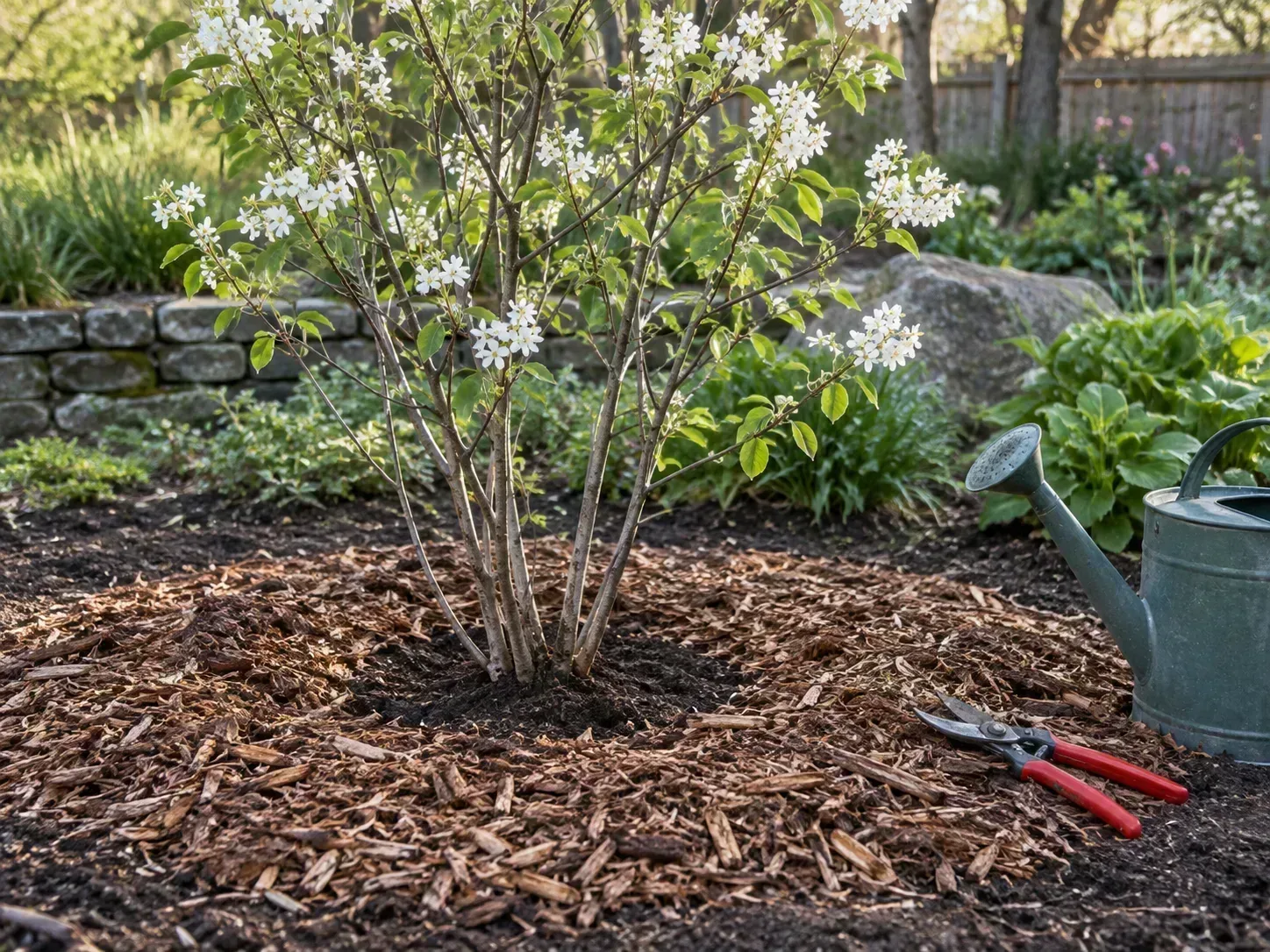
A correctly planted serviceberry gets a broad mulch ring, deep establishment watering, and selective pruning rather than constant shearing.
Plant in fall or early spring when the soil can be worked and the plant is not under heat stress. Dig a hole no deeper than the root ball and at least twice as wide, loosen circling roots, and set the top of the root ball level with the surrounding soil. In heavy or slow-draining ground, planting slightly high and improving the broader bed is safer than creating a deep bowl that holds water around the roots.
Light: Full sun to partial shade works for most species. Aim for at least half a day of direct light if flowers, fruit, and fall color matter. More shade can keep a serviceberry alive while giving you fewer flowers, a looser habit, and a smaller harvest.
Water: Keep new plants evenly moist but not constantly wet. Check below the mulch; when the upper few inches of soil begin to dry, water slowly over the root zone. After establishment, many serviceberries can handle normal rainfall with supplemental water only during drought, but fruit production and leaf quality still improve when severe dry spells are addressed.
Soil: Well-drained loam is easiest, but serviceberries tolerate a useful range of soils. Avoid planting into standing water, and do not assume that a drought-tolerant species will tolerate a wet winter. A soil test is more helpful than a fertilizer guess, especially if leaves are pale or growth is weak.
Mulch: Apply a two- to three-inch layer of wood chips or another organic mulch over the root zone, leaving a clear gap around trunks and stems. Mulch conserves moisture, reduces grass competition, and makes sucker removal easier to see. A mulch volcano pressed against the stems creates a rot and rodent problem rather than better care.
Pruning: Start by removing damaged, crossing, or weak wood. For a tree form, select one or a few permanent trunks early and remove competing basal shoots at ground level. For a shrub or fruiting hedge, retain several age classes and thin the oldest stems gradually so the plant keeps producing new, productive growth. Prune during dormancy or after flowering according to your goal and local extension advice; avoid turning a naturally arching plant into a tight box.
Pests, diseases, suckers, and yard maintenance
Serviceberries are generally resilient, but they are members of the rose family and can share problems with apples, pears, and hawthorns. Fire blight may cause blackened shoots and dieback; fungal leaf spots, rust, and powdery mildew can mark foliage; and borers, aphids, mites, sawfly larvae, rabbits, and deer may appear. The NC State profile lists fire blight, leaf spot, rust, powdery mildew, alkaline-soil chlorosis, wind damage, and rabbit browsing among the issues to watch.
Use the symptom before reaching for a spray. Remove and discard clearly diseased wood with clean tools, improve airflow by thinning congested branches, water the soil rather than the foliage, and protect young trunks from rabbits with a physical barrier. If a problem is severe or recurring, identify the species, inspect nearby host plants such as junipers when rust is suspected, and ask a local extension office about diagnosis and legally labeled treatments.
The most predictable “problem” is often not a disease: flowers and fruit drop, birds scatter berries, and suckers extend the plant beyond its intended footprint. That is why serviceberry belongs over mulch, not over a pristine walkway, and why a lawn mower or sharp spade should be part of the maintenance plan for a thicket-forming planting.
Harvesting serviceberries without losing the crop
Serviceberry fruit usually ripens in early summer, but the exact window varies by species, climate, and spring weather. Pick when berries are fully colored and slightly soft rather than merely red. Taste a few from different clusters because fruit can ripen unevenly across the plant, and remove leaves or damaged fruit as you harvest.
Birds are not waiting for your preferred harvest date. If people-food is the priority, cover a compact plant with bird netting before the first berries soften, anchoring the edges so wildlife cannot become trapped. For a large tree, accept that the most efficient harvest may be to share the crop and preserve what you can gather quickly.
Refrigerate fresh berries promptly and use them soon, or freeze them in a single layer before transferring them to a container. Their flavor is often described as a blueberry-cherry or mild apple-like cross, but it varies by species and cultivar. Saskatoon selections are the most predictable choice for fruit quality, while larger ornamental species may be better planted for flowers, form, and birds than for a full pantry harvest.
Conclusion
The right serviceberry is the one whose mature size, moisture preference, hardiness, and growth habit fit your yard. Choose Saskatoon for a compact edible landscape, Utah serviceberry for a dry western site, roundleaf serviceberry for a smaller shrub, Canadian serviceberry for a moist border, and Allegheny, apple, common, Juneberry, or snowy mespilus when the form and climate match the space.
Before you plant, confirm the botanical name and cultivar, measure the mature spread, and decide whether suckers will be useful or annoying. Give the root ball a careful first season, mulch without burying the stems, prune for the form you actually want, and place the plant where dropped fruit and visiting birds are part of the design rather than a surprise.



