9 Low-Maintenance Perennials That Return Every Year
Find nine easy-care perennial flowers for sun, shade, dry soil, and edible beds, plus first-year watering and mulch steps that make them thrive.
Low-maintenance perennials are not plants you can plant in any corner and never visit again. They are plants that need less intervention after they are established because the site suits them. Choose a moisture-loving plant for dry soil and it will become a watering project; choose a drought-tolerant plant for a wet bed and it may rot.
The best shortcut is to match the plant to the bed before you buy it. The nine perennials below cover moist shade, ordinary garden soil, dry sun, edible borders, and pollinator-friendly planting. They also come with the trade-offs that matter in a real garden: slugs, deer, self-seeding, division, pet safety, or a need for consistent moisture during the first season.
What “Low Maintenance” Should Mean in a Perennial Garden
A perennial is a plant that lives for more than two years, but “perennial” does not mean evergreen, immortal, or maintenance-free. Many herbaceous perennials disappear in winter and return from crowns, roots, bulbs, or rhizomes in spring. Gardeners’ World makes the same useful distinction: evergreen perennials keep leaves year-round, while most herbaceous perennials die back and regrow. (Gardeners’ World)
For a busy gardener, low maintenance usually means:
- Fewer emergency waterings because the plant fits the site’s normal moisture.
- Little routine pruning beyond optional deadheading or a seasonal cutback.
- Stable growth that does not need constant staking, spraying, or replacing.
- Useful resilience to the site’s actual stress, such as dry soil, shade, deer, or heat.
- A clear failure signal so you know when to intervene rather than guessing.
That definition is more useful than labeling every drought-tolerant plant “easy.” A plant can survive dry conditions and still need frequent division, replacement, or control to stay attractive. Horticultural designer Alena Samoylenko describes drought tolerance and low maintenance as different traits, with longevity and stability just as important as water needs. (Alena Samoylenko)
Match the Plant to Your Site Before You Buy
Start with three observations: how many hours of direct sun the bed receives in midsummer, how quickly the soil dries after rain, and whether roots are competing with a mature tree. “Shade” beside a house can be cool and moist, while shade under a tree can be dry because the tree intercepts rain and draws from the soil.
| Plant | Best starting site | Water after establishment | Main maintenance watch-out |
|---|---|---|---|
| Astilbe | Partial to full shade; rich, moist soil | Regular moisture | Scorched foliage in dry soil |
| Coreopsis | Full sun; sandy or rocky soil | Low to moderate | Self-seeding and sprawling |
| Purple coneflower | Sun to part shade; well-drained soil | Low to moderate | Leave stems or cut them back intentionally |
| Daylily | Sun to part shade; ordinary well-drained soil | Moderate; tolerates some dryness | Deer and cat toxicity |
| Hosta | Dappled or morning shade; moisture-retentive soil | Moderate | Slugs, deer, and summer scorch |
| Siberian iris | Sun; evenly moist soil | Moderate until established | Divide crowded clumps |
| Common sage | Full sun; dry, well-drained soil | Low | Woody stems and wet roots |
| Common thyme | Full sun; dry, sandy, or rocky soil | Low | Trim leggy growth without cutting into bare wood |
| Yarrow | Full sun; poor, well-drained soil | Low | Aggressive spread in a formal border |
USDA hardiness zones help with winter survival, but they do not tell you whether the soil stays wet, whether afternoon heat is reflected by a wall, or whether a plant will receive enough light. Use the zone as one filter, then prioritize the bed’s moisture and sun.
9 Low-Maintenance Perennials Worth Planting
1. Astilbe for moist, shady beds
Astilbe is one of the better answers for a bed that is genuinely shady and stays moist. NC State Extension’s profile of Astilbe japonica describes clumping plants about 1.5 to 2.5 feet tall and wide, with late-spring to early-summer flower clusters and a preference for partial to full shade and moist, rich, well-drained soil. (NC State Extension: Astilbe japonica)
Plant it near a downspout, woodland edge, or bed that gets morning light and afternoon shade. It is a poor choice for a dry strip under a thirsty maple. Mulch helps, but mulch cannot replace water when the root zone is consistently dry. In the right spot, astilbe gives you soft foliage and upright flower plumes without demanding full-sun pruning or frequent pest treatments.
Best low-effort move: add compost before planting, cover the root zone with a thin organic mulch, and check moisture during the first hot summer. Once the clump is established, remove tired flower stalks only if you dislike their appearance.
2. Coreopsis for sunny, lean soil
Lanceleaf coreopsis is a tough choice for full sun, sandy or rocky soil, and beds where a little naturalizing is welcome. NC State Extension notes its resistance to deer, drought, heat, and humidity, but also warns that fertile soil can make it sprawl and that the plant can self-seed aggressively. (NC State Extension: Coreopsis lanceolata)
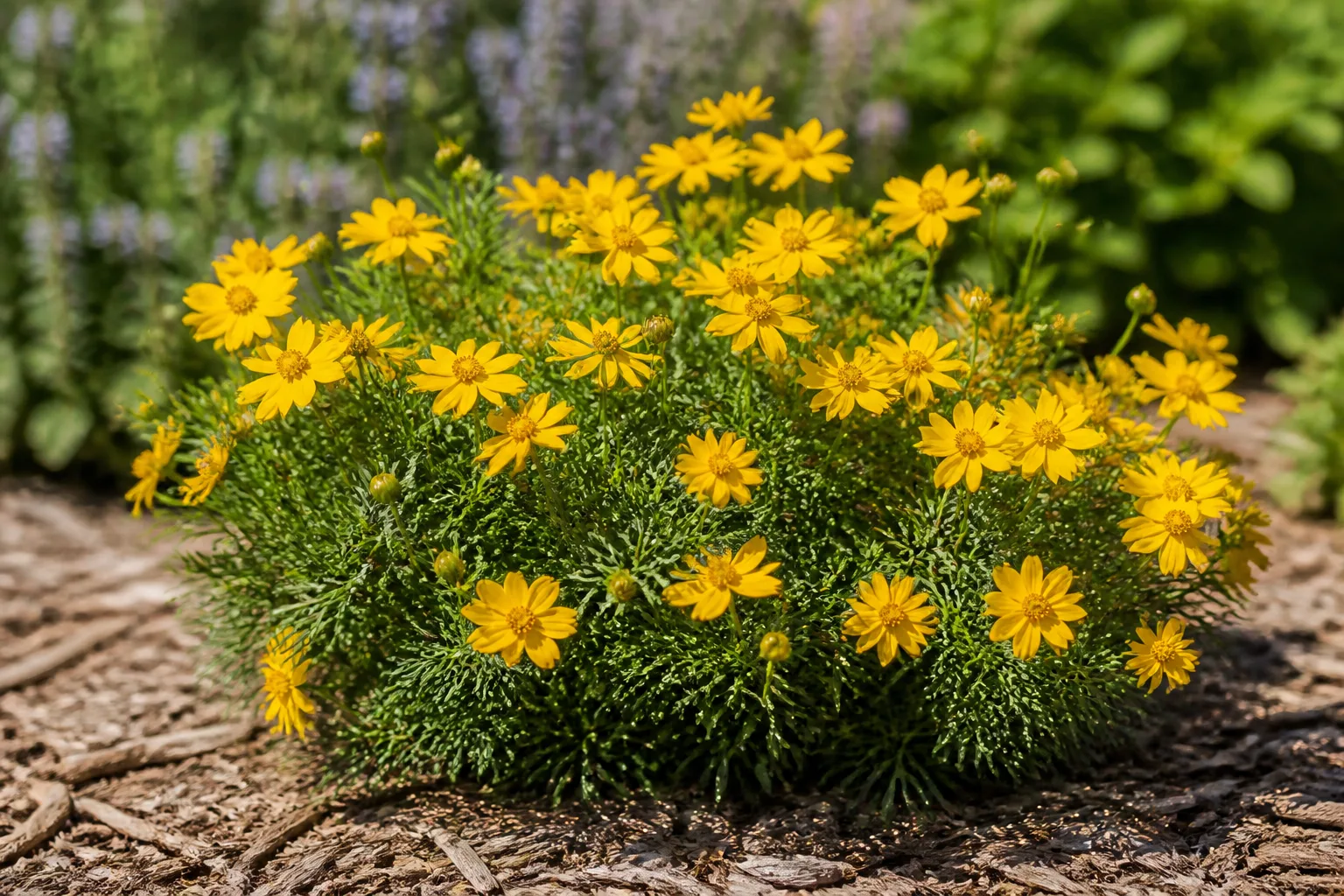
The yellow daisy flowers are useful in a pollinator or meadow-style planting, where seedlings are a feature rather than a defect. In a tightly edited border, deadhead before seeds mature or select a less vigorous cultivar. Division every few years may restore a tired clump, but you do not need to do it on schedule if the plant is flowering well and staying where you want it.
Best low-effort move: avoid rich, heavily fertilized soil. A lean, well-drained bed usually produces sturdier plants with less flopping than a lush border.
3. Purple coneflower for flowers and wildlife
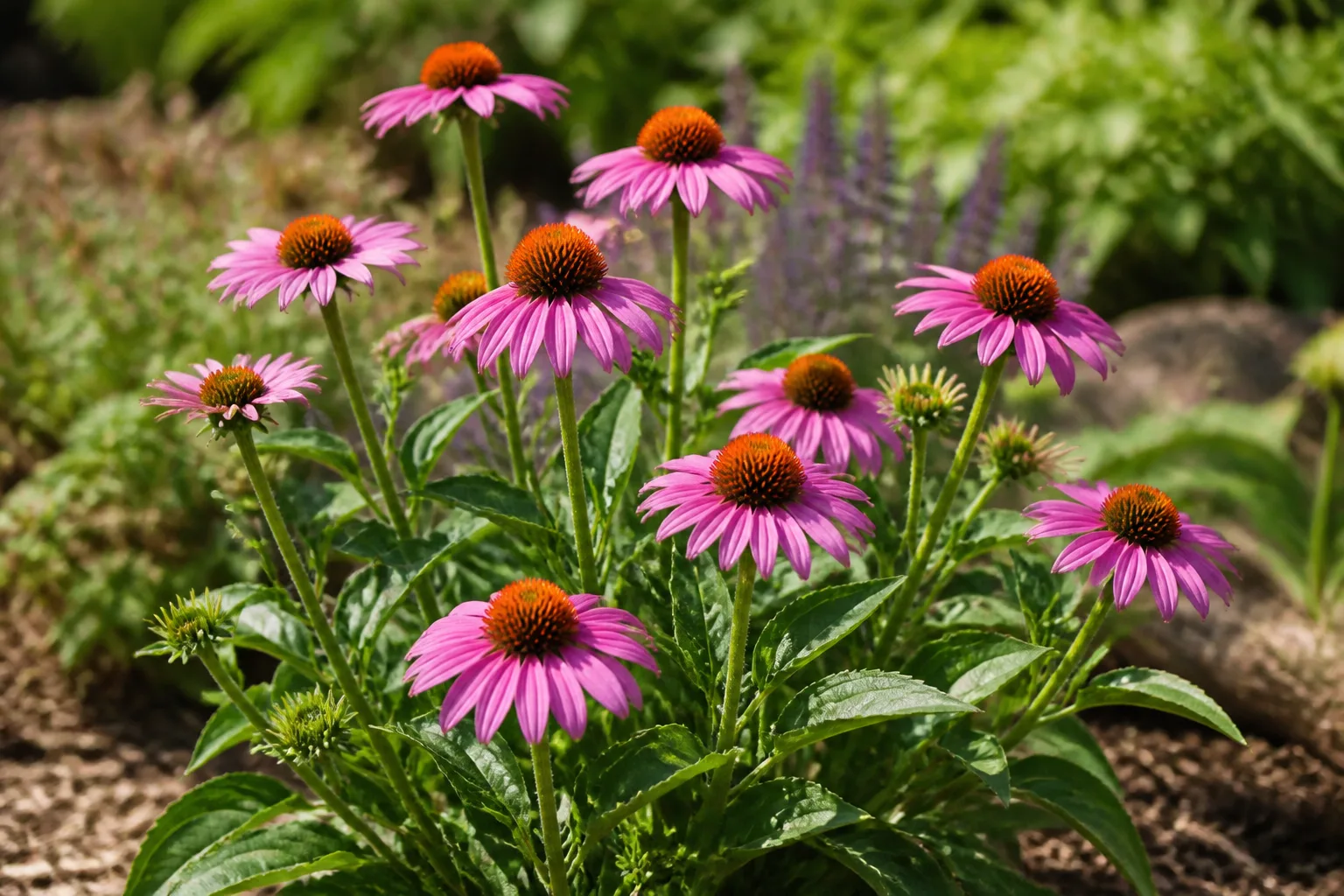
Purple coneflower (Echinacea purpurea) earns its place when you want a long season of flowers, pollinator value, and a plant that becomes more self-sufficient with age. NC State Extension lists it as adaptable to several soil types, drought tolerant once established, and suitable for full sun to partial shade. It also notes that butterflies use the flowers and birds eat the seeds. (NC State Extension: Echinacea purpurea)
Do not rush to cut every stem to the ground in fall. The seed heads provide winter structure and food, while standing hollow stems can provide nesting habitat for some native bees. If you prefer a tidy look, cut stems back in late winter rather than removing every head as soon as petals fall. That small timing choice preserves more wildlife value without making spring cleanup difficult.
Best low-effort move: plant it in well-drained soil, water deeply while it establishes, and let at least some seed heads remain through winter. Overly wet soil is a bigger long-term risk than a missed summer watering once the roots are established.
4. Daylily for dependable summer color
Daylilies are clump-forming perennials that tolerate a wide range of garden conditions. NC State Extension describes them as easy to grow in full sun to partial shade and notes that modern cultivars offer many colors, sizes, and flowering times. They are not true lilies: each individual flower lasts about a day, but a healthy plant can produce many buds. (NC State Extension: Hemerocallis)
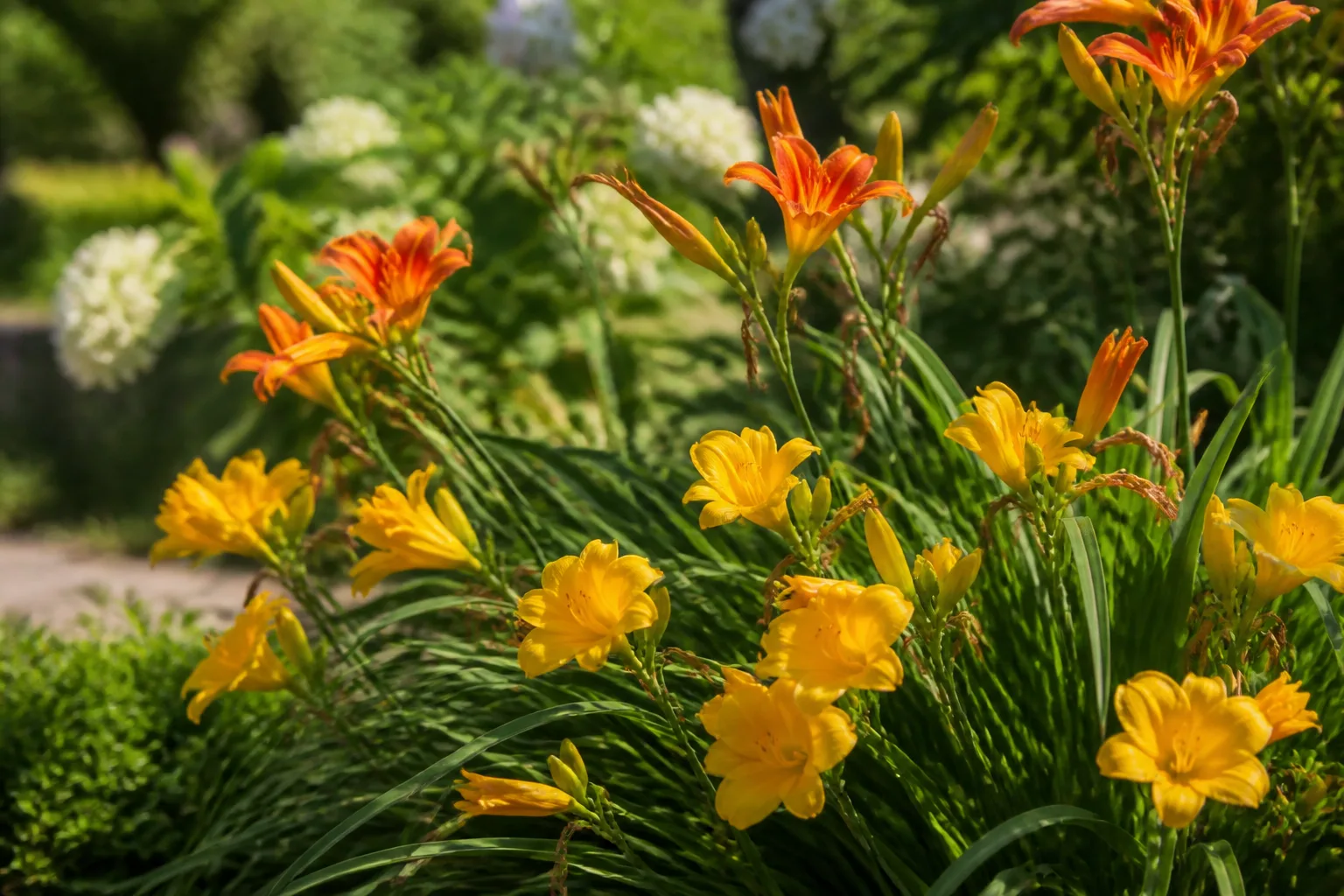
Daylilies work on slopes, along paths, around tree bases, and in borders. They tolerate some dryness once established, but flowering is usually stronger when the soil is not chronically parched. Deer may browse the foliage and buds, so do not promise yourself a deer-proof planting.
One important household caveat: NC State Extension identifies daylilies as toxic to cats, with ingestion capable of causing severe illness, including kidney failure. If cats can reach the bed or bouquets, choose a different perennial or ask a veterinarian about safer plant choices.
Best low-effort move: divide only when the clump is crowded or blooming declines. Removing spent flowers is cosmetic; it can improve appearance, but it is not the reason daylilies return.
5. Hosta for foliage in shade
Hosta is a foliage-first perennial for dappled shade, morning sun, or a cool bed with moisture-retentive soil. NC State Extension notes that hostas prefer moist, slightly acidic soil rich in organic matter, need good drainage, and can scorch in too much southern sun. Gardeners’ World likewise highlights their bold foliage and warns that slugs and snails can make holes in the leaves. (NC State Extension: Hosta; Gardeners’ World)
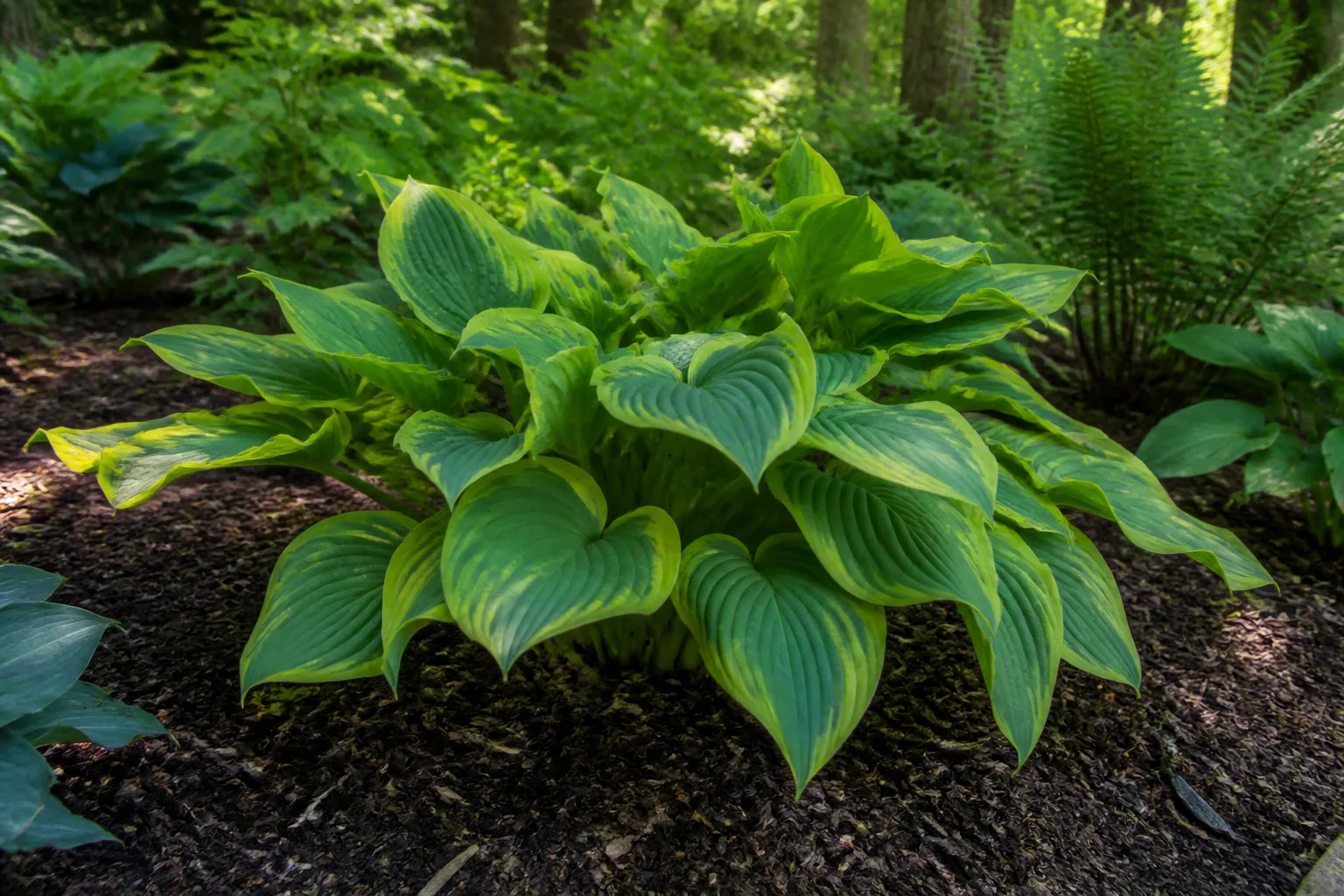
Hostas are low maintenance when you want dependable leaves, not when you expect perfect leaves. Deer and rabbits may eat them, slugs may perforate them, and drought can cause ragged margins before you notice the soil is dry. Blue-leaved forms generally need deeper shade than green forms, while some gold or variegated types tolerate brighter morning light.
NC State also lists hostas as toxic to cats, dogs, and horses. Keep that in mind before planting a large mass beside a pet’s favorite path. In a pet-free shade garden, a hosta clump can remain attractive for years with little more than spring cleanup and occasional division.
Best low-effort move: solve the site first. A hosta in afternoon sun will need more rescue watering and leaf cleanup than the same cultivar in bright shade.
6. Siberian iris for moisture and structure
Siberian iris brings upright, blue-green, straplike foliage and elegant flowers to the moist end of a perennial border. NC State Extension calls it a low-maintenance, moisture-loving perennial that prefers full sun and evenly moist soil; established plants tolerate some drought, but too much shade can reduce flowering. (NC State Extension: Iris sibirica)
Use it beside a pond edge, rain-fed bed, or downspout where water is available but roots are not sitting in stagnant mud. This is a better fit for moisture than sage or thyme, yet it is not a bog plant that wants permanent saturation. The clumps can be divided when they become crowded and flowering drops, usually after several years rather than every season.
Best low-effort move: protect new divisions from drying for their first six to eight weeks. Once established, the plant’s strong clumping habit does much of the work.
7. Common sage for a dry edible border
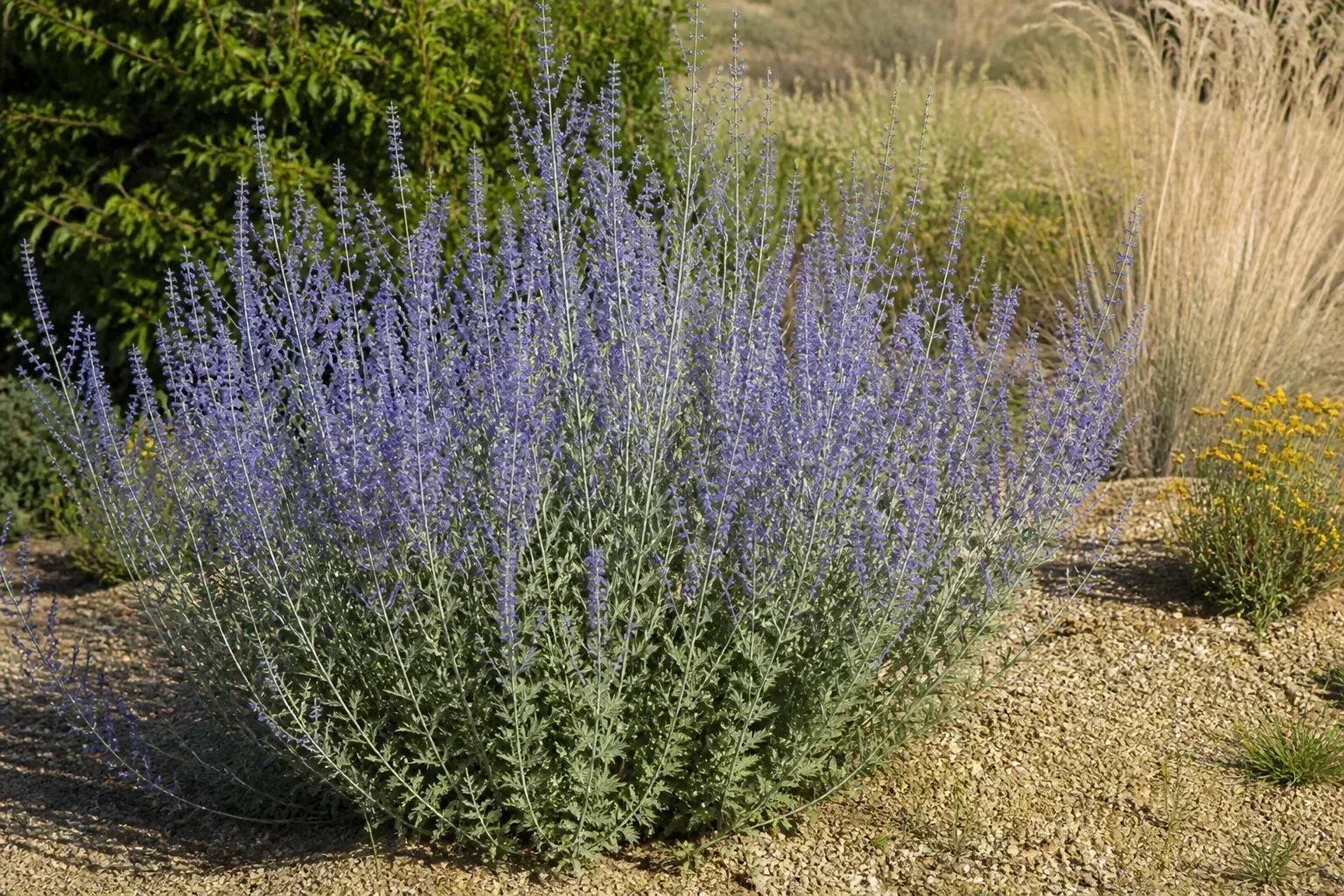
Common sage (Salvia officinalis) is a Mediterranean perennial herb with gray-green, aromatic leaves and early-summer flowers. It prefers full sun and well-drained medium-to-dry soil, and NC State Extension notes that it tolerates drought and poor soil but is short-lived compared with a permanent shrub. (NC State Extension: Salvia officinalis)
Sage is an excellent choice beside thyme, lavender, or other dry-site plants, but it is not a “never prune” plant. Spring pruning and light harvest keep it compact; do not cut deep into old woody stems because they may not resprout. In heavy clay or a wet winter bed, root rot can erase the supposed maintenance advantage.
Best low-effort move: plant it high or on a slight mound in fast-draining soil, then harvest lightly during the first year while the root system develops.
8. Common thyme for a low edging plant
Common thyme (Thymus vulgaris) is a small, woody, evergreen perennial herb that suits full sun, dry sandy or rocky soil, containers, and the front edge of a bed. NC State Extension describes it as frost and drought tolerant, low maintenance, fragrant, edible, and attractive to bees and butterflies. (NC State Extension: Thymus vulgaris)
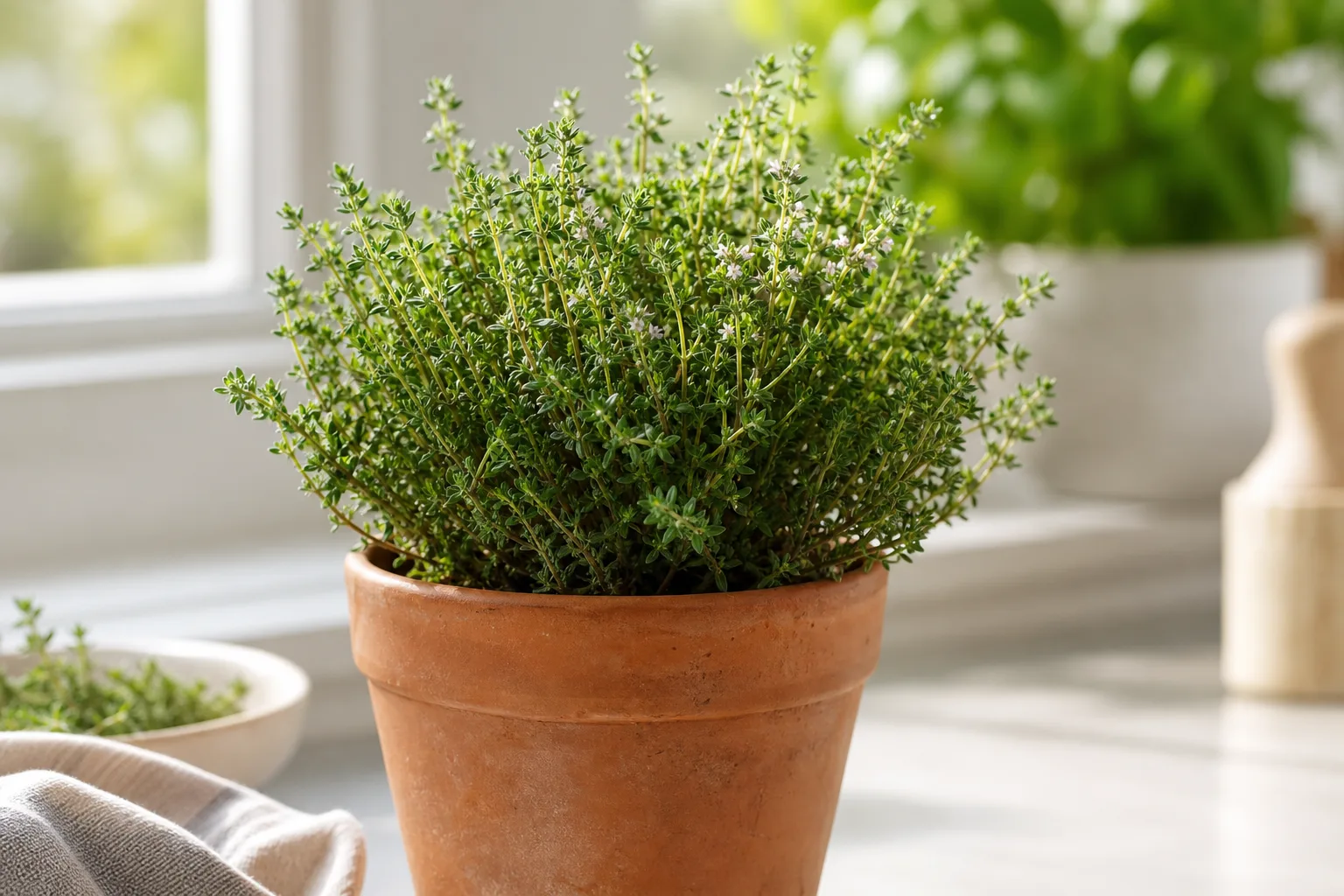
Thyme’s low profile makes it useful where taller perennials would flop or shade neighboring plants. It can become woody or leggy if ignored for too long, so trim the soft green growth after flowering or in early spring while leaving some leafy stems. Never treat a bare, woody center as a cue to shear the whole plant down to the soil.
Best low-effort move: give thyme bright light and sharp drainage. If the soil stays wet after a rain, changing the planting position will save more time than adjusting the watering schedule.
9. Yarrow for dry soil and long bloom
Yarrow (Achillea millefolium) is built for sunny, well-drained beds where ordinary plants sulk. NC State Extension describes it as tolerant of poor soils and drought, with fernlike foliage, a long bloom season, and strong pollinator value. The same profile warns that it can spread aggressively by rhizomes and seed. (NC State Extension: Achillea millefolium)
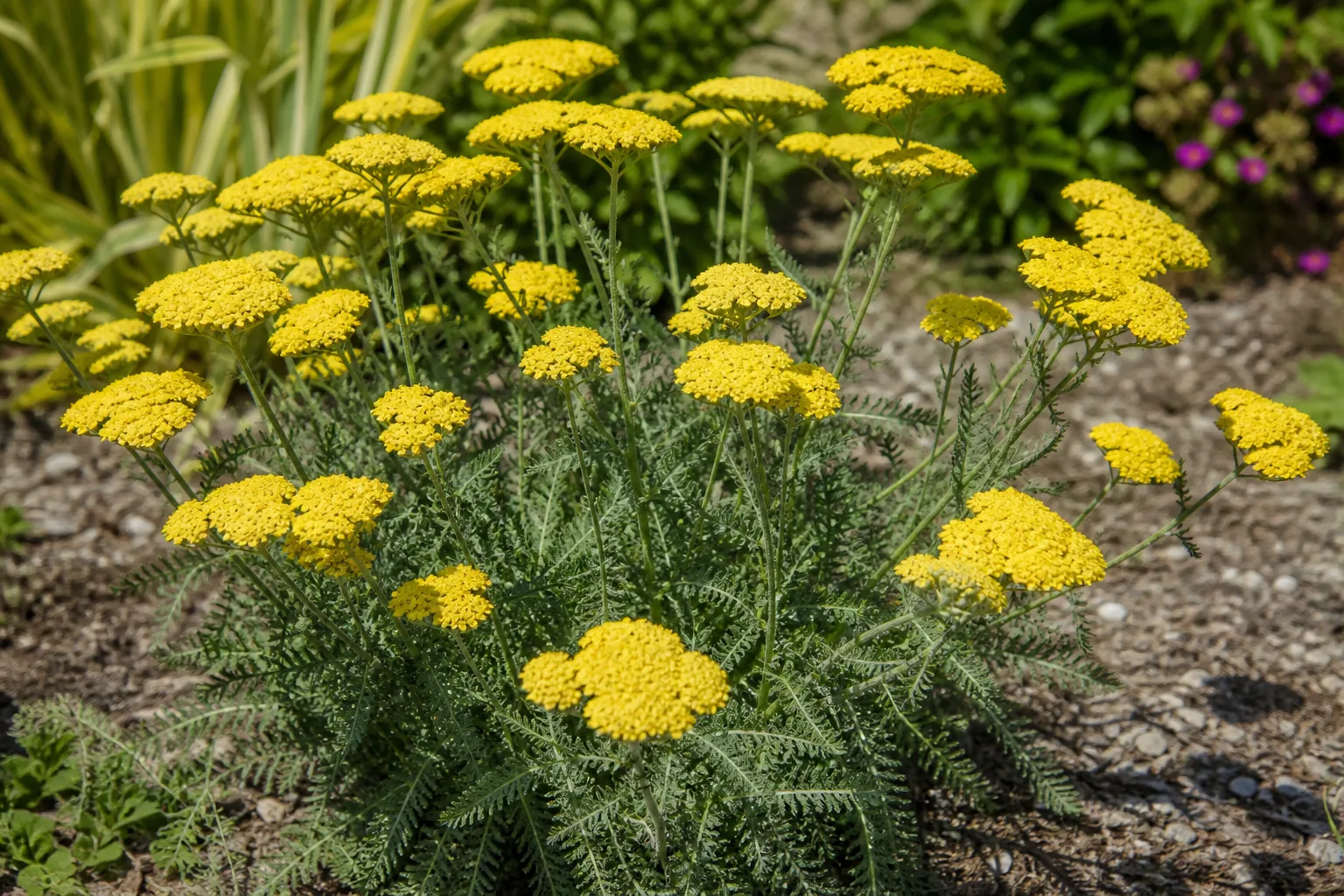
That spreading habit is an advantage in a naturalized strip and a chore in a narrow formal border. Choose a named cultivar for more predictable height and color, deadhead if you want to limit seedlings, and divide or edge the clump when it crosses its boundary. The flat flower heads also make good dried material, so a plant that is too enthusiastic for one bed may be useful elsewhere.
Best low-effort move: place yarrow where it has room to move. The “maintenance” is then occasional editing rather than constant watering.
Build a Low-Effort Planting That Stays Attractive
Pair moisture lovers and dry-site plants correctly
Do not plant all nine together just because they appear on one list. Put astilbe, hosta, and Siberian iris in the bed that holds moisture. Put thyme, sage, yarrow, and coreopsis in the sunniest, fastest-draining area. Daylily and purple coneflower can bridge ordinary garden soil, provided drainage is reasonable.
This grouping also creates a more stable design. Use taller coneflowers and Siberian iris toward the middle or back, low thyme at the edge, and hosta or astilbe where foliage can carry the display after flowers fade. The goal is to make each plant look “easy” because it is not fighting its neighbors for the wrong amount of water.
Use mulch and first-year watering to buy back time
The first growing season is the one period when even drought-tolerant perennials deserve attention. Water the root zone deeply when the top few inches dry, and check more often during heat, wind, and the first weeks after planting. Do not rely on a brief sprinkle that wets only the surface.
RHS guidance emphasizes that drought-tolerant plants still need watering while they establish roots. It also recommends mulch to reduce water loss and suppress weeds; a layer around 2 inches thick is useful, but keep it away from the crown and stems. (RHS: Drought-resistant gardening; RHS: Mulches and mulching)
For a dry bed, gravel or grit can suit plants such as thyme and sage. For a shade bed, organic mulch helps conserve moisture and improves the soil over time. Match the mulch to the planting rather than spreading one material everywhere.
Let seed heads stand, then divide only when needed
Deadheading is optional maintenance with a purpose, not a rule that every perennial must obey. Remove spent flowers when you want more blooms, a tidier appearance, or fewer seedlings. Leave seed heads on coneflowers when winter food and structure matter more than a manicured look. Deadhead yarrow and coreopsis when their spread is becoming a problem.
Division is equally situational. Divide when the center dies out, flowering declines, the clump crowds its space, or you want more plants—not automatically every spring. Gardeners’ World notes that mature clump-forming perennials can often be divided, with the old woody center discarded and healthy outer pieces replanted. (Gardeners’ World: 20 best perennial plants)
Common Mistakes That Make Easy Perennials Difficult
Buying by label instead of by site. “Drought tolerant” does not mean “happy in wet clay,” and “shade tolerant” does not mean “happy under a dry tree.” Read the plant’s moisture preference first.
Treating establishment watering as failure. A new plant has a small root system. Watering it during the first season is an investment in future low maintenance, not proof that the plant is fussy.
Over-fertilizing a dry-site border. RHS warns that extra fertilizer can push lush growth that flops, needs more water, and is more vulnerable to winter problems. For thyme, sage, yarrow, and coreopsis, correcting drainage and light is usually more useful than adding feed.
Mulching too close to the crown. A thick, wet collar around a perennial’s base can encourage rot and hide problems. Spread mulch over the root zone, but leave the crown visible.
Assuming tidy means healthier. Removing every coneflower stem in fall may make a bed look clean, but leaving some standing material supports winter interest and wildlife. Choose the level of tidiness that fits your garden rather than following a universal cleanup date.
Ignoring household safety. Daylilies are dangerous to cats if eaten, and NC State lists hostas as toxic to cats, dogs, and horses. Check the plant before adding it to a pet-accessible garden, and do not assume that a plant described as “easy” is automatically safe.
Conclusion: Choose by Site, Not by Wishful Thinking
The most dependable low-maintenance perennial is the one that matches the place you already have. Choose astilbe for moist shade, hosta for shade-grown foliage, and Siberian iris for an evenly moist sunny bed. Choose thyme, sage, yarrow, coreopsis, and coneflower for brighter, better-drained ground, with room for each plant’s particular habit.
Give every new perennial a thoughtful first season: prepare the soil, water the root zone, mulch without burying the crown, and watch how the plant behaves. After that, maintenance becomes selective—an occasional division, a strategic deadhead, or a late-winter cleanup—rather than a daily obligation.



