Should You Fertilize Your Lawn in the Fall?
Find out whether fall lawn fertilizer is worth the cost. Match timing and N-P-K to your grass type, soil test, weather, and winter dormancy.
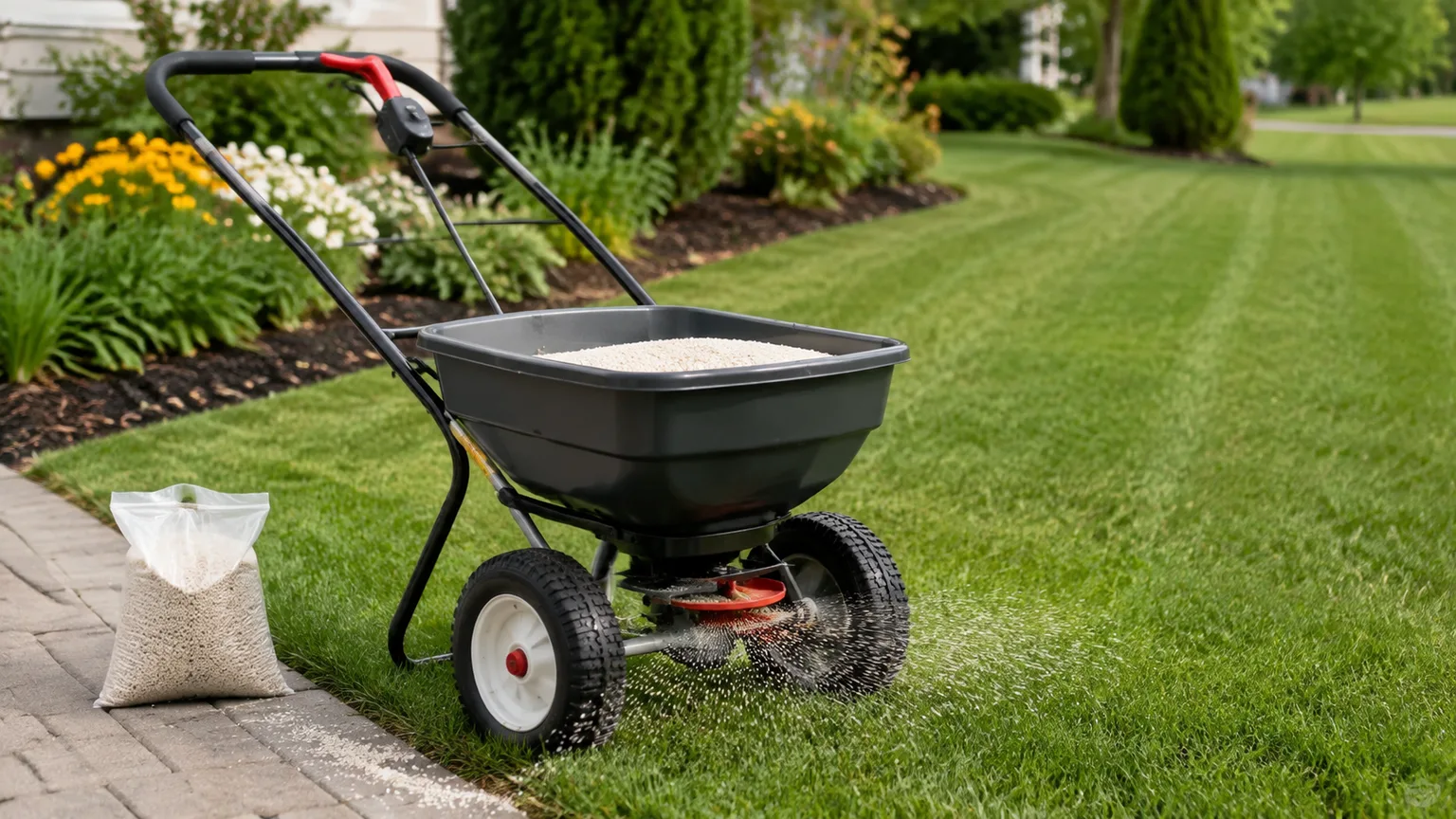
Fall fertilizer can be one of the best lawn-care purchases of the year—or a bag of nutrients your grass cannot use. The deciding factors are not the word “winterizer” on the package or the month printed on a calendar. They are grass type, active growth, soil fertility, moisture, and how close the lawn is to dormancy.
For a cool-season lawn such as tall fescue, Kentucky bluegrass, perennial ryegrass, or fine fescue, fall is often the highest-return feeding season. For a warm-season lawn such as bermudagrass, zoysiagrass, centipedegrass, or St. Augustinegrass, a late nitrogen application can be wasteful or even raise the risk of winter injury. The same autumn weather can be a green light in Ohio and a stop sign in North Carolina.
The short answer: fall fertilizer is conditional, not automatic
Fertilizing your lawn in fall is worth it when the grass is the kind that actively grows in cool weather, the soil or turf actually needs the nutrients, and you apply before dormancy on unfrozen, adequately moist ground. Fall feeding can support root development, density, and energy storage that show up as better spring recovery rather than instant green color.
It is usually a waste to fertilize a fully dormant or frozen lawn, to add phosphorus or potassium without a soil-test reason, or to push nitrogen onto warm-season grass after its local cutoff. It is also a poor investment when the lawn is severely drought-stressed, the real problem is shade or compaction, or heavy rain will carry loose nutrients off the property.
The best first decision is simple:
| Your lawn situation | Fall fertilizer decision |
|---|---|
| Cool-season grass, green and growing, soil fertility supports feeding | Usually worthwhile; follow local timing and label rate |
| Warm-season grass, still actively growing in early fall | Only if local guidance calls for it; finish before dormancy |
| Grass is dormant, frozen, or persistently heat- or drought-stressed | Wait; fertilizer is unlikely to solve the immediate problem |
| Soil test shows adequate phosphorus and potassium | Do not buy a high-P or high-K blend just because it says “winterizer” |
| You are overseeding | Coordinate seed, starter fertilizer, watering, and any herbicide restrictions |
This is why a blanket “yes” or “no” answer fails. The useful answer is a set of conditions you can check in your own yard.
Identify your grass type before choosing a plan
Grass type determines when the plant is biologically prepared to use fertilizer. If you inherited a lawn or bought a seed blend without recording the species, ask a local extension office or compare the blade and growth habit before you follow a feeding schedule. A lawn’s location can help, but transition-zone climates often contain mixed turf, so the grass’s actual growth pattern matters more than a state line.
Cool-season lawns: fall is the main feeding window
Cool-season grasses prefer moderate temperatures and commonly include tall fescue, fine fescue, Kentucky bluegrass, and perennial ryegrass. They may look tired during hot summer weather, then resume strong growth as nights cool. That autumn rebound is the reason fall nitrogen can be so effective: the plant is growing, but the weather is less punishing than midsummer.
Virginia Cooperative Extension describes late summer to mid-fall as an excellent period for cool-season turf establishment and says fall fertility can improve density through new shoots, carbohydrate storage, and root production. Its expert-reviewed Fall Lawn Care guidance also emphasizes soil testing and warns never to fertilize frozen soil.
Many cool-season lawns need one well-timed fall application; a more intensive regional program may use an early-fall and late-fall feeding. Purdue’s fall fertilization guidance is a useful example from Indiana: it identifies September and November as strong windows, but the listed rates and dates belong to that regional program, not every lawn in North America.
Warm-season lawns: early fall only in some regions
Warm-season grasses—bermudagrass, zoysiagrass, centipedegrass, and St. Augustinegrass—do most of their growing in warm weather and commonly slow down or go dormant as fall progresses. Their fall plan is therefore not a copy of a tall-fescue plan.
In eastern North Carolina, North Carolina Cooperative Extension advises against nitrogen after August or before spring for the warm-season grasses common there, while allowing a soil-test-based potassium application in early fall when a deficiency exists. Virginia’s extension guidance is less uniform because the state spans different climates: it allows a final nitrogen application for some high-nitrogen-use warm-season grasses roughly a month before anticipated frost, while recommending that zoysia and centipede receive nitrogen only during their most active growing months.
The practical rule is to follow your county or state extension calendar for the species you actually grow. If the grass is visibly slowing, color is fading toward dormancy, or frost is approaching, do not use a generic northern “winterizer” schedule. Frost-free areas such as parts of South Florida are a separate case because warm-season grass can keep growing much longer.
Why fall feeding can pay off
The strongest case for fall fertilization is not “make the lawn green tomorrow.” It is support the plant during a favorable root-growing window, then let the benefits carry into spring. When the grass is actively growing and moisture is available, nutrients can be used for roots, new shoots, and energy reserves instead of only producing soft top growth.
Root growth, energy reserves, and spring recovery
Cool-season turf often develops roots and stores carbohydrates in fall while leaf growth becomes less aggressive. That creates a useful trade: the lawn can strengthen and fill thin areas without the constant mowing surge that a heavy spring nitrogen application may trigger. The UW–Madison Division of Extension calls early September an important annual nitrogen window and notes that fall nitrogen supports root systems and a thicker stand that is better able to resist weed encroachment.
The payoff may be delayed. Good Nature’s practical fall-feeding explanation describes autumn feeding as supporting roots rather than chasing an immediate green-up, and points to late-season benefits that can continue into spring. That is a useful way to judge the purchase: you are not paying for a dramatic color change the day after application; you are paying for a better chance that the existing turf enters winter with adequate nutrition and rebounds evenly.
Fall fertilizer is not magic, though. It cannot replace enough sunlight, correct mowing height, drainage, seed-to-soil contact, or relief from severe compaction. If the lawn is thin because water runs down a slope or foot traffic has sealed the soil, fertilizer may simply feed the grass that can still grow while leaving the underlying bottleneck in place. In that situation, pair the nutrient decision with a diagnosis; our lawn aeration guide explains when opening compacted soil can help.
Test the soil before buying a “winterizer”
Soil testing is the shortest route from lawn marketing to a defensible decision. A lab report can show pH, phosphorus, potassium, and sometimes other nutrients, then tell you whether an amendment is warranted. Without a test, a fertilizer bag’s N-P-K numbers are only a product description—not proof that your lawn needs all three nutrients.
Testing is particularly important for phosphorus and potassium. Virginia Tech’s fall lawn guidance recommends using soil-test data for phosphorus on established turf and explains that extra potassium can be wasteful when soil levels are already adequate. The Pacific Northwest Pest Management Handbooks likewise caution against phosphorus near water in late fall or winter and note that nutrient requirements vary by grass species and region.
Read N-P-K without guessing
The three numbers on a fertilizer label are percentages by weight of nitrogen (N), phosphate (P₂O₅), and potash (K₂O). They describe what is in the bag, not the number of pounds you should spread over the lawn.
- Nitrogen primarily drives green leaf growth and supports overall turf development. Fall nitrogen can be valuable for actively growing cool-season grass, but late nitrogen can be risky for warm-season turf approaching dormancy.
- Phosphorus supports root development and is especially relevant to some new-establishment situations, but established lawns should receive it when a soil test or local recommendation indicates a need. More phosphorus is not a universal fall shortcut.
- Potassium contributes to general plant function and can support stress or winter hardiness when the soil is deficient. A high-potassium winterizer is not automatically useful if the test says potassium is already sufficient.
Do not choose a blend merely because its middle or last number looks impressive. Choose the nutrient the soil report and grass type call for, then select a product whose label allows the intended use and rate. Local fertilizer ordinances may also restrict phosphorus or application timing, especially near waterways.
Time the application by growth, not the calendar
The phrase “fall fertilizer” covers several weeks and several climates. Use the calendar as a starting point, then check whether the turf is green and growing, the soil is not frozen, and the next weather pattern gives nutrients a chance to move into the root zone without washing away.
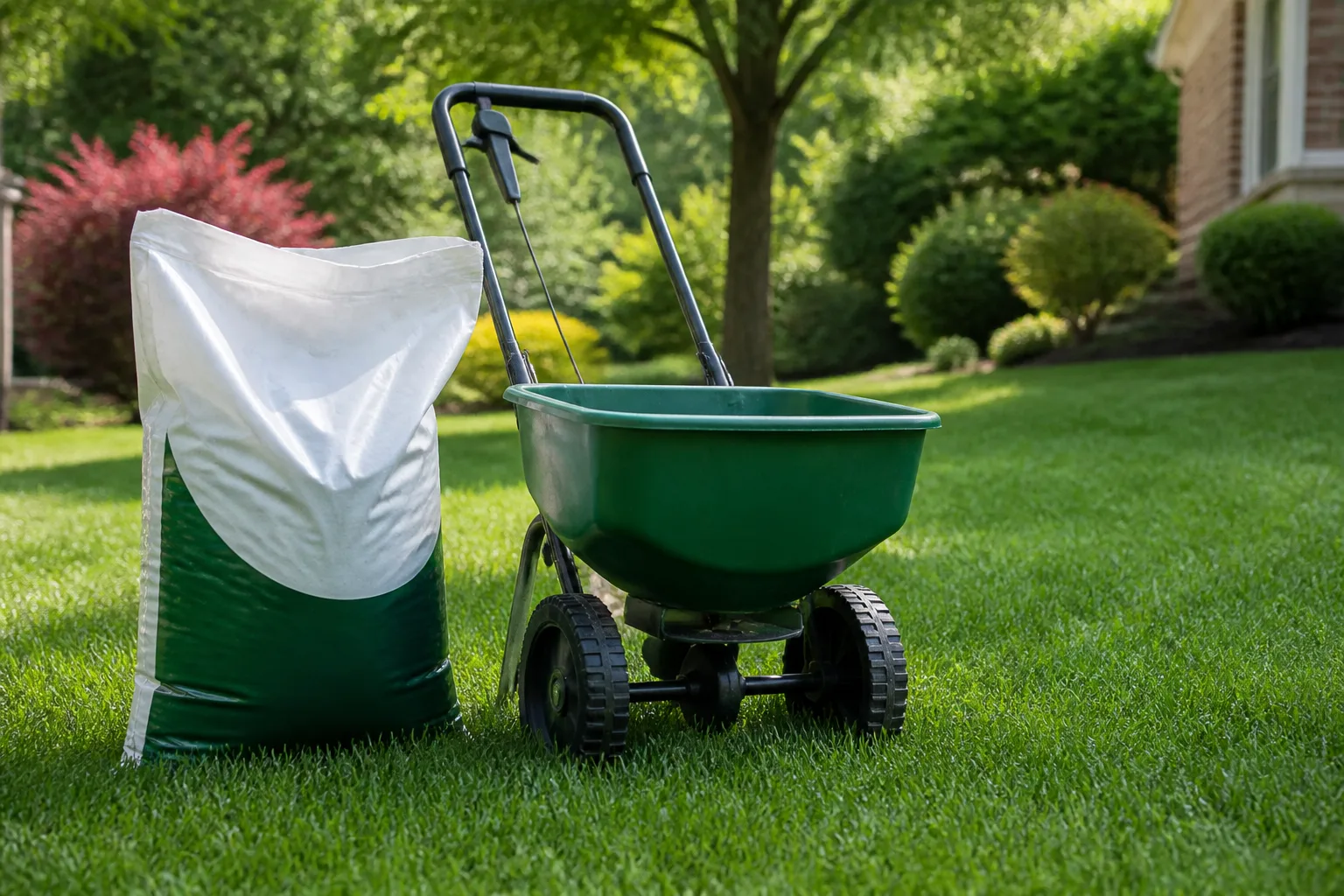
Cool-season timing
For cool-season grass, early fall is usually the dependable window. In much of the northern United States, that means September into October, with late fall possible while turf remains green and active. A useful field test is not just “the air feels cooler,” but whether the lawn has resumed regular growth after summer and can still take up nutrients before a hard freeze.
An early-fall application can restore growth after summer stress. A later application may help the lawn finish the season with stored energy, but it should happen before dormancy and only at a measured rate. Purdue’s Indiana schedule uses about 1 pound of actual nitrogen per 1,000 square feet for its September application and 0.5 to 1 pound for a late-fall application; Purdue labels those figures as targets for its regional recommendation, so treat them as an example rather than a universal prescription.
In the Upper Midwest and Northeast, the window closes sooner. In the Mid-Atlantic and transition zone, a lingering hot, dry September may justify waiting for a cooler, moist stretch. In the Pacific Northwest, fall moisture and active cool-season growth can make autumn a major lawn-renovation season, but local rain, soil, and grass type still control the decision. Gardening Know How offers a practical rule of thumb: cool-season feeding often falls between September and October, and fertilizing dormant or frozen turf is too late.
Warm-season timing
Warm-season timing is earlier and more conditional. If local extension guidance supports a fall application, finish while the grass is actively growing and with enough time before expected frost or full dormancy. In a frost-prone area, “early fall” may mean late summer or September—not November.
Do not assume that a fertilizer sold as a winterizer should contain extra phosphorus or potassium for every warm-season lawn. Test first. If nitrogen is the concern, stop when your local schedule says to stop; late green growth is not a sign of improved winter readiness if it delays dormancy or leaves tender tissue exposed to cold.
South of the transition zone, a bermudagrass lawn may still be actively growing when a northern fescue lawn is already slowing. Conversely, zoysia or centipede may need less nitrogen than bermudagrass. The Virginia Cooperative Extension warm-season recommendations are a good illustration of why grass species and regional frost timing belong in the same sentence as any fall fertilizer advice.
When fall fertilizer is a waste of money
Even a good product becomes a bad purchase when conditions prevent the turf from using it. Stop and wait in these situations:
- The lawn is dormant or the ground is frozen. Dormant grass will not turn fertilizer into useful growth, and frozen soil cannot accept nutrients through active roots. A late bag application may sit until runoff or a spring flush carries it elsewhere.
- The turf is severely drought- or heat-stressed. Stressed grass has limited ability to use extra nutrients and may be injured by a concentrated application. Restore moisture and wait for active growth rather than trying to force green color.
- A major rain event is imminent. Light irrigation after a granular application may help move nutrients into soil, but intense rain can move fertilizer off the lawn and toward drains or waterways. Avoid spreading before downpours.
- The soil already has adequate P or K. Buying a high-phosphorus or high-potassium blend because of a seasonal label adds cost and can upset nutrient balance. The University of Nevada Reno Extension also cautions that fertilizer should be measured, watered in carefully, and not applied above a conservative nitrogen rate.
- The lawn’s real problem is not nutrition. Persistent shade, compacted soil, poor drainage, a wrong grass species, disease, and excessive thatch can all produce weak turf. Fertilizer will not correct them by itself.
The same restraint applies after a missed window. If the lawn is already dormant, do not “make up” the application by doubling the spring rate. Wait, test, and plan the next feeding for active growth.
Calculate a safe amount of fertilizer
Apply fertilizer by actual nitrogen, not by how full the bag looks or how green the label promises the lawn will become. A common single-application ceiling in extension turf guidance is about 1 pound of actual nitrogen per 1,000 square feet, but your grass, product, season, soil report, and local program may call for less.
Use this calculation:
Product needed = desired pounds of actual nitrogen ÷ nitrogen percentage written as a decimal.
For example, if your plan calls for 0.5 pound of nitrogen per 1,000 square feet and the bag’s first number is 26, divide 0.5 by 0.26. The result is about 1.92 pounds of that product per 1,000 square feet. The University of Nevada Reno’s lawn-care calculation uses this same approach.
Measure the lawn area instead of guessing. Break an irregular yard into rectangles, estimate each area, and add them. Exclude planting beds, patios, and driveways. If the package rate is given as a range, start at the low end unless a soil test or local extension recommendation gives a more specific target.
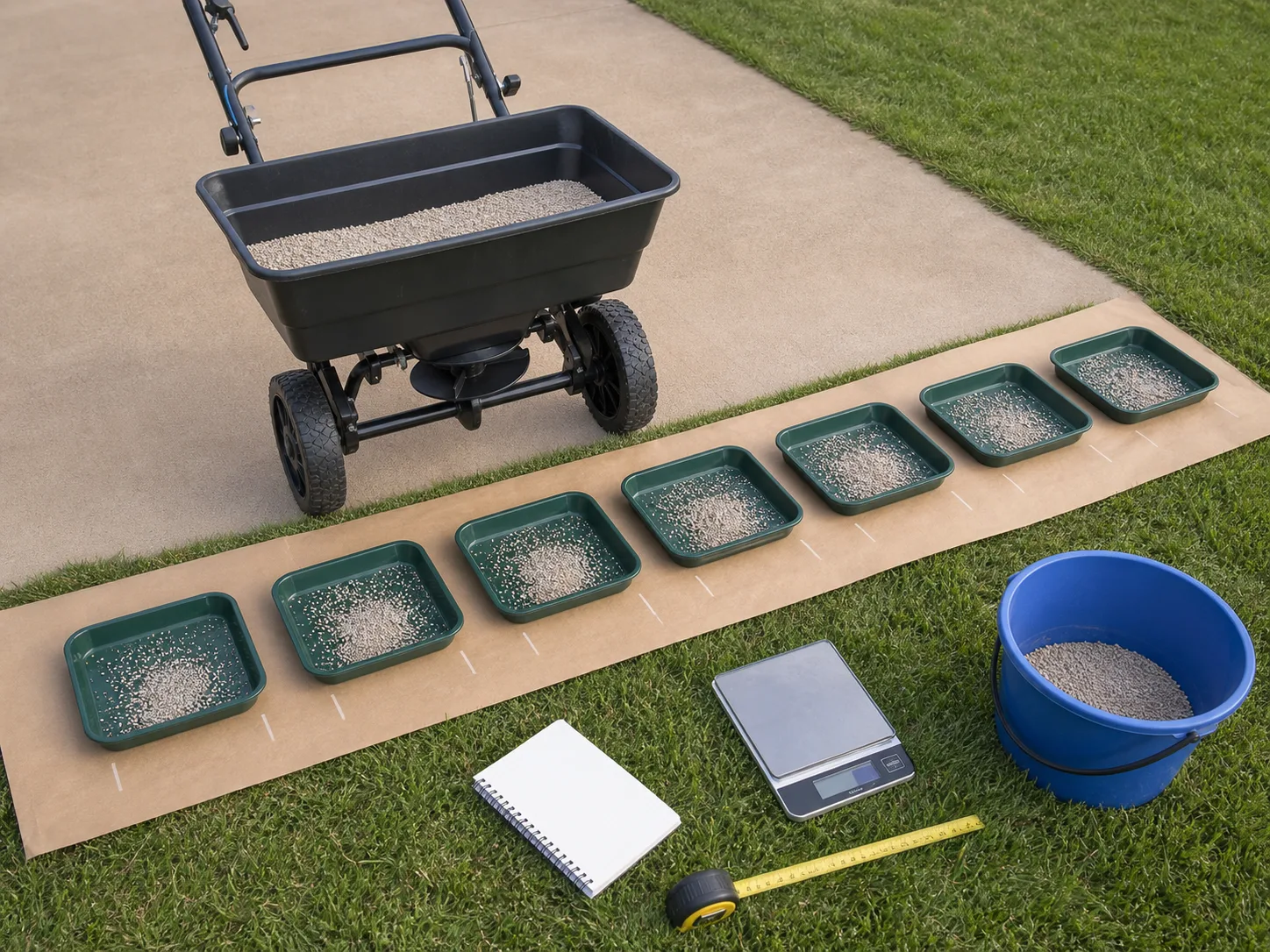
Apply fertilizer with a low-risk sequence
Once grass type, timing, nutrient, and rate are settled, the application is straightforward. The goal is even coverage with no piles, striping, or granules on hard surfaces.
- Mow if the lawn needs it, but do not scalp. Keep the normal mowing height for your grass and remove no more than one-third of the blade at a time. Short, stressed turf is not a better target for fertilizer.
- Clear leaves and debris from the application area. A thick leaf layer can intercept granules and create uneven feeding. Mulch or remove leaves according to your lawn plan so fertilizer lands on turf and soil.
- Check the soil moisture. The lawn should not be bone-dry, waterlogged, or muddy. If it is dry, irrigate according to the grass’s needs and let the surface settle before spreading.
- Calibrate the spreader. Use the product label as the starting point, measure a known area, and weigh or measure the product that passes through. Walk at a steady pace. If you are uncertain, under-application is easier to correct than a stripe of burned grass.
- Make two lighter passes if the spreader and label allow it. A perpendicular pattern can improve coverage, but divide the measured total rate rather than adding a second full application. Keep the spreader moving before opening the gate and close it before stopping.
- Keep fertilizer off pavement and out of drains. The Wisconsin Extension guidance on optimum lawn fertilizing time specifically warns that granules on sidewalks, driveways, and streets can move with runoff into waterways. Sweep stray granules back onto the lawn; do not hose them into a gutter.
- Water according to the label and forecast. A modest amount of irrigation can move fertilizer from leaf surfaces into soil. Avoid flooding and avoid watering so heavily that nutrients leach below the root zone. If useful rain is coming, let it do the work only when the forecast is reliable and the product label permits it.
You do not need to apply granular fertilizer at midday just because morning is the traditional lawn-care hour. A calm, dry period with manageable temperatures and no immediate downpour matters more than chasing a particular clock time. Always follow the product label for protective equipment, pets, reentry, and watering instructions.
What to do after overseeding
Fall is also the prime seeding season for many cool-season lawns, which creates a timing puzzle: seed needs moisture and establishment, while fertilizer needs a justified nutrient rate. Do not solve that puzzle by throwing a high-nitrogen product over every newly seeded patch.
Before seeding, core aerate only if compaction is present, prepare exposed soil, and create seed-to-soil contact. After spreading seed, keep the upper seed zone consistently moist with light irrigation; too much water can wash seed downhill or leave it saturated. Virginia Tech’s fall lawn care recommendations stress both soil preparation and careful irrigation for establishment.
A starter fertilizer may make sense for a new establishment or when a soil test indicates phosphorus is needed, but an established lawn does not automatically need a high-phosphorus product. Do not use a weed-and-feed product around new seedlings unless its label expressly permits that timing and grass stage. Herbicides can injure seedlings or prevent the seed you just paid for from germinating.
If you already overseeded, the safest next step is to read the seed and fertilizer labels together, inspect whether seedlings have emerged, and compare the product’s waiting instructions with your local extension advice. Prioritize steady moisture and establishment over cosmetic color. If seed is emerging unevenly, our grass-seed troubleshooting guide can help separate nutrient problems from dry soil, shade, runoff, or poor seed contact.
Common mistakes and better alternatives
Mistake: following the bag’s word “winterizer” without identifying the grass. A northern cool-season product calendar can be wrong for a southern warm-season lawn. Better alternative: identify the turf and use local growth timing first; treat the product label as a legal use and rate guide, not as a universal calendar.
Mistake: assuming more nitrogen equals stronger roots. Excess nitrogen can create a flush of top growth, increase mowing, and leave tissue vulnerable when weather turns cold. Better alternative: calculate actual nitrogen and use the lowest rate that fits your soil test and regional recommendation.
Mistake: buying phosphorus for an established lawn because it is marketed as a root builder. Phosphorus is important, but extra phosphorus can contribute to water-quality problems and is not useful when soil already has enough. Better alternative: soil-test before choosing a phosphorus-containing blend, especially near water.
Mistake: treating brown grass with fertilizer during a heat wave. Brown can mean dormancy, drought stress, disease, or dead turf—not necessarily hunger. Better alternative: check soil moisture, light, mowing, and roots; wait for active growth before feeding. Our lawn growth guide walks through those non-fertilizer causes.
Mistake: applying a full second dose because the first one did not produce instant color. Root and reserve benefits are delayed, and color may be limited by temperature, moisture, or species. Better alternative: give the lawn time, verify the rate, and do not reapply until the planned interval and conditions support it.
Mistake: spreading on sidewalks and rinsing the spill into a drain. That wastes product and turns a lawn-care task into a runoff problem. Better alternative: use a deflector near edges, sweep stray granules back onto turf, and keep applications away from standing water and hardscape.
If you remember only one workflow, use this: identify the grass, observe active growth, test the soil, calculate actual nitrogen, check the weather, calibrate the spreader, and stop before dormancy. A fall fertilizer application that passes all seven checks is usually an investment. One that fails the first two or three is usually just an expensive way to move nutrients off-target.
Conclusion: spend on the condition your lawn actually has
Fall fertilizing is not a waste of time and money for a healthy, actively growing cool-season lawn that needs nutrients. It can support roots, density, energy storage, and spring recovery with less of the soft top growth associated with indiscriminate spring feeding.
It is a waste—or a risk—when the lawn is dormant, frozen, drought-stressed, over-supplied, or warm-season grass past its local nitrogen window. Before you buy a winterizer, check the grass, the soil report, the forecast, and the label. If those four agree, apply a measured rate evenly and water it into the root zone without sending it down the driveway.



